Low cost chiropractor - Seeking a low-cost chiropractor? Our 2026 guide explores costs, insurance, & cash pay to find effective, affordable care without




Your back hurts, your neck is tight, and the first thing you type into your phone is probably some version of “low cost chiropractor near me.” That search makes sense. Pain changes how you think about money. You want relief quickly, but you also don't want to get pulled into a treatment plan that looks cheap on day one and expensive by week three.
That tension is real. A low sticker price can help, but the cheapest visit isn't always the least expensive path to recovery. I've seen people delay care because they assume every clinic is expensive, and I've also seen people chase a bargain only to learn that the advertised adjustment fee didn't include the exam, therapies, or imaging referral they needed.
The better question isn't just “Who has the lowest price?” It's “Who gives me the best value for the total cost of care?” When you look at chiropractic care that way, your choices get clearer, and your odds of wasting money go down.
Many individuals don't start by comparing treatment philosophies. They start by trying to make it through the day. You wake up stiff, sit at your desk, feel the ache travel into your hip or shoulder, and then spend lunch break checking prices because you can't justify an open-ended medical bill.
That's where the phrase low cost chiropractor becomes tricky. A low fee sounds reassuring, but pain care rarely works as a one-line purchase. A visit might include an exam, a Chiropractic Adjustment, a simple Realignment, or a plan for Sciatica Treatment. Another clinic might quote a lower number but leave out everything except a very brief adjustment.
Practical rule: Don't shop for pain care the same way you'd shop for a haircut. You're not buying time on a table. You're buying judgment, diagnosis, treatment, and a path forward.
A patient with occasional stiffness may do well with straightforward Chiropractic Care, a few focused Adjustment visits, and a Personal Exercise Plan. A patient with radiating leg pain, disc irritation, or a car accident injury may need a broader approach that includes Decompression, Mobility Therapy, Rehabilitation Exercise, Massage Therapy, Muscle Stimulation, or Acupuncture.
Here's the practical mindset that saves money. Start by defining the problem, not the budget alone. If you need basic maintenance care, a simple and affordable visit may be enough. If you have stubborn sciatica or recurring low back pain, the cheapest visit can become the most expensive choice if it doesn't address the cause.
A patient sees a $39 new-patient special, books fast, and expects a clear answer about cost. Then the bill starts to grow. The exam is separate. Rehab is extra. Imaging is billed elsewhere. The discount visit was real, but it was never the full price of care.
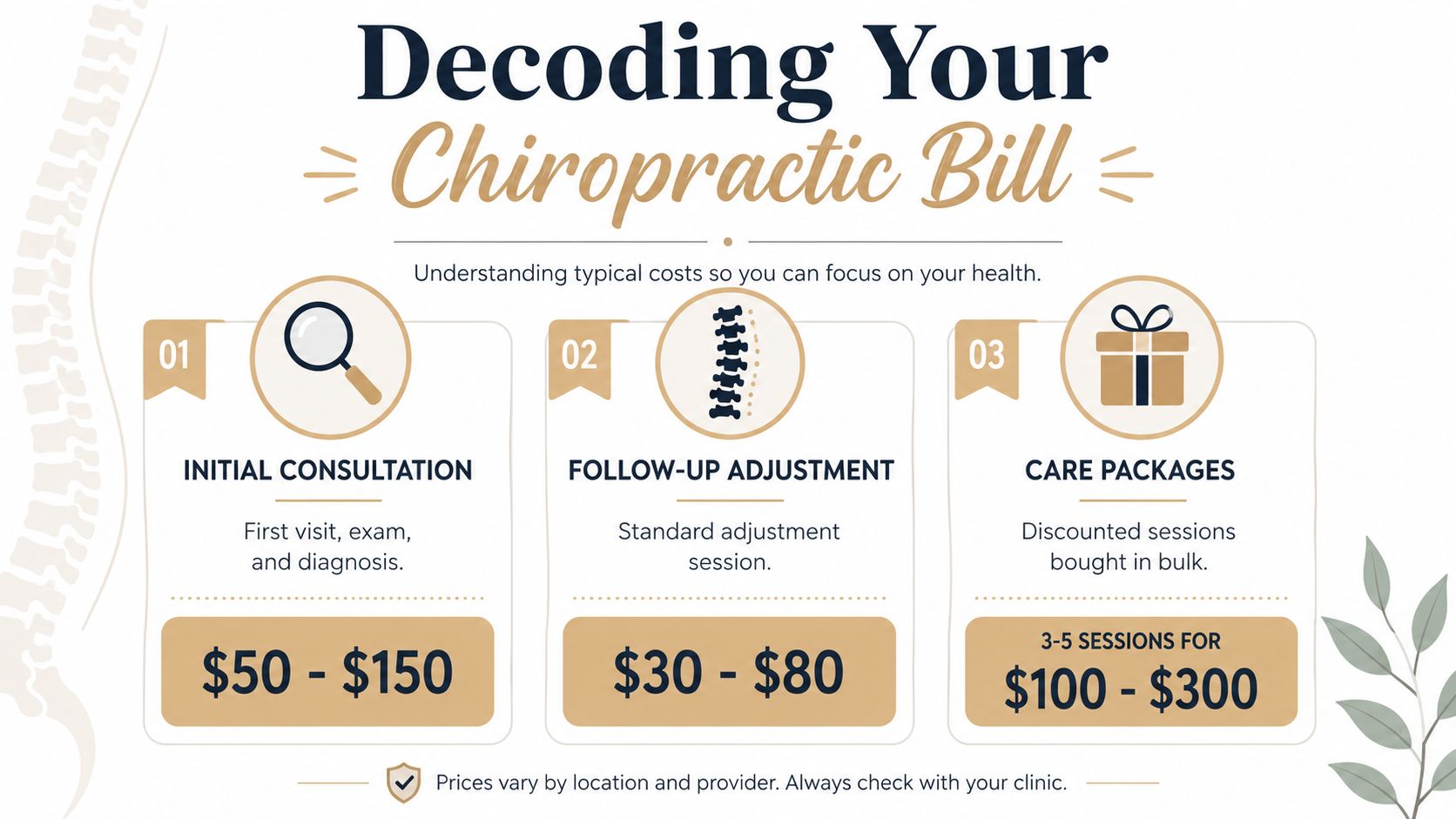
That is why the right question is not, “What is your cheapest visit?” Ask, “What will this problem likely cost from evaluation to discharge?” A low sticker price can still lead to a high total bill if the clinic strips out the services needed to make progress.
Published consumer pricing guides show a wide spread for chiropractic fees across the U.S. A single visit can fall anywhere from the lower end of routine care to a much higher initial appointment, especially when the first visit includes an exam, treatment planning, or added therapies. For a local breakdown of how prices can vary by visit type and setting, this overview of chiropractor costs in Salt Lake City, Utah gives useful context.
A proper first visit takes time. It should cover history, orthopedic and neurological screening when indicated, movement testing, a hands-on exam, and a decision about whether chiropractic care fits the case.
That work protects your wallet.
If a clinic skips the exam or keeps it superficial, the first bill may look attractive. The trade-off is that you may end up paying for a string of generic visits without a clear diagnosis, measurable goals, or a plan to change the problem.
A basic billing picture often looks like this:
| Visit type | What it commonly covers |
|---|---|
| Initial visit | History, exam, diagnosis, treatment plan, and sometimes first treatment |
| Follow-up visit | Chiropractic Adjustment, symptom review, and progress check |
| Integrated visit | Adjustment plus one or more adjunctive therapies such as Massage Therapy, Acupuncture, Mobility Therapy, or Muscle Stimulation |
In practice, value comes from the full package of care, not the ad price. A clinic can advertise a very low adjustment fee and still cost more overall if every useful add-on is billed separately or if the care plan drags on without clear progress.
Here are the hidden cost questions I tell people to ask before booking:
Those answers matter more than a coupon.
A good low-cost option is usually transparent, efficient, and appropriate for the condition. A bad low-cost option often looks cheap only because important parts of care are excluded. Patients paying cash, especially those navigating care without health insurance, need that distinction spelled out before the first appointment.
One line I recommend using on the phone is simple: “For my problem, what do patients usually pay over the first four to six weeks, including the exam, follow-ups, and any commonly recommended therapies?” Clinics that give a straight answer tend to be easier to trust. Clinics that avoid the question often produce surprise bills later.
Cheap and effective are not always the same thing. Good value means the diagnosis is careful, the treatment matches the condition, and the total cost makes sense for the result you are trying to get.
A low per-visit price can lose its appeal fast when the clinic is out of network, the deductible has not been met, or each useful add-on is billed separately. The smart move is to compare what you will spend over a short block of care, usually the first month, not just what appears on an ad.

Insurance can lower your out-of-pocket cost, but it can also make pricing harder to predict. I see this often with high-deductible plans. A patient assumes the visit is “covered,” then finds out they are paying the contracted rate in full until the deductible is met.
Before you book, call both the insurer and the clinic. Ask the same questions to each so you can compare the answers.
Confirm these details:
Value matters here. Earlier in the article, I noted research showing lower total low back pain costs when care starts with chiropractic. That does not mean every insurance-based plan is cheaper. It means the right care path can cost less overall when the diagnosis is solid and the treatment plan fits the problem.
If you want a practical checklist before calling offices, this guide on how to choose a chiropractor in Salt Lake City, Utah helps you compare clinics beyond the posted visit fee.
Cash pay is often the better buy for patients with high deductibles, limited chiropractic benefits, or simple musculoskeletal complaints that may respond in a short course of care. It is also easier to budget for if the clinic gives clear package pricing or a written estimate.
The mistake is asking only for the adjustment fee.
Ask what a typical first phase of care costs, including the exam, follow-ups, and any services that are commonly used for your condition. A clinic that quotes a modest visit fee but bills every therapy as a separate line item may end up costing more than a clinic with a slightly higher visit price and fewer extras.
A simple script works well: “If I pay cash, what do patients with my kind of problem usually spend in the first three to five visits?”
If you're sorting out navigating care without health insurance, that guide can help you compare direct-pay medical costs with musculoskeletal care costs before you commit.
Budget pressure does not mean you have to settle for careless treatment. It means you need a clinic or setting that is honest about limits and selective about what is needed first.
These options can help:
I would be more comfortable using a lower-cost setting for routine neck stiffness than for severe leg pain, progressive numbness, or a suspected disc injury. The more complicated the case, the more important clinical judgment becomes. That is where paying a little more upfront can save money, time, and frustration later.
Finding an affordable chiropractor starts online, but your decision shouldn't end there. Search results can show low prices. They can't tell you whether the clinic communicates clearly, evaluates carefully, or builds a plan around your condition.
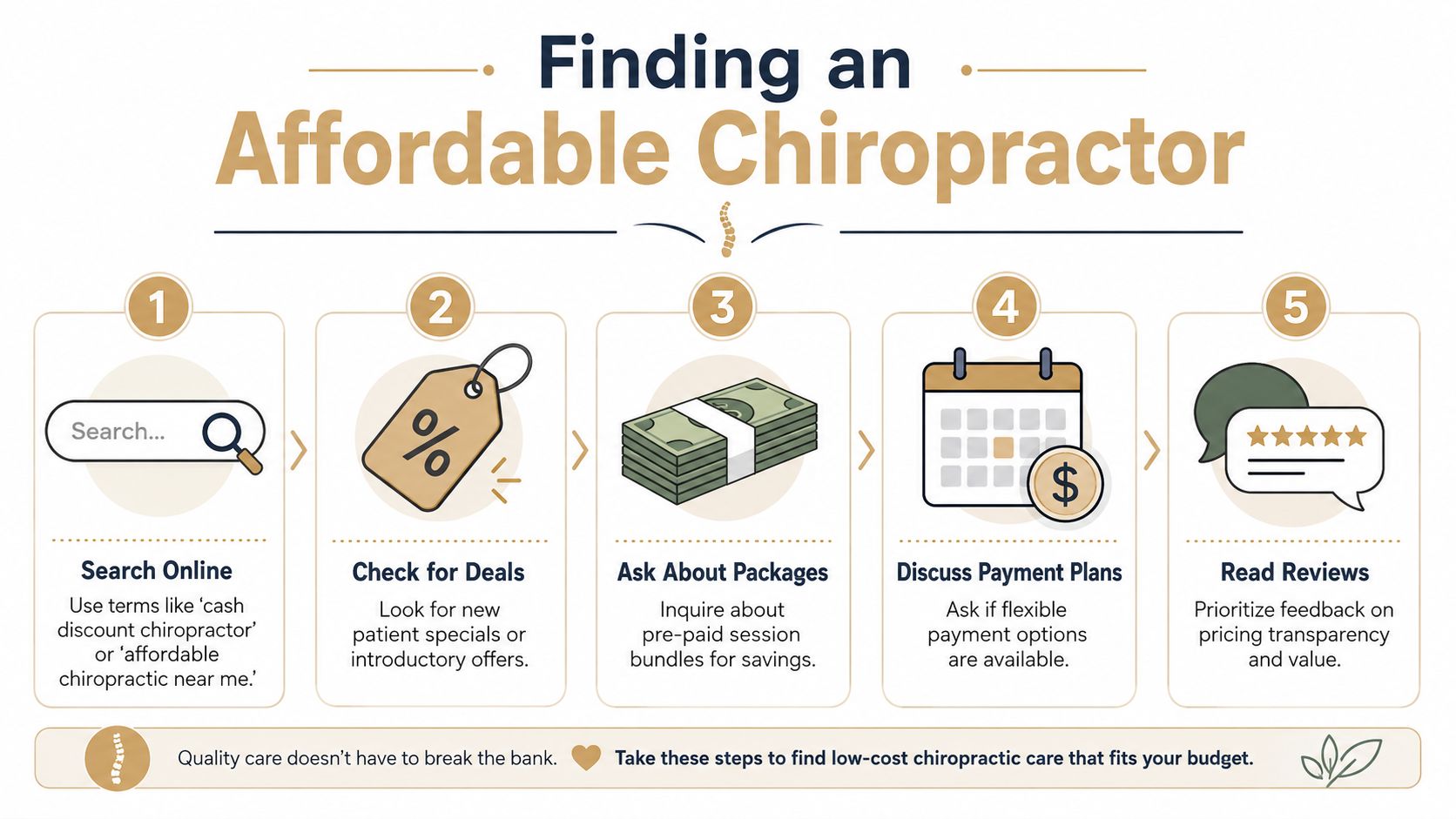
Use search terms that reflect how clinics present pricing. Good examples include “chiropractor cash discount Salt Lake City,” “affordable chiropractic near me,” and “sciatica treatment chiropractor self pay.”
Then look for signs of substance on the clinic website. This guide on how to choose a chiropractor in Salt Lake City, Utah gives a solid framework for evaluating fit.
Review these areas before calling:
You'll find value. Keep the call short and direct.
Ask these questions:
What does the first visit include?
You want to know whether the exam, treatment recommendations, and first treatment are part of the quoted fee.
What does a follow-up visit usually include?
Ask whether a standard follow-up is just an Adjustment or whether therapies like Muscle Stimulation or Mobility Therapy are billed separately.
How do you decide whether someone needs more than basic chiropractic care?
Good clinics should talk about examination findings and diagnosis, not pressure tactics.
Do you treat my kind of problem often?
If you have sciatica, disc pain, or an injury after a collision, ask specifically about that condition.
If you recommend additional therapies, how are those priced?
This reveals whether “affordable” means transparent.
Do you provide home exercises or self-care guidance?
A strong Personal Exercise Plan can improve value because it helps you hold gains between visits.
If the office can't explain what's included, what they're treating, and how they decide on care, keep looking.
A low cost chiropractor is worth considering when the clinic is both affordable and clear. If the phone call leaves you confused, the billing probably will too.
A patient calls after seeing an ad for a very low chiropractic visit price. Then the complete plan emerges. The adjustment is one fee, the traction table is another, rehab is extra, and the therapies that may be suitable for disc-related pain are outside the quoted rate.
That is why the per-visit number can mislead you.

An adjustment alone often works well for joint restriction, simple mechanical back pain, and routine maintenance. Disc injuries, radiating leg pain, spinal stenosis, and persistent neck pain may call for more than repeated manual care. In those cases, a clinic may recommend spinal decompression, rehab exercise, soft-tissue work, or other supportive therapies based on the exam and diagnosis.
The value question is not whether an added therapy sounds advanced. The value question is whether it changes the treatment plan in a way that matches your condition and improves the odds of steady progress.
For a useful example, Aspen Falls Wellness explains how spinal decompression and chiropractic adjustments may be combined for disc-related cases. That pairing can make sense when symptoms point to disc and nerve involvement rather than a simple mobility problem.
Patients often incur unexpected costs. A clinic might advertise a low office visit fee, then structure the full treatment around additional services that were not clearly disclosed initially.
I tell patients to compare total episode cost, not just the cheapest line item. If one office charges less per visit but leaves out the therapy, exercise instruction, or follow-up testing needed for your case, the lower sticker price may produce slower progress and more visits.
Here is a practical way to judge value:
| Situation | Usually better value |
|---|---|
| Mild stiffness, no nerve symptoms, simple flare-up | Focused chiropractic adjustment and home exercise |
| Disc-related pain, sciatica, recurrent nerve irritation | Integrated plan that may include decompression and rehab |
| Muscle guarding and soft-tissue restriction | Adjustment plus massage therapy or muscle-focused treatment |
| Recovery support and inflammation control | Selective use of laser, acoustic wave, or similar modalities if the exam supports it |
Spinal decompression is not a bargain add-on. It is a condition-specific option. For the right patient, it can be a reasonable part of care. For the wrong patient, it adds cost without enough benefit.
In practice, decompression is usually considered when symptoms and examination findings suggest disc involvement, nerve root irritation, or pain patterns that have not responded well to simpler care. It also takes time. These plans often involve a series of visits over several weeks, not one or two sessions, so the financial commitment should be discussed upfront before care starts.
Ask for the full number, not the teaser rate. You want to know the expected visit frequency, whether rehab or other therapies are bundled, how progress will be checked, and what would make the doctor change course if you are not improving.
“What is the total expected cost for this phase of care, and what exactly is included?” That question protects your budget better than asking for the lowest adjustment price.
Use these questions to pressure-test the recommendation:
Good advanced care is not about stacking services. It is about choosing the right tools for the diagnosis, then being honest about total cost. If a clinic can explain both clearly, the higher visit price may still be the better buy.
A new patient comes in after buying a very cheap introductory special. The visit sounded like a bargain. Then the exam was rushed, the diagnosis was vague, and the office started pushing a long prepaid plan before explaining what was included. That is how a low sticker price turns into poor value.
Chiropractic care is generally very safe when the doctor takes a proper history, performs an exam, and matches treatment to the problem. Price does not change that standard. A lower fee never excuses careless screening, pressure tactics, or one-size-fits-all treatment.
Pause if you see any of these red flags:
The last point matters more than many patients realize. I would rather see a clinic charge a fair, plain-spoken fee and explain everything up front than advertise a bargain price that only covers the quickest possible adjustment.
Good value starts with clinical judgment. The doctor identifies the likely pain generator, explains the options in plain language, and tells you what is included in the fee. If your case is simple, the plan should stay simple. If your case is more involved, the office should explain why broader care is being recommended and what that does to the total cost.
Ask one direct question if anything feels unclear: “Before I agree, what will I likely spend over the next few weeks, and what services could add to that total?”
That question filters out a lot of bad fits.
A solid clinic feels organized and specific. You know what they found, what they are treating, how progress will be checked, and what would make them change the plan. That is how to judge a low cost chiropractor. Look at the total cost of care, not just the cheapest number on the ad.
No. A lower-cost visit can be perfectly reasonable if the clinic is efficient, transparent, and treating a straightforward problem. Trouble starts when the low advertised fee hides separate charges or replaces a proper exam.
Ask what the first visit includes, what follow-up visits include, whether therapies are billed separately, and what a typical plan for your condition may involve. Those questions reveal the total cost better than the headline number.
No. Some patients do fine with Adjustment-only care. Others with disc injury, sciatica, soft-tissue dysfunction, or post-accident pain may benefit from a more integrated plan that can include Spinal Decompression, Massage Therapy, Mobility Therapy, Acupuncture, or rehab.
Yes. A good Personal Exercise Plan, posture guidance, and practical self-care can improve value because you may maintain progress between visits and avoid paying for passive care alone.
No. Insurance matters, but clarity matters just as much. A clinic that accepts your plan but can't explain your likely costs may still leave you with surprises.
If you're looking for practical, transparent chiropractic care in Salt Lake City or Sandy, Aspen Falls Wellness offers integrated conservative treatment that may include Chiropractic Adjustment, Spinal Decompression with the DRX 9000, Massage Therapy, Acupuncture, Mobility Therapy, Rehabilitation Exercise, MLS Laser Therapy, SoftWave Therapy, nutrition counseling, and condition-specific care for issues like sciatica or car accident injuries. The right next step is a clear evaluation and an honest discussion of what your case needs.

Stay updated with the latest chiropractic news and exclusive offers.