Find relief from back pain. Explore DRX9000 spinal decompression in Salt Lake City: how it works, success rates, & what to expect. Non-surgical treatment.



You wake up already bracing before you sit up. You think about the drive to work because sitting too long lights up your low back. By afternoon, the ache may run into your hip or leg, and by evening you're weighing the same frustrating options again. Another round of pain medication, another injection discussion, or a surgery consult you hoped you'd never need.
That in-between place is where many people get stuck. The pain is real, but the next step feels unclear. If you've tried stretching, rest, massage, or standard care and still feel like your back never fully settles down, DRX9000 spinal decompression may be worth understanding. Not as a miracle machine, and not as a fit for everyone, but as a non-surgical approach designed for specific disc-related problems.
At a patient level, the goal is simple. Take pressure off the injured area, calm irritated nerves, and create a better environment for healing. The technology sounds technical at first, but the idea behind it is easier to grasp than many might imagine.
A common story goes like this. Someone hurts their back lifting, twisting, training, or just after years of wear and tear. At first, they expect it to pass. Then weeks become months. The pain starts shaping daily choices, how long they sit, whether they travel, whether they pick up their child, whether they sleep through the night.
Many people in that situation aren't looking for something flashy. They want a treatment that makes sense. They want to know why the pain keeps returning and whether there's a way to address the source without jumping straight to an operation.
That's where spinal decompression enters the conversation. For the right patient, it offers a non-surgical path aimed at disc pressure and nerve irritation rather than only masking symptoms for a few hours or days. It isn't about forcing the spine. It's about using controlled mechanical unloading so the injured tissues have a chance to settle and recover.
People often feel discouraged not because they've done nothing, but because they've tried many things that helped only temporarily.
If your pain seems linked to sitting, bending, lifting, or symptoms that travel into the leg, decompression may be a more relevant discussion than another round of general low back advice. It can be especially meaningful for people who feel caught between conservative care that hasn't gone far enough and surgery that feels too big, too soon.
A good evaluation still matters most. Back pain isn't one condition. A strained muscle, an inflamed joint, spinal stenosis, and a disc herniation can all feel similar from a distance. That's why thoughtful screening, movement testing, and imaging review when needed matter before anyone recommends a machine or a procedure.
Spinal decompression therapy is a non-surgical treatment that gently stretches targeted areas of the spine to reduce pressure on discs and nerves. If a disc is bulging, herniated, or dehydrated, that pressure can irritate nearby structures and create persistent pain, stiffness, or sciatica.
A simple analogy helps. Think of a dry sponge that's been compressed for a long time. It becomes flattened and doesn't absorb fluid very well. If you slowly release the pressure, the sponge can expand again and draw fluid back in. A spinal disc behaves in a somewhat similar way.
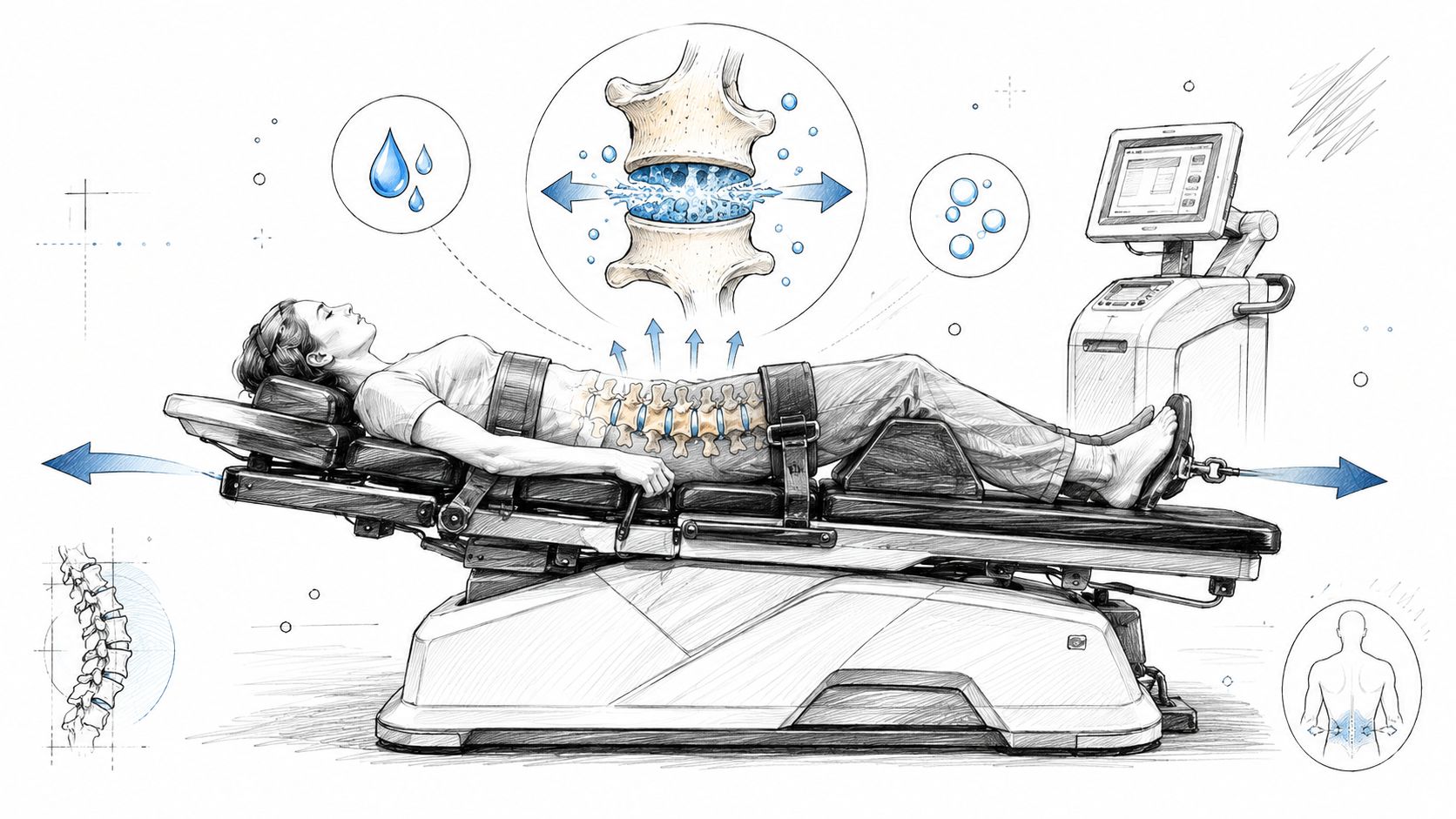
With decompression, the goal is to create negative pressure inside the disc. That pressure change may help reduce the inward crowding that contributes to pain, while also supporting the movement of oxygen, water, and nutrients into the disc.
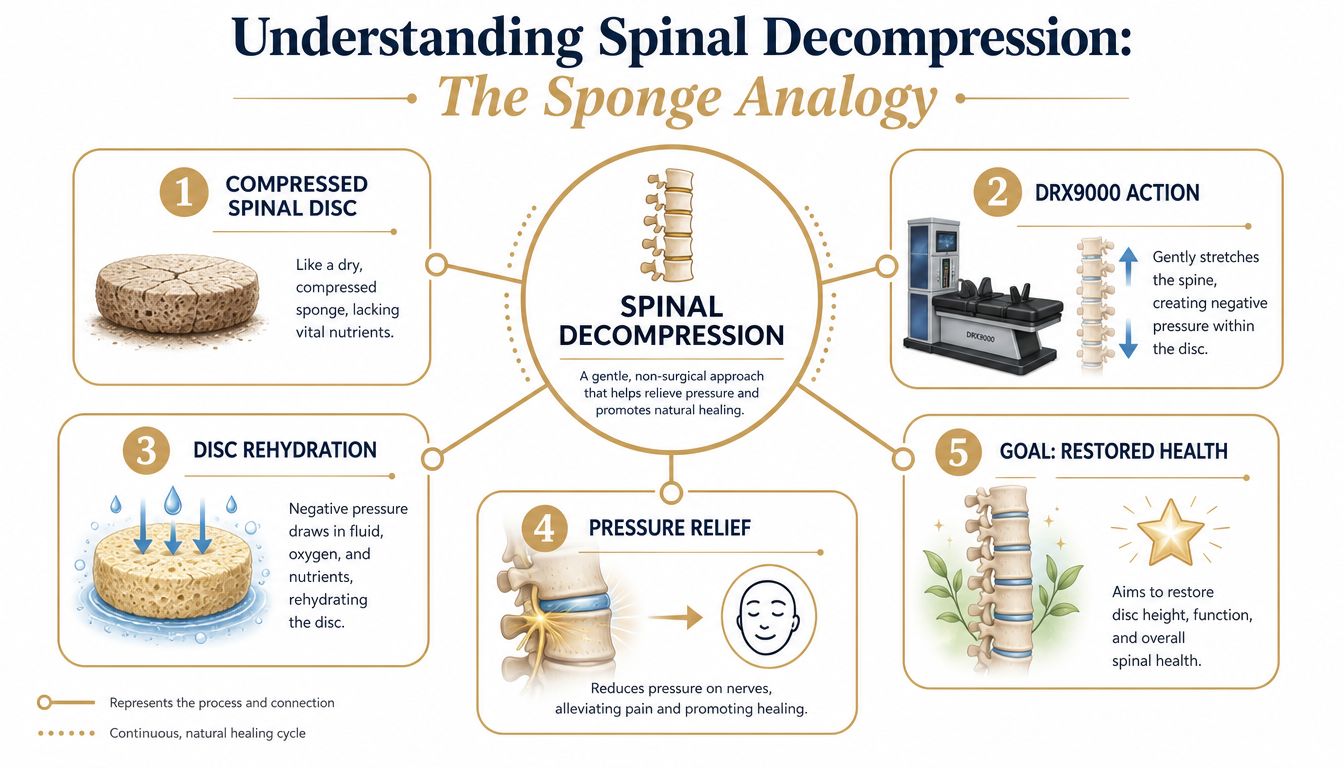
Patients often understand it better when they stop thinking of the spine as a stack of bones and start thinking about the discs as cushions that need space, circulation, and the right mechanical conditions to function well.
People often get confused. They hear "decompression" and assume it's just traction with a new name. It isn't that simple.
Basic traction can pull on the body, but the spine has strong muscles designed to protect it. If the pull feels abrupt or poorly targeted, those muscles tighten. That's called muscle guarding. Once that happens, the body resists the stretch, and the force may not reach the injured disc the way you want.
Here's the practical difference:
Practical rule: If a treatment only makes your back feel yanked, it may not be creating the calm, specific conditions needed for a disc problem.
That difference matters because many disc-related cases don't improve just from "loosening up." They improve when pressure on the disc and nerve decreases in a controlled way.
The DRX9000 takes the general idea of decompression and makes it more precise. According to the FDA 510(k) clearance documentation for the DRX9000 system, the device applies logarithmic distraction tensions in a controlled, computer-guided pull-and-release cycle. That design reduces muscle guarding and allows precise elongation of the lumbar spine for conditions including herniated discs, bulging discs, degenerative disc disease, posterior facet syndrome, and sciatica.
"Logarithmic" sounds technical, but the patient experience is easier to understand. The pull isn't random, and it isn't a crude tug. The machine follows a pattern designed to increase force in a way the body can tolerate more comfortably.
That matters because the low back muscles are powerful. If they sense a sudden pull, they contract. If the system gradually loads and unloads the tissues in a calculated way, those muscles are less likely to fight the treatment.
A treatment session often feels like a gentle wave. Pull, hold, release, repeat. Many patients describe it as a steady stretching sensation rather than something harsh or alarming.
The most important feature isn't that the machine is computerized. It's that the computer allows repeatable precision. In spine care, small changes matter. Segment selection, body positioning, pull angle, and force progression all influence whether the decompression reaches the intended area.
A simple comparison helps:
| Approach | What the body may do | Why it matters |
|---|---|---|
| General traction | Tighten to protect itself | Force may stay in muscles and soft tissue |
| Computer-guided decompression | Relax more gradually | More of the effect can reach the target segment |
That's why many people who didn't respond well to generic traction still want a closer look at decompression. If you'd like more context on how this fits with manual care, this overview of spinal decompression and chiropractic adjustments is a helpful next read.
A smart decompression system doesn't overpower the body. It works with the body's protective reflexes so treatment can become more specific.
The right question isn't whether DRX9000 sounds advanced. The right question is whether your problem matches what decompression is built to address. Some patients fit very well. Others need a different plan.
The DRX9000 is FDA-cleared specifically for patients with incapacitating low back pain and sciatica caused by herniated discs, degenerative discs, and posterior facet syndrome, as described on this DRX9000 treatment overview.
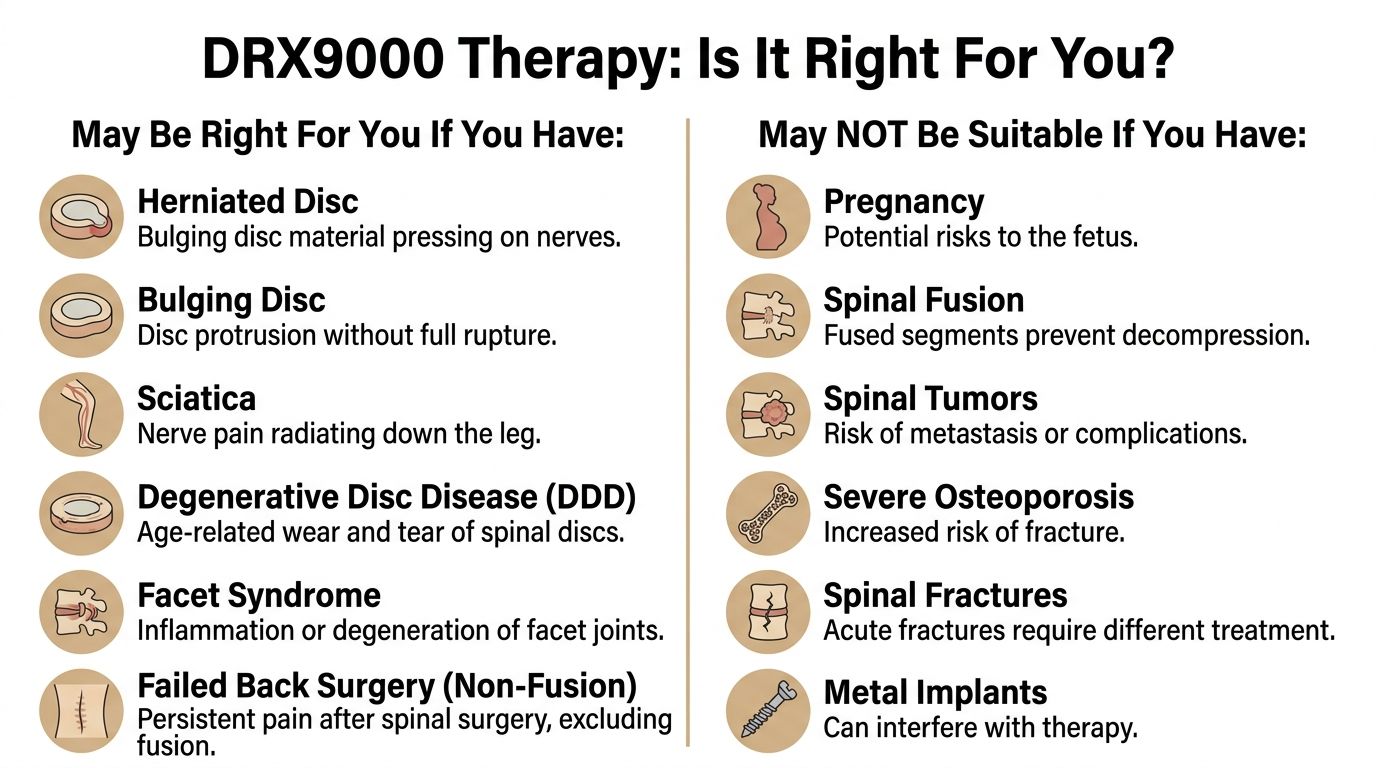
If your symptoms line up with disc pressure or nerve irritation, decompression may deserve consideration.
Some readers also ask about stenosis. That answer depends on why the narrowing is happening and whether the pattern is primarily disc-related. If stenosis has entered your diagnosis, this article on stenosis treatment without surgery may help you sort out the possibilities.
This part matters just as much as the indications. A good clinic should be willing to say no when decompression isn't the safest match.
Treatment may not be appropriate in cases such as:
A short screening table can help:
| If you have this | What it usually means for decompression |
|---|---|
| Disc-related nerve pain | May be a reasonable fit |
| Mechanical back pain from certain disc or facet issues | May respond well |
| Fusion or metallic hardware | Often not a fit |
| Fracture, tumor, severe bone fragility | Usually not appropriate |
The goal isn't to talk everyone into one treatment. It's to match the treatment to the problem.
Patients usually ask the same fair question. Does it help people, or does it just sound promising?
The strongest answer is a balanced one. There are encouraging clinical findings for selected patients, especially in disc-related low back pain. There are also limits in the broader evidence base, which means expectations should stay realistic.
A retrospective chart audit of outpatients treated with the DRX9000 reported a mean 83% improvement in low back pain after an average follow-up of 31 weeks, with a post-treatment Numeric Rating Scale score of 1.7 and a satisfaction score of 8.55 out of 10, as reported in this Stanford Healthcare-linked publication on DRX9000 outcomes.
Another meaningful piece of evidence comes from imaging. In a case series involving lumbar intervertebral disc lesions, patients who underwent 20 sessions of non-surgical spinal decompression had a median pain decrease of -4 points, representing an 80% improvement, and MRI findings showed a 77% quantitative reduction in disc herniation size, according to the Journal of Parker University case series on clinical and imaging outcomes.
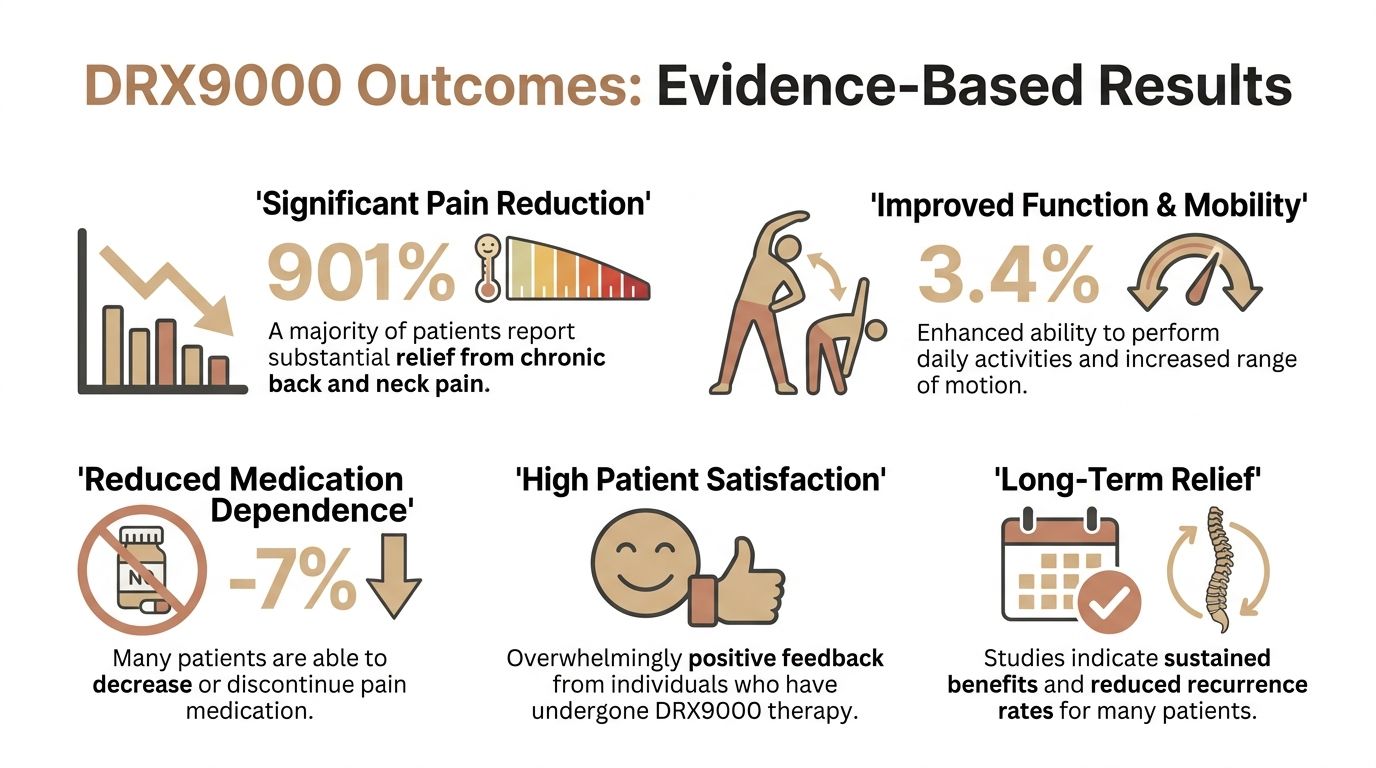
These results matter because they point to two things patients care about. Less pain, and evidence that the disc itself may be changing in a favorable way.
Evidence isn't just about the highest numbers you can find. It's also about how strong, repeatable, and comparable the studies are.
A reasonable takeaway looks like this:
Stronger evidence helps us predict results better. Honest care also means admitting that no device helps every person with back pain.
That's the right mindset for anyone considering decompression. Hope is appropriate. Hype isn't.
Patients often feel more comfortable once they know what the process looks like. A typical DRX9000 protocol involves approximately 22 sessions over a 6-week period, with each visit including a 28-minute active treatment phase. In one study of discogenic low back pain, that protocol produced a success rate of over 75% and reduced average pain scores from 6.2 to 1.6 on an 11-point scale, according to this clinical protocol summary and study review.
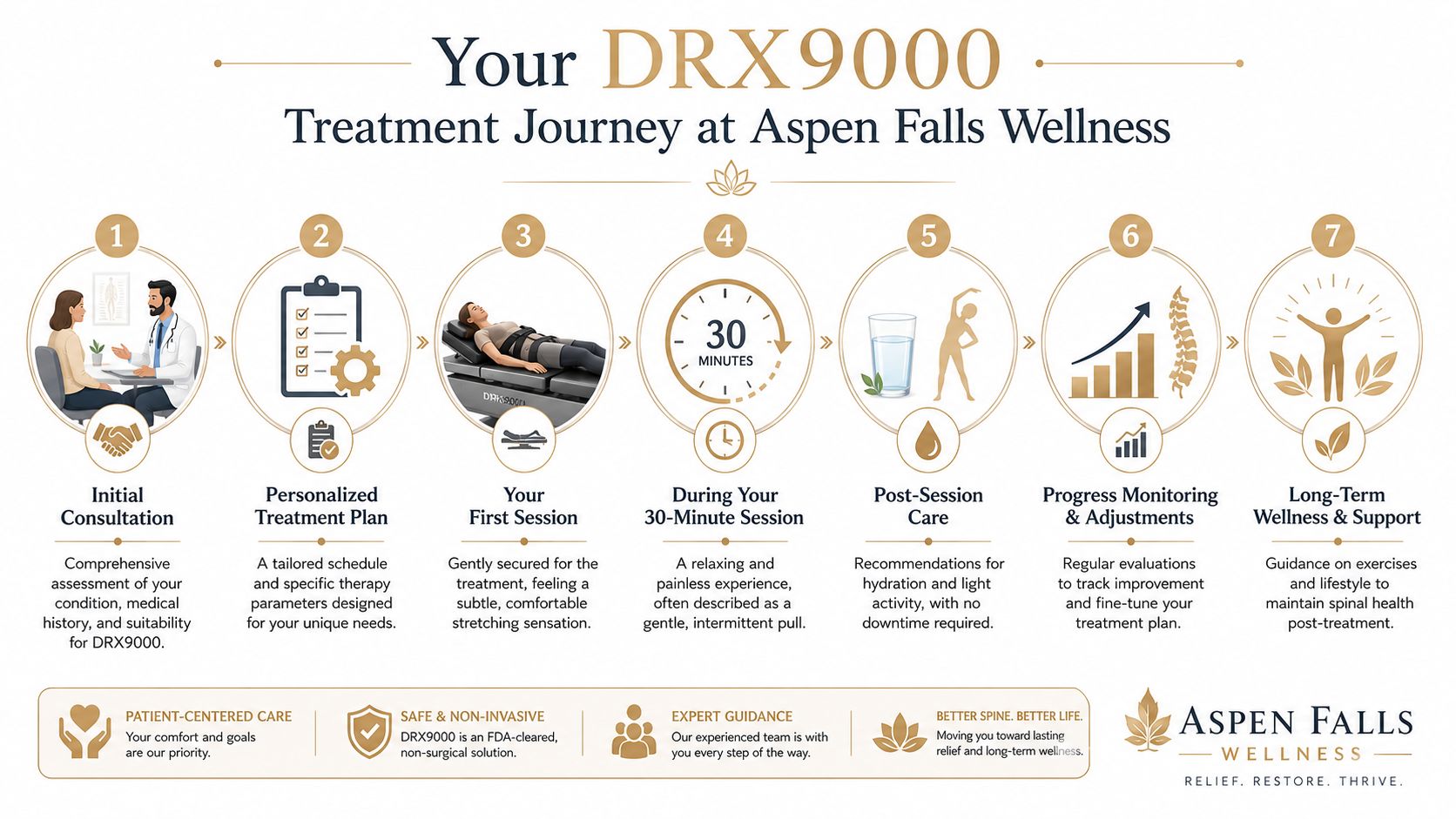
The first step is a careful exam. Your provider looks at symptom pattern, movement tolerance, medical history, prior imaging, and whether your case fits decompression at all. If the pattern points elsewhere, the plan should change.
During treatment, you lie on the table while the body is positioned to target the lumbar region. The experience is usually calm and repetitive rather than dramatic. A gentle pull that comes and goes is often described.
Common parts of the care path include:
If you're preparing for a first visit and want to know what intake usually involves, the new patient information page can help you know what to expect.
Many patients experience a better result when factors beyond just pressure reduction are considered. Decompression can reduce pressure, but pressure isn't the whole story. Many people also have joint restriction, muscle guarding, deconditioning, movement habits that keep reloading the area, or inflammation in surrounding tissues.
At Aspen Falls Wellness, decompression may be combined with Chiropractic Adjustment, Spinal Decompression, Adjustment, Realignment, Muscle Stimulation, Pain Relief strategies, Personal Exercise Plans, Sciatica Treatment, Chiropractic Care, Acupuncture, Nutrition and Nutrition Counseling, Mobility Therapy, Rehabilitation Exercise, Massage Therapy, MLS Laser Therapy, SoftWave Therapy, Golf Movement Screening, and Car Accident Treatment when those services fit the diagnosis and goals.
That integrated model matters because different therapies solve different problems. Massage Therapy can ease soft-tissue tension. MLS Laser Therapy may be used to support inflammation control and recovery. Chiropractic adjustments can improve motion in restricted segments. Rehabilitation exercise helps patients keep the gains they make in the treatment room.
Some clinics also use digital systems to improve follow-up, reminders, and patient communication. If you're curious how healthcare practices think about that side of patient support, this guide to healthcare chatbot solutions gives a useful overview of the broader context.
No. An inversion table changes body position and uses gravity. Decompression uses controlled mechanical force and targeted setup. The experience, precision, and treatment intent are different. People sometimes try inversion at home and assume decompression won't help because inversion didn't, but the two approaches aren't interchangeable.
Coverage is often one of the biggest frustrations. Many clinics describe spinal decompression as out-of-pocket or experimental. Public information on pricing is inconsistent, and there isn't much transparent, insurance-verified cost data across regions. Some offices discuss totals such as 20 sessions at $300 to $500 each, while Medicare and many major carriers often deny coverage, as discussed in this overview of spinal decompression insurance questions and pricing examples.
That doesn't mean you shouldn't ask. Policies vary, some plans may allow partial coverage, and the financial conversation should be direct before care begins.
This is where honest screening matters. Many providers promote decompression for failed back surgery patients, but the evidence for post-surgical populations is still insufficient in quantity and quality. The same clinical guidance also notes that treatment is contraindicated for patients with spinal fusion or metallic hardware, which is a key detail many patients don't hear early enough, according to this clinical FAQ on post-surgical DRX9000 considerations.
If you've had surgery, the important question isn't "Have you had any surgery?" It's "What kind of surgery, what level, and what hardware or fusion is present?" A non-fusion decompression surgery in the past is a different situation from a rigid fusion with implanted hardware.
Bring your operative report or imaging summary if you have it. That information often changes whether decompression is even on the table.
If you're dealing with persistent back or leg pain and want to know whether a structured, non-surgical plan makes sense, Aspen Falls Wellness offers evaluation and integrative musculoskeletal care that can help clarify whether DRX9000 spinal decompression or another conservative option fits your condition.

Stay updated with the latest chiropractic news and exclusive offers.