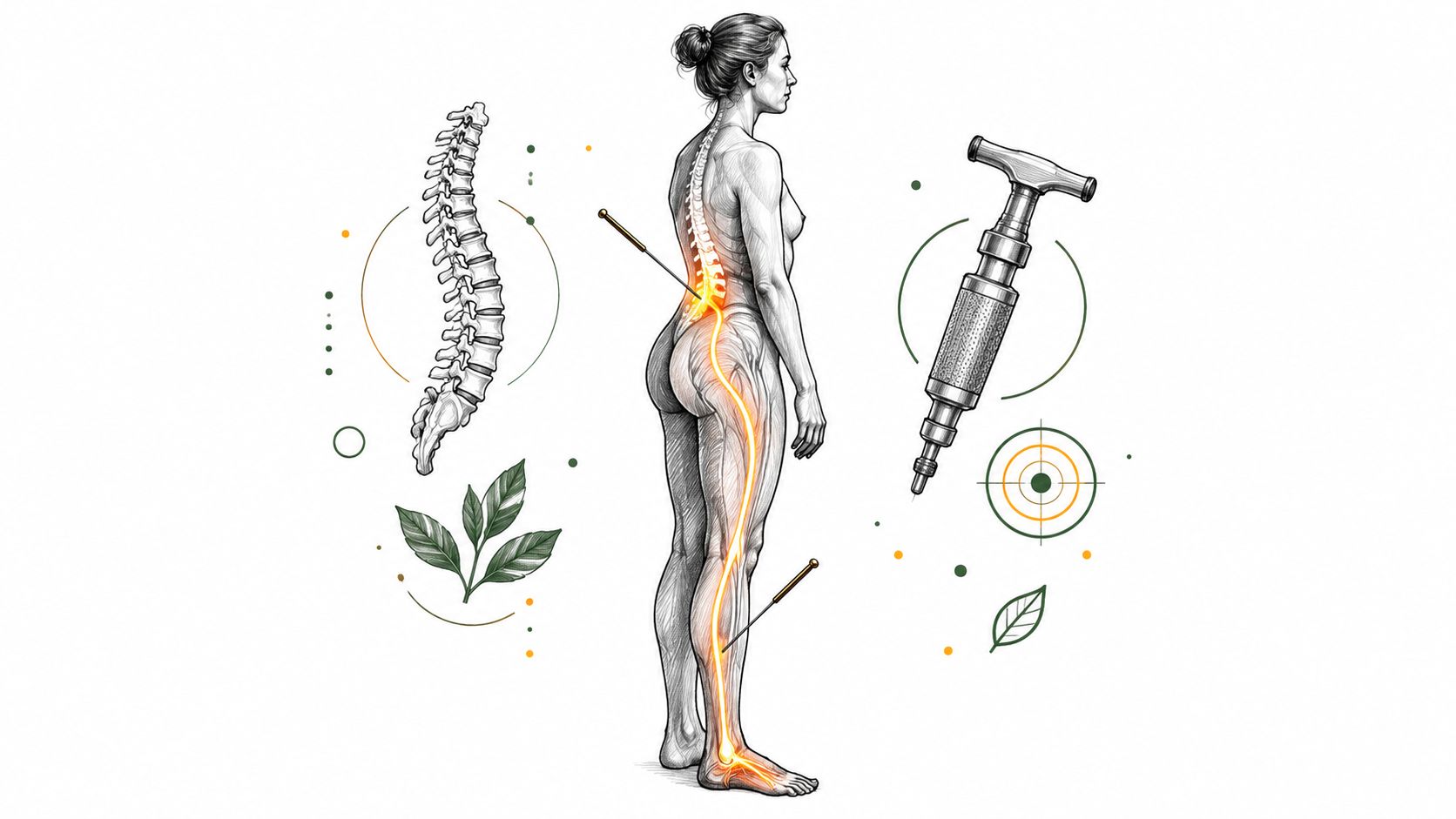
Discover how a whole food magnesium supplement aids muscle recovery & pain relief. Learn about bioavailability, dosing, and when to consult a clinician.



You stretch. You walk. You drink more water. You try a foam roller at night and a heating pad in the morning. Yet your calf still grabs during sleep, your shoulders stay tight, or your low back feels like it never fully lets go.
That pattern shows up often in musculoskeletal care. People assume the answer has to be structural, or only structural. Sometimes it is. A disc problem, joint restriction, irritated nerve, scar tissue, poor movement mechanics, or an old injury can absolutely keep pain going. But nutrition matters too, and magnesium is one of the most overlooked pieces.
A whole food magnesium supplement can be useful when someone's intake is low and their recovery feels incomplete. It isn't a magic fix. It won't replace proper diagnosis, chiropractic care, spinal decompression, rehabilitation exercise, mobility therapy, massage therapy, acupuncture, or a personal exercise plan when those are needed. But it can support the body that has to respond to all of those treatments.
A common scenario looks like this. Someone comes in with recurring back tightness, nagging neck stiffness, or muscle cramps that keep showing up despite stretching and decent sleep habits. They're doing many of the right things, but their tissues still don't feel resilient.

Magnesium deserves attention in that situation because muscle comfort depends on more than flexibility. It supports muscle function, nerve transmission, and energy production. The adult human body contains approximately 25 grams of magnesium, and it's essential for over 300 enzymatic reactions. Yet more than one-half of US adults fail to meet the Recommended Dietary Allowance through diet alone. The RDA is 400 to 420 mg/day for adult men and 310 to 320 mg/day for adult women, according to the Linus Pauling Institute magnesium overview.
When magnesium intake is low, people don't always feel one dramatic symptom. More often, they describe a body that feels irritable. Muscles recover slowly. Sleep doesn't feel restorative. Exercise tolerance drops. Tension returns quickly after massage, realignment, or an adjustment.
A nutrient gap won't create every pain problem, but it can make recovery from pain much harder.
That's why magnesium belongs in the same conversation as movement quality, inflammation, tissue loading, and spinal mechanics. If you've already been looking into discover magnesium's impact, it helps to place that information in a musculoskeletal context rather than treating it like a general wellness trend.
Nutrition won't correct every source of pain. A person with a joint restriction may still need chiropractic adjustment. A person with soft tissue guarding may still benefit from muscle stimulation, massage therapy, or mobility therapy. A person with disc-related symptoms may need decompression or more advanced care.
If inflammation is part of your pattern, it also helps to understand how conservative treatment and nutrition work together in musculoskeletal recovery, including whether chiropractors can reduce inflammation.
Most supplement confusion starts with the label. “Magnesium” sounds simple, but one product may contain an isolated lab-made salt, while another provides magnesium from food-based material where the mineral stays associated with natural plant compounds.
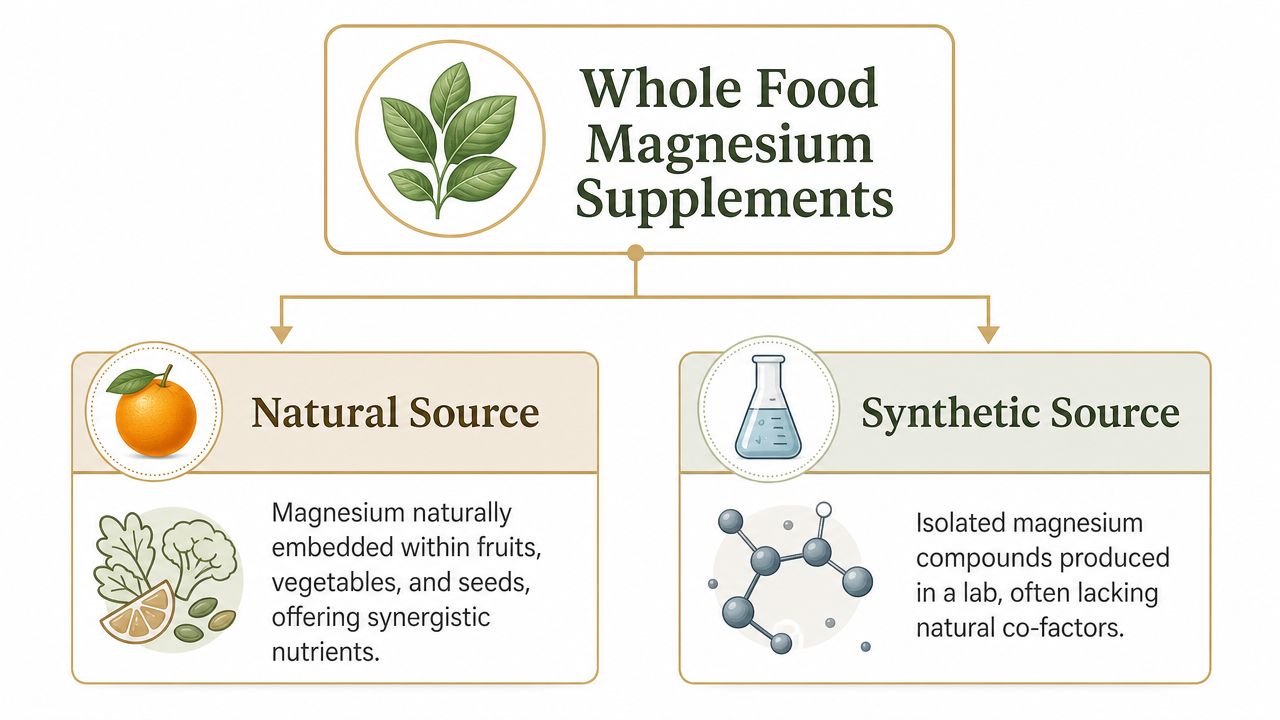
A practical analogy helps. Think about eating an orange versus taking a plain vitamin C tablet. Both relate to vitamin C, but the orange arrives as part of a food matrix. A whole food magnesium supplement follows that same idea. It isn't just the mineral in isolation. It's magnesium delivered in a form tied to real food material.
In this category, magnesium is sourced from plants rather than presented only as a conventional mineral salt. One example is E-Z Mg, which provides magnesium in its naturally bound form within Swiss chard and buckwheat, delivering 70 mg of elemental magnesium per 6-tablet serving. The formulation uses magnesium's natural relationship with chlorophyll and amino acids, which may support bioavailability, as described on the E-Z Mg product page.
That doesn't mean every product with the phrase “whole food” is automatically better. It means you should ask a sharper question: is the magnesium still part of a recognizable food-derived structure, or is the label using “whole food” as branding language?
The body doesn't interact with nutrients in a vacuum. Real foods bring along other compounds that can influence how minerals behave during digestion and absorption. That's one reason many patients prefer whole food forms when they've had trouble tolerating more concentrated supplements.
Here's the practical difference I look for in nutrition counseling:
Clinical perspective: The best magnesium product is the one a patient can tolerate, use consistently, and fit into a broader recovery plan.
A whole food magnesium supplement usually works best in that supportive role. It's not the product I think about when someone wants an aggressive single-nutrient intervention. It's the one I consider when they need steady nutritional backup for muscle function, rehabilitation exercise, and recovery.
The number on the front of a bottle doesn't tell you how much magnesium your body will use. That's the core issue with magnesium supplements. Label amount and absorbed amount aren't the same thing.
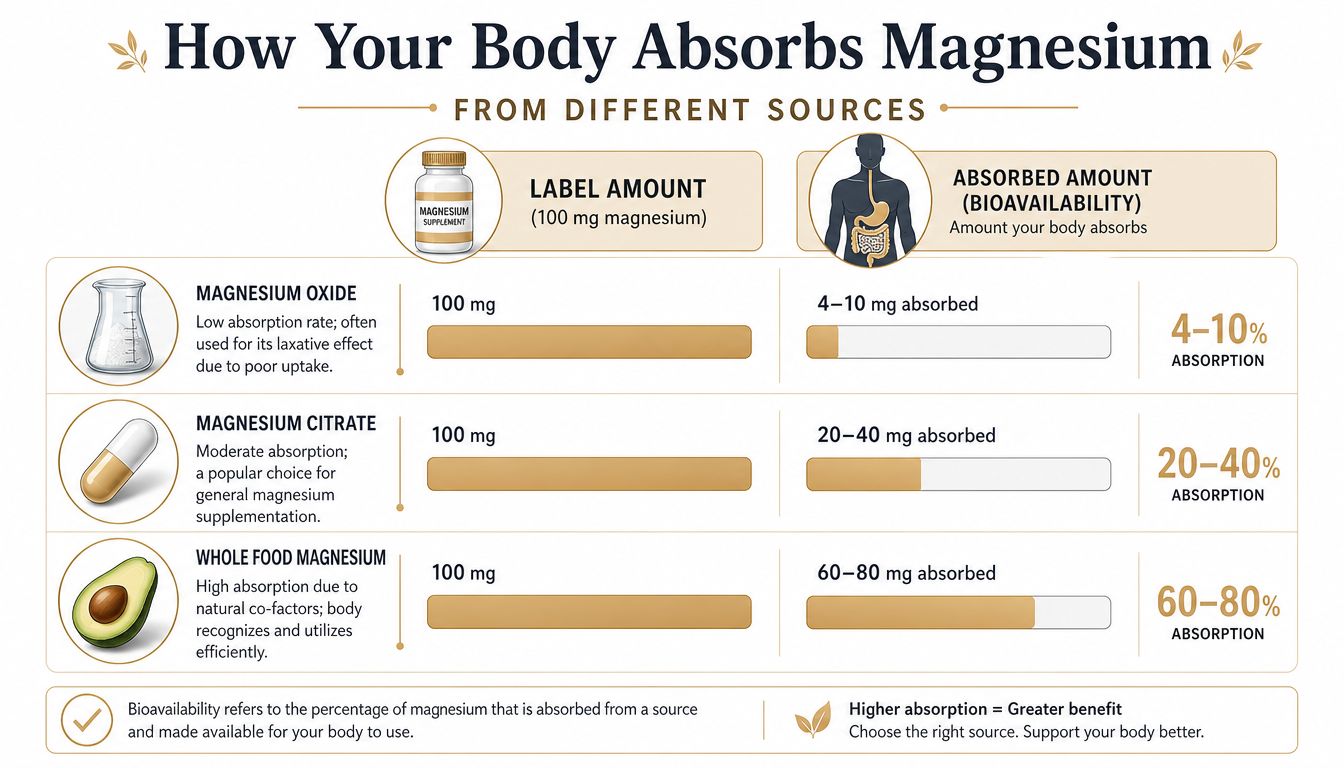
I explain absorption like a key fitting a lock. Some forms of magnesium are easier for the body to dissolve, recognize, and move across the gut wall. Others are less cooperative. You may swallow a large dose and still get less useful uptake than you expected.
The evidence summarized in this review on magnesium formulations is clinically important. It notes that organic magnesium formulations derived from whole food sources exhibit significantly greater bioavailability compared to inorganic variants. It also notes that absorption rates decrease as dosage increases, which is why a lower-dose, better-absorbed form can outperform a larger, poorly absorbed one in real use.
A lot of people shop by milligrams alone. That's understandable, but it's incomplete. If one product gives a large dose in a form that's less efficiently absorbed, and another gives a smaller dose in a form the body handles more effectively, the lower number may be the smarter choice.
This is especially relevant in musculoskeletal care because tolerance matters. If a supplement causes digestive upset, people stop taking it. If they stop taking it, the “better” supplement wasn't better for them.
Consider the practical implications:
For general support, I favor forms that match the person's goal and digestion. If someone mainly wants foundational nutritional support while working through chiropractic care, mobility therapy, rehabilitation exercise, or pain relief strategies, a whole food magnesium supplement often makes sense because it emphasizes usable delivery instead of brute-force dosing.
The body responds to what it can absorb, not what the label promises.
There's another important limit to remember. Supplementing magnesium doesn't appear to offer proven benefit for people who have no deficiency or deficiency symptoms, and healthy kidneys excrete excess magnesium. That's one reason magnesium should be viewed as targeted support, not as something everyone needs in large amounts.
For people with muscle tension, exercise recovery issues, or recurring tightness, the goal isn't to chase the biggest dose. It's to use a form that supports normal physiology without creating another problem. Better uptake, better tolerance, and better consistency usually beat a high-dose approach that irritates the gut and gets abandoned after a week.
Different magnesium forms behave differently in the body, and that matters if your main goal is muscle comfort, joint support, or recovery from training and treatment. The decision shouldn't be based on trends. It should be based on what you want the supplement to do, and what you can tolerate.
One of the most overlooked differences is digestive response. Mayo Clinic Press notes that whole food sources avoid the “diarrhea and upset stomach” common with supplements because the kidneys efficiently eliminate excess magnesium from food, while supplements deliver a concentrated dose that can overwhelm that system. That distinction is tied to the 350 mg/day supplemental limit, as described in the Mayo Clinic Press discussion of magnesium.
For patients dealing with chronic pain, that's not a minor detail. If your supplement causes GI distress, it can disrupt sleep, hydration, training, and treatment adherence.
| Form | Bioavailability | Primary Use | GI Side Effect Risk |
|---|---|---|---|
| Oxide | Lower compared with better-absorbed forms | Sometimes chosen when cost or laxative effect is the priority rather than muscle support | Higher |
| Citrate | Moderate | General supplementation, especially when someone wants a common and widely available option | Moderate |
| Glycinate | Often chosen for gentler use and muscle relaxation goals | Muscle tension, evening use, or when someone wants a more calming profile | Lower to moderate |
| Whole food forms | Strong practical fit when food-derived delivery and gentler support are the priority | Foundational musculoskeletal support, especially for people who want lower-dose daily use | Lower |
I don't treat this as a best-versus-worst contest. I treat it as a fit question.
For readers also exploring nighttime use, this overview of the best forms of magnesium for sleep can help frame how form selection changes based on the symptom you're trying to address.
Don't ask which magnesium is “best” in the abstract. Ask which form fits your body, your goal, and your treatment plan.
That approach keeps supplement choices practical. A person doing chiropractic care, rehabilitation exercise, sciatica treatment, or regular massage therapy usually needs a supplement they can tolerate every day, not one that looks impressive only on the label.
Magnesium is helpful when used with respect for dose and context. It's not a nutrient to treat casually just because it's common.
The Tolerable Upper Intake Level for supplemental magnesium is 350 mg/day for adults, established to prevent diarrhea. The same source notes that whole food magnesium formulations typically deliver 70 to 100 mg per serving, which allows more incremental dosing, while many synthetic supplements provide 200 to 400 mg per dose, according to the NIH Office of Dietary Supplements magnesium fact sheet.
That distinction matters. Lower-dose products often let you adjust gradually instead of jumping straight into an amount your digestion may not like.
Use magnesium like you'd use exercise progression. Start with a reasonable amount, observe your response, and only increase if there's a clear reason and professional guidance supports it.
A practical checklist:
For a plain-language overview of cramp-focused form selection, these Wellness Apothecary magnesium insights are a useful companion read.
If you already have a pain condition, the smartest place to discuss supplementation is inside a broader care plan. That's especially true if you're also changing diet, activity level, rehab volume, or anti-inflammatory strategies. Personalized nutrition counseling helps determine whether magnesium belongs in the plan at all, which form makes sense, and how to use it without creating side effects.
Safety rule: More magnesium is not better if the extra amount only causes diarrhea or complicates medication timing.
Nutrition can improve the terrain. It can't always fix the structure.
That's the line many people need to hear. If your pain comes from disc involvement, nerve irritation, joint dysfunction, movement compensation, or post-injury mechanics, a whole food magnesium supplement may support recovery, but it won't correct the underlying driver by itself.

A musculoskeletal plan works best when each layer does its own job.
Nutrition and nutrition counseling help support tissue recovery, energy availability, and consistency. Chiropractic care, chiropractic adjustment, adjustment, decompression, and realignment address mechanical problems. Massage therapy, mobility therapy, muscle stimulation, and rehabilitation exercise improve tissue behavior and movement control. Acupuncture may help with pain modulation. Personal exercise plans help carry progress into daily life.
If someone has sciatica treatment needs, recurrent back pain, or a disc-related pattern, the supplement is the background support. The clinical treatment is often the active driver of change.
For disc problems, spinal decompression with the DRX 9000 is one of the more important non-surgical tools. Evidence cited in a clinical overview reports that DRX9000 spinal decompression achieves success rates between 70% and 90% for treating herniated discs, with a 78% success rate in studies focused on reducing leg pain and promoting disc rehydration. A typical protocol involves 20 to 30 sessions over 4 to 6 weeks, as described in this DRX9000 spinal decompression summary.
That doesn't mean every person needs that therapy. It means persistent pain should push the conversation beyond supplements when symptoms suggest a disc issue.
An integrated plan might include several pieces at once:
If pain remains chronic despite self-care, people often benefit from learning how conservative options such as acupuncture for chronic pain fit into a broader recovery strategy.
Persistent pain deserves evaluation. Supplements support healing, but they don't diagnose the problem or correct joint and disc mechanics.
Sometimes, yes. In practice, many adults don't. Earlier evidence showed that more than half of US adults fall short of recommended intake from diet alone, which is why food-first advice sometimes still needs a supplement backup. I still prefer food as the base, with supplements filling a gap rather than replacing meals.
Not necessarily. That's an important distinction. Some discussions around magnesium note that fermentable fiber in food may help magnesium absorption, but many whole food supplement labels don't make clear whether that fiber-magnesium synergy is preserved. A supplement can be food-derived without replicating every benefit of eating the original food.
It depends on why you're taking it. If intake has been low and the form is well tolerated, some people notice changes in muscle comfort, sleep quality, or cramp frequency sooner than others. But if your pain is being driven by disc irritation, nerve compression, poor mechanics, or an unresolved injury, you may notice very little from magnesium alone.
Not always. Serum magnesium can be part of the picture, but it doesn't fully reflect what's happening in tissues. That's why a clinical conversation matters. Symptoms, diet pattern, medication use, bowel history, kidney function, and your overall pain presentation all matter when deciding whether supplementation makes sense.
Think of it as foundational support. It may help when your intake is low, your digestion is sensitive, and your goal is steady musculoskeletal support rather than a high-dose intervention. It works best when it's paired with good nutrition, movement, sleep, and the right treatment for the actual pain generator.
Ask sooner if pain is persistent, radiating, worsening, or affecting sleep, work, training, or daily function. Also ask if you have kidney issues, take medications that may interact with magnesium, or you're unsure whether your symptoms are nutritional, structural, or both.
If you're dealing with recurring back pain, muscle tightness, sciatica, or a recovery plateau, Aspen Falls Wellness offers an integrated approach that combines chiropractic care, spinal decompression with the DRX 9000, SoftWave Therapy, MLS Laser Therapy, acupuncture, massage therapy, rehabilitation exercise, mobility therapy, and nutrition counseling so your treatment plan addresses both the mechanics of pain and the nutritional support behind healing.

Stay updated with the latest chiropractic news and exclusive offers.