Is sleeping on air bed bad for your back? Get expert guidance on spine health, preventing pain, & when to seek professional care for lasting relief.



You pull an air bed out when life gets messy or crowded. You're staying with family for a week, your new mattress hasn't arrived, you're recovering after a move, or guests took the main bed and you took the backup. It feels temporary, manageable, and harmless enough.
Then morning hits. Your low back feels locked up. Your neck is stiff. One hip aches when you stand. You blame travel, stress, or sleeping in a different room, but the sleeping surface is often part of the problem.
Sleeping posture isn't a luxury. Your spine spends hours in that position without interruption, and small alignment problems become long stretches of tissue strain. An air bed can be convenient, and in some situations it's a reasonable short-term solution. But from a spinal health perspective, it has clear trade-offs that many people don't recognize until their body starts complaining.
A temporary sleeping arrangement often becomes less temporary than planned. One weekend turns into a couple of weeks. A guest visit stretches longer. A home renovation drags on. People adapt because they have to, and the air bed stays in use longer than anyone expected.
The problem is that your spine doesn't care whether the bed is temporary. It responds to the support it's given tonight, then again tomorrow night, then again the next. If that support lets your body sag, twist, or brace itself for hours, you'll usually feel it first thing in the morning.
I've seen the same pattern many times in people with otherwise manageable backs. They were doing fine, then slept on an air bed while traveling, hosting family, or waiting on furniture delivery. They didn't always wake with severe pain right away. More often, they noticed a creeping pattern: stiffness on rising, discomfort during the first few steps, then soreness by late afternoon.
A bed doesn't need to feel terrible in the moment to create a problem by morning.
That's why the question isn't whether an air bed is comfortable enough to fall asleep on. The more important question is whether it keeps your spine in a position your joints, discs, and surrounding muscles can tolerate for hours at a time.
A single bad night may only leave you sore. Several nights can irritate an already sensitive neck or lower back. If you have a history of disc problems, sciatica, hip pain, or recurring muscle tension, sleeping on air bed can become the trigger that turns a quiet issue into an active one.
Some people are more likely to react quickly:
An air bed doesn't support the body the same way a well-built mattress does. That difference matters because your spine isn't meant to sleep in a suspended, shifting position. It does best when the sleep surface supports your natural curves without forcing any one area to collapse.
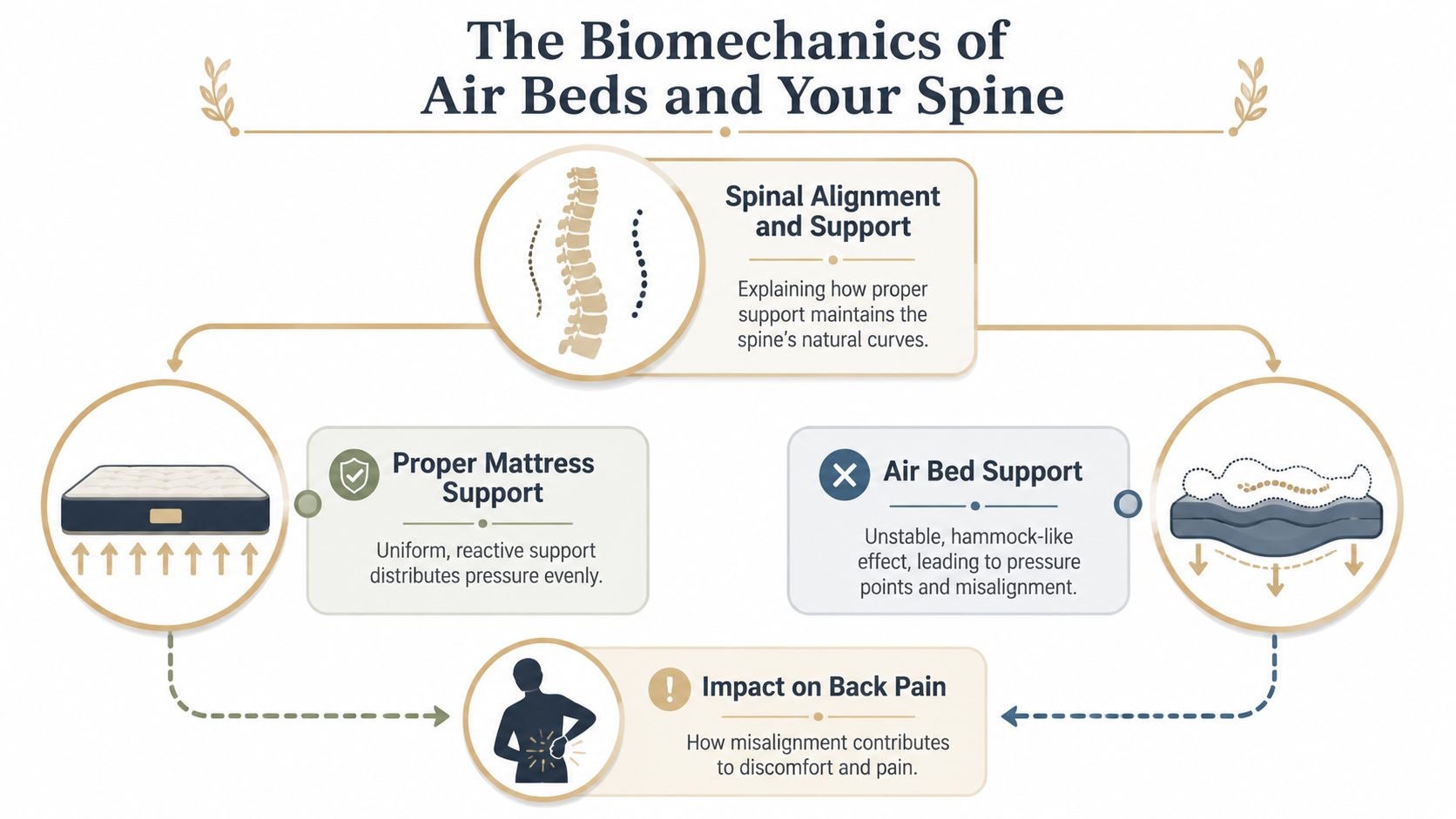
Think of the difference between lying in a supportive surface and lying in a hammock. A supportive surface holds you up while still allowing slight contouring. A hammock lets the middle of the body drop and changes your shape to match the fabric. Many air beds drift toward that hammock effect, especially after a few hours.
The issue isn't only softness. It's uniform internal air pressure trying to support body regions with very different weights and shapes. Your hips and shoulders usually press down harder than your waist or legs. On a better mattress, layers are designed to respond differently across those pressure zones. On an air bed, those heavier areas often sink more than they should.
If you've ever wondered whether your back discomfort could be tied to alignment, this guide on what a misaligned spine can feel like describes the kinds of symptoms people often notice when posture and support are off.
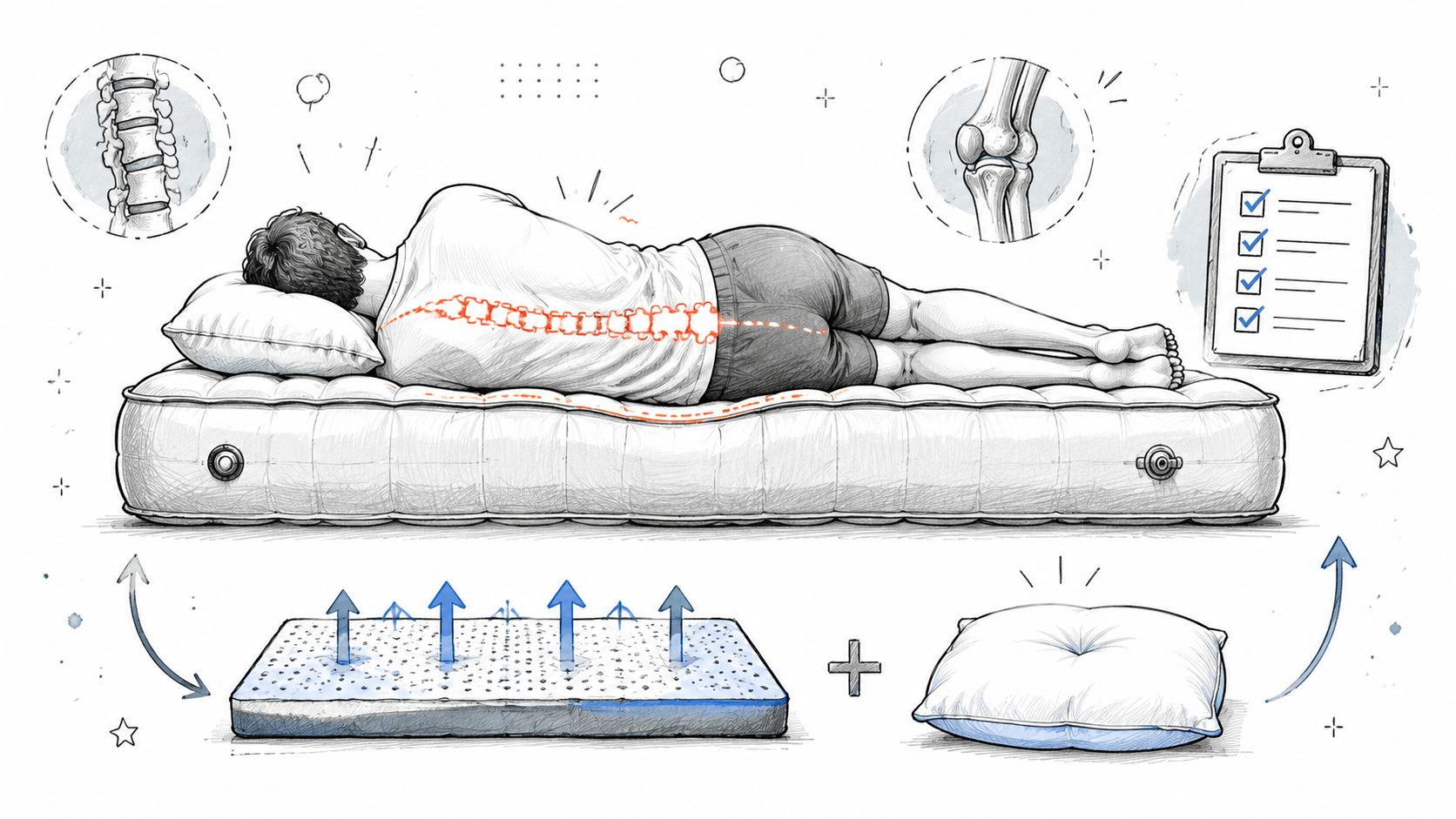
Once the heavier parts of the body sink, the spine changes shape. For a side sleeper, the low back may bend sideways or rotate slightly. For a back sleeper, the pelvis may tip in a way that flattens or strains the lumbar curve. For a stomach sleeper, the lower back often falls into extension and the neck stays turned for too long.
That altered position affects several structures at once:
Practical rule: If your body has to brace while you sleep, you won't wake restored.
There's also the issue of movement. Air beds often shift when you roll, when a partner moves, or when the pressure changes overnight. That small instability may not wake you fully, but your muscles still respond to it. By morning, people often describe the result as tightness, heaviness, or a feeling that their back is "off."
A healthy sleep surface should reduce the work your body has to do. Many air beds do the opposite. They ask the spine to adapt to the bed rather than supporting the spine in a neutral position.
Air beds do have uses. They solve practical problems quickly, and for a short stay they can be better than sleeping directly on the floor or on a couch that forces awkward bending. Still, the health picture is mixed, and the biggest drawbacks relate directly to support quality.
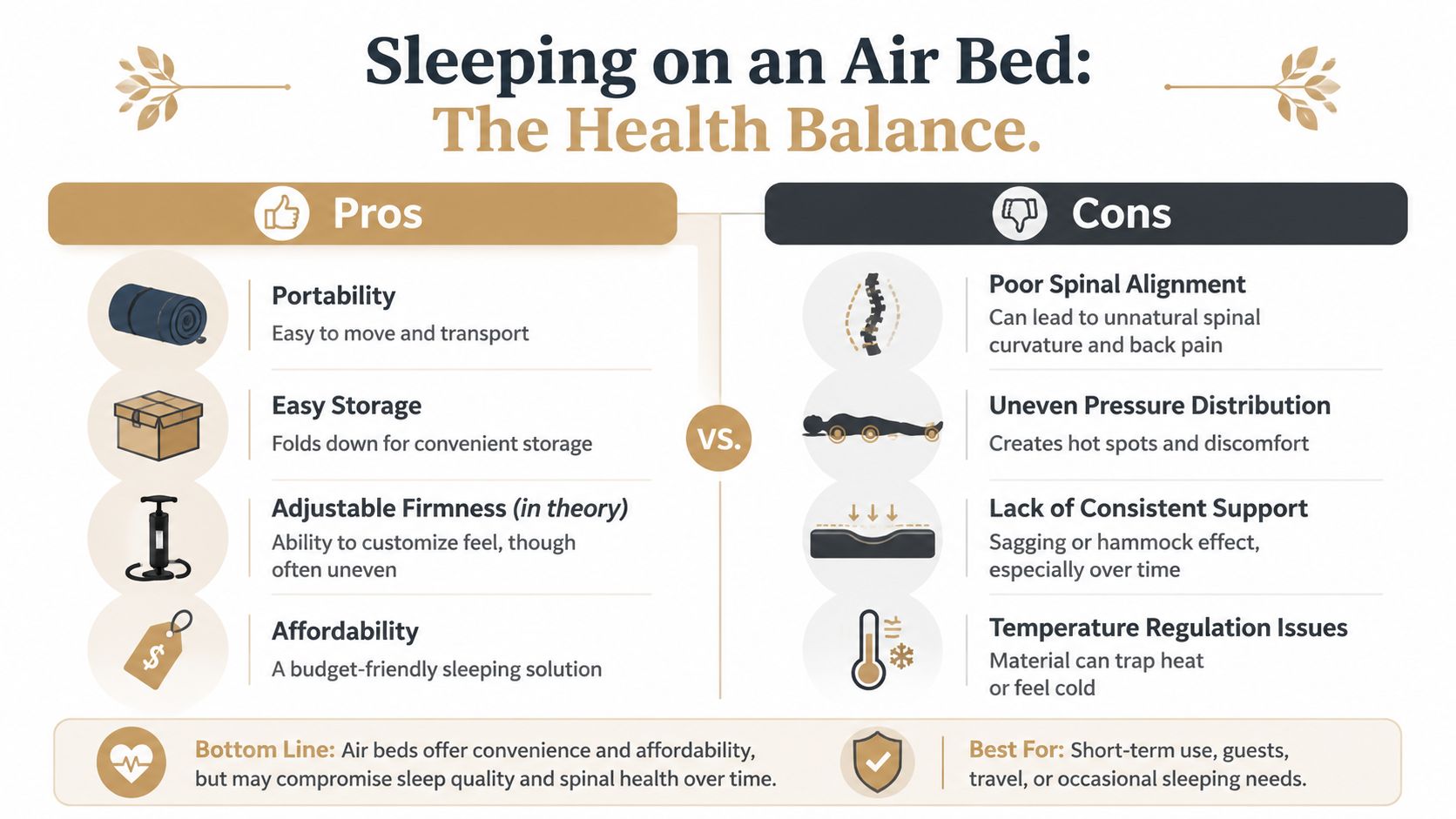
The upside is mostly practical, not biomechanical.
| Benefit | Why people choose it | Spinal reality |
|---|---|---|
| Portability | Easy to move between rooms or homes | Useful in a pinch, but mobility doesn't equal support |
| Easy storage | Deflates and stores compactly | Convenient for occasional use |
| Adjustable firmness | You can add or release air | Helpful in theory, inconsistent in practice |
| Lower cost | Often less expensive than a full mattress setup | Can make sense for short-term needs |
If your main goal is flexibility, an air bed does that job well. It can also be a reasonable backup for guests or brief transition periods.
For readers trying to sort out whether their discomfort is mattress-related or part of a larger back issue, Aspen Falls Wellness has a clear page on lower back pain patterns and contributing factors.
The downsides matter more if you're depending on the bed night after night.
Those aren't just comfort complaints. Each one can affect how your joints and muscles behave. If the bed softens through the night, your pelvis and trunk can settle into a deeper curve than where you started. If the edge collapses when you sit or stand, your hips and low back take more strain during transfers.
The biggest problem with sleeping on air bed isn't that it always hurts. It's that the support often changes while you're asleep.
The "adjustable firmness" selling point also sounds better than it performs. Very firm inflation can reduce sagging, but then pressure points increase at the shoulders, ribs, and hips. Slightly softer inflation may feel comfortable at first, yet allow too much sink. This often results in being stuck between pressure and instability.
For a healthy young adult with no pain history, that may be tolerable for a short stretch. For anyone with spinal sensitivity, it often isn't a neutral choice.
If the air bed is what you have tonight, the goal isn't perfection. The goal is harm reduction. You want a setup that limits sagging, reduces pressure points, and keeps your spine closer to neutral.
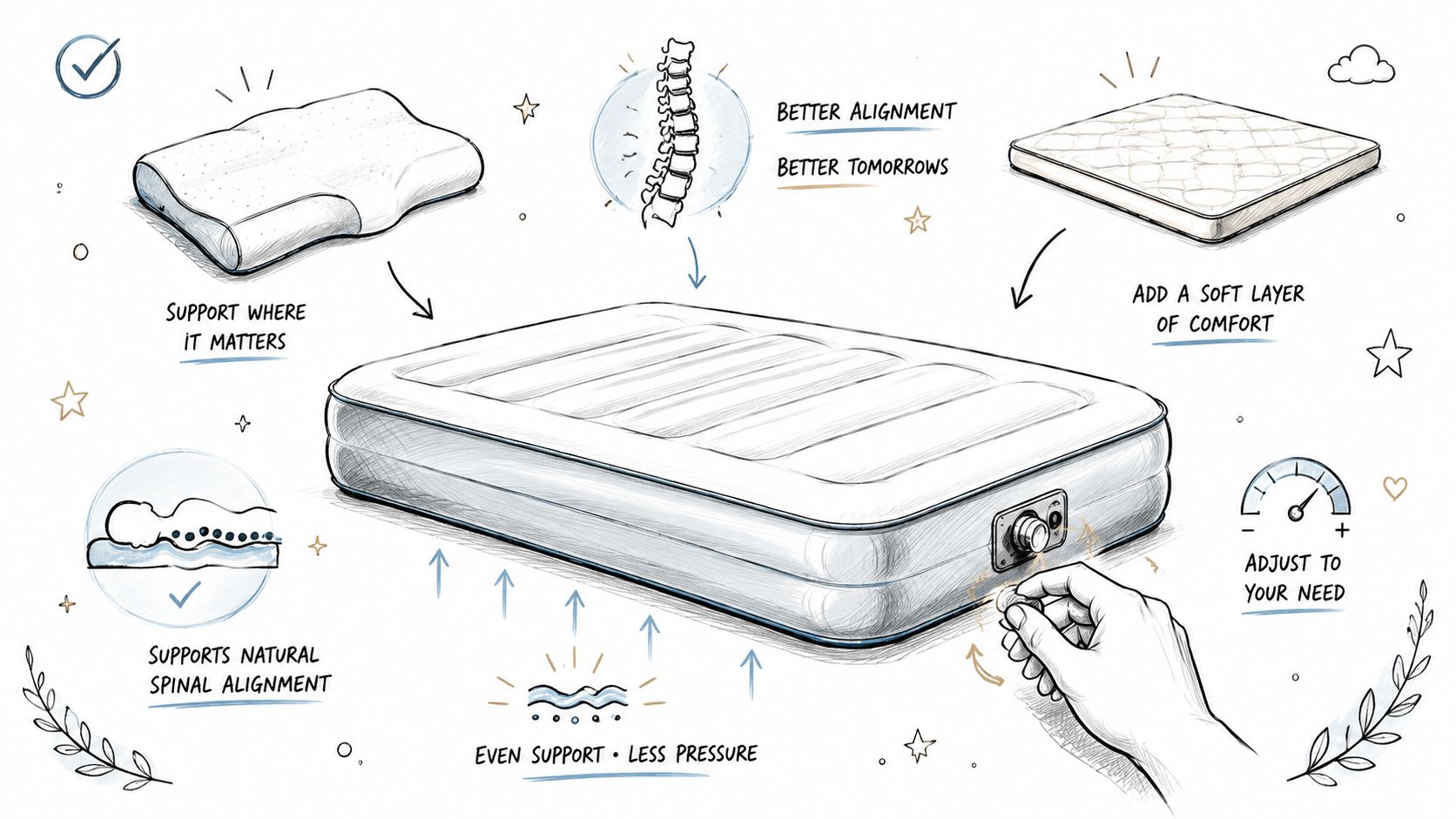
Start with inflation. Don't leave the bed underfilled because it feels plush when you first lie down. That usually leads to more trunk sag once your body weight settles. At the same time, rock-hard inflation can create harsh pressure points. In practice, a nearly full bed usually works better than a soft one, as long as it doesn't feel rigid.
Then check the surface underneath.
The single best upgrade is usually adding a topper. A foam or latex layer can soften pressure at the shoulders and hips while the air chamber underneath provides the lift. That combination often feels more like a real mattress and less like floating on a balloon.
Pillows also matter more than people think. Side sleepers usually do best with enough pillow height to keep the neck level and a second pillow between the knees to reduce pelvic twist. Back sleepers often benefit from a small pillow under the knees if the low back feels tight. Stomach sleeping is the hardest position to make work, so if possible, avoid it on an air bed.
A few practical mattress principles carry over well here. If you want a simple consumer-oriented checklist, Gates' tips for back pain mattresses offer useful guidance on support, pressure relief, and sleep position fit.
If you must sleep on an air bed for several nights, build the support system around it instead of expecting the bed itself to do all the work.
A quick setup checklist for tonight:
These changes won't turn an air bed into an ideal orthopedic surface, but they can make the night less punishing.
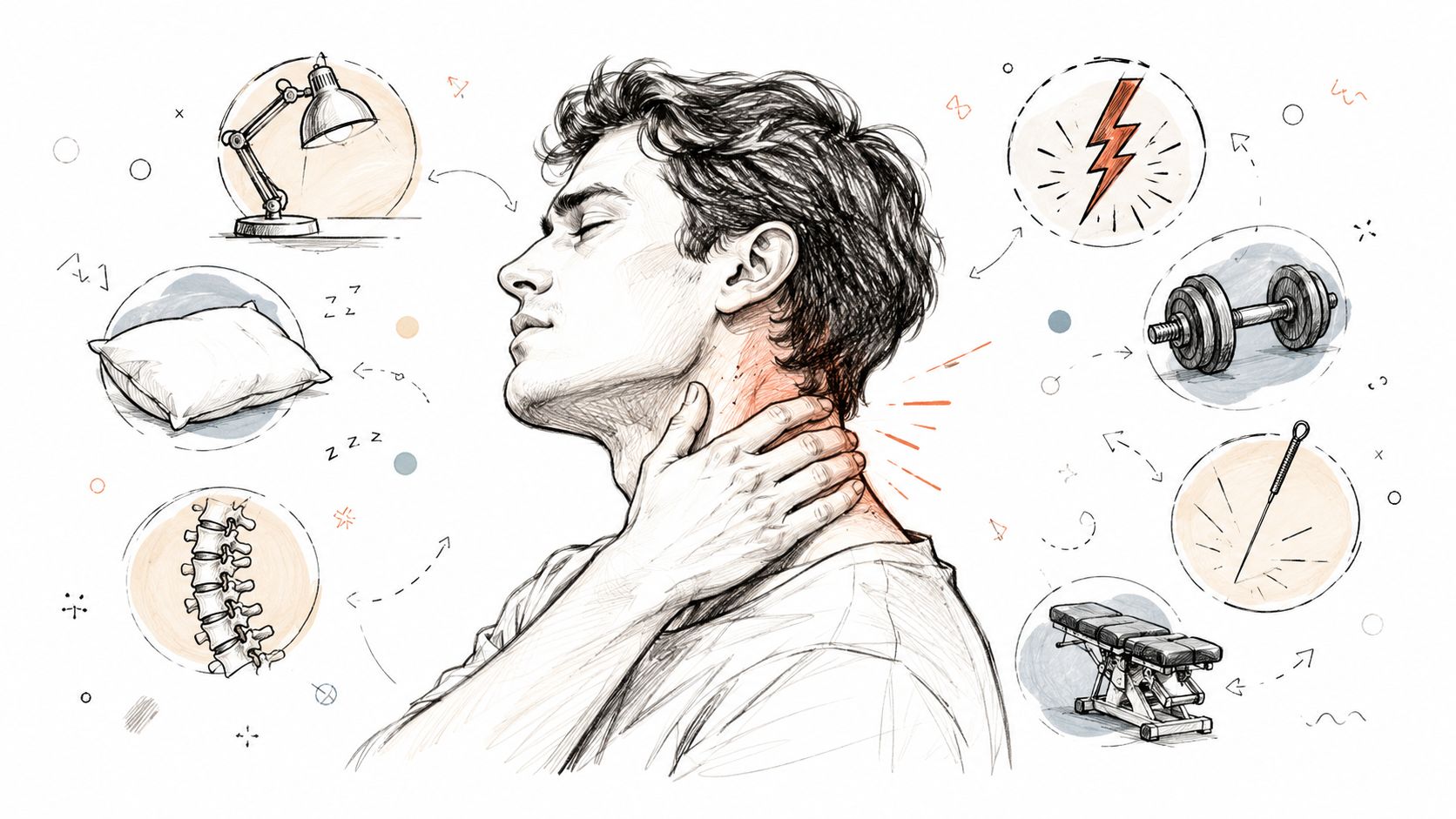
Sometimes the body tells you very clearly that the sleeping surface isn't working. The key is noticing patterns instead of dismissing them as random soreness.
The first red flag is morning stiffness that lingers. If you get up and your low back feels seized, then takes a while to loosen, your tissues likely spent the night under strain instead of resting.
Another common sign is new or worsening pain in specific areas. The low back is the most obvious, but the neck, mid-back, hips, and even the outer shoulder can react when the bed doesn't distribute weight well.
Watch for symptoms like these:
If you're trying to sort out the mattress connection, this article on addressing why your back hurts in the morning gives a useful overview of how sleep surfaces can affect wake-up pain.
The more concerning signs involve nerve irritation and poor sleep recovery. If sleeping on air bed is followed by tingling, numbness, burning pain, or discomfort traveling into the buttock or leg, don't brush that off as ordinary stiffness. Those symptoms can suggest that a nerve-sensitive area is being aggravated by prolonged positioning.
Waking up tired after a full night in bed often means your body spent the night protecting itself instead of recovering.
Pay attention to timing. If symptoms improve when you return to a regular mattress and flare when you use the air bed again, that's a strong clue. The pattern matters more than any single rough night.
You should be especially cautious if you already deal with sciatica, disc irritation, arthritis, or previous back injuries. In those situations, the air bed may not be the original cause, but it can absolutely be the factor that stirs symptoms up and keeps them active.
An air bed problem sometimes resolves once you return to a better surface. But if the pain keeps showing up, gets more intense, or starts radiating, home fixes have reached their limit.

A topper, better pillow setup, and a firmer inflation level can reduce stress on the body. They cannot restore joint motion that's already restricted, calm an irritated nerve on their own, or correct a disc-related problem that has become more symptomatic.
Professional care becomes more important when:
In those cases, an evaluation should look beyond the mattress and ask what structure is irritated. That may include spinal joints, discs, surrounding muscles, or postural mechanics that were exposed by the unstable sleep surface.
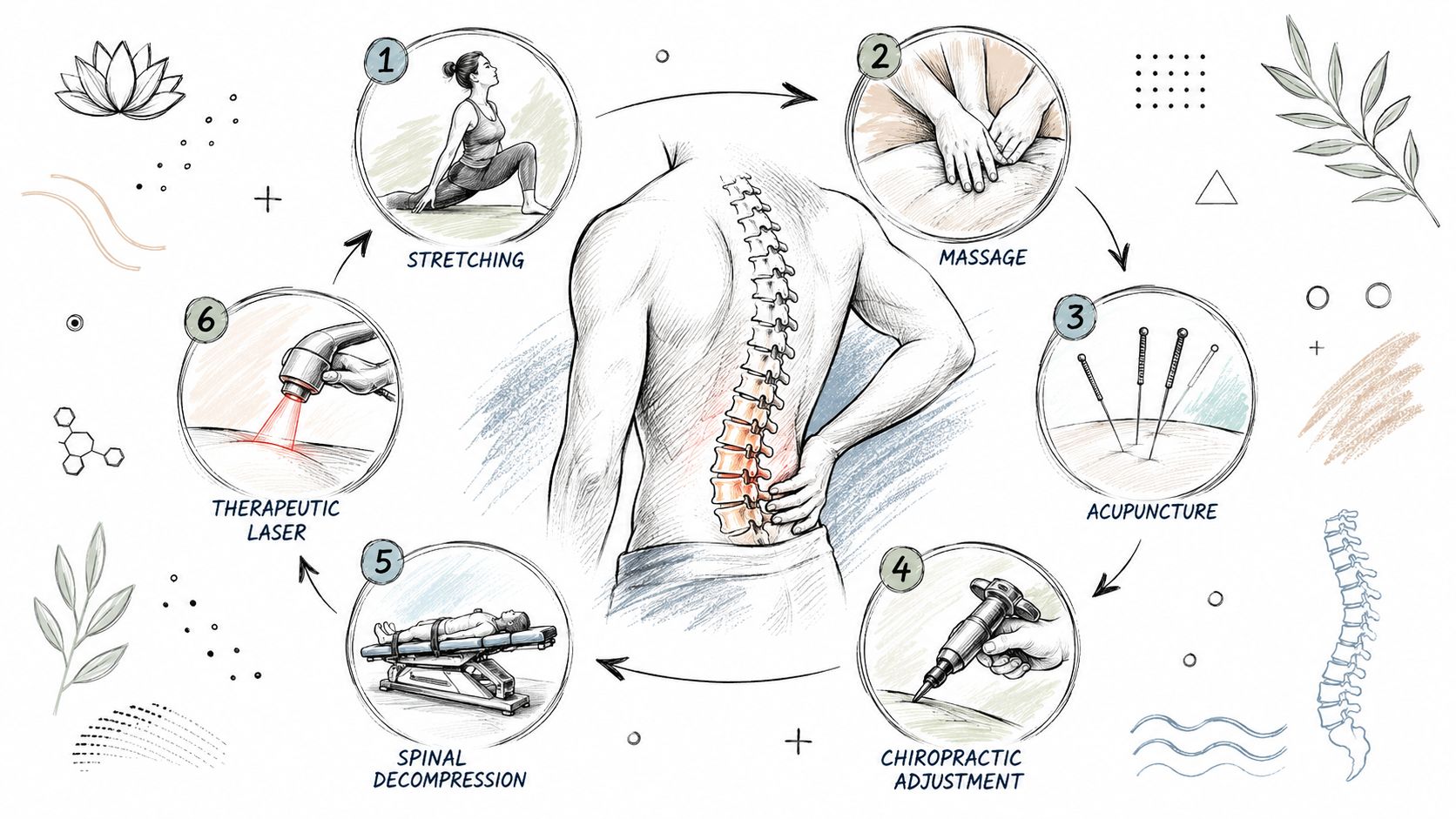
For persistent cases, treatment often works best when it addresses multiple layers of the problem. Chiropractic Adjustment and realignment may help restore motion in restricted segments. Massage Therapy can reduce muscle guarding that builds up when the spine feels unstable at night. Mobility Therapy, rehabilitation exercise, and personal exercise plans help the body hold better alignment between visits.
When symptoms point toward disc involvement or sciatica, Spinal Decompression with the DRX 9000 becomes especially relevant. If you want to understand how that approach works, Aspen Falls Wellness provides an overview of spinal decompression care. In the right setting, decompression can be part of a non-surgical plan for disc-related pain aggravated by poor sleeping posture.
Other supportive options may include SoftWave Therapy, MLS Laser Therapy, muscle stimulation, acupuncture, nutrition and nutrition counseling, or broader chiropractic care depending on the presentation. Some people also need sciatica treatment, decompression, or focused pain relief strategies after a temporary sleep arrangement turns into a real flare.
The important point is simple. If your body keeps reacting to the air bed, the answer usually isn't to keep experimenting with the same setup. It's to identify what the sleep surface irritated and treat that problem directly.
Sometimes, yes. For brief use, a well-inflated air bed with a topper and smart pillow support can be acceptable. It's usually more tolerable for people without active back symptoms and less dependable for people with recurring low back pain, sciatica, or significant hip discomfort.
There isn't one exact cutoff because people vary. A healthy spine may tolerate short-term use reasonably well. If symptoms begin, or if you already have a history of back trouble, even a few nights can be enough to create a flare.
No. Overinflation can reduce sagging but increase pressure points. Underinflation increases collapse through the pelvis and trunk. The sweet spot is usually firm enough to prevent sinking, with added surface cushioning from a topper or blanket layer.
Often, yes. Side sleepers load the shoulder and hip more heavily, and those areas tend to sink unevenly. That can tilt the pelvis and bend the spine sideways if the surface doesn't contour well.
It can aggravate sciatic symptoms in someone who's already vulnerable. A poor sleeping position may increase irritation around the low back and pelvis, which can contribute to pain, tingling, or discomfort traveling down the leg.
Many can for occasional use. The concern rises when the bed becomes a regular sleeping surface or when the sleeper already has joint, disc, or posture-related sensitivity.
Back or side sleeping usually works best. Use a pillow setup that keeps the neck neutral and reduces twisting through the pelvis. Stomach sleeping is usually the least spine-friendly choice.
If sleeping on air bed has turned into morning stiffness, back pain, or sciatica, Aspen Falls Wellness offers non-surgical care in Salt Lake City and Sandy with services including Chiropractic Adjustment, Spinal Decompression with the DRX 9000, Massage Therapy, SoftWave Therapy, MLS Laser Therapy, Acupuncture, Mobility Therapy, Rehabilitation Exercise, and personalized care plans designed to address the actual source of pain.

Stay updated with the latest chiropractic news and exclusive offers.