Learn about evidence-informed chiropractic adjustment benefits for back pain, neck pain, headaches, sciatica, and sports injuries.



You finally reach the point where rest, stretching, heat, and over-the-counter pain medicine aren't changing much. Your neck still feels tight when you turn to back out of a parking space, your low back flares after sitting, or a headache keeps coming back after a long day at a desk. That's usually when people start asking a more useful question than “Does chiropractic help?” They want to know who it helps, what it does, and how long the benefit tends to last.
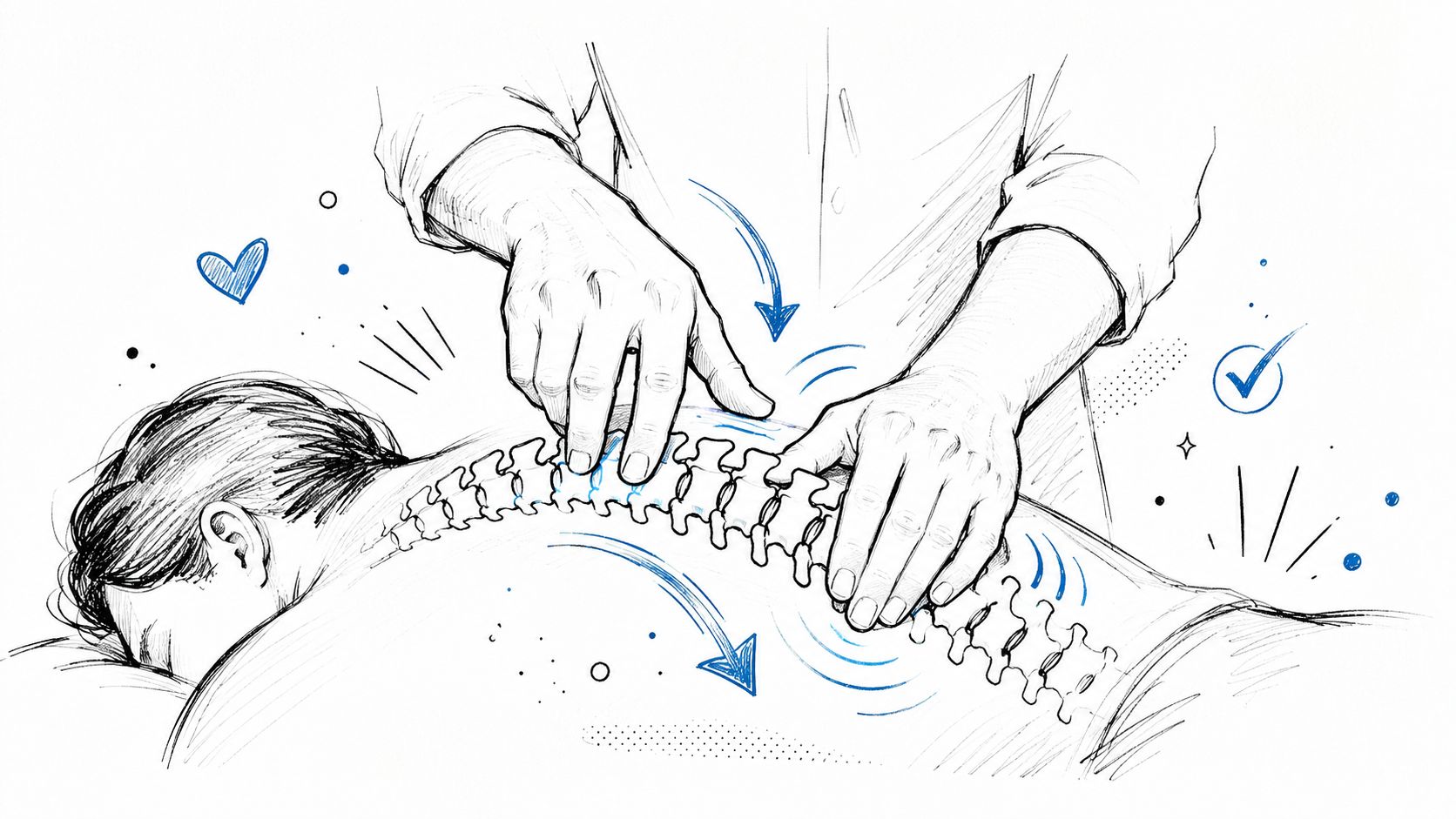
A first visit usually starts with the problem on the table, not the table itself. Someone comes in after weeks of stiffness, maybe after lifting something awkwardly or sleeping in a bad position, and the clinician checks how the spine and nearby joints are moving, what hurts, and what patterns show up when the person bends, turns, or presses through a movement. That matters because a chiropractic adjustment is a specific manual treatment, not the same thing as general massage, stretching, or exercise instruction.
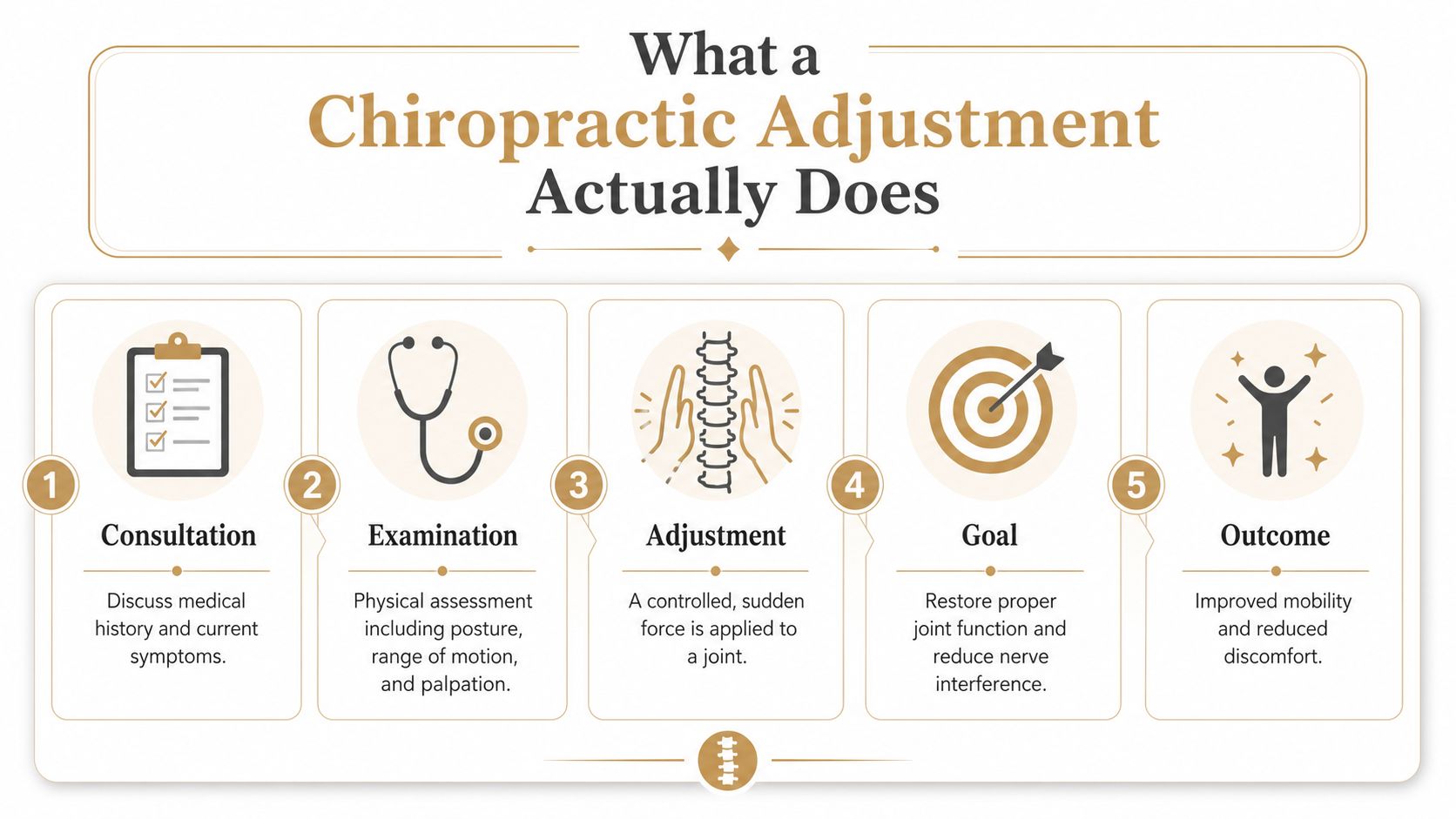
The difference shows up in the details. Soft-tissue work addresses muscle tone and tenderness. Mobilization uses slower, gentler joint movement. Spinal decompression is a device-based approach, and a clinic may use it when disc-related pain or nerve irritation is part of the picture. An adjustment itself is the hands-on force directed at a joint to improve movement, which is why the expected benefit is often better mobility, less discomfort, and a better response to the rest of care.
Practical rule: if the pain is coming from a stiff joint plus irritated surrounding tissue, the adjustment is only one piece of the answer. The rest of the plan usually needs movement, loading, and symptom control.
At an integrative clinic, the visit can also include exercises, soft-tissue treatment, or device-based care so the adjustment doesn't have to carry the whole load. For readers who want a plain-language overview of the visit process, the Chiropractor guide on SkipCalls gives a useful patient-facing summary of what to expect before and after treatment.
| Condition | Evidence Strength | Typical Outcome Reported |
|---|---|---|
| Low back pain | Stronger | Less pain, better function, easier movement |
| Neck pain | Moderate to stronger | Improved rotation, less stiffness |
| Headache patterns linked to the neck | Moderate to stronger | Fewer episodes or less severe episodes |
| Disc-related or sciatica-like pain | More variable | Some patients improve, others need broader care |
| Non-musculoskeletal complaints | Uncertain | Results are less predictable |
The key idea is simple. People don't come in for a crack or a click. They come in because movement hurts, and they want to know whether restoring joint function can make everyday life feel normal again.
A chiropractic adjustment is often compared to freeing a joint that has gotten a little stuck, then helping the surrounding system move more normally again. The joint is only part of the picture. Muscles, nerves, and movement habits can all react when a segment stops gliding well, and that reaction often shows up as guarding, stiffness, or pain.
A joint that moves poorly can place extra strain on nearby tissues, so restoring motion can ease that load. That part is easy to understand, and it matches what many patients notice after care. The more interesting part is that the response does not seem to stay local. In a sham-controlled randomized trial published in PLOS ONE, 12 weeks of chiropractic spinal adjustments were associated with measurable biomarker changes, including BDNF and IL-6 increases, TNF-α decreases at 12 weeks, and cortisol plus IFN-γ decreases at 16 weeks versus sham care (PLOS ONE trial).
Those findings matter because they point to more than a loud joint or a short-lived placebo response. A second high-quality summary of the same trial describes changes in stress physiology, inflammatory signaling, and neuroplasticity-related markers in similar terms (full trial text). That does not mean every patient will feel better for the same reason, but it does help explain why clinicians talk about the nervous system when they discuss adjustments.
The nervous system helps decide how threatening a movement feels. If a joint has been guarded for weeks, the brain may keep turning up pain signals even after the original trigger has quieted. An adjustment may help interrupt that loop by changing input from the joint, changing muscle tone around it, and improving confidence with movement. The evidence supports this as a plausible mechanism, not a simple explanation that fits every case.
An adjustment can change how motion feels, how movement is tolerated, and how the body responds afterward. That is different from simply “cracking” a stiff area.
The most useful takeaway is also the most careful one. Adjustments appear to influence both mechanical function and pain regulation, but the size and duration of the response depend on the condition, the person, and the rest of the care plan.
The strongest evidence for chiropractic adjustment benefits clusters around mechanical spine pain and a few specific headache patterns. For acute, subacute, and chronic low back pain, spinal manipulation is supported as an effective care option and is often comparable to other recommended therapies, including exercise and standard medical care (NIH-backed review). The same review is described in another evidence summary as supportive for migraine and cervicogenic headaches, while the evidence remains inconclusive for tension-type headaches (NIH-backed review).
That distinction is where many patient pages oversimplify. People often hear that adjustments can help pain, headaches, flexibility, or posture, but the evidence is strongest when the problem is clearly musculoskeletal. Government-reviewed evidence also notes benefit signals for low-back pain, neck pain, cervicogenic headache, and whiplash, while the evidence is inconclusive for some other popular claims, including fibromyalgia, mid-back pain, sciatica, and temporomandibular disorders (government evidence summary).
That does not mean a person with those complaints cannot benefit. It means the response is less predictable, and the adjustment should sit inside a broader plan rather than be sold as a cure. The most honest way to talk about chiropractic adjustment benefits is to pair the symptom with the evidence level.
For low back pain, the literature supports spinal manipulation as a reasonable part of care, not a standalone fix. One pooled analysis cited in the review literature found 47 randomized controlled trials with pain and disability improvements similar to other recommended interventions for chronic low back pain, and another review of 26 randomized trials reported about a 10-point improvement on a 100-point pain scale plus functional gains (evidence synthesis). Those findings help explain why adjustments stay in the conversation for spine care.
The practical message is straightforward. If the complaint is mechanical and movement-related, the evidence is better. If the complaint is broader, multi-system, or less clearly linked to the spine, expectations should stay cautious.
Different complaints respond to different parts of care, so a good clinic does not use one technique for everyone. It matches the adjustment to the pattern, then adds the support that helps the result last beyond the appointment.
A person with low back pain often needs more than a short-term drop in pain. The adjustment may help reduce stiffness and restore segmental motion, while exercise helps the spine tolerate daily load again. For a resident-level overview of common lower-back approaches, this internal guide on lower back pain solutions fits well with the same decision-making logic.
A neck that feels locked up follows the same pattern. Gentle joint work can make turning the head easier, and postural retraining helps keep the change from fading too fast. The adjustment is aimed at a clear mechanical target, the kind of restriction that behaves like a stiff hinge rather than a vague ache.
Headache care is more selective. The evidence is stronger for cervicogenic headache and migraine than for tension-type headache, so the clinician has to ask whether the neck is part of the driver or whether the headache pattern is coming from somewhere else. That distinction matters because the wrong assumption leads to disappointing results.
For sciatica-like pain or disc-related complaints, the adjustment may be one piece of a larger conservative plan that also includes decompression, mobility work, and gradual strengthening. At Aspen Falls Wellness, DRX 9000 spinal decompression can be combined with adjustments when disc irritation or nerve sensitivity is part of the case. That is a different situation from a stiff neck, because the care plan has to account for nerve loading, tolerance, and symptom irritability.
Clinical takeaway: the more nerve-like the symptoms, the more important it is to match the technique to the tissue that is actually irritated.
If inflammation is part of the recovery picture, lifestyle support matters too. Readers interested in broader recovery habits can look at proven inflammation reduction strategies and use them as background work that helps the body settle down between visits.
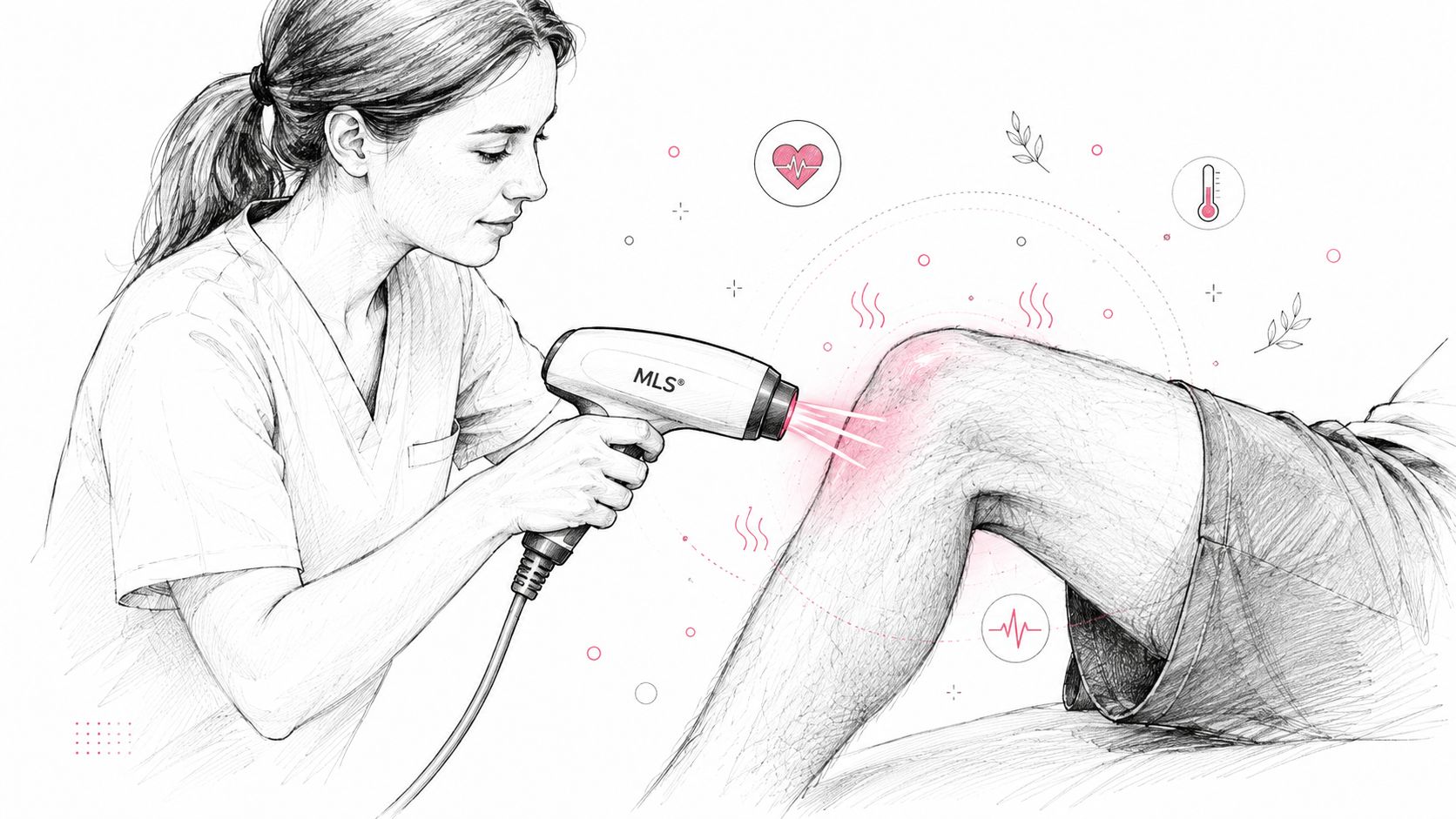
A realistic integrative plan often layers in massage therapy, acupuncture, mobility therapy, MLS Laser Therapy, SoftWave Therapy, and corrective exercise. The adjustment is still important, but it works best when the surrounding tissues, movement habits, and home routine are all moving in the same direction.
The people most likely to notice meaningful chiropractic adjustment benefits usually fit a familiar pattern. They have mechanical, activity-related pain, they can point to a movement that aggravates the problem, and they're willing to do something between visits. That includes adults with recurring low-back or neck pain, athletes with overuse irritation, and some post-accident patients who are still in a conservative care window.
A good fit often looks like this. A person sits for long periods, the back tightens, and the pain improves with movement but returns when the day gets longer. Another patient has neck stiffness after repetitive desk work and gets better range of motion once the joint is moving normally again. In those patterns, the adjustment is aimed at a clear mechanical target.
A more cautious fit includes people with long-standing pain, degenerative changes, or symptoms that seem amplified by central sensitization. They may still improve, but the gains are often more modest and less linear. Those patients usually do better when the plan includes pacing, exercise, and symptom education instead of trying to chase a quick fix.
Some symptoms should pause the plan and trigger more evaluation. Progressive neurological deficits, serious trauma, or a change in bowel or bladder function aren't situations to “try an adjustment and see.” Those problems need a proper exam and, if needed, referral.
A comparative question many patients ask is whether they should choose this care or physical therapy. The answer depends on what's driving the pain and what the patient can realistically do between visits. This internal guide on chiropractic vs physical therapy helps frame that decision as a matter of matching the method to the goal, not picking a winner.
The best self-screening question is simple. Is this pain mostly mechanical, or does it come with red flags, spreading neurological symptoms, or a medical history that needs more than conservative care? If it's the first, an exam may be a reasonable next step. If it's the second, the right next step is evaluation, not guesswork.
A single adjustment can help, but durable change usually comes from a phased plan. That's because pain doesn't just come from a joint. It comes from the joint, the surrounding tissues, the nervous system, and the person's day-to-day load.
The first phase focuses on calming the problem down and getting basic movement back. That often means a short run of visits, sometimes 4 to 8 visits over 2 to 4 weeks, with the exact number depending on irritability, duration, and severity. The goal isn't perfection. It's enough relief to sleep better, walk more normally, and stop bracing every time the body moves.
Progress should show up in ordinary tasks. A patient may turn the neck farther while backing up the car, sit through a work block with less guarding, or notice fewer wakes at night. Those are more useful markers than chasing a pain score alone.
Once the acute flare calms down, the plan shifts toward restoring capacity. This phase often runs 6 to 12 weeks and blends adjustments with mobility work, rehabilitation exercise, and, for disc cases, decompression such as DRX 9000. The point is to stop relying on symptom control alone and start building a body that tolerates normal demands again.
At this stage, a clinic may also adjust the plan based on how the patient responds. That's why one internal page on how patients are adjusted the same way is less useful than learning that good care should change as the body changes.
Some people move into a prevention or maintenance phase, especially if the same problem keeps flaring with work, sport, or travel. That phase should be a choice, not a default. If someone stops relapsing and keeps up the home plan, maintenance visits may not be necessary.
The real test is whether function improves, not whether the appointment sounded impressive.
Many individuals worry about the scary outcomes and ignore the ordinary ones. The ordinary ones matter too. Mild soreness or stiffness after an adjustment is common and usually settles quickly, while fatigue can show up for a short time as the body adapts to the new movement pattern. Those are very different from the rare serious events that make headlines.
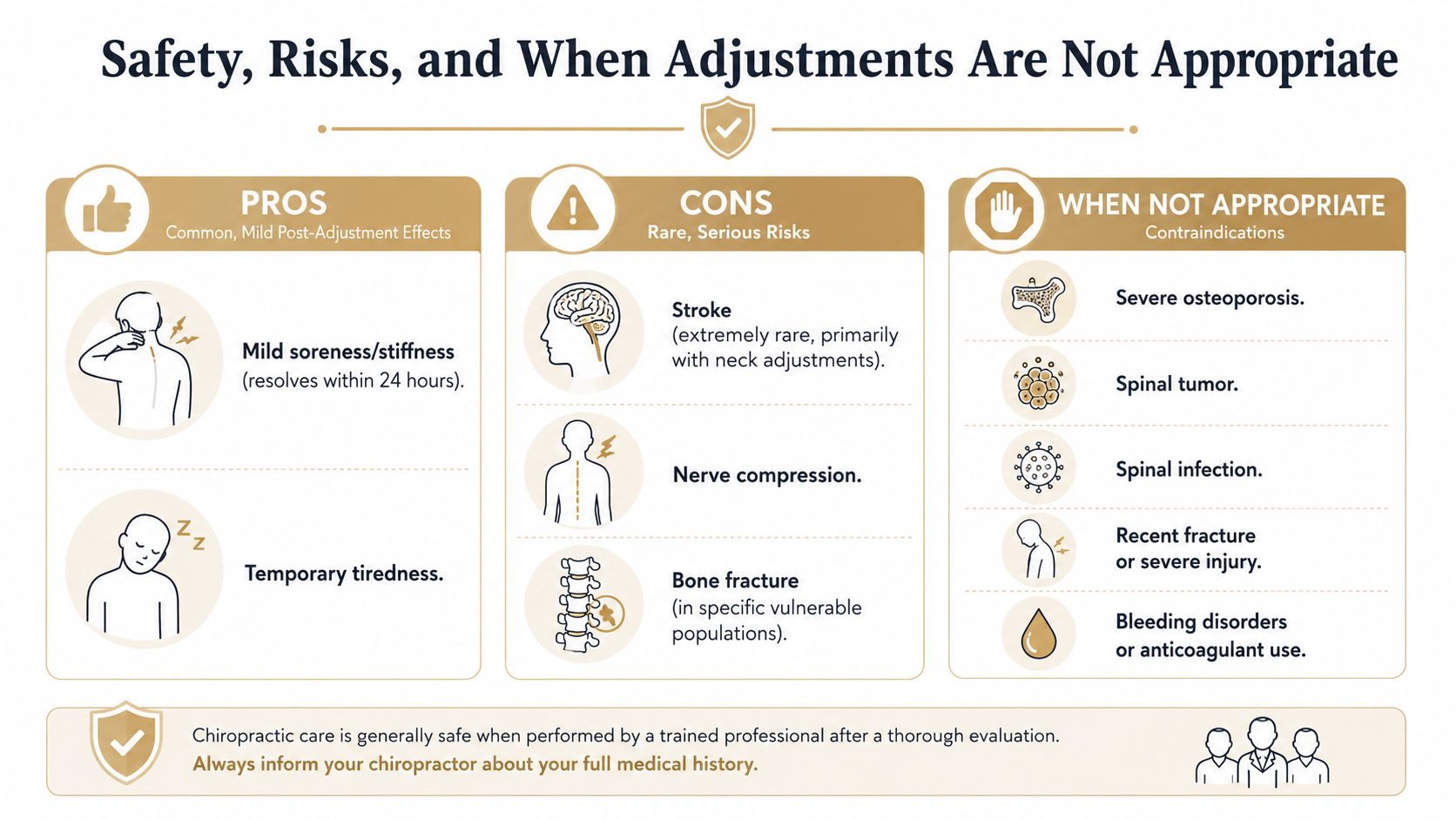
The safety literature cited in the evidence summary describes very rare serious adverse events, with serious injury estimated at about 1 in 2 million manipulations and fatality at about 3 in 10 million in neck manipulation contexts. Those figures are part of why careful screening matters, especially in the neck.
There are clear situations where a traditional manual adjustment is not the right starting point. These include significant osteoporosis, acute fracture, certain types of cord or nerve compression, recent spinal surgery, and unstable vascular conditions. In those settings, a clinician may choose low-force techniques, mobilization, soft-tissue work, or laser-based care instead.
The important point is that safety isn't only about what happens during the thrust. It's about deciding whether the thrust is appropriate for this person on this day. Shared decision-making should cover the expected benefit, the likely soreness window, and the alternatives if the tissue is too vulnerable.
If a patient can't tolerate a traditional adjustment, that doesn't mean care stops. It usually means the plan shifts toward the least irritating effective option, then progresses only if the body tolerates it.
If the pain has been lingering long enough that you're considering care, the next step is usually a proper exam, not a random adjustment. At Aspen Falls Wellness, that starts with an assessment of the spine, joints, movement, and symptom pattern, with X-ray or MRI referral when indicated. The clinic serves patients in Salt Lake City and Sandy, Utah, and it works with multiple insurance plans, including Aetna, BCBS, Cigna, Humana, GEHA, and Motiv Health, though verification is still smart before the visit.
That kind of intake matters because a one-size-fits-all protocol doesn't tell you much about which chiropractic adjustment benefits you're likely to get. An individualized plan can include personalized chiropractic adjustments, DRX9000 decompression, MLS Laser Therapy, SoftWave Therapy, massage therapy, acupuncture, mobility therapy, rehabilitation exercise, and nutrition counseling. The point isn't to stack services for the sake of it. The point is to match the care to the tissue problem.
A first visit should also answer a few plain questions. What's the working diagnosis? What outcome should improve first? How will the clinician know the plan is helping? Those answers are more useful than a promise that everything will be fixed quickly.
If you're deciding whether to move forward, focus on three things. Location, so the clinic is convenient. Coverage, so you know what insurance may help with. And fit, meaning the plan matches your pain pattern instead of forcing your problem into a generic template.
If you're dealing with recurring back pain, neck stiffness, headaches, or a disc-related problem, Aspen Falls Wellness can evaluate the issue and build a plan around adjustments, decompression, rehab, and other conservative options. If you want a clearer sense of whether chiropractic care fits your situation, visit Aspen Falls Wellness and schedule a first exam so you can get a specific plan instead of guessing at the next step.

Stay updated with the latest chiropractic news and exclusive offers.