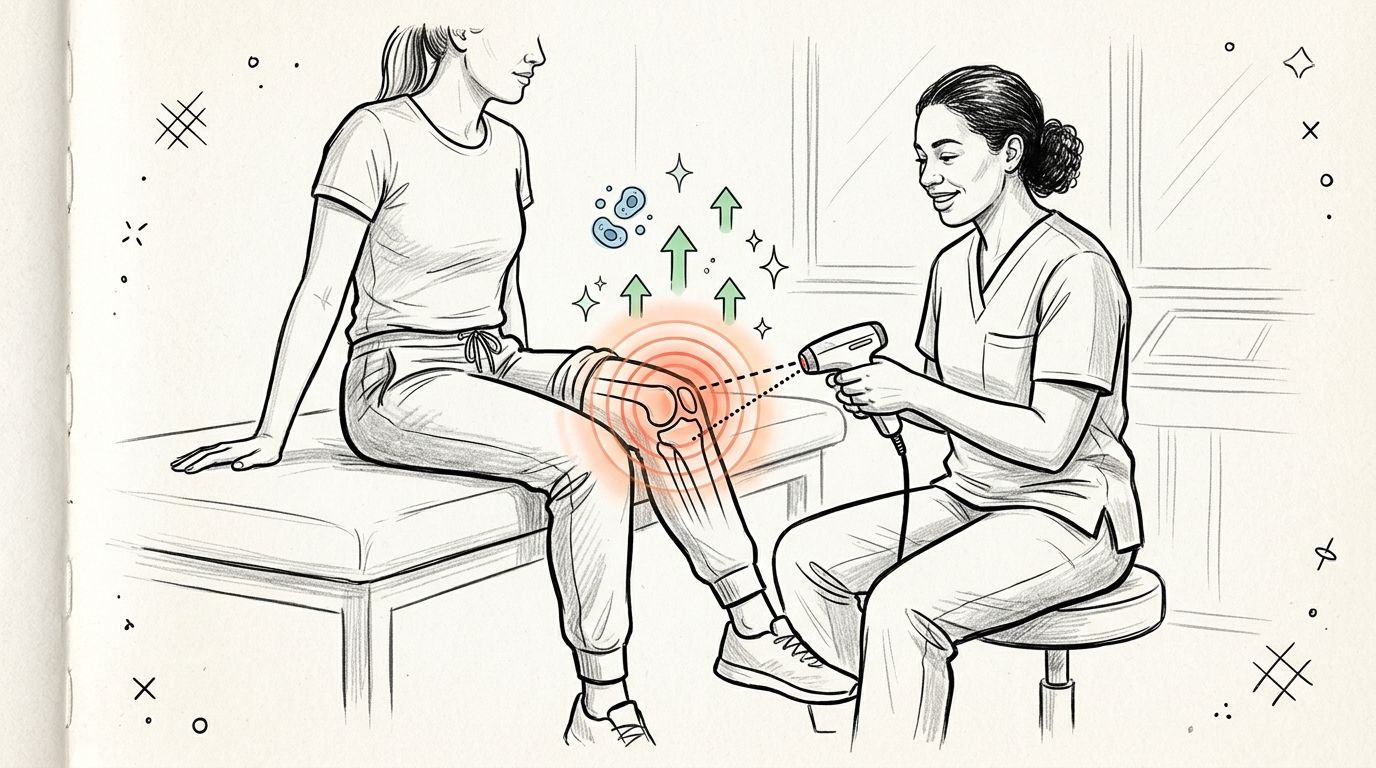
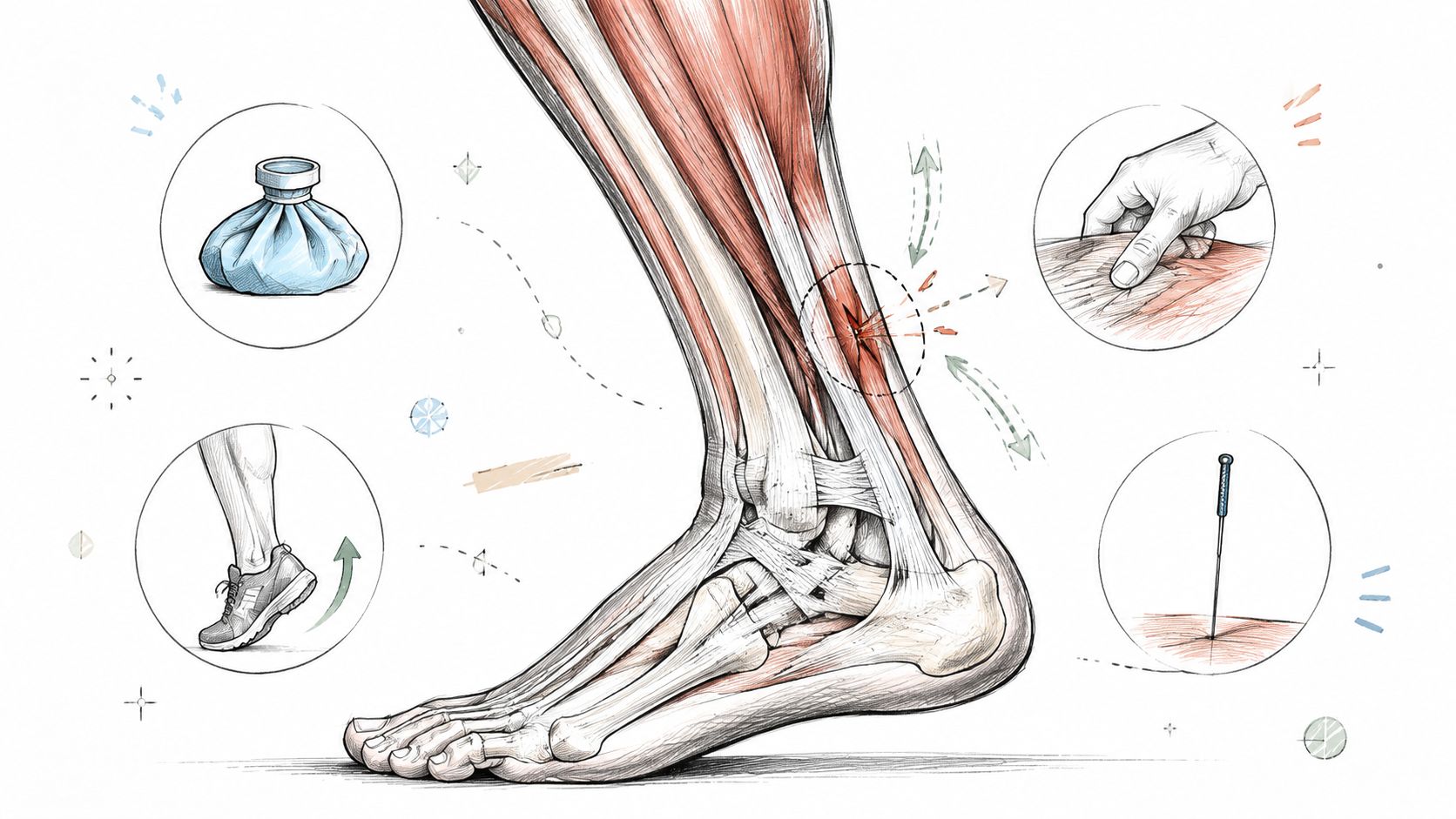
Discover proven lower back pain solutions including chiropractic care, spinal decompression, laser therapy, and exercise rehab.
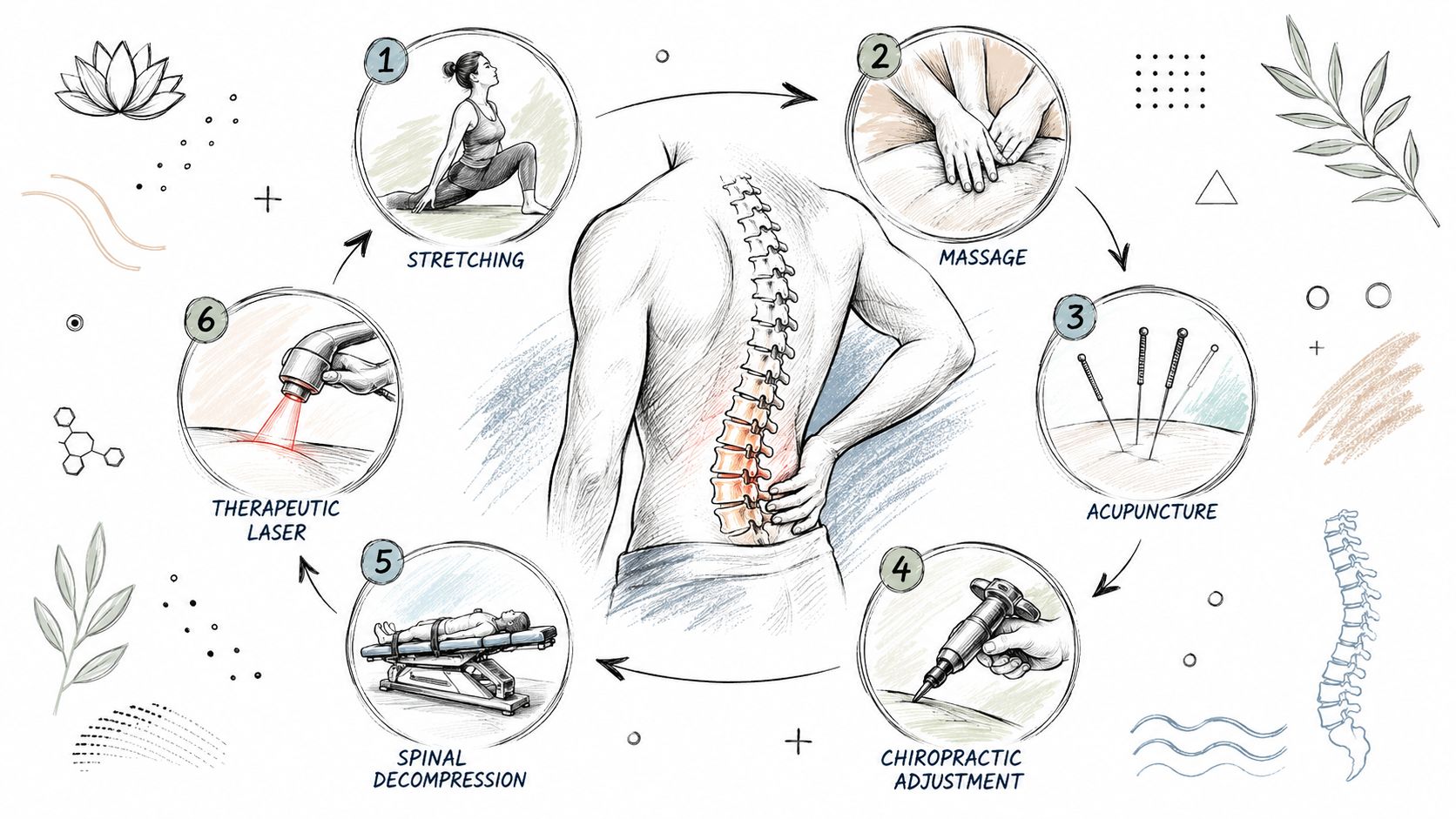



619 million people lived with low back pain in 2020, and the World Health Organization projects 843 million by 2050. That makes this one of the biggest disability problems in medicine, not a minor nuisance that should be chased with a single fix. The most useful lower back pain solutions start with a simple idea, the treatment has to match the type of pain, the stage of the problem, and the level of risk.
What frustrates people most is that generic advice gets repeated everywhere. Rest more. Stretch more. Get adjusted. Try a machine. Those ideas can help in the right context, but they can also waste time if the pain is acute, chronic, or shooting down the leg for different reasons. The better path is to sort the pain first, then choose the least invasive option that has a real chance of helping.
Lower back pain affected 619 million people worldwide in 2020, and the World Health Organization calls it the leading cause of disability globally. The same data projects 843 million cases by 2050, with especially strong growth expected in Africa and Asia as populations age and live longer. That scale changes the conversation. This isn't a rare injury problem, it's a long-term public health issue that demands treatments people can sustain, not just short-lived symptom relief. World Health Organization low back pain fact sheet
Age matters too. The WHO data places the peak number of cases at ages 50 to 55, and it notes that women experience low back pain more often than men. That pattern helps explain why the strongest care pathways usually focus on function, recurrence prevention, and age-sensitive rehabilitation, instead of assuming a few days of rest will reset everything. In practical terms, people in their 50s often need a plan that protects movement while calming irritability.
A lot of consumer advice fails because it treats every backache as the same problem. That's where people get stuck cycling through the same tips. The pain could be an irritated joint, a strained muscle, a disc issue, or a nerve problem, and those don't all respond to the same input.
Practical rule: if the pain keeps coming back, the goal isn't just to quiet it once. The goal is to reduce the chance that the next flare shows up.
Even basics like sleep support matter more than one might expect, especially when a poor mattress keeps aggravating an already sensitive back. A useful consumer resource on that specific issue is the SouthShore Fine Linens mattress guide, which is relevant when a worn sleep surface seems to worsen morning stiffness or repeated flare-ups.
The first question is usually not “What treatment should I buy?” It's “What kind of pain is this?” That answer changes the pathway. Acute pain is typically under 6 weeks, chronic pain lasts more than 12 weeks, and radicular pain shoots down the leg, often in a sciatica pattern.
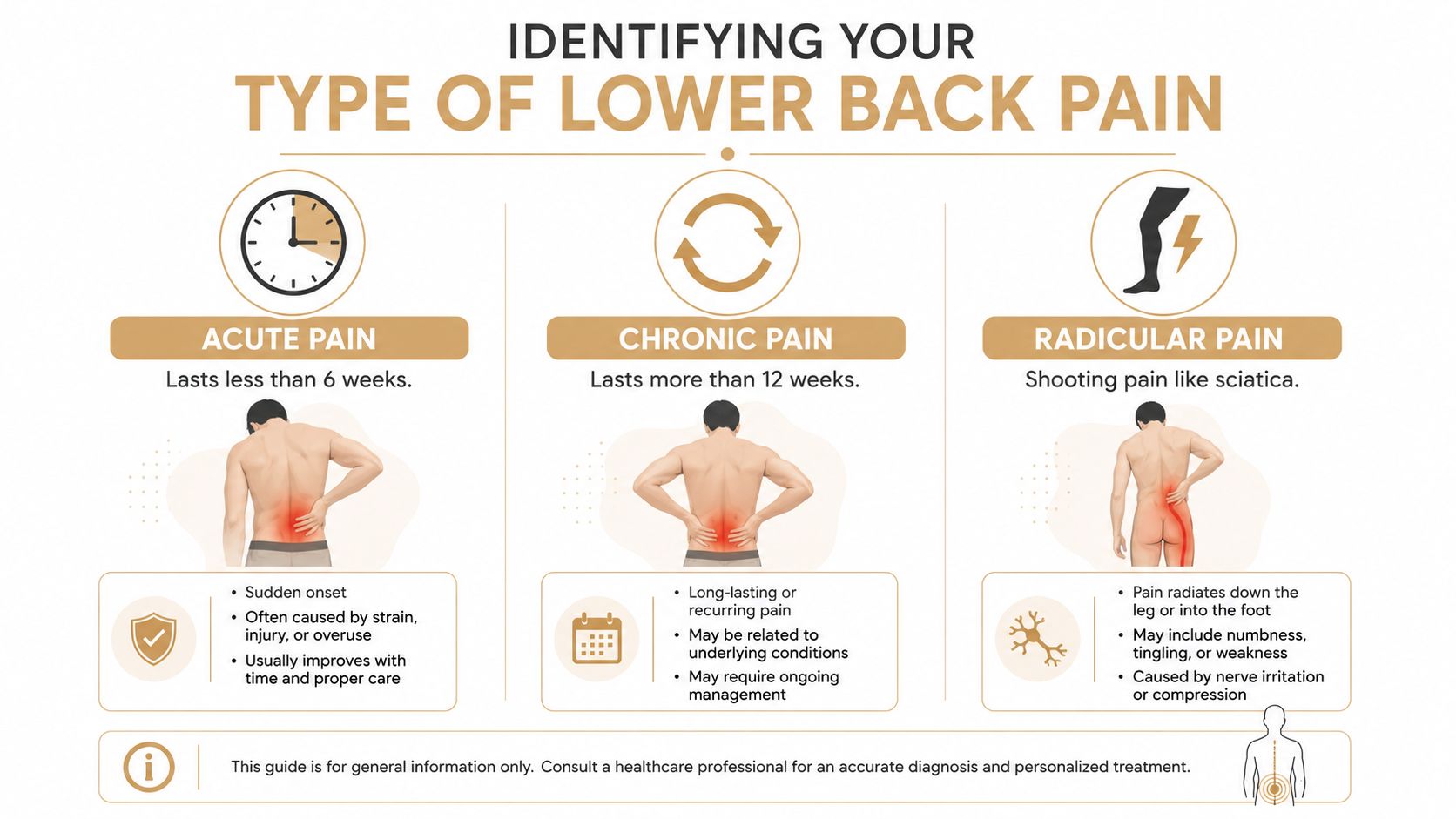
Acute pain often starts after lifting, twisting, a long drive, a hard workout, or a sudden awkward movement. It tends to feel local, stiff, and aggravated by certain motions, but it doesn't always point to a deeper structural problem. For many people, it eases on its own with time, which is why the best first step is often calm movement rather than aggressive intervention.
Chronic pain is different because the problem is no longer just tissue irritation. The body has often learned a protective pattern, which means the back may hurt with normal tasks, then settle down, then flare again. That's why chronic pain usually responds better to active rehabilitation, education, and reconditioning than to passive care alone.
Radicular pain usually feels sharper, more electric, or more travel-based, and it can run below the knee. A proper exam should include reflexes, strength, sensation, heel-walking for L5, and toe-walking for S1, because those findings help separate simple back pain from nerve-root involvement. If pain comes with new weakness, bowel or bladder changes, fever, major trauma, or a history that raises concern for infection or cancer, the pathway changes quickly and conservative self-care shouldn't be the only plan.
If the pain is spreading down the leg, don't just chase comfort. Ask whether the nerve itself needs evaluation.
A useful way to self-check is to ask three questions. How long has this been going on, where does it travel, and what makes it worse. If the answer changes from one week to the next, the category may be changing too.
For readers who want a deeper look at disc-related pathways, this guide to disc herniation treatment options is a practical follow-up.
The biggest mistake people make is choosing a treatment because it sounds advanced, not because it fits the pain type. Evidence quality matters. For chronic low back pain, exercise-based rehabilitation has the strongest noninvasive research base, and a systematic review found moderate-certainty evidence that exercise improved pain by 15.2 points on a 0 to 100 scale and disability by 7 points at earliest follow-up. Systematic review of exercise therapy for chronic low back pain That doesn't mean every exercise plan works the same way, but it does mean active rehab deserves to be first-line rather than an afterthought.
| Treatment | Evidence Quality | Sessions Needed | Best For |
|---|---|---|---|
| Exercise-based rehabilitation | Strongest noninvasive support for chronic pain | Ongoing, with home follow-through | Chronic pain, recurrence prevention, function |
| Superficial heat | Moderate evidence for acute pain | Short-term use | New pain, muscle tightness |
| Massage therapy | Lower-quality evidence for acute pain | Short course | Short-term symptom relief, muscle guarding |
| Acupuncture | Supported for acute and chronic pain | Usually a series | Pain modulation, mixed pain patterns |
| Spinal manipulation or adjustment | Low-quality evidence for acute pain, used in some chronic pathways | Short series with reassessment | Select acute and chronic cases |
| Spinal decompression | Emerging, especially for disc-related symptoms | Typically a repeated course | Disc-related and radicular pain |
| Soft-tissue laser or device-based therapies | Emerging | Usually a series | Irritable or slow-to-settle tissue pain |
Acute pain often improves regardless of treatment, so the goal there is to calm symptoms without turning a temporary flare into a long treatment dependency. That's why superficial heat, massage, acupuncture, and spinal manipulation are commonly used early. ACP guideline for acute low back pain
For chronic pain, the picture changes. APTA's clinical practice guideline supports trunk strengthening and endurance, multimodal exercise, specific trunk activation, aerobic work, aquatic exercise, and general exercise for chronic low back pain. APTA clinical practice guideline In plain terms, the back usually needs to be trained to tolerate load again, not just treated gently forever.
Some readers also look at device-based care for disc or nerve-related symptoms. If that's part of your search, a spinal decompression overview can help clarify where decompression fits and where it doesn't. For a broader pain-relief perspective, the MedEq Fitness pain relief guide is relevant to people comparing non-drug options, though it should still be judged against the actual pain pattern in front of you.
Practical rule: if a treatment doesn't improve function, tolerance, or confidence within a reasonable trial, it needs reassessment. More sessions are not automatically better.
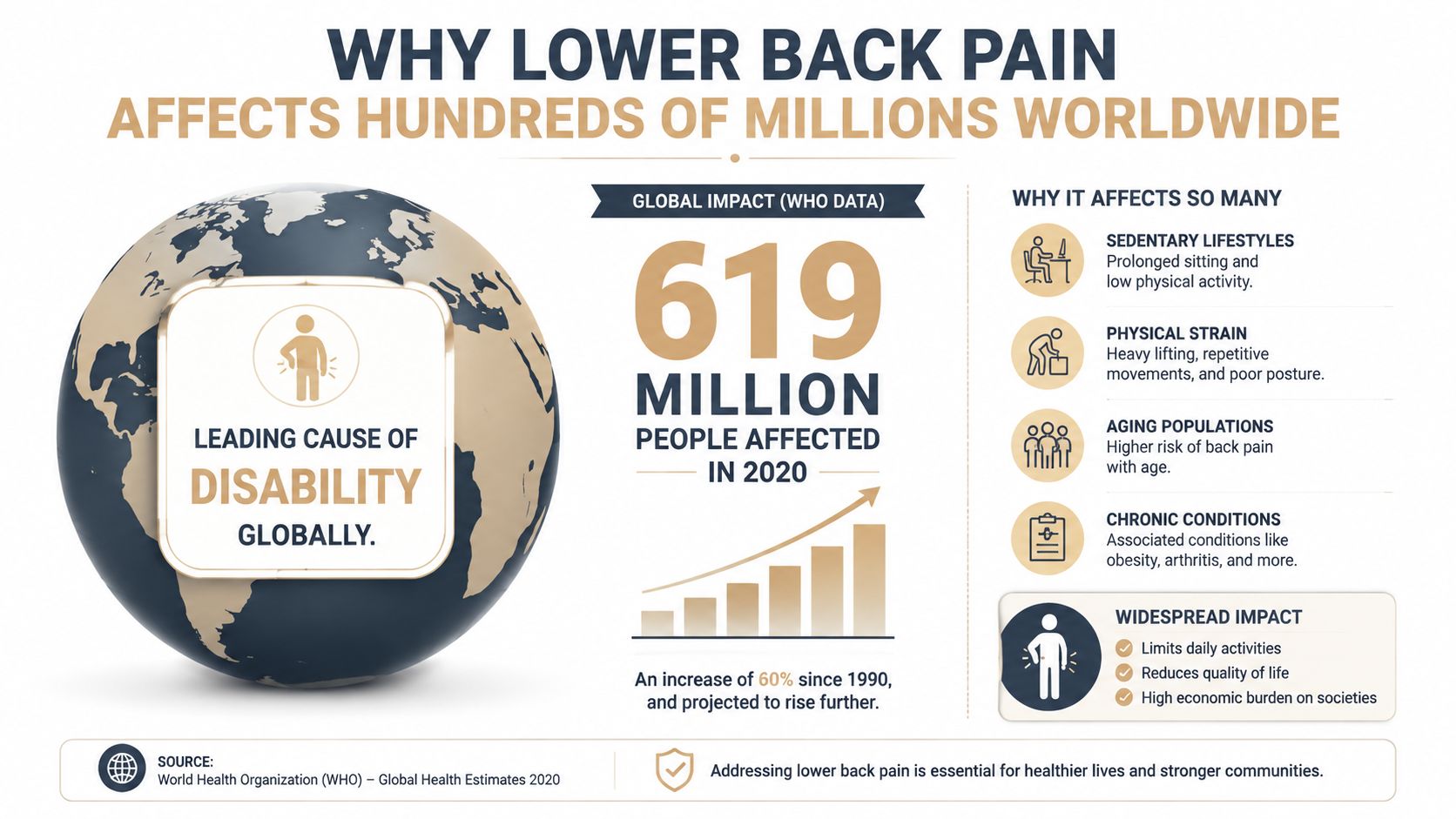
One option some patients consider is Aspen Falls Wellness, which combines chiropractic adjustments, spinal decompression, SoftWave therapy, MLS laser therapy, massage, acupuncture, rehabilitative exercise, mobility work, and nutrition coaching within one care setting. That kind of coordination can make it easier to match the modality to the pain stage instead of guessing one treatment at a time.
Good care usually moves in steps, not leaps. Start with the least invasive approach that still makes sense for the pain type, then escalate only if the response is poor. The reason is simple, most back pain does not need a dramatic response on day one, and a hurried jump to advanced care can miss the chance for recovery through movement, education, and time.
For a new flare, use gentle movement, superficial heat, and a clear avoidance of bed rest. Short walks, position changes, and light mobility work are often better than trying to “protect” the back all day. If the pain is severe but still mechanical, this phase is about settling irritation without feeding stiffness.
If pain isn't improving after a short home trial, professional conservative care can add structure. Chiropractic care, massage, acupuncture, and a personal exercise plan can help, especially when the back is guarded, stiff, or stuck in a repetitive flare cycle. Natural supplements for joint health may also be discussed by some patients, but supplements should never replace the basics, because movement and reassessment matter more than any capsule.
If symptoms linger despite a thoughtful conservative trial, advanced modalities may be considered. That's where spinal decompression, laser therapy, and other adjunctive tools sometimes enter the plan, especially when disc-related irritation or persistent inflammation seems to be limiting progress. The point isn't to collect modalities, it's to choose a tool that fits the problem.
Surgery is not the default answer for most cases. It belongs when there's a clear structural target and the clinical picture supports escalation, or when serious nerve compromise is present. For the average frustrating back flare, the smarter move is a staged plan with reassessment.
Track function, not just pain. If you can sit longer, walk farther, sleep better, or bend with less fear, that matters.
A practical timeline many clinicians use is simple, try self-care for about 1 to 2 weeks, seek professional evaluation if pain persists beyond 2 to 4 weeks, and consider advanced modalities after 6 to 8 weeks without improvement. That doesn't replace judgment, but it keeps people from waiting too long or escalating too fast.
A lot of people think back pain should automatically trigger an MRI or CT scan. That's not how most guidelines work. For atraumatic adult low back pain, history and physical examination usually come first, and imaging is generally deferred for about 6 weeks unless red flags are present, such as neurologic deficits, suspected infection, malignancy, fracture, or cauda equina or spinal cord compression. NCBI clinical review on low back pain evaluation
That stepwise approach protects patients from chasing incidental findings. Imaging can show changes that look alarming on paper but don't explain the pain, which is one reason unnecessary scans can lead to over-treatment. The scan is useful when the result will change the plan, not when it just creates noise.
A proper neuromuscular assessment should not be vague. It should look at reflexes, strength, sensation, heel-walking for L5, and toe-walking for S1, especially if pain travels into the leg. That kind of exam helps separate a simple mechanical strain from a nerve-root issue that may need a different pathway.
If weakness is progressing, pain is becoming more leg-dominant, or bladder and bowel symptoms appear, the wait-and-see approach stops being appropriate. The same is true when infection, fracture, or malignancy is a real possibility. In those cases, advanced diagnostics and specialist input aren't optional, they're part of safe care.
Consumer-facing advice often overemphasizes comfort tips and underemphasizes risk stratification. That leaves people guessing about whether they should push through or push for a referral. The better rule is to let the exam and symptom pattern lead the way.
Practical rule: imaging should answer a question. If no one can say what question the scan is meant to answer, the scan may be too early.
Back pain usually has more than one driver. A person may have irritated joints, guarded muscles, reduced movement, sleep disruption, and fear of bending, all at the same time. That's why fragmented care often disappoints, because one provider treats the pain signal while another treats mobility, and nobody is coordinating the full picture. A coordinated model brings those pieces together.
When chiropractors, massage therapists, acupuncturists, mobility specialists, and nutrition coaches work in the same setting, the message stays consistent. The patient isn't told to rest by one person, stretch aggressively by another, and stop moving by a third. Shared records also cut down on redundant evaluation, which means more time gets spent on progression and less on repeating the same intake story.
A practical example is a patient with chronic disc-related pain who begins with decompression, gets targeted adjustments when tolerated, uses therapeutic massage to reduce guarding, and then follows a home exercise plan that progresses as symptoms settle. Multidisciplinary pain management overview makes sense in that kind of case because the treatment is sequenced, not randomly stacked.
It supports re-evaluation. It lets the plan change when the patient improves or stalls. It also makes it easier to move from passive care to active care without a hard handoff that loses momentum.
The strongest plans don't just reduce pain for one visit. They make the next week easier to manage.
Integrated care also fits the reality of recurrence. Since back pain often comes back, a patient who learns movement strategy, load management, and self-monitoring during care is better prepared for the next flare. That's the difference between a temporary fix and a usable long-term plan.
A serious first visit should feel organized, not rushed. It usually starts with a thorough history, a physical assessment, and, when indicated, a referral for X-ray or MRI. The goal is to match the workup to the symptoms, then build a plan that can be rechecked instead of assumed.
Visit frequency depends on the condition. Acute pain often needs a shorter, simpler course, while chronic pain usually benefits from a longer runway with regular re-evaluation. Good care doesn't just ask whether pain is down, it asks whether you can sit longer, move better, sleep more normally, and return to the tasks that matter.
Insurance participation varies by provider, and Aspen Falls Wellness accepts multiple plans, including Aetna, BCBS, Cigna, Humana, GEHA, and Motiv Health, with verification recommended. That matters because continuity is easier to maintain when the financial path is clear up front.
The bigger point is that 90% of cases improve without surgery, but 50% of patients who have one episode will have another within one year, so prevention and maintenance are part of the conversation from the start. American Association of Neurological Surgeons low back pain page That recurrence risk is why the best results usually come from care that teaches you how to manage your back after the flare is gone.
If your pain keeps returning, or if you've already tried generic rest-and-stretch advice without lasting change, get evaluated by a team that can sort the pain type and build a plan around it. The right next step is not guessing harder, it's getting a clear exam, a real progression plan, and follow-up that tracks whether your back is improving.
Aspen Falls Wellness offers coordinated chiropractic care, spinal decompression, SoftWave therapy, MLS laser therapy, massage, acupuncture, mobility work, and rehabilitative exercise for people dealing with back pain, sciatica, and disc-related symptoms. If you're ready for a more structured approach to lower back pain solutions, visit Aspen Falls Wellness to see how a multidisciplinary plan can fit your situation.

Stay updated with the latest chiropractic news and exclusive offers.