Find relief with a chiropractor for back pain in Salt Lake City & Sandy. Our guide covers evidence-based treatments like DRX9000, what to expect, and costs.



You wake up stiff, take a few careful steps out of bed, and feel that familiar pull in your lower back. By lunch, sitting is worse. By evening, you're skipping the gym, declining a walk on the Bonneville Shoreline Trail, or bracing yourself just to load groceries into the car. That's how back pain tends to work in Salt Lake City. It doesn't just hurt. It chips away at the routines that make life feel normal.
A lot of people wait longer than they should because they're trying to sort through mixed advice. Rest or push through? Stretch or stop? See a chiropractor for back pain, start physical therapy, ask for imaging, or just hope it settles down? The confusion gets worse when you want real relief but don't want to jump straight to medication or surgery.
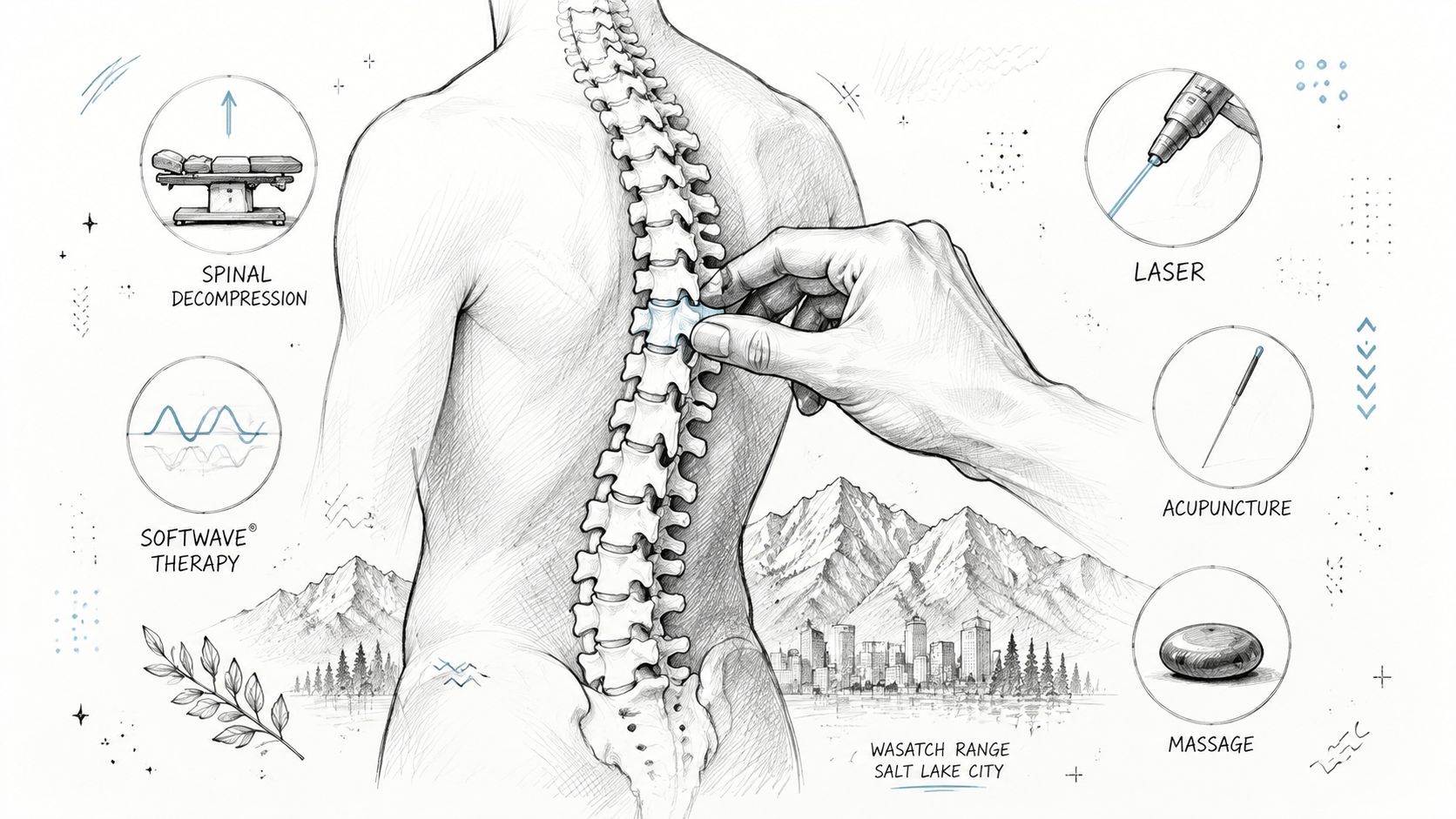
Modern chiropractic care is broader than commonly understood. It can include chiropractic adjustment, spinal decompression, mobility therapy, rehabilitation exercise, massage therapy, acupuncture, muscle stimulation, personal exercise plans, nutrition counseling, and newer tools like MLS Laser Therapy and SoftWave Therapy. The point isn't to throw every treatment at the problem. The point is to match the right tool to the reason your back hurts.
Back pain in Utah often starts with something ordinary. A long commute. A hard ski day. Yard work after a storm. A weekend hike you felt fine during, then paid for the next morning. By the time many people look for help, the pain has already changed how they move. They bend differently, sleep differently, and avoid things they assume will flare it up.
In practice, I see two patterns often. One is the person with a sudden episode who says, “I threw my back out.” The other is the person who's had a low ache for months, then gets one sharp flare that makes the issue impossible to ignore. Both want the same thing. Relief that makes sense, without turning their life upside down.
Back pain feels bigger when you don't know what's causing it. Most people calm down once they understand whether the problem is mainly joint, disc, nerve, muscle, or a mix of all four.
Salt Lake City and Sandy patients also tend to be active. They don't just want pain relief. They want to get back to lifting, golfing, biking, working, traveling, parenting, or training without constantly negotiating with their back. That matters, because treatment should focus on function, not just symptoms.
A good conservative plan usually starts with three questions:
That's where modern chiropractic care helps. It isn't just about a quick adjustment and a follow-up whenever you hurt again. Done well, it's a guided process. You get examined, the likely pain generator is identified, movement and nerve findings are checked, and treatment is selected based on what your body is doing today.
For some people, that means a straightforward adjustment and a home exercise plan. For others, especially those with disc-related pain, sciatica, or stenosis, it may mean a more integrated plan that includes decompression, rehabilitation exercise, massage therapy, or laser-based support.
You bend to load groceries in Sandy, feel a catch in your lower back, and by that evening sitting feels worse than standing. A few days later, the pain shifts into the hip or down the leg. That pattern usually points to irritation in more than one structure, not a mysterious injury that came out of nowhere.
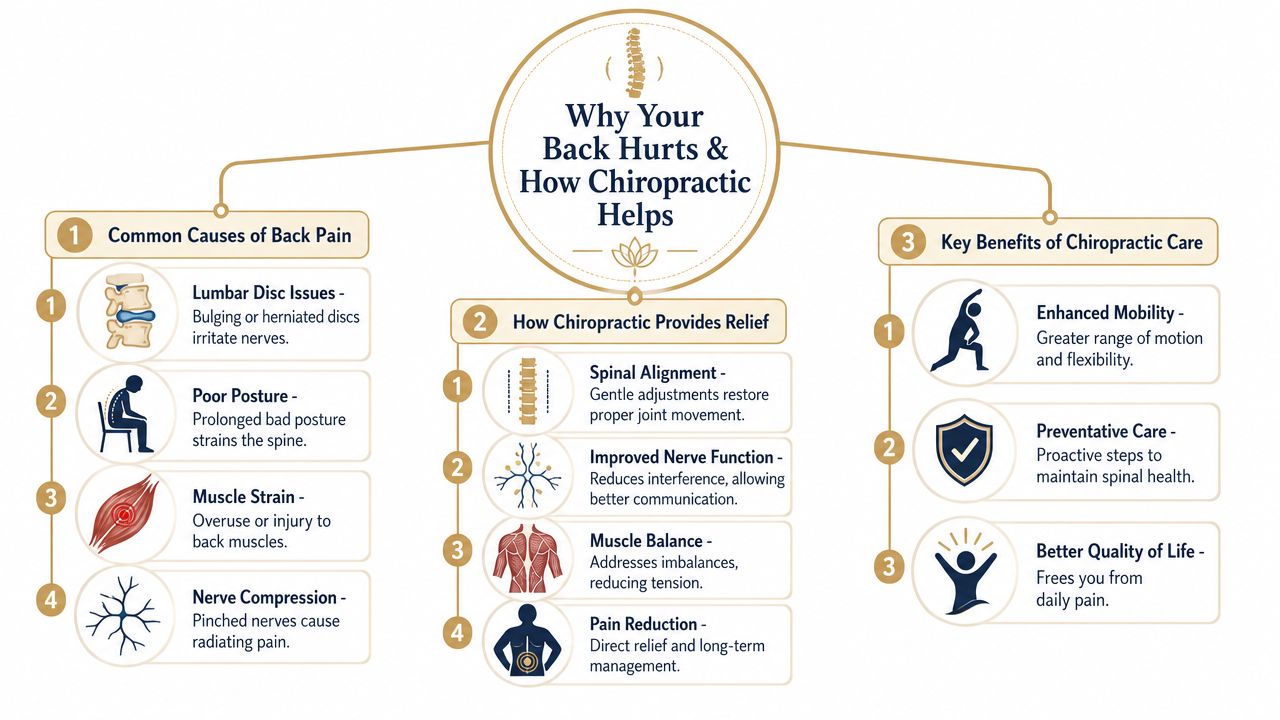
Low back pain often comes from a mix of disc stress, joint restriction, muscle guarding, and nerve sensitivity. The hard part is that these problems can overlap. A disc can irritate a nerve. A stiff joint can trigger muscle spasm. Protective tension can keep the area painful long after the first strain.
A lumbar disc problem usually hurts more with sitting, bending, coughing, or getting up after staying in one position too long. Some patients feel pain in the center of the low back. Others feel it in the glute or down the leg when the nearby nerve becomes irritated.
A facet joint problem usually behaves differently. Pain is often sharper with twisting, standing upright after sitting, or extending backward. Patients commonly point to one side of the lower back rather than the middle.
Muscle strain and guarding can be the main driver, but they are often a response to deeper irritation. In practice, I treat tight muscles as information. They tell us what the body is protecting.
| Problem type | What it often feels like | What care usually tries to restore |
|---|---|---|
| Disc irritation | ache, sitting intolerance, leg symptoms | pressure reduction, movement tolerance, calmer nerve response |
| Joint restriction | sharp catching pain, stiffness with motion | cleaner joint motion and less local irritation |
| Muscle guarding | tightness, fatigue, soreness, spasms | tissue relaxation, better control, normal loading |
| Nerve compression | radiating pain, tingling, burning | less irritation and better function through the low back and leg |
Chiropractic care helps by improving motion, reducing mechanical stress, and giving irritated tissues a chance to settle. An adjustment is a specific input to a restricted joint. When it fits the case, it can reduce stiffness, improve movement quality, and lower the amount of protective bracing around the area.
That does not mean every back problem should be adjusted the same way.
If pain is highly acute, clearly disc-driven, or traveling below the knee, treatment may need to start more gently. In those cases, we often get better traction by calming the area first, then adding manual care, exercise, and other support as tolerance improves. That integrated approach matters in a clinic like Aspen Falls Wellness, where low back cases in the Salt Lake City area often need more than one tool to make steady progress.
Clinical guidance from the American College of Physicians recommends non-drug options such as spinal manipulation for acute and subacute low back pain, as summarized by the American Family Physician review of the ACP guideline. That recommendation fits what many chiropractors see every week. The right treatment can reduce pain and help people return to normal activity sooner, but the response depends on the pain source, severity, and how long the problem has been present.
Good care also has limits. If an adjustment improves your motion but sitting still triggers leg pain every time, the disc may need more attention than the joints. If manual treatment reduces pain for a day but symptoms return with every lift, the body usually needs better load tolerance through the trunk, hips, and lower body.
That is where rehab earns its place. Once symptoms calm enough, strength and movement training help the results hold. If you want a practical overview of how strength supports long-term resilience, learn about longevity strength training.
For patients sorting through recurring symptoms, this guide to lower back pain care options can help you compare common patterns, including pain that sounds more disc-related, joint-related, or muscular.
Back pain treatment works better when the therapy matches the diagnosis. Some cases respond quickly to adjustment and movement. Others need decompression, tissue stimulation, or more symptom control before strengthening can begin.
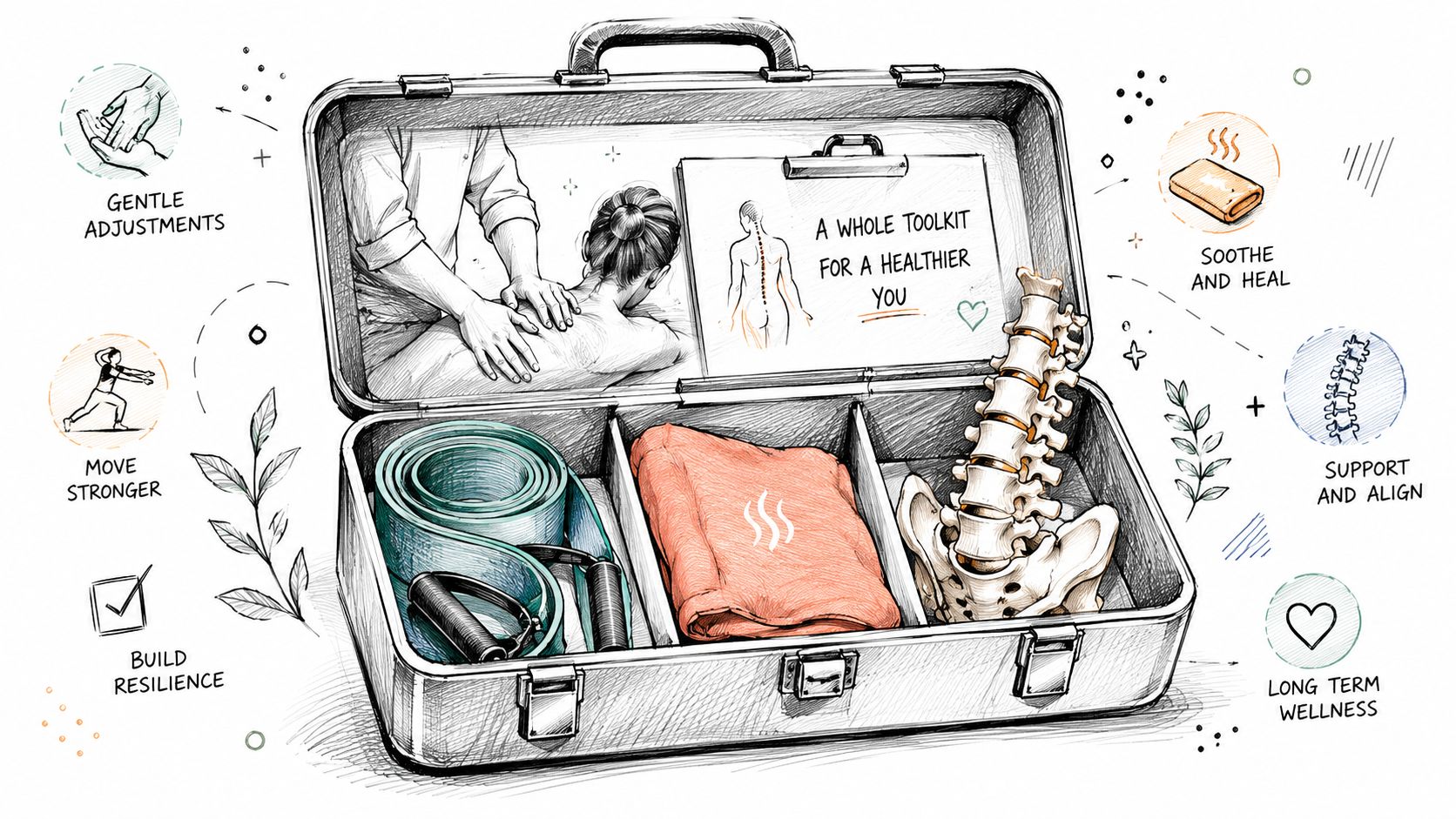
An adjustment is often the foundation. It helps restore motion to spinal segments that have become restricted and can reduce the cycle of stiffness, guarding, and pain. For a patient with a locked-up lower back after lifting, that may be the main intervention early on.
Realignment matters most when it improves function. If you can stand taller, rotate more comfortably, and stop bracing with every movement, the adjustment is doing useful work. If your pain is highly irritable or clearly disc-driven, though, adjustment may be only one part of the plan.
Spinal decompression is designed for cases where pressure reduction matters, especially with disc herniation, sciatica, and some stenosis patterns. The DRX9000 applies controlled decompression to the lumbar spine with the goal of reducing disc-related stress and making nerve irritation less constant.
One study on DRX9000 spinal decompression reported that 89% of patients with chronic low back pain had significant pain reduction after a 6-week course, with average pain scores dropping from 6.4 to 0.8 on a 10-point scale, and no significant adverse events were reported in that study, as described in this DRX9000 spinal decompression report.
Not every patient with radiating pain needs decompression, and decompression isn't a magic fix for every chronic back problem. But when symptoms fit the pattern, it can be a valuable non-surgical option. Patients who want a fuller overview can review spinal decompression therapy details.
Some backs hurt because tissues are inflamed and irritated, not just mechanically restricted. That's where SoftWave Therapy and MLS Laser Therapy can make sense as supportive tools.
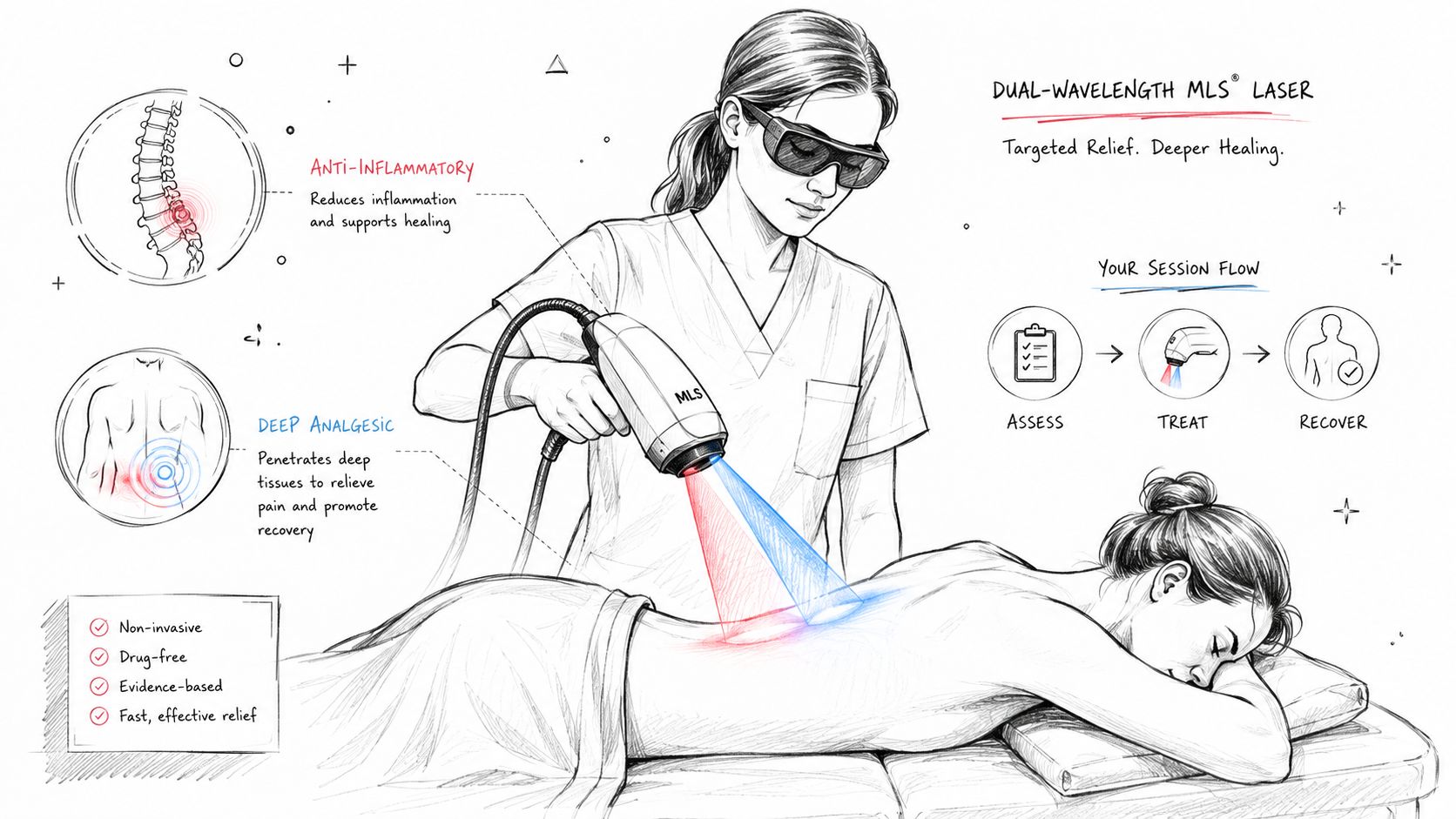
SoftWave is generally used to stimulate tissue healing and support recovery in stubborn soft-tissue problems. MLS Laser Therapy is commonly used when the treatment goal is to calm inflammation and promote recovery in irritated tissues around the spine, pelvis, or supporting musculature. These approaches don't replace movement-based care. They can make movement more tolerable so the patient can progress.
The most effective plan is rarely the one with the most treatments. It's the one that removes the main barrier to healing first.
Patients who are curious about broader traditions that pair hands-on care with recovery support may also appreciate this overview on exploring oriental wellness practices, especially when they're comparing different non-surgical paths.
Supportive therapies often determine whether early relief lasts.
An integrated clinic such as Aspen Falls Wellness uses that kind of multi-modal model, combining chiropractic care with decompression, laser, SoftWave, acupuncture, massage, mobility work, and rehabilitation exercise based on the patient's presentation rather than a one-size-fits-all routine.
The first visit should lower anxiety, not add to it. Patients often come in wondering two things: “What's wrong?” and “Am I about to get talked into a long plan before anyone explains my back?”
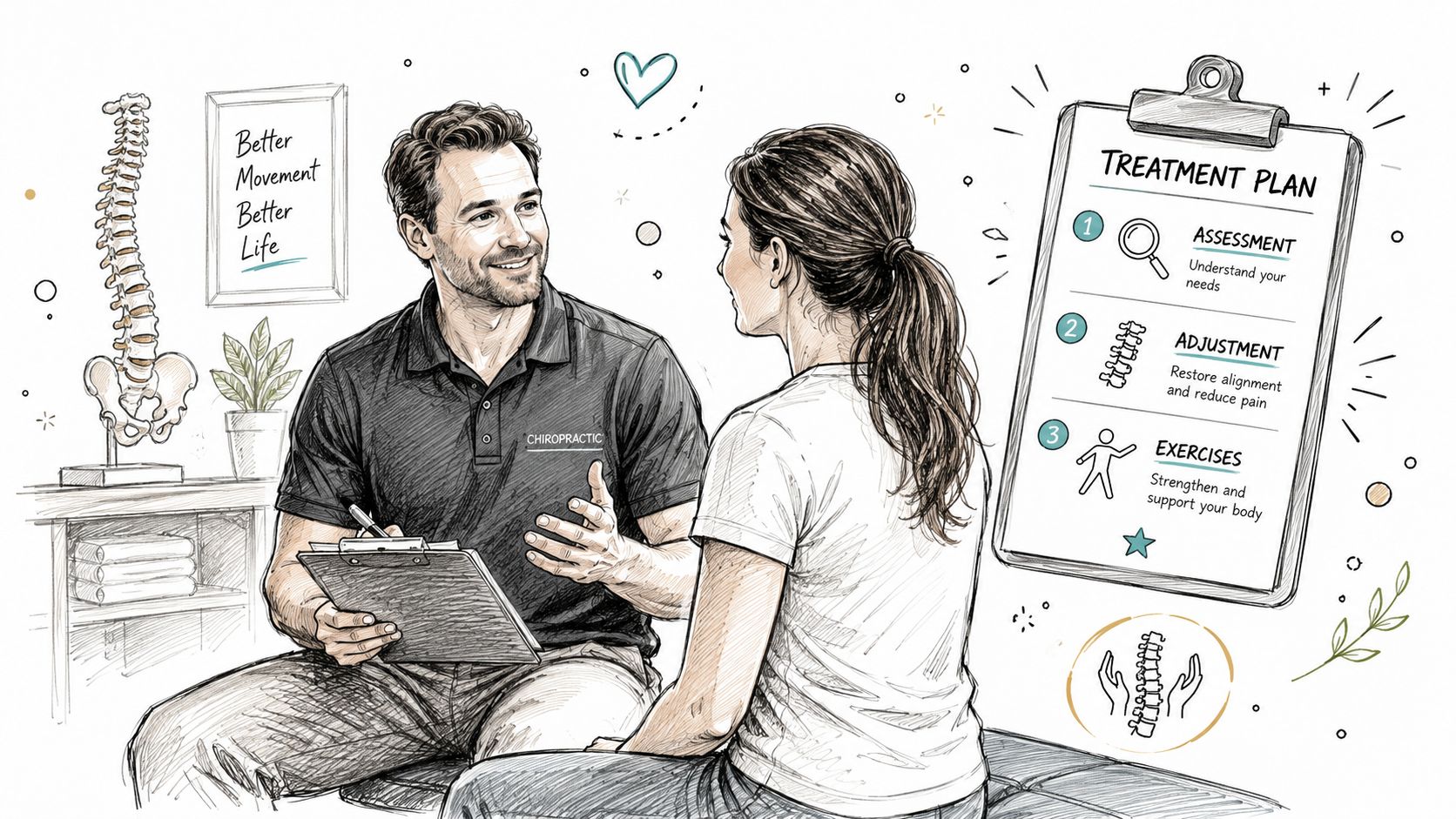
A solid first appointment starts with history. Not just where it hurts, but how it behaves. Does sitting make it worse? Does walking ease it? Is the pain staying in the back, or traveling down the leg? Did it begin after a lift, a fall, a car accident, or with no clear event at all?
Then comes the physical exam. That usually includes posture, motion, orthopedic testing, neurological screening, and palpation of the involved areas. If sciatica is present, the exam should look for signs that distinguish simple referred pain from nerve root irritation.
Imaging isn't automatic. For nonspecific back pain, routine imaging usually isn't the first step. When back pain is persistent and includes radiculopathy or spinal stenosis, MRI is the preferred imaging modality, while routine imaging isn't recommended unless severe neurological deficits or serious pathology are suspected according to this evidence-based statement on low back pain management.
If your first visit skips the exam and jumps straight into treatment, that's a problem. The plan should follow the findings.
Once the pattern is clearer, the treatment plan should be specific. A person with acute mechanical low back pain may start with a chiropractic adjustment, mobility therapy, and a few simple home movements. A person with disc-related pain and leg symptoms may need a different sequence: decompression first, symptom calming second, strengthening later.
A personalized plan often includes a mix of these elements:
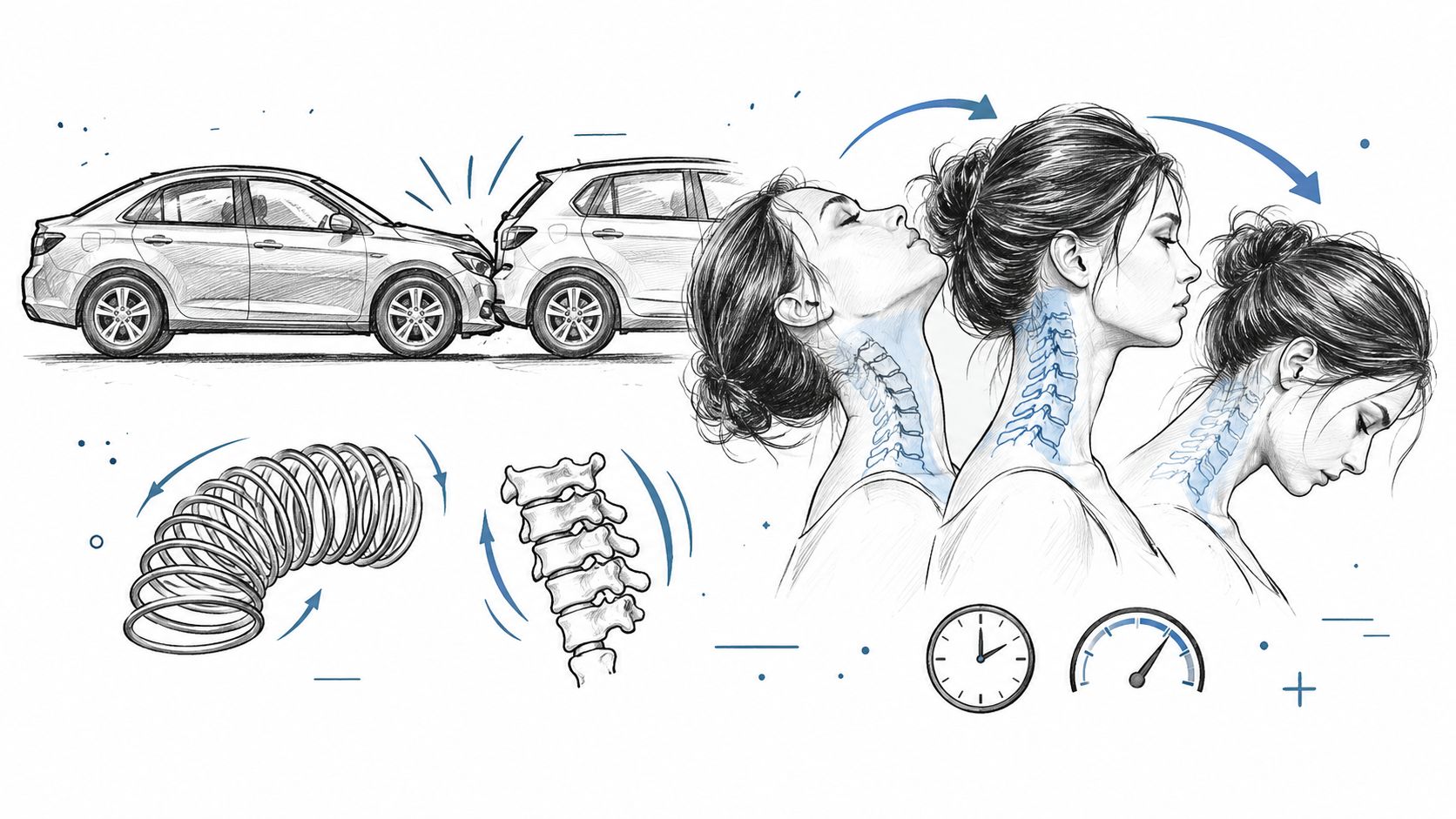
Some patients also need care for related problems uncovered during the visit, such as postural collapse from desk work, swing mechanics through a golf movement screening, or lingering issues after a motor vehicle collision that call for car accident treatment.
Good plans are collaborative. The patient should know what the working diagnosis is, what the first goal is, what the treatment is trying to change, and what would count as progress.
A common Salt Lake scenario is this: the pain eases for a day or two after treatment, then flares again after a commute, a ski day, yard work, or long hours at a desk. That does not automatically mean care is failing. It means progress has to be measured by more than a pain score on your best day.
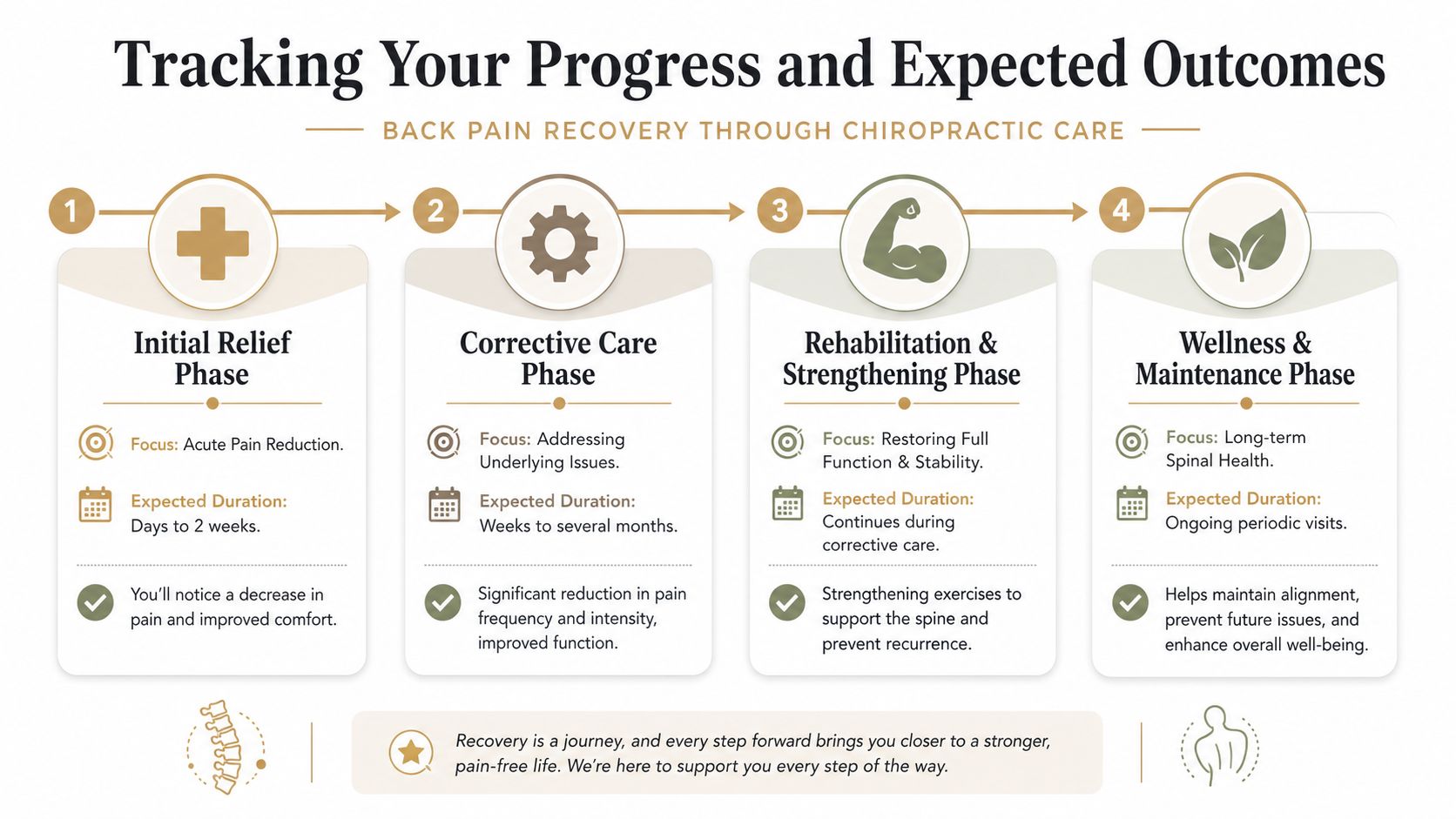
The clearest signs of improvement are functional. You get out of bed with less stiffness. You can sit through work with fewer position changes. Walking feels easier. Bending to load the dishwasher or pick up a child takes less bracing. If pain has been traveling into the leg, a good trend is centralization, where symptoms pull out of the leg and become more limited to the low back.
Visit frequency depends on how irritable the condition is, how long it has been present, and what the exam shows. Clinical guidance from the American College of Physicians supports non-drug care such as spinal manipulation and exercise for low back pain, with follow-up adjusted to the patient's response rather than locked into a fixed schedule, as outlined in these low back pain treatment recommendations. In practice, acute episodes usually need closer spacing at first. Persistent or disc-related cases often need a longer runway, especially when decompression, rehab, and home exercise all need time to change the pattern.
At Aspen Falls Wellness, I want re-evaluations to answer a plain question. Is the spine handling load better than it was one or two weeks ago? If the answer is yes, we continue and taper care as the patient gains stability. If the answer is no, the plan changes.
Progress should show up in several places, not just one:
That matters with integrated care because each tool has a different job. An adjustment may improve motion. DRX9000 spinal decompression may reduce disc-related pressure and help leg symptoms calm down. MLS Laser or SoftWave may help settle irritated tissue enough for exercise to become possible. Rehab then gives those gains something to hold onto. If one part is helping and another is missing, the overall result often stalls.
Expected outcomes should also be realistic. Acute mechanical back pain may improve fairly quickly. Longstanding pain, recurrent flare-ups, stenosis, disc injuries, and postural deconditioning usually improve in stages. Relief often comes first. Strength, endurance, and confidence in movement tend to lag behind, which is why stopping care the moment pain dips can lead to the same cycle returning a few weeks later.
Home care changes the outcome more than patients expect. The people who keep up with their mobility work, walking, and strengthening usually maintain progress better than the people who rely only on office visits. Cost plays into those decisions too, so it helps to review what chiropractic care can cost in Salt Lake City before starting a plan.
Recovery is not measured by how many visits are used. It is measured by whether your back lets you do more, with less pain, less guarding, and less disruption to daily life.
Cost matters, and so does convenience. Back pain already takes enough from your week. Care shouldn't require a complicated travel routine or leave you guessing whether your insurance will help.
Many integrated musculoskeletal practices in this area work with major insurance plans. Examples often include Aetna, BCBS, Cigna, Humana, GEHA, and Motiv Health, but benefits vary by plan and by service. The practical move is to verify coverage before starting, especially if your plan treats chiropractic care, acupuncture, decompression, massage therapy, or laser-based services differently.
Chiropractic care can also make sense from a value standpoint. A study summarized in a systematic review found chiropractic care for low back pain had a lower average cost of $48.56 compared with physical therapy over the study period while also showing a higher disability-adjusted life year outcome, as reported in this review of cost-effectiveness and outcomes for low back pain care.
For local patients, access is part of the decision. If you live in or near Salt Lake City or Sandy, having two nearby clinics makes it easier to stay consistent with the recommended visit schedule. That matters most in the first phase of care, when frequency is usually higher and missed visits can slow momentum.
A few practical questions help before you schedule:
The best financial decision usually isn't the cheapest single visit. It's the plan that fits the problem, uses care efficiently, and moves you toward doing more on your own.
Chiropractic care is a strong option for many back pain cases, but it isn't the right fit for every patient at every stage. That's not a weakness in the profession. It's part of safe care.
Seek immediate medical evaluation if you have progressive weakness, numbness in the groin or saddle area, or loss of bowel or bladder control. Those symptoms can signal a more urgent neurological problem. Severe trauma, unexplained systemic illness, or rapidly worsening symptoms also deserve prompt medical attention.
A second group needs attention even if the situation isn't emergent. That includes patients whose pain keeps escalating, whose leg symptoms keep spreading, or whose function keeps dropping despite a reasonable trial of conservative care.
Few sources explain this well, but re-evaluation protocols matter. If progress stalls, the plan should change, or the patient should be referred for further medical or surgical evaluation, as emphasized in this discussion of chiropractic safety, failure points, and red flags.
A trustworthy chiropractor for back pain doesn't just know when to treat. They know when to pause, reassess, and refer.
That's what patients deserve. Clear expectations, measurable progress, and honest boundaries.
If you're dealing with persistent or recurrent back pain in the Salt Lake City or Sandy area, Aspen Falls Wellness offers non-surgical evaluation and coordinated care that can include chiropractic adjustment, DRX9000 spinal decompression, laser therapy, SoftWave, massage, acupuncture, mobility work, and rehabilitation exercise. The next step is simple. Schedule an exam, get the problem defined clearly, and find out which treatment path fits your back instead of guessing.

Stay updated with the latest chiropractic news and exclusive offers.