Discover what causes whiplash in car accidents through biomechanics, impact scenarios, and evidence-based treatment options for neck and soft tissue injuries.
You're stopped in traffic when the car behind you bumps into your rear bumper. The vehicles have little visible damage, so you exchange information and drive away. Later that evening, your neck feels tight. By the next morning, turning your head hurts, and a headache has settled at the base of your skull.
That pattern is common because whiplash is not just an injury caused by a large impact. It's an acceleration-deceleration injury. Your torso moves with the seat, while your head briefly lags behind, forcing the cervical spine through a rapid sequence of motion. Understanding what causes whiplash in car accidents can explain why a collision that felt minor can still strain muscles, ligaments, joints, discs, and nerves.
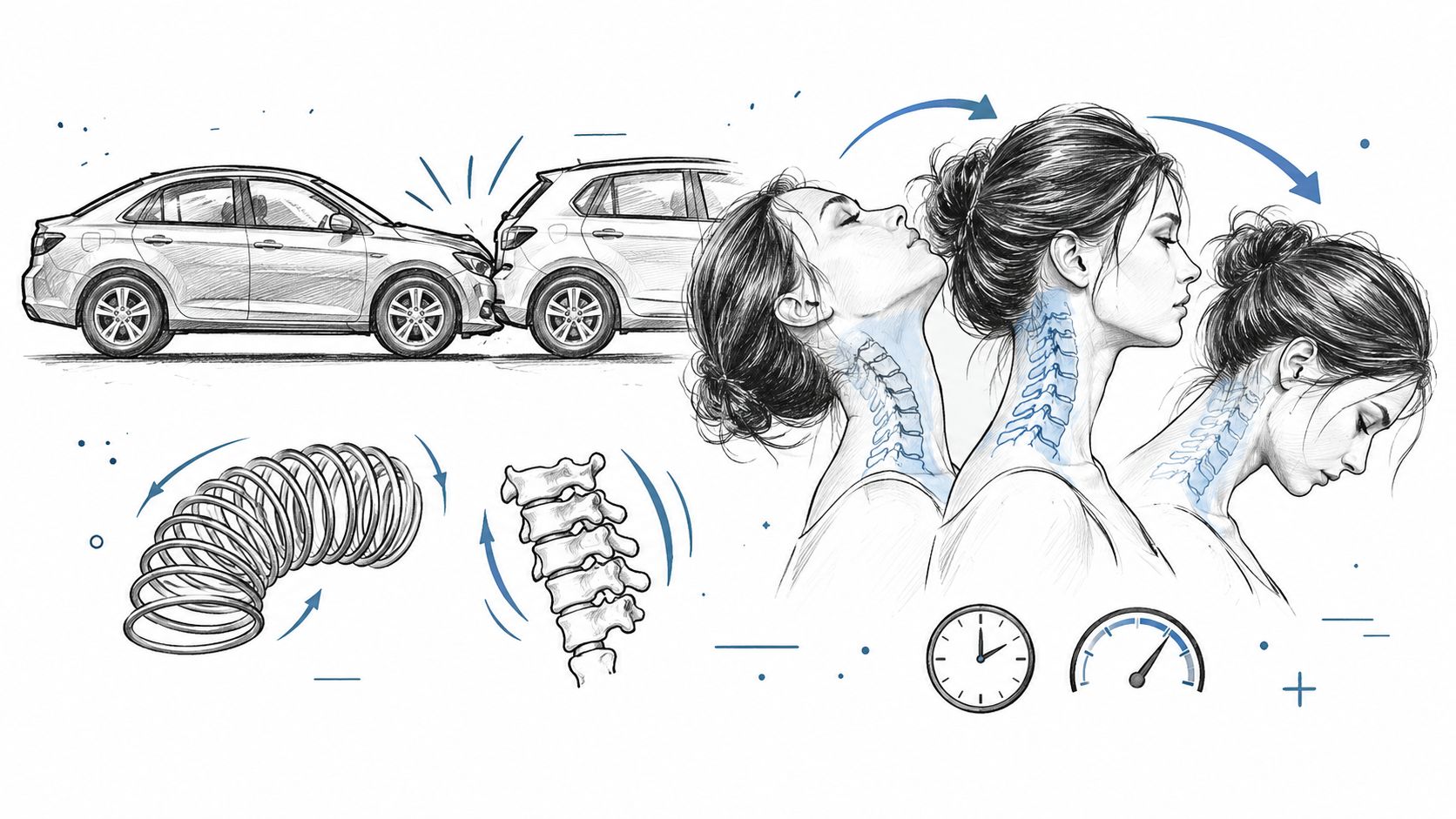
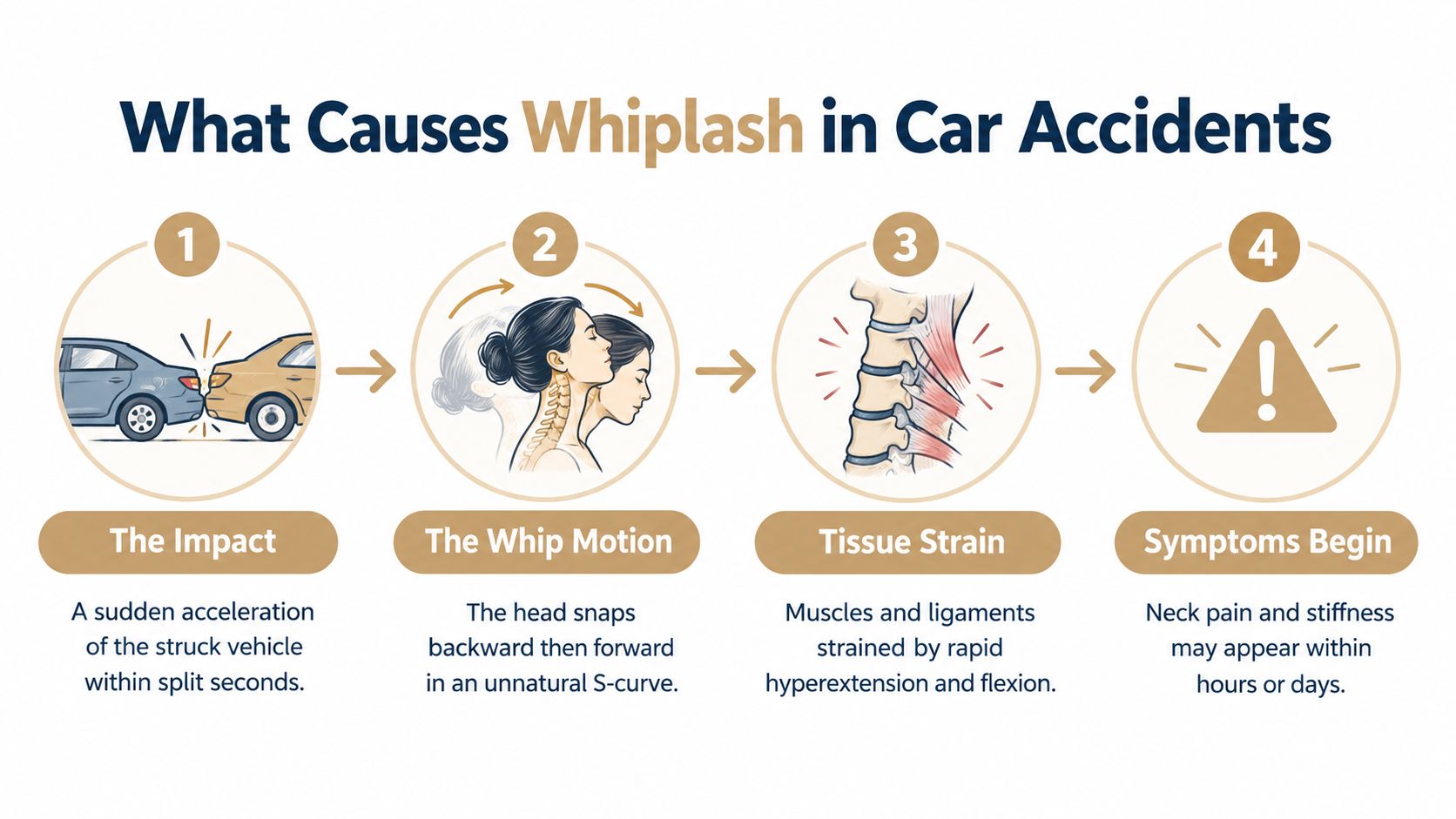
At the instant a rear-end collision begins, the struck vehicle and your torso move forward. Your head briefly lags behind because of inertia, like a heavy weight attached to a moving base. That split-second difference makes the neck change shape before the head catches up. The cervical spine can form an unusual S-shaped curve, extend backward, and then move forward again.
The full sequence may unfold within about 100 to 250 milliseconds, faster than conscious bracing or deliberate tightening of the neck muscles. A biomechanical review also estimates that whiplash occurs at about 300 cases per 100,000 inhabitants each year in Western Europe and North America, with rear-end crashes representing roughly 50% to 85% of cases depending on the source and case definition (Biomechanics of whiplash injury). The timing helps explain why the tissues may absorb motion before they can coordinate a protective response.
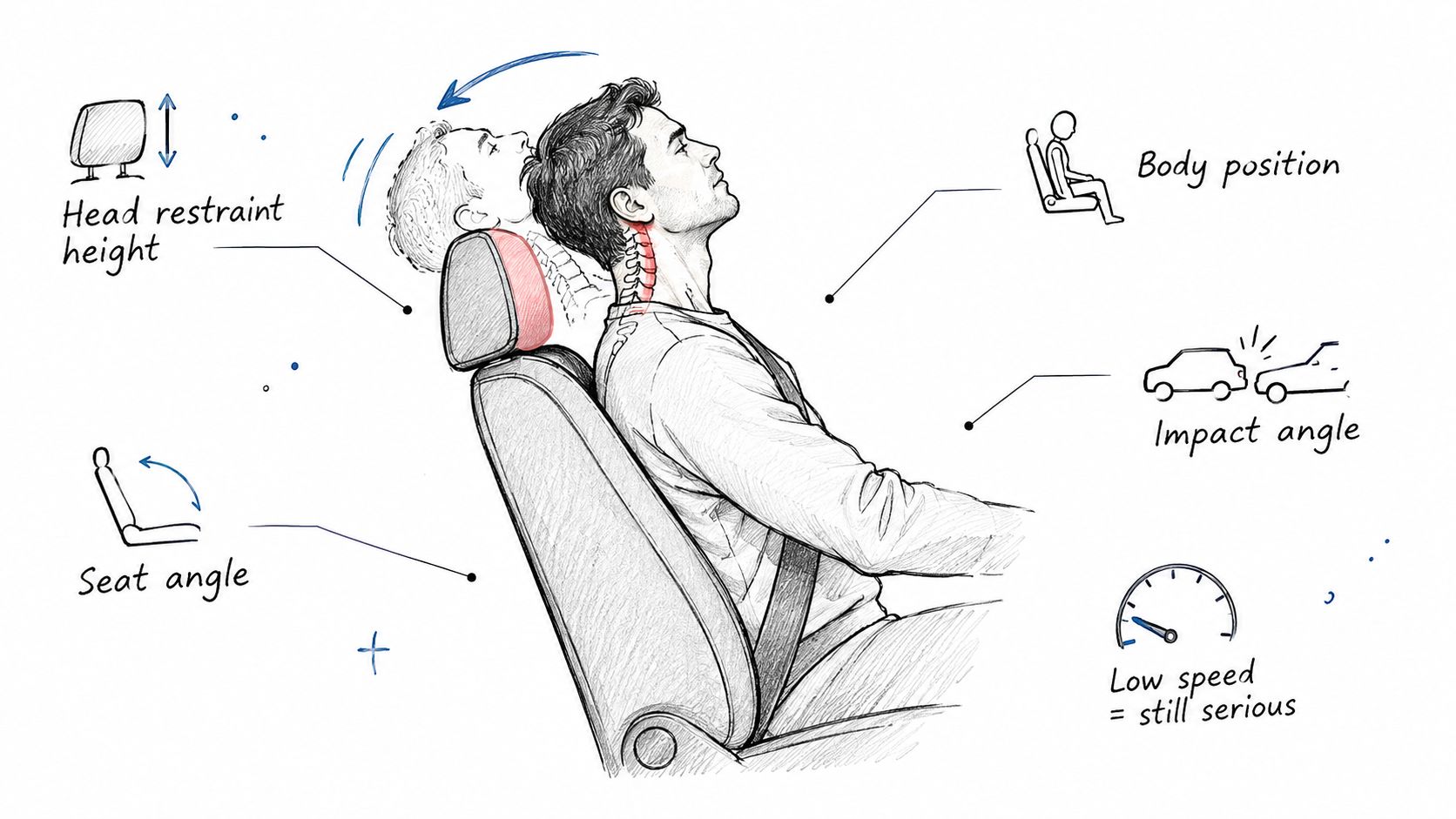
A low-speed collision can produce the same basic acceleration-deceleration mechanism. Vehicle speed still matters, but the force direction, your head position, seat design, and head-restraint alignment also shape the neck's movement. Two people in similar vehicles can therefore experience different loads.
Pain does not require a complete tear. Ligaments may be overstretched, muscles may develop small areas of strain, and facet joints may receive a sudden load. Afterward, inflammation and protective muscle tension can make those tissues sensitive and limit movement.
Symptoms may emerge later rather than at the crash scene. Adrenaline, distraction, and shock can temporarily mask discomfort. As those effects fade, stiffness, headache, reduced neck movement, or arm symptoms may become easier to notice.
At Aspen Falls Wellness, a clinical assessment can connect this millisecond-by-millisecond motion with an appropriate conservative care pathway, while checking whether symptoms require further medical evaluation.
Practical rule: Bumper damage and estimated vehicle speed cannot determine the seriousness of a neck injury. Pay attention to symptoms and arrange a proper clinical examination.
Whiplash is easier to understand when you slow the event down. In a typical rear impact, the neck doesn't move as one rigid unit. The torso, lower cervical spine, upper cervical spine, and head respond at different moments.
Biomechanical research describes three useful phases: an initial S-shaped configuration, cervical extension, and rebound after the head reaches the restraint. A detailed review places these events across 0 to 250 milliseconds, with relative vertebral acceleration, compression, shear, bending, and pressure changes contributing to symptoms (Whiplash injury biomechanics).
| Phase | Timing | Biomechanical Event | Tissue Impact |
|---|---|---|---|
| Initial torso surge | 0 to 50 ms | The torso moves forward while the head lags behind | The cervical spine forms an S-shaped curve, loading muscles, ligaments, and joints unevenly |
| Cervical extension | 50 to 140 ms | The head moves toward the head restraint as the neck extends | Posterior tissues, facet joints, discs, and stabilizing muscles experience rapid loading |
| Rebound | 140 to 250 ms | The head contacts or responds to the restraint, then moves forward | The neck transitions toward flexion, creating a second strain on already stressed tissues |
Think of a slinky held at both ends. If one end moves suddenly, the coils don't shift together. They compress and bend in sequence. The cervical spine behaves similarly during the first part of a rear impact. The lower neck and torso begin moving while the head remains behind, producing a temporary S-shaped arrangement.
That shape matters because the vertebrae don't all experience the same acceleration. One segment may be moving forward while another is extending. The resulting shear and bending forces can irritate structures that normally guide smooth, controlled motion.
As the torso continues forward, the head moves backward relative to the body. The neck reaches extension, and the head approaches the restraint. Posterior muscles and ligaments must control the motion, while facet joints can experience compression. Disc tissues can also be exposed to pressure and shear rather than a simple front-to-back force.
This is why the phrase “my head just snapped back” doesn't fully describe the injury. The vulnerable event is the difference in movement between neighboring parts of the neck, not only the final position of the head.
The head restraint helps limit excessive backward travel, but the neck still has to manage the rebound. The head begins moving forward after the extension phase, creating another rapid change in direction. The same tissues that were stretched or compressed moments earlier now have to control flexion.
A clinical examination should therefore assess more than pain location. Range of motion, muscle control, neurological function, joint tenderness, and the pattern of arm symptoms can help determine which structures may be involved. The three-phase model also explains why a normal initial appearance doesn't rule out a meaningful soft-tissue injury.
People often ask how fast the other vehicle was traveling. That question matters, but it isn't enough to predict injury. Head restraint position, seat geometry, occupant height, vehicle mismatch, posture, and head position at impact can all change the way force travels through the neck.
A driver looking over a shoulder may have the head rotated when the crash occurs. Someone leaning forward may have more distance to travel before the head meets the restraint. A shorter or taller occupant may not align with the restraint in the same way as the person for whom the seat was adjusted.
Research on whiplash biomechanics emphasizes that seating and head-restraint geometry can influence injury risk, while rear-end crashes remain a major mechanism (Whiplash research and prevention).
A head restraint works most effectively when it supports the back of the head and limits excessive relative movement. If it sits too low or too far behind you, the head may travel farther before contact. If the seatback and restraint don't fit your body, the neck may enter extension before the restraint can help control the motion.
Before driving, check that:
Whiplash can occur in rear, frontal, and side-impact crashes. One widely cited review reports that rear-end collisions account for about 85% of whiplash injuries, while another source describes roughly 50% in rear crashes and 30% in frontal crashes, reflecting differences in study methods and case definitions (Whiplash injuries).
The practical lesson is simple. Don't dismiss symptoms because the collision wasn't a rear impact. Side and frontal forces can still move the head and neck abruptly, although the exact tissue loading pattern may differ.
A crash can load several neck structures in a fraction of a second. As the torso moves with the seat, the head briefly lags behind, then changes direction. Like a whip passing motion from its handle to its tip, that sequence can stress ligaments, muscles, facet joints, discs, and nerves in different ways. The result depends on the direction and force of the movement, along with the tissues involved.
A ligament sprain may cause local tenderness or a feeling of instability. A muscle strain often produces guarding, stiffness, and pain when you turn your head. Facet joint irritation commonly causes focused pain that changes with extension or rotation. Disc or nerve involvement can send pain or altered sensation into the shoulder, arm, or hand.
Symptoms can emerge within hours or days. During the collision, adrenaline and the body's initial protective response may temporarily mask discomfort. As muscle guarding develops and irritated tissues continue to react, symptoms can become easier to recognize. Delayed symptoms do not prove that an injury is severe, but feeling well at the crash scene does not rule one out.
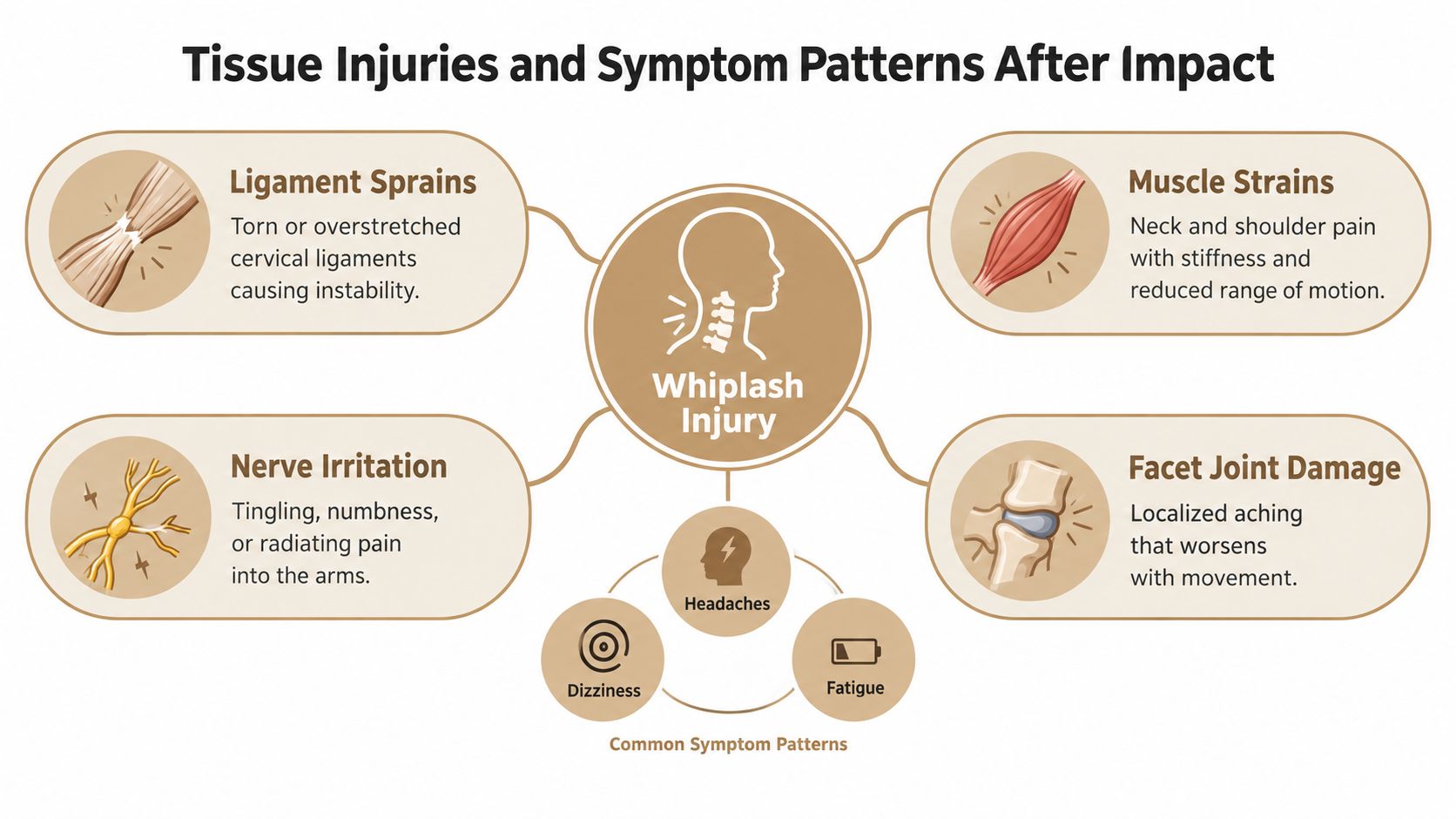
Mechanical symptoms usually remain near the neck and upper back. Stiffness, muscle tightness, reduced range of motion, or pain with looking up, turning, or holding one position can point to irritated joints and soft tissues. For a plain-language explanation of how muscles, ligaments, joints, and other structures may be affected, read this guide to soft-tissue damage.
Nerve-type symptoms require careful documentation. Tingling, numbness, burning, radiating pain, or weakness may indicate irritation along a nerve pathway. A 2025 study in the journal Brain found that many patients with acute whiplash-associated disorder show signs of neuropathic pain and nerve pathology (Neuropathic pain and whiplash-associated disorder).
These symptoms do not automatically mean permanent nerve damage. They do mean the symptom deserves clinical assessment rather than being dismissed as ordinary muscle soreness.
Record what you notice and when it changes. Include:
Seek urgent medical attention for severe or rapidly worsening symptoms, significant weakness, changes affecting both arms or the legs, loss of bowel or bladder control, difficulty walking, or a severe headache after the collision. A clinician can determine whether imaging, specialist referral, or conservative care is appropriate.
Treatment should match the tissues involved, your symptom pattern, and your tolerance for movement. A person with guarded neck muscles may need gentle mobility and soft-tissue work first. Someone with disc-related or radiating symptoms may need a different evaluation before adding more demanding exercise.
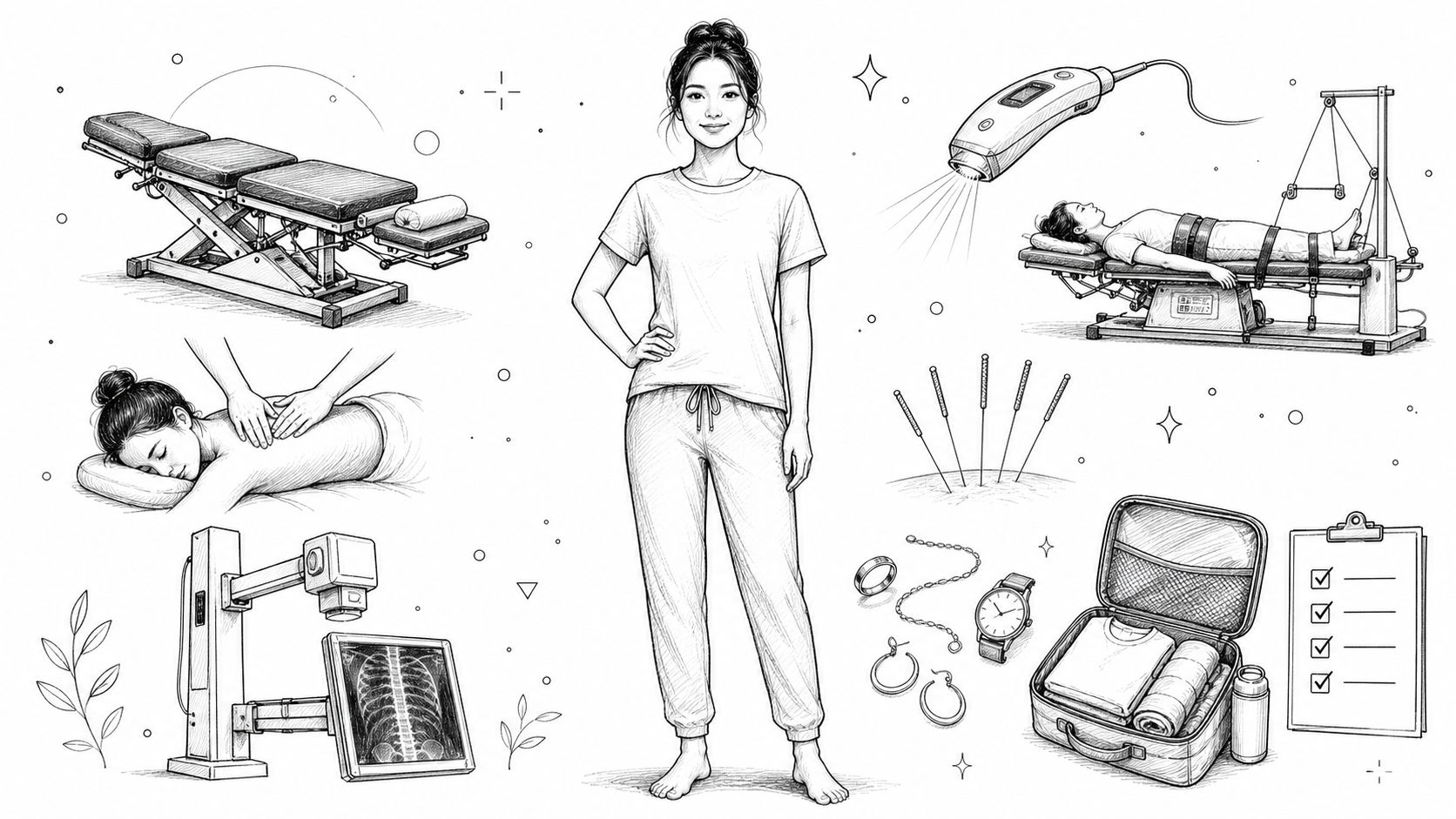
A coordinated conservative plan can combine manual care, symptom-modulating therapies, and progressive rehabilitation. Available options may include Chiropractic Adjustment, Adjustment, Realignment, Decompression, Spinal Decompression with the DRX 9000, Massage Therapy, MLS Laser Therapy, SoftWave Therapy, Acupuncture, Muscle Stimulation, Mobility Therapy, Rehabilitation Exercise, Personal Exercise Plans, and Nutrition and Nutrition Counseling. These services don't all serve the same purpose, and not every patient needs every modality.
| Treatment Type | Primary Goal | Typical Use Case | Session Frequency |
|---|---|---|---|
| Chiropractic adjustment and realignment | Improve joint mobility and movement tolerance | Restricted motion or mechanical neck discomfort after appropriate assessment | Individualized according to examination findings |
| Massage therapy | Reduce soft-tissue guarding and improve comfort | Muscle tightness in the neck, shoulders, or upper back | Adjusted as symptoms and recovery change |
| MLS Laser Therapy and SoftWave Therapy | Support tissue recovery and symptom relief | Soft-tissue irritation or pain when device-based care is appropriate | Determined by the treating clinician |
| Spinal decompression with the DRX 9000 | Address selected disc-related mechanical concerns | Disc-related symptoms when the patient is an appropriate candidate | Planned around clinical response |
| Acupuncture | Modulate pain and support function | Persistent pain or muscle tension as part of an integrated plan | Individualized |
| Mobility therapy and rehabilitation exercise | Restore control, strength, and range of motion | Reduced movement, weakness, or fear of normal activity | Progressed through supervised and home sessions |
| Muscle stimulation and personal exercise plans | Reinforce muscle activation and home recovery | Difficulty recruiting stabilizing muscles or maintaining progress between visits | Set according to tolerance and goals |
| Nutrition counseling | Support general recovery habits | Patients who want guidance alongside musculoskeletal care | Scheduled as clinically useful |
The value of combining approaches is that each addresses a different barrier. Massage may make movement more comfortable, an adjustment may address restricted joint motion, and a personal exercise plan may help you retain that improvement between visits. Decompression should be considered selectively, not automatically, because the clinical findings determine whether it fits.
For broader context about care after a motor vehicle collision, this Texas motor vehicle accident treatment guide explains why evaluation and follow-up matter after an accident. If massage is part of your plan, this resource on massage therapy for whiplash describes how soft-tissue care may fit into recovery.
In the milliseconds after a rear impact, the vehicle moves forward while the head briefly lags behind. The neck then bends and straightens as the head catches up, like a flexible whip following a sudden pull. Muscles may tighten to protect the area, while irritated joints and soft tissues continue sending signals after the collision. Pain, stiffness, or headache can therefore appear later, even when the initial moments felt manageable.
Early care focuses on identifying what happened, ruling out conditions that need a different level of treatment, and preventing guarding from limiting movement. A first evaluation establishes a useful baseline. The clinician may assess range of motion, strength, sensation, reflexes, posture, joint movement, and the location or spread of pain. Imaging or referral for X-ray or MRI may be appropriate when examination findings suggest a structural problem requiring further assessment.
A practical plan can develop in stages:
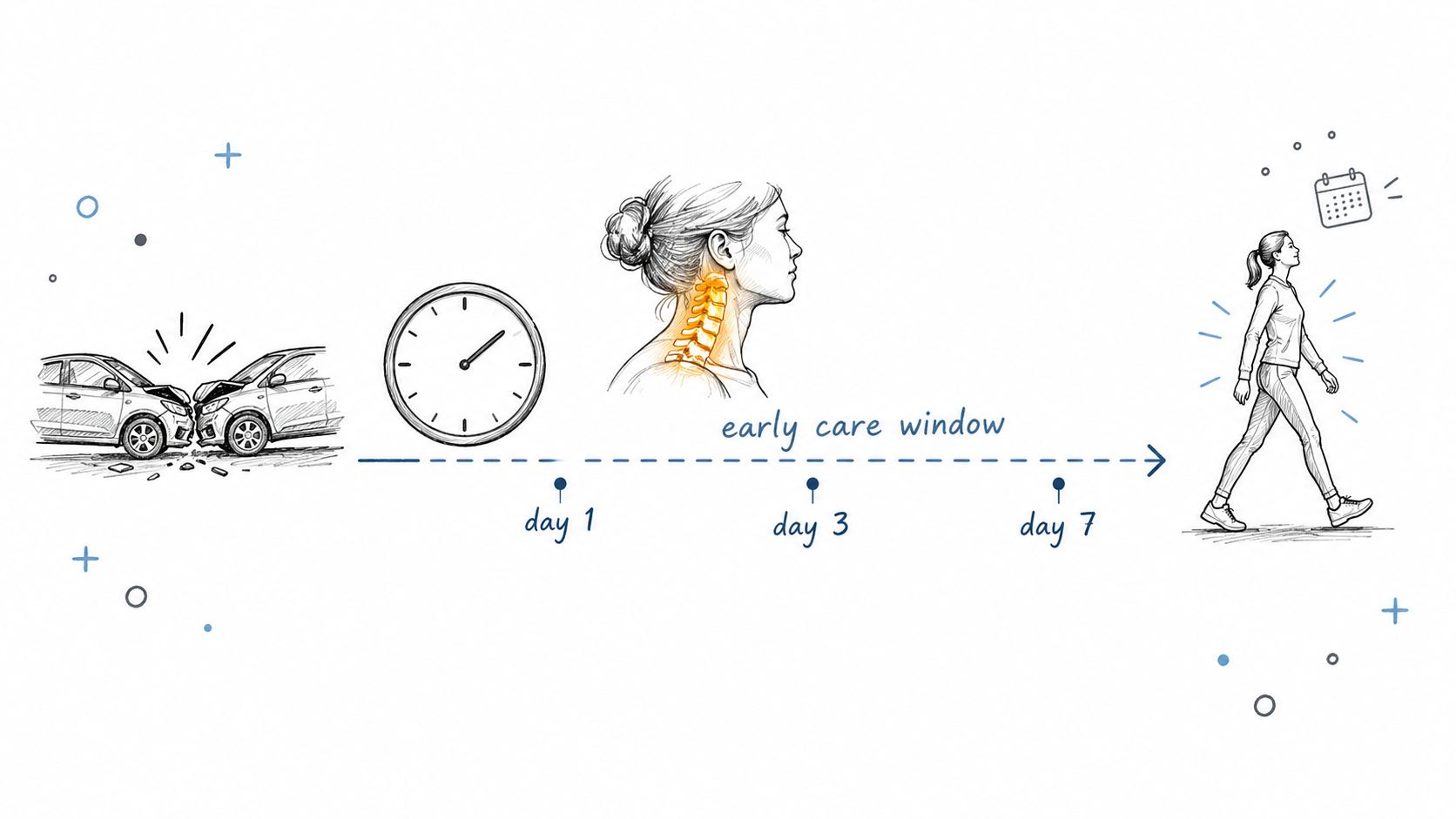
Avoiding all movement can reduce confidence and conditioning. Pushing through radiating pain or weakness can aggravate an unresolved problem. At Aspen Falls Wellness, conservative care can be adjusted to the examination findings and your tolerance, with reassessment when the pattern changes.
Clear communication supports that process. The explanation should acknowledge the injury while making clear that pain does not automatically indicate permanent damage.
After a collision, start with information rather than assumptions. Note the date and circumstances of the crash, take photographs when it's safe, record your symptoms, and arrange a professional evaluation if pain, stiffness, headache, or neurological symptoms develop.
Bring a concise account of what happened and explain how your symptoms affect daily activities. Tell the clinician whether pain stays local or travels, whether movement changes it, and whether you have numbness, tingling, weakness, dizziness, or problems with balance.
Ask practical questions:
A normal initial evaluation doesn't mean you should ignore symptoms that later worsen. Conversely, pain alone doesn't tell you which treatment is appropriate. Re-evaluation gives the clinician a chance to adjust care as the symptom pattern becomes clearer.
Maintain appointment records, treatment recommendations, receipts, imaging reports, and a simple symptom diary. Write down missed work, interrupted sleep, driving limitations, and tasks you can't perform comfortably. These details help your healthcare team understand functional impact and may also matter if an insurance or legal claim develops.
For general legal information about documenting a potential claim, you can review this resource on whiplash injury payout in Martin County. Legal guidance doesn't replace medical evaluation, and treatment decisions should remain focused on your health.
You can also learn what to expect from seeing a chiropractor after a car accident. Conservative care may include chiropractic adjustment, massage, acupuncture, mobility therapy, rehabilitation exercise, MLS Laser Therapy, SoftWave Therapy, or spinal decompression when an examination supports those options.
If you've developed neck pain, stiffness, headache, or arm symptoms after a collision, visit Aspen Falls Wellness for a car accident assessment and individualized non-surgical care plan. The team can evaluate your movement and symptoms, coordinate appropriate conservative therapies, and guide you through rehabilitation and home exercises.

Stay updated with the latest chiropractic news and exclusive offers.