Learn what is MLS laser therapy is, how it works, conditions it treats, and if it's right for your pain or injury.
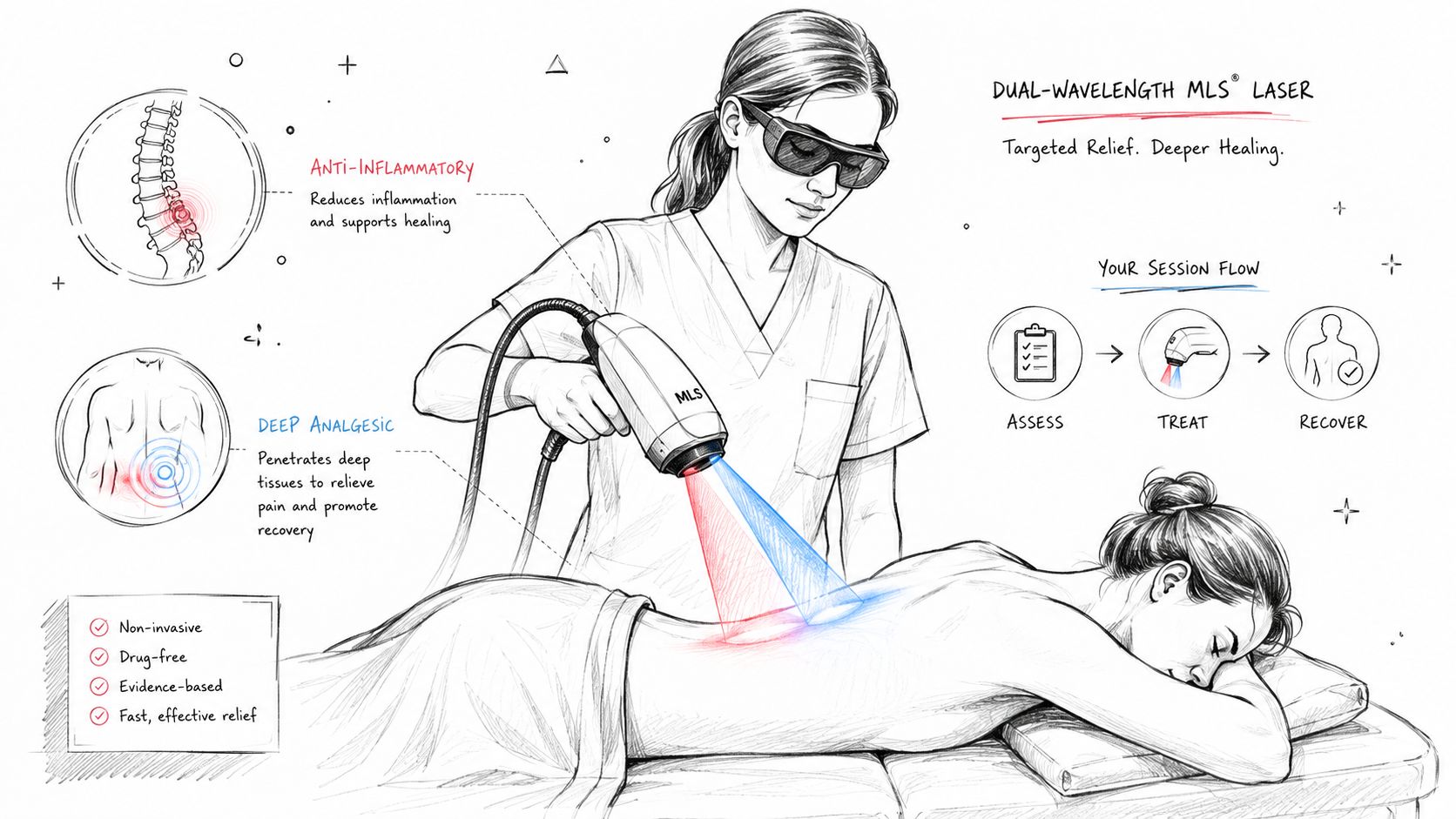



MLS Laser Therapy is a non-thermal, dual-wavelength photobiomodulation treatment that uses 808 nm and 905 nm light to reduce pain and inflammation. In chronic low back pain research, the treated group's mean pain score dropped from 7.66 ± 1.11 to 5.60 ± 1.35, while the control group stayed at 7.73 ± 1.16, with a reported P = 0.001.
That sounds technical, but you are really asking a simpler question. If your back, neck, shoulder, knee, or sciatica pain hasn't moved much with ice, stretching, or pills, what exactly is MLS, and is it worth trying?
A lot of people reach this point after they've already tried the usual first steps. They've iced the area, stretched it, taken over-the-counter pain relievers, and still wake up with the same stiff back or irritated neck. That's usually when a clinician starts talking about MLS Laser Therapy as one more conservative option, not a magic fix.
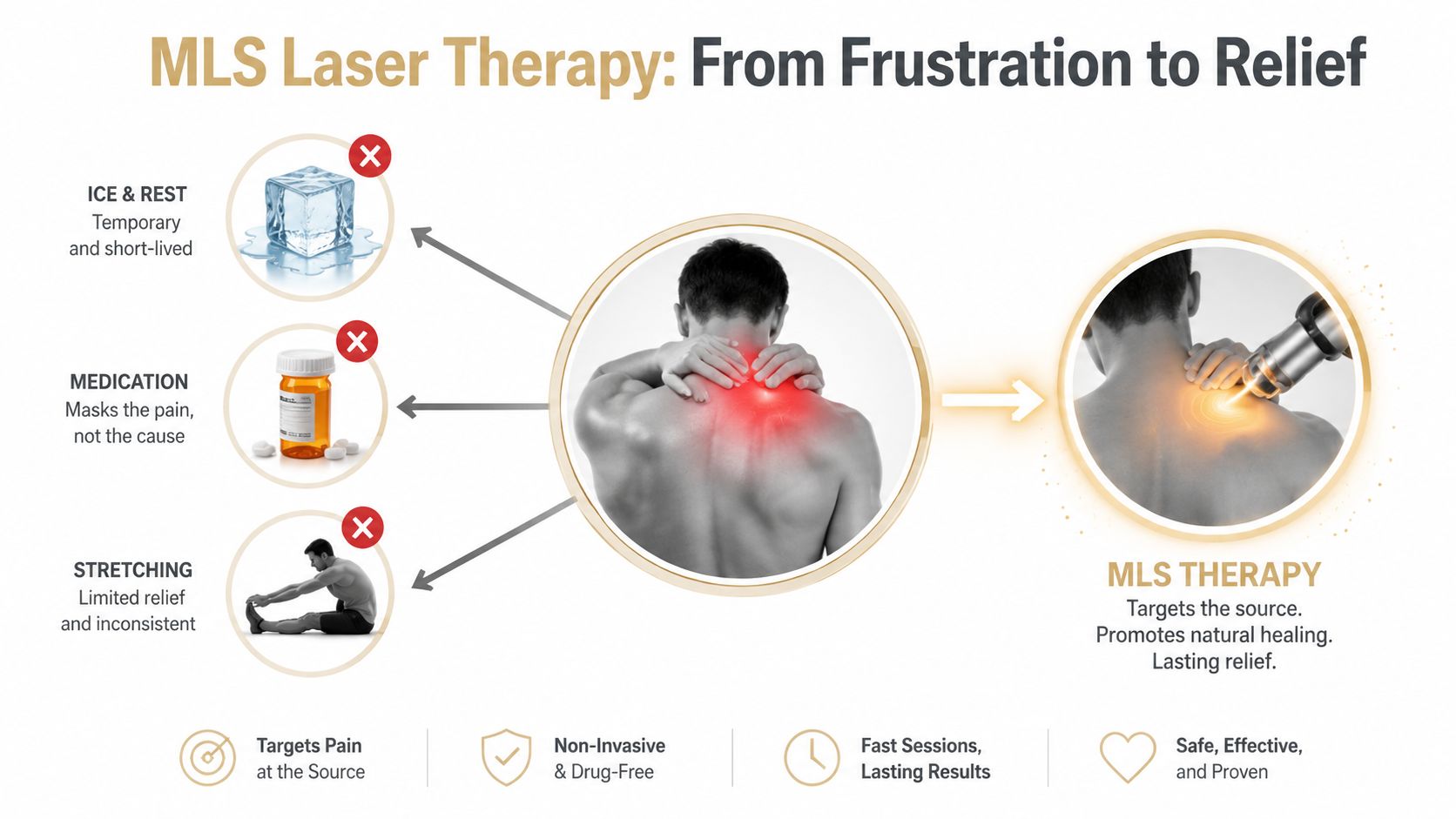
MLS stands for Multiwave Locked System, and the core idea is straightforward. It's a Class IV, high-power, non-thermal photobiomodulation treatment that synchronizes two wavelengths of light, 808 nm and 905 nm, to help calm inflammation and ease pain. Published technical descriptions describe it as a light-based therapy built for musculoskeletal problems, not a heat-based tissue burn tool.
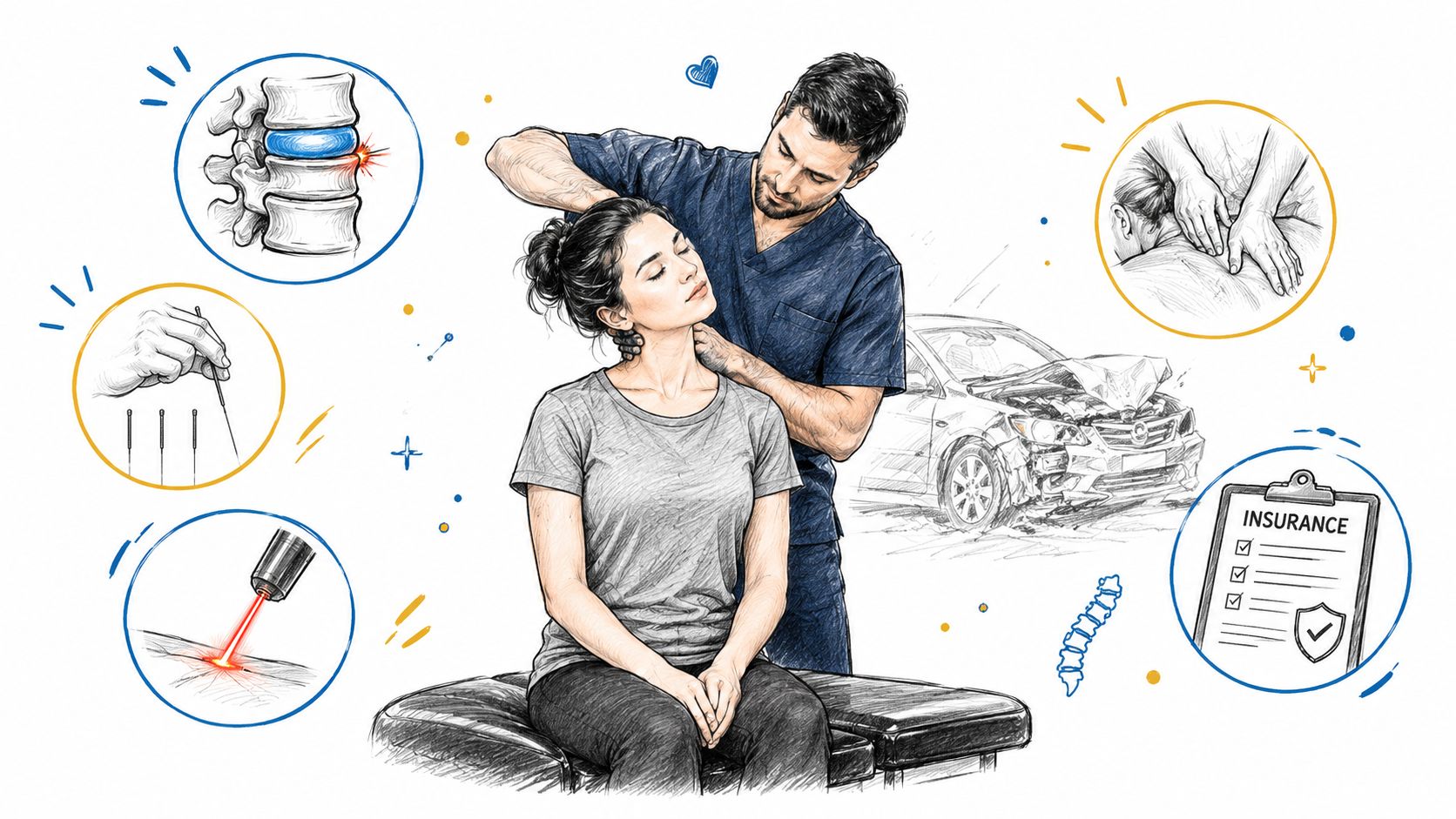
A patient doesn't usually need another gadget. They need a plan that matches the problem. That's why MLS is often paired with chiropractic adjustment, spinal decompression, SoftWave therapy, massage, exercise, and other conservative care, depending on what's driving the pain.
For a person with a stubborn lumbar flare-up, MLS can be a way to settle irritation enough that movement, manual work, and rehab become more tolerable. For someone whose neck pain keeps returning after long hours at a desk, it may be used to reduce sensitivity so the rest of the care plan can stick. If you want a broader look at how newer modalities are changing conservative pain care, pain management technology advancements is a useful background read.
Practical rule: if a treatment is presented as the only thing you'll ever need, be cautious. MLS makes more sense as one part of a broader pain strategy.
The best way to think about MLS is as a targeted, clinician-guided tool. It's meant to support recovery, not replace the basics that keep pain from coming back.
Think of MLS like two delivery drivers working the same neighborhood on different schedules. One driver handles the slow, steady deliveries. The other makes faster, more forceful runs into the same area. That's the basic logic behind the 808 nm continuous and 905 nm pulsed wavelengths used together in MLS.
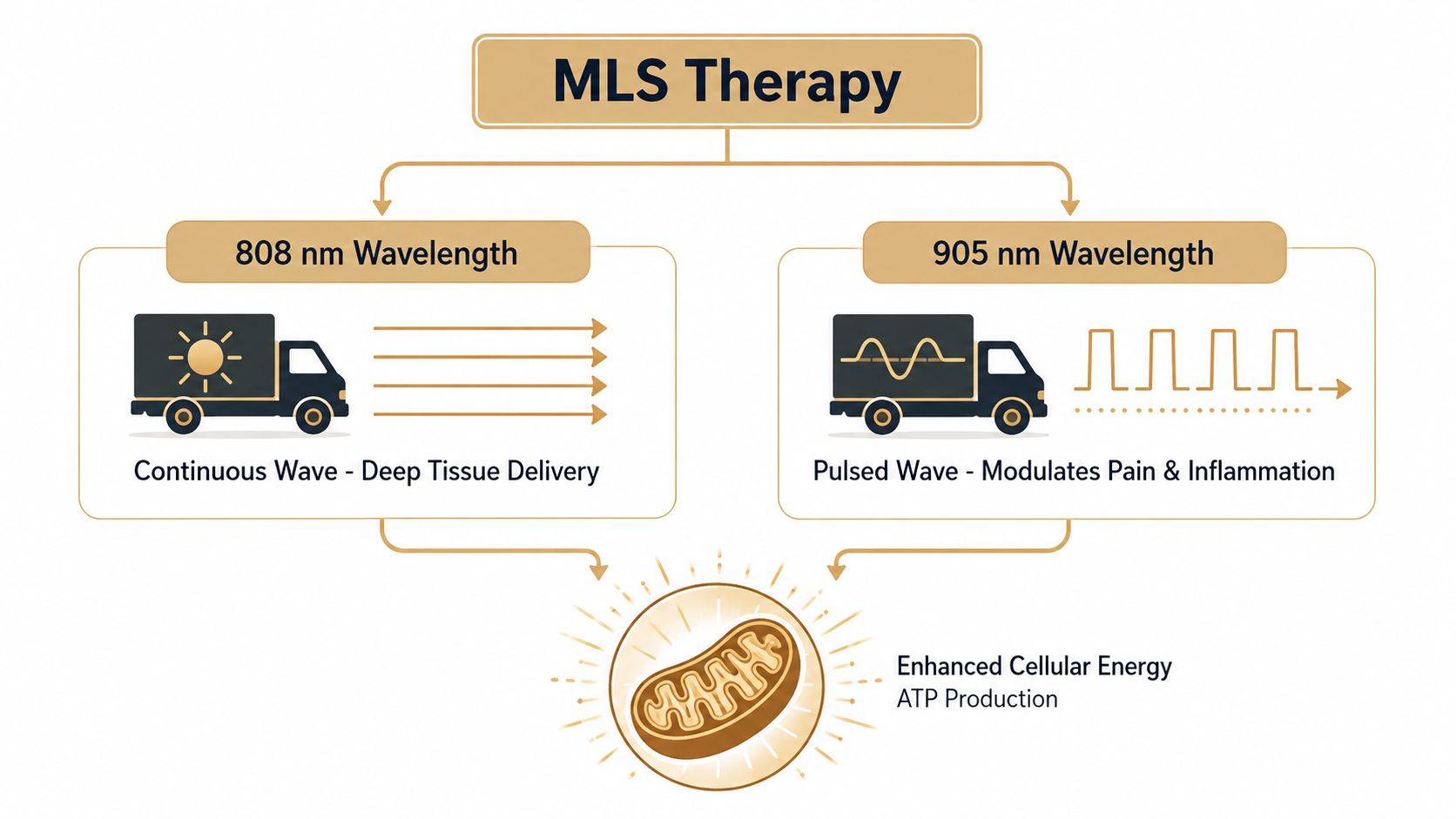
The 808 nm component is described as doing the anti-inflammatory and microcirculatory work. In plain language, that means it's aimed at helping the irritated tissue environment settle down and move fluid and nutrients more efficiently. The 905 nm pulsed component is associated more with analgesic effects, and published technical descriptions note that it can reach kW-range peak power while the average output stays low enough to avoid intentional thermal damage.
That combination is the point of MLS. It's not just "more laser." It's synchronized light delivery designed to do different jobs in the same session. Published descriptions also note common pulse modulation ranges of 1 to 2000 Hz, which helps explain why the device can be tuned for different treatment goals.
Another detail people miss is temperature control. One technical source says treatment profiles stay below about 43°C, which keeps the tissue out of the 43 to 45°C non-therapeutic window and below the threshold for thermal damage above 45°C. That's why MLS is often described as cold or low-heat therapy even though it uses a Class IV platform.
Dose matters too. Guidance cited in the literature points to 1 to 4 J/cm² as a range that tends to stimulate cell activity, while higher doses may inhibit it. That's one reason the operator matters. Good outcome selection depends on getting the right tissue, the right dose, and the right delivery pattern, not just turning the machine on.
The technology is only half the story. The other half is whether the clinician matches the dose to the condition.
That's what makes MLS different from a generic single-wavelength approach. The treatment is built around synergy, timing, and dose control, not just light exposure.
For most patients, the practical question is whether MLS can help their specific condition. Clinicians commonly consider it for low back pain, neck pain, sciatica, soft-tissue strain, overuse injury, post-accident soreness, and chronic joint stiffness, especially when pain and inflammation are limiting movement.
The clearest example comes from chronic low back pain research. In one peer-reviewed study, the intervention group's mean VAS pain score moved from 7.66 ± 1.11 to 5.60 ± 1.35, while the control group stayed at 7.73 ± 1.16, with a reported P = 0.001. Because VAS is a standard 0 to 10 pain scale, a drop of more than 2 points is often clinically meaningful in many musculoskeletal settings. Clinical low back pain results and VAS change
For someone with neck pain and cervicogenic headache, the early change may be less pain after sitting at a computer, not instant perfection. For a person with sciatica or radiating nerve pain, the goal is usually less irritation and better tolerance for walking, sitting, or rehab work. For soft-tissue strains and sports injuries, clinicians often look for calmer tissue and easier motion before the area is loaded again.
Joint pain is a little different because the issue is not only discomfort, it is how the joint moves. A patient may notice less guarding, smoother range of motion, and less stiffness when getting up from a chair or climbing stairs. For a plain-language anatomy refresher that helps connect symptoms to structures, the complete guide to human anatomy is a useful reference.
MLS usually does not mean the pain disappears forever. A more realistic result is that the pain settles enough for you to walk, turn, lift, or sleep with less guarding. That matters because irritated tissue often needs symptom relief and movement retraining in the same care plan.
The treatment makes the most sense when pain is one of the things keeping rehab from starting to work. If the laser lowers pain enough for you to move better, then exercise, decompression, or manual care can do their part more effectively. The same logic applies when inflammation is part of the picture, which is why some clinics discuss it alongside laser therapy for inflammation. MLS works best when it lowers pain enough for movement-based treatments to take effect.
A first question patients ask is, “How long does this take?” Published clinical summaries commonly describe 6 to 12 sessions, delivered 2 to 3 times per week, with each visit lasting about 10 to 15 minutes. One orthopedic protocol describes 6 to 9 sessions over three weeks for fuller results, while some chronic cases use maintenance visits every four to six weeks.
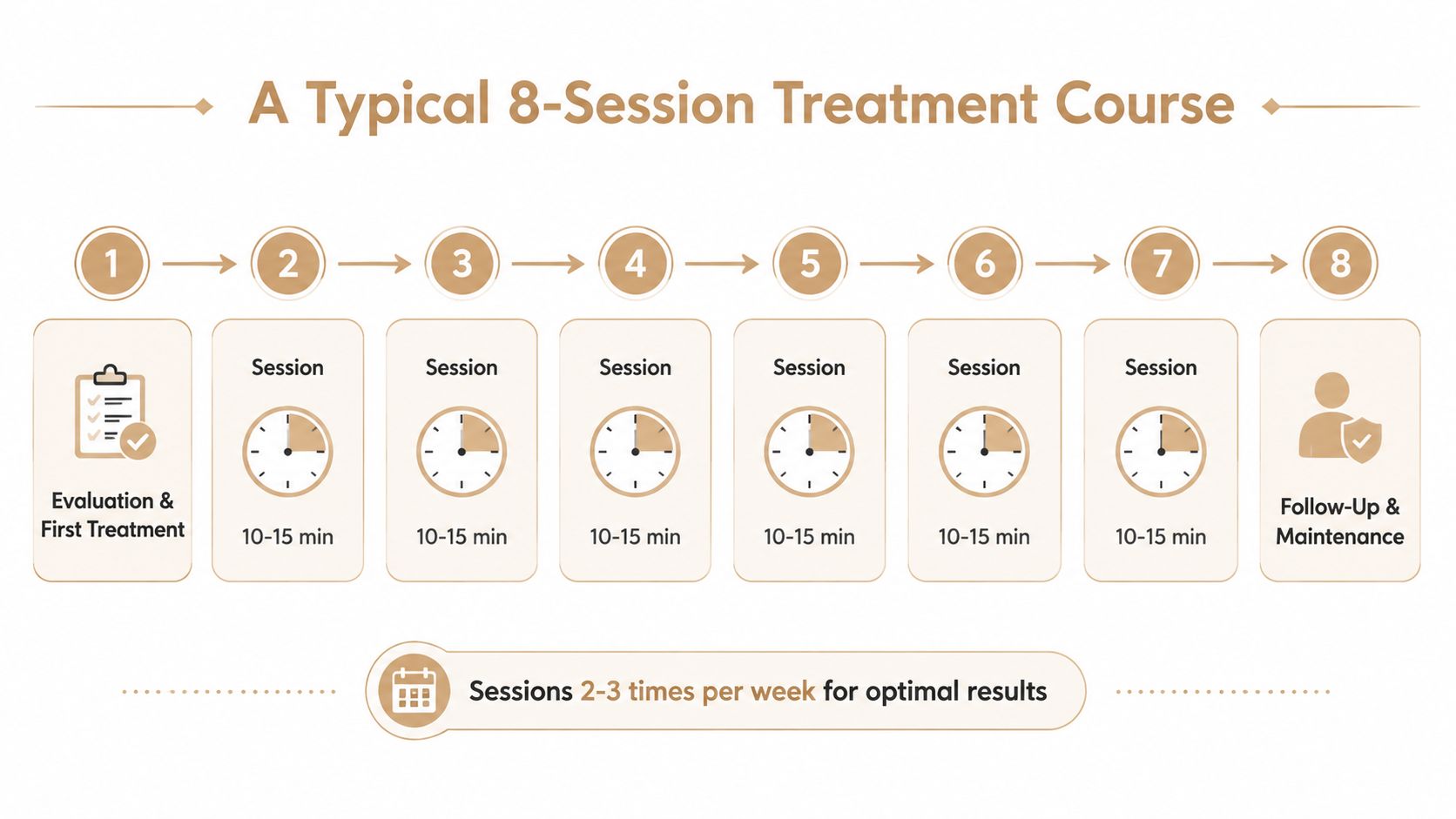
The session itself is usually simple. You're positioned comfortably, protective eyewear is used, and the handheld applicator moves across the treatment area. Patients often describe the experience as quiet and low-key, with no heat and no meaningful discomfort.
That simplicity can make it easy to underestimate the importance of repetition. MLS tends to work in cumulative fashion, which means the changes are often measured over several visits rather than judged by one session alone. Some people notice an early shift, but many need a short course before the pattern becomes obvious.
A good clinician doesn't rely on “feels better today” alone. Better tracking usually includes repeat pain scores, range-of-motion checks, and functional markers like whether you can sit longer, bend farther, or sleep with fewer interruptions. Those details matter because pain relief without functional change can be misleading.
Use function as the test, not just sensation. If the pain score drops but you still can't move better, the plan needs review.
That's also why maintenance visits are treated as a clinical decision, not a promise. If symptoms return, the question isn't just whether to repeat MLS. It's whether the underlying driver has changed, whether the dose was right, and whether another part of the care plan needs adjusting.
MLS makes the most sense when it's used for the job it does best, which is settling pain and inflammation so the rest of care goes more smoothly. It's not a substitute for chiropractic adjustment, spinal decompression with the DRX9000, SoftWave therapy, massage, acupuncture, or corrective exercise. It's one piece of a larger conservative plan.
A joint that isn't moving well often needs manual correction or decompression. A muscle that has tightened around an irritated area may respond better when soft tissue work is added. A patient with nerve irritation may need decompression and activity changes more than another round of passive treatment alone.
That's the logic behind integrated musculoskeletal care. MLS can lower the pain barrier, which may make adjustment more tolerable and exercise more realistic. If a patient can move with less guarding, the clinician can usually work with better mechanics and clearer feedback.
For readers comparing conservative options, the guide to plant-based joint care is a helpful reminder that daily habits, load management, and recovery strategies still matter outside the clinic.
The important point is that MLS can make the rest of these tools easier to tolerate. It can also be used after the initial pain spike is under control, when the focus shifts to rebuilding capacity.
For a broader look at that coordinated model, the internal article on multidisciplinary pain management fits well with this approach. Aspen Falls Wellness uses that same logic in practice, which is why MLS is often discussed alongside the rest of the plan rather than as a standalone cure.
MLS is generally considered well tolerated when it's used properly. The important safety point is that “non-thermal” doesn't mean “no screening needed.” Clinicians still check the treatment area, the medical history, and the device settings before they begin.
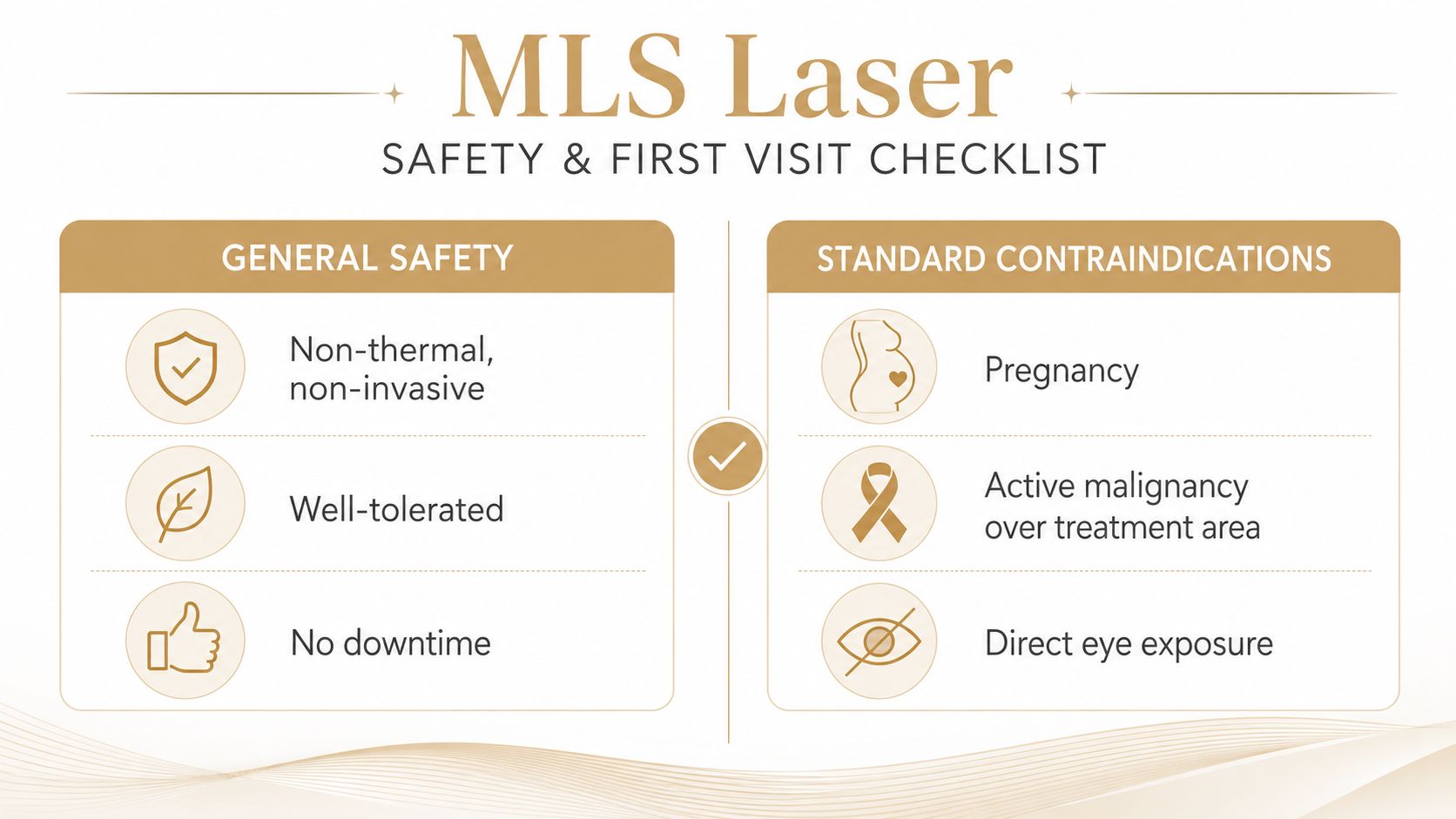
Standard contraindications include pregnancy over the treatment area, active malignancy in the treatment field, direct irradiation of the eyes without protective eyewear, and use over certain pacemakers or implants depending on manufacturer guidance. Those are the kinds of details that should be reviewed before treatment, not figured out mid-session.
A well-run first visit starts with a proper exam. At Aspen Falls Wellness, that typically means a thorough initial evaluation and diagnosis, with X-ray or MRI referral when indicated, followed by a personalized care plan that matches the working diagnosis.
Expect a discussion about symptom history, movement limits, and what's already been tried. The clinician should explain whether MLS makes sense on its own or as part of a broader plan that includes adjustment, decompression, exercise, or soft-tissue work. That's also the time when insurance verification is usually reviewed for common Utah plans, including Aetna, BCBS, Cigna, Humana, GEHA, and Motiv Health.
A patient should leave the first visit knowing three things. What problem is being treated. What outcome is being tracked. And what would make the plan change if the response isn't what was expected.
A patient can hear that MLS laser therapy is FDA-cleared and assume the science has already settled every question. It has not. Clearance means the device has met a regulatory pathway for use, while clinical effectiveness still depends on the condition being treated, how the treatment is dosed, and whether the study design was strong enough to show a real benefit.
The research base is growing, but it is still relatively young. A 2024 review of MLS-focused research initially identified 948 abstracts, found 211 that met screening and eligibility criteria, and only 28 articles that were specifically about MLS itself. The same review tracked publication trends from 2000 to 2024, showing a sustained rise in studies over time. MLS research trends and publication data
The practical takeaway is straightforward. Some peer-reviewed studies report meaningful pain reduction, including the low back pain data already discussed, but the evidence is still concentrated in certain uses and larger rigorous trials are limited in many other categories.
That does not make MLS unhelpful. It means MLS should be viewed as a promising photobiomodulation tool with condition-specific evidence, not as a universal replacement for exercise-based rehab or manual therapy. Many marketing pages blur device clearance, comfort, and proven clinical benefit into one message, and that can leave patients with unrealistic expectations.
If a treatment sounds like it solves every pain problem, the evidence is probably being oversold.
A better question is narrower. Does the therapy make sense for this body part, this diagnosis, and this stage of recovery? If the answer is yes, MLS may be a reasonable option. If the answer is no, another treatment should take priority.
For readers comparing tissue-focused modalities, the internal overview on ultrasound therapy for scar tissue treatment reinforces the same idea, device choice should follow the problem, not the other way around.
How many sessions are typical? Most published clinical summaries describe 6 to 12 sessions, usually 2 to 3 times per week. Some protocols suggest 6 to 9 sessions over three weeks, and chronic cases may use maintenance visits every four to six weeks.
How soon do results show up? Some people notice change after the first few visits, but the more honest expectation is that benefits are usually cumulative. That means the course matters more than a single appointment.
Is MLS covered by insurance? Coverage varies, and it's often billed under physical therapy or modality codes. Verification is the safest step before starting, especially if you want to avoid surprise out-of-pocket costs.
What if pain comes back later? That can happen. The next step is usually to reassess the driver of the pain, then decide whether maintenance care, exercise changes, or a different treatment is needed.
How does MLS compare with at-home red-light devices? MLS is a clinician-delivered system with dual-wavelength programming, controlled dosing, and supervised application. Home devices may be convenient, but they don't replace diagnosis, tissue-specific dosing, or a care plan built around the underlying cause.
| Aspect | Typical Range |
|---|---|
| Session length | 10 to 15 minutes |
| Course length | 6 to 12 sessions |
| Visit frequency | 2 to 3 times per week |
| Some orthopedic protocols | 6 to 9 sessions over three weeks |
| Maintenance in chronic cases | Every four to six weeks |
If you're trying to decide whether MLS fits your problem, the best next step is a real evaluation. Aspen Falls Wellness can assess the source of your pain, explain whether MLS belongs in your plan, and match it with care that supports longer-term recovery. Visit Aspen Falls Wellness to schedule a consultation and get a treatment plan built around your specific symptoms and goals.

Stay updated with the latest chiropractic news and exclusive offers.