Find a trusted Sandy Utah chiropractor offering spinal decompression, adjustments, laser therapy, massage, and acupuncture. Learn what to expect and how



You're sitting in traffic on the way home from Salt Lake City, and the ache across your low back has changed from an occasional nuisance into something that affects sleep, work, and weekends. Or you woke up after a rear-end collision with a stiff neck that seemed manageable, only to notice the pain worsening later. You might also be dealing with a disc flare-up that sends pain into your leg whenever you sit, bend, or try to rest.
Choosing a Sandy, Utah chiropractor shouldn't mean selecting a treatment from a long menu without understanding the reasoning behind it. Effective conservative care starts with a proper examination, identifies the likely pain generator, uses the least aggressive appropriate intervention, and changes course when progress stalls or symptoms suggest medical evaluation.
A chronic desk worker may need more than an adjustment. Long commutes, prolonged sitting, limited hip movement, and weak trunk endurance can keep loading the lumbar spine after a treatment ends. In that situation, care may combine a chiropractic adjustment to restore joint motion, mobility therapy for restricted hips and spine, soft-tissue work for guarded muscles, and a personal exercise plan that addresses the habits driving recurrence.
A patient with delayed whiplash symptoms needs a different starting point. The first visit should document the collision, inspect the neck and shoulders, check neurological function, and determine whether gentle manual care, MLS Laser Therapy, SoftWave Therapy, massage, or referral is appropriate. Acute whiplash guidance doesn't recommend routine advanced imaging for every mild presentation, but selected patients with suspected nerve-root or spinal-cord involvement may need medical assessment and imaging first. The whiplash management guidance also emphasizes that imaging findings alone don't reliably predict ongoing pain or disability.
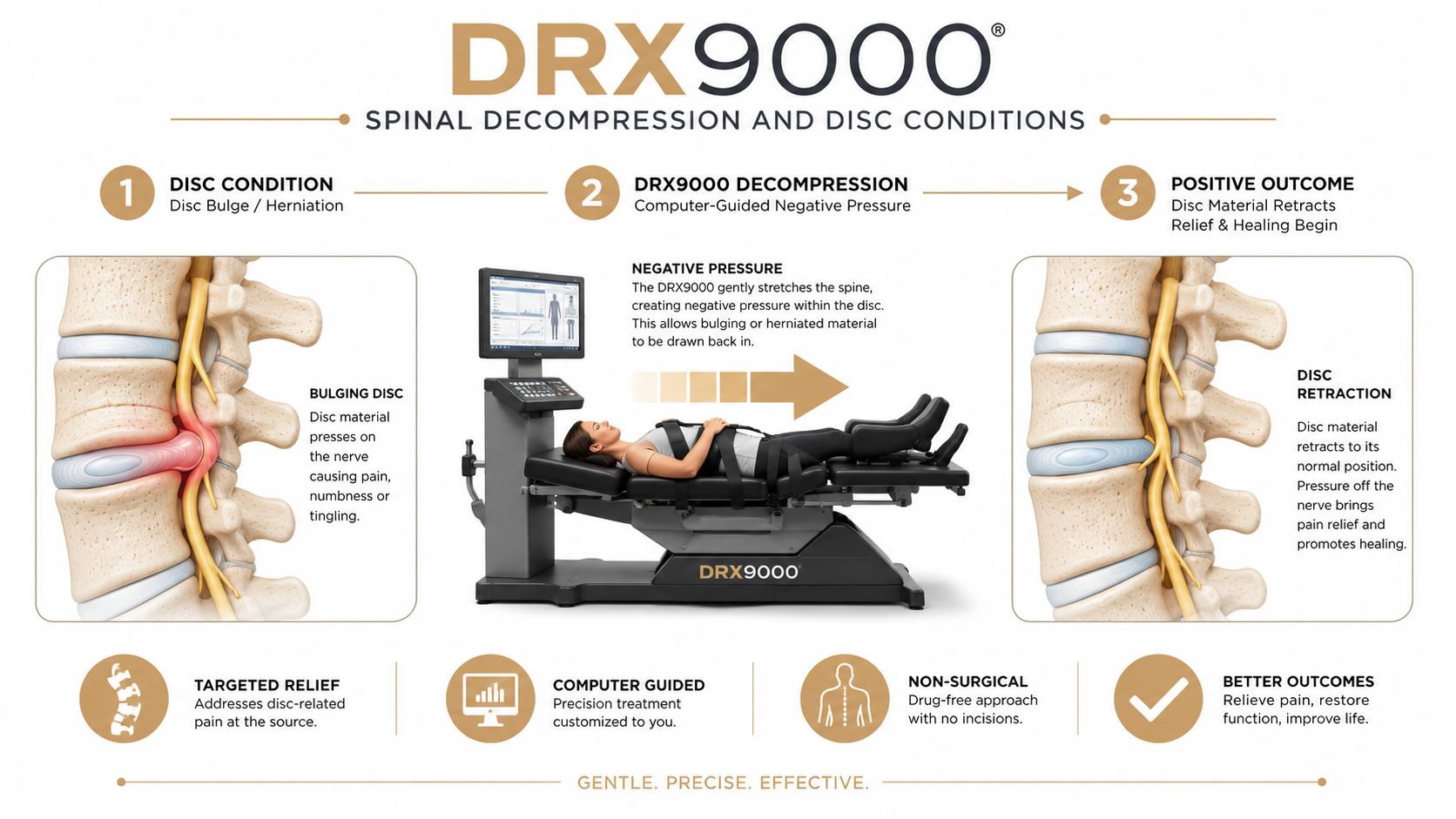
Disc-related pain requires even more precision. Sciatica treatment should account for leg symptoms, strength, sensation, reflexes, and how pain changes with movement. Spinal decompression with the DRX 9000 may be considered for a properly selected patient, often alongside targeted adjustment, acupuncture, muscle stimulation, rehabilitation exercise, and home positioning. It isn't a universal answer for every back complaint.
Practical rule: Treatment should follow the examination, not the other way around.
Before manual treatment begins, I want to know whether symptoms fit a conservative musculoskeletal pathway. Loss of bowel or bladder control, saddle numbness, progressive weakness, fever with spinal pain, unexplained weight loss, or significant trauma can change the decision entirely. A responsible Sandy Utah chiropractor will refer when the clinical picture exceeds chiropractic scope.
Low back pain is a large health burden, not a niche complaint. The World Health Organization estimates that 619 million people lived with low back pain in 2020 and projects 843 million by 2050. It also identifies low back pain as the leading cause of disability worldwide and the most prevalent musculoskeletal condition. The WHO-linked source provided through the CDC explains why non-surgical, function-focused care remains relevant for working adults and older patients.
Use of chiropractic care has also become established in the United States. National Center for Complementary and Integrative Health data report that 11.0% of U.S. adults used chiropractic care in 2022, compared with 7.4% in 2002, while 3.4% of children ages 4 to 17 used it in 2017. A CDC-linked review also estimates that 20% to 30% of patients with back-related leg pain seek chiropractic care. The source review places chiropractic within a broader pattern of care-seeking for back disorders.
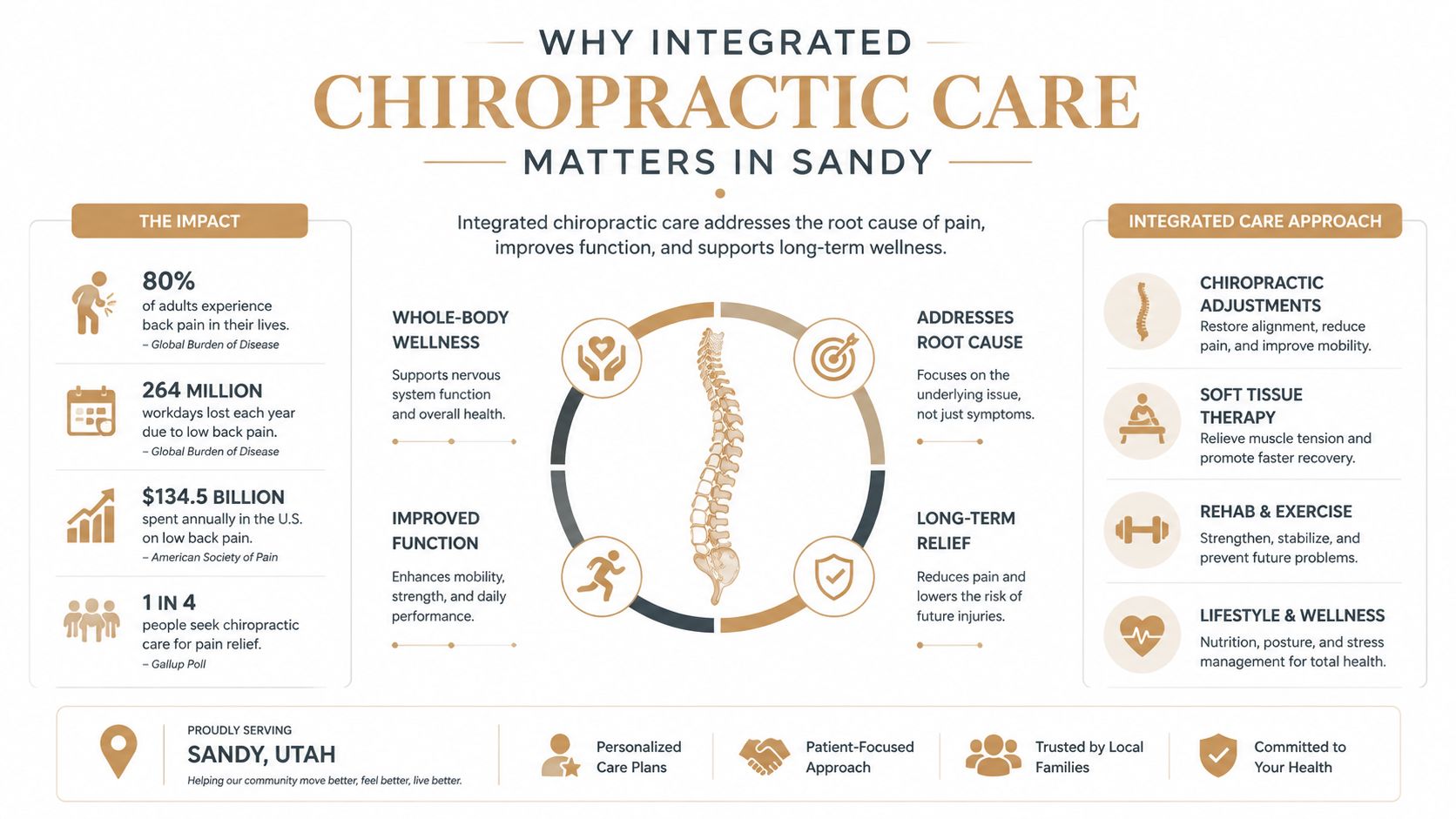
A single adjustment can improve motion and reduce joint-related restriction, but it may not address disc sensitivity, muscle guarding, reduced strength, or fear of movement. Integrated care pairs the appropriate manual technique with decompression, massage, MLS Laser Therapy, SoftWave Therapy, acupuncture, and rehabilitation exercise when those services fit the diagnosis.
For nonradicular low back pain, clinical guidance supports non-drug options such as heat, massage, acupuncture, and spinal manipulation for acute or subacute symptoms. Chronic cases may call for exercise, multidisciplinary rehabilitation, acupuncture, and spinal manipulation. The American College of Physicians guideline supports a coordinated pathway rather than automatic reliance on medication or one isolated technique.
A useful service list should answer three questions: What does the therapy do, who is it for, and what happens during the visit? Aspen Falls Wellness offers the following options in a coordinated setting, although the appropriate combination depends on examination findings, tolerance, goals, and coverage.
Chiropractic adjustment and realignment use controlled manual or instrument-assisted techniques to improve restricted joint motion. They're commonly considered for mechanical back or neck pain, stiffness, postural strain, and selected post-accident complaints. A typical adjustment visit is brief, followed by reassessment of movement and symptoms.
Spinal decompression with the DRX 9000 uses a computer-guided table for selected disc-related conditions. The patient lies comfortably while the table applies a controlled unloading pattern to the involved spinal region. Decompression visits generally last 25 to 35 minutes, and may be paired with ice, light myofascial work, or corrective exercise.
MLS Laser Therapy and SoftWave Therapy are device-based options used to support tissue recovery and pain relief. They may suit soft-tissue irritation, tendon complaints, post-injury soreness, or a treatment plan where reducing sensitivity helps the patient move more effectively. These therapies can often be added to a manual-care visit, but they shouldn't replace strengthening or a clear diagnosis.
Massage therapy addresses muscular tension, protective guarding, and soft-tissue restriction. A massage appointment may last 60 minutes, particularly when combined with acupuncture or mobility work. Therapeutic massage can complement an adjustment, but aggressive pressure isn't appropriate for every acute injury.
Acupuncture uses thin needles to modulate pain and support functional improvement. For acute nonspecific low back pain, one guideline allows treatment once daily or every other day, with a course of three to six sessions. The clinical practice guideline makes clear that cadence depends on the clinical category rather than following one universal schedule.
Muscle stimulation, mobility therapy, and rehabilitation exercise target the capacity that passive treatment can't build by itself. Muscle stimulation may assist activation, while mobility therapy restores usable range and rehabilitation exercise develops control, strength, and confidence. Personal exercise plans should be simple enough to complete at home and specific enough to measure.
Nutrition counseling, nutrition planning, golf movement screening, and car accident treatment add context around recovery. A golfer may need movement analysis rather than repeated treatment for the same swing-related irritation. A collision patient may need documentation, progressive activity guidance, and reassessment rather than a generic adjustment schedule.
For general background on supportive approaches, readers can also review these topical treatments for back ache and discuss suitability with a qualified clinician.
| Service | Best For | Session Length | Often Combined With |
|---|---|---|---|
| Chiropractic adjustment | Joint restriction, stiffness, mechanical pain | 15 to 20 minutes | Mobility therapy, exercise |
| DRX 9000 decompression | Selected disc-related symptoms | 25 to 35 minutes | Adjustment, ice, home positioning |
| MLS Laser Therapy | Soft-tissue irritation and recovery support | Varies by plan | Adjustment, rehabilitation |
| SoftWave Therapy | Tissue stimulation and pain support | Varies by plan | Exercise, mobility therapy |
| Massage therapy | Muscle tension and guarding | 60 minutes | Acupuncture, adjustment |
| Acupuncture | Pain modulation and selected chronic complaints | Varies by plan | Massage, exercise |
| Muscle stimulation | Muscle activation support | Varies by plan | Rehabilitation exercise |
| Nutrition counseling | Recovery-supportive eating habits | Varies by plan | Exercise and mobility care |
| Golf movement screening | Swing mechanics and injury prevention | Varies by plan | Mobility therapy, exercise |
| Car accident treatment | Whiplash and collision-related symptoms | Varies by plan | Laser, massage, gentle adjustment |
Patients often ask for a specific technique before anyone has identified the condition. A better approach is condition first, modality second. The same low back pain label can describe joint restriction, disc irritation, muscular guarding, or a problem requiring medical referral.
For lumbar or cervical disc symptoms with radiating pain, the clinical priorities are neurological screening, symptom centralization, and progressive stabilization. A DRX 9000 consultation may be appropriate when findings support mechanical decompression, with targeted adjustment and core-focused rehabilitation added as tolerated.
Whiplash calls for restraint. Gentle instrument-assisted adjustment, MLS Laser Therapy, and therapeutic massage may help selected patients during early recovery, but the clinician should monitor neurological findings and worsening symptoms rather than applying a fixed protocol to every collision.
Athletic strains require active progression. Shoulder irritation, IT band symptoms, plantar fascia complaints, and similar overuse problems often need mobility therapy, soft-tissue work, kinesiology taping where appropriate, and rehabilitation exercise. Repeated passive care without restoring load tolerance can leave the athlete vulnerable to recurrence.
For persistent stiffness or postural dysfunction, repeated mobility-focused adjustments, acupuncture for muscular guarding, and a personal exercise plan may be more useful than chasing short-lived relief. Neck pain guidance supports spinal manipulation most strongly when it's combined with exercise and other conservative therapies, not used alone. The cited neck pain guideline describes multimodal care for both acute and chronic presentations.
| Condition | Primary Therapy | Supporting Therapies | Typical Course |
|---|---|---|---|
| Disc-related leg pain | DRX 9000 decompression | Adjustment, stabilization exercise, acupuncture | Reassess response throughout a structured course |
| Whiplash | Gentle examination-led care | MLS Laser Therapy, massage, mobility work | Gradual progression based on symptoms |
| Sports strain | Rehabilitation exercise | Soft-tissue work, mobility therapy, adjustment | Progress activity as function returns |
| Chronic stiffness | Mobility-focused adjustment | Acupuncture, massage, posture retraining | Repeated care with functional reassessment |
| New neurological symptoms | Medical evaluation first | Co-management if appropriate | Referral threshold determines next step |
The DRX 9000 is a computer-guided mechanical decompression table used for selected lumbar or cervical disc presentations. The proposed mechanism involves controlled unloading that may reduce intradiscal pressure and support movement away from an irritated position. That description doesn't mean every disc bulge is a candidate, and decompression shouldn't be marketed as a cure-all.
The strongest evidence described in the provided reviews applies to properly selected patients with contained disc herniation and predominantly lower-extremity pain. One systematic review found Level II-3 evidence for nucleoplasty in that setting but no evidence for axial low back pain, while another review described possible relief for selected contained herniations but a limited evidence base. The pain medicine review supports careful patient selection rather than broad promises.
A clinic protocol may begin at three visits per week and taper as symptoms centralize, with sessions lasting about 25 to 35 minutes. The plan should include objective reassessment, home positioning, light soft-tissue work, and rehabilitation rather than relying on table time alone. DRX 9000 decompression also differs from an inversion table because the clinician can adjust the treatment setup to the patient's response instead of using one static load.
Nutrition won't reposition a disc, but eating habits can support general recovery and energy for rehabilitation. A personalized anti-inflammatory menu may help a patient plan meals, but it should complement, not replace, examination-led care.
Read more about the clinic's spinal decompression service before scheduling a consultation.
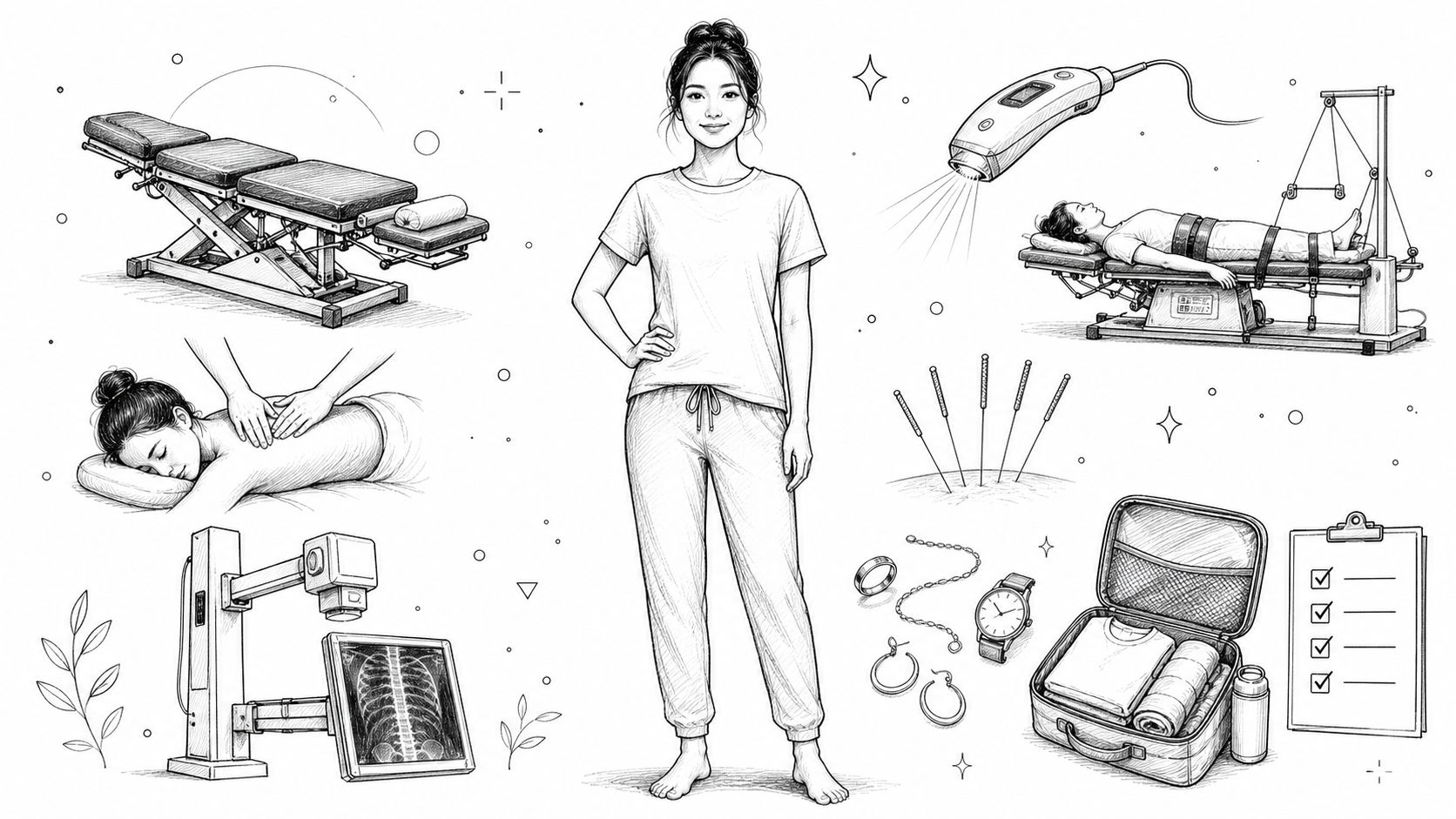
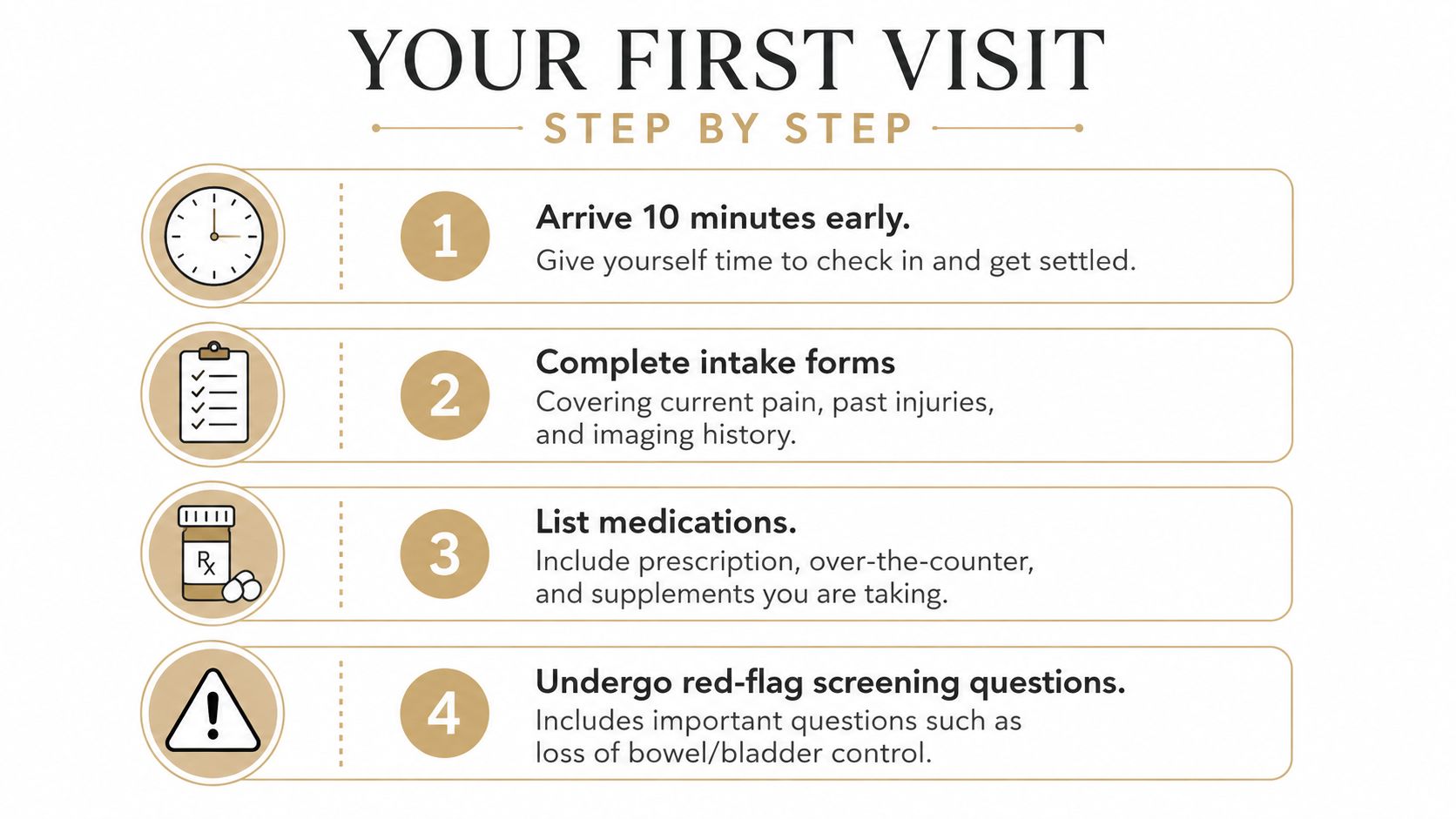
Arrive 10 minutes early. Intake forms should cover your current pain, previous injuries, imaging history, medications, activity limits, and symptoms that could change the safety of treatment.
Bring:
The clinician then performs a focused orthopedic, neurological, and postural examination. That may include range-of-motion testing, reflexes, strength or sensation checks, posture assessment, and palpation of involved segments. Red-flag screening should address loss of bowel or bladder control, unexplained weight loss, night pain, and fever.
Imaging isn't automatic. If examination findings warrant it, digital X-rays may be taken in the office or the clinician may refer you for MRI. The appointment should end with a plain-language working diagnosis, proposed frequency, expected duration, and anticipated out-of-pocket cost before treatment begins.
First visits generally run 45 to 60 minutes, while follow-ups average 15 to 20 minutes. You should leave knowing what the clinician believes is happening, what improvement will be measured, and what would prompt a referral.
A realistic care plan has a beginning, a reassessment point, and a tapering strategy. Acute injuries may start at three visits per week for two weeks, then reduce to twice weekly as symptoms stabilize. Chronic spinal conditions often begin at twice weekly for six to eight weeks before reassessment.
Disc-focused DRX 9000 programs may involve 20 to 24 sessions across seven to ten weeks, with the exact course determined by response and clinical findings. Preventive wellness patients commonly schedule monthly or quarterly maintenance visits instead of following an acute-injury schedule.
| Patient Type | Starting Frequency | Tapering Schedule | Session Length |
|---|---|---|---|
| Acute injury | Three visits weekly | Twice weekly as symptoms stabilize | 15 to 20 minutes |
| Chronic spinal condition | Twice weekly | Reassess after six to eight weeks | 15 to 20 minutes |
| Disc-related presentation | Structured decompression schedule | Taper as symptoms centralize | 25 to 30 minutes |
| Preventive wellness | Monthly or quarterly | Maintain based on goals | 15 to 20 minutes |
| Combined therapy visit | Based on examination | Adjust as function improves | 45 to 60 minutes |
Re-evaluations at four, eight, and twelve-week milestones can track range of motion, pain ratings, and functional goals. For a fuller discussion of planning, see how often you should see a chiropractor.
An MRI on day one isn't automatically the safest or most useful next step for uncomplicated low back pain. Current guidance emphasizes a diagnostic physical examination, red- and yellow-flag screening, progress monitoring, and selective imaging. Routine X-rays or MRI aren't recommended for nonspecific low back pain, including low back pain with sciatica, unless serious pathology is suspected. The 2025 chiropractic clinical guidance also emphasizes exercise advice, reassessment, return-to-work planning, and referral when needs exceed scope.
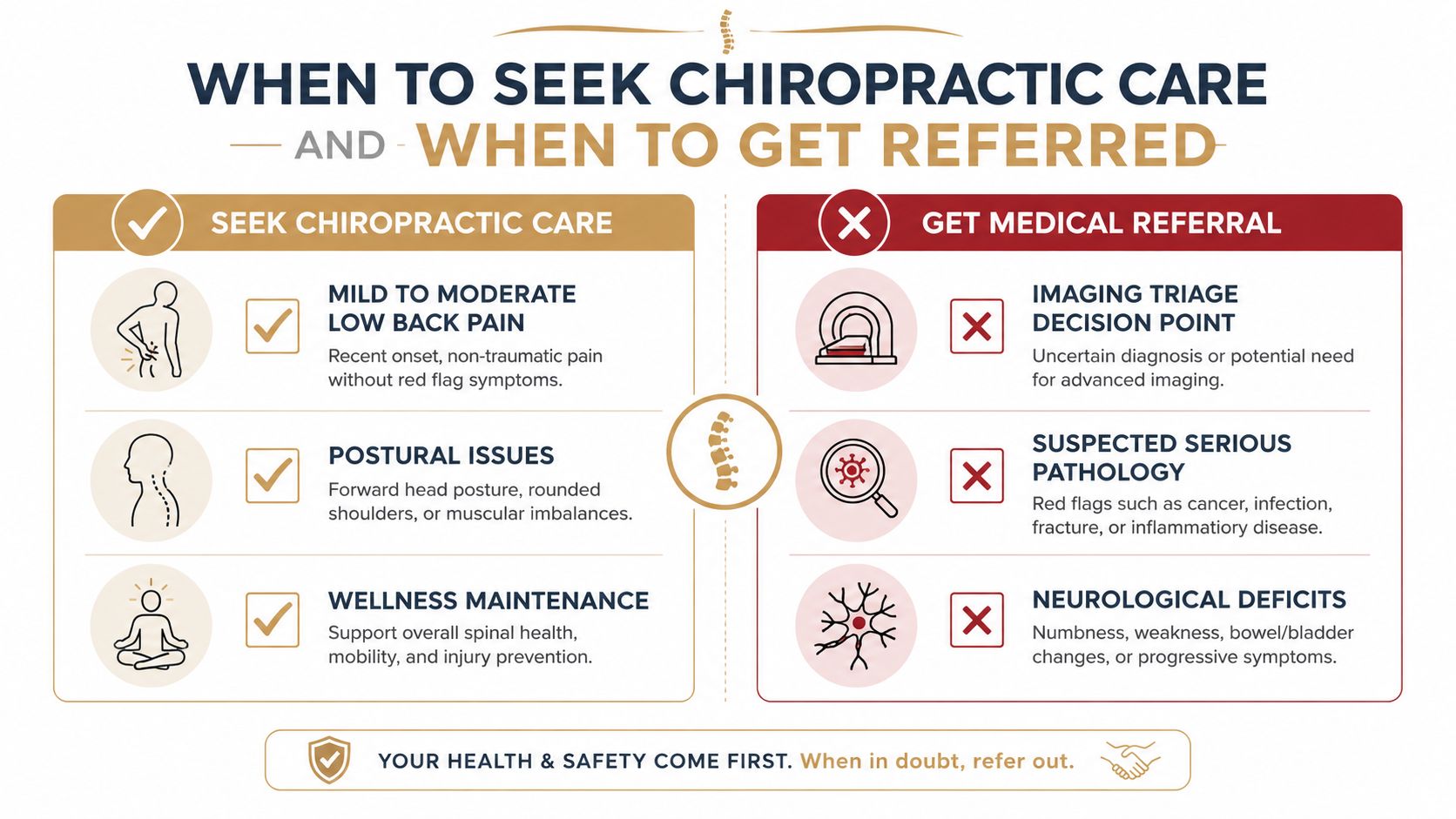
Seek conservative evaluation for mild to moderate mechanical back pain, posture-related discomfort, recurring stiffness, or activity-limiting symptoms without urgent warning signs. Get medical referral first for suspected cancer, infection, fracture risk, progressive neurological deficits, saddle anesthesia, bowel or bladder changes, fever with spinal pain, unexplained weight loss, or sudden weakness.
A scan can show an abnormality without proving that abnormality is the source of pain.
Yellow flags deserve attention even when they aren't emergencies. Prolonged sitting intolerance, repeated flare-ups, symptoms extending below the knee, fear of movement, or difficulty returning to work may call for co-management with primary care, a pain specialist, or another clinician. The right referral isn't a failure of chiropractic care. It's part of safe musculoskeletal decision-making.
Aspen Falls Wellness works with major commercial insurers along the Wasatch Front, including Blue Cross Blue Shield, United Healthcare, Aetna, Cigna, SelectHealth, PEHP, and Medicare for qualifying services. Coverage isn't identical across plans. Spinal decompression, Class IV laser, and acupuncture may require plan-specific benefits and medical-necessity documentation.
Call with your member ID before the first treatment so the front desk can verify benefits rather than estimate coverage. Workers compensation and personal injury cases are accepted with active claim numbers.
If you're uninsured, ask for a self-pay rate sheet, package pricing for a decompression series, and whether HSA or FSA cards can be used. Verification tells you what the plan may cover, but it doesn't guarantee payment. Ask about deductibles, visit limitations, authorization requirements, and your expected responsibility.
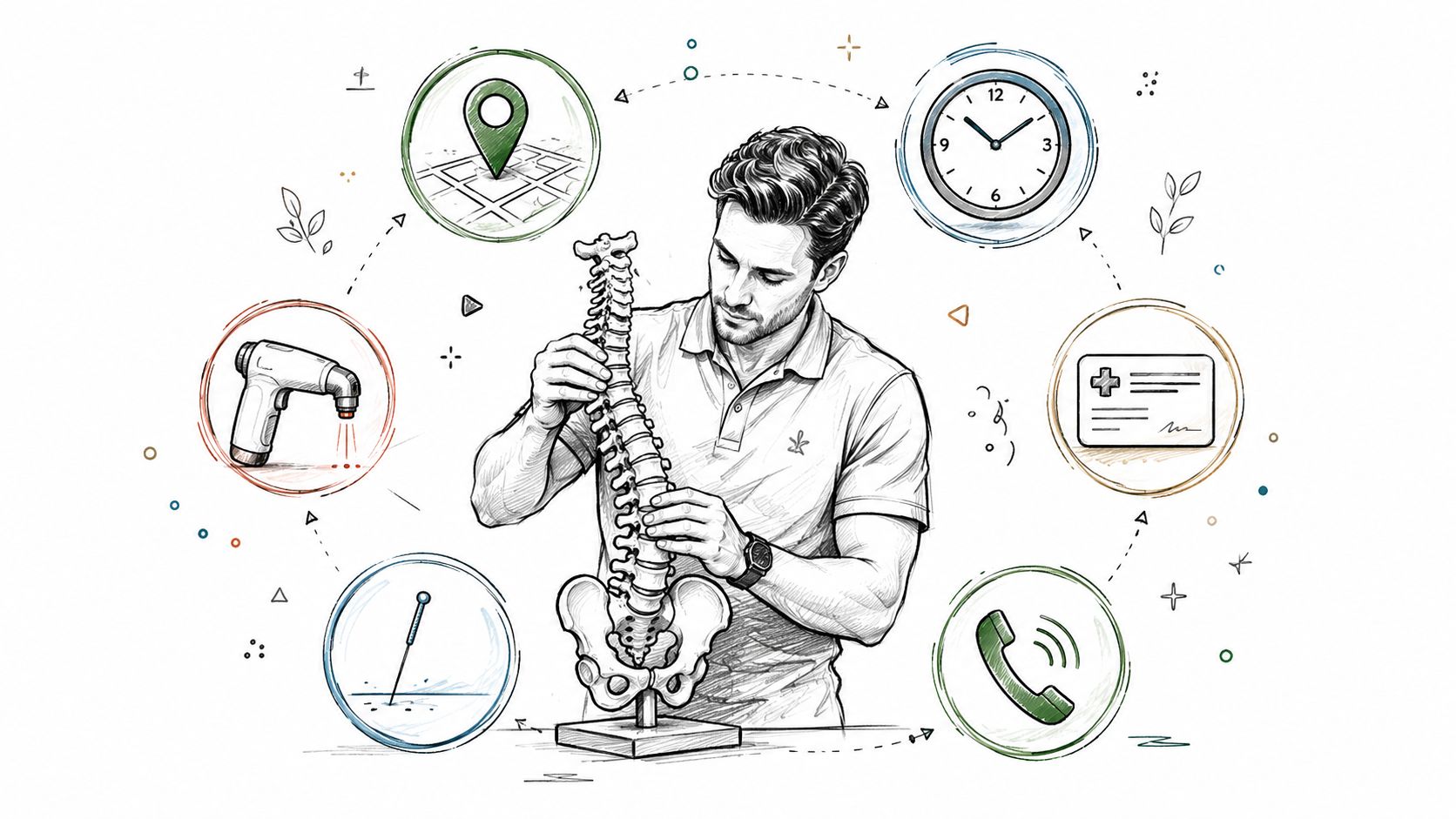
The primary Sandy clinic is at 8191 South 700 East, Sandy, Utah 84070, just off I-15 near the 9000 South corridor. It serves patients from Draper, Cottonwood Heights, and Midvale, with weekday scheduling that includes selected early morning and late afternoon appointments for commuters.
A second location in Salt Lake City serves downtown workers and people near the University area. Hours can vary by location and provider, so confirm the current schedule when booking.
| Location | Address | Hours | Phone | Parking |
|---|---|---|---|---|
| Sandy clinic | 8191 South 700 East, Sandy, Utah 84070 | Weekday hours, selected early and late appointments | Call the clinic directly | Free on-site parking |
| Salt Lake City clinic | Salt Lake City location | Confirm with the clinic | Call the clinic directly | Confirm with the clinic |
When you call, mention the referral source, how long symptoms have lasted, the main complaint, whether the problem followed a collision, and whether imaging has already been completed. Same-week appointments are commonly available for acute injuries, while preventive visits can be scheduled farther ahead. Online intake forms, a patient portal, direct phone access, ADA accessibility, and on-site Sandy parking make the logistics easier for patients with limited mobility. Review the Sandy clinic location information before traveling.
Call medical care first for bowel or bladder changes, saddle numbness, sudden weakness, fever, or trauma with neurological loss. Preventive adjustments may suit maintenance goals, while acute disc and whiplash complaints generally need more frequent early reassessment than wellness care.
Aspen Falls Wellness provides examinations, chiropractic adjustments, DRX 9000 spinal decompression, laser and SoftWave therapies, massage, acupuncture, mobility work, rehabilitation exercise, nutrition counseling, and car accident care in Sandy and Salt Lake City. If your back or neck pain is disrupting work, sleep, or movement, visit Aspen Falls Wellness to request an evaluation and discuss the safest next step.

Stay updated with the latest chiropractic news and exclusive offers.