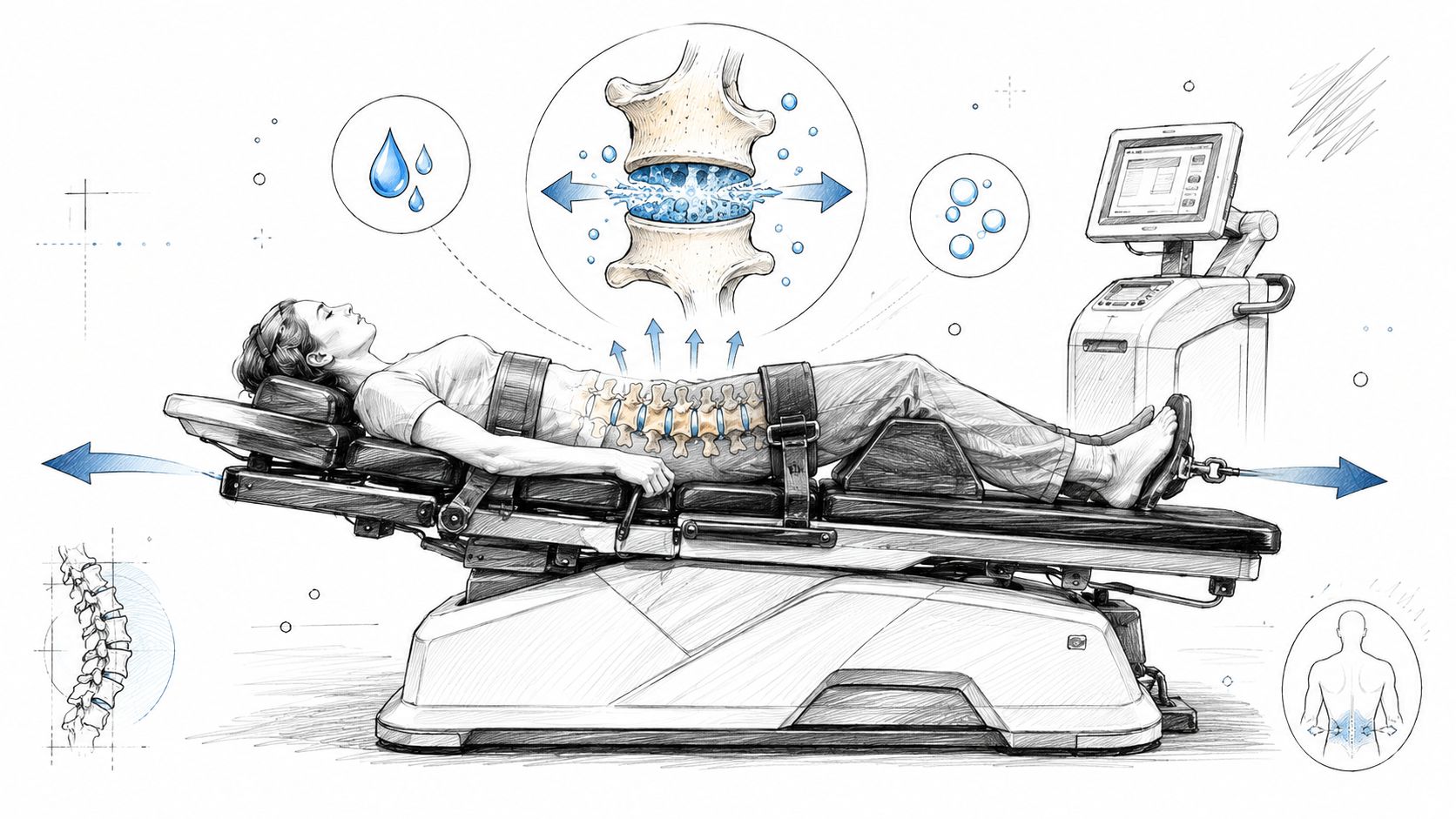
Discover safe chiropractic stretches for lower back pain. Learn step-by-step routines, safety tips, and when to seek professional care for lasting relief.
You wake up, roll toward the edge of the bed, and feel that familiar tightening across your lower back. A quick search brings up a long list of stretches, so you try the first one that looks easy. Sometimes the stiffness eases. Other times, bending or twisting makes the pain sharper, sends symptoms into the leg, or leaves you worse the next morning.
That difference matters. Chiropractic stretches for lower back pain can support mobility, but stretching alone isn't a universal fix. The safer approach is symptom-limited movement, followed by progressive strengthening and professional assessment when pain persists, radiates, or stops responding.
A stretch found online may ease one person's stiffness and aggravate another's symptoms. Lower back pain can involve limited hip movement, sensitive muscles, disc-related irritation, joint dysfunction, reduced trunk control, or several factors at once. The right movement depends on the response it produces, especially when bending, twisting, or hamstring tension increases symptoms into the leg.
A symptom-limited plan starts with the movement your back tolerates, then progresses as control improves. Gentle mobility can reduce stiffness, but it does not correct every source of pain. If a stretch repeatedly provokes symptoms, forcing a longer hold is the wrong progression.
Evidence supports combining active care with appropriate hands-on treatment. A Cochrane review of 39 trials found spinal manipulation more effective than sham therapy and therapies known to be unhelpful for reducing pain and improving everyday function. It was not more effective than medication, physical therapy, exercise, back school, or usual general-practice care. A 2017 systematic review and meta-analysis of 26 randomized trials also found statistically significant improvements in pain and function after spinal manipulative therapy, with a modest average benefit observed up to 6 weeks (Cochrane review).
Stretching and exercise therefore work best as part of a broader plan, not as a stand-alone cure. A structured therapeutic exercise approach lets you adjust range, repetitions, and loading according to your symptoms. Professional care can add assessment and modalities such as spinal decompression or laser therapy when home mobility work plateaus, while exercise remains the tool that builds lasting tolerance.
Use gentle mobility first, then add support and function:
A temporary decrease in stiffness does not prove that function has improved. Check whether you can stand, walk, sleep, bend, or complete your day with better control afterward. If the answer remains no, reassess the movement and seek professional guidance rather than adding intensity.
If your lower back feels stiff after sitting, start with controlled movement rather than forcing a large stretch. Use a firm, supportive surface and move slowly. Each exercise should create a comfortable pull or mild muscular effort. Sharp pain, electrical sensations, or increasing pain down the leg means the movement needs less range or should stop.
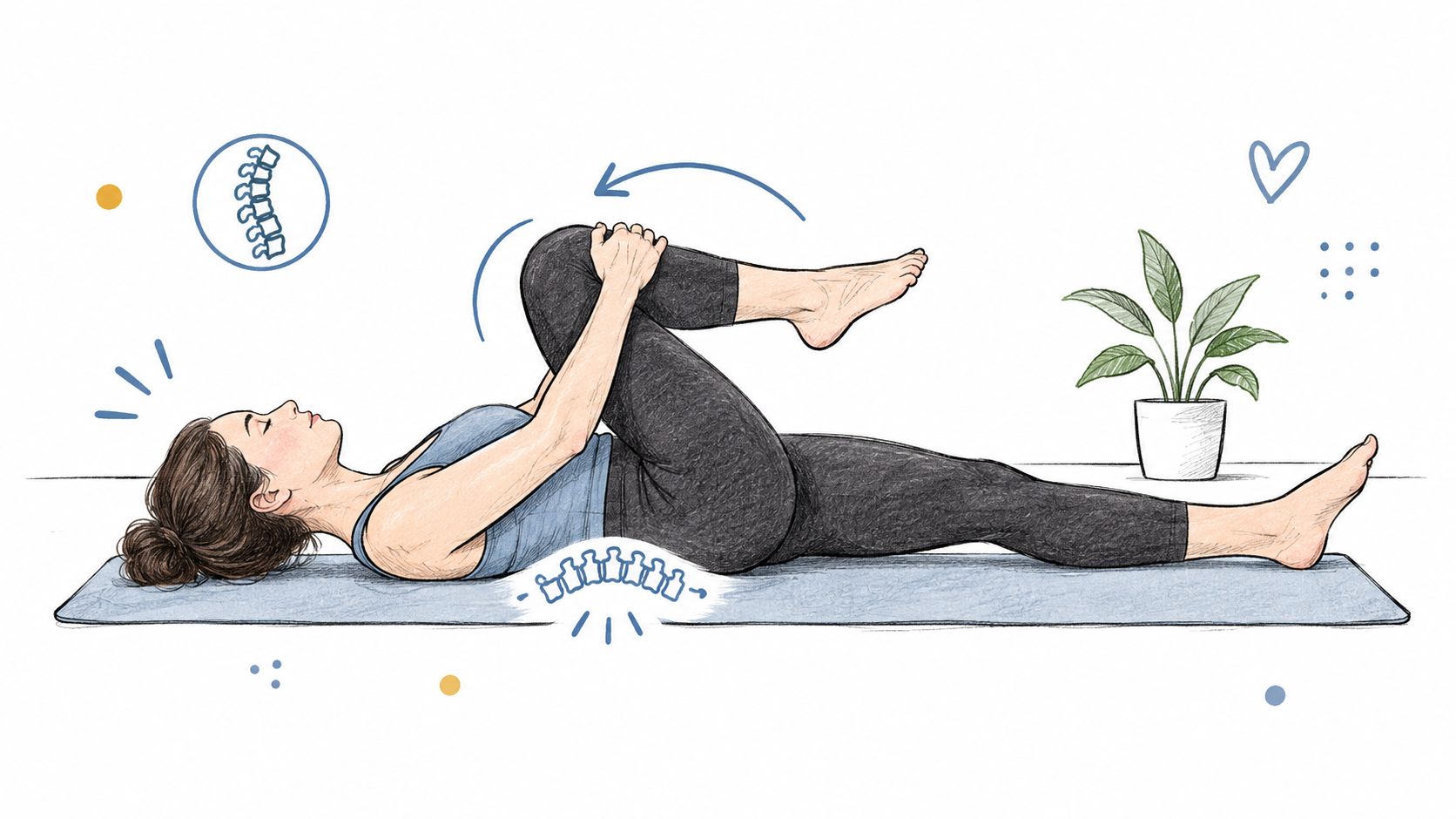
Lie on your back with both knees bent and your feet supported. Bring one knee toward your chest, holding behind the thigh or over the shin. Stop at a comfortable stretch in the lower back or buttock. Keep your shoulders relaxed and breathe steadily. Do not pull harder as you exhale.
Harvard Health recommends holding the position for 5 to 10 seconds and repeating it 5 to 10 times on each leg (Harvard's lower-back exercise guidance). Mayo Clinic's back routine also includes knee-to-chest and knee-rotation movements held for 5 to 10 seconds (Mayo Clinic back-exercise routine). If bringing the knee inward increases leg symptoms, reduce the range or discontinue that variation.
Stay on your back with your knees bent and feet flat. Brace your abdomen gently, press through your feet, and lift your pelvis without aggressively arching the lower spine. Lift the buttocks only 4 to 6 inches and hold for 5 seconds, per the same Harvard Health guidance above.
The bridge adds controlled strengthening for the gluteal and hip muscles, rather than increasing flexibility. Keep your ribs relaxed, lower slowly, and use a height you can control. A manageable muscular effort is acceptable. Back pain that increases during the lift is a reason to reduce the height or stop.
With your knees bent and feet supported, let both knees move gently toward one side while keeping your shoulders relaxed and supported. Return to center, then repeat on the other side. The Mayo Clinic Health System exercise sheet includes side rotation with knee-to-chest and hamstring movements that stop at a comfortable stretch behind the thigh.
Do not use your hands to force the knees farther. Smooth, symptom-limited motion matters more than maximum rotation. For broader guidance on combining mobility with strengthening, review these natural methods for back pain, rather than treating stretching as a complete solution.
For another movement pattern, review this guide to the back arch stretch. Apply the same standard: the exercise must fit your symptom response, and progress should come from better control rather than pushing farther.
A stretch can feel mild during the session and still provoke symptoms later that evening or the next morning. Use that delayed response to set your dose. Muscle tightness usually feels like a dull pull that settles when you stop. Burning, electric, shooting, or radiating pain, along with numbness, tingling, or weakness, points to a different concern.
Stop the exercise and reassess if you notice:
Guidance on exercise for chronic low back pain warns against movements that increase pain, particularly during trunk or hip stretching. A flare does not always require complete rest. You may need a smaller range, a supported position, fewer repetitions, or a temporary pause while a clinician identifies the aggravating pattern.
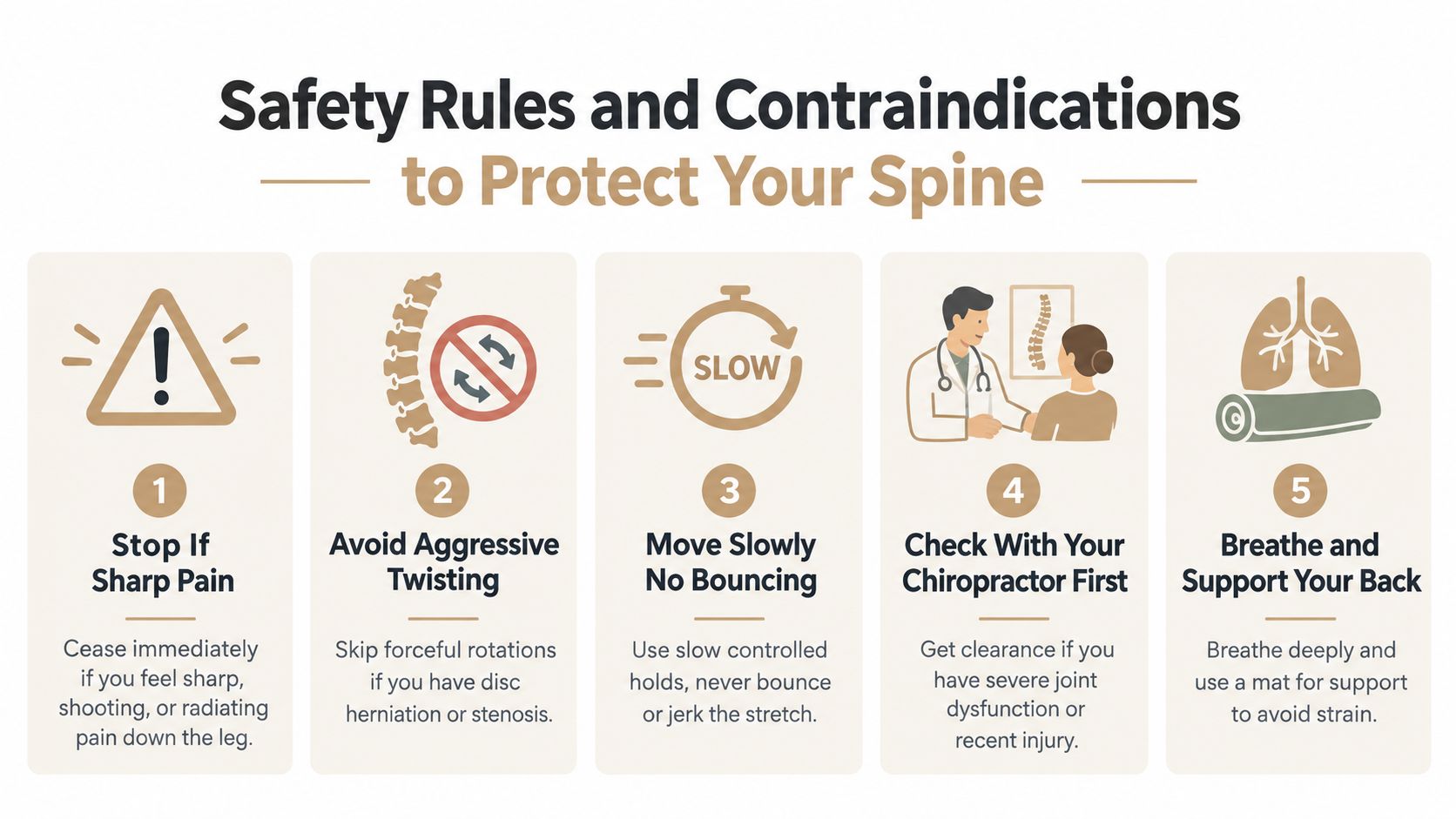
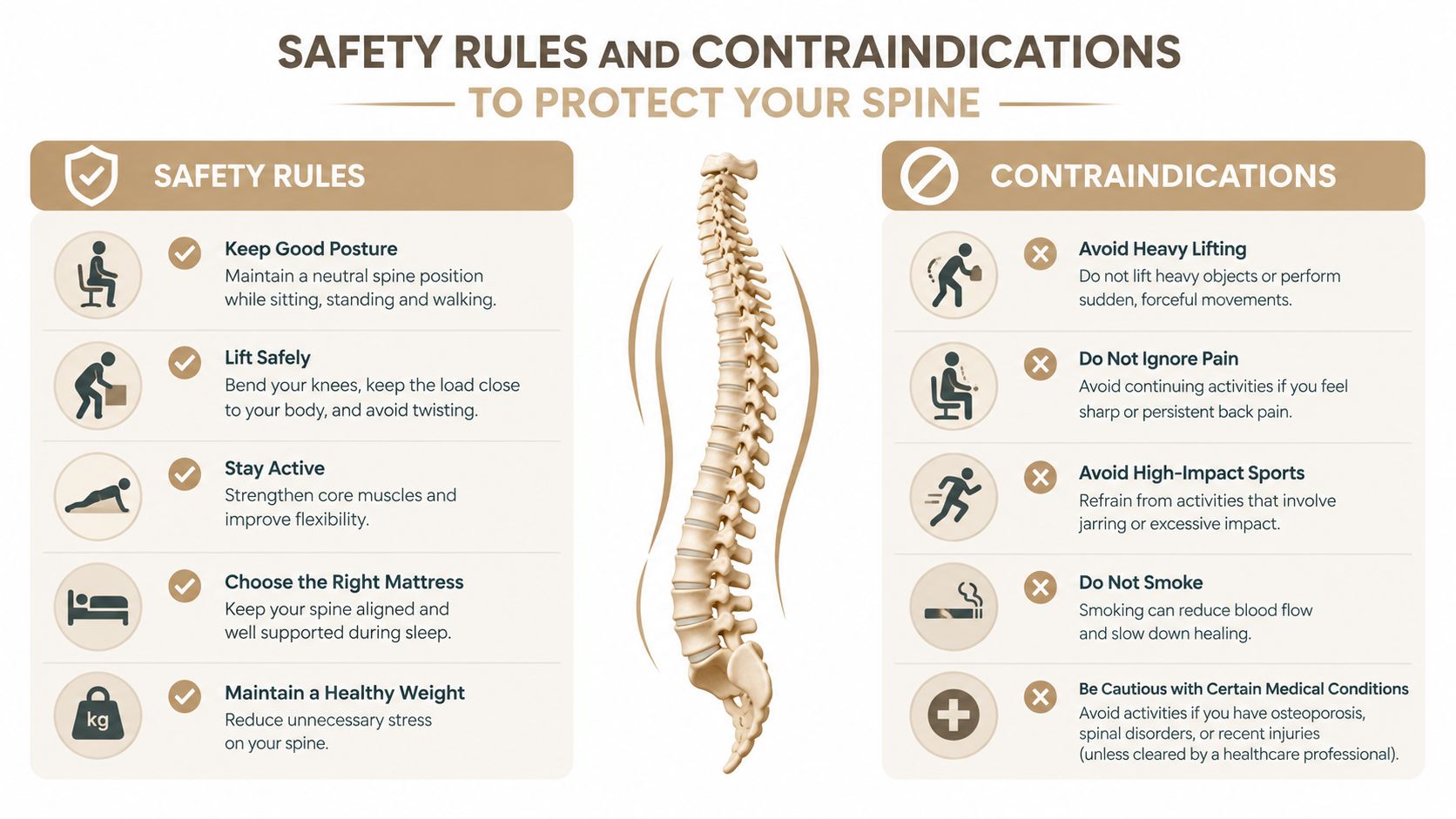
Safety rule: A comfortable stretch can be useful. Sharp, shooting, or radiating pain means stop.
Aggressive twisting and bouncing require extra caution when disc-related symptoms or spinal narrowing are possible. Slow, supported movement gives you better control. Anyone considering ballistic stretching for Weight Method users should recognize that forceful bouncing is a poor starting point for an irritated lower back.
Use professional assessment when symptoms remain unchanged despite careful adjustments. A chiropractor can determine whether mobility work fits the presentation and whether options such as spinal decompression or laser therapy should complement, rather than replace, a symptom-limited home routine.
If your back feels easier after gentle mobility but worsens with deeper stretching, progress by symptoms and function, not by how far you can move. Starting with the hardest stretch can overload irritated tissue before it is ready for end-range work.
Early phase: Begin with low-pain mobility, such as knee-to-chest or supported side rotation, using the hold and repetition ranges described earlier. Follow the Mayo Clinic routine described earlier, completing the sequence once in the morning and once in the evening if possible, and repeating each stretch 2 to 3 times. Keep the range comfortable. If symptoms spread, intensify, or linger afterward, reduce the range, repetitions, or frequency.
Building phase: Add the bridge only after the mobility work is consistently tolerated without a meaningful flare. Lift through controlled hip and trunk movement, not by trying to reach a higher position. Continue ordinary activity that your symptoms tolerate. A short walk or easier daily movement may be more useful than adding another demanding stretch.
Progress one variable at a time: range, repetitions, hold time, or resistance. If the next change increases symptoms, return to the last well-tolerated level for several sessions before trying again.
Maintenance phase: Combine strengthening with stretching or aerobic activity 2 to 3 times per week, a reasonable prevention benchmark identified in a systematic review (exercise prevention review). The review reported that exercise alone reduced low back pain risk by 33%, with a risk ratio of 0.67 and a 95% confidence interval of 0.53 to 0.85, based on 8 randomized controlled trials involving 1,634 participants. Exercise plus education reduced risk by 27%, with a risk ratio of 0.73 and a 95% confidence interval of 0.59 to 0.91, based on 6 trials involving 1,381 participants.
Record whether you walk more comfortably, change position more easily, or sleep with fewer interruptions. Guidelines may provide limited detail about stretching type, intensity, duration, and frequency, so your response helps set the dose. If function stalls, a personalized exercise plan, mobility therapy, or rehabilitation program can identify the missing strength or movement component before home care is intensified.
Home mobility work has a ceiling. If a disc-related condition, stenosis, persistent sciatica, or severe joint dysfunction continues to limit walking, sleep, work, or basic movement, repeating the same stretches won't address the whole problem.
The next step should be an examination, not automatically more force. A clinician can assess strength, sensation, movement tolerance, and the pattern of your symptoms, then decide whether chiropractic adjustment, decompression, soft-tissue care, or referral is appropriate.
Spinal Decompression with the DRX 9000 may be considered within a broader non-surgical plan for selected disc-related conditions. It shouldn't be presented as a guaranteed cure, and it isn't a substitute for diagnosis or exercise. The purpose of an evaluation is to determine whether decompression fits the presentation and whether progress can be measured alongside home care. You can read more about a spinal decompression chiropractor and the role of structured clinical assessment.
MLS Laser Therapy and SoftWave Therapy are device-based options that may support care for irritated soft tissue and painful regions. Massage Therapy, Acupuncture, and Muscle Stimulation may also be incorporated when they match the patient's needs. A Chiropractic Adjustment or targeted realignment can address restricted joint mechanics, but it works best when paired with active rehabilitation rather than used as the only intervention.
For readers comparing approaches to disc care, Longevity Medical Institute disc care offers another resource to review. Keep the decision grounded in your examination findings, symptom behavior, goals, and tolerance.
Aspen Falls Wellness provides coordinated chiropractic care, mobility therapy, massage, acupuncture, rehabilitation exercise, nutrition counseling, and non-surgical spinal decompression, including the DRX 9000, at its Salt Lake City and Sandy clinics. The appropriate combination depends on the examination and how your symptoms respond over time.
Consider two people with morning stiffness. One feels better after gentle knee-to-chest movement and can walk normally, so a progressive home plan may be a sensible starting point. The other feels pain travel into the leg and notices a stronger flare the following day. That person needs the routine modified and an evaluation before adding intensity.
Safe stretching means staying below the threshold that provokes symptoms, adding strengthening as movement improves, and checking progress through daily function. You don't have to manage persistent or recurrent pain by guessing which internet stretch fits.
If lower back pain is limiting your movement, visit Aspen Falls Wellness for a thorough examination in Salt Lake City or Sandy. The team can develop a personalized plan using rehabilitation exercise, mobility therapy, chiropractic care, and appropriate options such as massage, acupuncture, MLS Laser Therapy, SoftWave Therapy, or Spinal Decompression with the DRX 9000.

Stay updated with the latest chiropractic news and exclusive offers.