Wondering what to wear to a chiropractic appointment? Get practical outfit ideas, clothing do’s and don’ts, jewelry guidance, and clinic prep tips.



What should you wear to a chiropractic appointment? The safest default is comfortable, breathable, two-piece clothing with supportive shoes and minimal jewelry. The best choice depends on the service and whether your visit includes an examination, movement testing, or imaging.
A standard adjustment usually lets you stay fully clothed, but your outfit still affects how easily you can bend, rotate, lie on the table, and maintain privacy. Loose athletic wear, soft casual clothing, and easy-to-remove shoes work well for many visits. A specific body area or treatment may call for shorts, a sleeveless top, or an accessible layer instead.
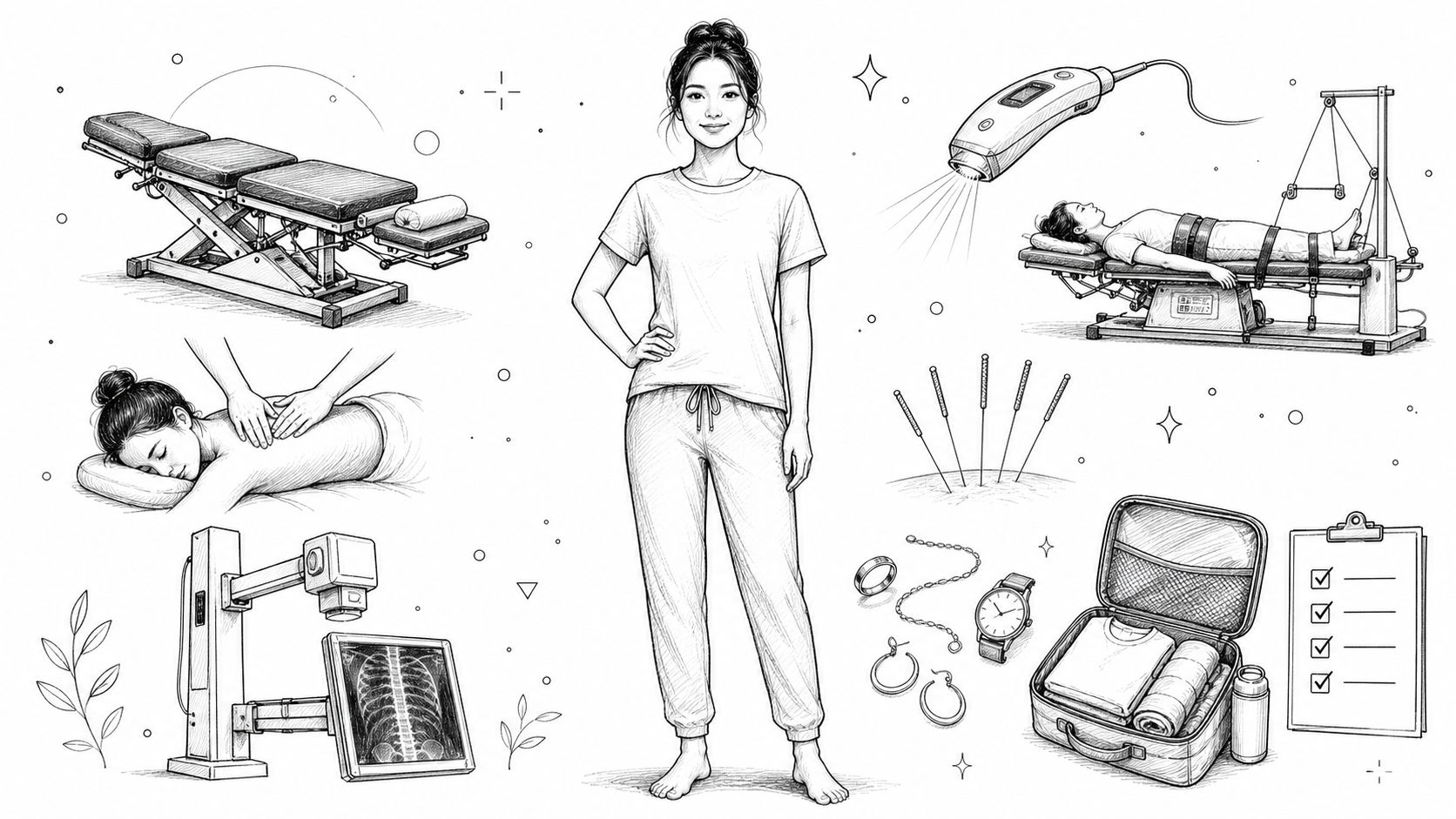
At Aspen Falls Wellness, clothing needs can vary between an initial examination, chiropractic adjustment, massage therapy, MLS Laser Therapy, SoftWave Therapy, spinal decompression with the DRX 9000, X-ray preparation, and acupuncture. You can ask staff in advance about changing, draping, jewelry removal, or clinic-specific requirements. A quick question before you arrive can make the appointment feel more comfortable and predictable.
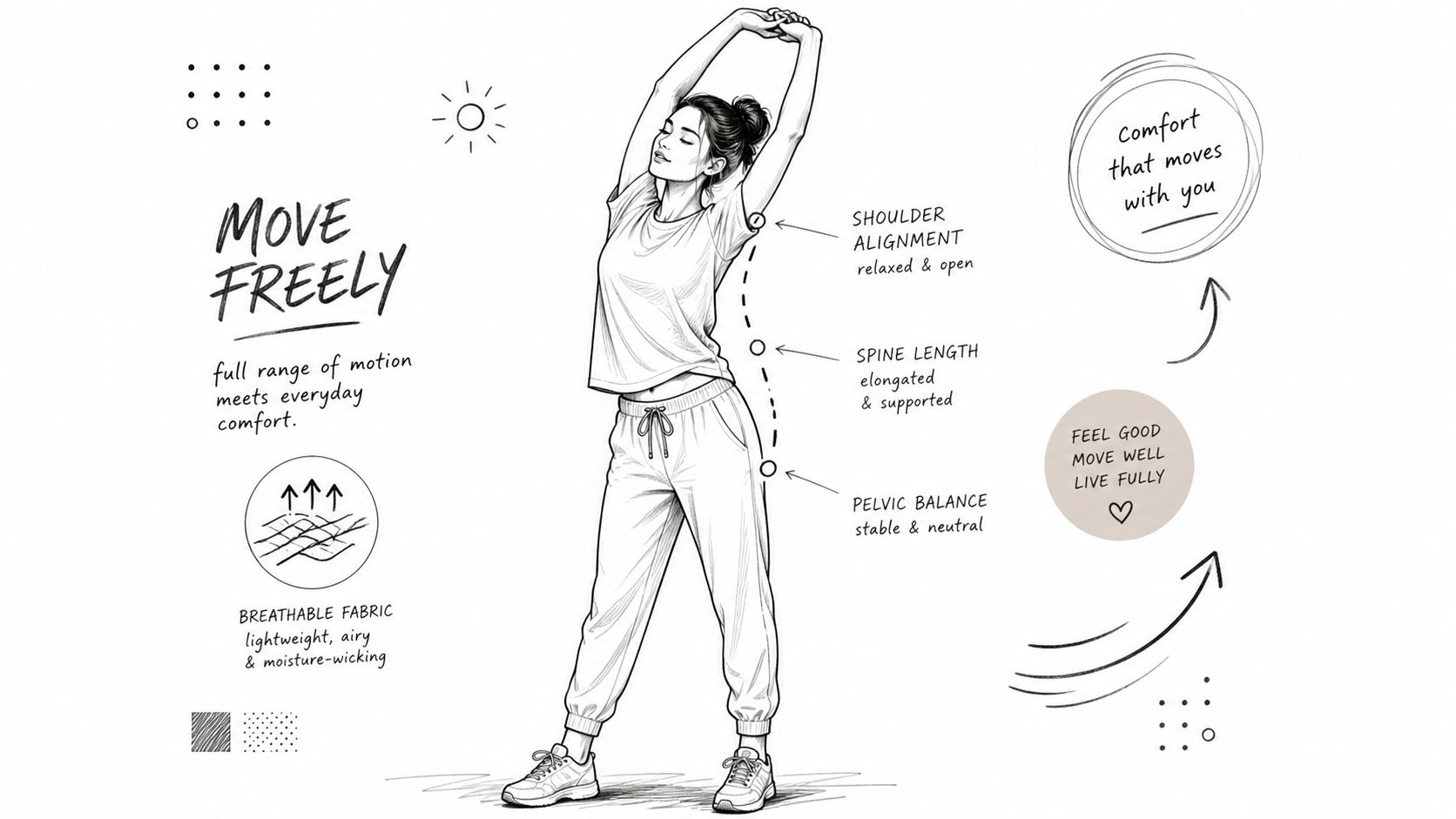
Could your clothing restrict a movement test or make treatment access awkward? Start with garments that let the clinician observe posture, position your body, and assess movement without tight waistbands or stiff seams. Cotton shirts, moisture-wicking athletic tops, relaxed joggers, yoga pants, and stretch-fabric trousers are practical choices.
This approach supports mobility therapy, posture work, golf movement screening, and rehabilitation exercise. It also makes longer periods of positioning easier to tolerate during care. Aspen Falls Wellness recommends loose, comfortable clothing for a thorough examination and for stretches and movements during care through its new-patient guidance.
Privacy matters as much as flexibility. Choose a top that stays in place when you bend or raise your arms, and bottoms that provide coverage while you lie down or change position.
Practical rule: Before leaving home, bend forward, rotate your torso, raise both arms, and sit down in the outfit. If the fabric pulls, digs in, or exposes more than you'd like, choose another option.
Soft athletic wear usually allows more movement than clothing chosen mainly for appearance. A cotton T-shirt with relaxed joggers, a performance top with leggings, or a loose button-up over a simple base layer can provide mobility without requiring a wardrobe change. For soft casual options, comfortable joggers for women illustrate the flexible fit that can suit an appointment.
Stiff denim, rigid dress pants, bulky sweaters, and thick waistbands can limit bending and create pressure on the treatment table. Heavy zippers, thick seams, or straps across the back may also interfere with palpation or become uncomfortable when lying face down. A neutral color can make posture and alignment easier to observe, but comfort, coverage, and access matter more.
A simple outfit also leaves room for service-specific adjustments. Choose pieces that can be moved or removed without a struggle if the clinician needs access to a particular area.
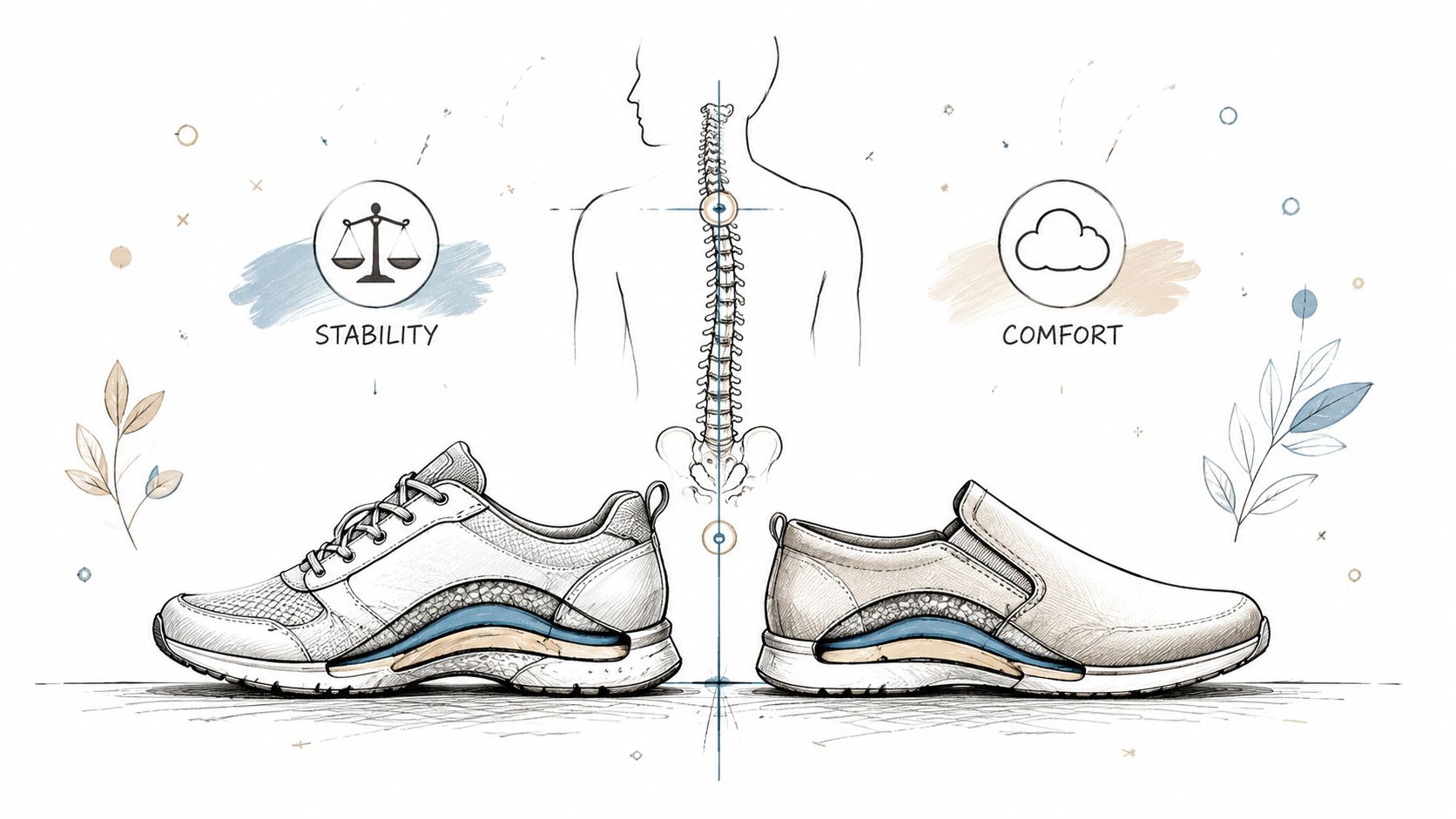
Shoes can affect how you stand and walk before the examination even begins. Flat, supportive footwear, such as sneakers, athletic slip-ons, or comfortable flats, makes movement testing easier and avoids the altered balance that can come with high heels or hard soles. Patient-facing guidance also favors easy-to-remove shoes when a visit includes walking, lower-body assessment, or position changes, as explained in this footwear guide for chiropractic visits.
Cross-training sneakers are useful for mobility therapy, posture retraining, personal exercise plans, and rehabilitation exercise. If you're attending a golf movement screening, bring the shoes you normally use for practice or play. The clinician can then observe movement in footwear that reflects your usual activity rather than a completely different pair.
A patient who arrives in office heels but exercises in supportive trainers may want to change before an assessment. A short walk from the waiting area to the treatment space can look and feel different in each pair. If you use orthotics, bring them with you, especially if the appointment involves gait, posture, exercise planning, or lower-body symptoms.
Avoid shoes that are too tight, excessively loose, unstable, or difficult to remove. High heels and rigid footwear may interfere with balance and movement, while worn-out soles can make your usual support less representative of what you need. Nutrition counseling won't replace a footwear assessment, but follow-up conversations about whole-body health can be a useful time to ask whether your current shoes or orthotics deserve attention.
Easy-to-slip-on sneakers or flats are usually more convenient than shoes that require lengthy fastening in the treatment room.
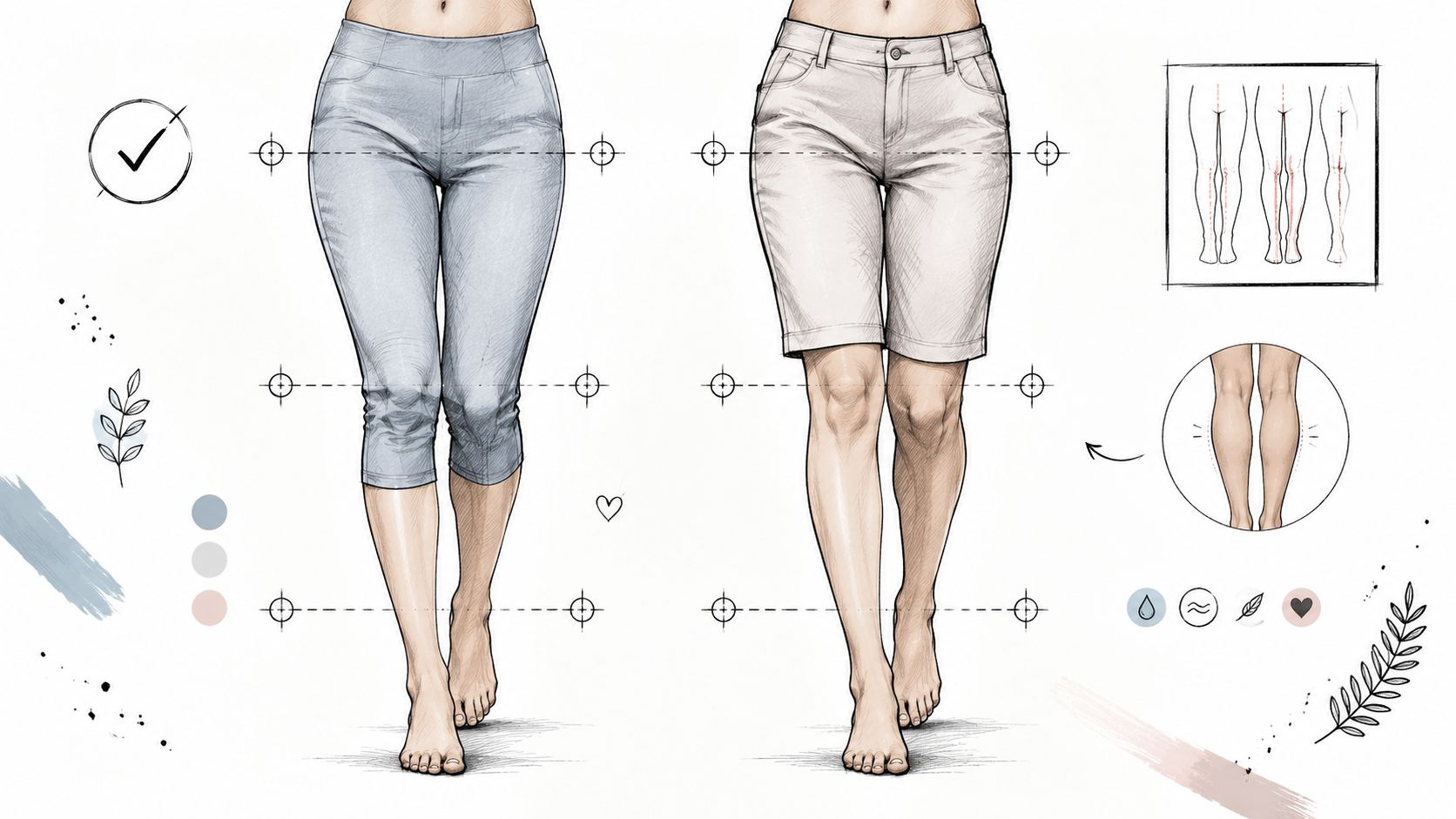
Lower-body clothing should give the clinician a clear view of leg movement while preserving your comfort and privacy. Knee-length athletic shorts, capri leggings, cropped tights, and flexible training shorts suit appointments involving the hips, knees, ankles, gait, or sciatic symptoms.
For spine-related complaints, shorts can reduce clothing obstruction during examination. NHS musculoskeletal guidance advises patients with spine complaints to wear or bring shorts. For lower-limb assessments, it recommends shorts or loose trousers that roll above the knee, paired with trainers, as explained in its clothing guidance for musculoskeletal appointments.
If sciatica symptoms affect leg movement, shorts can help the clinician observe range-of-motion testing. They are also practical for a car accident assessment involving the hip, knee, or lower leg. For knee-focused care, choose shorts or loose trousers that roll above the knee. A hip or lower-back examination calls for bottoms that allow comfortable bending and rotation.
Very baggy shorts may hide leg shape and movement. Tight fabric can restrict motion or press against sensitive areas. Fitted, stretchy clothing usually offers the better compromise, especially when the appointment includes movement assessment and treatment access.
You can bring shorts and change privately if you are coming from work or prefer more coverage during travel. A private changing option also helps you prepare for lower-body services without arriving in clothing that feels too revealing.
Privacy matters: You do not have to arrive in the shortest possible outfit. Change privately when needed, and choose clothing that provides access while preserving the coverage you prefer.
A tank top or sleeveless shirt can be especially practical when the visit centers on the neck, shoulders, upper back, or headaches. Musculoskeletal examination guidance explains that most regions can be assessed in a T-shirt and shorts, while shoulder examinations often need more exposure because clothing can limit simultaneous visual inspection and provocative testing. A clinical attire guide for physical examinations describes tank tops or comparable exposure as useful for shoulder assessment.
At Aspen Falls Wellness, a sleeveless workout shirt can support visual assessment during chiropractic adjustment, massage therapy, mobility therapy, soft-tissue work, and acupuncture. It can also make it easier to observe shoulder-blade movement and upper-back posture during exercise or range-of-motion testing.
A racerback athletic top, loose sleeveless tee, or breathable tank may provide access without requiring you to remove everything. Some patients prefer a sports bra or layered top, while others want a removable cardigan or button-up shirt over a fitted base. A standard bra can usually stay on during a chiropractic visit, but straps, clasps, or thick seams across the back may feel uncomfortable on the table.
Avoid an oversized sleeveless top if it hides the shoulder or upper-back area. Choose a garment that moves freely but stays in place when you raise your arms or rotate your torso. If you're worried about exposure, bring the tank rather than wearing it from home. Staff can explain whether you'll need to change or whether your current clothing provides enough access.
A separate top and bottom gives you more control over spinal access than a dress, skirt, or jumpsuit. During prone positioning, the top can ride up enough to expose the treatment area while the lower back remains covered by the waistband or a drape. You can also adjust one garment at a time, which supports privacy during an examination, chiropractic adjustment, or realignment.
Choose separates that stay secure as you lie down, turn, and sit up. A fitted T-shirt with joggers, a tank top with leggings, or a sports bra with loose pants can work when the waistband is comfortable and the shirt does not bunch under your chest or neck. A gown may sometimes be used if additional access is needed, as Aspen Falls Wellness explains in its article on full-body adjustments.
Separate pieces are practical when a visit combines manual care with device-based therapies, acupuncture, massage therapy, or spinal decompression. Each service may require a different position or treatment area. Adjustable clothing lets the practitioner reach the spine while you keep unrelated areas covered.
Select simple fasteners, and avoid belts, complicated straps, and tight waistbands that can press against the table. A front-opening cardigan or lightweight robe can add coverage between the waiting room and treatment space. Tell the practitioner about any privacy concerns before treatment begins. Ask what will remain on, what may need adjustment, and whether draping is available.
Jewelry can become a comfort and access problem when you're lying down, turning your head, or completing movement exercises. Heavy necklaces can press into the neck or upper back. Large earrings may catch against the table, while watches, bracelets, rings, belts, and body jewelry can interfere with work near the wrists, hands, hips, or spine.
Take off neck jewelry before a cervical spine evaluation. Remove wrist accessories if the appointment includes upper-extremity testing or exercise. If a piercing sits directly over a treatment area, ask staff whether it needs to come out. The decision may differ between manual adjustment, massage therapy, acupuncture, SoftWave Therapy, MLS Laser Therapy, and spinal decompression.
Removing accessories at home is usually easier than managing them in the treatment room. If you need to wear them to an event afterward, carry a small pouch rather than placing loose pieces in a pocket. Ask the clinic about secure storage, and don't leave valuables unattended in a vehicle unless that's the safest option available to you.
Accessories can also complicate rehabilitation exercise and mobility therapy by catching on clothing or pressing into the body during floor or table work. A simple outfit with no dangling pieces keeps positioning straightforward. For a massage appointment, you can review comfort, coverage, and draping expectations through Aspen Falls Wellness's massage therapy information.
A front-opening layer balances treatment access with privacy. A lightweight button-up shirt, zip-up hoodie, cardigan, wrap, or robe-style cover-up can stay on during travel and come off quickly when the practitioner needs to assess the neck, shoulders, or back.
This setup suits a first appointment, when the visit may include a detailed examination, movement testing, imaging preparation, or more than one treatment approach. It also gives added coverage if you would rather not arrive in a tank top or sports bra. Wear a breathable base layer underneath so the outer garment can come off without a complete change.
Large buttons and smooth zippers are easier to handle than tiny fasteners. Choose lightweight cotton, linen, chambray, or soft athletic fabric instead of thick fleece or padded outerwear. Avoid scarves, ties, and long cords around the neck, since they can obstruct cervical assessment or affect positioning. Cedar & Lily's layering advice provides a useful general example of combining coverage with removable layers.
Match the base layer to the planned service. For adjustment or decompression, clothing that exposes the relevant area without excessive repositioning can save time. Muscle stimulation, pain-relief care, and exercise planning may require different access or movement freedom. Contact Aspen Falls Wellness before the visit if you are unsure whether changing, draping, or removing a garment will be expected. The clinic's new-patient information can also help you prepare for arrival and appointment logistics.
Pack a removable layer, comfortable base garment, and any prescribed support device. Bring a small bag for clothing and valuables, then confirm arrival instructions before leaving home.
| Item | Implementation complexity | Resource requirements | Expected outcomes | Ideal use cases | Key advantages |
|---|---|---|---|---|---|
| Loose-Fitting, Breathable Clothing | Low, choose relaxed-fit garments | Minimal, breathable fabrics, two-piece preferred | Accurate posture/movement assessment; comfort during therapy | Mobility therapy, golf screening, DRX 9000, rehabilitative exercise | Full range of motion, clear visualization, easy manual access |
| Flat, Supportive Footwear | Low, wear appropriate shoes | Moderate, supportive shoes or orthotics | Neutral spinal alignment; reliable gait analysis | Posture retraining, mobility therapy, gait screening, rehab plans | Shock absorption, weight distribution, prevents heel-induced distortion |
| Shorts or Capris for Lower Body Visibility | Low, select shorter/fitted bottoms | Minimal, shorts, capris, or fitted leggings | Clear lower-limb assessment; detect swelling or muscle imbalance | Sciatica, car-accident evaluation, spinal decompression, gait analysis | Visualizes leg alignment and symmetry; improves diagnostic accuracy |
| Tank Tops or Sleeveless Shirts for Upper Body Assessment | Low, wear sleeveless or removable top | Minimal, tank/sleeveless tops, modesty layer optional | Better cervical/thoracic visualization; targeted treatment | Neck pain, headaches, shoulder issues, upper-back therapies | Unrestricted view of shoulders/spine; facilitates manual and device therapy |
| Two-Piece Outfits for Full Spinal Access | Low–Moderate, plan separates for easy removal | Minimal, coordinating top and bottom, removable layer | Full-back access; streamlined examinations and device treatments | Comprehensive spinal exams, DRX 9000, multi-modality sessions | Full spinal visibility without gown; faster, more efficient care |
| Minimal Jewelry and Accessories | Low, remove items before visit | Minimal, safe storage recommended | Safer hands-on and device-based treatments; no interference | Any manual therapy, acupuncture, SoftWave/MLS Laser, decompression | Improves safety and precision; prevents device or positioning conflicts |
| Easy-to-Remove Layers and Front-Opening Garments | Low, wear front-opening or layered pieces | Minimal, button-ups, zip-ups, cardigans, robes | Maintains modesty while enabling rapid access; reduces anxiety | New patients, initial exams, multi-modality appointments | Modesty with flexibility; speeds transitions and preserves professional appearance |
The best outfit is the one that supports the actual appointment rather than a generic dress code. For a routine chiropractic adjustment, start with breathable two-piece clothing, flat supportive shoes, and minimal jewelry. For mobility therapy, rehabilitation exercise, golf movement screening, or a lower-body examination, add shorts or bring the shoes you normally use for activity.
A removable layer gives you coverage and flexibility. Orthotics and exercise shoes are worth bringing when gait, posture, lower-body alignment, or activity-specific movement matters. If you're attending for sciatica treatment or after a car accident, choose clothing that leaves the symptomatic area accessible without forcing you into a garment that causes pain.
Use this preparation list:
Aspen Falls Wellness offers chiropractic care alongside spinal decompression with the DRX 9000, SoftWave Therapy, MLS Laser Therapy, massage therapy, acupuncture, nutrition counseling, mobility therapy, rehabilitation exercise, and car accident treatment. Confirm your appointment details and insurance information before you arrive, since coverage and visit requirements should be verified with the clinic. If pain, privacy concerns, or a planned service makes clothing selection uncertain, contact the team before your appointment rather than guessing.
Aspen Falls Wellness provides individualized chiropractic and integrative musculoskeletal care in Salt Lake City and Sandy, including adjustments, spinal decompression with the DRX 9000, massage therapy, acupuncture, laser and SoftWave therapies, and rehabilitation support. Choose your clothing with access and privacy in mind, then visit Aspen Falls Wellness to review services and arrange care suited to your appointment.

Stay updated with the latest chiropractic news and exclusive offers.