Evidence-based ankle pain treatment explained, from home care and rehab exercises to laser therapy and decompression, so you know what works and when
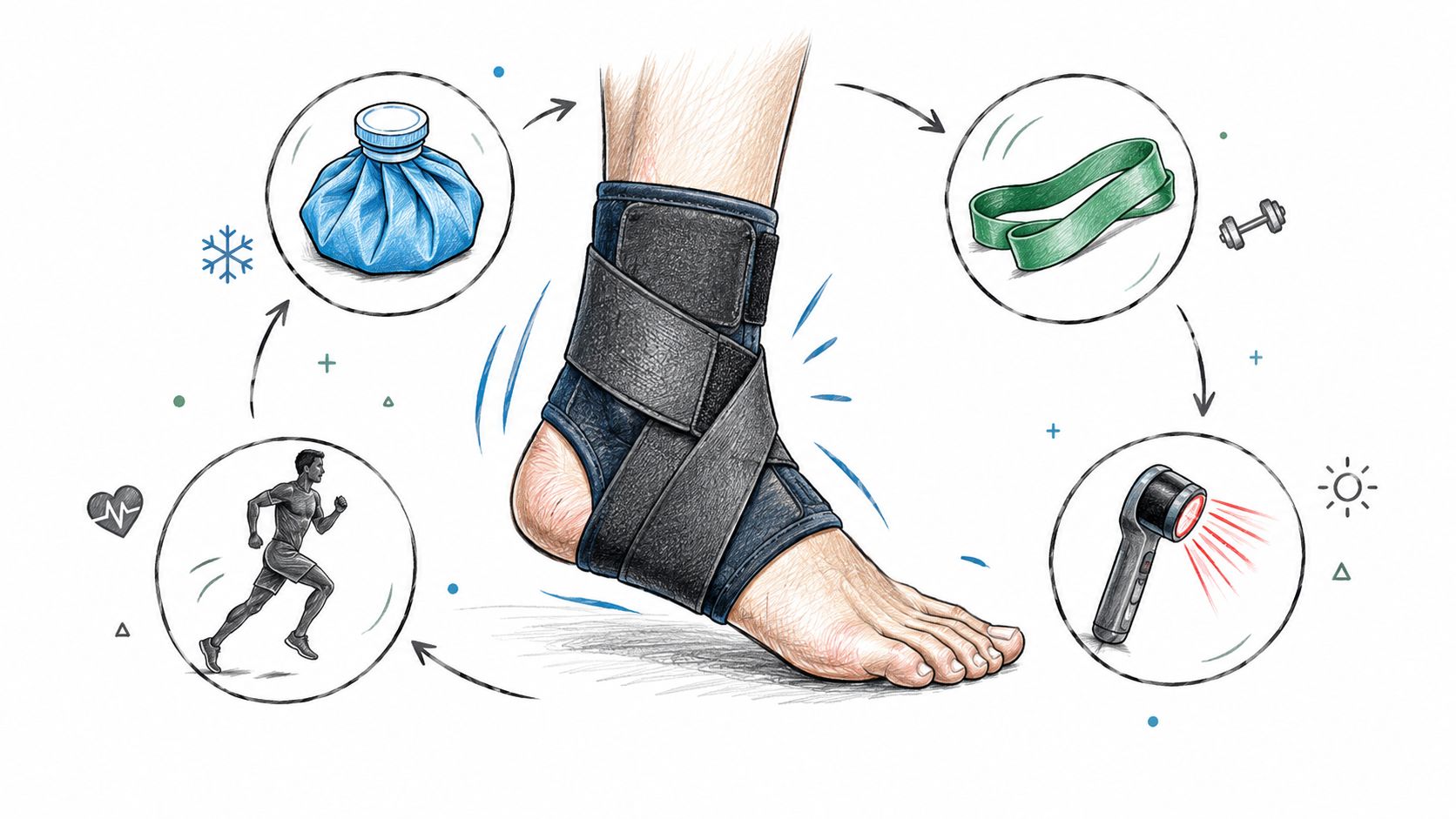
You step off a curb, your ankle rolls, and a sharp pain makes you stop mid-stride. Or perhaps there was no dramatic injury: a dull ache has lingered for weeks, and now stairs, exercise, or even a normal walk feels uncertain. In either case, the right ankle pain treatment depends on what's irritated and how the joint responds to movement.
Good care isn't complete rest or pushing through. It's graded load management: protect the ankle when it needs protection, restore movement and strength in stages, and reassess when symptoms don't follow an expected course. Pain relief matters, but it isn't the finish line. Confident walking, balance, and the ability to handle everyday or sport-specific demands matter too.
After rolling an ankle, people often want to know whether they should stay off it or keep moving. The answer depends on the injury and the symptoms. A straightforward sprain may benefit from early, protected movement, while severe pain, an inability to bear weight, or focal bone tenderness calls for assessment rather than guesswork.
A useful treatment plan has three jobs. First, identify the likely problem and check for signs that need prompt evaluation. Second, use conservative care in a sensible order, progressing from protection and symptom control to mobility and strengthening. Third, set a clear point for reassessment if pain, swelling, or instability persists.
An ankle can feel better before it has regained its strength, balance, or stability. For acute sprains, clinical guidance favors external support or limited immobilization for about 5–10 days, followed by early functional activity and targeted rehabilitation. A neuromuscular program commonly continues for 8–12 weeks, even if everyday symptoms improve earlier (clinical guidance for acute ankle sprains).
That gap between feeling better and being ready for full activity matters. Persistent weakness or impaired balance can leave the ankle vulnerable to another sprain. Recovery should therefore be judged by how the ankle moves and performs, not just by whether it hurts less at rest.
A practical rule: Protect the ankle from sharp, escalating pain, but don't assume that keeping it completely still is the safest long-term plan.
Most sprains are managed without surgery through protection, progressive loading, and exercise. If the ankle isn't improving, the next step isn't to repeat the same home routine indefinitely. It's to revisit the diagnosis and decide whether examination or imaging is needed.
Think of the ankle less like a rigid hinge and more like a suspension bridge. Bones provide the structure, ligaments help hold it together, tendons transmit muscle force, and cartilage cushions the joint surfaces. Pain can come from any of these tissues, and the way it began offers useful clues.
The location, onset, swelling, and tolerance for standing or walking can help narrow the possibilities, but they can't confirm a diagnosis on their own. For a closer look at how injuries affect the tissues around the joint, Aspen Falls readers can explore this overview of soft-tissue damage and its effects. People with pain at the back of the ankle may also find these posterior ankle pain insights from Thermo Recovery helpful for understanding possible symptom patterns.
An old sprain can matter years later if it leaves the ankle unstable or changes how it handles activity. Persistent or recurring pain deserves a fresh look rather than an automatic assumption that it's the original sprain.
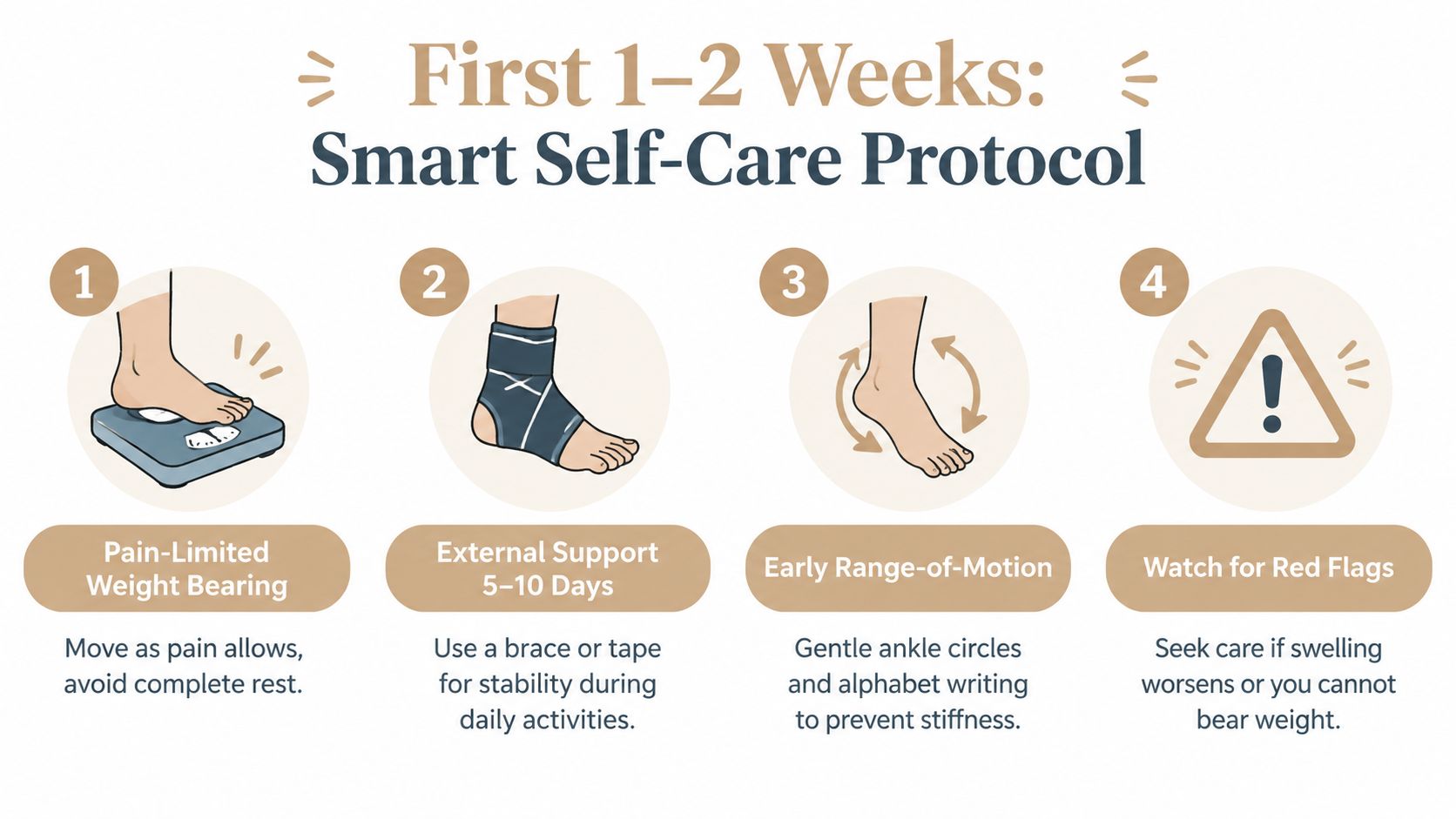
For an uncomplicated sprain, start with protection and symptom-guided movement, not days of strict bed rest. During the first few days, pain control and support can make ordinary movement more manageable. Then increase activity as symptoms permit, avoiding both complete inactivity and movements that produce sharp or worsening pain.
Use a brace or tape for support during the acute phase, generally for around 5–10 days, and begin gentle range-of-motion work as pain allows. Ankle circles or tracing the alphabet with your foot are simple ways to move the joint without immediately asking it to handle high loads. If swelling or pain rises after activity and doesn't settle toward its usual level, reduce the demand and reassess.
Oral or topical NSAIDs may help with short-term pain during the first 14 days. They aren't a default long-term solution: gastrointestinal, kidney, and cardiovascular concerns, medication interactions, and possible tissue-healing considerations call for individualized advice. Ask a qualified clinician or pharmacist whether they're appropriate for you, especially if you take other medication or have an underlying health condition (guideline synthesis on ankle sprain treatment).
The brace choice should match what the ankle needs and what you can comfortably wear:
After recovery, sports bracing may still be useful. Clinical guidance supports wearing a lace-up or semirigid brace during sports for as long as 12 months to reduce reinjury risk. The aim is to support activity while rehabilitation restores the ankle's own capacity, not to use a brace as a substitute for strengthening and balance work (clinical guidance for acute ankle sprains).

A useful treatment plan matches each therapy to a specific problem and a measurable goal. A device or hands-on technique may help manage symptoms, but it shouldn't replace progressive loading when the ankle needs to regain strength and control.
At Aspen Falls Wellness, ankle and foot care may include MLS Laser Therapy, SoftWave Therapy, massage, acupuncture, chiropractic adjustment, mobility therapy, and rehabilitation exercise. The clinic's role is to evaluate the problem, select options that fit the person and the symptoms, and adjust the plan as function changes. These treatments aren't interchangeable, and no single modality guarantees recovery.
| Therapy | Best for | Typical phase |
|---|---|---|
| MLS Laser Therapy | Symptom management when inflammation or joint irritation is part of the picture, including sprain or arthritis care | Early care or ongoing symptom support |
| SoftWave Therapy | Selected chronic tendon or ligament complaints as an adjunct to active rehabilitation | Persistent or chronic symptoms |
| Massage Therapy | Calf or peroneal soft-tissue tension that limits comfortable movement | As mobility and loading are introduced |
| Chiropractic Adjustment and Mobility Therapy | Joint-motion restrictions after a sprain or with instability, when examination supports manual care | Early or mid-stage mobility work |
| Acupuncture | An adjunct for pain modulation when appropriate | Symptom-limited phases |
| Nutrition counseling | General recovery support alongside a broader care plan | Throughout care, if relevant |
| Personal Exercise Plans and Rehabilitation Exercise | Strength, balance, range of motion, and functional deficits | Progressive rehabilitation |
The trade-off is straightforward: passive care may make movement more comfortable, but it won't build tendon capacity or single-leg control by itself. For chronic tendon overload, the central work is gradually increasing the tendon's tolerance for load, then checking how it responds during activity and afterward (review of loading for tendinopathy).
Expectations should stay realistic. Progress depends on the diagnosis, how long the problem has been present, and how consistently the person can follow an appropriate plan. A good clinician tracks pain response, movement, strength, and everyday function, then changes course if those markers aren't moving in the right direction.
Rehabilitation works best as a progression, not a random collection of band exercises. The right starting point depends on pain and function, and each phase should prepare the ankle for the next demand. Don't advance just because a calendar says you should.
Protection, 0–2 weeks: Focus on comfortable movement and a normalizing walking pattern. If symptoms allow, gentle ankle isometrics can activate the muscles without large joint movement. Avoid forcing range or practicing through sharp pain.
Range of motion and strengthening, around 1–3 weeks: Add resisted dorsiflexion, plantarflexion, inversion, and eversion as tolerated. Squats, lunges, calf raises, and toe raises can build capacity for everyday tasks, provided they don't cause pain or swelling to increase after exercise.
Return-to-sport training, roughly 3–8 weeks: Progress toward single-leg balance, more demanding control drills, and movements that resemble the intended activity. Running, jumping, cutting, or uneven terrain should come later, when the ankle can manage simpler tasks with control (ankle sprain rehabilitation guideline).
Here's what to check before increasing difficulty:
Those milestones provide useful guideposts, not permission to ignore symptoms or bypass an examination. A personalized rehabilitation exercise plan can target the deficits a clinician finds, rather than handing every patient the same routine.

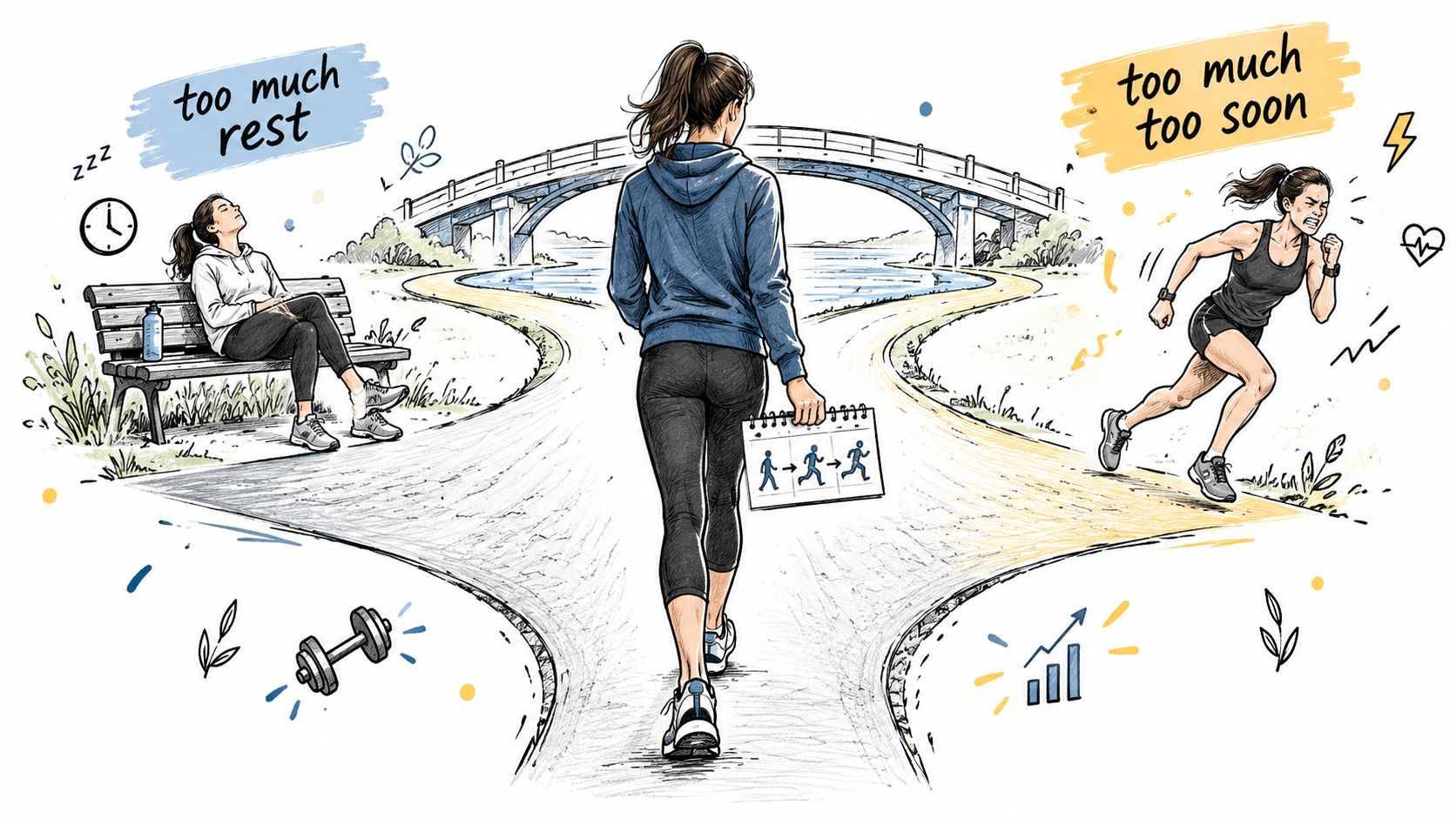
Two common choices can hold recovery back: resting until the ankle feels completely normal, or returning to running and cutting as soon as the pain quiets down. Neither gives a reliable measure of readiness. Activity should build in steps, and the ankle's response during and after each step should guide what comes next.
Begin with walking. When you can walk without a limp and the ankle's range of motion is close to the other side, add more demanding work gradually. Controlled single-leg balance should feel manageable before you move on to sport-specific drills. Running, jumping, or changing direction belongs later in the progression, once those tasks can be performed without pain.
“Feeling better” is not the same as being ready to compete.
Watch how the ankle feels later that day and the next day. If pain or swelling increases, or your gait changes, ease back to a level you tolerate and give the area a chance to settle before progressing again. That's load management, not failure.
A brace during sports can add support while strength and balance catch up. After a significant sprain, guidance supports sports bracing for up to 12 months as a recurrence-prevention measure (clinical guidance for acute ankle sprains). For general preparation before activity, these natural joint mobility warm-up tips offer ideas for a deliberate warm-up. Athletes returning after an injury can also review this guide to athlete injury recovery.
You don't need to wait for pain to become severe before asking for an assessment. Chronic ankle pain is generally defined as pain lasting at least 6 weeks. When imaging is needed, radiography is usually the first step; MRI or CT may be considered if X-rays don't explain symptoms but tendon injury, cartilage damage, instability, impingement, or a hidden bone problem remains suspected (guidance on imaging for chronic ankle pain).
Seek evaluation sooner if you can't bear weight, have focal tenderness over a bone, experience recurrent giving-way, or notice locking, catching, marked loss of movement, or neurological symptoms. For an acute injury, the Ottawa Ankle Rules help clinicians decide when radiographs are appropriate based on pain around the ankle bones, specific bone tenderness, or difficulty taking four steps.
A scan isn't necessary for every sore ankle. But persistent pain after an initially negative X-ray doesn't prove the injury is minor, either. Examination and imaging, when indicated, help distinguish an injury that needs more time and structured rehabilitation from one that needs a different intervention. For a broader sense of how rehabilitation care can progress from assessment to recovery, see this guide to the rehab patient journey.
Start by identifying the likely cause and checking for red flags. For a manageable sprain, use a short period of support and pain-limited movement, then progress through rehabilitation with clear movement and balance goals. Get assessed if symptoms persist, worsen, or don't fit an uncomplicated recovery.
Can chronic instability improve without surgery? Many sprains are treated nonoperatively with bracing, progressive loading, and targeted rehabilitation. A clinician should assess recurrent giving-way.
How soon does MLS Laser Therapy work? There's no reliable timeline that applies to everyone. Response depends on the diagnosis and the full treatment plan, so track function as well as pain.
When should I consider decompression for ankle-related back or sciatic complaints? Spinal decompression, including DRX 9000 care, addresses selected spine-related problems, not an ankle injury itself. Ask for an examination to clarify the source of symptoms.
Can an old sprain cause trouble years later? Yes. Ongoing instability or joint changes can contribute to later symptoms, so recurring pain deserves assessment.
Aspen Falls Wellness offers examination, non-surgical care, mobility work, and individualized rehabilitation for ankle and foot problems in Salt Lake City and Sandy. Visit Aspen Falls Wellness to request an evaluation and discuss a plan that fits your symptoms, activity, and recovery goals.

Stay updated with the latest chiropractic news and exclusive offers.