Learn what is soft tissue damage, common types, causes, symptoms, evidence-based non-surgical treatments, recovery timelines, and when to seek urgent care.



Soft tissue damage is an injury to muscles, ligaments, tendons, or fascia that can cause pain, swelling, bruising, and restricted movement. Most cases heal with conservative care in roughly six weeks, although stiffness, weakness, and discomfort may continue for a few months after the initial healing stage.
You might roll your ankle stepping off a curb, feel a sharp pull in your back while lifting, or wake up with neck stiffness the morning after a rear-end collision. Nothing looks obviously broken, yet turning your head, climbing stairs, sleeping, or returning to sport suddenly becomes difficult. That uncertainty often leads to the same question: what is soft tissue damage, and how do you know whether it needs routine care, imaging, or urgent evaluation?
Soft tissues connect, support, cushion, and move your body. When they're stretched beyond tolerance, bruised, irritated, or torn, normal movement can become painful. A soft tissue injury may respond well to non-surgical treatment, but the right plan depends on the tissue involved, the mechanism of injury, the amount of functional loss, and whether symptoms are improving.
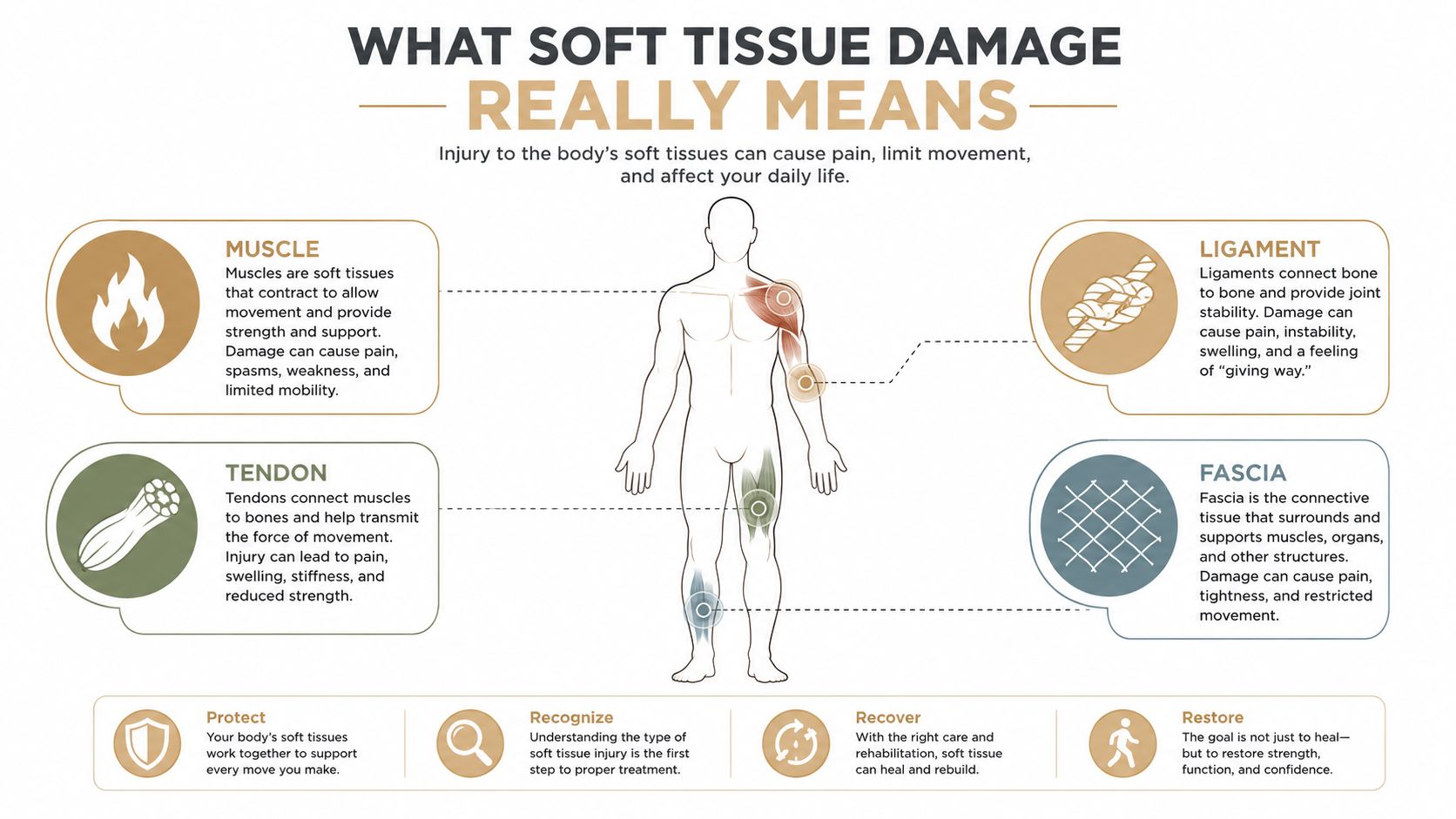
Soft tissue damage describes injury to structures that support movement without being bone. The main structures include muscles, which generate force, tendons, which connect muscles to bones, ligaments, which stabilize joints by connecting bone to bone, and fascia, the connective tissue envelope surrounding muscles and other structures. These tissues can be strained, sprained, bruised, inflamed, or restricted.
A runner who rolls an ankle may overstretch or tear a ligament. A driver may develop whiplash-associated pain after the neck moves rapidly forward and backward. A warehouse worker might strain a back muscle while lifting, while a tennis player may develop tendon irritation after repeatedly serving. Each situation involves a different tissue pattern, even though pain and swelling can look similar.
Soft tissue injuries differ from fractures because the primary damage affects connective or contractile tissue rather than bone. They also differ from isolated nerve injuries, which more commonly produce symptoms such as numbness, tingling, burning, or weakness along a nerve pathway. These categories can overlap, so a physical examination matters when symptoms don't follow a routine pattern.
Practical rule: Pain that improves steadily with gentle movement is usually less concerning than pain that escalates, causes major functional loss, or appears with neurological changes.
Soft tissue injuries create a substantial occupational and healthcare burden. A U.S. Bureau of Labor Statistics summary reported that soft tissue injuries represented 43% of all work injuries, with nearly 30% of days-away-from-work cases in that category. In 2018, the median time away from work was 12 days, and the incidence rate was 27.2 cases per 10,000 full-time workers. Transportation and warehousing recorded the highest incidence rate, 77.1 cases per 10,000 full-time workers, while healthcare and social assistance recorded the highest total number of incidents and a median of eight days away from work. (Occupational soft tissue injury overview)
Most uncomplicated injuries respond to conservative care, such as temporary activity modification, symptom control, mobility work, and progressive rehabilitation. However, “conservative” doesn't mean ignoring symptoms. It means matching treatment to the biology of healing while watching for signs that the injury is more serious.
The mechanism of injury gives you an early clue, but it can't confirm a diagnosis by itself. A sudden twist points toward a sprain, while forceful contraction suggests a strain. Repetitive loading may irritate a tendon or bursa, and direct impact commonly produces a contusion.
| Injury Type | Structure Affected | Typical Cause | Key Symptoms |
|---|---|---|---|
| Sprain | Ligament | Sudden twist, fall, or joint displacement | Localized swelling, tenderness, bruising, possible instability |
| Strain | Muscle or tendon | Lifting, sprinting, overstretching, or forceful contraction | Sharp pain, weakness, pain with contraction or stretching |
| Contusion | Muscle and surrounding tissue | Direct blow or compression | Deep tenderness, swelling, bruising, limited movement |
| Tendinitis or bursitis | Tendon or fluid-filled bursa | Repetitive loading, friction, or pressure | Aching pain that worsens with repeated use |
| Myofascial injury | Muscle and fascia | Overload, sustained posture, or movement restriction | Tender knots, stiffness, and referred pain |
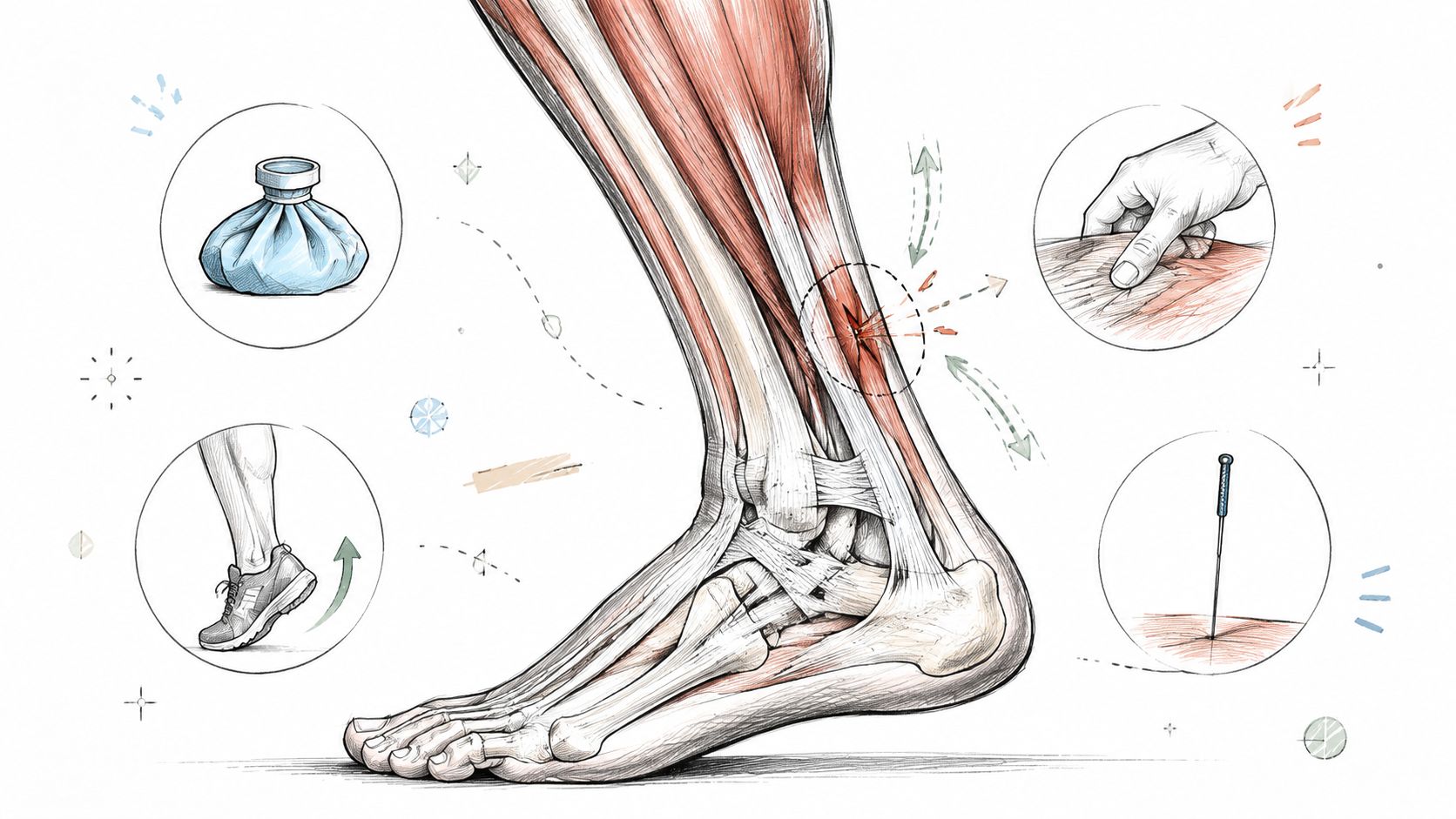
A sprain usually centers around a joint. The ankle may swell around the outside after a roll, and the person may feel unstable when walking. A strain often hurts when the affected muscle contracts. For example, a hamstring strain may cause pain during sprinting, bending, or resisted knee movement.
A contusion can look deceptively mild on the surface. A deep blow may bruise muscle fibers beneath the skin, producing tenderness and reduced function even when discoloration is limited. Tendinitis and bursitis tend to build gradually, although a sudden event can aggravate an already irritated tendon or bursa.
Myofascial injury is different from a single torn structure. Restrictions in the muscle and fascial envelope can create tender points and pain that spreads beyond the original location. A tight upper shoulder, for example, may contribute to discomfort toward the neck or upper arm.
The broader musculoskeletal burden helps explain why these patterns matter. A global analysis estimated 322.75 million incident musculoskeletal disorder cases worldwide in 2019, along with 150.08 million disability-adjusted life years and 117.54 thousand deaths. The same review cited lifetime prevalence approaching 70% for neck pain and 80% for back pain, while epidemiologic studies measured soft tissue injuries across occupational, military, and community settings. (Global musculoskeletal burden and soft tissue epidemiology)
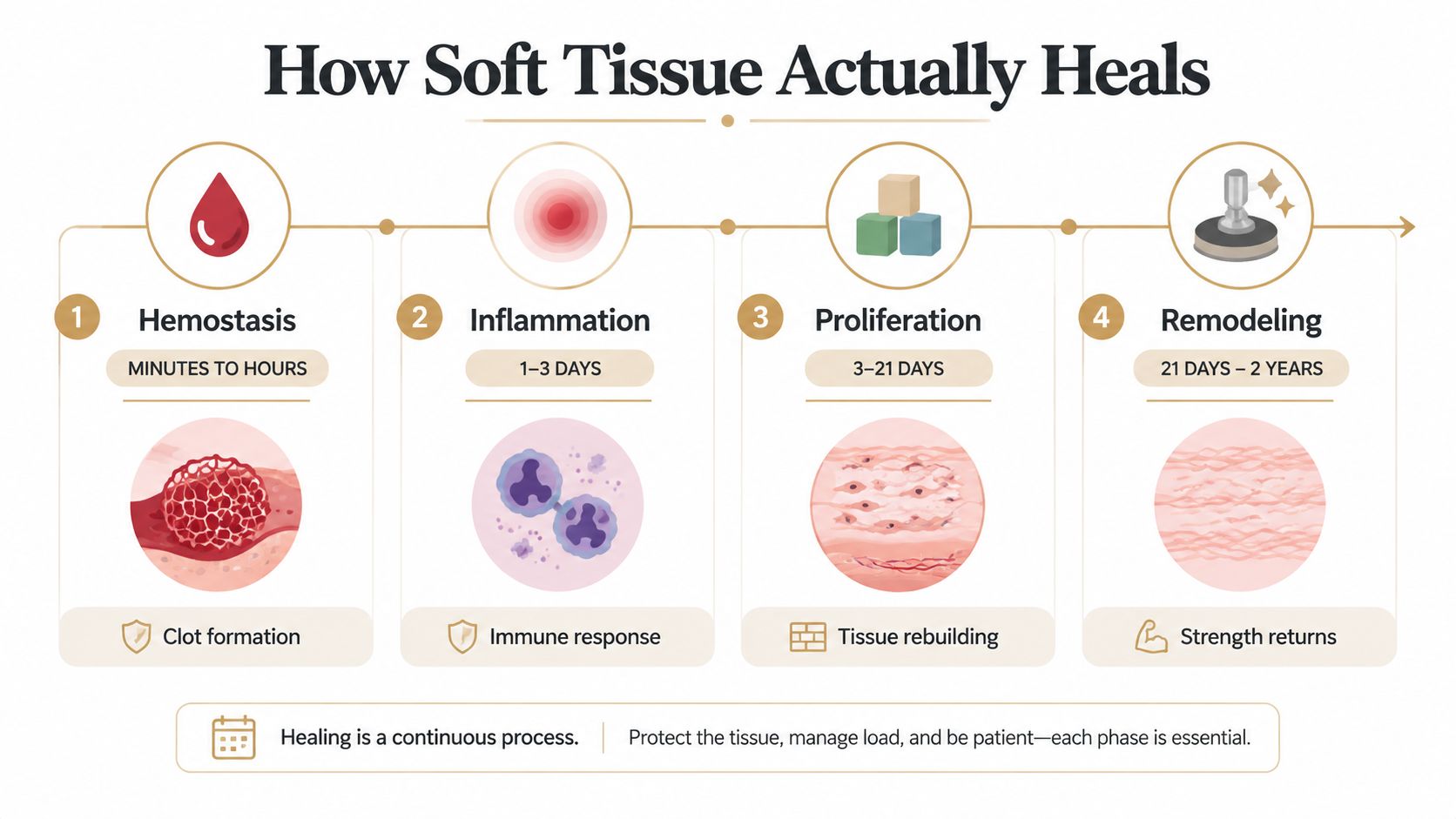
After an ankle rolls or a back muscle strains, pain may ease before the tissue can safely handle normal force. Healing is a sequence, not a single event. The body first limits bleeding, removes damaged material, builds a temporary repair, and gradually reorganizes that repair so it can tolerate load.
Hemostasis begins within seconds to hours. Blood vessels constrict, platelets gather, and a clot helps limit bleeding. The inflammatory phase follows and commonly peaks around days one through three. Immune cells clear damaged tissue and coordinate repair, which can produce swelling, warmth, tenderness, and reduced movement. These findings can fit a routine injury, but symptoms that worsen rapidly need assessment.
The proliferative phase begins around day three and may continue for three to six weeks. Fibroblasts produce collagen and other repair materials, forming fragile tissue across the injured area. The new fibers are not yet arranged for efficient load transfer. A person may therefore walk with less pain while still lacking the capacity for heavy lifting, sprinting, or contact sport.
Remodeling can start around three weeks and continue for more than a year. Collagen fibers gradually reorganize in response to the stresses placed on the tissue. Pain and swelling may settle before mechanical strength, coordination, and confidence return. (Soft tissue healing phases and tissue strength)
Healing timelines overlap rather than follow rigid calendar dates. One clinical framework describes inflammation as lasting about 24 to 48 hours, proliferation lasting up to two to three weeks, and remodeling extending from roughly one to six weeks, with later functional and return-to-competition stages continuing for months. (Soft tissue healing stages) Bleeding may continue for 48 to 72 hours, depending on severity, so testing maximum strength during the first few days can aggravate the injury. (Acute soft tissue injury guidance)
Pain can persist for several reasons. Scar tissue may glide differently from uninjured tissue, local nerves can remain sensitive, and guarded movement can reduce muscle coordination. Carefully dosed loading gives the tissue a controlled signal to adapt while restoring movement and control. If restricted or thickened tissue remains, this overview of ultrasound therapy for scar tissue treatment explains one treatment approach.
Treatment should follow the injury stage and the patient's functional needs. A fresh ankle sprain, persistent tendon pain, and post-collision neck stiffness may all involve soft tissue, but they don't need identical care.
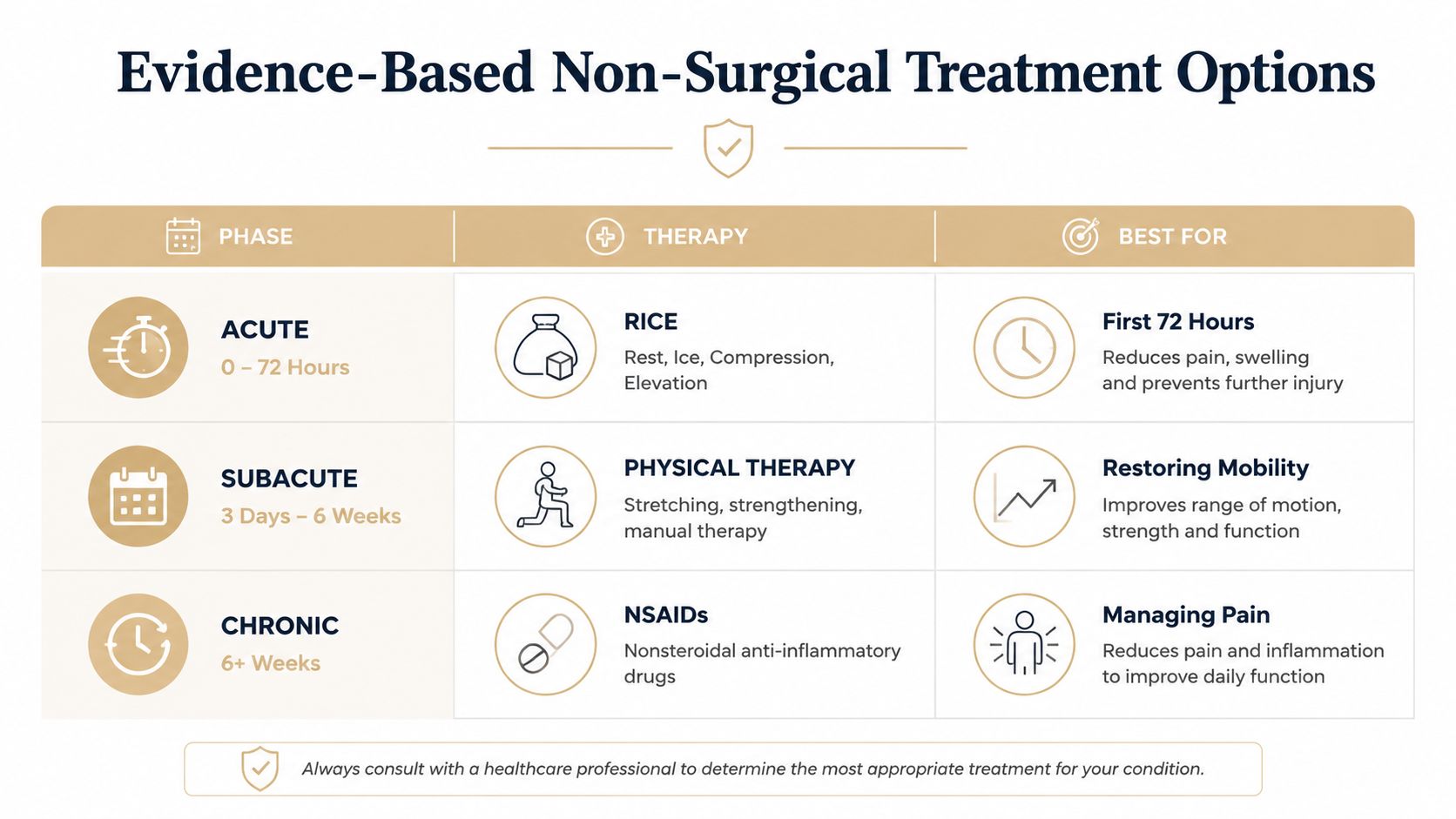
During the acute stage, use relative rest rather than complete inactivity. Ice, compression, and elevation may help control swelling, while activity modification prevents repeated stress. Traditional RICE, rest, ice, compression, and elevation, can be useful initially, but many rehabilitation approaches progress toward POLICE, protection, optimal loading, ice, compression, and elevation, once gentle movement is safe.
Bleeding and inflammatory activity can continue during the first 48 to 72 hours, depending on injury severity, so avoid aggressive stretching, deep pressure, or heavy strengthening at the outset. (Acute injury management guidance) A topical option, such as this herbal muscle rub for quick comfort from Supplemynts Inc., may provide temporary comfort, but it shouldn't replace evaluation when function is significantly impaired.
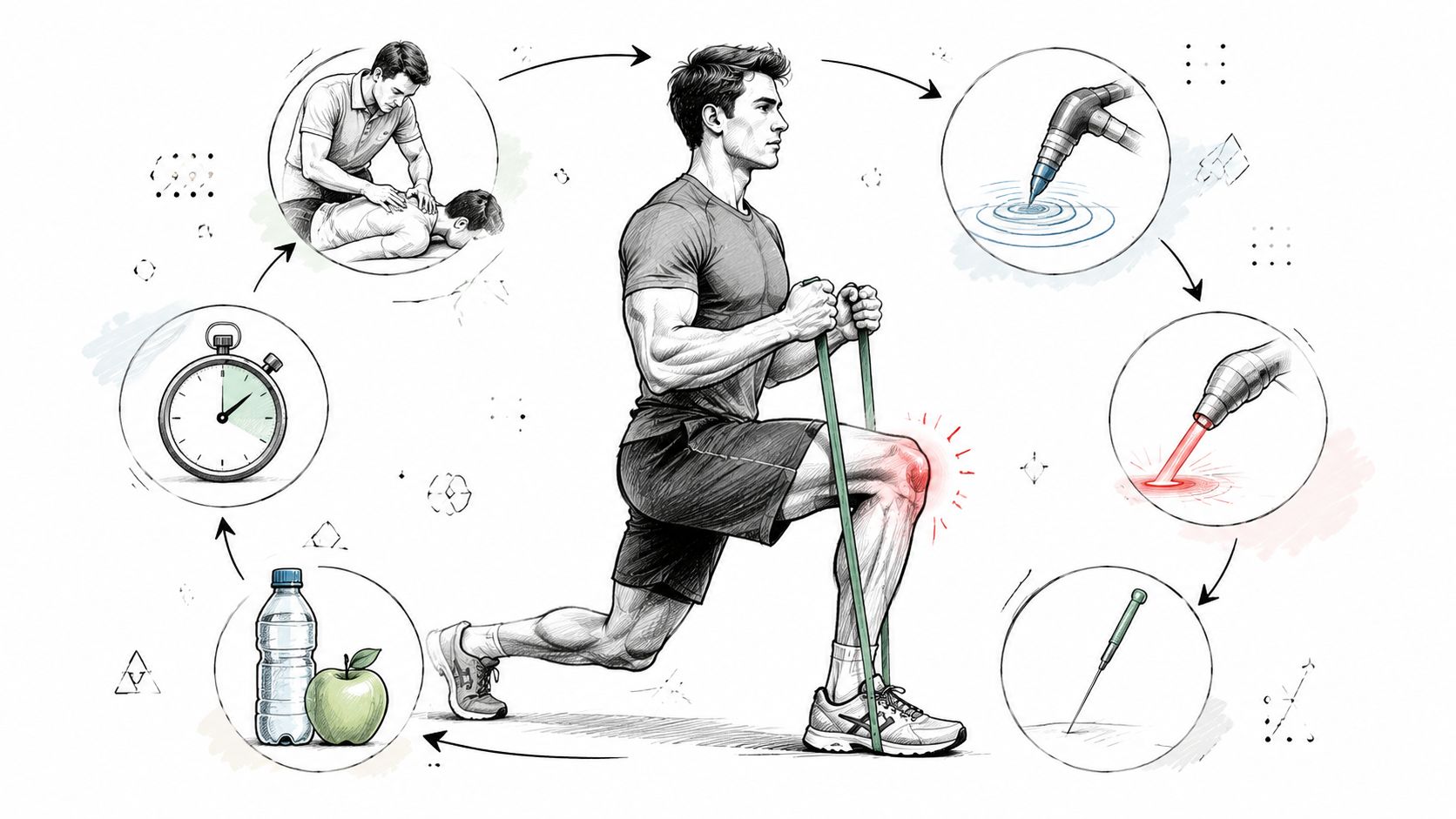
A rehabilitation program restores range of motion, strength, balance, and proprioception in stages. A person with an ankle sprain may begin with comfortable weight shifting, then controlled strengthening, then balance drills. Someone with a back strain may need graded trunk movement and a personal exercise plan rather than prolonged bed rest.
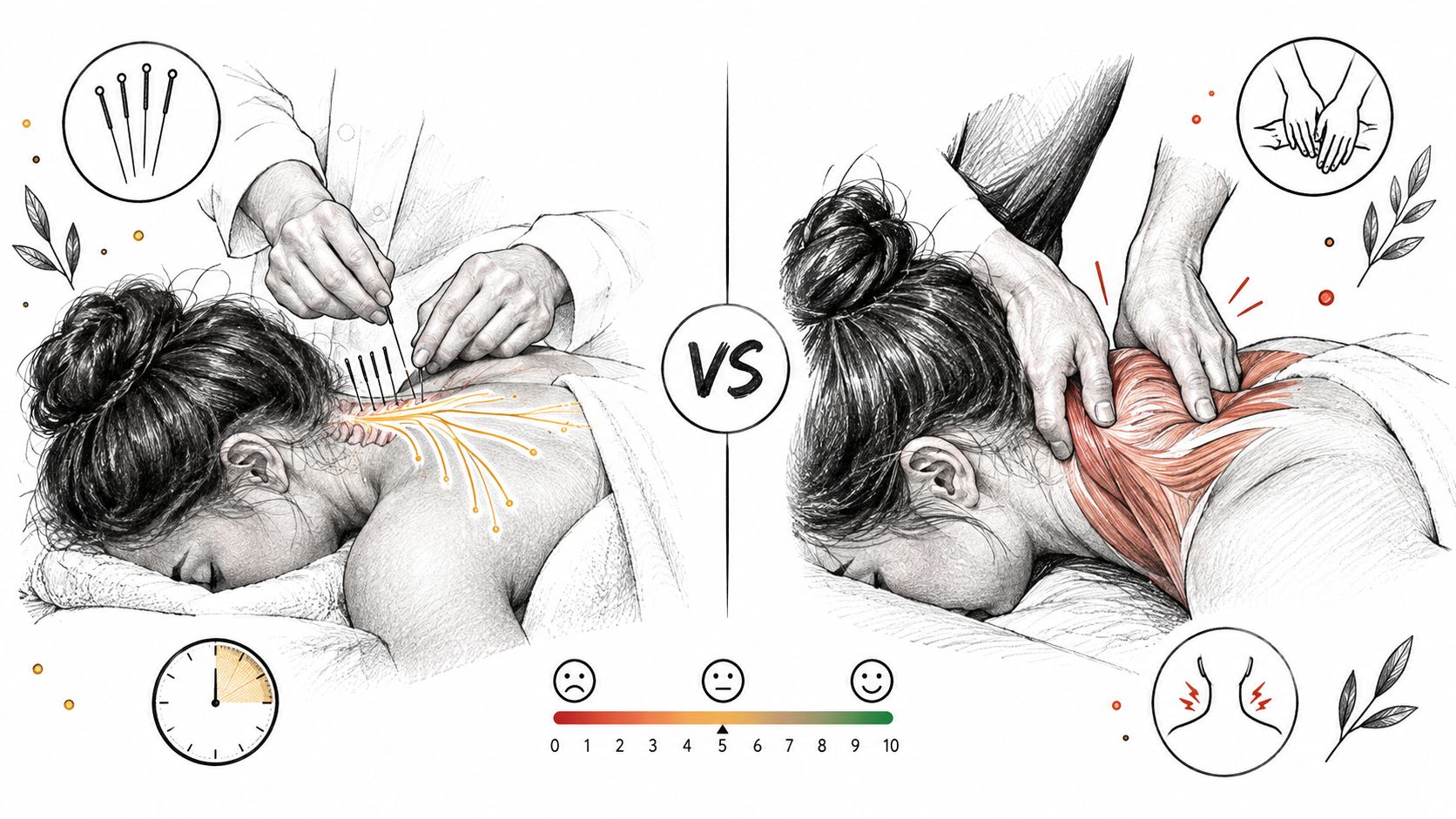
A chiropractic evaluation can identify joint restriction, altered movement patterns, and protective muscle tension after a sprain or whiplash event. Chiropractic adjustment, realignment, mobility therapy, and massage therapy may be used according to examination findings and tolerance. Acupuncture can serve as part of a broader plan for pain modulation, while muscle stimulation may support activation when weakness or guarding limits exercise.
SoftWave Therapy and MLS Laser Therapy may be considered adjuncts for persistent pain, selected tendinopathies, or tissue irritation. These modalities don't replace progressive loading, but they may help some patients participate more comfortably in movement-based rehabilitation. Learn more about the clinical role of MLS Laser Therapy.
Once pain allows, the central question becomes functional: can you move through the required range, produce force, and control the body without a worsening response later that day or the next morning? That answer is more useful than a calendar alone.
Recovery depends on the tissue, severity, location, blood supply, previous injury, and physical demands of the activity. General windows can guide expectations, but they aren't promises or substitutes for an examination.
| Injury Type | Mild Grade I | Moderate Grade II | Severe Grade III | Return-to-Activity Gate |
|---|---|---|---|---|
| Ankle sprain | Often a shorter recovery | Often several weeks | May involve major instability and specialist care | Full movement, stable single-leg control, and pain-free loading |
| Hamstring strain | Often a shorter recovery | Longer rehabilitation | May require specialist assessment | Symmetrical strength, stretching tolerance, and sport-specific control |
| Whiplash | May settle over several weeks | Persistent symptoms need reassessment | Severe functional or neurological findings need escalation | Comfortable neck movement and normal daily function |
| Tendinopathy | Usually requires consistent loading | Symptoms may remain with repeated use | Structural injury needs assessment | Tolerated loading, strength, and task-specific endurance |
For orientation, mild to moderate ankle sprains may take roughly two to six weeks, hamstring strains may take one to eight weeks depending on severity, whiplash may take four to twelve weeks, and tendinopathies may require six to twelve weeks because tendon remodeling is slow. These ranges should be interpreted alongside the healing stages described earlier, not treated as fixed deadlines.
Use this sequence:
Pain can disappear before tissue strength returns. A return decision should include movement quality, strength, control, and the demands of work or sport.
A person returning to contact sport, heavy labor, or high-speed activity should consider reassessment before full participation. A whiplash guideline recommends structured reviews at 7 days, 3 weeks, 6 weeks, and 3 months, with recovery occurring in up to 65% of cases by 12 months. (Acute whiplash follow-up guidance)
Prevention isn't about avoiding all stress. Tissues adapt when they receive manageable stress, recover adequately, and build capacity gradually. Problems often arise when the demand changes suddenly, such as an unprepared sprint, a sharp increase in training, or hours of static posture.
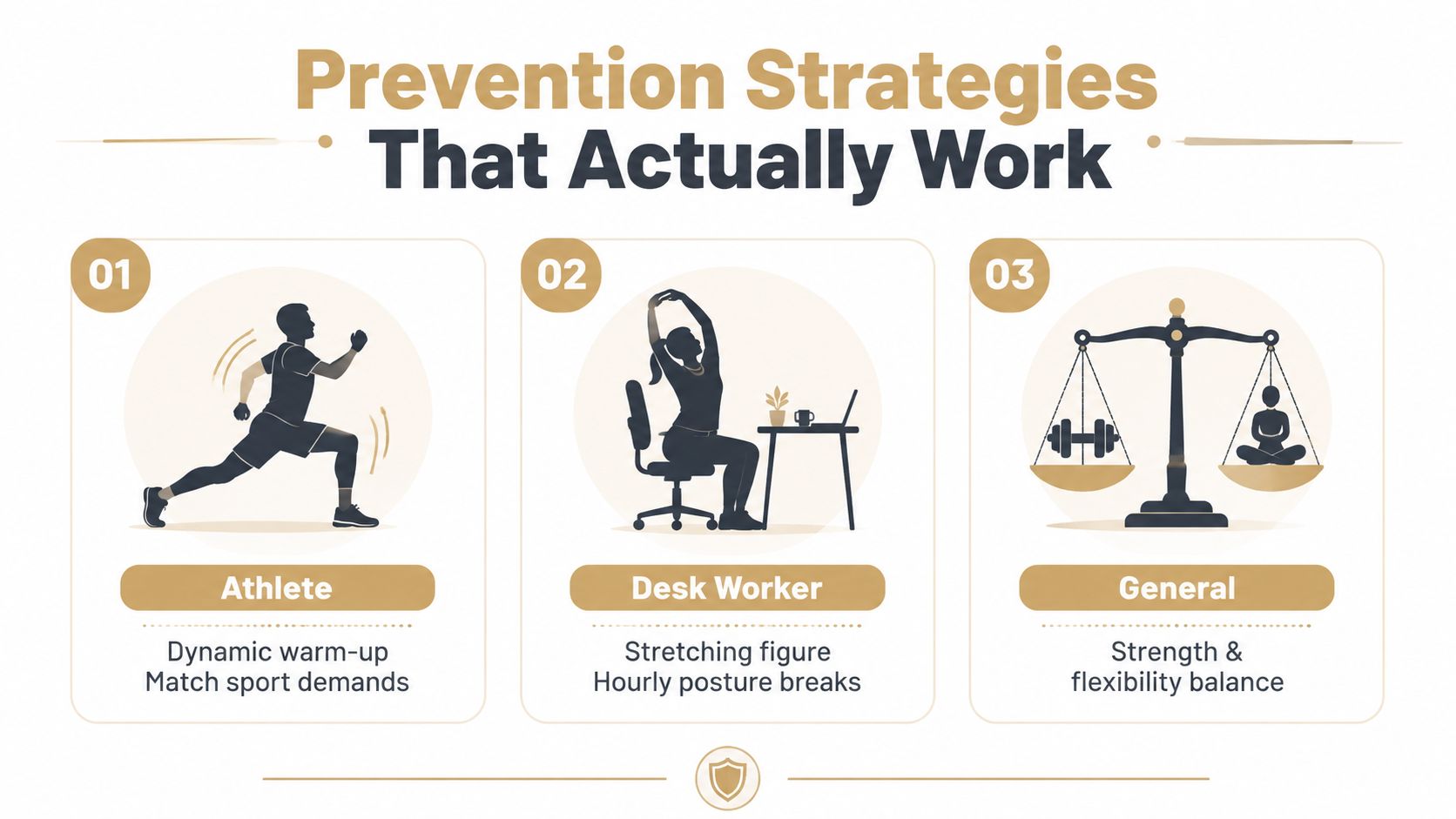
Begin with a dynamic warm-up that matches the activity. A soccer player needs progressive running, direction changes, and hip and ankle preparation. A golfer may need thoracic rotation, hip mobility, and a movement screen that identifies limitations before they alter the swing.
Neuromuscular training helps the body control the ankle, knee, hip, and trunk during landing and cutting. Increase workload gradually rather than making abrupt jumps. The commonly used ten-percent rule is a coaching guideline, not a universal medical law, so an individualized plan should account for recent symptoms, recovery, sleep, and training history. This sports injury prevention guidance can help active readers organize those decisions.
Static posture creates a different challenge. Set up the monitor, keyboard, and chair so you aren't repeatedly reaching, shrugging, or holding the neck forward. Take brief posture and movement breaks every 30 to 45 minutes, then use gentle hip-flexor and thoracic mobility exercises to interrupt prolonged sitting.
The purpose isn't to find one perfect posture. It's to vary positions before the neck, upper trapezius, hips, or lower back become overloaded.
After medical clearance, guided movement is often more useful than prolonged rest. Gentle neck range-of-motion work during the first week may help preserve movement, while a follow-up evaluation is appropriate if pain continues beyond two weeks. Car accident treatment should also consider headaches, dizziness, arm symptoms, sleep disruption, and changes in daily function rather than focusing only on pain intensity.
Many people assume every soft tissue injury needs only rest and ice. That advice can be reasonable for a mild, improving strain, but it becomes unsafe when symptoms suggest fracture, dislocation, major tissue disruption, nerve involvement, vascular compromise, or another urgent condition.
Seek same-day evaluation if you notice:
Ordinary soreness tends to remain localized and responds, at least somewhat, to position changes and gentle care. Red flags often involve rapid progression, major loss of function, abnormal appearance, neurological symptoms, or systemic changes.
Call a primary care clinician or musculoskeletal practice when symptoms are persistent, movement remains limited, or recovery has stalled. Urgent care is appropriate when an examination and imaging may be needed promptly, especially after a fall, collision, or forceful twist. Emergency evaluation is necessary for an open wound over a suspected fracture, possible compartment syndrome, severe circulation changes, or cauda equina symptoms after a back injury, such as new bladder or bowel problems, saddle numbness, or rapidly worsening leg weakness.
Save this checklist: Can you bear weight? Does the body part look aligned? Is swelling rapidly increasing? Are there numbness, tingling, weakness, temperature, or color changes? Did a head injury occur?
The aim isn't to avoid movement indefinitely. After the acute period, prolonged rest can increase stiffness, weakness, and fear of movement. Protection should transition to appropriately graded loading when the examination supports it.
After a sprain, a person may have more than pain. Swelling can change movement, guarded muscles can create stiffness, and an accident can bring headaches or neck symptoms. Care in Salt Lake City and Sandy may begin with an examination, movement testing, and strength assessment. If the findings suggest a fracture, major tissue disruption, or another problem that needs a closer look, the clinician may refer for X-ray or MRI.
Treatment should match the tissue problem and the person's current function. SoftWave Therapy and MLS Laser Therapy may be considered as supportive options for selected acute sprains, persistent tendon irritation, or painful tissue that makes rehabilitation difficult. Chiropractic adjustment, decompression, and realignment approaches may address joint restriction or altered movement when appropriate. Spinal Decompression with the DRX 9000 is a separate non-surgical service for selected disc-related conditions, including some back pain or sciatica cases. It is not a routine treatment for every soft tissue injury.
Massage Therapy, mobility therapy, muscle stimulation, and acupuncture may support different stages of recovery. Guided rehabilitation exercise and an individualized exercise plan may help a strain regain strength and control. Myofascial pain may respond to targeted massage and gradual mobility work. Golf Movement Screening can help active adults identify movement limits that affect the golf swing. Nutrition and nutrition counseling may also support recovery habits.
The first visit usually covers how the injury happened, what changes the symptoms, and which movements or activities are limited. The clinician may test mobility, strength, coordination, and function while checking for signs that call for outside referral. Follow-up visits help decide whether the plan should focus on symptom relief, mobility, strengthening, work tolerance, or sport-specific progression.
A practical question is whether the problem is improving in a predictable way. Mild pain that steadily settles may fit routine conservative care. Worsening symptoms, major loss of function, neurological changes, or signs of fracture require a different level of assessment.
No. Many strains and sprains can be assessed without immediate imaging. A clinician may recommend X-ray, MRI, or another study when the examination suggests a fracture, significant tissue disruption, persistent symptoms, neurological involvement, or recovery that is not progressing as expected.
Prompt evaluation makes sense after a collision, fall, major twist, or injury that limits normal activity. Mild symptoms that steadily improve may be monitored. Worsening pain, substantial swelling, or declining function should shorten the wait.
Many conservative options may be considered during nursing, but safety depends on the therapy, treatment area, medications, medical history, and the nursing parent's circumstances. Tell the clinician that you are nursing before treatment so the plan can be adjusted.
Previous surgery changes the examination and loading plan, but it does not automatically rule out conservative care. Bring operative details and imaging when available. The clinician will consider hardware, altered anatomy, scar tissue, and restrictions from the surgical team.
Aspen Falls Wellness provides coordinated chiropractic care, massage, acupuncture, mobility therapy, rehabilitation exercise, SoftWave Therapy, MLS Laser Therapy, and selected decompression services for patients in the Salt Lake City and Sandy communities. Visit Aspen Falls Wellness to request an evaluation for persistent soft tissue pain, post-accident symptoms, or a planned return to activity.

Stay updated with the latest chiropractic news and exclusive offers.