Decode the apple cider nutrition label to understand calories, sugar, and carbs. Learn how cider compares to juice and whole apples for better health choices.



You pour a glass because it feels seasonal, simple, and a little healthier than soda. Then you turn the bottle around and see the numbers, and the story changes fast. The apple cider nutrition label matters because it tells you what this drink really does to calories, carbs, and sugar, especially if you're watching blood sugar, weight, or recovery. 
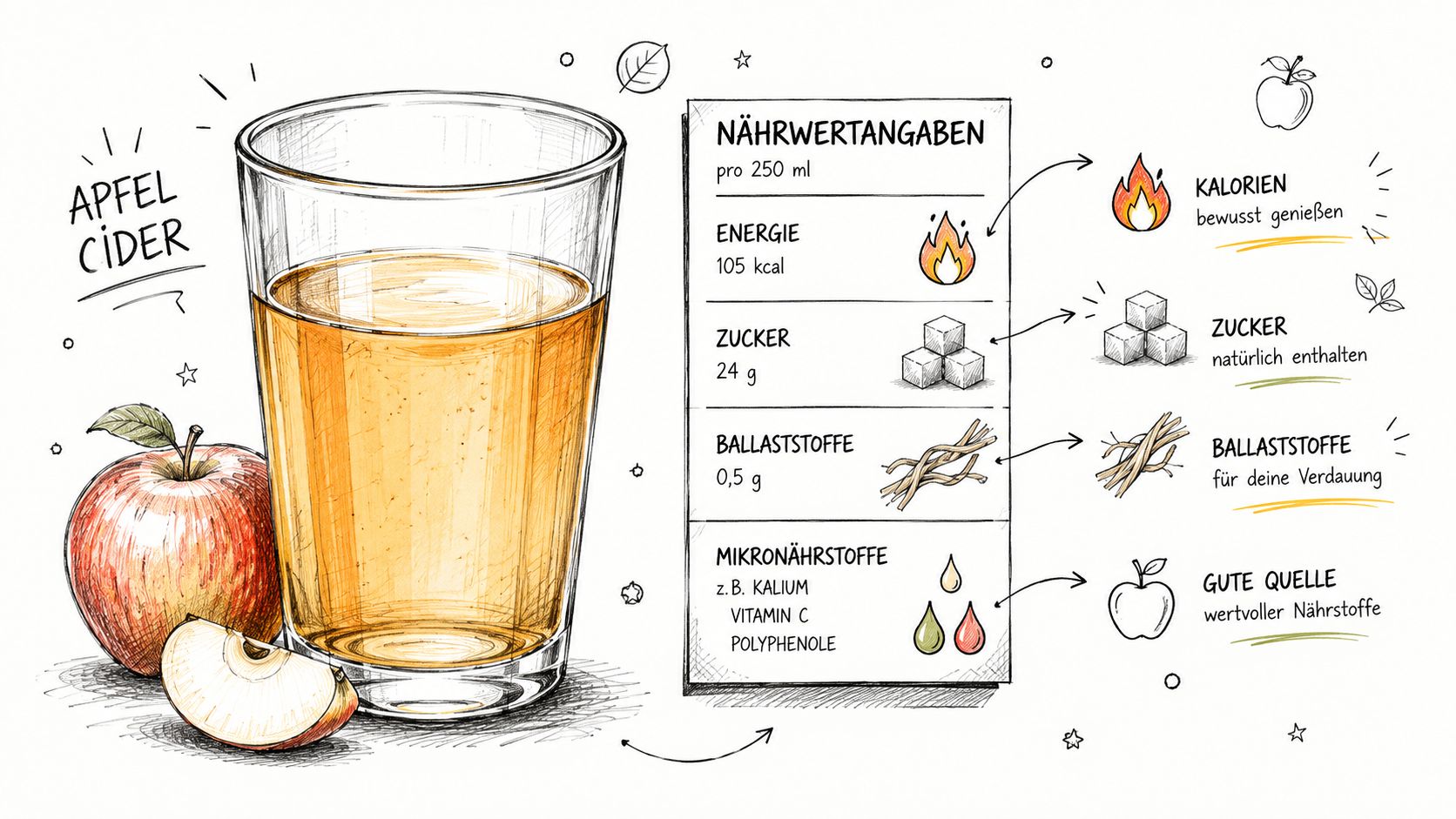
A lot of people reach for apple cider thinking it's basically warm apple flavor in liquid form, a light treat that belongs in the same mental category as fruit. The label usually tells a different story. Typical references place one cup at 105 to 120 calories, 25 to 30 g of carbohydrate, and 20 to 30 g of sugar per 8 fl oz serving, which is a lot closer to a sweet beverage than a low-energy wellness drink (a healthier Michigan nutrition explainer).
That disconnect happens because apple cider sounds wholesome. It's tied to orchards, fall markets, and the idea of “natural” sweetness, so people often assume the sugar must be gentler than what they'd find in a packaged drink. The Nutrition Facts panel doesn't care about the mood of the season, it only shows the serving, the carbohydrate load, and what's inside.
Practical rule: if a beverage tastes sweet, read the label before you decide it's light.
The surprise gets bigger when people compare apple cider to the way they think about fruit. A whole apple comes with structure, chewing, and fiber. Cider is already pressed and strained into a drink, so the sugar is easier to take in quickly. That difference matters when you're trying to manage appetite, glucose swings, or afternoon cravings.
A simple label habit helps here. Look first at serving size, then at total carbohydrates, then at sugars. If the bottle is meant to be poured into a regular glass, the numbers on the panel are already relevant to what's going into your body.

A patient looking at a bottle of cider often gets tripped up by one simple detail. The drink sounds close to fruit, yet the label reads more like a sweet beverage. That is why the first step is to read the panel the way a clinician would, starting with the serving size and then checking what that serving contains.
A standard serving is usually 8 fl oz, which is about 240 ml (fatsecret nutrition reference). That line sets the frame for everything else on the label. If you pour a larger mug or top off a glass without checking, you are no longer looking at one serving, so the calories and carbohydrate values need to be mentally scaled up.
Serving size works like the measuring cup for the whole panel. It tells you what the listed numbers mean in real life, not just on paper. When a bottle shows 110 calories or 120 calories per cup, those values are tied to one standard pour, not to whatever amount happens to fit in your glass.
A widely used reference lists 117 calories, 28.97 g of carbohydrate, 27.03 g of sugar, 0.27 g of fat, 0.15 g of protein, 7 mg of sodium, and 295 mg of potassium per cup, with the standard serving size noted as 8 fl oz (fatsecret nutrition reference). Another consumer reference gives a very similar profile, about 120 calories, 28 g carbohydrate, 24 g sugar, 0.3 g protein, and 0.3 g fat per 8-ounce serving (WebMD nutrition reference). A separate product label shows 110 calories, 28 g total carbohydrate, 28 g total sugars, 0 g added sugars, 0 g fat, 0 g protein, and 30 mg sodium in 8 fl oz (Giant 100% apple cider label).
Those numbers all point in the same direction. Apple cider is carbohydrate-heavy and sugar-dominant, with almost no fat or protein to slow how quickly it is absorbed. For someone watching blood sugar or body weight, that is the part of the label that matters most.
The most useful distinction on the panel is total sugars versus added sugars. When a label shows 0 g added sugars, it means the sweetness comes from the fruit itself rather than from extra sweeteners (Giant 100% apple cider label). That does not make it sugar-free. It only tells you where the sugar came from, which helps explain why cider can still affect glucose management even when no added sugar is listed.
A nutrition coach may also look beyond the sugar line and ask what else the product includes, because that changes how useful the drink is for a patient trying to control appetite or recovery. If you want help interpreting beverage labels in that wider context, nutrition services can help connect the panel to your goals. For a separate ingredient-focused perspective, find proven ingredients is another place to compare what a product contains with what it claims.
Clinical takeaway: the smaller the serving, the smaller the sugar load. The label is always based on serving size, not the size of the glass.
A shopper can stand in front of three apple products and assume they will act the same in the body. They do not. A whole apple keeps its structure, while cider and juice remove the chewing and much of the natural pace that comes with eating fruit. That difference matters for fullness, glucose response, and how quickly the sugar reaches you.
| Nutrient | Apple Cider (8 oz) | Apple Juice (8 oz) | Whole Apple (medium) |
|---|---|---|---|
| Calories | About 105 to 120 (a healthier Michigan nutrition explainer) | Similar fruit-juice range, depending on product | About 95 |
| Total Carbohydrates | About 25 to 30 g (a healthier Michigan nutrition explainer) | Similar fruit-juice range, depending on product | About 25 g |
| Sugars | About 20 to 30 g (a healthier Michigan nutrition explainer) | Similar fruit-juice range, depending on product | About 19 g |
| Fiber | Very low, generally not meaningful on the label | Very low, generally not meaningful on the label | About 4 g |
| Fat and Protein | Less than 0.5 g each in common references (a healthier Michigan nutrition explainer) | Similar low-fat, low-protein pattern | Very low fat, with a small amount of protein |
The table shows the practical point clearly. Cider and juice are both sugar-forward drinks, while a whole apple keeps the chewing, fiber, and slower eating pace that help fruit feel more filling. A patient may finish an apple and feel satisfied, then still want more food after a glass of cider.
Cider can look a little less refined than clear juice, especially when it is cloudy or unfiltered. That appearance does not change the main issue. Without the apple's intact fiber structure, the drink reaches you faster and behaves more like a quick carbohydrate source than a piece of fruit.
For patients managing weight or blood sugar, that difference usually matters more than the wording on the front of the package. “Natural” only tells you the sugar came from apples rather than from a sweetener added later. It does not tell you that the drink will have the same effect as eating the fruit itself.
Label mistakes often start before anyone reads the Nutrition Facts panel. A shopper sees “apple cider vinegar” discussed as a low-calorie pantry staple, then assumes cider in a bottle will behave the same way. The result is a wrong read on sugar, calories, and how the drink fits into a blood sugar or weight plan.

Apple cider is a juice beverage, so the U.S. label needs to show percent juice under the FDA Food Labeling Guide.pdf). Apple cider vinegar is a different product category, so it follows a different labeling path and does not use the same beverage-style juice declaration. That difference matters because the front of the bottle can sound similar while the nutrition panel tells a very different story.
The numbers make that distinction easier to see. A reference for apple cider vinegar lists only 4 kcal per 100 g with 0.6 g carbohydrate and 0.4 g protein (apple cider vinegar nutrient entry). That profile is far removed from cider values, which are much more like a fruit drink than a vinegar. If a person expects a vinegar-style product but pours a cider beverage instead, the effect on glucose and fullness will not match.
Start with the front label, then check the ingredient list, then read the panel. If the bottle says cider, juice, or beverage, you are looking at a sugar-containing drink. If it says vinegar, you are looking at an acidified product that belongs in a different category.
The safest habit is to ask what the product is meant to do. A drink, a seasoning, and a food ingredient all come with different expectations on the label. That simple check helps patients with blood sugar or weight goals avoid treating cider like a vinegar swap.
Serving size can confuse the picture too. A tablespoon and a cup are not the same, and label reading only works if the serving amount matches the way the product is used. Careful reading also helps a wellness professional boost member loyalty with nutrition, because the same label skills that prevent mix-ups at home also support clearer coaching in a group setting.
For patients looking at body weight or glucose response, the bottle category comes first, the numbers come second. If the label says cider, treat it like a beverage with sugar, not like vinegar in a condiment bottle. That small distinction keeps the Nutrition Facts panel grounded in real use rather than assumptions.
If you also work with a broader wellness plan, a guide on how a chiropractor can support weight goals in Salt Lake City can fit into the same practical conversation about daily habits.
If you are managing blood sugar or trying to control weight, the label should answer one question first, how much sugar are you going to drink? That is the main issue with cider. The sugar may come from the fruit itself, but natural sugar still counts in your daily intake.
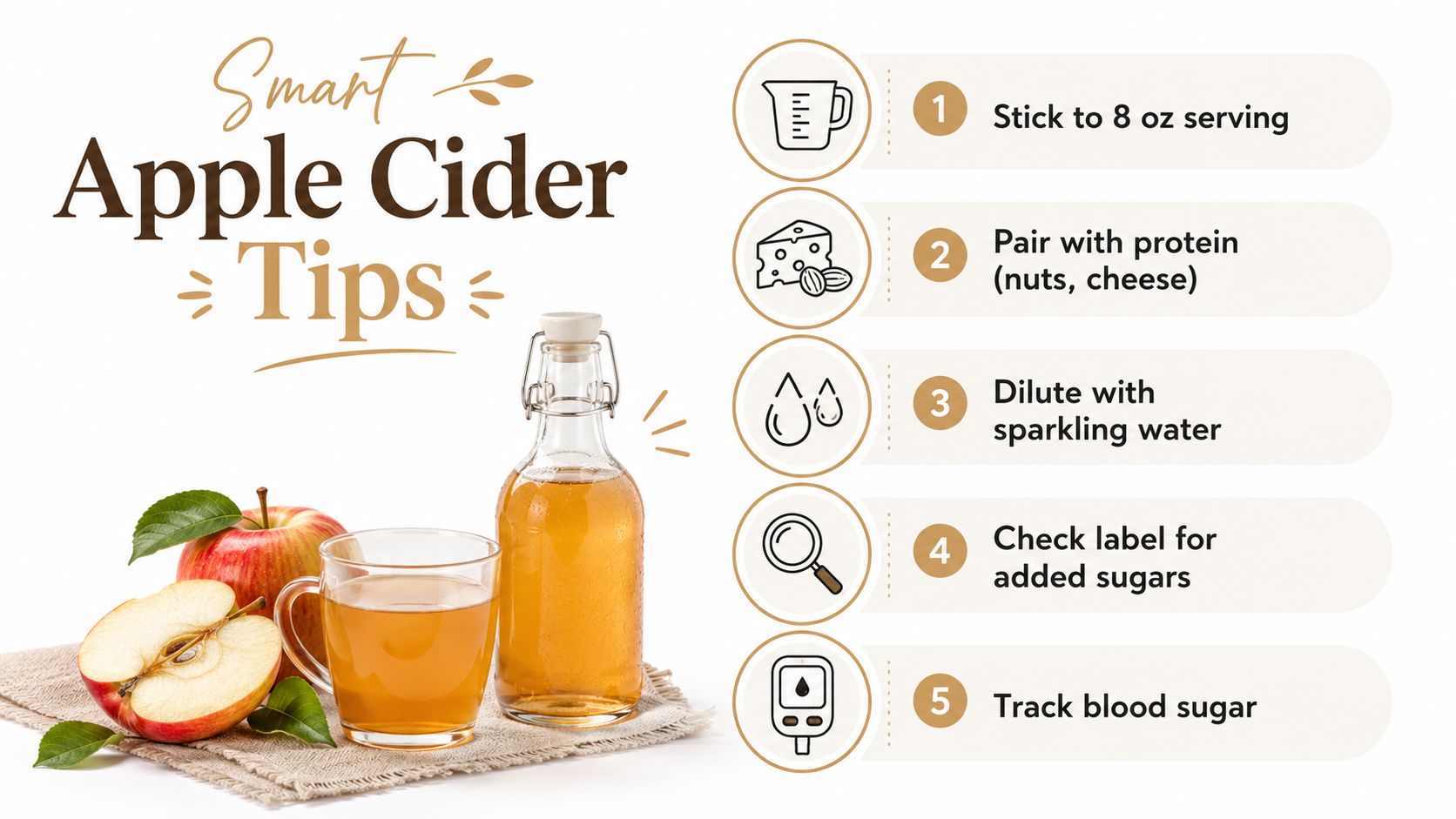
Those steps matter because cider is easy to underestimate. It does not taste as sharp as soda, and it can feel more wholesome than dessert, so people often give it a pass. The label helps slow that reflex and turn it into a deliberate choice.
Label reading also works best when you connect it to the rest of your routine. A nutrition-focused conversation can sit alongside movement and weight goals without turning every choice into restriction. A helpful read on that connection is boost member loyalty with nutrition, especially if you like practical habit-based coaching. If weight control is part of your concern, the perspective in can a chiropractor help you lose weight in Salt Lake City Utah fits the same real-world mindset, food choices are easier to manage when they are part of a bigger routine.
Practical rule: if you want the flavor but not the full sugar load, use cider sparingly and treat it like a dessert drink.
Sugar choices don't just live in the nutrition world. They also show up in how patients feel during recovery. When someone is dealing with back pain, disc irritation, soft-tissue strain, or general inflammation, a daily beverage habit can either support steadier routines or work against them. I see that most clearly in patients who want pain relief but also keep a few high-sugar drinks in rotation.
That doesn't mean one glass of cider is a disaster. It means the pattern matters. Regular sugar-heavy drinks can make it harder to keep appetite steady, energy even, and recovery habits consistent, especially when someone is also trying to stay active. A body that's healing from musculoskeletal stress usually does better when nutrition choices are predictable and simple.
For runners and active people, recovery habits often revolve around how they refuel after effort. A practical guide like how much protein after a run is useful because it reminds you that recovery works best when the drink or snack supports the next step. Apple cider is rarely the best recovery drink choice, even if it feels comforting.
The same reasoning applies to broader integrative care. Nutrition counseling, mobility therapy, rehabilitation exercise, and spinal care all work better when the person isn't fighting avoidable sugar swings in the background. If you're also thinking about how food fits into a supplement routine, whole food magnesium supplement is a useful reminder that recovery tends to work best when the basics are consistent.
If you're unsure how apple cider fits your goals, bring the bottle or the label to your next visit and talk it through with a clinician who understands both movement and nutrition. Aspen Falls Wellness offers coordinated chiropractic and integrative care, including nutrition coaching, spinal decompression, massage therapy, acupuncture, and rehab-focused support. If you want help making food and recovery choices work together instead of against each other, visit Aspen Falls Wellness and start a conversation with a care team that looks at the whole picture.

Stay updated with the latest chiropractic news and exclusive offers.