Discover common whiplash symptoms neck injuries cause after a car accident. Learn red flags, recovery timelines, and effective chiropractic treatments.
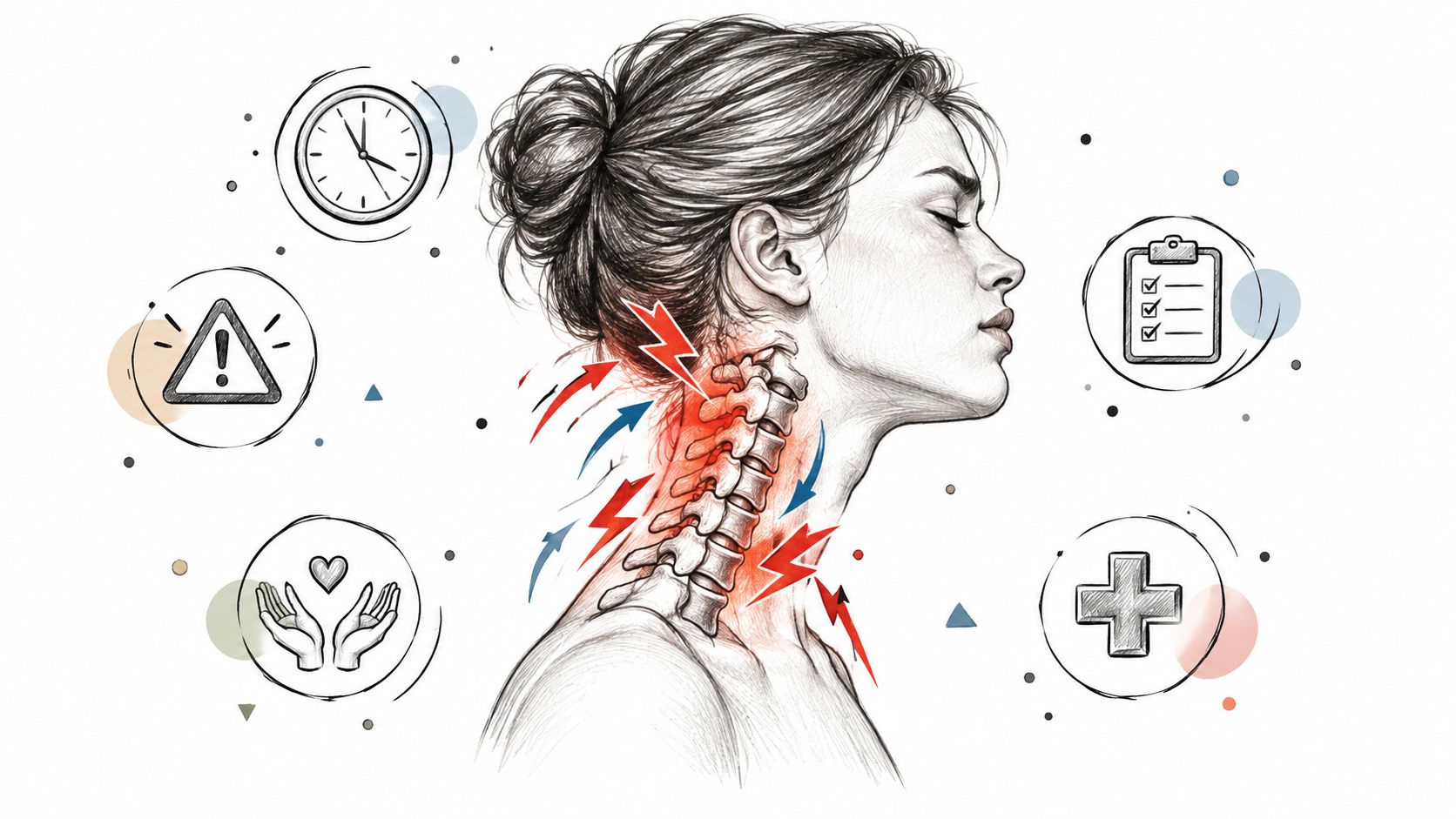
You leave the collision thinking you escaped without an injury. You spoke with the other driver, exchanged information, and walked away under your own power. Then, later that evening or the next morning, turning your head becomes difficult, your neck feels locked, and a headache begins at the base of your skull.
That delayed pattern is common with whiplash symptoms in the neck, but it still deserves attention. Whiplash-associated disorder can involve muscles, ligaments, joints, discs, and neural structures. Most cases can be managed without surgery, yet some symptoms point to nerve or spinal involvement and need prompt evaluation.
A patient may feel fine immediately after a crash because the body is still responding to the event rather than accurately reporting every injury. Adrenaline can temporarily reduce the awareness of pain, while the person focuses on safety, insurance information, passengers, or getting home. Once that heightened state settles, stiffness and soreness may become much easier to notice.
The physical injury itself can also take time to declare its full effect. A rapid acceleration-deceleration force stresses the head and cervical spine near their end ranges, which can irritate muscles, ligaments, joints, discs, and nearby neural structures. Inflammation may build gradually, and the neck muscles may tighten to protect an area that feels unstable or painful. That protective tightening, called muscle guarding, can make the neck feel increasingly restricted after the initial collision.
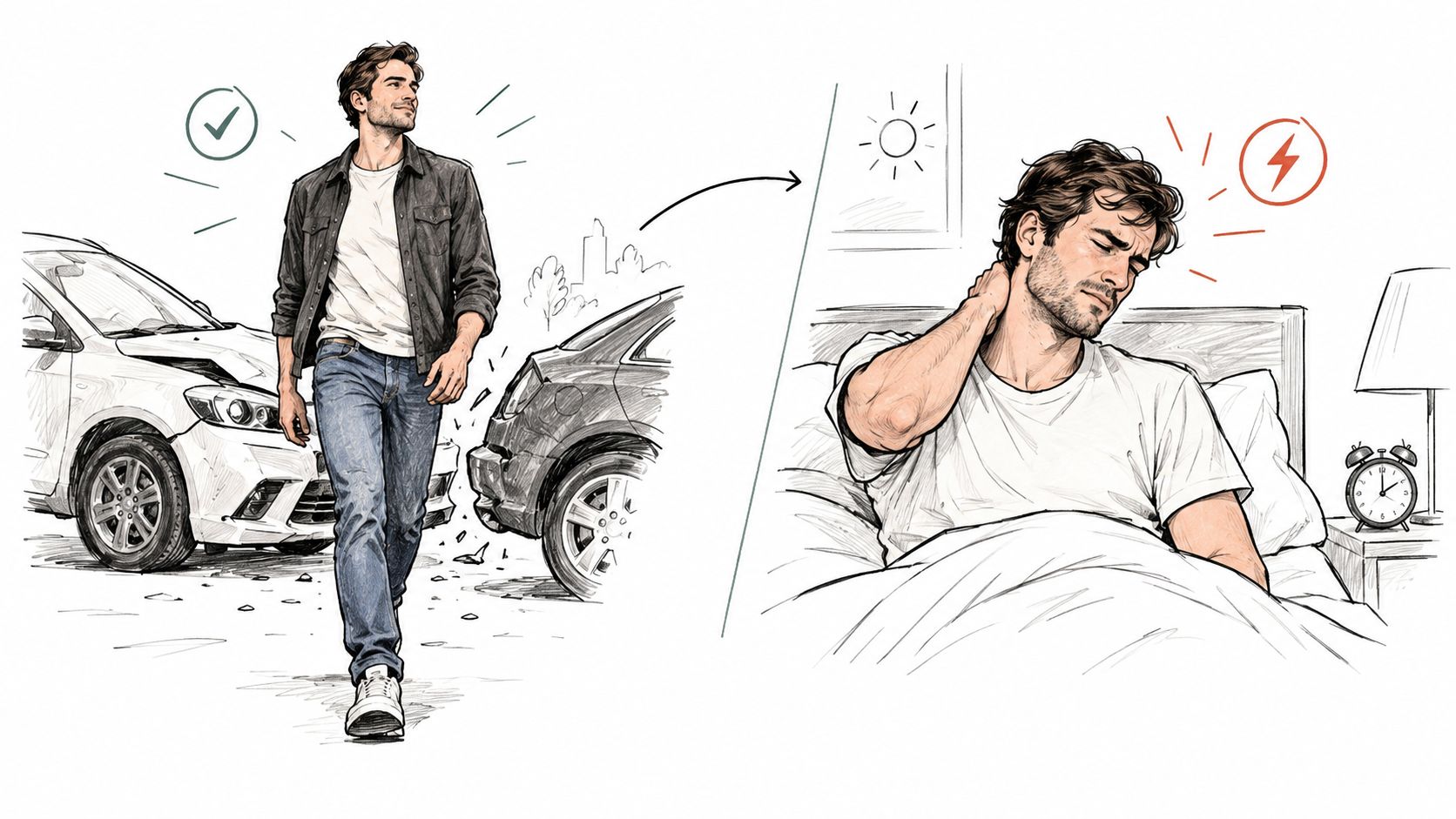
The first day or two is a useful monitoring period. It doesn't mean you should wait to seek care if you have significant symptoms. It means you should pay attention to whether your condition is improving, staying stable, or changing.
Record practical details such as:
Delayed symptoms don't automatically prove severe structural damage. They do show why feeling normal at the crash scene isn't enough to rule out an injury. For additional perspective on symptoms that develop after a rear-end collision, review this guide to neck pain after a rear-end collision.
Practical rule: If your neck feels normal immediately after a crash, continue monitoring it. If pain, restricted motion, headache, dizziness, or arm symptoms appear, arrange an appropriate clinical assessment rather than dismissing them.
Avoid testing the neck aggressively to “see how bad it is.” Gentle everyday movement may be appropriate for an uncomplicated presentation, but forceful stretching, heavy lifting, and high-impact activity can aggravate an injured area. A clinician can help determine what movement is suitable for your findings.
Whiplash-associated disorder, or WAD, is broader than a sore neck. The underlying acceleration-deceleration force can affect cervical tissues and alter how the neck, upper back, shoulders, and nervous system function together. That's why a patient may report several symptoms that seem unrelated at first.
A systematic review found that neck pain occurs in approximately 100% of patients at presentation, neck stiffness in about 70%, and headache in roughly 50–80% of cases (systematic review of whiplash-associated disorder symptoms). The same review reported low-back pain in approximately 60%, shoulder pain in 40–75%, and visual disturbance or dizziness in 10–50% of patients. These figures don't mean every person will develop all of these problems. They show why an assessment shouldn't stop after asking whether the neck is sore.
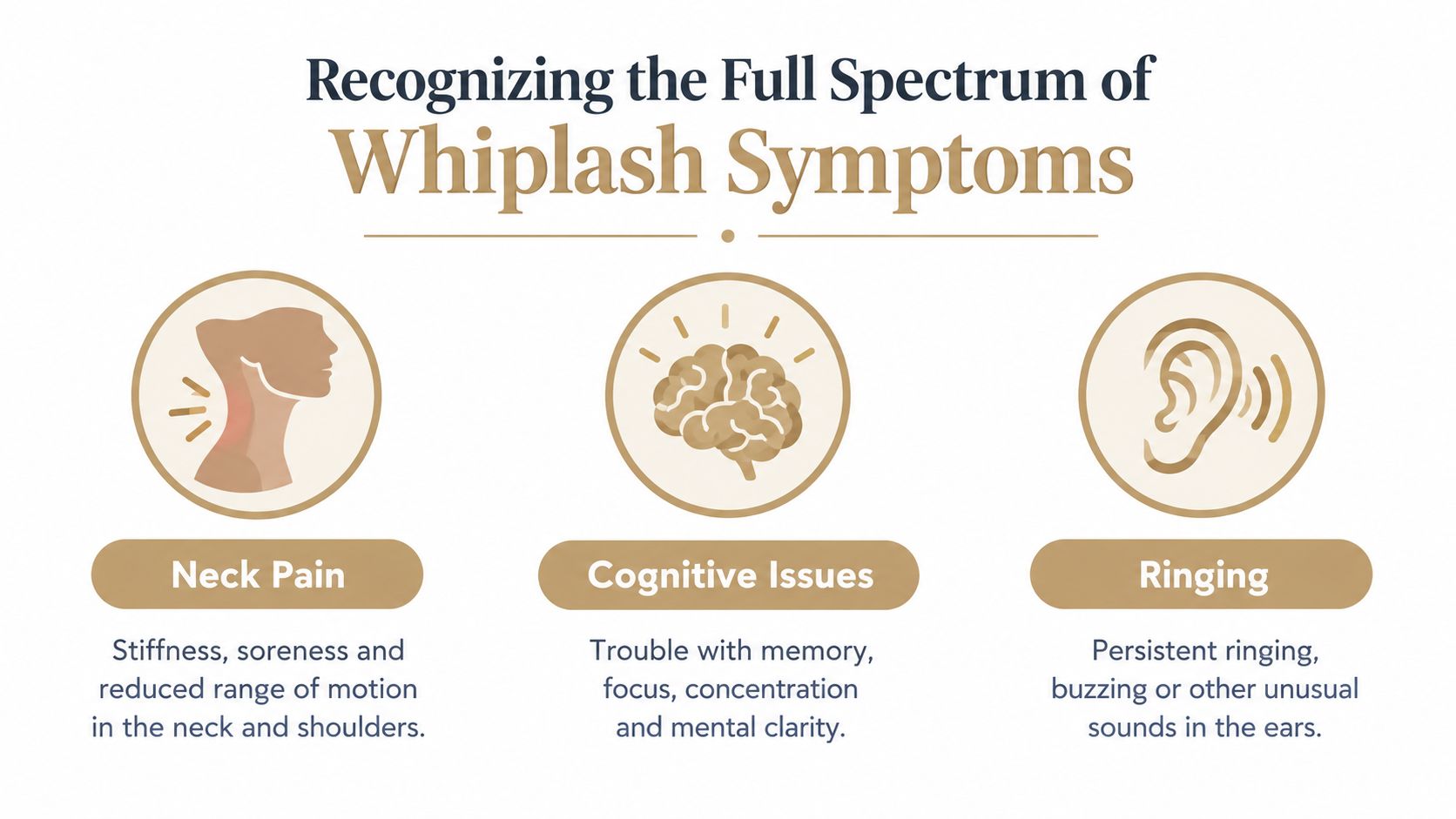
Neck-related symptoms often include pain with movement, stiffness, tenderness, muscle tightness, and reduced cervical range of motion. Headaches may begin at the base of the skull and travel toward the forehead or behind the eyes. Shoulder blade, trapezius, upper-back, shoulder, or arm discomfort may reflect referred pain or irritation of tissues connected to the cervical region.
Balance and sensory symptoms can include dizziness, visual disturbance, or a feeling of being off balance. These symptoms have several possible causes after a collision, so persistent or worsening changes shouldn't be automatically attributed to routine neck strain.
Whole-person effects may include fatigue, sleep disruption, irritability, difficulty concentrating, or memory complaints. Pain itself can disturb sleep and reduce concentration, while the stress of a collision can make normal activities feel harder. Mayo Clinic also identifies reduced neck movement, headaches, shoulder or upper-back pain, arm tingling or numbness, dizziness, fatigue, sleep disturbance, irritability, concentration difficulty, and memory problems among possible whiplash symptoms (Mayo Clinic's overview of whiplash symptoms).
A useful symptom diary doesn't need complicated language. Write “headache begins at the back of the skull when I look down” or “right arm tingles after sitting at the computer.” Specific descriptions help a clinician connect symptoms with movement and function. If you're looking for general guidance on managing symptoms after a collision, this resource on quick relief for whiplash after a crash may also help you identify questions to raise during care.
The important distinction is not whether a symptom sounds dramatic. It's whether it is new, worsening, function-limiting, or accompanied by a neurological change. Those patterns determine how quickly you should be assessed.
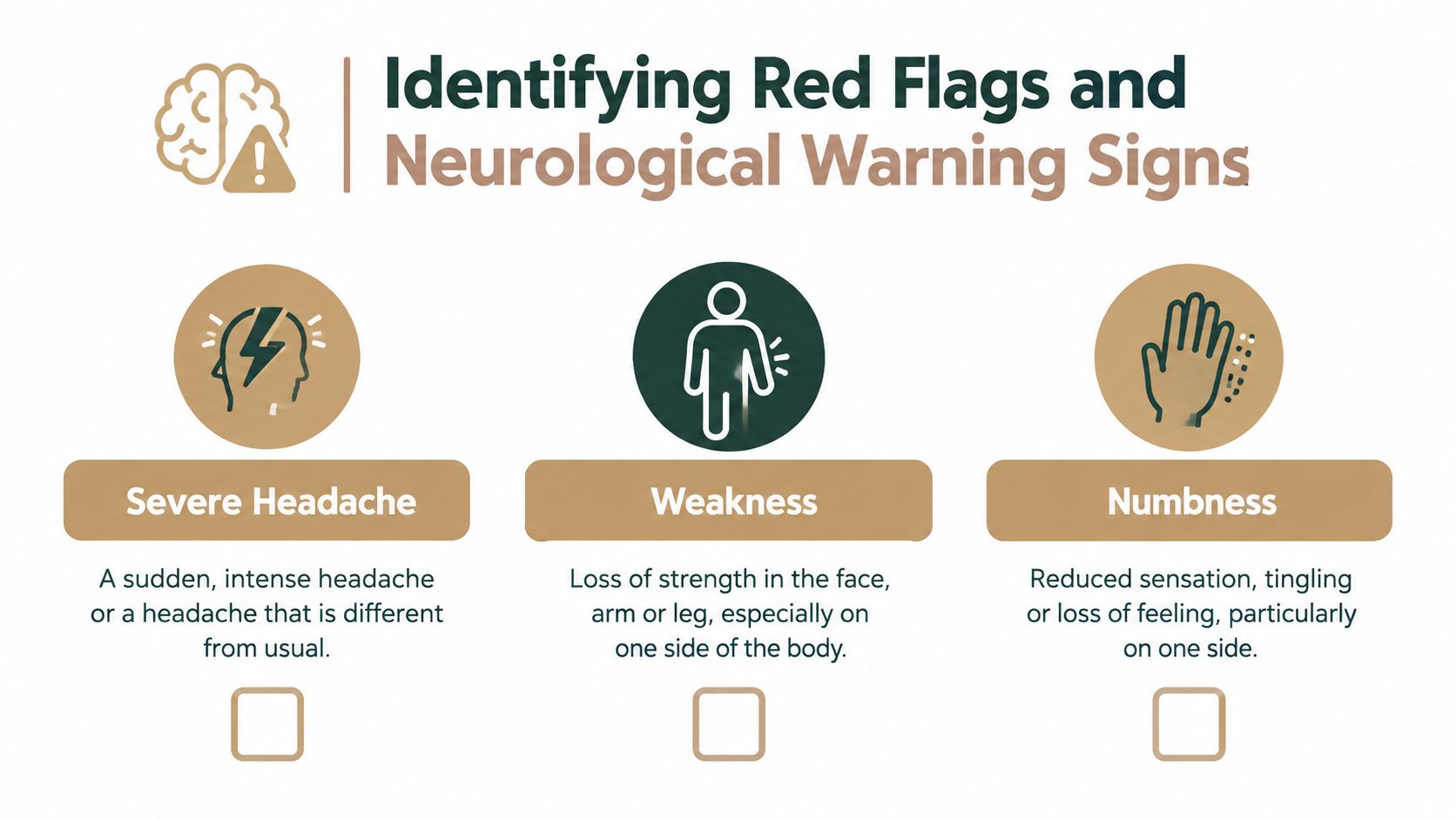
Neck soreness and stiffness can occur with an uncomplicated whiplash injury. Weakness, progressive numbness, impaired coordination, or electric-shock sensations are different concerns because they may indicate involvement of a nerve root, spinal cord, or another structure that needs more careful evaluation.
Use three practical pathways after a collision.
If you have mild neck soreness or stiffness, can move your arms and legs normally, and have no significant sensory or coordination changes, contact a healthcare professional and monitor your symptoms. Follow the activity guidance you receive, avoid high-impact exertion, and record whether movement and daily function are improving.
Routine monitoring doesn't mean ignoring pain. It means watching the trajectory while using appropriate conservative care. A normal initial scan, if one was performed, also doesn't replace follow-up when symptoms change.
Arrange reassessment when pain remains difficult to manage, movement stays restricted, or symptoms fail to improve. New or ongoing symptoms should be discussed with a clinician, and NHS guidance advises contacting a healthcare professional if symptoms worsen or have not improved within six weeks (NHS guidance on whiplash).
Non-urgent reassessment is also appropriate for persistent headaches, dizziness, arm tingling, numbness, sleep disruption, or activity limitations. A clinician may adjust your care plan, refer you for additional evaluation, or investigate another source of symptoms. If you want to understand how neck nerve irritation can present, this explanation of a pinched nerve in the neck offers useful context.
Seek urgent medical attention after major trauma or when you develop:
These signs shouldn't be managed with routine adjustments or home exercises before medical evaluation. Imaging decisions depend on the examination and the suspected injury. The purpose of urgent assessment is to identify or exclude serious pathology, not merely to obtain a scan.
A useful post-collision examination creates a baseline. Without that baseline, it becomes harder to tell whether your neck is gaining motion, whether pain is spreading, or whether daily function is returning. It also gives future clinicians a clearer picture of how the condition has changed.
An assessment commonly considers:
The Korean Journal of Spine review describes whiplash as a rapid acceleration-deceleration injury that can stress muscles, ligaments, discs, facet joints, and neural structures. It recommends documenting active range of motion, pain distribution, strength, sensation, reflexes, headache or dizziness characteristics, and functional limitations during clinical evaluation (clinical assessment of whiplash-associated disorder).
X-rays, CT, or MRI may be appropriate when examination findings suggest fracture, dislocation, spinal-cord involvement, disc pathology, ligament injury, or another structural problem. They don't directly confirm uncomplicated whiplash, and a scan that doesn't show a major abnormality doesn't make your symptoms imaginary.
For uncomplicated WAD grades I and II, the SIRA acute-WAD guideline advises against routine CT or MRI and emphasizes clinical evaluation. Specialized imaging is reserved for selected grade-III presentations, such as suspected nerve-root compression (SIRA acute whiplash guidelines).
Keep copies of clinical notes, referrals, treatment instructions, and your symptom diary. Documentation should describe what you could and couldn't do, not just assign a pain score. Function often reveals recovery more clearly than a single image or a single appointment.
Treatment should match the examination, symptom pattern, and recovery stage. Passive care may reduce pain enough to let you move, sleep, and participate in rehabilitation. It generally works best when paired with active mobility and strengthening rather than used as a substitute for rebuilding function.
| Therapy Modality | Primary Clinical Target | Recovery Benefit |
|---|---|---|
| Chiropractic Adjustment | Restricted joint motion and altered cervical mechanics | May support mobility and reduce mechanical irritation when clinically appropriate |
| SoftWave Therapy | Soft-tissue stimulation and healing support | May complement a plan focused on pain control and tissue recovery |
| MLS Laser Therapy | Local inflammation and irritated soft tissues | Provides a non-invasive modality that may help settle symptoms |
| Massage Therapy | Muscle guarding, tenderness, and soft-tissue dysfunction | Can reduce muscular tension and make movement more comfortable |
| Spinal Decompression with the DRX 9000 | Selected disc-related pathology | Non-surgical care may be considered when examination supports a disc-related problem |
| Acupuncture | Pain modulation and muscle tension | Can be integrated when a patient responds well to needling-based care |
| Mobility Therapy | Restricted movement and postural control | Restores controlled range of motion and improves movement confidence |
| Rehabilitation Exercise | Strength, endurance, coordination, and activity tolerance | Builds the capacity needed for work, driving, and normal daily activity |
| Muscle Stimulation | Selected muscle activation and support | May assist a broader program when voluntary activation is limited |
A Chiropractic Adjustment, realignment-focused care, or manual therapy shouldn't be applied automatically to every person after a crash. The clinician should first screen for fracture risk, neurological findings, instability, and symptom behavior. The technique and intensity must fit the patient's condition and tolerance.
SoftWave Therapy, MLS Laser Therapy, and massage may be useful for symptom modulation, but relief alone doesn't prove that the neck has recovered. If a patient feels better but still can't rotate the neck, sleep normally, or tolerate ordinary activity, the plan needs an active component.
A Personal Exercise Plan can include gentle range-of-motion work, postural retraining, cervical and upper-back strengthening, and gradual return to activity. Mobility Therapy and Rehabilitation Exercise help address the reasons a person remains guarded, while Nutrition and Nutrition Counseling can support broader health habits during recovery.
Spinal Decompression with the DRX 9000 belongs in a selected treatment plan, not a routine whiplash protocol. It may be relevant when clinical findings point toward disc-related pathology, but it doesn't replace neurological assessment or emergency care for red flags.
At an integrative clinic such as Aspen Falls Wellness, care may combine Chiropractic Care, massage, acupuncture, laser therapy, mobility work, rehabilitation exercise, and non-surgical spinal decompression. Other services, including Sciatica Treatment, golf movement screening, and nutrition support, address different musculoskeletal needs and should be used according to the diagnosis rather than added indiscriminately.
The assumption that every whiplash injury disappears quickly can lead patients to stop care too soon. A systematic review reports that most patients recover within approximately eight weeks, yet an estimated 18–40% continue to experience symptoms for more than six months (systematic review of whiplash recovery). Recovery is often favorable, but it isn't guaranteed to be rapid or complete.
A longitudinal study summarized in the same academic review identified different symptom trajectories across a year. Forty percent had mild symptoms throughout the year, 43% began with moderate symptoms and improved to mild levels by three months, and 17% experienced persistent moderate or severe symptoms across the full 12-month period. These figures describe groups, not an individual prognosis, but they show why follow-up matters.
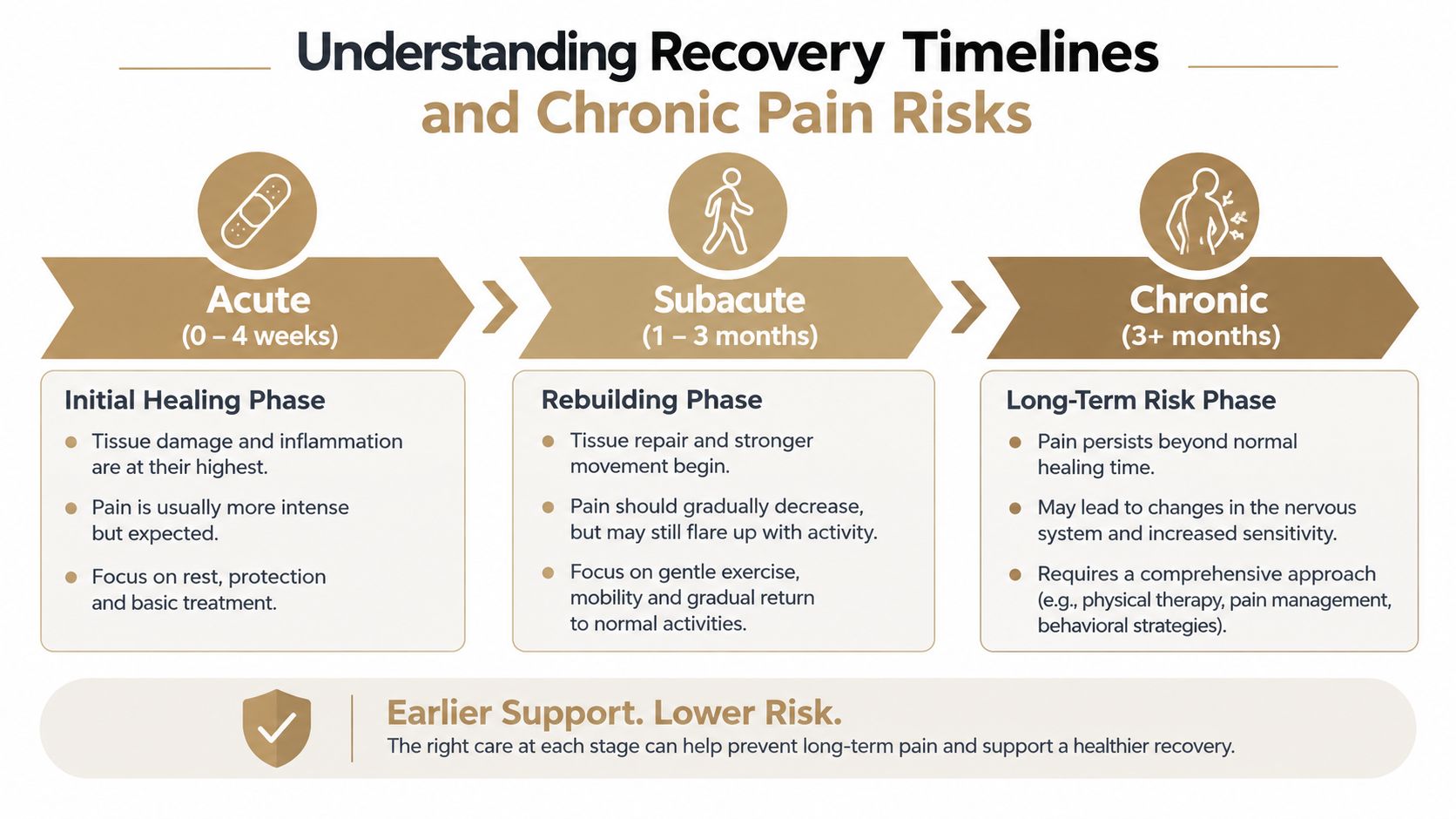
Reduced initial neck range of motion and initial cold hyperalgesia are identified in the SIRA acute-WAD guideline as predictors of ongoing disability. If these findings persist, they support closer reassessment and potentially more intensive or specialist-directed management.
Other evidence summarized in the academic literature estimates that up to 42% of people with whiplash transition from an acute condition to chronic pain. Population-based research has also found that up to 50% may still report pain or disability 12 months after injury (academic review of whiplash prognosis). Chronic WAD is commonly defined as symptoms lasting at least three months.
The practical response isn't fear. It's measurement. At follow-up, compare pain, neck motion, work tolerance, sleep, driving, and patient-specific disability with the original baseline. If those measures aren't improving, the clinician can modify the plan instead of assuming that time alone will solve the problem.
Recovery checkpoint: Improvement means more than lower pain. It also means better movement, greater activity tolerance, steadier sleep, and fewer symptoms during ordinary tasks.
Use a simple timeline to make decisions without either panicking over mild soreness or dismissing important changes.
Follow the care plan you receive and use gentle, controlled movement when it has been approved. Prolonged inactivity can contribute to stiffness and weakness, while aggressive activity can flare symptoms. Reassess if pain spreads, movement worsens, neurological symptoms appear, or daily function remains substantially limited.
Bring your symptom record to each appointment. Describe specific changes, such as being unable to check a blind spot while driving or waking repeatedly because of neck pain. Those details help your provider adjust treatment and maintain accurate clinical documentation.
Continue the prescribed Personal Exercise Plan, Mobility Therapy, or Rehabilitation Exercise rather than stopping as soon as passive pain relief arrives. Keep scheduled reassessments, especially if reduced range of motion or unusual sensitivity persists. The aim is a stable return to work, sleep, driving, exercise, and other activities, not just temporary relief while the neck remains vulnerable.
Aspen Falls Wellness provides car accident assessment and treatment planning with Chiropractic Adjustment, massage therapy, acupuncture, MLS Laser Therapy, SoftWave Therapy, mobility care, rehabilitation exercise, and selected Spinal Decompression with the DRX 9000. If you're experiencing delayed whiplash symptoms in the neck, visit Aspen Falls Wellness to arrange an evaluation and discuss a care plan suited to your findings.

Stay updated with the latest chiropractic news and exclusive offers.