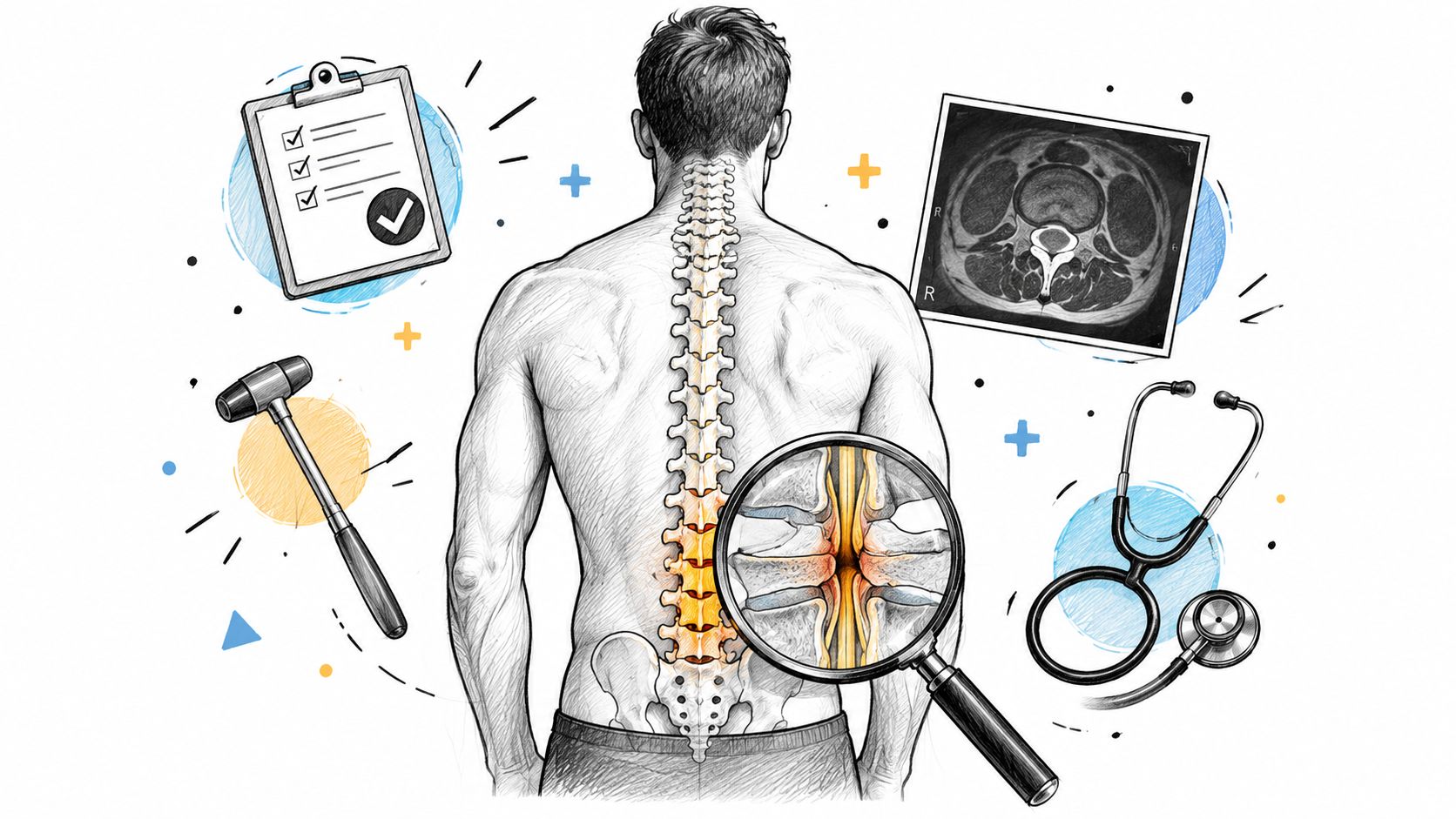
Explore bulging disc in neck treatment options, from conservative care like decompression and physical therapy to injections and surgical referrals

A patient sits down in my office with an MRI report folded in her bag, one phrase underlined: bulging disc. Her neck is stiff, pain travels into her right arm, and two fingers go numb by evening. I see some version of this every week. The scan matters less than which of three situations she is in: an incidental bulge, an irritated nerve root, or pressure on the spinal cord itself. Each calls for a different response.
Most acute cervical radiculopathy improves without surgery. A 2025 StatPearls review of cervical radiculopathy reports that more than 85% of acute cases resolve without specific treatment within 8–12 weeks.
That number is why I sequence care against clinical milestones like exam findings and functional change rather than reacting to imaging alone.
Two patients can carry the same MRI finding and need different plans. One has a stiff neck and a disc bulge that explains nothing; the other has pain running into the arm, a weak triceps, and a scan that matches the exam. Before comparing therapies, I sort every patient into one of three categories, because the right response for each is different. For the anatomy first, what a bulging disc actually is covers the basics in plain language.
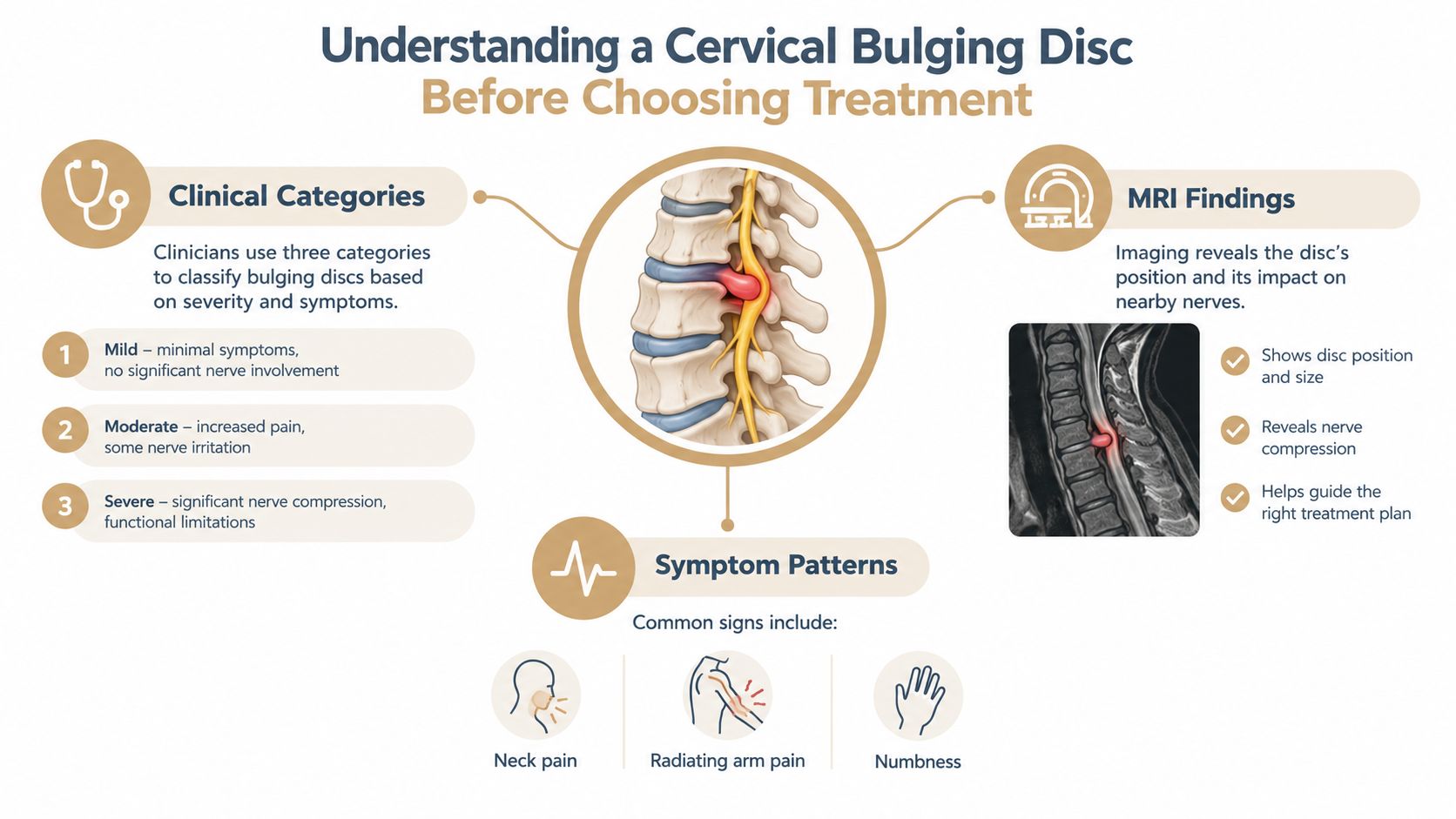
An incidental bulge shows on imaging without producing a matching pattern of nerve symptoms or neurological change. Pain-free adults carry these findings all the time. If your exam shows local stiffness without arm symptoms or objective weakness, chasing the bulge itself wastes time; the useful work is movement, posture, and building tolerance for daily activity.
Cervical radiculopathy means a nerve root is irritated or compressed. Pain, tingling, or numbness travels into the arm, sometimes with weakness in a specific muscle group. Here I check whether the symptom pattern and reflex changes fit the level the MRI flags, because a mismatch sends me looking for another cause.
Cervical myelopathy is pressure on the spinal cord rather than a single root. Unsteady walking, clumsy hands, or bowel and bladder changes move this out of the conservative-care lane. Progressive weakness gets a surgical referral, not another round of home exercises.
An MRI shows disc and nerve anatomy. It cannot prove which structure is generating your pain. That takes a history plus strength, sensation, reflex, and function testing, then reassessment over time to see whether the picture is improving.
Imaging still has a defined role. The American College of Radiology finds MRI isn't useful as a first-line test for acute or worsening neck pain without trauma or red-flag symptoms; it becomes appropriate when symptoms persist, worsen, or objective neurological findings appear (cervical pain imaging guidance). In practice, exam findings decide when imaging earns its place.
Get evaluated promptly for new or worsening weakness, gait or balance changes, or bowel or bladder symptoms. These findings change the priority from routine symptom management to assessing possible neurological involvement.
A useful care plan isn't a contest between devices. It matches the treatment to the problem: nerve irritation, restricted movement, muscle guarding, or reduced tolerance for daily activity. Aspen Falls Wellness provides coordinated, non-surgical care in Salt Lake City and Sandy, with reassessment to adjust the plan when symptoms or function change.
For a confirmed disc-related problem, spinal decompression with the DRX 9000 may be considered as one part of a broader plan. The aim is to apply controlled traction to the cervical region, but it shouldn't be presented as a guaranteed way to reposition a disc or cure nerve symptoms. Suitability depends on the diagnosis, examination, and individual tolerance.
A chiropractic adjustment may help selected patients with joint stiffness or restricted movement. Technique matters: care should be adjusted to the person's symptoms and tolerance, especially when arm pain or neurological signs are present. Mobility therapy and posture retraining target movement limitations; rehabilitation exercise builds strength and control that can support everyday activity.
Massage therapy addresses muscle tension and soft-tissue discomfort. Acupuncture may be used as a pain-modulation option. MLS Laser Therapy and SoftWave Therapy are device-based services that may be considered for symptom management, but neither should replace a progressive exercise plan when restoring function is the priority.
A personal exercise plan gives the patient something useful to do between visits. Depending on the examination, it may include gentle mobility, stretching, and strengthening that progresses as tolerated. Nutrition counseling can support broader health habits, but it doesn't decompress a nerve or substitute for clinical assessment.
Ask at an initial visit which findings support each proposed service, what change it's meant to produce, and how progress will be measured. A clinic may also offer services such as muscle stimulation, pain relief approaches, realignment, acupuncture, and golf movement screening, but those aren't interchangeable treatments for a symptomatic cervical disc. Sciatica treatment and car accident treatment address other clinical needs; a neck plan still needs to be specific to your symptoms and findings.
Conservative therapies can address different parts of the same problem. A manual approach may help movement or muscle guarding, while a device-based modality may be used to manage symptoms or apply traction. None should be assumed to remove a disc bulge. The practical test is whether the selected treatment helps you move, sleep, exercise, and use your arm more comfortably.
| Therapy | Primary Target | Best Fit Case | Typical Session Frequency |
|---|---|---|---|
| Chiropractic adjustment | Joint mobility and movement tolerance | Selected cases with stiffness, when examination supports manual care | Set by the clinician according to response and tolerance |
| Spinal decompression with the DRX 9000 | Controlled cervical traction | Selected disc-related symptoms after suitability screening | Individualized, with progress reassessed |
| MLS Laser Therapy | Symptom management and recovery support | As an adjunct when included in an individualized plan | Individualized |
| SoftWave Therapy | Tissue stimulation and symptom support | As an adjunct, not a stand-alone nerve treatment | Individualized |
| Massage therapy | Soft-tissue tension and muscle discomfort | Muscle guarding or associated stiffness | Based on symptoms and response |
| Acupuncture | Pain modulation | When appropriate as part of a broader care plan | Individualized |
For cervical cases, the potential role of mechanical decompression is a key distinction. It uses controlled traction rather than relying on massage or joint movement alone. That doesn't prove it's the right choice for every patient, and it isn't equivalent to surgery, which directly addresses nerve compression. Read about spinal decompression therapy as a treatment approach, then ask a clinician whether your symptoms and examination make it suitable.
The treatment that “moves the needle” is the one that supports measurable progress. If passive care leaves you no more able to turn your head, use your arm, or follow an exercise plan, the care plan needs reassessment.
Frequency varies with the treatment, clinical findings, and response, so a fixed visit schedule shouldn't be promised before an examination. A sensible sequence often pairs symptom-guided manual or device-based care with mobility work and home exercise. Exercise is the part that builds active capacity; a passive therapy alone may not prepare you to return to work, sport, or prolonged sitting.
Evidence summarized in a review of cervical disc care supports structured therapeutic exercise, with selected use of traction, alongside activity modification and appropriate medication. It also cautions that cervical epidural injections have potentially serious complications and that their longer-term benefit is less certain (review of cervical disc management).
A calendar helps only if it's tied to clinical milestones. An incidental bulge on MRI, a true radiculopathy, and early myelopathy each run on a different clock, so the first job is knowing which one you're treating. For cervical radiculopathy without progressive neurological deficit, the opening weeks usually center on education, ordinary daily activity as tolerated, and structured home exercise, with treatment adjusted to symptoms. A guide to herniated disc recovery can help set expectations, while your own progress gets measured against function and neurological findings.
At the start, an examination should document the symptom pattern, strength, sensation, reflexes, and relevant daily limitations. Keep moving within a comfortable range rather than defaulting to prolonged bed rest. Heavy or vigorous loading may need temporary modification if it aggravates symptoms.
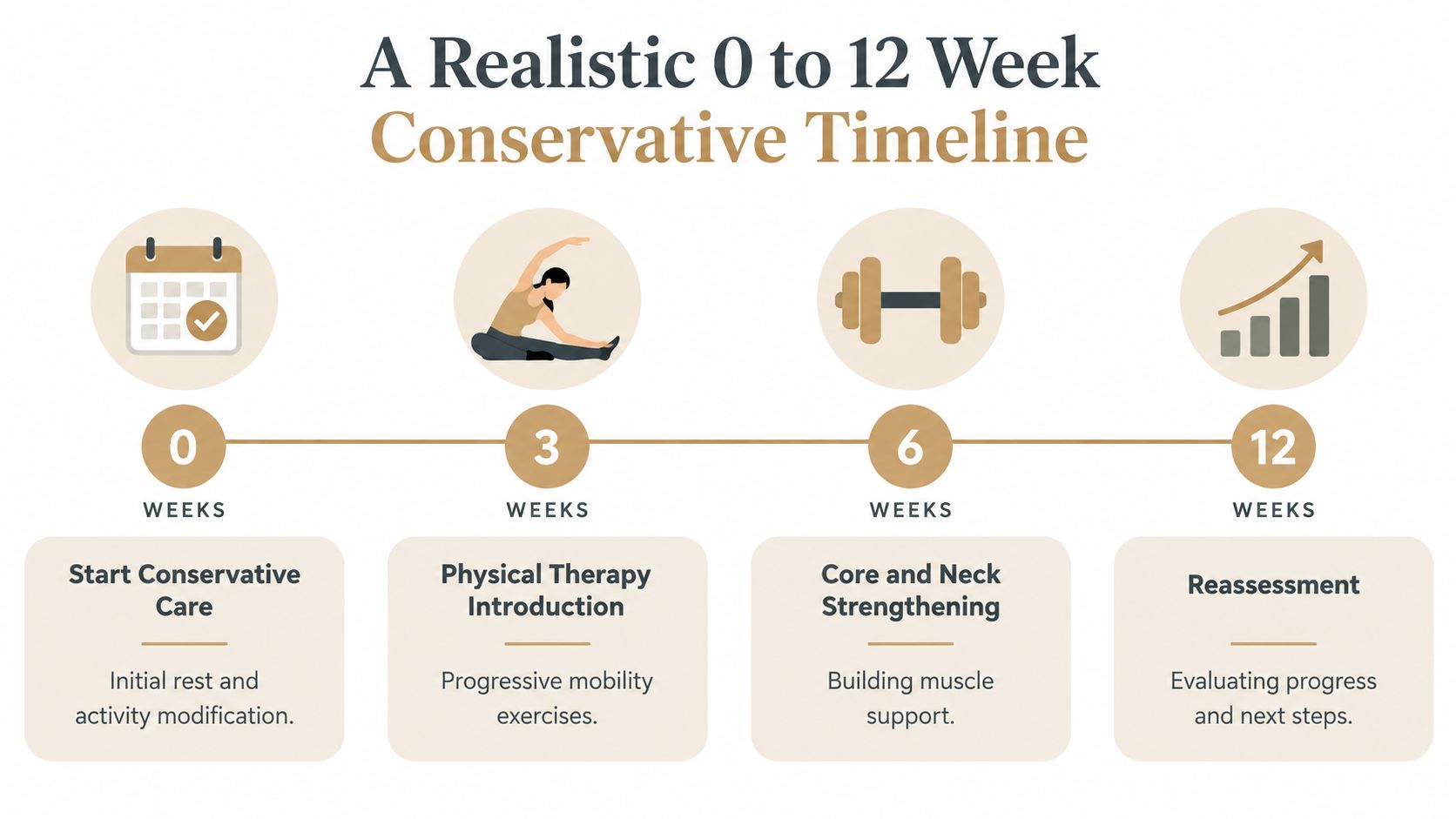
As symptoms allow, a clinician may layer in progressive mobility work, soft-tissue care, or traction matched to the examination findings. The exercise dose should advance with tolerance instead of following a generic calendar.
In my practice, patients who chase pain relief alone tend to stall. The ones who track what they can do, turning the head, carrying groceries, sitting through a workday, give me something concrete to build on. If DRX 9000 decompression enters the picture, it supports that progression rather than replacing it.
At follow-up, compare arm and neck pain, sleep, sensory changes, strength, and tolerance for ordinary activities. Better grip function, improved sleep, or longer comfortable sitting can signal real progress even when discomfort hasn't fully resolved. If symptoms plateau, revise the exercise dose, reconsider the diagnosis, or decide whether imaging or referral is appropriate.
A randomized trial offers useful context for monitored conservative care. Among patients whose cervical radiculopathy had lasted at least 3 weeks, mean arm pain fell from roughly 70% of the maximum possible level at baseline to about 20% at 6 months, whether they wore a collar, received physiotherapy, or followed a wait-and-see approach. Improvement at 6 and 12 weeks came sooner with physiotherapy or a collar, and 26% ultimately underwent surgery (randomized trial of cervical radiculopathy conservative care). Individual results vary around trial averages, which is exactly why reassessment points matter more than dates on a calendar.
Escalate rather than wait for the calendar if weakness is new or worsening, or if gait disturbance or bowel or bladder symptoms appear. A worsening neurological examination matters more than reaching a planned follow-up date.
A patient with three months of burning arm pain and a disc bulge at C6 asks me the same question every time: does this mean surgery? Usually no. Injections and surgery each carry a defined role, a different risk profile, and a specific threshold that justifies raising them. Which of the three clinical pictures you fit, incidental bulge, true radiculopathy, or myelopathy, matters more than the wording on the MRI report.
A cervical epidural steroid injection becomes worth discussing when radicular arm pain stays severe enough to block participation in rehabilitation. Relief, when it comes, tends to be short-term, and lasting benefit is less certain. Cervical injections also carry real complication risk, so image guidance and careful patient selection matter. Injecting an incidental bulge that produces no matching symptoms adds risk without a target to treat.
Surgery decompresses an affected nerve by removing or bypassing pressure from a disc or bony structure. Exercise, manual therapy, and traction improve function around the compression rather than removing it. Orthopaedic guidance describes surgery as an option when symptoms continue or worsen despite non-surgical care, while physical therapy and specific exercises can help reduce pain and improve movement (cervical radiculopathy surgical options).
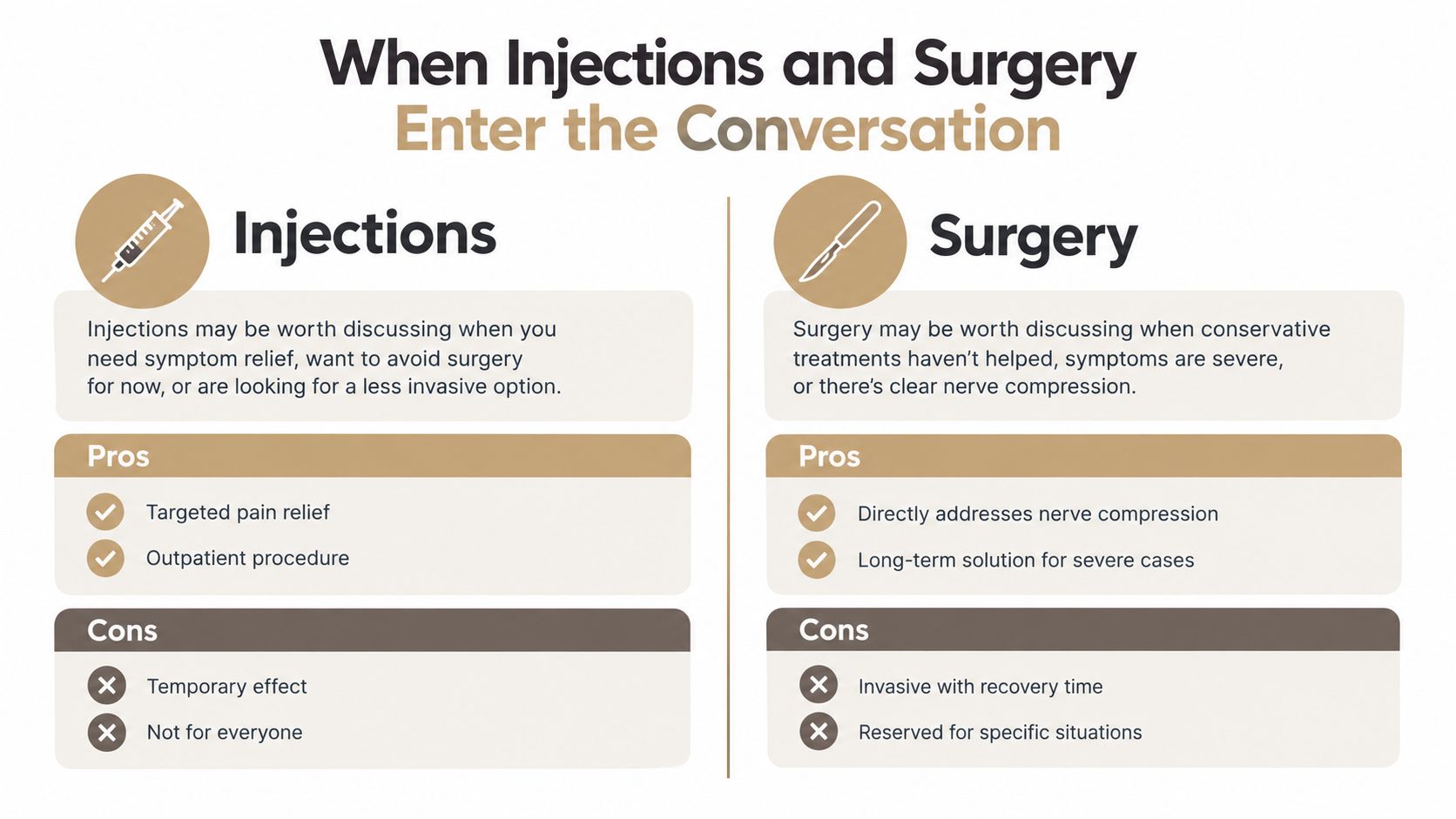
For a patient without progressive deficits, the milestone that usually triggers a specialist discussion is persistent symptoms after roughly 6–12 weeks of organized nonsurgical care (as noted earlier), particularly when imaging confirms disc-related or bony nerve compression. Disabling pain or progressive objective weakness moves that evaluation earlier. With myelopathy, the goal shifts from pain relief to protecting cord function, which is why that picture bypasses the usual wait-and-see sequence and calls for prompt assessment.
When I refer a patient out, it means conservative care did its job of clarifying the picture, and the examination now favors specialist input over more of the same.
The same MRI phrase can describe very different clinical pictures. Use the combination of symptoms, examination, and functional change to identify a reasonable starting point, then define what would trigger a change in course.
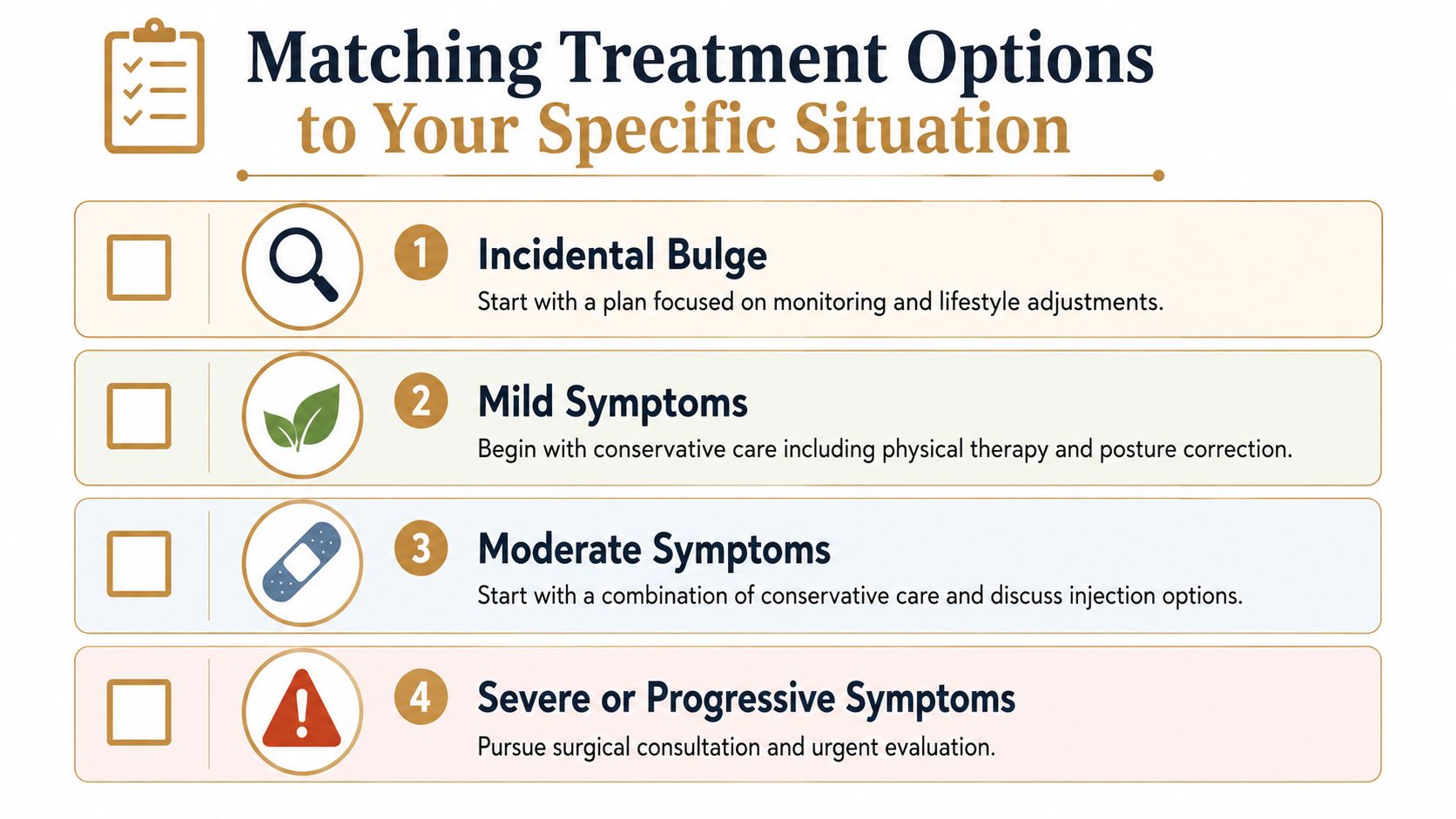
| Situation | Reasonable starting plan | Reassessment or referral trigger |
|---|---|---|
| Incidental bulge with mechanical stiffness | Mobility therapy, posture retraining, and corrective exercise; manual care if appropriate | Symptoms change or neurological findings appear |
| Radicular arm pain without progressive deficit | Examination-led conservative care, potentially combining exercise, soft-tissue treatment, and selected modalities | Persistent disability, worsening symptoms, or objective deficit |
| Chronic or recurrent neck pain | Recheck the diagnosis and build a plan around movement, strength, and activity tolerance | Recovery stalls or the symptom pattern changes |
| Progressive weakness, gait change, or bowel or bladder symptoms | Prompt medical or specialist evaluation, not further routine treatment escalation | Urgent assessment |
For a confirmed radiculopathy without red flags, a layered plan might include supervised rehabilitation, a take-home exercise program, and selected options such as DRX 9000 decompression, massage, MLS Laser Therapy, or SoftWave Therapy when clinically appropriate. The plan should track arm symptoms, strength, sensory changes, and function rather than treating the MRI appearance as the outcome.
An athlete may need a gradual return to lifting or sport-specific movement, with load adjusted to symptoms. Someone with recurrent desk-related stiffness may benefit more from mobility work and posture changes than from a device-focused plan. After a car accident, a clinician should assess the injury and neurological status before choosing treatment; new symptoms after trauma shouldn't be managed as an ordinary recurrence without evaluation.
The referral trigger stays consistent across patient types: progressive neurological changes or failure to improve despite structured care warrants reassessment. A plan should have a clear purpose, a way to measure progress, and a reason to stop or change course.
An MRI finding can be real without being the cause of your symptoms. Cervical disc bulges and degenerative changes can appear in people who don't have neck pain, so clinicians need to match the scan with your symptom pattern and neurological examination. Treating every visible bulge aggressively risks addressing an image rather than the problem affecting your daily life.
For most acute radiculopathy without progressive neurological deficit, the evidence supports beginning with conservative care and monitoring progress. That may involve activity guidance, exercise, and selected manual or device-based treatments, with injections or surgery considered when the clinical situation justifies escalation. More treatment isn't automatically better; the right treatment is the one that addresses the confirmed problem without overlooking neurological warning signs.
Keep the decision practical: confirm whether the finding is incidental, radiculopathy, or possible myelopathy; agree on a structured plan with functional milestones; and seek reassessment if recovery stalls or neurological function worsens. Let symptoms, examination, and progress guide the next step, not the scan alone.
Aspen Falls Wellness offers individualized chiropractic care, DRX 9000 spinal decompression, rehabilitation exercise, and other non-surgical services for neck and disc-related concerns in Salt Lake City and Sandy. If neck or arm symptoms are limiting your daily activities, visit Aspen Falls Wellness to discuss an examination and a care plan matched to your findings.

Stay updated with the latest chiropractic news and exclusive offers.