Explore the link between diet and back pain, from inflammation and weight to nutrient gaps, with practical strategies and a sample plan to support recovery.
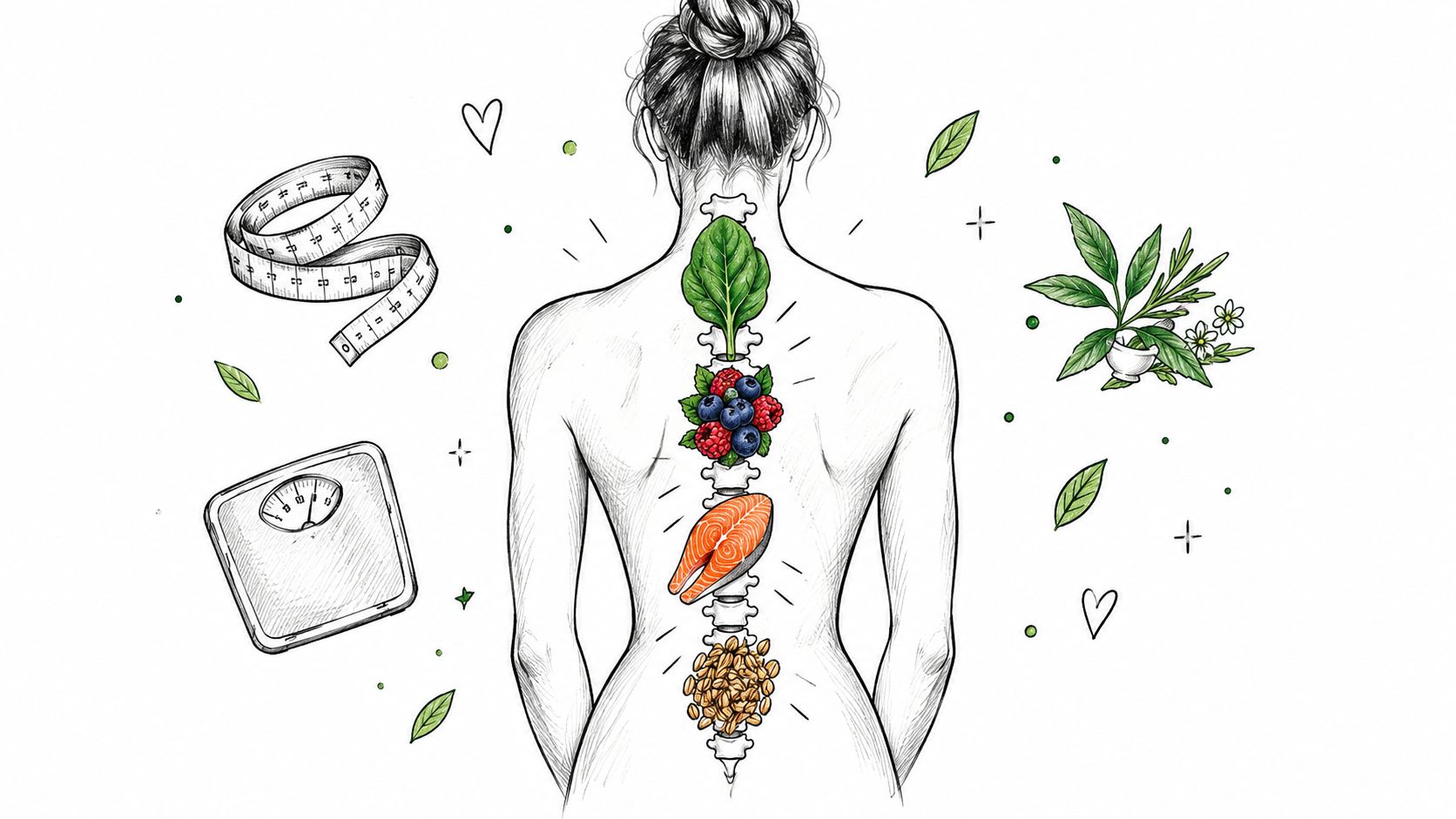
The most popular advice about diet and back pain is often the least reliable. Miracle foods, restrictive elimination plans, and supplement stacks may sound convincing, but no specific diet has been shown to repair a herniated disc, widen a narrowed spinal canal, or remove pressure from a compressed nerve.
Food still matters. It can influence body weight, nutrient status, metabolic health, and the inflammatory environment that may affect pain sensitivity. But nutrition belongs beside diagnosis, movement, rehabilitation, sleep, stress management, and targeted treatment. It shouldn't be used as a substitute for finding out why your back hurts.
A specific eating plan can't treat every type of back pain because back pain doesn't have one universal cause. Muscle strain, facet-joint irritation, disc-related pain, spinal stenosis, sciatica, inflammatory disease, and nerve compression require different clinical decisions. Changing your meals may support recovery, but it can't replace an examination when pain persists, radiates, or limits normal function.
The strongest nutrition evidence points to diet quality as an adjunct, not a cure. A meta-analysis of controlled trials found a small overall benefit from whole-food dietary interventions for chronic pain, but no single diet consistently outperformed the others. Vegetarian or vegan, elimination, and Mediterranean-pattern subgroups reached statistical significance in that analysis, yet the findings still don't justify prescribing one universal diet for back pain. The review in Pain Medicine supports a measured interpretation rather than a miracle-food claim.
Practical rule: Use food to improve the conditions around recovery, not to pretend that a structural diagnosis doesn't exist.
For most mechanical back problems, load management, sleep, exercise selection, posture, stress, and appropriate treatment often have a more direct effect on function than one dietary change. A person with sciatica from nerve compression may benefit from nutrition coaching, but they may also need an assessment, rehabilitation exercise, mobility therapy, or a coordinated decompression plan.
Nutrition can be useful for four practical reasons:
That is the appropriate promise. Dietary changes may support the body and improve measurable function, but they won't directly treat disc herniation, stenosis, nerve compression, or every source of spinal pain.
Think of the spine as a building. The vertebrae and joints form the structural column, muscles and connective tissues act like stabilizing supports, and the nervous system carries signals through the structure. Diet doesn't rebuild the building by itself, but it can influence the foundation, the load, the materials available for maintenance, and the way the alarm system responds.
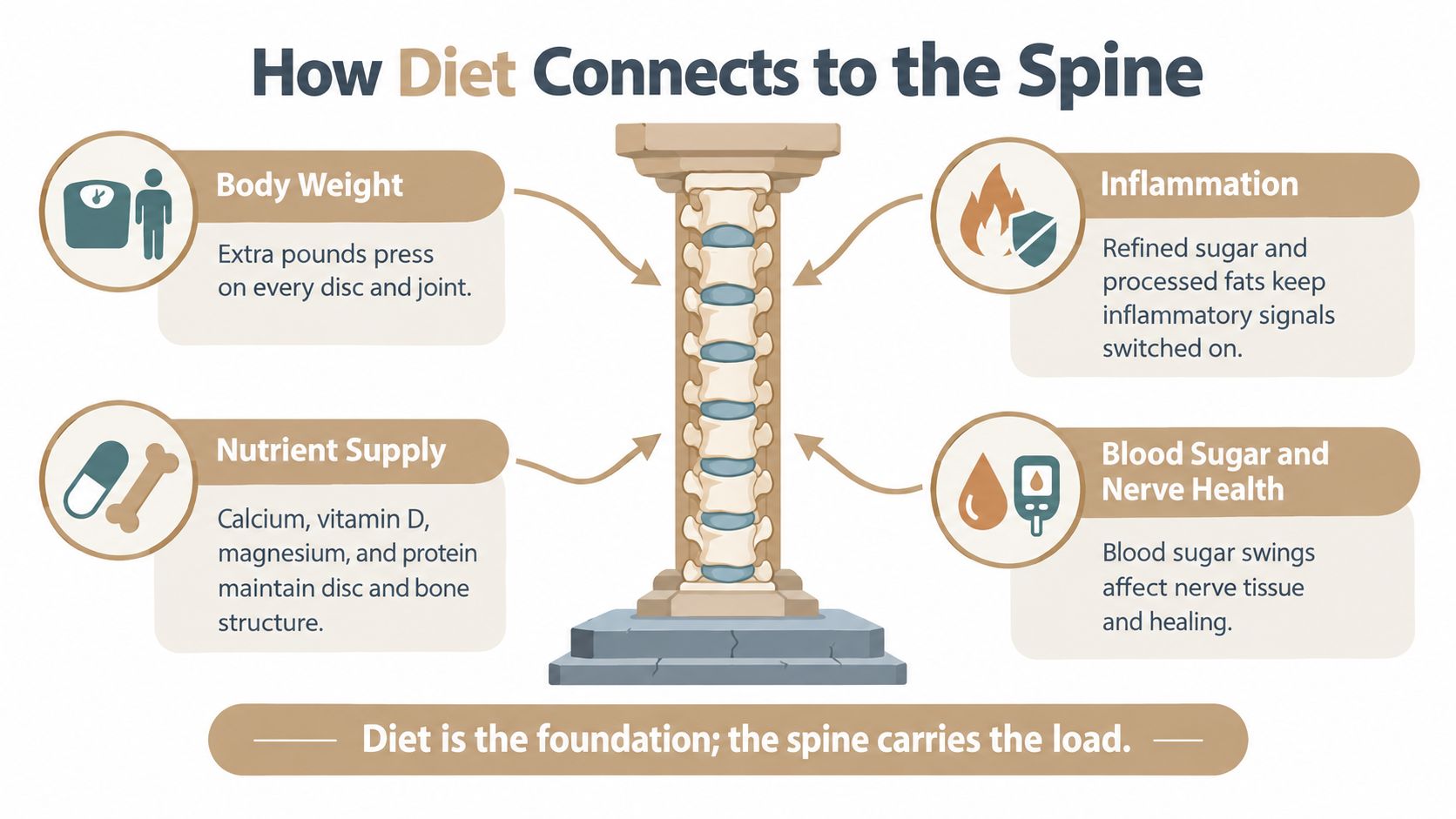
Body weight is the first load path. Excess body mass can increase stress on lumbar discs and facet joints, much like placing permanent extra furniture on a floor. A meta-analysis of 10 cohort studies involving 29,748 participants found pooled odds ratios of 1.15 for overweight and 1.36 for obesity, compared with normal weight, for the incidence of low-back pain. The association doesn't prove that excess weight directly causes every case, and genetic and early-environment factors may contribute. The cohort meta-analysis supports treating weight as a modifiable risk factor, not as a moral judgment or a complete explanation.
Inflammation is another pathway. Dietary patterns high in added sugar and ultra-processed foods may contribute to poorer metabolic health and inflammatory signaling. That doesn't mean one dessert creates spinal inflammation or that an “anti-inflammatory” label guarantees pain relief. It means the overall pattern may matter more than an isolated ingredient, particularly when it affects body composition and energy.
Nutrient supply supports the structure. Protein, calcium, vitamin D, magnesium, and B12 have different roles in muscle, bone, and nerve health. A deficiency may worsen general function or interfere with recovery, but taking a supplement without establishing a deficiency doesn't automatically treat back pain.
Blood sugar and central pain processing add complexity. Metabolic health, gut-immune communication, and the nervous system may influence how the brain interprets pain signals. These pathways overlap, and diet's effect is usually modest compared with the mechanical contributors in a specific spinal condition.
The most useful studies don't show that a food cures back pain. They show associations between dietary patterns and chronic spinal pain, which can help clinicians develop sensible nutrition goals without overstating certainty.
In a large U.S. population study of 4,123 adults, 800 people, or 19.4%, reported chronic spinal pain. Average calorie intake was nearly identical in participants with and without pain, at 2,137 versus 2,160 calories per day. Participants in the highest tertile of the Healthy Eating Index-2015 were 24% less likely to report chronic spinal pain than those in the lowest tertile. Higher fruit, whole-grain, and dairy intake was associated with an approximately 20% to 26% lower likelihood, while higher added-sugar intake was associated with 49% higher odds. The population study is important because it points toward overall diet quality rather than calorie quantity alone.
The limits matter just as much as the associations. The study was observational, so it can't prove that diet caused or prevented pain. Body weight, activity, socioeconomic circumstances, existing illness, and the way participants recalled their intake may have influenced the results. People with pain may also change their eating habits, creating reverse causation.
A separate dietary-pattern analysis found that 22.5% of participants had chronic low back pain. After adjustment for demographic, lifestyle, metabolic, and activity-related factors, participants in the highest tertile of a high-protein dietary pattern had 12% lower odds of chronic low back pain than those in the lowest tertile, with an adjusted odds ratio of 0.84 and a 95% confidence interval of 0.72 to 0.97. The high-protein pattern study doesn't prove that adding protein alone treats pain. The pattern may also reflect activity, body composition, food quality, or socioeconomic differences.
| Study type | Dietary pattern | Reported association | Key limitation |
|---|---|---|---|
| Population study | Higher Healthy Eating Index-2015 | Lower likelihood of chronic spinal pain | Observational design can't establish causation |
| Dietary-pattern analysis | Higher-protein pattern | Lower odds of chronic low back pain | Protein may represent broader lifestyle and diet quality |
| Controlled-trial meta-analysis | Whole-food interventions | Small overall benefit for chronic pain | No single diet was consistently superior |
| Systematic review | Mediterranean pattern in osteoarthritis trials | No significant improvement in pain or physical function | The trials addressed osteoarthritis, not every back-pain diagnosis |
These are signals, not prescriptions. A whole-food pattern is reasonable to try alongside clinical care, but the evidence doesn't support selling it as a stand-alone back-pain treatment.
An anti-inflammatory eating pattern is best understood as a flexible template, not a list of forbidden foods. Build meals around vegetables, fruit, legumes, whole grains, nuts, seeds, fatty fish, and olive oil. Reduce ultra-processed foods, refined grains, sugary drinks, and excess alcohol gradually enough that the change can survive a busy week.
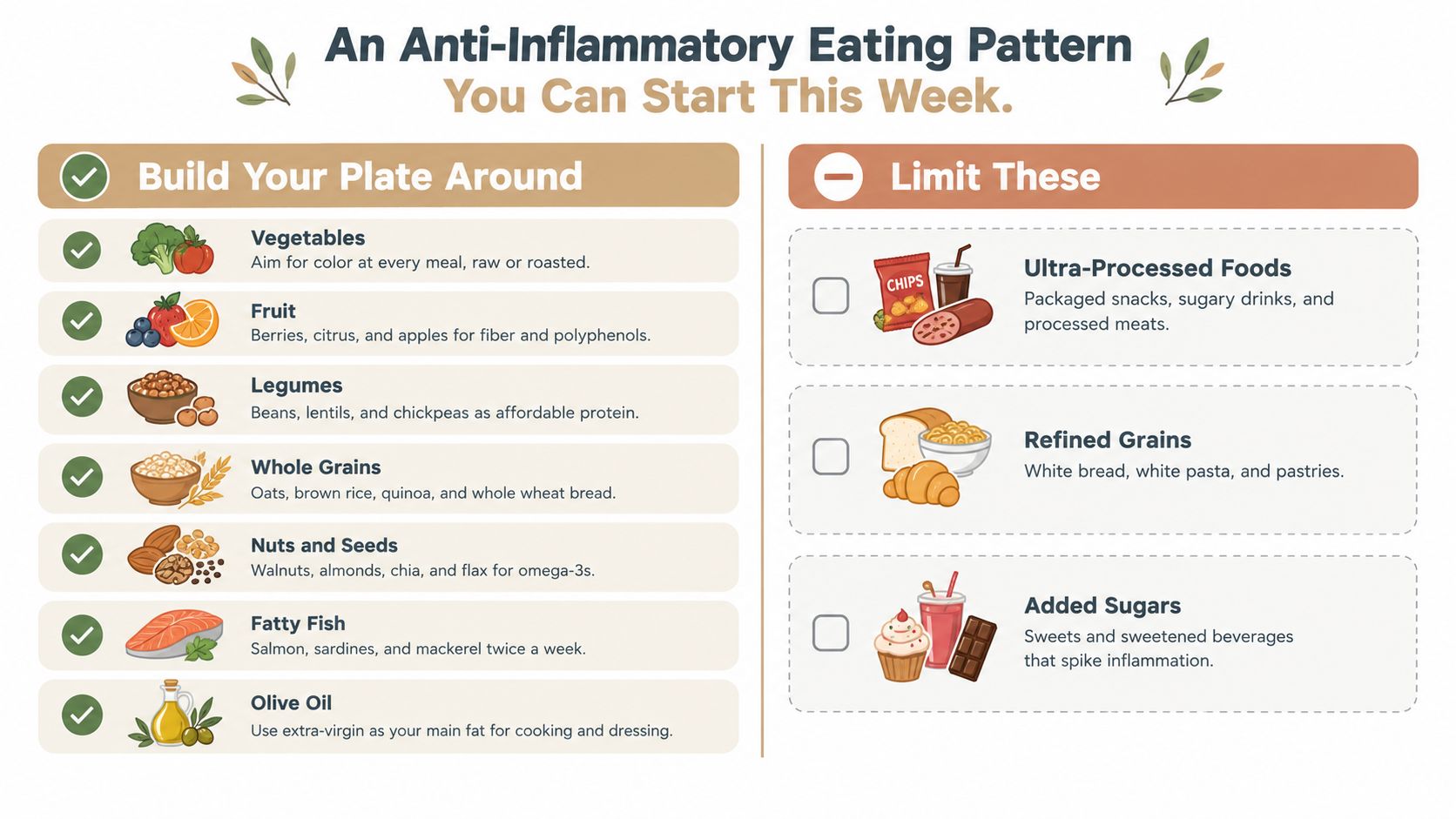
Start by adding foods rather than creating a complicated restriction plan. You might include a serving of fatty fish three times weekly, a half-cup of legumes daily, and leafy greens at two meals. If those changes are unrealistic, use canned fish with low-sodium options, frozen vegetables, beans in a soup, or greens folded into an omelet.
A practical plate might contain:
The purpose is to support nutrient density, energy, and body composition. It isn't to guarantee that your back pain will disappear.
Replace a sugary drink at breakfast first. The following week, change an afternoon packaged snack. Then prepare a batch of legumes or whole grains that can serve as a base for several meals. Gradual swaps make it easier to identify what you can maintain and prevent an overly restrictive plan from undermining rehabilitation.
For meal ideas that turn these principles into a grocery plan, use these recipes and shopping lists as a practical starting point. You can adapt the ingredients to allergies, budget, cultural preferences, and medical needs.
Track outcomes beyond pain. Waist circumference, daily energy, ease of climbing stairs, walking tolerance, sleep quality, and exercise participation can tell you whether the pattern is helping your broader recovery. Pain may fluctuate for reasons unrelated to food, so don't judge an entire dietary approach from one difficult day.
A measured deficiency and a “back pain supplement” are not the same thing. Correcting inadequate vitamin D or B12 may be clinically sensible when testing confirms a problem, but taking a product because it is marketed for spinal pain is a different decision.
A systematic review that screened 3,534 articles and included eight clinical trials found very-low-quality evidence that vitamin D was no more effective than placebo, no treatment, or other conservative or pharmacological interventions for low back pain. For continuous pain scores on a 0 to 100 scale, the pooled mean difference was -2.65, with a 95% confidence interval from -10.42 to 5.12 and p = 0.504, based on five studies. The vitamin D review doesn't support routine vitamin D supplementation as a stand-alone treatment.
Older adults, people with darker skin or limited sun exposure, and people with persistent fatigue or poor wound healing may have reasons to discuss vitamin D testing with a clinician. People who take metformin or follow a plant-based eating pattern may also need to discuss B12 assessment. Kidney disease, liver disease, pregnancy, medication use, and a history of disordered eating can change the safety of a nutrition or supplement plan.
Evidence for magnesium, omega-3, curcumin, and collagen in spine-specific pain remains mixed. A 2025 scoping review found relatively stronger support for vitamin D and B-vitamin interventions than for some other nutritional strategies, but the findings conflicted, including studies in which vitamin D offered no advantage over placebo. The scoping review describes why inconsistent designs, small samples, different populations, and nonuniform outcomes limit confident recommendations.
| Supplement | Proposed mechanism | Evidence for back pain | Clinical takeaway |
|---|---|---|---|
| Vitamin D | Bone and muscle support | Very-low-quality evidence, with no reliable stand-alone pain benefit | Test and correct a deficiency when clinically indicated |
| Vitamin B12 | Nerve and blood-cell function | Spine-specific findings remain inconsistent | Consider testing when risk factors or symptoms exist |
| Magnesium | Muscle and nerve function | Mixed results in spinal pain | Prefer food sources unless a clinician identifies a need |
| Omega-3 | Inflammatory signaling support | Mixed spine-specific evidence | Food-first use is reasonable, but don't replace care |
| Curcumin or collagen | Inflammation or connective-tissue support | Insufficiently consistent for routine back-pain treatment | Review interactions and expectations before use |
For a food-first discussion of magnesium, see this whole-food magnesium resource. Review every supplement with a qualified provider, especially if you take anticoagulants, diabetes medication, pain medication, or other prescriptions. Targeted testing also gives you a way to monitor whether correction is working instead of guessing.
A realistic plan for an adult with nonspecific spinal pain doesn't need unusual ingredients or a perfect schedule. It needs meals that provide protein and fiber, enough energy for rehabilitation, and portions that match the person's activity and weight-management goals.
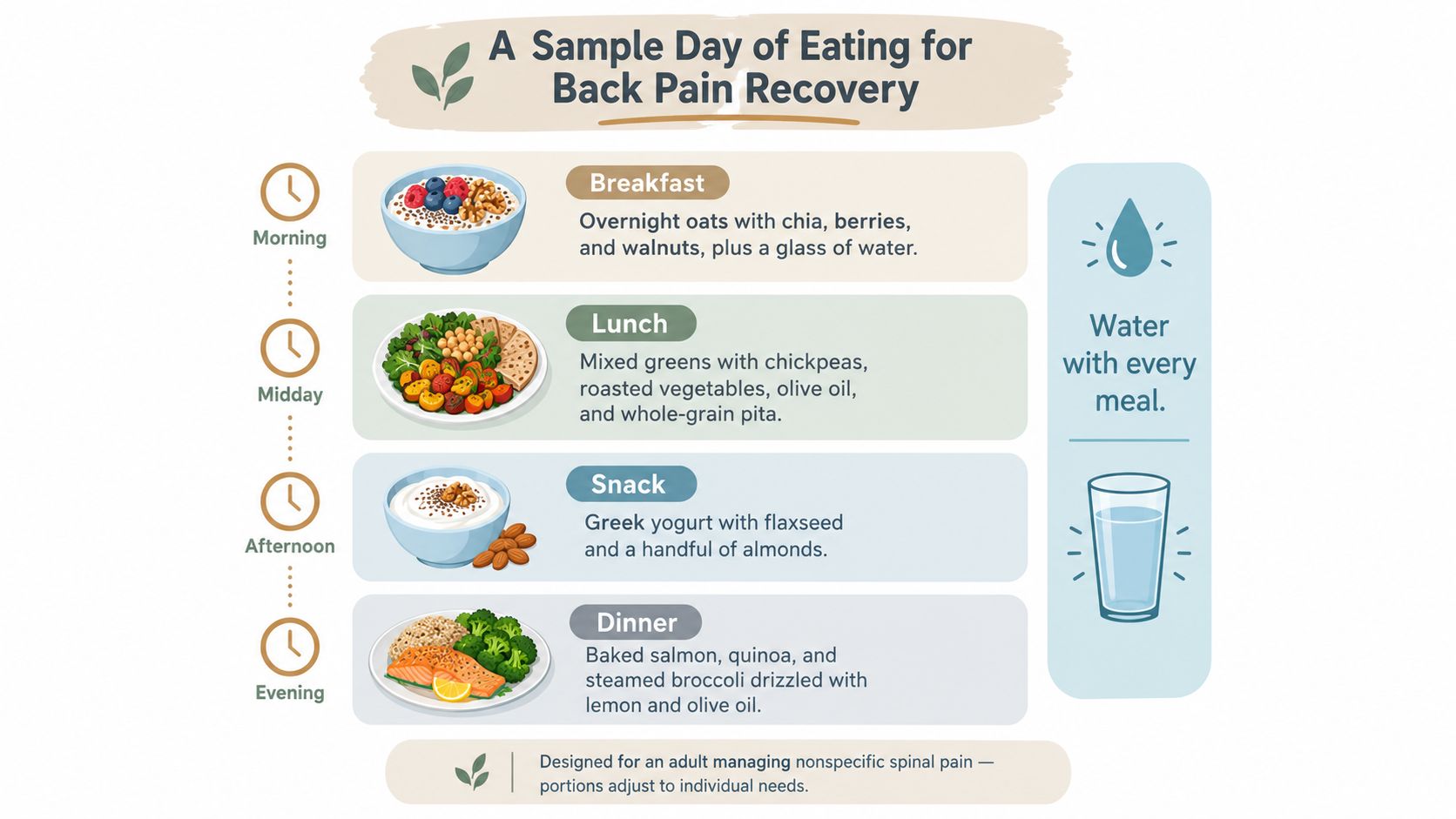
Breakfast could be overnight oats with chia, berries, and walnuts, alongside water. This combination offers a practical mix of whole-grain carbohydrate, fruit, seeds, and plant-based fats. If caffeine is part of your routine, keep it moderate and avoid using it to replace breakfast or sleep.
Lunch might be a bowl of mixed greens, chickpeas, roasted vegetables, olive oil, and whole-grain pita. Alternatively, grilled salmon and quinoa can serve as the protein and grain base. Prepare extra vegetables and grains so lunch can become dinner or the next day's meal without requiring another cooking session.
An afternoon snack could be plain Greek yogurt with flaxseed and a handful of almonds. Portion size matters here because nutrient-dense foods still contain energy. The right serving depends on your body, activity, appetite, and goals, not on a universal back-pain prescription.
Dinner could be baked salmon, quinoa, and steamed broccoli with lemon and olive oil, or lentil stew over brown rice with a mixed-green side. Water with meals supports normal hydration, while alcohol is best limited because it can displace nutrient-dense choices and interfere with sleep or recovery. Leftovers make the plan easier to follow for two days and reduce reliance on packaged convenience foods.
A useful protein-focused recovery guide can help you think about protein distribution without turning a sample menu into a rigid prescription. The point is repeatability, not dietary perfection.
Diet is an adjunct to back-pain care, not a treatment for a spinal diagnosis. Nutrition coaching is most useful when it shares goals with the chiropractor, physical therapist, rehabilitation specialist, and other practitioners. A nutrition-trained practitioner can review food intake, weight trajectory, meal timing, medical history, and possible deficiencies while the clinical team assesses diagnosis, symptoms, and functional limits.
A coordinated plan names who monitors each goal. Pain, weight, walking tolerance, lifting capacity, mobility, sleep, and exercise adherence may involve different professionals. Clear ownership prevents separate recommendations from competing or leaving gaps.
The workflow should connect nutrition decisions to measurable rehabilitation tasks:
At Aspen Falls Wellness, nutrition coaching can support different parts of the plan without making every service a nutrition intervention. Weight-management goals can be reviewed alongside Mobility Therapy milestones, while adequate intake may help a patient participate in Rehabilitation Exercise or follow Personal Exercise Plans consistently. Acupuncture, SoftWave Therapy, MLS Laser Therapy, and Muscle Stimulation address other clinical aims. Their use depends on the examination, treatment goals, and patient tolerance.
The plan may also include Sciatica Treatment, Pain Relief strategies, Realignment, Decompression, Golf Movement Screening, or Car Accident Treatment when those needs apply. Nutrition coaching does not replace these interventions. It gives the team another way to address weight, meal structure, nutrient adequacy, and recovery habits while mechanical care and rehabilitation are monitored. Progress should be reviewed together rather than judged by pain or diet changes alone.
Diet can support back-pain care through diet quality, weight management, nutrient adequacy, and general recovery capacity. It can't reliably cure a structural spinal problem, and the evidence doesn't support one universal diet or routine supplement stack.
Improve the quality of your meals, correct verified deficiencies, and pair those changes with movement and appropriate clinical care. Exercise, rehabilitation, manual therapy, acupuncture, spinal mobilization, and other nonpharmacologic approaches are part of guideline-supported care for chronic low back pain. The American College of Physicians guideline recommends initially selecting nonpharmacologic options for chronic cases, while the VA/DoD guideline supports clinician-directed exercise and multimodal care.
A consistent trial of four to eight weeks gives you time to observe adherence, energy, sleep, weight trend, and function. Don't use that period to delay assessment of severe, persistent, or neurologic symptoms.
Depending on your history, ask a clinician whether 25-hydroxy vitamin D, B12, fasting glucose, or a lipid panel is appropriate. Testing should reflect symptoms, risk factors, medication use, and weight-related concerns rather than a generic supplement checklist.
Dietary improvement generally doesn't require imaging. Acute pain, progressive symptoms, significant trauma, persistent radiating pain, or neurological findings may require clinical assessment and, when indicated, imaging or referral. Changing meals shouldn't postpone that evaluation.
Track pain scores alongside walking tolerance, lifting ability, sleep, energy, exercise participation, body weight, and flare frequency. Avoid attributing every improvement or setback to food because manual therapy, rehabilitation, natural recovery, stress, and sleep can change at the same time.
Seek prompt clinical evaluation for progressive weakness, bowel or bladder changes, saddle numbness, or unexplained weight loss. Dietary experimentation should never delay assessment of those warning signs.
Aspen Falls Wellness can combine nutrition counseling with chiropractic care, spinal decompression, rehabilitation exercise, mobility therapy, massage, acupuncture, and other non-surgical services based on your examination and goals. Visit Aspen Falls Wellness to request an evaluation for a coordinated plan that addresses both your daily habits and your musculoskeletal condition.

Stay updated with the latest chiropractic news and exclusive offers.