Looking for integrative manual therapy near me? Learn what it is, who it helps, and how to find the right local provider in Salt Lake City and Sandy.
You're probably not searching for integrative manual therapy because you're casually browsing wellness options. You're searching because something hasn't settled down. Your neck still locks up by afternoon. Your low back keeps flaring when you sit, lift, or sleep wrong. You've rested, stretched, maybe taken over-the-counter pain relief, and the problem keeps returning.
That's usually the moment behind a search for Integrative Manual Therapy Near Me. It isn't a directory question first. It's a trust question. Who can look at the whole pattern, not just the sore spot, and give you a plan that makes sense?
A lot of local clinics use similar language. They mention adjustment, massage therapy, acupuncture, decompression, mobility therapy, rehabilitation exercise, and pain relief. What matters is whether those pieces are connected. If you're comparing local options in Salt Lake City or Sandy, the useful question isn't just who is close. It's who can build one coordinated care model around your problem, your schedule, and your goals.
At some point, many people end up at the kitchen table late at night, phone in hand, after another bad stretch of sleep. Maybe the neck stiffness has been hanging around for months. Maybe the low back pain is now affecting how you drive, work, or pick up a child. Your primary care visit may have ruled out something alarming, but you still didn't leave with a practical roadmap.
That's when a local search starts to matter.
You're no longer asking, “What is manual therapy?” You're asking better questions. Who will examine me? Will they explain what they think is happening? Will they just treat the painful area, or will they look at movement, posture, nerve irritation, work demands, and recovery habits too?
For many people in Utah, distance still matters because pain changes what “convenient” means. A clinic can look close on a map and still be a poor fit if every visit feels fragmented. If you're trying to compare neighborhood access with continuity of care, it helps to look at a local page such as Salt Lake City care options and then ask what happens inside the visit, not just where the building sits.
A useful local search doesn't end with “near me.” It starts there.
Low back pain is a major reason people seek hands-on conservative care. The World Health Organization reported that in 2020 about 619 million people, roughly 1 in 13 worldwide, were living with low back pain, and that represented a 60% increase from 1990 in the same evidence base on global burden and disability (WHO summary in this review). That doesn't tell you which clinic to choose. It does tell you your problem is common, persistent, and worth evaluating carefully instead of bouncing from one isolated treatment to another.
The phrase sounds technical, but it becomes clearer if you pull it apart.
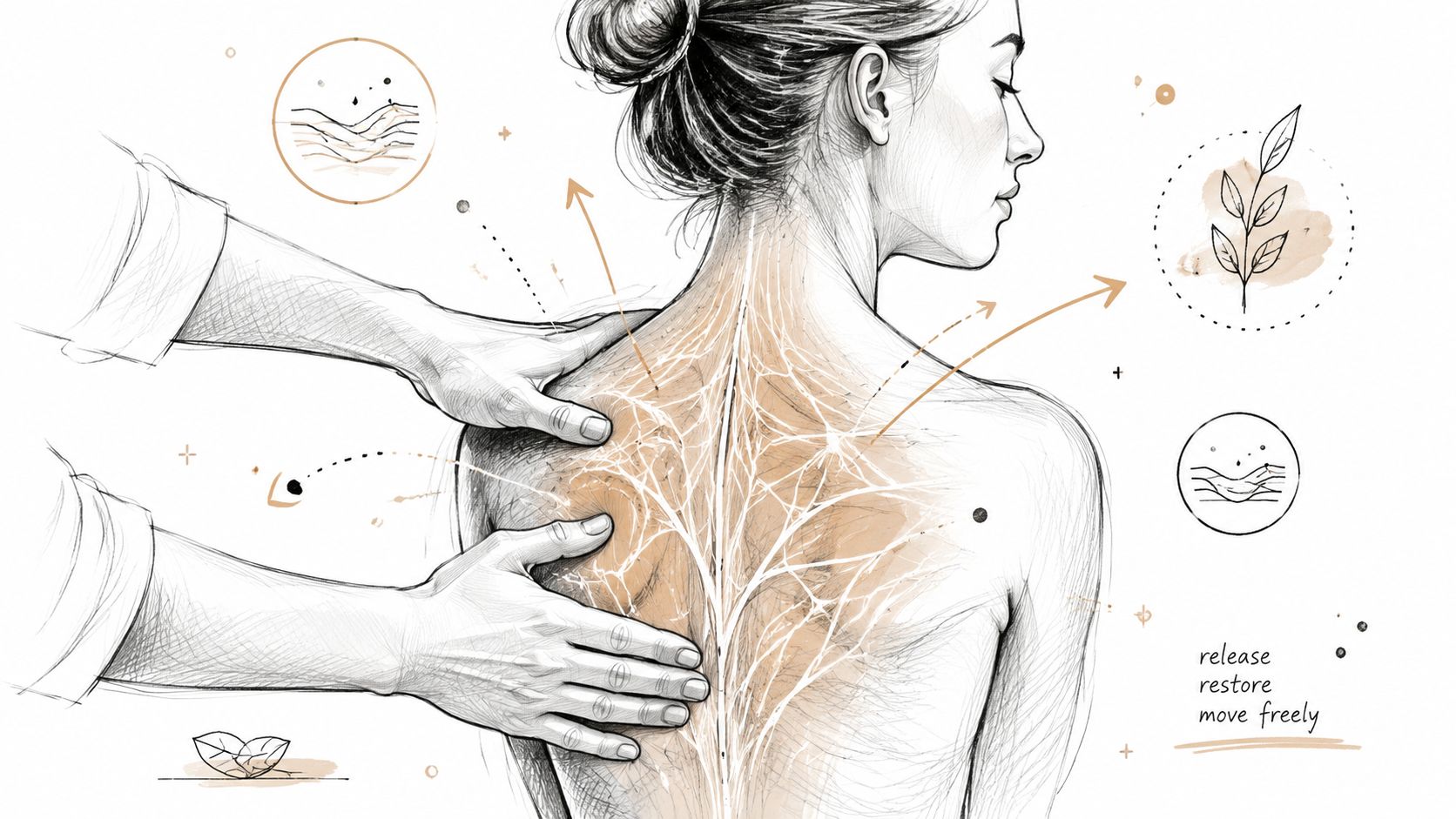
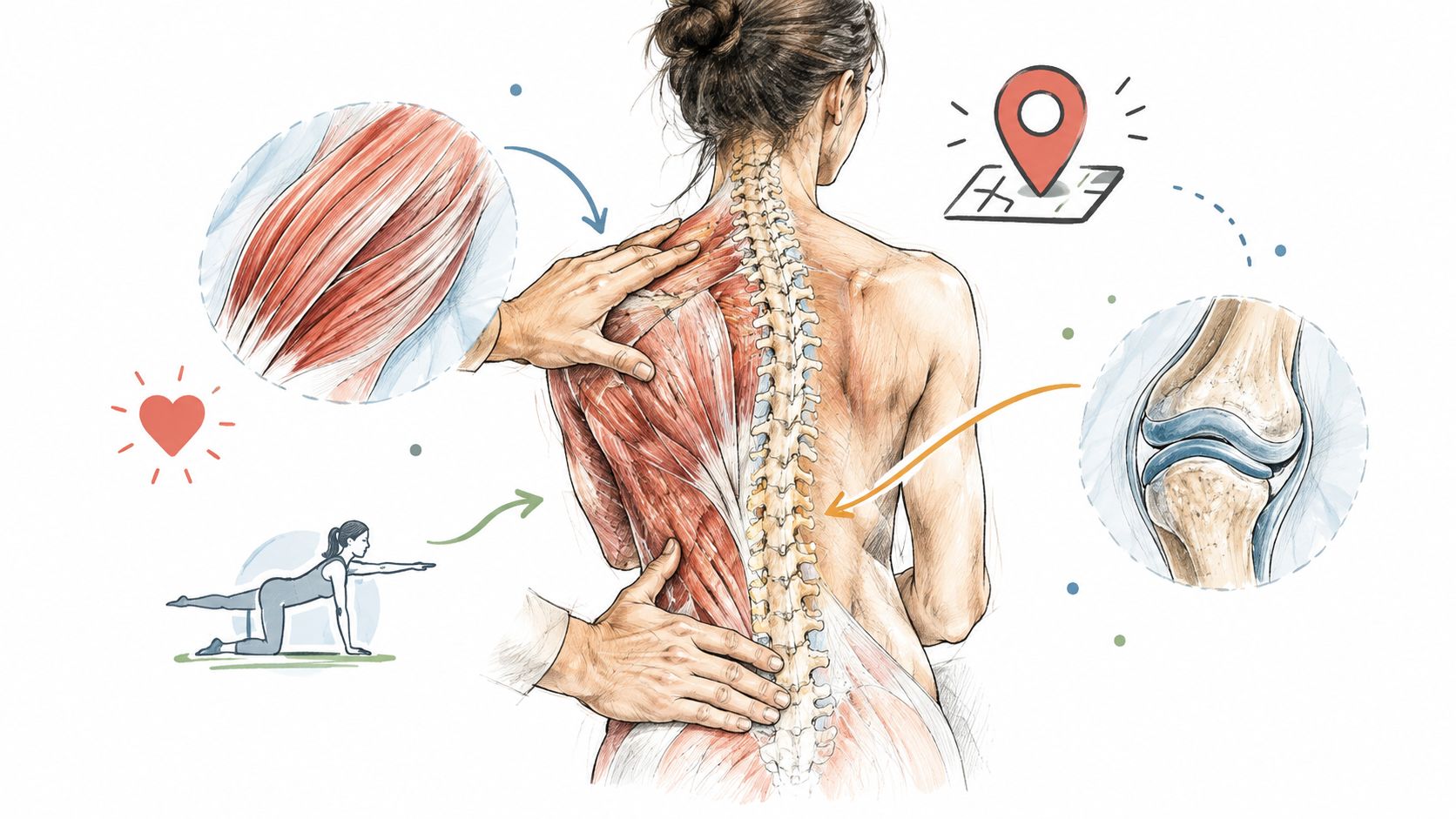
Manual therapy means a clinician uses skilled hands-on methods to assess and treat muscles, joints, and surrounding soft tissue. That can include a chiropractic adjustment, joint mobilization, soft-tissue treatment, myofascial release, or guided movement done with the provider's help.
Integrative means those methods aren't used in isolation. They're coordinated with other parts of care so each part supports the next one.
Think of treatment like a sports team with one game plan.
If one person works on tight tissue, another improves joint motion, and another teaches the right exercise progression, those efforts should fit together. The soft tissue work should make the exercise easier to perform. The exercise should help hold onto the new range of motion. If decompression is used for disc-related pain, the rest of the visit should support what that treatment is trying to accomplish, not ignore it.
That's different from a clinic that offers a menu of services.
A multi-service clinic might have massage therapy, acupuncture, chiropractic care, muscle stimulation, mobility therapy, and rehabilitation exercise under one roof. But if each service runs on a separate script, you're getting several treatments, not one integrated plan.
A real integrated model usually includes:
Once that framework is clear, the clinical terms are easier to understand. Neuromuscular re-education means helping your body relearn a movement pattern. Myofascial release means hands-on work directed at fascial restrictions. If you want a patient-friendly explanation of that concept, this overview of myofascial release therapy is a good starting point. Spinal decompression refers to a non-surgical approach used in some disc-related cases to reduce mechanical pressure and improve tolerance for movement.
Practical rule: If a clinic can't explain why each treatment is being combined with the others, it's not really integrated.
This approach tends to help people whose pain isn't just about one irritated spot, but about a pattern involving tissue restriction, joint stiffness, nerve sensitivity, poor load tolerance, or movement habits that keep re-triggering symptoms.
A desk worker with chronic neck and upper-back tension often has more than “tight muscles.” The problem may involve stiff thoracic joints, overworked upper trapezius muscles, reduced neck endurance, and a workstation setup that keeps the cycle going. In that case, hands-on care can reduce guarding, but the longer-term gain often depends on posture retraining, mobility therapy, and simple rehabilitation exercise.
A person recovering from a car accident may have whiplash, headaches, and a neck that feels both stiff and unstable. For neck pain and whiplash-associated disorders, a multidisciplinary guideline states that a multimodal approach combining manual therapy, self-management advice, and exercise is effective for recent-onset and persistent cases, and for recent-onset whiplash grades I to III it specifically suggests multimodal care over education alone (multidisciplinary guideline summary).
An athlete with a recurring hamstring, hip, or low back strain usually needs more than symptom relief. Repeated strains often point to a movement-pattern issue. Manual treatment may calm the irritated area, but a golf movement screening, mobility therapy, or corrective exercise often matters just as much because the body has to absorb force differently when training resumes.
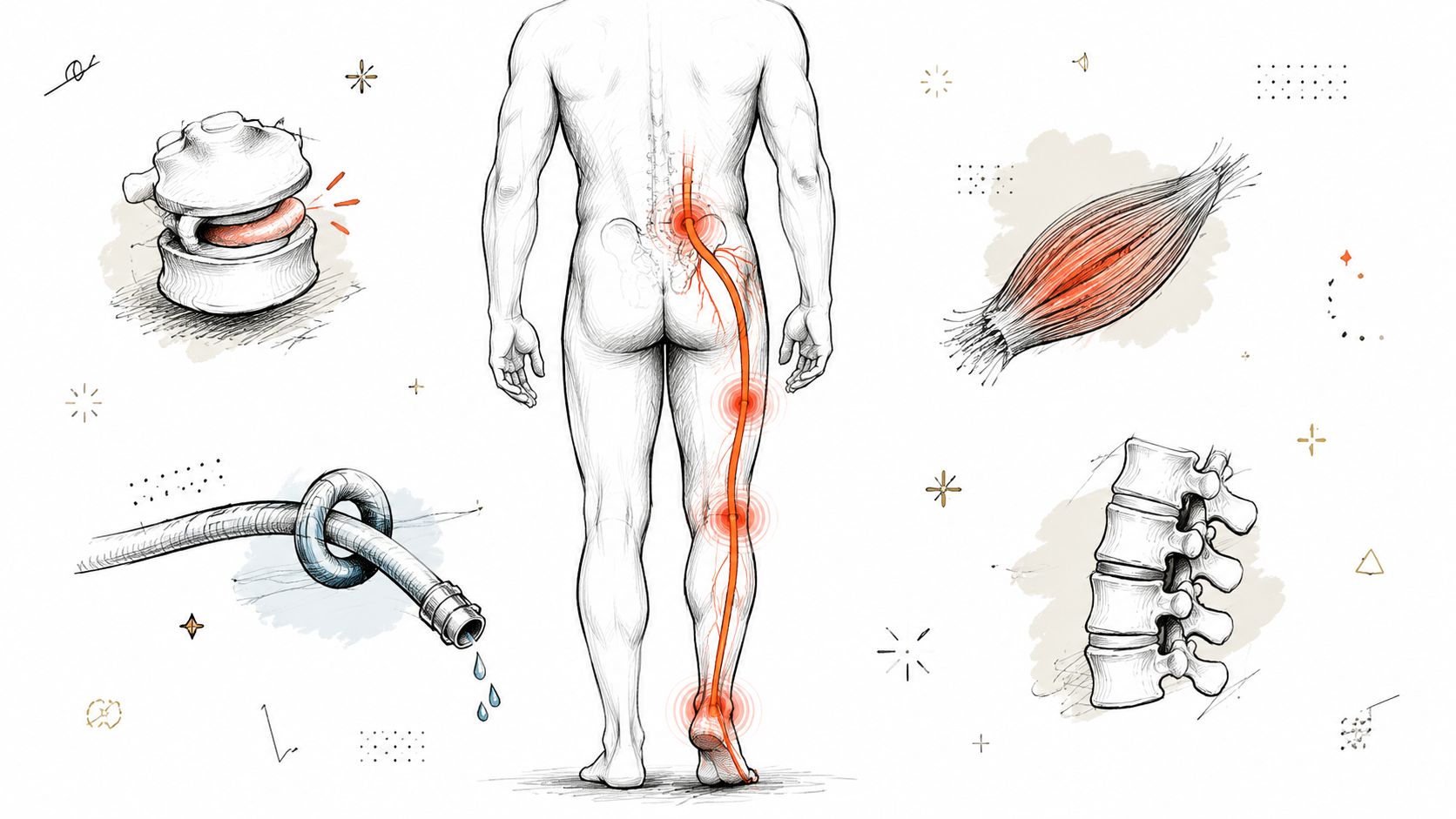
An older adult with disc degeneration or sciatica may need a more careful mechanical approach. If sitting, bending, or leg pain suggest nerve irritation, providers may consider decompression, realignment strategies, soft tissue treatment, and gradual exercise to improve tolerance without pushing too hard too soon.
The evidence is strongest when manual therapy supports a broader plan rather than trying to do the whole job alone. A systematic review reported that adding manual therapy to exercise improved short-term pain, function, and disability more than exercise alone in most included studies, while a later review of 5 randomized trials with 260 participants found no significant extra short-term pain reduction versus exercise alone but did find meaningful disability improvement at short- and long-term follow-up (systematic review summary).
That fits what patients often feel in practice. Hands-on care can create an opening. Exercise helps keep it.
If joint irritation is part of your picture, resources on navigating arthritis discomfort can also help you think more clearly about daily load management, flare patterns, and what kind of movement support to ask for during treatment.
Some situations need medical referral before conservative treatment becomes the main focus.
A good visit has a rhythm to it. It doesn't feel rushed, and it doesn't feel random.
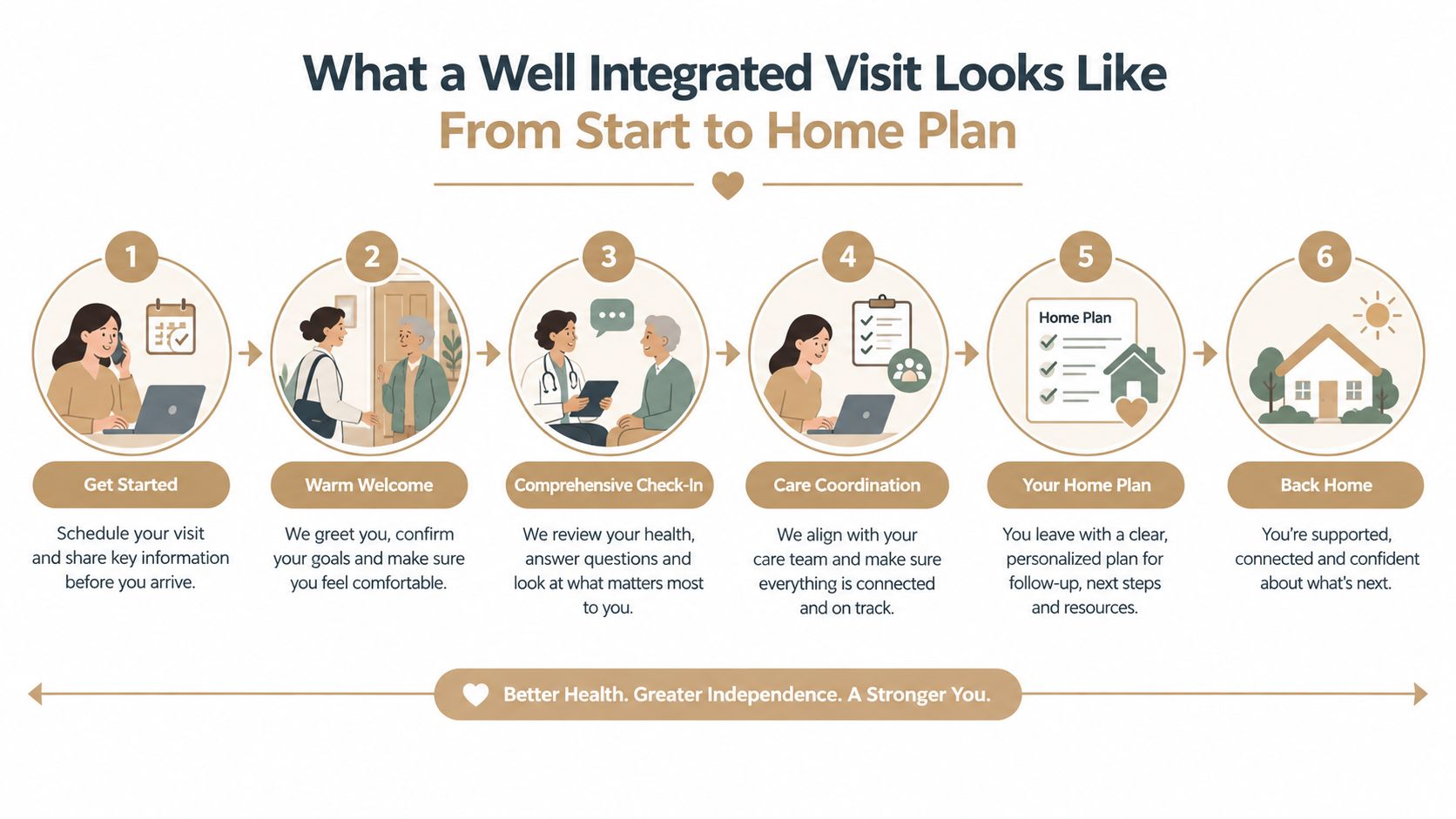
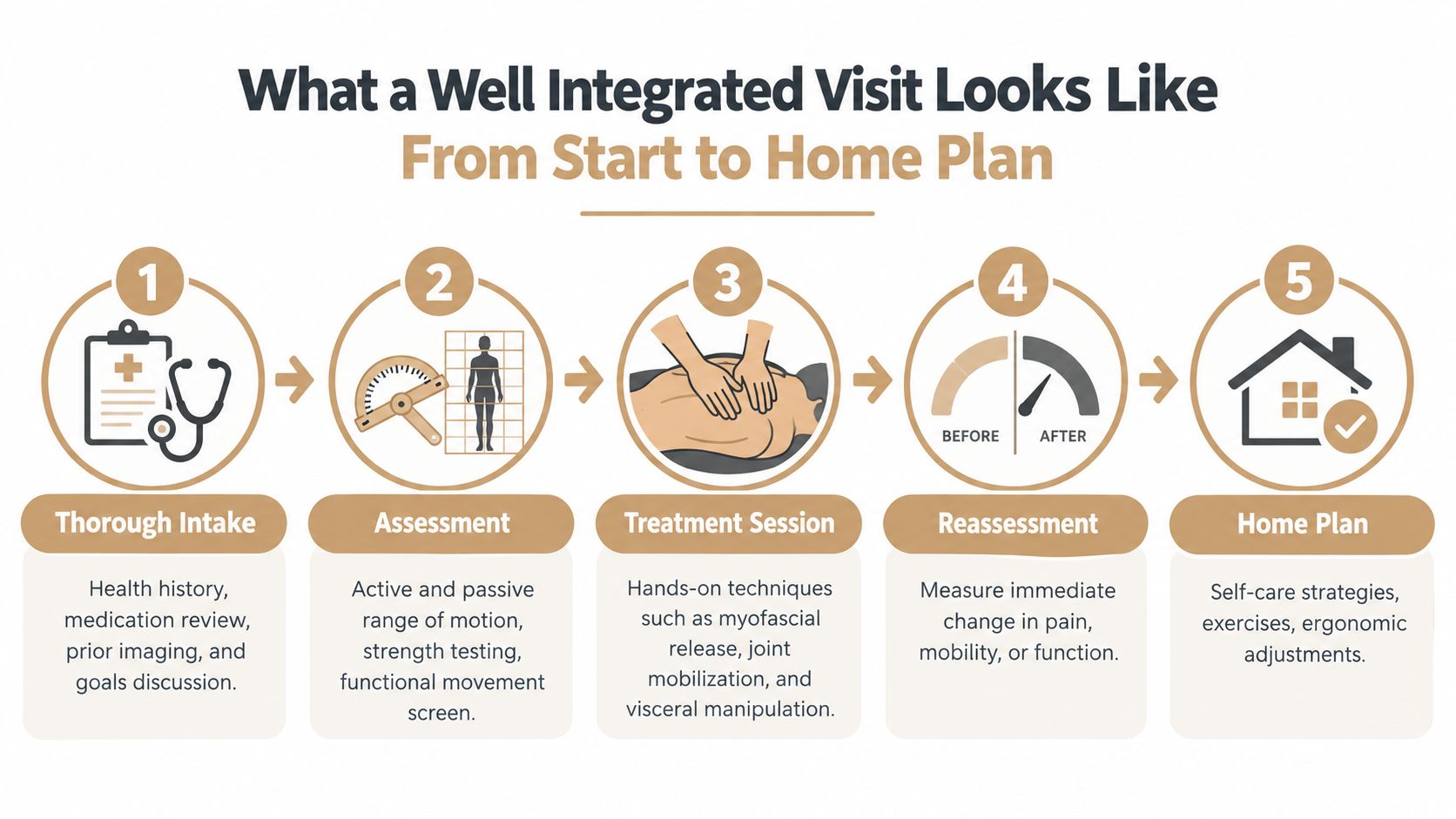
The first part should be a real intake. That means health history, current medications, prior treatment, past imaging if you have it, symptom behavior, and goals. “My back hurts” isn't enough detail for a thoughtful plan. The provider should want to know what makes it worse, what eases it, and which daily tasks you're protecting or avoiding.
Then comes the physical exam. Depending on your complaint, that may include posture, active and passive range of motion, strength testing, orthopedic testing, neurological checks, walking or functional movement review, and palpation of tissue and joint motion.
The key question isn't whether the clinic offers many services. It's whether today's choices make sense based on the exam.
One person may need soft tissue work before a chiropractic adjustment because guarding is limiting motion. Another may need spinal decompression or decompression-focused care because disc-related symptoms worsen with compression. Someone else may respond better to acupuncture, massage therapy, mobility therapy, or muscle stimulation as part of a broader pain relief plan.
Good providers explain findings in plain language before they start layering on treatment.
That explanation should include a working diagnosis, the reason for each treatment used that day, and what kind of short-term response is expected over the next day or two.
You should leave with more than temporary relief.
A strong visit ends with a written or clearly taught plan that covers home exercises, activity modification, ergonomic changes if relevant, and how progress will be reviewed next time. If you want an example of how a clinic frames that kind of individualized roadmap, this page on personalized treatment plans shows the kind of patient education worth looking for.
For chronic low back pain, manual therapy can help in the short term, but those gains may diminish over time. An umbrella review pooling 21 systematic reviews and 35,711 participants found short-term pain improvement of about 10.5 points on a 0 to 100 scale and disability improvement with a moderate effect size, while noting that benefits faded over time (umbrella review details). That's one reason the home plan matters so much. The visit should change what you do between visits, not just what happens on the table.
A local clinic can sound impressive online and still leave big gaps in actual care. The easiest way to protect yourself is to evaluate the model, not the marketing.
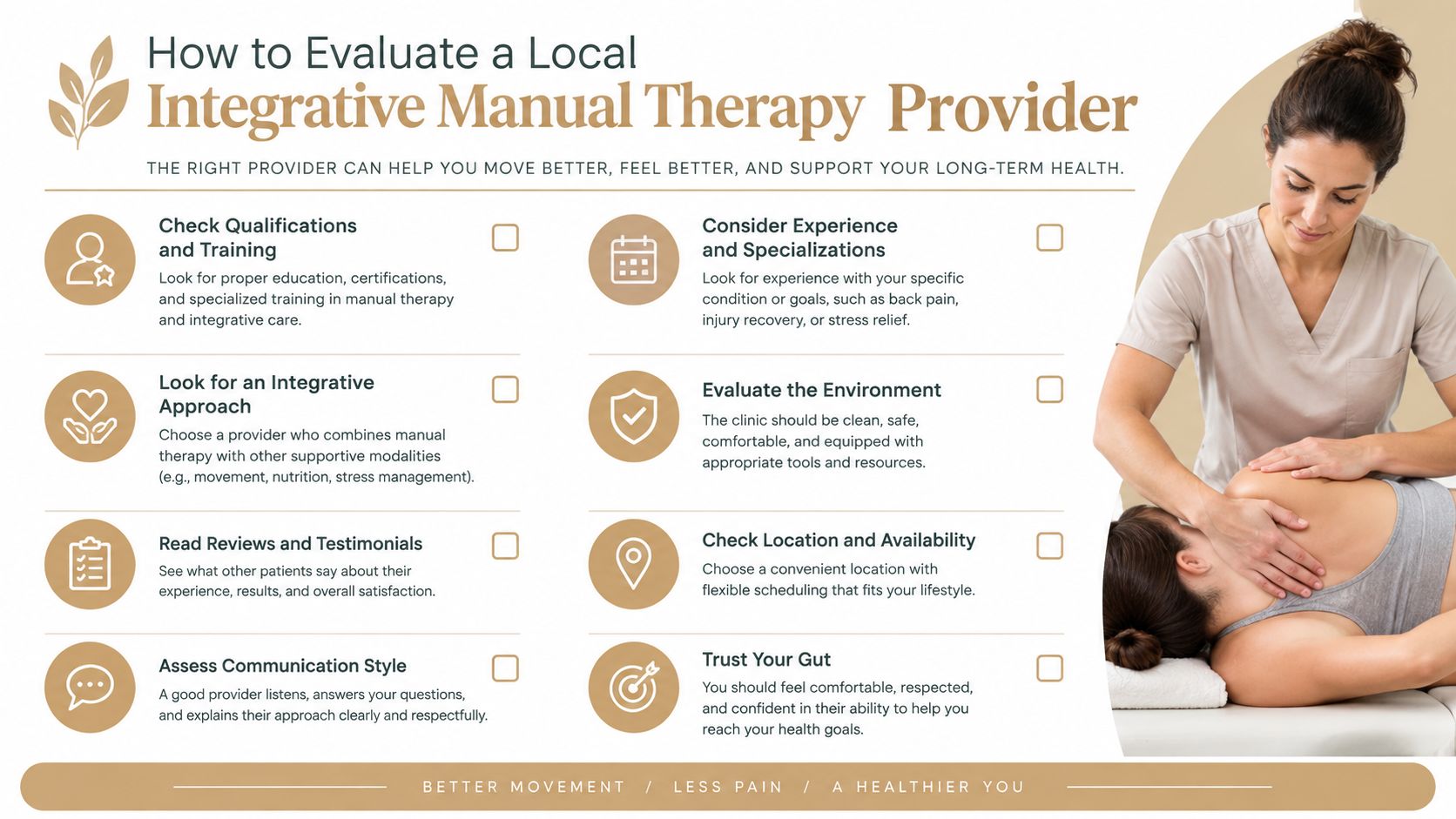
| What to check | Why it matters |
|---|---|
| Licensed provider status | You want someone practicing within a defined clinical scope and accountable to professional standards. |
| Condition-specific experience | A provider who commonly sees sciatica, whiplash, disc pain, or sports strains is more likely to spot patterns quickly. |
| Integrated services under one plan | Manual care, corrective exercise, acupuncture, massage, nutrition counseling, or decompression should work together when needed. |
| Reassessment habits | Progress should be checked with function, symptoms, and exam findings, not assumed. |
| Equipment and setup | Clean rooms, organized flow, and condition-appropriate tools matter because they shape treatment quality and comfort. |
| Imaging and referral judgment | Clinics should know when to request imaging or send you out for medical evaluation. |
| Cost and coverage clarity | You shouldn't have to guess about billing, visit expectations, or coverage questions. |
| Between-visit communication | Patients do better when they can clarify flare-ups, exercise questions, or scheduling issues. |
Ask a few direct questions before your first appointment.
Independent guidance on manual therapy points out that coverage varies, public insurance may not cover it in some systems, extended-health plans may cover chiropractic, physiotherapy, or massage, and treatment dose should be individualized with an initial brief trial followed by reevaluation rather than assuming endless visits are necessary (manual therapy guidance).
If a clinic can explain when not to continue treatment, that usually signals better judgment than a clinic that only talks about starting care.
One practical example is Aspen Falls Wellness, which uses a coordinated in-house model that can include chiropractic adjustment, DRX 9000 spinal decompression, massage therapy, acupuncture, rehabilitation exercise, mobility therapy, SoftWave Therapy, MLS Laser Therapy, nutrition counseling, and car accident treatment under one chart when clinically appropriate. That doesn't make it the automatic fit for everyone. It does match the kind of integrated structure many patients are trying to find when they search locally.
A coordinated plan becomes easier to understand when you put it into real patient situations.
Start with a person whose lumbar disc injury makes sitting miserable and lifting unpredictable. The first task is to figure out whether the pattern fits disc-related irritation, mechanical joint restriction, muscular guarding, or a mix of all three. If the exam supports a conservative mechanical plan, care may combine spinal decompression with the DRX 9000, decompression-focused positioning, chiropractic adjustment when tolerated, and gradual rehabilitation exercise aimed at restoring movement confidence without provoking symptoms.
That kind of case also needs restraint. Coverage policies for spinal decompression surgery commonly require objective imaging evidence and a conservative-care trial. One payer policy says radicular pain must persist despite 6 weeks of at least one conservative treatment before decompression surgery is covered, and another requires imaging-confirmed neural compression correlating with symptoms (coverage policy example). In plain terms, conservative care often sits in the right part of the decision pathway before surgery is even considered.
Now take someone after a motor vehicle collision. Their neck hurts, they're getting headaches, and they feel “off” turning the head. An integrated plan might start with a careful accident history, neurological screening, and documentation, then combine gentle manual care, massage therapy, mobility therapy, and reactivation of deep neck stabilizers through supervised exercise. The benefit for the patient is continuity. One team tracks symptom behavior instead of sending the person from office to office.
For an athlete returning after a strain, the clinic may sequence soft tissue treatment, mobility therapy, muscle stimulation where appropriate, golf movement screening for rotational demands, and a personal exercise plan that rebuilds capacity in stages. For an older adult trying to preserve independence, the mix may shift toward pain relief, joint mobility, balance-supportive movement, nutritional counseling, and home exercises simple enough to repeat consistently.
The practical advantage of having this kind of system in both Salt Lake City and Sandy is continuity. Patients can choose the site that fits work, family, or commute demands without feeling like they're changing treatment philosophies. What they're looking for is one chart, one logic, and one care plan that evolves with the response.
By the time you're ready to book, the most useful question usually isn't “Which clinic is closest?” It's “Whose care model fits my problem and my life?”
A little preparation changes the quality of the first visit.
Bring a brief symptom timeline. Write down when the problem started, what it feels like, what makes it worse, and what you've already tried. Gather prior imaging reports if you have them. List medications and supplements. Then write the three functional goals you care most about, such as sleeping through the night, driving without pain, returning to golf, working a full day at a desk, or lifting safely.
You should expect:
Bring questions to the front desk and to the clinician. The answers should sound specific, calm, and consistent.
Useful prompts include asking who designs the plan, how home exercises are taught, what happens if symptoms plateau, whether records can be transferred in advance, and whether your preferred location in Salt Lake City or Sandy affects continuity.
Acupuncture may also be part of the conversation for some pain patterns. The American College of Physicians guideline for chronic low back pain lists acupuncture, spinal manipulation, exercise, and multidisciplinary rehabilitation as first-line options, and also includes low-level laser therapy among recommended nonpharmacologic treatments (ACP guideline summary). A separate low back pain guideline recommends acupuncture as a short-term therapy or adjunct to active rehabilitation and reported no serious adverse events, with minor adverse events occurring in 5% of cases in the underlying trials (clinical practice guideline.pdf)). That's useful context when you're deciding whether an integrated clinic's treatment mix matches your preferences.
Call before you go. Confirm the services relevant to your condition, ask whether prior records should be sent ahead of time, and choose an appointment slot that leaves room for a real conversation. The best first visit rarely happens when you're trying to squeeze it between meetings.
Aspen Falls Wellness provides coordinated chiropractic and integrative musculoskeletal care in Salt Lake City and Sandy, including chiropractic adjustment, massage therapy, acupuncture, rehabilitation exercise, mobility therapy, SoftWave Therapy, MLS Laser Therapy, and DRX 9000 spinal decompression for appropriate cases. If you're looking for more than a nearby office and want a care model that connects hands-on treatment with reassessment and a home plan, visit Aspen Falls Wellness to review services and choose the location that fits your routine.

Stay updated with the latest chiropractic news and exclusive offers.