Learn how a donut chair cushion works, who it actually helps, key selection criteria, and when to seek integrative care at Aspen Falls Wellness.



Most advice treats a donut chair cushion like a universal comfort fix. It isn't. The shape can help in a narrow set of sitting problems, but it can also make the wrong problem worse, especially when people use it for long hours, on a soft seat, or for conditions it wasn't meant to treat.
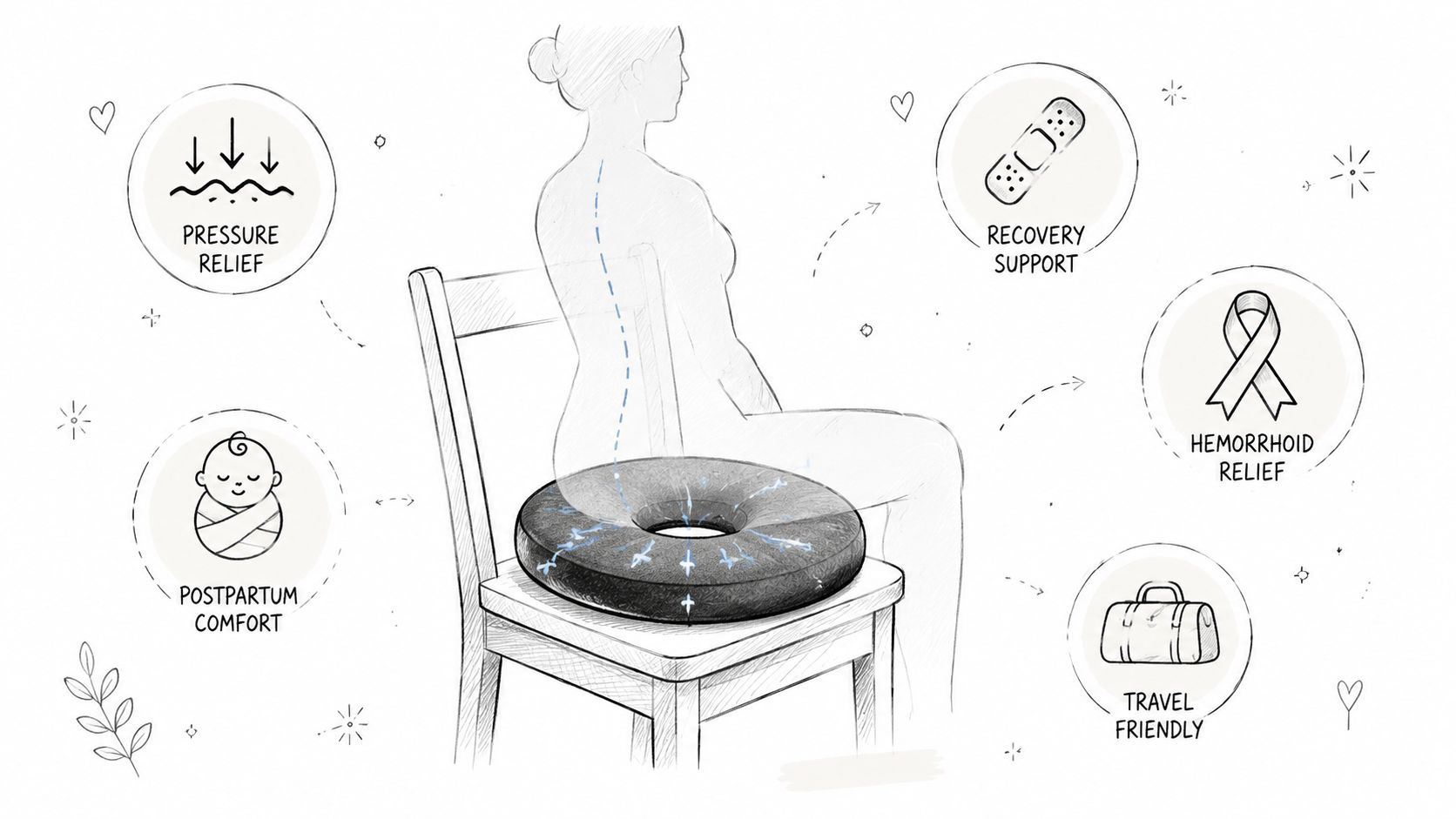
A better way to think about it is simple. A donut cushion is a pressure-redistribution device with a central hollow, not just a softer pad. That hole is the whole point. It suspends the most pressure-sensitive area while the surrounding ring takes the load, which is very different from an ordinary cushion that mainly adds padding.
The idea isn't new. Ring-shaped medical cushions appeared in the 19th century, and the design logic was already moving toward medium or slightly firm support by the late 1800s, because too much softness can compress the wrong tissues instead of relieving them. That early thinking still explains why the donut form survives today, even if the marketing around it often gets ahead of the evidence.

A donut cushion is easiest to understand if you stop calling it a comfort pillow and start calling it a load-shifting seat aid. The defining feature is the central aperture, the open middle that leaves the most sensitive area with less direct contact. Instead of pressing straight down through the center, your weight travels into the ring around the hole.
A soft pad and a donut cushion solve different problems. A soft pad spreads pressure by squishing under you, but a donut cushion uses geometry to create a pressure-relief zone in the middle. Think of sitting on a lifebuoy rather than on a pillow, the ring supports you, while the opening keeps pressure off the middle.
That distinction matters because the cushion's job isn't to make sitting plush. Its job is to suspend the pressure-sensitive area and redistribute force to the surrounding ring and thighs. In practical terms, the best cushion is the one that keeps the opening from collapsing under body weight, because once the center bottoms out, the pressure relief is gone.
Practical rule: if the cushion feels like a flat pad after a few minutes, it's no longer doing the thing you bought it for.
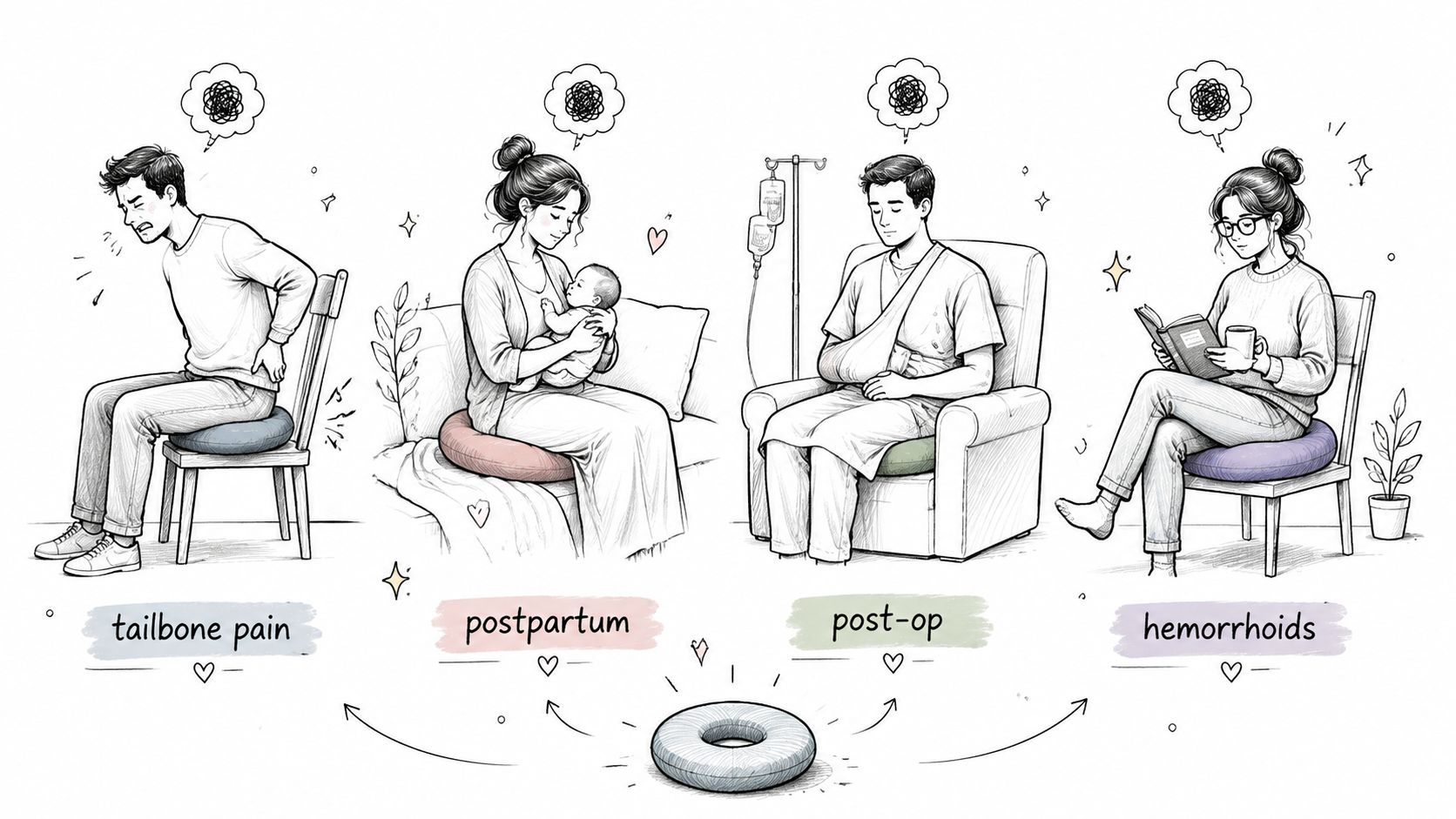
The cushion makes the most sense when you start with the pain pattern instead of the product label. A donut shape can help with tailbone pain, some forms of postpartum sitting discomfort, certain post-operative recovery periods, and a few short-term pressure problems where direct loading is the main issue. It is a weaker fit when the discomfort comes from swelling, bleeding, nerve irritation, or a posture problem that returns every time you sit.
For coccyx pain, the goal is simple. A randomized crossover study used a donut-shaped cushion with a 10 cm central opening and 35 cm width as a pressure-relief device, showing how the center can unload the sacrum while the ring carries the weight pressure-redistribution study. That is why a cushion with a stable perimeter and enough opening to clear the coccyx usually matters more than one that merely feels soft.
Post-operative sitting intolerance can follow the same logic when the painful area needs temporary unloading. The cushion does not heal tissue on its own, but it can make short sitting periods easier while a person follows the rest of the recovery plan. For pelvic floor context that helps people understand why sitting can feel so different after birth or surgery, Momotaro Apotheca pelvic floor tips is a useful plain-language read.
Readers often assume the same ring shape that helps tailbone pain should also help hemorrhoids. A hemorrhoid-specialist page argues otherwise and says donut cushions are not recommended in a hemorrhoid treatment plan hemorrhoid and cushion discussion. That difference matters because hemorrhoids and coccyx pain are not the same problem.
The reason is mechanical. A donut cushion can shift pressure into the outer ring, which may be a poor match for inflamed anorectal tissue. If the issue is rectal bleeding, thrombosis, or prolapsing hemorrhoids, the cushion is not a treatment, even if it feels briefly better while you sit.
A simple way to sort the patterns is to ask what changes the pain. If removing pressure from the center helps, a donut shape may fit. If the problem needs a different kind of support, the hole in the middle does not solve it.
A donut chair cushion looks reassuring because it removes pressure from the center, but seating does not work that way. If the shape is wrong for the pain pattern, or if the cushion bottoms out under body weight, the ring can push force into the edges instead of taking it away.
For pressure injury prevention, the main concern is edge loading. Guidance summarized by an independent source reports that the National Pressure Ulcer Advisory Panel recommends against donut-shaped devices because the ring can concentrate pressure around the opening, limit blood flow, and increase the chance of tissue damage and ulcers pressure injury guidance summary. A cushion that feels soft at first can still create a hard-to-see pressure pattern once a person settles into it.
That is why a donut cushion should not be treated as a default answer for long sitting. It may take pressure off one point, but it can shift more load to the outer ring, especially on a seat that already compresses too much.
The hemorrhoid question needs the same kind of mechanical caution, and the earlier discussion on hemorrhoid and cushion discussion covered why this shape is often a poor fit. A center hole does not automatically help anorectal pain, because the ring can still press on irritated tissue and may leave venous congestion worse rather than better.
The common failure pattern is easy to miss. Someone uses the cushion on a soft sofa or a sagging chair, the foam compresses, the pelvis drops deeper, and the pressure ends up concentrated on the ring. At that point the cushion behaves less like relief and more like a pressure band around the painful area.
Sitting tolerance matters too. A cushion that seems fine for a brief break can become a problem during a longer work session, because body size, chair geometry, and how much the cushion compresses all change the load. For broader context on how seat shape and posture interact, orthopedic chair support back helps connect cushioning with the chair itself.
Stop using it when: pain increases during the sitting session, numbness creeps in, or the cushion sinks so far that the opening no longer stays open.
The shape you choose should match the job. A donut cushion, a U-shaped coccyx cutout, a gel cushion, and an inflatable ring all promise comfort, but they don't behave the same way under real sitting loads. The best choice depends on whether you need short-term offloading, posture support, portability, or something that can hold up through longer sitting.
An ergonomic article makes the core distinction plainly, U-shaped coccyx cushions are usually the better default for tailbone pain and posture-related sitting discomfort, while donut cushions fit short, localized relief better donut versus coccyx comparison. That matches what many people feel in day-to-day use, because the U-shape can support the pelvis without creating a pressure ring around the center.
For broader back-support context, a simple seat-shape overview can help readers connect posture and cushioning without overcomplicating it, orthopedic chair support back. The main point is that posture and pressure are linked, but they're not identical problems.
| Cushion type | Pressure relief | Posture support | Portability | Best sitting duration |
|---|---|---|---|---|
| Donut | Strong for localized offloading | Limited | Good | Short bouts |
| Coccyx cutout | Strong for tailbone unloading | Better for many users | Good | Longer sits |
| Gel | Moderate, depends on build | Variable | Fair | Mixed use |
| Inflatable | Adjustable, but less stable | Limited | Excellent | Short to moderate |
If the problem is a sore tailbone after a car ride, a donut or coccyx cutout may both make sense. If the problem is all-day desk work, the U-shaped option usually deserves more attention because it gives support without putting so much emphasis on a ring-load. If the issue is a quick, temporary pressure problem, portability may matter more than long-session durability.
The decision gets easier when you ask two questions. Is this for short bouts or continuous sitting. And is the pain centered on the coccyx, the perineum, or the broader pelvis?
A donut cushion can look suitable and still be a poor match for the problem you are trying to solve. The right choice depends on how long you sit, how much support your body needs, and whether the chair itself helps or fights the cushion. Adult models commonly fall around 13 to 18 inches in diameter and 2.25 to 4 inches in height, while construction ranges from inflatable vinyl or rubber to molded or memory foam with removable covers. These product details affect whether the opening stays usable under load or closes in too quickly.
Longer sitting calls for a cushion that keeps its shape. Denser foam or molded polyurethane usually holds up better through a workday because it resists bottoming out, while inflatable versions are lighter and easier to carry but more sensitive to pressure changes and puncture risk. That tradeoff matters more than a glossy product photo.
Weight capacity belongs in the same decision. Commercial models in the specification range run from about 200 lbs for an inflatable rubber design to 250 lbs for a foam model and 300 lbs for some vinyl designs. Even when a user is below those limits, a higher load rating usually means the opening is less likely to collapse as the sitting session goes on.
A washable polyester, cotton, or mesh cover helps with hygiene, and breathable construction can reduce heat retention during longer sitting sessions. That matters because a sweaty cushion becomes uncomfortable quickly, and discomfort often leads people to shift into poor posture.
Fit the cushion to the person and the chair, not the other way around. A 175-lb desk worker who sits through an eight-hour day usually needs a higher-density foam model with a mesh cover, because the goal is steady support rather than frequent repositioning. A 120-lb user on a long flight may get more value from a lighter inflatable version, since portability and short-term relief matter more than all-day structural support.
A cushion only helps when it matches the sit, the body, and the chair geometry. If the pain pattern is tied to prolonged sitting or you are planning a gradual return to normal activity, a short review of how to speed up recovery can help set expectations for how long support should be used and when movement matters more than padding.

How you sit on the cushion matters as much as which one you buy. The opening has to clear the coccyx or perineal area, and that won't happen if you slump backward and sink into the ring. Soft chairs make this worse because the cushion and the seat can compress together.
A practical routine is simple. For a 30-minute commute, sit so the opening stays centered under the painful area, then shift your weight every so often instead of freezing in one position. During the workday, stand up for 10-minute breaks when you can, and reset your posture at lunch so the cushion doesn't become a crutch.
The goal is pressure relief, not permanent immobility. If you lean too far back on a soft seat, the ring absorbs more load and the opening stops doing its job. If that happens, adjust the cushion or stop using it for that setting.
Removable covers should be washed regularly, especially if you use the cushion in a car, office, or wheelchair. Foam surfaces can usually be wiped clean, but harsh solvents can break down memory foam, so stick to gentle cleaning products. Inflatable models need occasional inflation checks, because a slow leak turns a relief device into a flat circle.
A dry, cool storage spot helps the cushion last longer. If you toss an inflatable into a hot trunk or leave a foam model compressed under heavy items, it won't keep its shape as well.
For people trying to recover faster from a sitting-related flare, the basics matter more than they sound. This overview on how to speed up recovery fits well with the same logic, use the cushion, but don't let it replace movement, posture resets, and the rest of the plan.
A donut chair cushion helps when the main issue is pressure at the sitting surface. It falls short when pain keeps getting worse, spreads down the leg, or comes with warning signs that need a clinician's eye, such as bleeding, prolapse, thrombosis, or pain after surgery that is not settling. Those patterns usually point to a problem deeper than seat-level pressure relief.
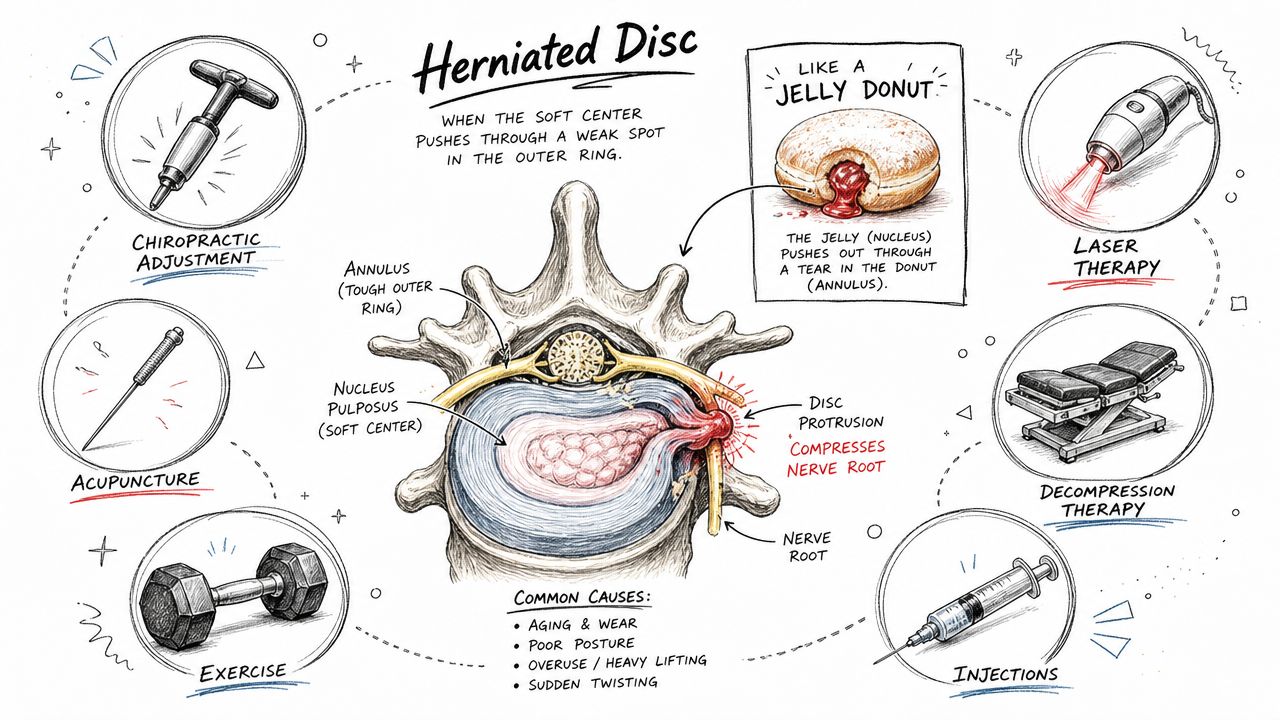
If sitting pain changes from one week to the next, the cushion may be hiding the pattern instead of fixing it. Leg symptoms can fit nerve irritation or sciatica, while ongoing pelvic or rectal symptoms need proper evaluation rather than repeated changes to the chair. For readers who want a clearer breakdown of nerve-related symptoms and next steps, sciatica treatment options offers useful context.
Pregnancy and postpartum pain call for similar caution. A support belt can help manage load, but it does not replace assessment, especially when sitting discomfort overlaps with low-back strain. For readers comparing support tools, a pregnancy belt for back pain can be helpful context.
At that point, a wider plan can help. Aspen Falls Wellness in Salt Lake City and Sandy works with patients through chiropractic adjustment, spinal decompression with the DRX 9000 for disc-related pain, SoftWave therapy, MLS Laser Therapy, massage therapy, mobility therapy, acupuncture, and corrective exercise. Nutrition counseling can also support longer-term resilience when recovery is slowed by daily habits or repeated strain.
That kind of care fits when the sitting problem involves the spine, soft tissue, or a recovery cycle that keeps repeating. The cushion can lower sitting stress, but it cannot correct disc irritation, rebuild movement tolerance, or change how the body handles load.
A patient with leg pain from nerve irritation may need more than pressure relief, just as someone with persistent pelvic pain may need a different plan than a better seat shape. In those cases, the cushion is a helper, not the whole answer.
How long can you sit on one stretch? Short sessions are the safest default. If the cushion starts to compress, the opening no longer stays open, or your pain climbs during the sit, that's a sign to get up and reset rather than pushing through.
Do weight limits really matter for average-sized adults? Yes, because the limit isn't just about body size, it's about whether the cushion keeps its shape. A cushion that bottoms out too easily stops redistributing pressure and starts behaving like a flat pad.
Can I use one in a car seat or wheelchair? Often, yes, if the cushion fits the seat geometry and the opening stays aligned with the painful area. The same rule applies, though, don't use it for long periods if it's causing more pressure around the ring or making you slump.
When should I stop managing this at home? Stop self-managing if pain keeps worsening, symptoms spread, or you notice bleeding, prolapse, thrombosis, or leg symptoms. A donut chair cushion is a useful short-term pressure tool, not a diagnosis or a treatment plan.
If your sitting pain is starting to rule your day, visit Aspen Falls Wellness for an evaluation and a plan that matches the cause, not just the seat you're using. Their team can help you sort out whether a donut chair cushion is the right short-term tool, or whether you need a broader approach to back, pelvic, or sciatica-related pain.

Stay updated with the latest chiropractic news and exclusive offers.