Learn how to speed up recovery after injury or surgery with a practical, evidence-informed plan covering rest, rehab, nutrition, sleep, and clinic therapies.




You just want to move normally again. Maybe the pain started after a lift, a run, a fall, or a procedure, and now the key question is simple: what helps without setting you back? The answer usually isn't “do nothing” and it isn't “push through it.” It's dosed recovery, the kind that matches activity to your current capacity so you don't decondition the area or reset the clock.
A sore joint after training, a pulled muscle after a lift, or a postsurgical area that feels guarded all run into the same problem. Healing is often treated like a countdown, but how to speed up recovery usually comes down to dose, not time. Too little movement leaves tissue stiff, weak, and less tolerant of load. Too much too soon spikes irritability and can keep symptoms cycling longer than they need to.
The cleaner model is simple. Recovery works best when the body gets the right stress at the right time. That is why a phased, criterion-based plan makes more sense than “rest until it feels better” or “just work through it.” Controlled activity can help symptoms settle faster in some conditions, while the wrong kind of loading can do the opposite. A randomized clinical trial in adolescent sports concussion found that early subthreshold aerobic exercise shortened median recovery to 13 days versus 17 days with stretching, about 24% faster median recovery, with delayed recovery beyond 30 days also lower at 4% versus 7% (trial summary).
Practical rule: recovery usually improves when activity is dosed below the point that worsens symptoms, then advanced only when the body proves it can handle more.
That does not mean every painful structure should be loaded immediately. It means the target is calibrated movement, not passive waiting. The same idea shows up in recovery optimization for performance, because the primary task is matching stress to current tolerance instead of guessing and hoping. In clinic, that often means using symptoms, swelling, range of motion, and next-day response as the guide for the next dose of activity.
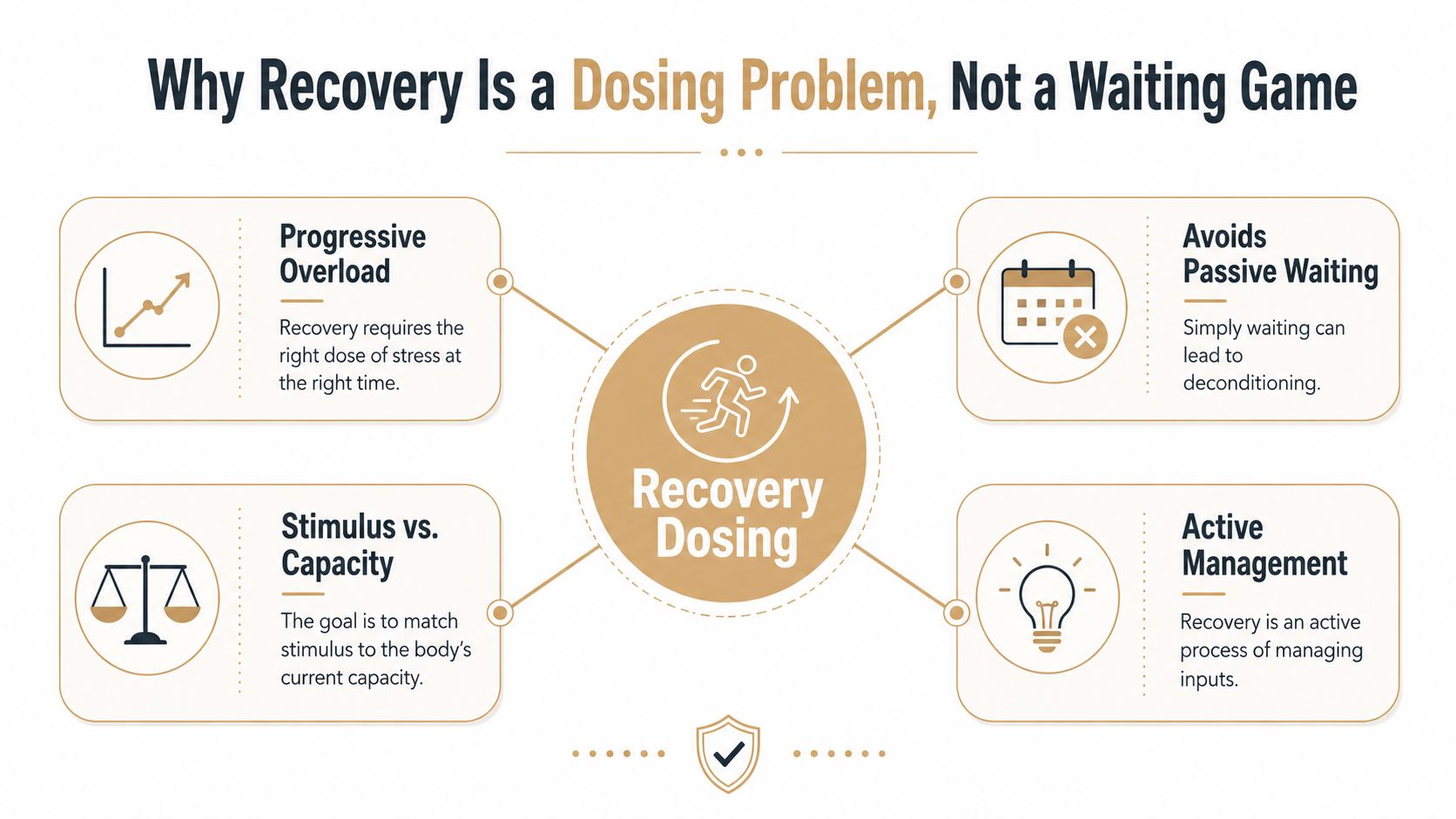
A useful way to frame it is this: tissue adapts to the load it can currently tolerate. If the dose is below that threshold, nothing much changes. If the dose overshoots it, pain and stiffness often flare, and progress stalls. The sweet spot sits in the middle, where work is challenging enough to signal adaptation but restrained enough to avoid a symptom rebound. That is the practical difference between recovery that moves forward and recovery that keeps restarting.
The first three days set the tone for recovery. Protection comes first, with relative rest for 48 to 72 hours giving irritated tissue room to settle while gentle motion keeps stiffness from taking over. Full immobilization is usually a mistake unless a clinician has specifically told you otherwise. sports injury guidance
Start with pain-limited motion, brief walks if they are safe, and positions that reduce pressure on the injured area. If swelling is obvious, raise the area when practical and follow the trend instead of fixating on the clock. Ice can help with comfort early on, while heat is usually better saved for stiffness once acute irritability has eased. Over-the-counter medication can be appropriate for some people, but only when it fits their medical history and the instructions they have already been given.
The practical check is straightforward. Ask whether pain is drifting down, whether swelling is stable or easing, and whether range of motion is improving rather than tightening up. If those markers move the wrong way, or if symptoms climb sharply, reassessment should happen sooner. Sleep position matters too. Use pillows to support the area so the night is not spent repeatedly guarding against pain.
If you have a joint injury, the first movements should stay easy and controlled. If you have surgery, follow the post-op instructions exactly, because the repair strategy may limit how much motion or weight bearing is appropriate early on. The useful target is enough activity to keep the area from shutting down, without so much load that irritation gets reset.
Do not use soreness alone as the guide. That usually pushes people toward either over-resting or doing too much. Do not test the injury with a hard workout just to see what happens, because an early flare-up can erase several days of progress. The goal in this window is to calm the system while keeping enough motion to avoid shutdown.
If the injury feels less reactive each day, the dose is probably in the right zone. If it becomes more sensitive, the load is too high or the tissue needs a closer look.
For a better sense of how therapeutic exercise fits into the early phase and the next steps, see therapeutic exercise in rehab planning.
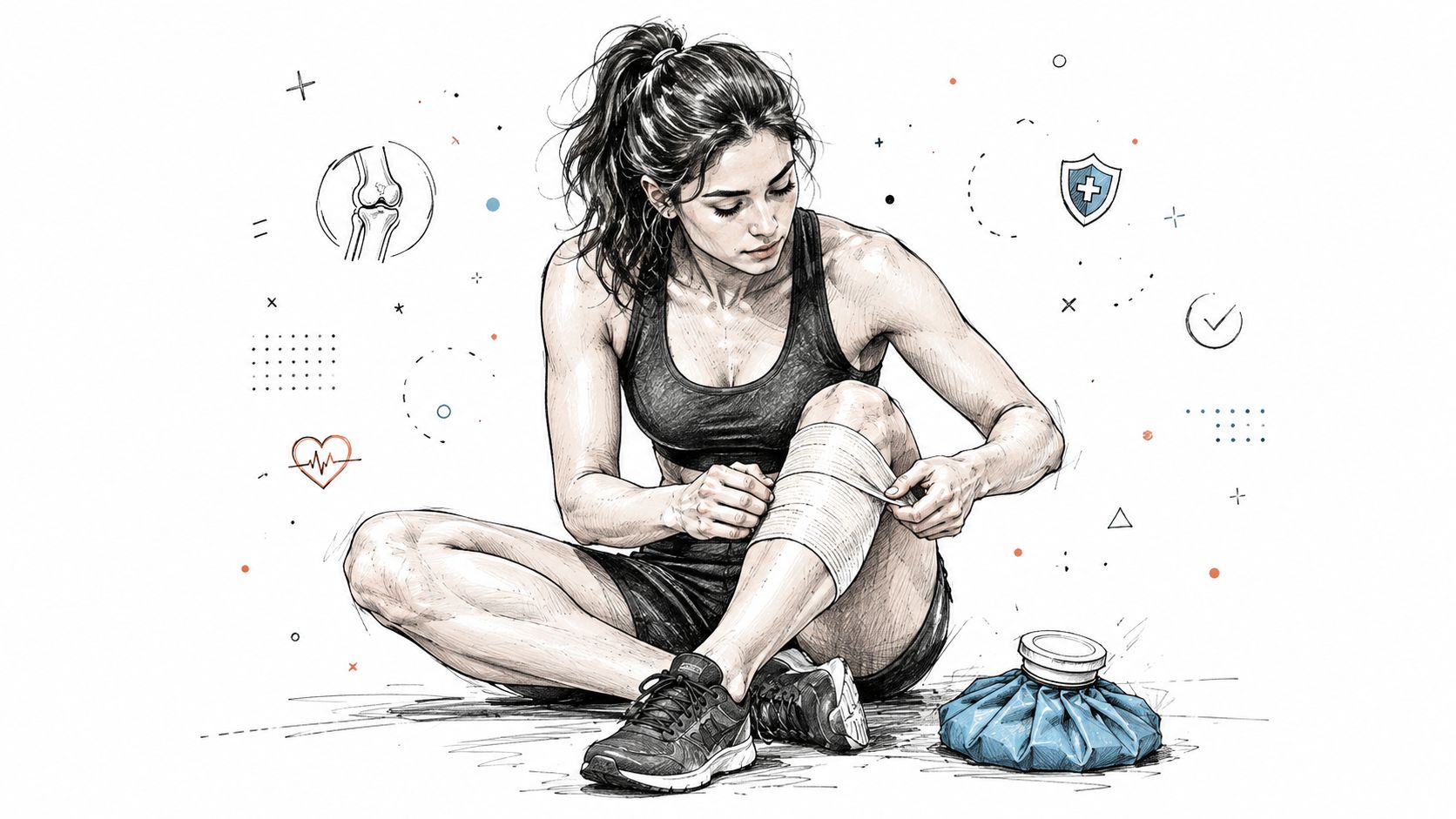
A runner tries to “push through” a hamstring strain because the pain seems mild. Two days later, the area is tighter, the stride is shorter, and the return has been set back. That pattern is common because recovery is a dosing problem. Too little activity leaves tissue deconditioned, while too much load resets the clock.
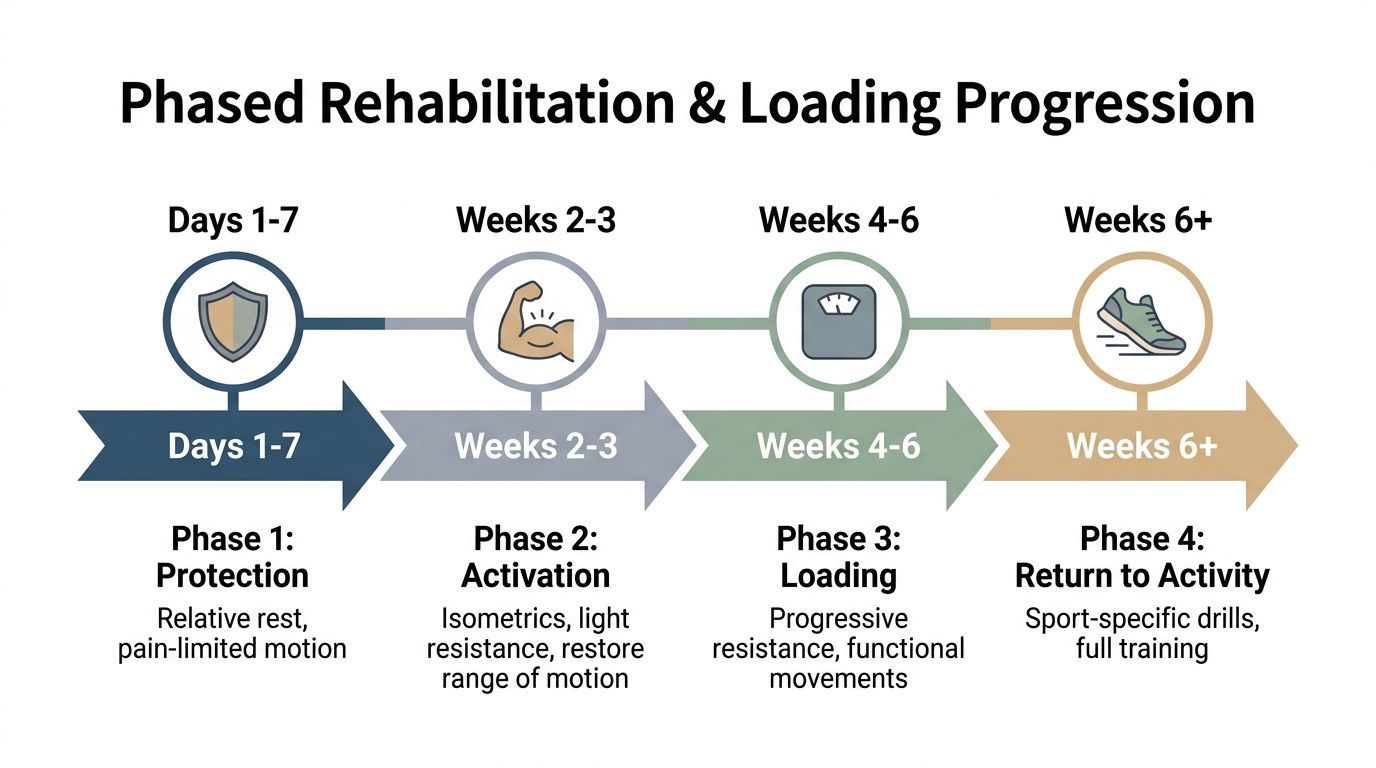
Recovery usually moves in phases, even when the calendar does not feel neat. The useful question is not how many days have passed. It is whether the tissue has earned more load. In practice, pain trend, range of motion, endurance, and task tolerance tell you more than a generic timeline, and early overloading tends to prolong the problem instead of solving it (rehab workflow guidance).
Phase 1, protection. Keep the tissue quiet, use relative rest, and maintain pain-limited motion.
Phase 2, activation. Restore motion and begin gentle resistance or isometrics once irritability drops.
Phase 3, loading. Progress to stronger resistance, single-leg work when relevant, and more demanding functional drills.
Phase 4, return to activity. Add sport-specific or job-specific tasks, then full training only when those tasks are tolerated repeatedly.
A hamstring strain in a recreational runner is a clean example. Early on, the runner may walk, then jog lightly, then add controlled strength work, then progress to hill work or faster strides only after the tissue tolerates lower levels without a pain spike. The progression is not about speed for its own sake, it is about proving that the tissue can accept more stress without reacting badly. For a clearer view of how therapeutic exercise fits into rehab planning, the key idea is that loading should match the current capacity of the tissue, not the athlete's frustration level.
Progressive agility work can matter more than static stretching for reinjury reduction in soft-tissue rehab, so the type of loading matters as much as the amount. A delayed return often costs more time than careful early progression, provided the progression respects symptoms and task quality.
A patient with back pain and leg symptoms often wants the fastest fix, but the clinic has to match the intervention to the job it is supposed to do. Some therapies lower pain enough to make movement possible. Some improve tolerance to loading. Some fit a specific diagnosis better than others. In practice, that distinction matters because a treatment that calms symptoms is not automatically a treatment that speeds tissue healing.
| Condition | First-Line Therapies | Supporting Therapies |
|---|---|---|
| Disc-related pain, sciatica, stenosis | Spinal decompression, chiropractic care, guided rehabilitation | Pain-modulating care, mobility work |
| Soft-tissue strain or overuse | Therapeutic exercise, mobility therapy, massage therapy | Acupuncture, laser or tissue-stimulation support |
| Joint stiffness or restricted motion | Chiropractic adjustment, mobility therapy, corrective exercise | Massage, decompression when indicated |
| Exercise soreness or fatigue after training | Massage therapy, active recovery, hydration and sleep | Cryotherapy or compression, if they fit the person |
| Movement dysfunction with recurring pain | Rehabilitation exercise, posture retraining, nutrition coaching | Manual therapy, acupuncture |
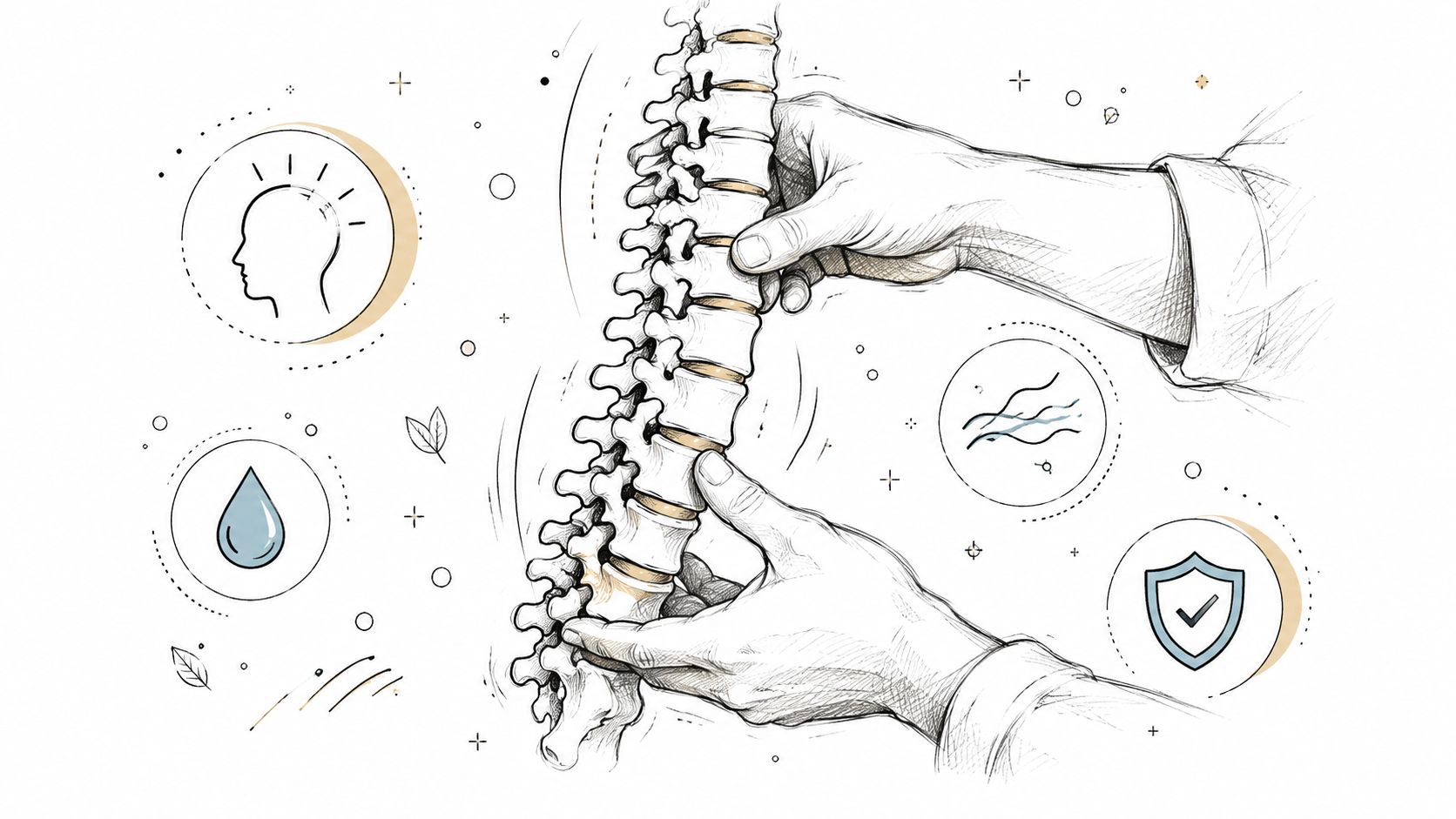
Spinal decompression with the DRX 9000 is usually considered when disc-related pathology is part of the picture, especially when nerve irritation patterns such as sciatica are present. Chiropractic adjustment and realignment fit better when joint motion is the main limiter. Acupuncture is commonly used for pain modulation. Massage therapy has a clearer evidence signal for DOMS and perceived fatigue after a single exercise session than many popular recovery methods, which is why it often works best as symptom support rather than as a cure-all (systematic review).
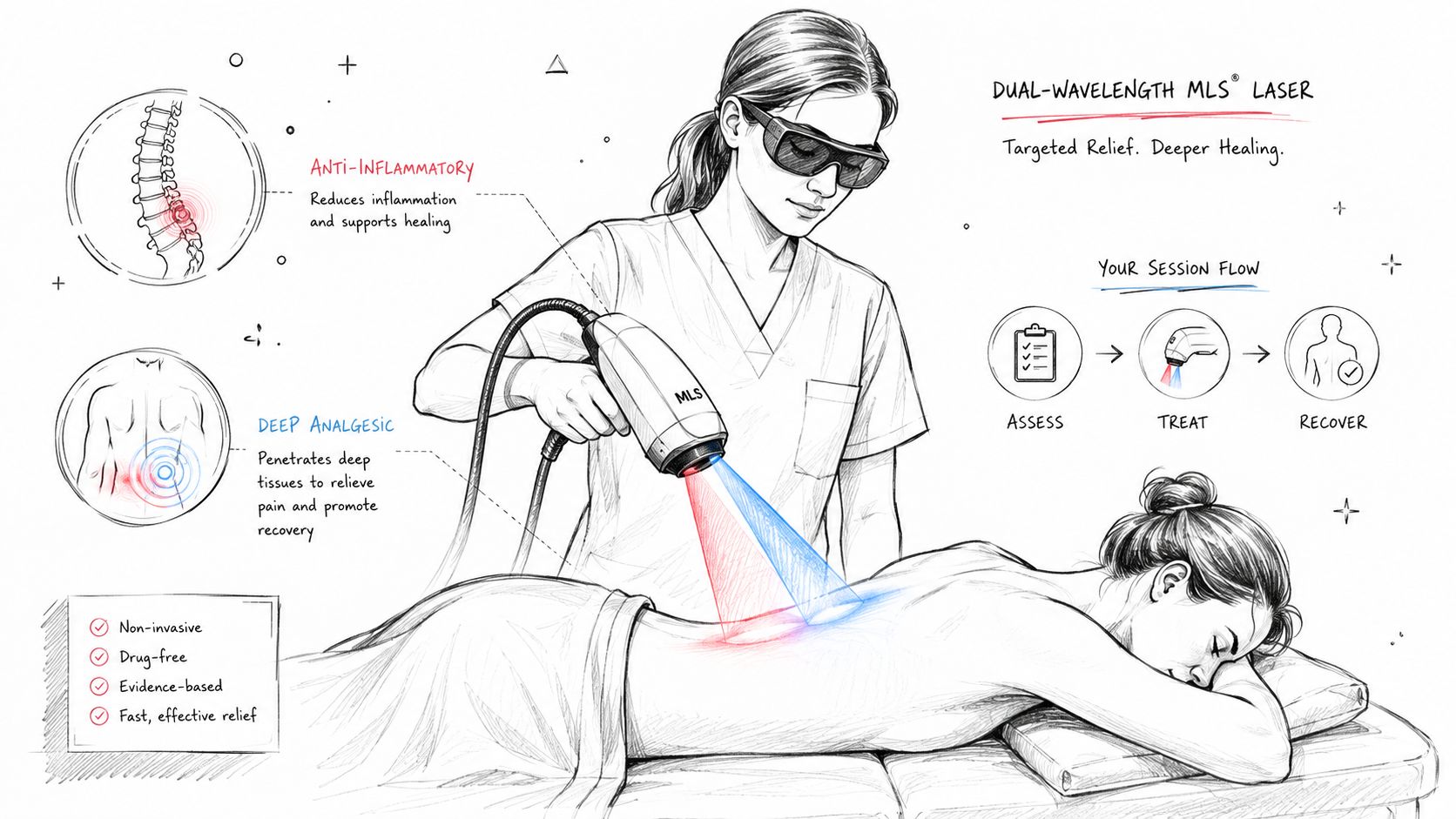
For inflammation-focused care, laser therapy for inflammation gives useful background on where device-based care may fit inside a loading plan. MLS laser therapy and SoftWave therapy are often used in the same support role, to reduce irritation so the patient can keep doing the active work that rebuilds capacity.
Most passive modalities do not erase the underlying healing timeline. They can lower pain enough to let someone walk, strengthen, and mobilize sooner. That is the value. A better session is one that helps the patient tolerate the next dose of movement.
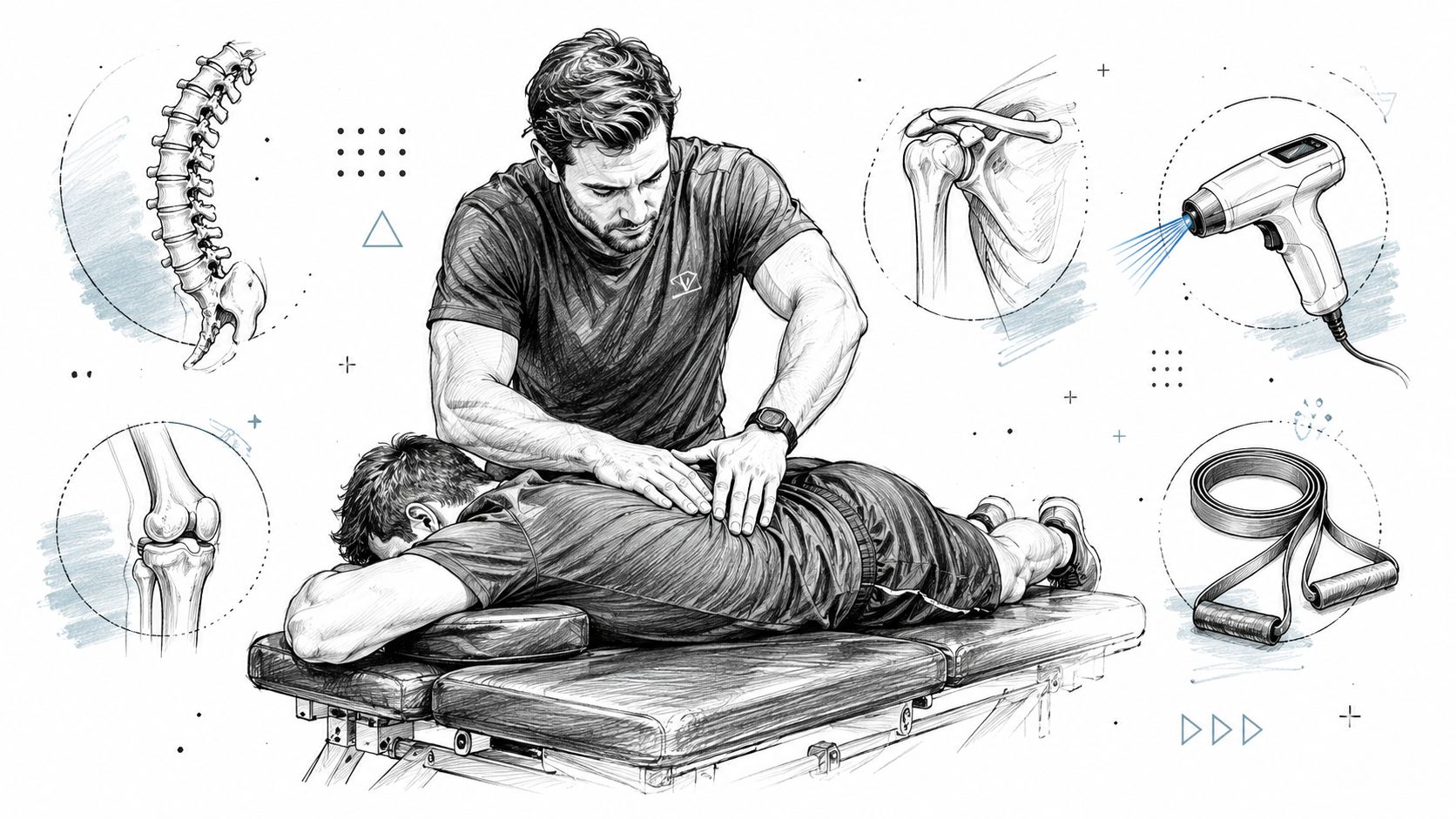
Aspen Falls Wellness uses that model in practice through chiropractic care, spinal decompression, massage, acupuncture, mobility therapy, and corrective exercise, all within a coordinated musculoskeletal plan. For readers who want context on why sleep timing can backfire in structured care, how sleep restriction works explains the trade-offs clearly.
A sore back after lifting, a swollen knee after surgery, or a flared tendon after too much walking all respond better when the body gets the basics right at home. Sleep, protein, and fluid replacement shape how much tissue repair can happen and how much stress the body can handle the next day. A steady sleep window, enough protein around loading sessions, and rehydration after heavy sweating matter more than piling on recovery tricks that sound impressive but do very little.
Highest-yield variables: sleep quality, protein intake, and fluid replacement. Get those right before you worry about extras.
Keep the sleep schedule steady enough that recovery has a rhythm. If pain is fragmenting sleep, the fix is usually practical, position changes, pillow setup, and symptom control, not blaming the body for failing to “rest enough.” For readers who want to see why restricting sleep can backfire in structured care, how sleep restriction works explains the trade-offs clearly.
Protein belongs near loading sessions and recovery meals because tissue repair needs amino acids when the body is adapting to stress. In practice, that means spacing protein across the day instead of saving it all for one meal. If magnesium is part of the plan, whole food magnesium supplement is a useful internal reference to pair with broader nutrition choices without turning supplements into the main event.
Hydration matters most when sweat losses are high. A practical target from recovery guidance is replacing about 150% of fluid lost after heavy sweating, ideally with sodium so the body holds onto more of what it takes in. That matters after long training sessions, outdoor work, or rehab days layered on top of a full schedule. It is also one of the few recovery variables where underdoing it shows up quickly in performance, pain tolerance, and fatigue.
Low-intensity active recovery for 15 to 30 minutes the next day can support circulation without creating much extra stress. An easy walk, gentle cycling, or light mobility work can help the body settle, but the dose needs to stay small enough that it leaves the person looser rather than guarded. That is the same logic behind a well-built recovery routine, where the goal is to support adaptation instead of adding another hard session.
Return decisions go better when you stop asking “How many days has it been?” and start asking whether the body is ready. The most useful markers are pain trend, range of motion, sleep quality, symmetry, and functional task tolerance. If those are improving together, activity can usually climb with less risk. If one of them is lagging badly, the plan needs another round of loading at the current level.
For driving, the test is simple. You need enough trunk, neck, and limb control to brake, steer, and react without guarding. For lifting, you want the movement to feel repeatable under light to moderate load, not just tolerable once. For sport, the body should pass the basics first, then tolerate speed, change of direction, and repeat effort before full return.
A runner coming back from a soft-tissue injury should be able to jog, recover, and jog again without a late symptom spike before stepping into harder work. That's the difference between readiness and optimism. The same logic applies after surgery or an accident. If fatigue is high or the next session is close, the intervention should be smaller and simpler, not more aggressive.
Readiness is a pattern, not a single good day.
A patient recovering from a back strain might feel better one morning and worse that night. That's why weekly tracking matters. Look at pain score, range of motion, functional task ability, and sleep quality. The trend tells the truth better than a single appointment does.
I like a simple review rhythm, compare the same markers each week, then adjust the dose based on what changed. If pain is dropping, motion is easier, and tasks are less irritating, the plan is probably working. If the pattern stalls for two to three weeks despite consistent care, or if symptoms worsen, it's time to escalate evaluation (recovery guidance). Red flags include worsening neurological symptoms, progressive weakness, bowel or bladder changes, and pain at night that disturbs sleep. Those aren't “wait and see” issues.
A few common questions come up over and over. Recovery time varies by tissue, severity, and how the person loads it. In most cases, movement beats total rest once the acute phase has settled. If the injury followed a collision, or if you still have neck, back, or radiating symptoms after a car accident, a proper evaluation can sort out whether the problem is a strain, a joint issue, or something that needs imaging or referral.
The cleanest plan is still the same one from the start. Protect the tissue early, move it within tolerance, build capacity step by step, and only return to full activity when the markers say the body can handle it.
If you're trying to recover from an injury, surgery, or a recent car accident, Aspen Falls Wellness can help you match the right treatment to the right phase, with chiropractic care, decompression, rehab exercise, massage, acupuncture, and nutrition guidance under one roof. Visit Aspen Falls Wellness to schedule an evaluation and build a recovery plan that's based on your symptoms, your goals, and your current capacity.

Stay updated with the latest chiropractic news and exclusive offers.