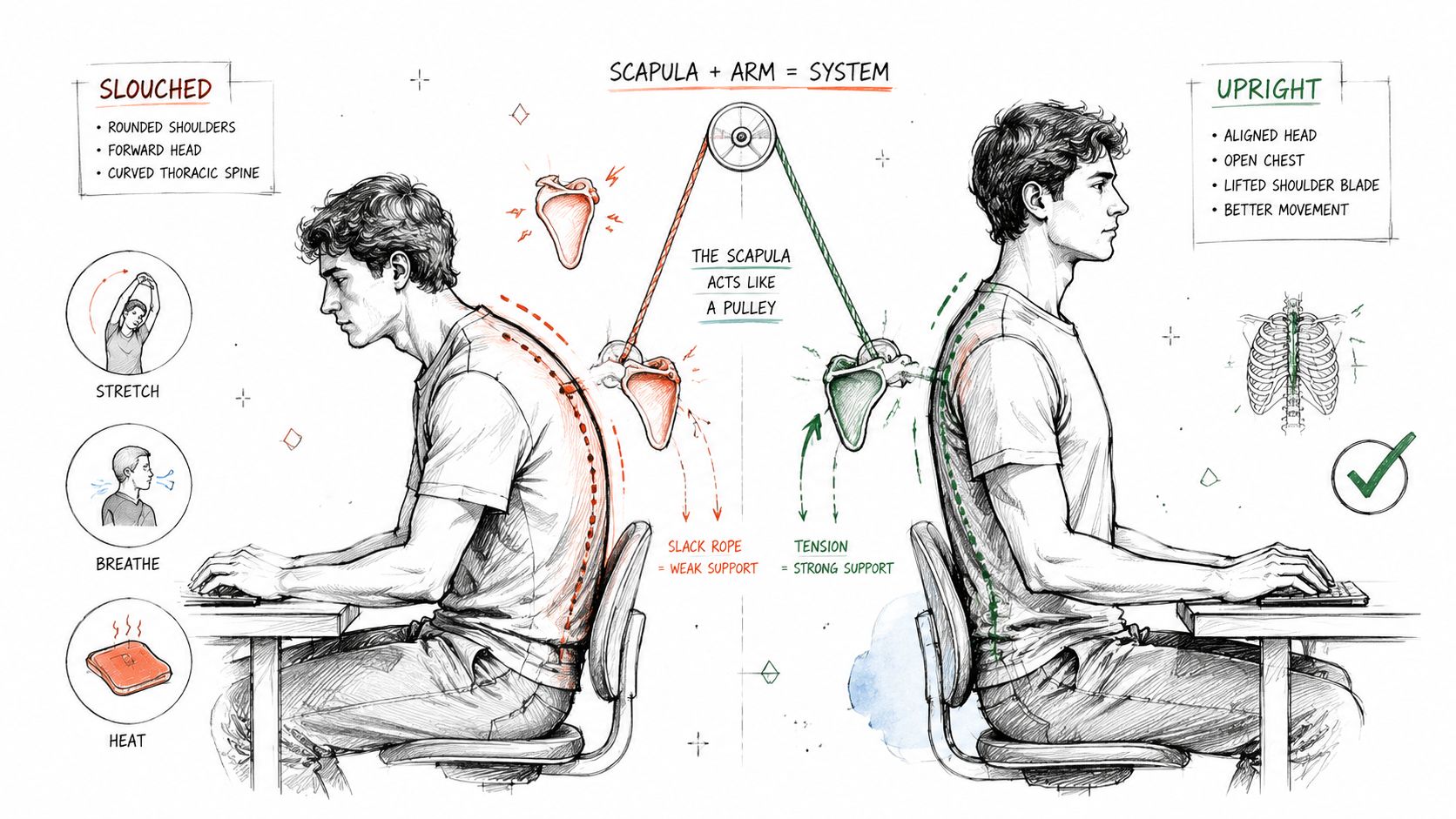
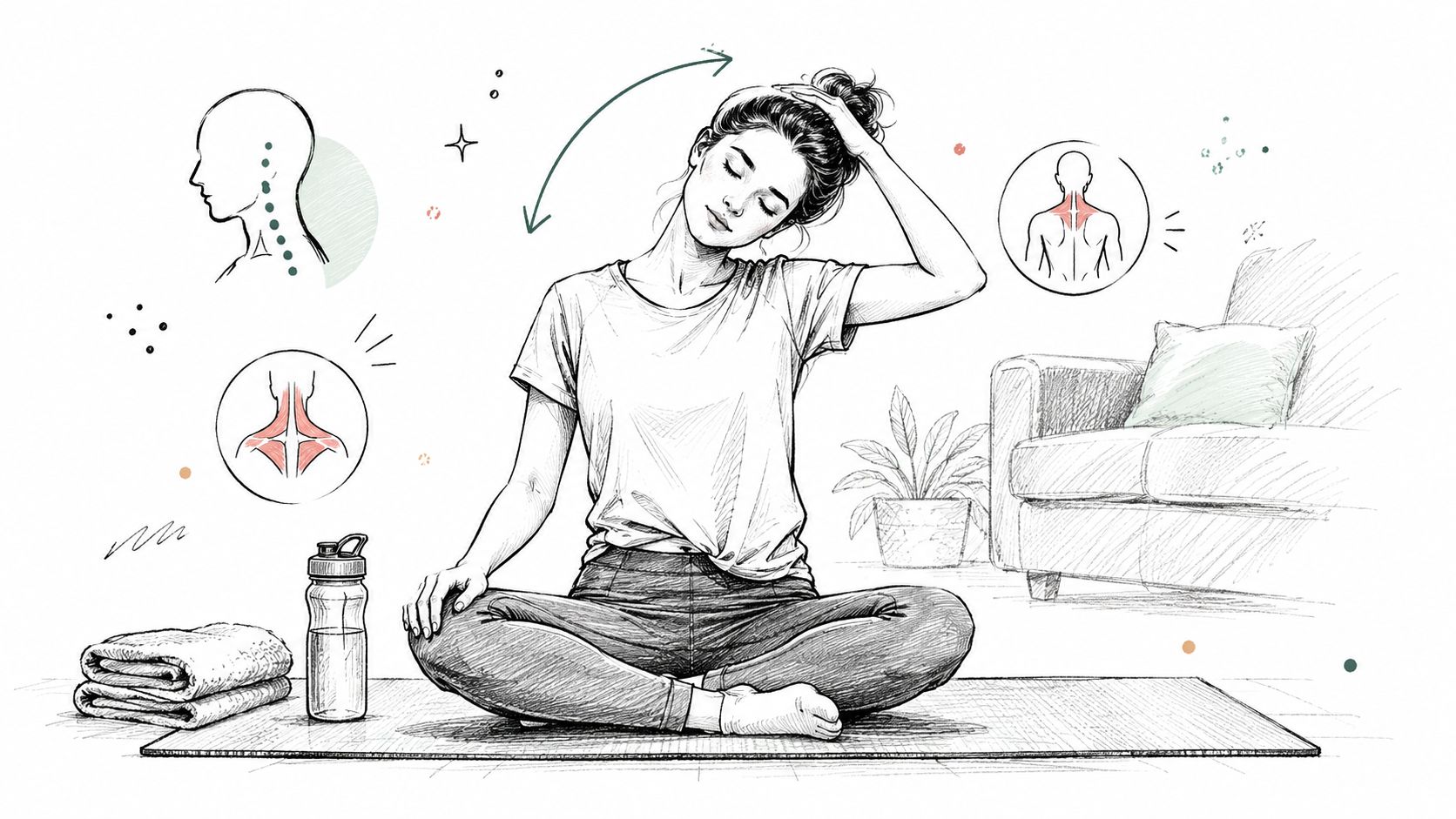
Learn how orthopedic chair support back systems really work, key features to look for, setup tips, and when to seek professional care for lasting back comfort.
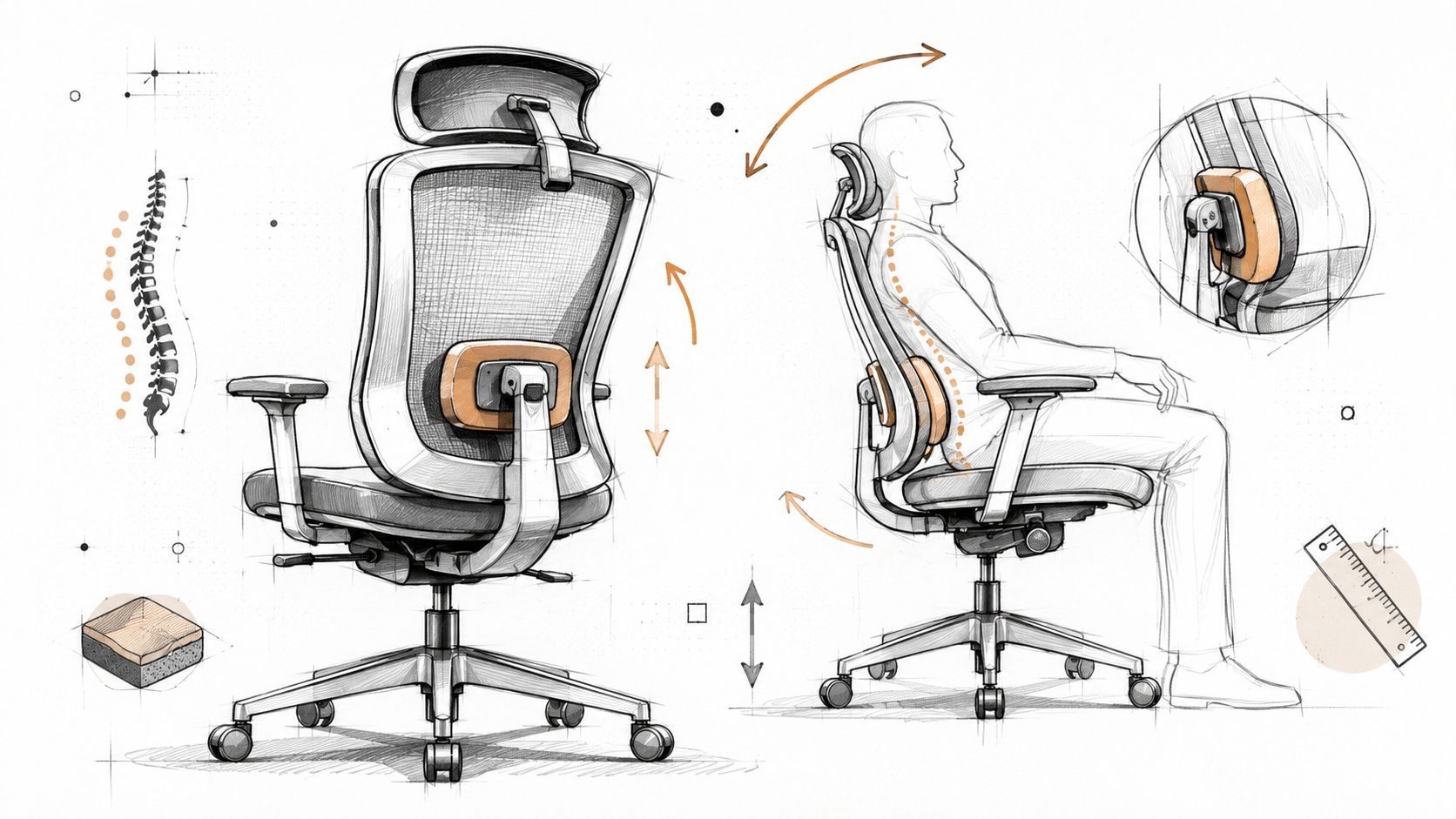



Many shoppers pick an orthopedic chair support back assuming a bigger lumbar bulge automatically fixes pain. That's the wrong starting point. A supported recline is typically the better choice, as Cornell ergonomics materials show the lowest lumbar disc pressure, back muscle activity, and comfort ratings at 110° to 130°, with another Cornell summary noting preferred back angles around 15° backward from vertical (Cornell ergonomics seating guidance, Cornell chair ergonomics summary).
That matters if you already bought the fancy chair and still feel stiff by midafternoon. The back cushion is only one piece of the setup. Seat height, seat depth, recline, and pelvic stability often do more than the visible pad on the backrest, especially when someone is trying to sit through long work blocks without constantly sliding forward.
A rigid lumbar pad gets blamed for a lot of pain, and sometimes it deserves the blame. If the pad sits too high, it can shift pressure toward the lower thoracic spine and flatten the natural lumbar curve. If it sits too low, it fails to resist posterior pelvic rotation, and the body drifts into a flexed C-shape that loads the low back more harshly (Cornell seating guidance).
The overlooked part is that the most comfortable and least stressful sitting posture is often not fully upright. Cornell's ergonomics material points to 110° to 130° of supported recline as the range associated with lower disc pressure and lower back muscle activity, which is a direct challenge to the common advice that says you should always sit as straight as possible (Cornell chair ergonomics summary). That's especially relevant for people with disc-related pain or sciatica, because a fixed upright posture can raise spinal loading when it doesn't fit the person or the task.
Practical rule: A chair back should help you stay supported, not force you into a posture your spine can't hold all day.
This is why the biggest benefit usually comes from a coordinated system, not a single cushion. A good setup distributes load through the backrest, keeps the pelvis from tipping, and gives the user room to move between tasks without losing support. It also explains why expensive-looking chairs can still feel wrong if the seat is too deep, the recline is stiff, or the back contact hits the wrong level.
The rest of this guide stays grounded in those practical benchmarks, so you can judge any chair you already own, whether it's a basic task chair or a high-end executive model.
In plain terms, an orthopedic chair support back is a chair back built to support the spine in a way that matches the body's shape instead of fighting it. A sound design combines backrest height, a separately adjustable lumbar element, seat dimensions that fit the thighs and pelvis, and a recline that can be controlled rather than locked in one position.
A chair is not a single pad on the low back. It is a system. If the seat is too short, the backrest sits too low, or the lumbar pad cannot move where the spine needs it, the chair may feel supportive at first and then become irritating once you sit with it for a while.
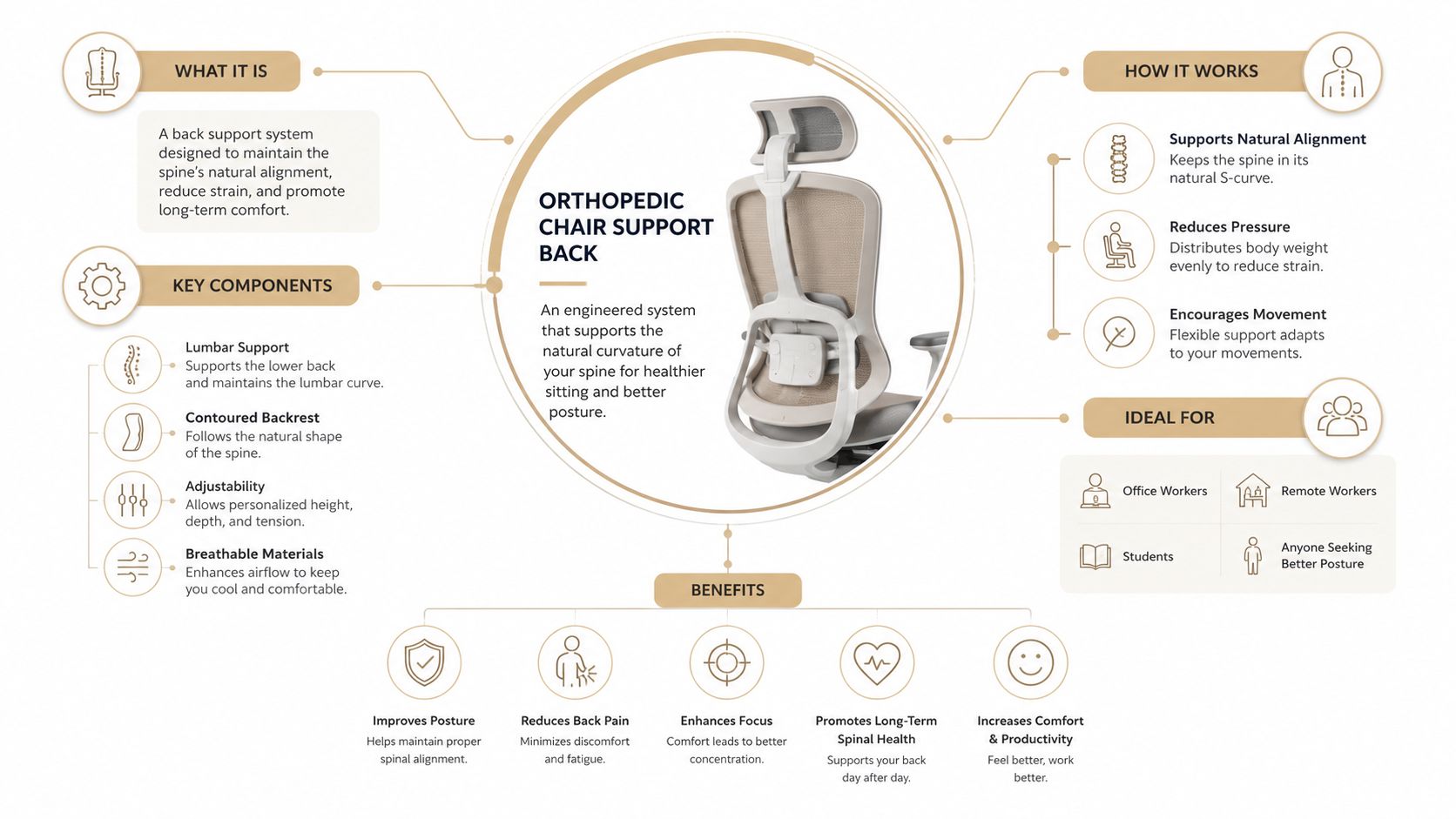
The word orthopedic sounds clinical, but it is still a marketing term unless the chair's shape earns it. A true lower-back support should meet the lumbar curve, not press into the shoulder blades or the upper thoracic spine. If a backrest behaves more like a shoulder brace than a spinal support, it can push the torso forward and leave the low back under-supported.
The upper back and lower back do different jobs. Thoracic support can help carry trunk weight, while lumbar support helps preserve the curve that keeps many people from settling into a slumped posture. That difference matters more than the size of a cushion.
A recline-friendly backrest with stable pelvic contact usually does more for pressure relief than a thick pad alone. A deeper chair can help one person and feel wrong for another if the seat depth traps the knees or the back angle never lets the pelvis settle. Patients who want a simple place to begin can browse power recliner options, but the same fitting rules still apply: the support has to match the body, the condition, and the way the chair will be used.
| Feature | Recommended Range | Why It Matters |
|---|---|---|
| Backrest height | About 17.7 to 29.7 inches, or 45 to 75.5 cm in practical chair specs | Higher backs give more trunk-weight support (government office chair guide) |
| Lumbar height travel | About 50 to 80 mm | Lets the pad meet different torso lengths instead of forcing one fixed position |
| Lumbar midpoint height | 15 to 25 cm above the seat pan | Helps the pad land in the low-back curve rather than too low or too high (government office chair guide) |
| Seat depth | No more than 16.9 inches, or 43 cm, if fixed | Keeps the seat from pressing behind the knees (government office chair guide) |
| Supported recline | About 110° to 130° | Often lowers lumbar disc pressure and back muscle activity (Cornell chair ergonomics summary) |
A fixed pad only works when it lines up with the person using it. Torso length varies enough that one person may feel supported while another feels the pad crowd the wrong part of the back. Cornell's guidance notes that lumbar support should have about 3.75 inches, or 9.5 cm, of vertical adjustment so the pad can meet the lumbar curve instead of forcing a one-height-fits-all fit.
Very soft foam is a common trap. It lets the pelvis sink back into a C-shaped slump during long sitting bouts. A firmer seat usually does a better job of keeping the pelvis level, while back materials mainly shape how pleasant the chair feels over time. Mesh works well in warm rooms because it breathes. Leather-style upholstery can feel better in cooler spaces. Neither one fixes bad geometry.
What I tell patients: Comfort is a finish, but support is a shape. If the shape is wrong, the upholstery cannot save it.
If you are comparing chair styles and want a quick way to see how recline and lumbar contour change together, it can help to browse power recliner options and watch how the backrest and support move as a unit. The lesson is not to buy a recliner for the office, it is to notice how much difference coordinated adjustment makes. For a closer look at how lower back pain patterns shape seating choices, this overview of lower back pain gives useful context.
The rule of thumb is simple. Geometry and adjustability drive outcomes. Materials drive comfort. If the first part is wrong, the second part will not make up for it.
The same chair can feel right for one person and wrong for another because the pain pattern is different. A supported recline often helps disc-related pain and sciatica because it reduces the urge to collapse forward. A more upright setup, or even a slight forward tilt, often suits stenosis better because it leaves more room in the canal. For chronic low back pain, a middle-ground setup usually works best, where the chair supports the curve without forcing the body into one rigid posture all day.
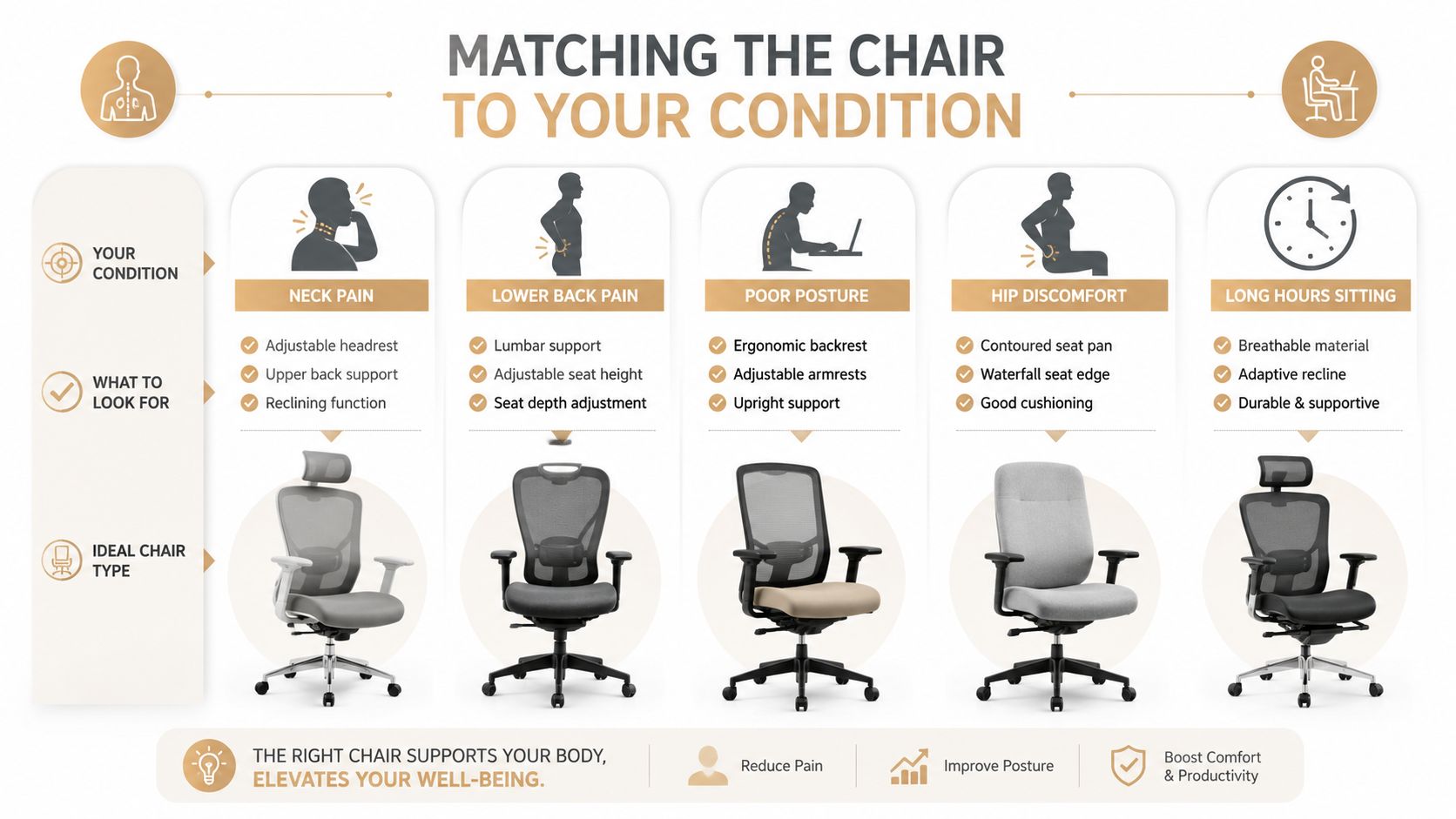
For a herniated disc or sciatica, the goal is usually to avoid flexion collapse. That means supported recline, pelvic stability, and enough lumbar contact to keep the lower back from rounding. For stenosis, many people tolerate a different bias. A gentle forward tilt or a more upright posture can feel better because it opens the spinal canal rather than narrowing it.
For chronic low back pain, a balanced setup is usually the safest starting point. Seat height should let the knees rest comfortably rather than lifting the thighs too high, the lumbar pad should sit near the low-back curve, and the backrest should allow a small recline instead of a rigid vertical brace. Cornell's seating guidance is useful here because it reinforces the practical point that a slight lean often works better than a forced upright hold.
If pain radiates, worsens at night, or comes with numbness, chair shopping is not the diagnosis. That pattern deserves a clinical evaluation first. For a broader look at how low back pain presents and why the symptom pattern matters, these lower back pain resources fit well with that decision point.
Tyner Furniture's posture guide makes the same basic point in plain language, the setup has to match the person, not just the product. The same chair can help more than one condition if the user re-adjusts between tasks instead of locking into one posture and forgetting it. For families comparing options for someone who has trouble getting up and down from a seat, lift chairs for seniors in Norwich can be part of that broader seating conversation.
Feet flat on the floor is the first checkpoint. If the seat is too high, the pelvis often tips and the lower back has to work harder to stay neutral. The knees should rest in a comfortable bend, and the chair depth should leave about a two-finger gap behind the knees so the seat does not press into the back of the legs (Cambridge University Hospitals seating guidance).
Once the lower body is steady, move the lumbar support so it meets the low-back curve instead of crowding the upper back. The backrest can rise high enough to help the thoracic spine when needed, but the lumbar piece should resist slumping. Armrests should sit around elbow height with the shoulders relaxed, not lifted.
Simple reset cue: Every 30 minutes, take three deep breaths, gently re-engage the lower abdominals, and let the pelvis come away from the chair back if it has drifted.
Short movement breaks matter because static sitting is what usually drives the ache, not a single imperfect posture. If you are retraining sitting habits, a clinical therapeutic exercise plan often fills the gap a chair cannot, because the body still needs better control between changes in position.
Do not sit bolt upright all day. A small lean back, about 15 degrees from vertical, is usually enough to reduce the steady load that builds when a person stays fixed in one angle too long. The point is not to lounge. It is to let the backrest carry part of the upper body so the trunk muscles are not doing everything at once.
For a practical reminder of posture habits, Tyner Furniture's posture guide makes the same basic point from a furniture perspective. Good support starts low, fits the body, and still allows motion.
For readers who cannot replace the chair right now, two modest changes can help. A seat cushion can raise height when the chair sits too low, and a lumbar pillow can add contact to a chair that has no adjustability at all. The goal stays the same, keep the pelvis stable and the back supported without forcing a slump.
A chair can reduce irritation from sitting, but it doesn't heal every spine problem. A 2021 systematic review in PubMed found that chair interventions for lower back pain had only very low- to low-quality evidence for reducing pain or discomfort, and the authors concluded that chair interventions are not recommended to reduce low back pain or activate trunk muscles unless better evidence shows otherwise (PubMed systematic review).
That doesn't mean seating is useless. It means the chair sits below the ceiling of care. If the disc is irritated, the canal is tight, or the trunk muscles are deconditioned, a better chair helps the person sit more safely, but it doesn't correct the underlying tissue problem by itself.
Common soreness from long sitting is different. That pattern often eases with a better setup, short movement breaks, and a little more variety through the day. Persistent or worsening symptoms need a real exam, not just another chair review.
A well-fitted chair helps preserve progress between visits, but it's only one part of conservative musculoskeletal care. At Aspen Falls Wellness, care can include personalized chiropractic adjustment, non-surgical spinal decompression with the DRX9000 for disc-related conditions, MLS Laser Therapy, SoftWave Therapy, massage therapy, acupuncture, mobility therapy, rehabilitation exercise, and nutrition counseling, all within a coordinated plan that can be adjusted as symptoms change. For readers comparing care models, the broader idea of multidisciplinary pain management matches what many backs need, which is multiple levers working together rather than one fix pretending to do everything.
A chair reduces daily irritation. Manual care and device-based therapies can help calm a painful episode, support tissue recovery, and restore movement tolerance. Exercise and mobility work matter because a supported spine still needs capacity, especially after an injury or a long stretch of guarding. Nutrition coaching can support recovery from the inside, which matters more than people think when pain has started to affect sleep, activity, or consistency with rehab.
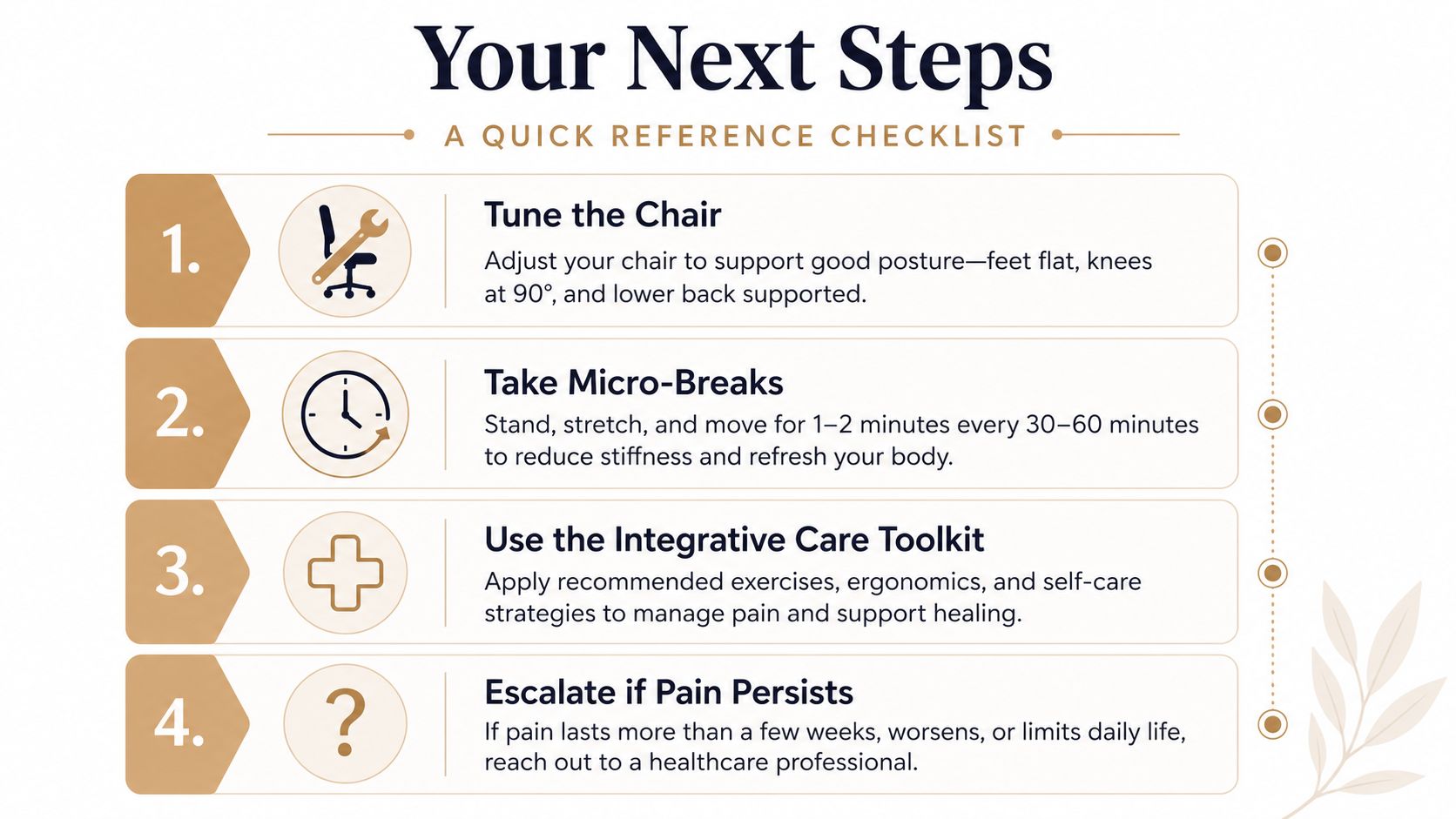
The best care plans don't stay frozen. If pain improves, the chair setup may need less support. If symptoms shift from sitting pain to movement pain, the balance changes again. That's where re-evaluation matters, because the right support at week one is not always the right support at week six.
Aspen Falls Wellness has locations in Salt Lake City and Sandy, and participates with multiple insurance plans, with verification recommended before care begins. That's access information, not a promise. The point is to match the plan to the condition, then keep adjusting it as the body changes.

A new chair should usually be judged by function, not by its first five minutes. If you stand all day, you still may need back support during seated tasks, because alternating positions is often easier on the spine than any single posture. If the chair feels better but symptoms keep spreading or intensifying, that's not a furniture problem anymore.
If your back pain is still getting in the way of work, sleep, or sitting tolerance, Aspen Falls Wellness can evaluate the mechanics, not just the symptoms, and build a care plan around the chair setup you're using every day. Visit Aspen Falls Wellness to learn how chiropractic care, decompression, therapy, and exercise-based support can fit into a practical plan for your spine.

Stay updated with the latest chiropractic news and exclusive offers.