Learn how to prevent sports injuries with this evidence-based guide covering warm-ups, strength training, load management, and recovery strategies.




Structured prevention programs reduce overall sports injuries by 34% and injuries per hour of exposure by 37%, so the key question isn't whether prevention works, it's whether the plan is built like a system or just a habit (systematic review). In clinic, the athletes who stay healthiest are rarely the ones who do a random stretch before practice. They're the ones who build strength, balance, movement control, and load management into the week before pain ever shows up.
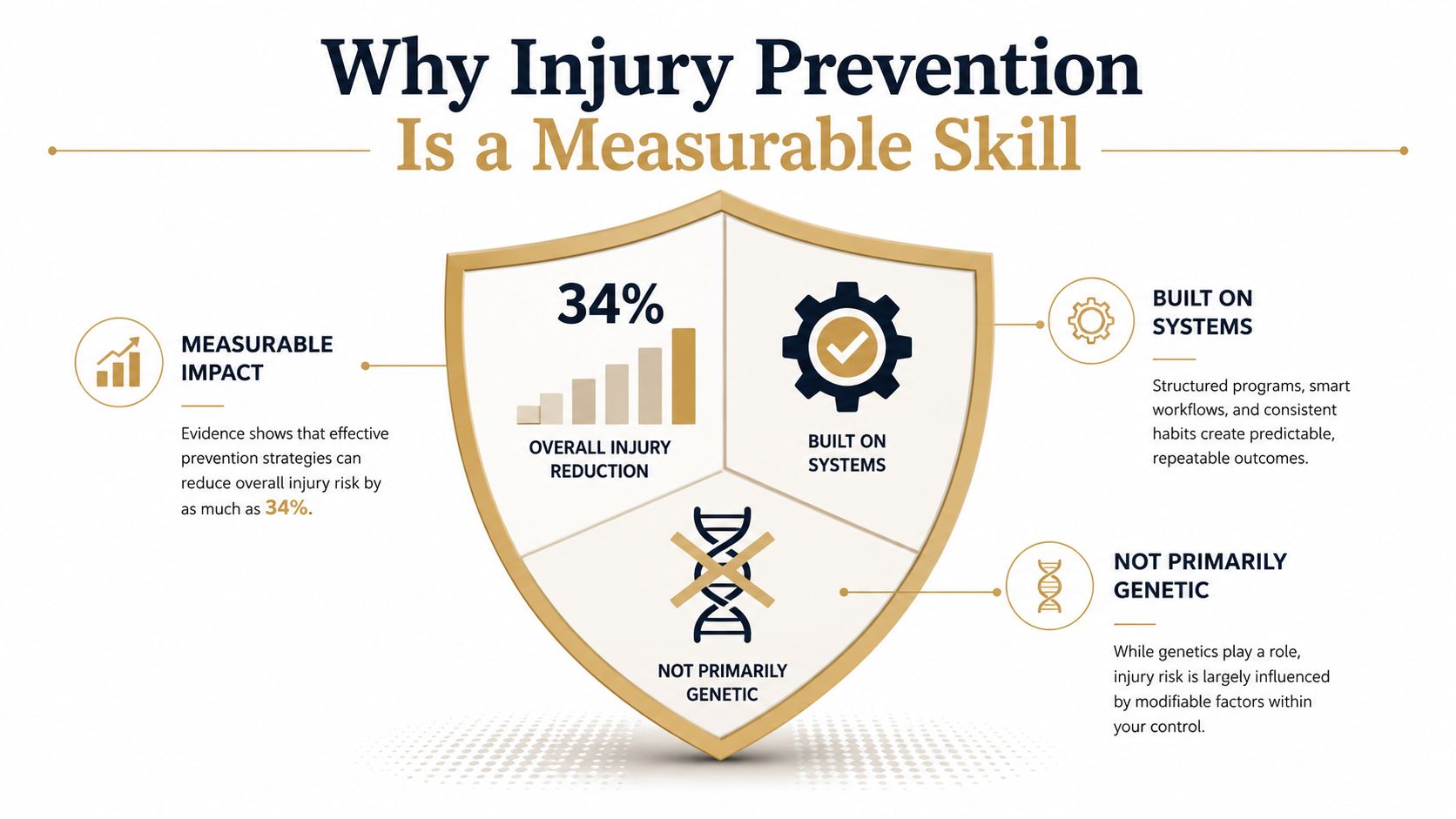
The best evidence says injury risk is not fixed. A systematic review found that prevention programs reduced overall injuries by 34% and injuries per hour of exposure by 37% (systematic review). That changes the job. Instead of telling athletes to “be careful,” I want a program that changes the odds in a measurable way.
Acute injuries and overuse injuries do not come from the same process, so they should not be managed the same way. A sudden ankle sprain, a torn ligament, or a fracture usually calls for better reaction control, landing mechanics, and protective support. Overuse problems, like tendon and stress injuries, usually come from repeated load that outpaces tissue tolerance, so they respond better to smarter volume control, conditioning, and recovery. A runner who spikes mileage and a court athlete who keeps landing on poor mechanics need different prevention plans, even if both are fit.
A separate review in JAMA review reported that multifactorial soccer prevention work lowered the general injury rate, ankle disc training paired with a thorough warm-up helped in handball, and ankle supports lowered ankle sprain risk. The pattern is plain. Multi-component beats single-measure.
Practical rule: if a prevention plan only adds a few stretches, it is usually too small to matter.
A solid prevention workflow starts with surveillance. Establish the injury burden, identify the main mechanisms and risk factors, implement a measure, then re-measure to see whether rates changed (surveillance framework). That repeat-assessment step is what turns a routine into evidence-based prevention. Without it, a team can feel organized while still missing the mark.
For an athlete or active adult, baseline data can be simple. Write down current pain, prior injuries, training volume, and activity type before changing anything. Then reassess the same items after a few weeks of the new plan, especially if the goal is to improve ankle stability for court sports, hip control for runners, or shoulder mobility for overhead athletes. If back extension keeps showing up as a limit, use a targeted mobility drill such as a back arch stretch guide rather than guessing at random drills. Golfers who need more rotation and trunk control can also benefit from golf flexibility exercises for 2025, because the prevention plan has to match the demands of the sport.
Document what hurts, what you are doing, and how often you are doing it. If the pattern does not change, the program needs to change.
That is why self-monitoring matters more than copying someone else's routine. A basketball player with repeated ankle rolls and a runner with hip weakness need different solutions, even if both are training hard. Injury prevention becomes effective when the plan matches the movement pattern, the tissue load, and the sport.
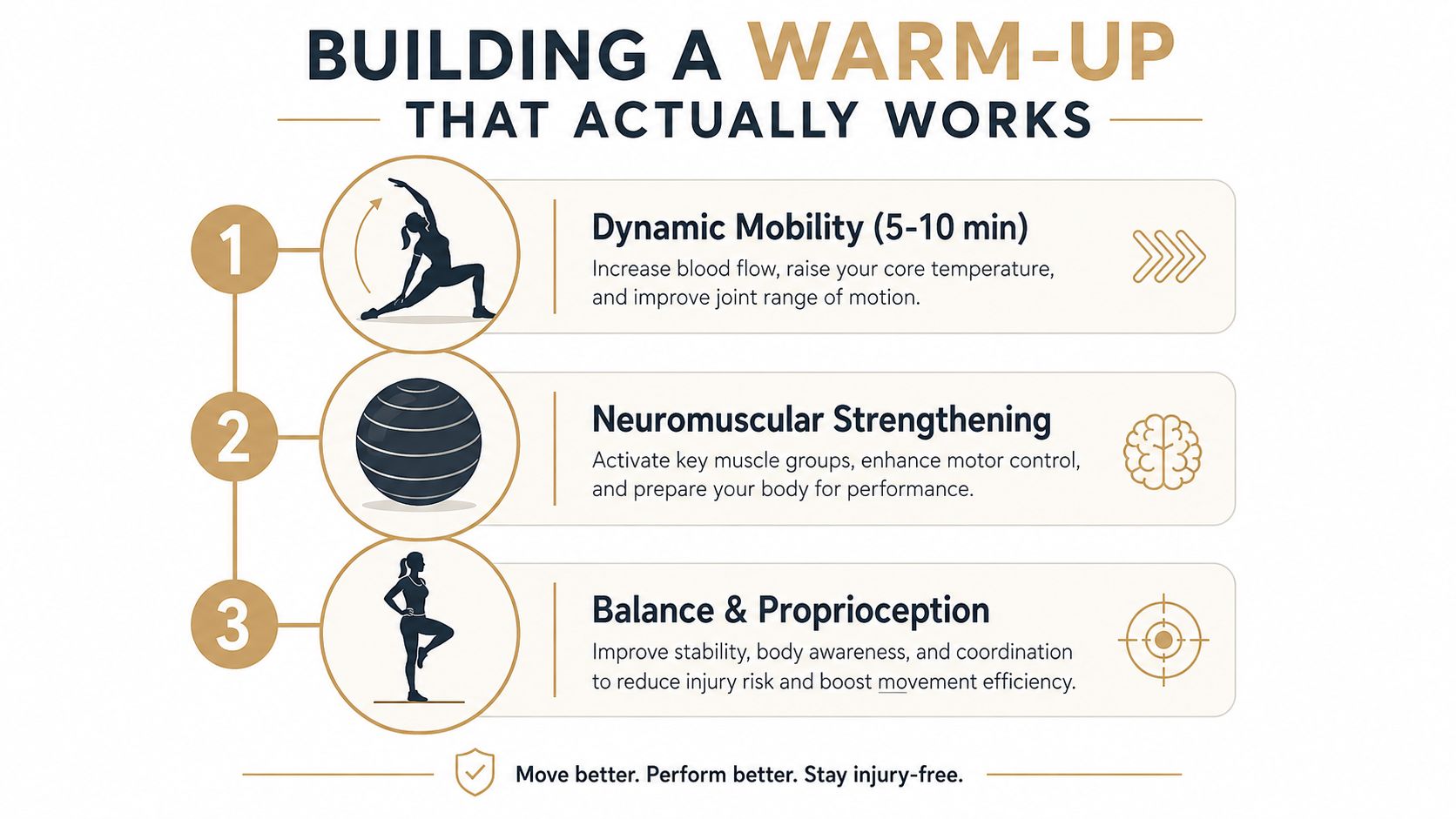
A warm-up has to change what the body can do, not just raise temperature. The most useful version is neuromuscular, because it primes coordination, force production, and movement control before the session starts. European dual-career guidance supports a multi-component structure with dynamic mobility, strengthening, balance, plyometrics, and sport-specific drills, while the broader evidence base shows that static stretching alone does not prepare the body as well (European guidelines). Stretching can feel useful, but a full warm-up does a better job of preparing tissue and movement patterns for load.
A workable sequence is straightforward. Start with 5 to 10 minutes of low-intensity movement, then move into dynamic mobility through full range, then activate the weak links, then finish with sport-specific drills at rising intensity. A runner may use brisk walking or easy jogging, leg swings, and single-leg hops. A tennis player may use shoulder circles, trunk rotation, and split-step rehearsal.
A warm-up should make the first hard rep feel smoother, and it should expose obvious movement problems before the work set begins. I like glute bridges, banded lateral walks, scapular retractions, and a few controlled accelerations or change-of-direction drills before the main session. Those drills wake up the tissues that usually fail under load and give you a quick read on readiness.
Johns Hopkins recommends alternating muscle groups, using a cooldown that lasts twice as long as the warm-up, and stretching only to the point of tension, not pain, with each stretch held for up to 20 seconds (Johns Hopkins Medicine). For a sport-specific mobility menu, golf flexibility exercises for 2025 shows how mobility can be tied to a movement goal instead of treated as a generic stretch list.
A simple internal reference point for the lower back can also help when you are deciding which motions are appropriate, especially if you are screening the hips and trunk before activity. A back arch stretch can be one useful option in that setting. Use mobility as preparation, and keep it tied to the demands of the session.
A session feels better when the body has been prepared for it, but long-term injury prevention comes from the work that changes what the athlete can tolerate over time. Progressive strength training, balance work, landing mechanics, and plyometric progressions need a place in the program if you want the body to handle force more reliably.
A multi-component approach works better than a single drill because injuries usually grow out of several small faults at once. The randomized-trial evidence in the JAMA review showed a multifactorial soccer program reduced general injury risk, while ankle-disc training plus warm-up in handball and ankle supports also lowered sprain risk (JAMA review). That does not mean every athlete needs the same routine. It means the package matters more than one isolated exercise.
Practical rule: if the athlete only gets stronger in the gym but still lands poorly, cuts awkwardly, or decelerates late, the program is incomplete.
A useful weekly structure is two to three sessions centered on movement quality. Start with bodyweight squats, hinges, step-downs, single-leg balance, and low-level hops. Then build toward loaded split squats, Romanian deadlifts, carries, and deceleration drills as control improves.
For common injury sites, the targets are predictable. Ankles need balance and landing control. Knees need deceleration mechanics and hip support. Hips need strength through range, and improving hip mobility can help when stiffness limits clean movement. The core needs anti-rotation and trunk control. Shoulders need scapular control and overhead tolerance. If you train a runner, emphasize hip stability and single-leg control. If you train a soccer player, add lateral cutting and braking mechanics. If you train a basketball player, spend real time on deceleration and repeat jump landing.
A six- to twelve-week build works better than random exercise hopping because tissues adapt when the stimulus is repeated and increased in a controlled way. A plan built around progressive overload explained by BionicGym fits that logic, as long as the load rises only as movement quality holds. That is also where coordinated rehab and exercise planning can fit naturally, and it is where corrective exercise, mobility therapy, and rehabilitation exercise become useful within a broader prevention strategy, including at places such as Aspen Falls Wellness.
Load is the quiet driver behind a lot of preventable problems. University of Chicago Medicine warns against increasing mileage or workout duration by more than 10% per week, because sudden jumps in volume are a major injury trigger (University of Chicago Medicine). That guidance is simple because the body usually prefers boring progress to dramatic spikes.
A runner coming back after a break should track mileage, duration, or both, then let the increase stay controlled. A gym trainee who's adding a second sport should count total weekly stress, not just the new workouts. A baseball or tennis athlete should also watch throws, swings, or serves, because the relevant load isn't always measured in miles.
Rate of perceived exertion, sleep quality, and morning resting heart rate can all help flag rising fatigue before pain fully settles in. They're not magic, but they're useful when they move in the wrong direction at the same time that training volume rises. Cumulative life stress matters too, because poor sleep, travel, work pressure, and hard training can stack into one recovery deficit.
A structured plan beats enthusiasm. If the week is already heavy, adding another hard session may look harmless on paper and still push tissue tolerance too far. A clinician's job here is often to help an athlete choose what not to do.
Volume is only one part of the load picture. Recovery debt from life stress counts, even when the workout log looks clean.
For readers who want a deeper look at progression logic, progressive overload explained by BionicGym is a helpful reference point for the broader training concept. In practice, the safest version of progressive overload is the one that respects the athlete's current capacity instead of chasing speed of progress.
Sleep is still the most underused recovery tool. Most adults do better with 7 to 9 hours on a consistent schedule, because the body repairs better when timing is steady and sleep isn't constantly shifted around. Nutrition matters too, especially adequate protein, regular hydration, and meals timed around training so the body isn't trying to adapt in a low-fuel state.
Active recovery should stay active, not punishing. Light mobility, easy walking, cycling, or controlled range-of-motion work on rest days can help tissues tolerate the next session. What doesn't help is turning every “recovery day” into another workout in disguise.
Footwear and protective gear should match the sport and the athlete's history. Running shoes eventually wear out, and ankle braces make more sense for someone with prior sprains than for someone with no instability history. Mouthguards belong in contact sports, and helmets need to fit correctly, not just exist.
If you want a practical look at compression support during recovery, choose a compression sleeve for recovery is a reasonable starting point for understanding when a sleeve may fit into a broader plan. The point, though, is that gear supports the program, it doesn't replace technique.
A recreational tennis player with recurring shoulder pain is a good example. Changing racket string tension, grip size, and stroke mechanics may matter as much as changing the shoulder exercise list, because the problem often lives in the way force is being transferred. That's why technique coaching usually beats chasing equipment upgrades alone.
A common mistake is waiting too long to get evaluated. If pain keeps showing up after modified training, if the same spot keeps getting reinjured, if range of motion is shrinking, or if numbness, tingling, weakness, or sleep-disrupting pain is present, self-management has probably reached its limit. Post-collision symptoms like whiplash also deserve a proper assessment, not guesswork.
I've seen plenty of athletes try to solve a recurring problem with more stretching, more rest, or a different shoe, only to find that the underlying issue was a movement deficit or an irritated joint that needed a coordinated exam. Early evaluation often prevents a small problem from becoming a chronic one. That matters most when symptoms are changing faster than the athlete can adapt.
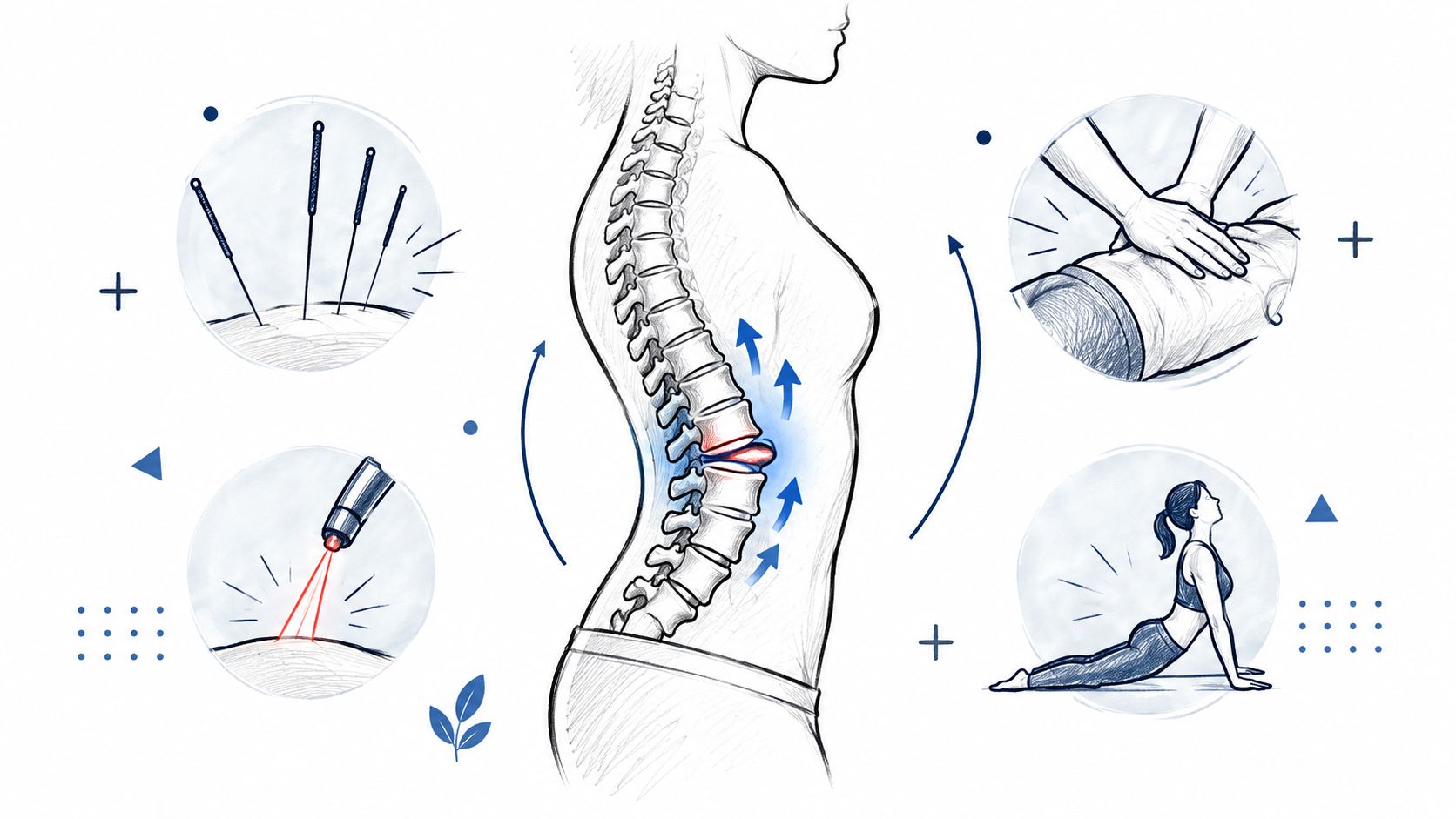
An integrative musculoskeletal evaluation usually starts with a thorough exam and imaging referral when it is warranted. From there, care may include chiropractic adjustment, spinal decompression, SoftWave therapy, MLS laser therapy, massage therapy, acupuncture, mobility therapy, nutrition counseling, rehabilitation exercise, or a golf movement screen when swing mechanics are part of the load problem.
That kind of coordinated model is part of the service set at Aspen Falls Wellness, and it fits athletes who need symptom relief and movement retraining in the same plan. The value is not that every tool gets used, it is that the plan matches the tissue, the sport, and the stage of recovery.
If you are dealing with a stubborn sports injury, stop guessing and get a sports injury chiropractor evaluation. Visit Aspen Falls Wellness to get an evaluation, build a prevention plan that fits your sport, and find out whether manual care, rehabilitation exercise, mobility work, or decompression belongs in your next step.
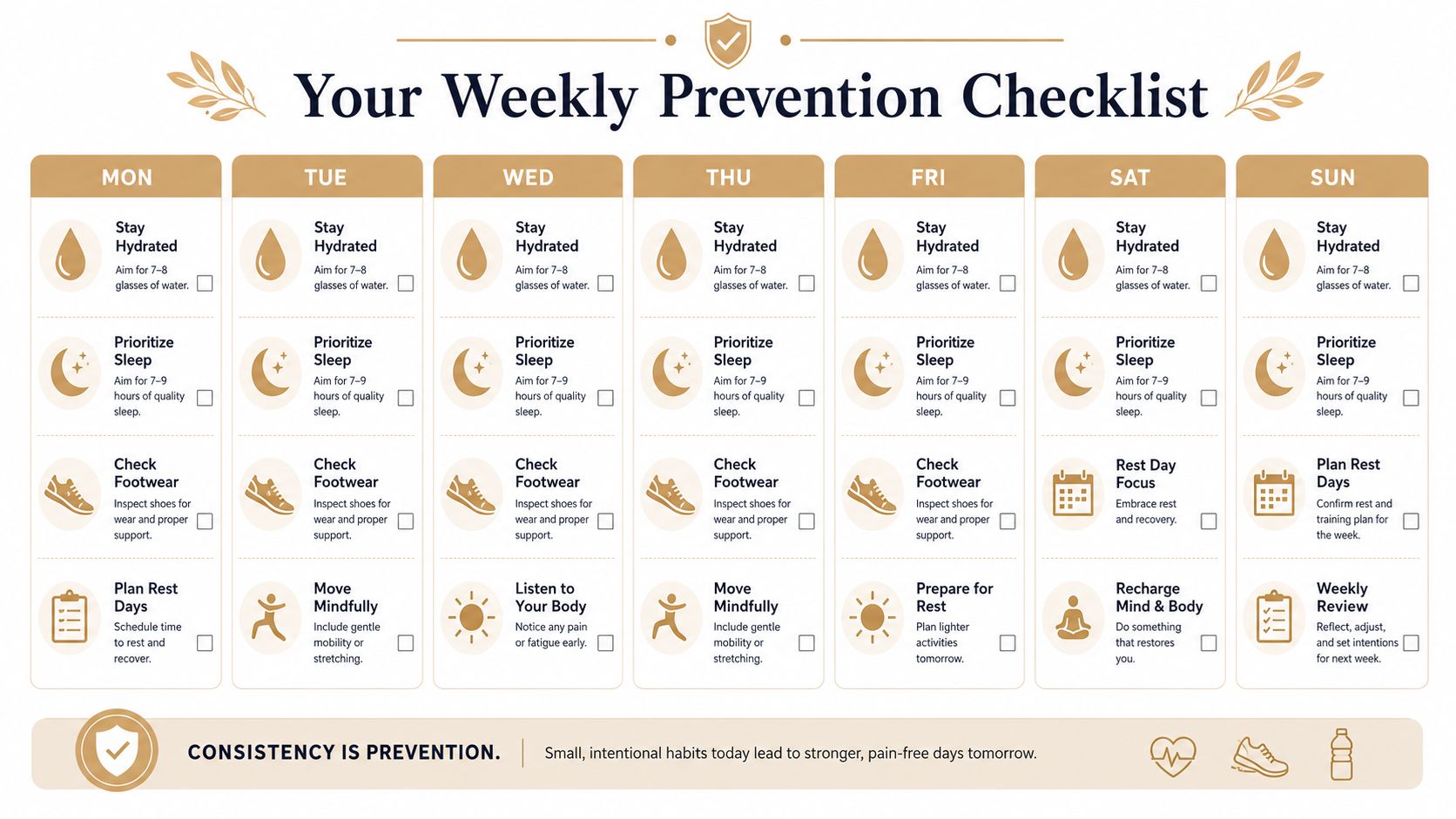
A good prevention week is boring in the best way. It starts with sleep that stays consistent, hydration that doesn't depend on memory, and a quick check that footwear and equipment still match the activity. It also includes a warm-up that prepares the tissues you use, not just the tissues you like thinking about.
Here's the cleanest way to approach the concept.
If the weekly checklist never changes, the injury risk usually doesn't change either.
The advantage of a checklist is that it exposes drift. You can see when sleep slips, when load creeps up, or when one joint keeps showing up as the weak link. That's the moment to pull back, change the exercise selection, or get a professional assessment rather than waiting for the next flare-up.
Prevention works when it's repeated, measured, and adjusted. That's the same surveillance mindset from the opening section, and it's what keeps a good routine from becoming empty routine. Keep the plan specific, keep the load gradual, and keep reassessing what the body is telling you.

Stay updated with the latest chiropractic news and exclusive offers.