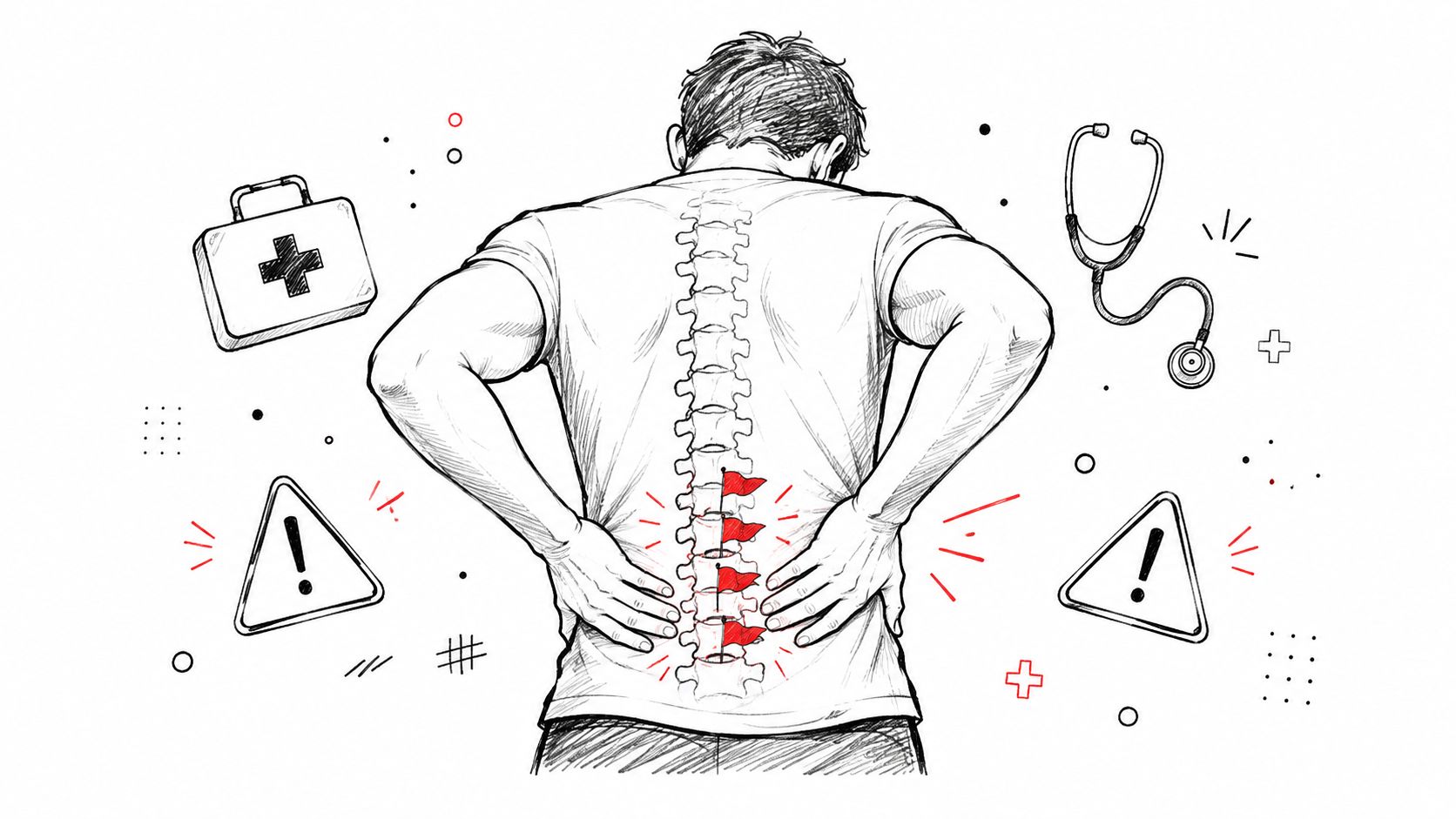
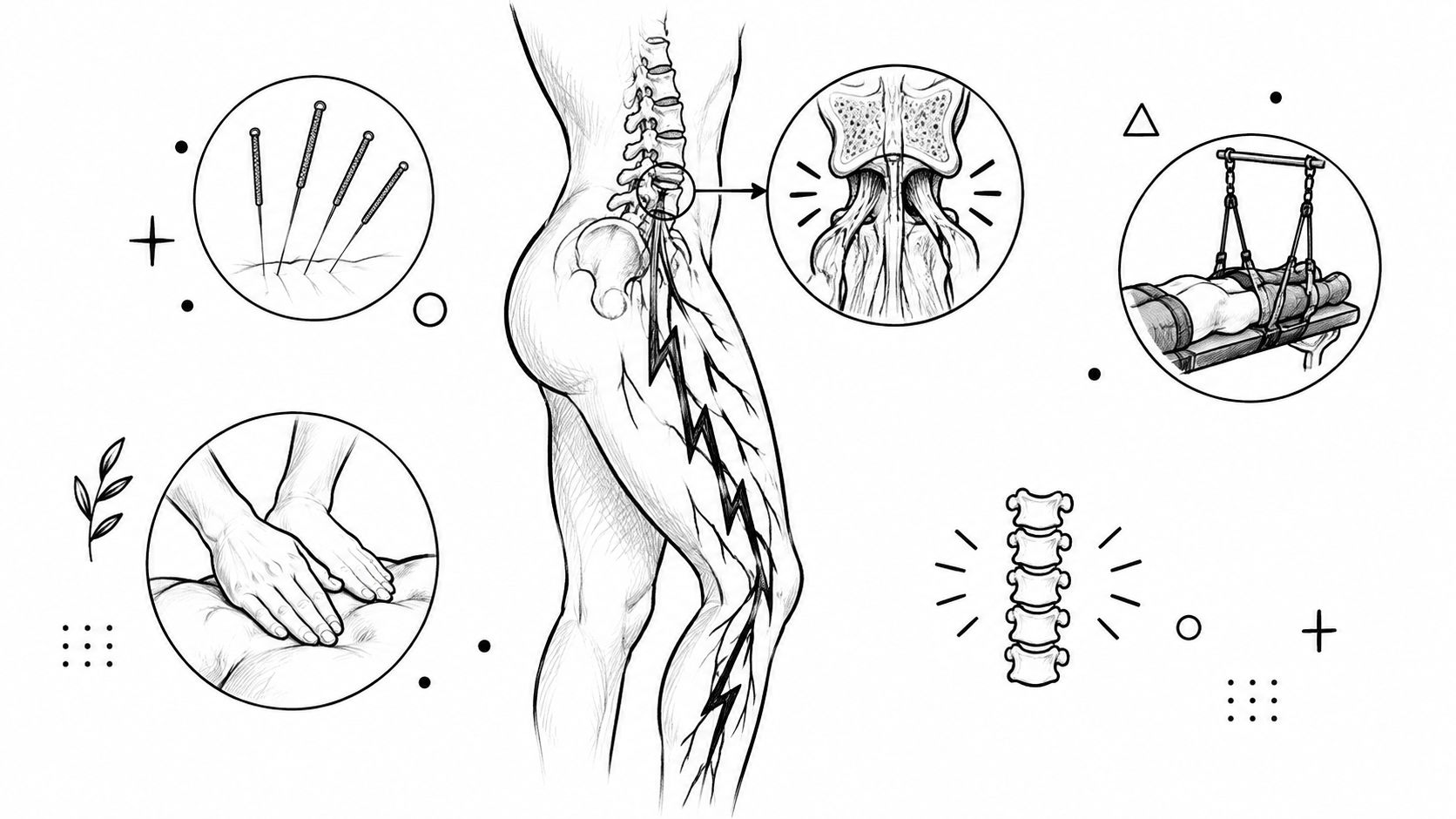
Lumbar Stenosis Chiropractic Treatment: what the evidence supports, which exercises and therapies help, and when to seek urgent care.
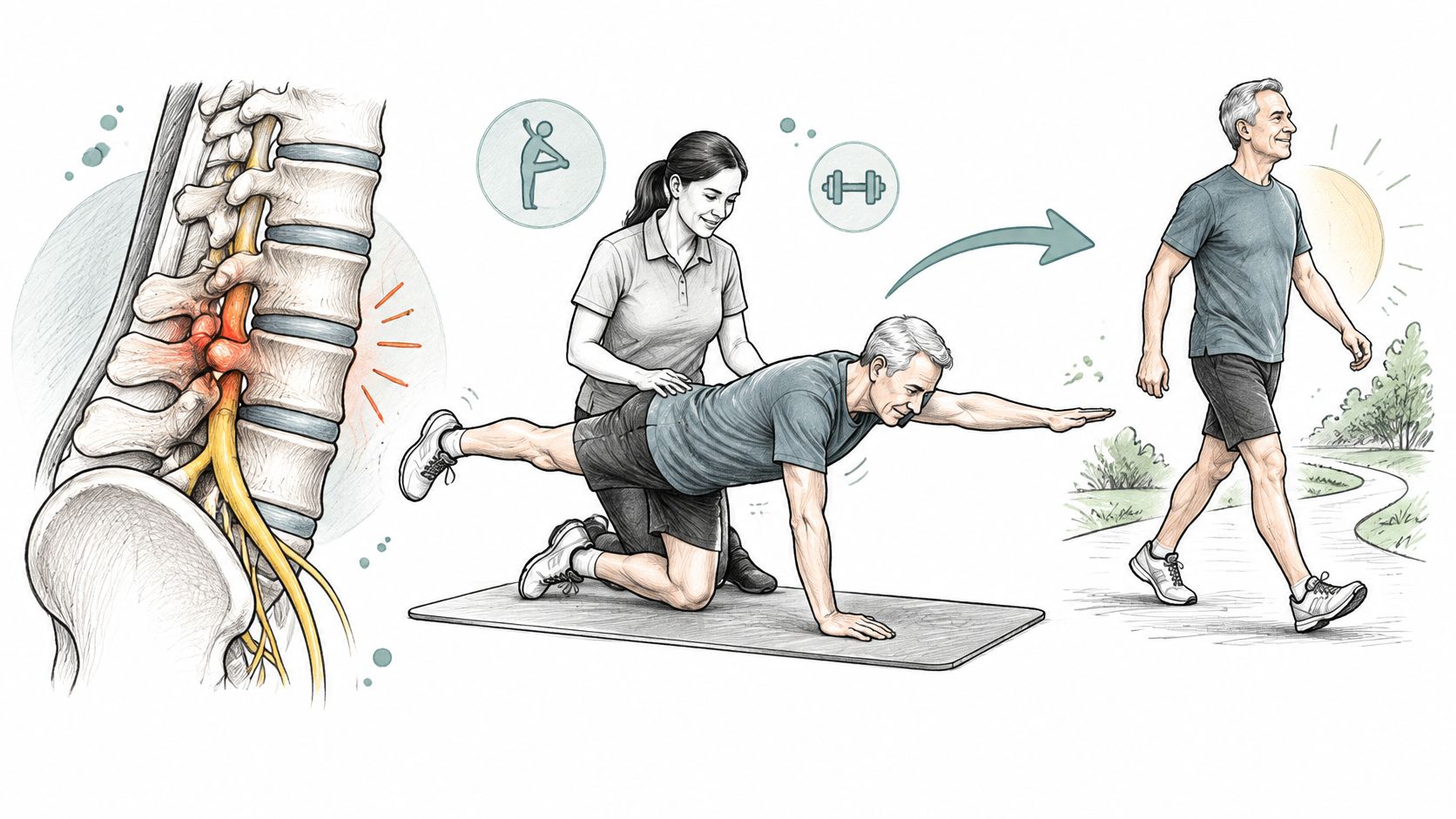
You can walk from the parking lot to the grocery store, but halfway through shopping your legs feel heavy and numb. Sitting helps, and leaning over the cart makes moving easier. If an MRI has shown lumbar stenosis, you may be wondering whether chiropractic treatment can help you walk farther, or whether anyone can fix the narrowing.
Those are different questions. A useful treatment plan separates symptom relief and better function from claims about changing spinal anatomy, then gives you a clear way to judge whether care is worthwhile.
Chiropractic care can be a reasonable part of conservative management for many people with lumbar stenosis, though the reviewed evidence doesn't establish that it reverses narrowing or works as a stand-alone cure. Its realistic job is better walking tolerance and day-to-day function, delivered through coordinated care that combines several techniques.
A foundational review of chiropractic treatment found only 6 eligible studies involving 70 patients, with no randomized controlled trials or case-control studies. Although the reports described positive outcomes, their small samples and lack of controlled comparisons left the findings preliminary.
The options below don't have interchangeable evidence. A treatment may have a plausible symptom-relief role without having demonstrated that it treats stenosis itself.
| Option | Main aim | Evidence status for stenosis | Role in a plan |
|---|---|---|---|
| Chiropractic adjustment and manual therapy | Joint and soft-tissue mobility | Positive in small studies; no stand-alone proof | One component alongside exercise |
| Individualized exercise | Strength, walking tolerance, function | Supported as monitored conservative care | Core of the plan |
| Non-surgical spinal decompression (DRX9000) | Disc-related pain and nerve irritation | Not covered by the reviewed trials | Optional add-on, judged by outcomes |
| MLS laser therapy | Pain relief and reduced inflammation | Not covered by the reviewed trials | Adjunct for symptom relief |
| Massage therapy | Muscle and soft-tissue tension | Not covered by the reviewed trials | Adjunct for soft-tissue dysfunction |
| Acupuncture | Pain modulation | Listed in guidance; few high-quality trials | Optional adjunct or stand-alone service |
| Medical care | Symptom control and monitoring | Comparator in the key comparative trial | Baseline and referral pathway |
Medical care gives you symptom management, examination, and a referral route, and it served as the comparison treatment in a key comparative trial. The American Academy of Family Physicians review places nonoperative treatment first when no findings require urgent surgical evaluation, while acknowledging limited high-quality evidence for many individual options. That gap between a plausible benefit and a proven benefit is why your expectations matter before a trial of care begins.
The most useful yardsticks are functional: the distance you can walk before leg symptoms begin, how long you can stand comfortably, and whether ordinary errands get easier over several weeks of consistent care. If those measures stay flat, the plan deserves reassessment or a different approach.
Track results against specific tasks. Walking to the mailbox or finishing a grocery trip gives you a concrete benchmark that a promise about your spine cannot.
Get changing weakness assessed first. A foot that's becoming harder to lift needs medical review before routine treatment continues.
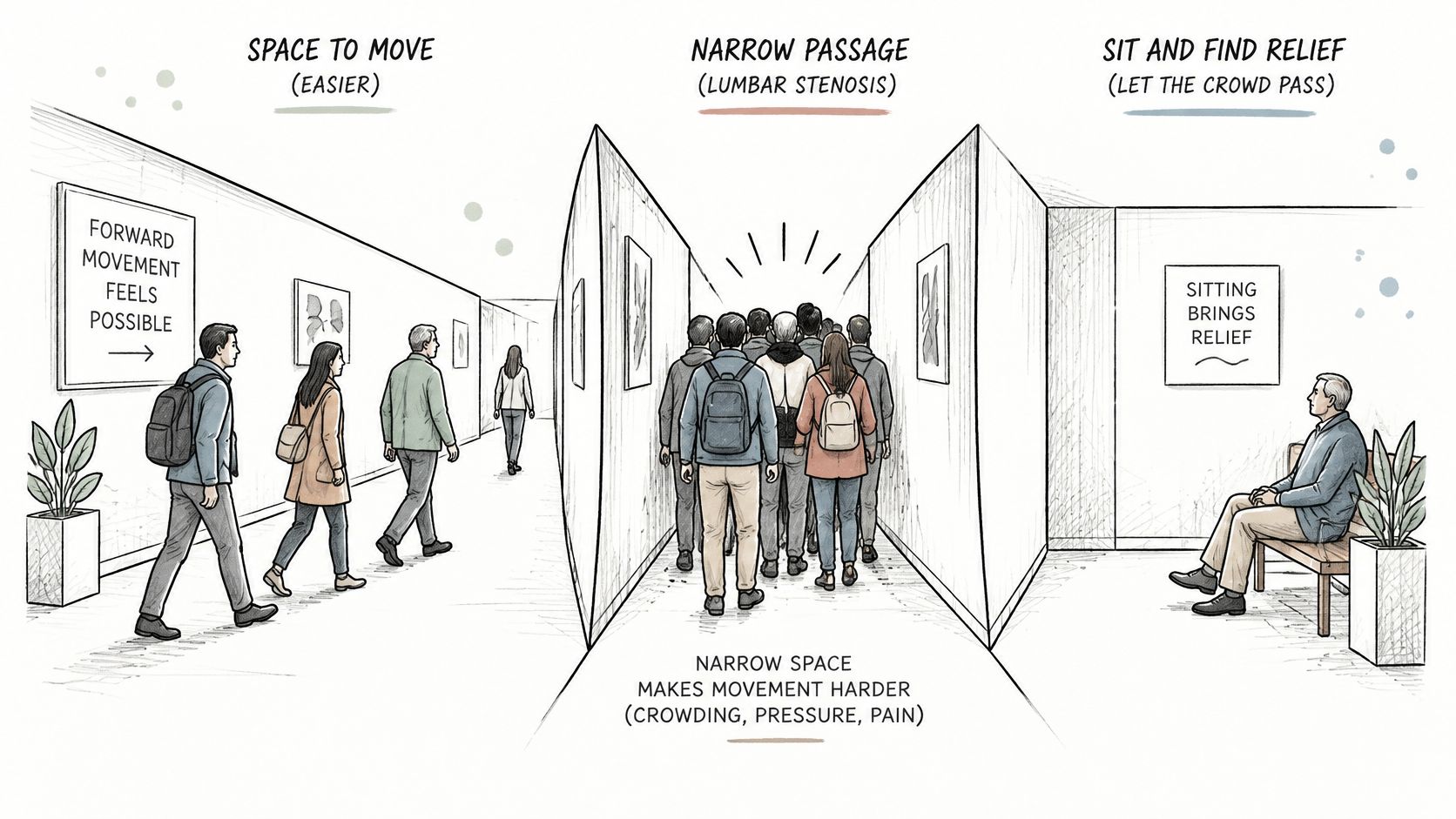
Think of a hallway with a narrow passage. People may move through comfortably when demand is low, but congestion develops when more people try to pass. For someone with lumbar stenosis, standing and walking can bring on symptoms, while sitting is like stepping aside and reducing the immediate demand.
The analogy isn't exact, but it helps explain why you can feel comfortable in a chair and struggle on a walk. The problem isn't necessarily a continuously painful back.
The spinal canal contains the nerves traveling through the lower spine. Other openings allow individual nerve roots to leave it. With degenerative changes, discs can lose height or bulge, ligaments can thicken, and bone spurs can reduce the available space.
Neurogenic claudication describes leg heaviness, aching, tingling, or numbness that builds with standing or walking and eases with sitting or leaning forward. Say you can comfortably ride a stationary bike but struggle to stand at the kitchen counter. That pattern is useful information during an examination, though it doesn't establish the diagnosis by itself.
Radicular pain, often called sciatica, follows an irritated nerve root and may feel like a band of pain traveling down the leg. These patterns can overlap, but sciatica treatment shouldn't automatically be treated as identical to stenosis care.
An MRI shows anatomy, not how comfortably you can prepare dinner, climb stairs, or walk outside. The amount of visible narrowing doesn't always match symptom severity, so clinicians also assess strength, sensation, walking, and the positions that change symptoms. Our explanation of how spinal stenosis is diagnosed describes how these pieces fit together.
Conservative treatment aims to make daily movement more manageable, not remove bone spurs. Bring these questions to your examination:
One randomized clinical trial enrolled 259 adults with symptomatic lumbar spinal stenosis and defined a responder as a participant who achieved at least 30% improvement. The table below shows each group's responder rates at two months.
| Treatment group | Symptom and function responders | Walking-capacity responders | Symptom gain at six months |
|---|---|---|---|
| Manual therapy plus individualized exercise | 20% | 65.3% | Between-group advantage not maintained |
| Medical care | 7.6% | 48.7% | Not reported |
| Group exercise | 3.0% | 46.2% | Not reported |
Source: randomized clinical trial of 259 adults with symptomatic lumbar spinal stenosis.
The same trial reported adjusted symptom and function differences of approximately 2.0 points compared with medical care and 2.4 points compared with group exercise. The manual-therapy group's symptom advantage wasn't maintained at six months, although all groups retained improvements in walking performance.
The distinction between outcomes matters. More participants met the walking-response threshold than the combined symptom-and-function threshold, so better walking didn't mean every aspect of the condition improved equally. The "not reported" entries mean that outcome wasn't measured for those groups. And none of these results show that the canal itself widened. They show that some participants moved and functioned better.
The treatment also combined manual therapy with individualized exercise. The package works like a recipe: the ingredients were delivered together, so the results can't be credited to manipulation alone.
A 2022 systematic review of nonoperative treatment assessed 44 randomized controlled trials and found moderate-quality evidence for clinically important short-term benefits from manual therapy combined with individualized exercise. It also found that community-based group exercise improved physical activity in the short term compared with medical care.
Smaller studies offer narrower lessons. The North American Spine Society guideline describes a 45-patient study in which exercise with ultrasound and exercise with sham ultrasound improved disability, pain, and walking at three weeks, yet it concludes that evidence is insufficient to recommend for or against exercise or physical therapy as stand-alone treatment.
That's a reason to monitor exercise closely. Understanding what therapeutic exercise involves helps distinguish a targeted program from a generic sheet of stretches.
A treatment package can improve function without proving that every component works independently.
Individual prediction remains uncertain. Age, smoking status, baseline disability, and symptom burden shouldn't be used to promise that a particular person will respond.
The same evidence-checking habit applies to supplements: the Pumpernickel Health Foods discussion of NICE guidance on glucosamine is a resource for weighing joint-health claims rather than evidence that supplements treat lumbar stenosis.
Success means doing more of what matters with less symptom interference. For lumbar stenosis chiropractic treatment, that might mean standing long enough to cook, walking through a store without repeated stops, or sleeping more comfortably. A trial counts as working when those everyday capacities improve, even if imaging would show the same narrowed canal it did before.
A review of contemporary lumbar stenosis management describes conservative care as targeting symptoms and function, and notes that long-term nonsurgical outcomes can be comparable to surgical outcomes for some patients. The evidence is mixed, however, and patient selection matters, so that finding should never delay an appropriate surgical consultation.
Record a baseline before treatment begins. Use the same route, task, or recording method at reassessment so you are comparing like with like. A different route or a flatter surface can make a weak result look like progress.
| Measure | How to record it | Why it matters |
|---|---|---|
| Walking distance | Meters or steps before leg symptoms start | Walking tolerance is the main functional goal |
| Standing time | Minutes standing before symptoms build | Shows daily tolerance outside the clinic |
| Leg symptoms | Rate severity and where it spreads at each visit | Tracks neurogenic symptom change |
| Sleep | Hours slept and nighttime waking | Reflects pain burden and recovery |
| Medication use | Doses per week | Shows whether pain-control needs are changing |
| Oswestry Disability Index | Questionnaire score at baseline and reassessment | Gives a standard measure of disability |
Bring the medication record to the prescribing clinician, who decides whether any dose change is warranted. A better pain score can also hide declining strength, so the reassessment should check strength and sensation alongside symptoms.
Agree on a fixed number of weeks, write down the specific goals, and book the reassessment at the first visit. No universally established treatment duration fits everyone, so each plan needs its own endpoint. Between appointments, a short daily log of walking distance and symptom triggers gives you the numbers to bring to that reassessment.
An active program can include symptom-guided walking or cycling, trunk and lower-limb strengthening, aerobic conditioning, balance practice, and rehearsal of everyday tasks. Supported walking or flexion-tolerant positions may make participation easier.
Practical rule: If your agreed measures have not improved at reassessment, seek a second opinion or change direction instead of extending the same care indefinitely.
When goals are met, discuss discharge and a home program. Ongoing visits should justify their time, cost, and treatment burden.
A useful care pathway connects the examination to a treatment decision and then to a progress check. It should not begin with a device or technique chosen before anyone has assessed your symptoms.
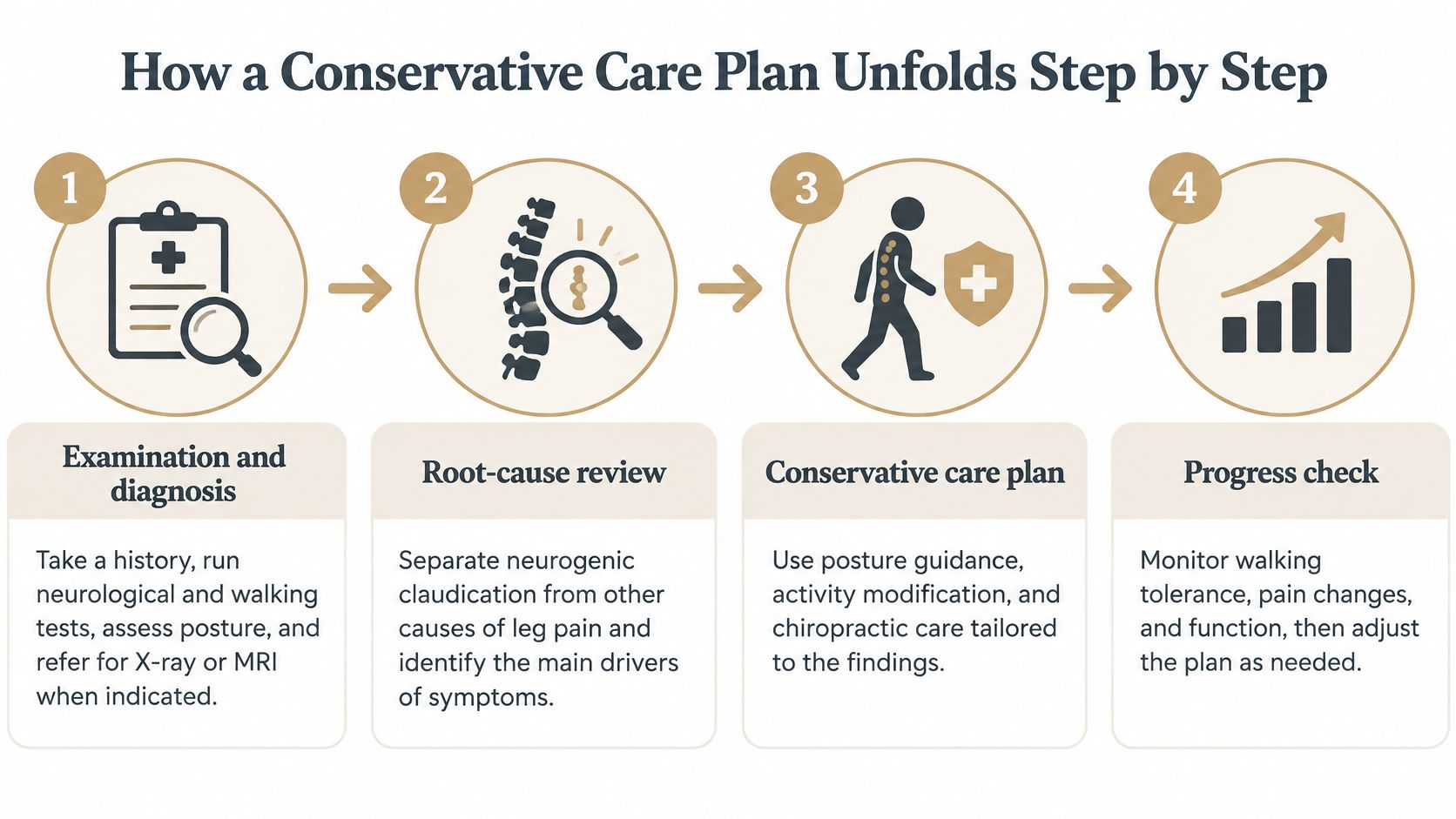
Examination and diagnosis. A thorough chiropractic evaluation aims to identify the underlying cause of the problem. History, neurological and walking tests, and posture assessment guide the examination, with X-ray or MRI referral when indicated.
Root-cause review. The clinician distinguishes neurogenic claudication from radicular pain and other causes of leg symptoms. Leg complaints that sound identical on the surface can come from different sources and call for different routes of care.
A customized plan. At Aspen Falls Wellness, the diagnosis guides a customized plan that may include chiropractic adjustments, DRX9000 Decompression, and/or MLS Laser Therapy. Chiropractic treatment often requires multiple visits, and the team explains the recommended extent and duration up front so the schedule is never left open-ended.
An early, tolerable starting point. Gentle mobilization or soft-tissue work can be paired with symptom-guided walking or cycling. Positioning and walking supports should help you participate without repeatedly provoking leg symptoms.
What you report between visits. Tell the clinician what changed in symptoms, walking tolerance, and everyday tasks, including anything that felt worse after treatment. A stalled or adverse response is a reason to reconsider the approach.
Strengthening and a home program. Trunk and leg strengthening, balance practice, and aerobic work enter at a tolerable level. Take-home exercises should come with clear instructions about technique, progression, and the symptoms that mean you should stop.
Progressing the program. As tolerance builds, the plan should demand more over time: longer walking intervals, harder balance work, added resistance. If it looks identical week after week, ask why. A plateau gives the scheduled review something concrete to act on.
Discharge or referral. The course ends when goals are met or when further visits no longer justify their time and cost, and you leave with a home program. The symptoms that call for a physician or urgent evaluation instead of another visit are covered under red flags that need urgent medical care.
At Aspen Falls Wellness, chiropractors, massage therapists, acupuncturists, mobility specialists, pain management specialists, and nutrition coaches design integrative care collaboratively. Coordination means each practitioner works toward the same functional goals, and each patient receives only the services their plan calls for.
Keep the home program usable: You should leave knowing which movements to perform, how to recognize an aggravating response, and whom to contact if symptoms change.
An adjunct earns its place by helping you participate or function better. Temporary comfort can be useful, but relief alone says little about whether a treatment is changing the course of stenosis.
Non-surgical spinal decompression with the DRX9000 targets disc-related pain and nerve irritation through a traction-based approach. Its reasonable role is an optional symptom-management trial alongside rehabilitation. The reviewed trials do not show DRX9000 benefit for stenosis specifically, and no traction device has been shown to permanently enlarge a narrowed canal.
MLS Laser Therapy is used for disc injuries, post-surgical pain, arthritis, sports injuries, plantar fasciitis, and neurological conditions, with the aim of reducing pain and inflammation. Those are general uses rather than stenosis-specific proof, so its contribution should be judged through the same walking and daily-function measures used for the rest of care.
SoftWave Therapy is also offered, but its evidence base differs from that of a combined manual-therapy and exercise program. Availability at a clinic is not, by itself, a reason a device belongs in your plan.
Massage therapy focuses on muscles and soft tissues, while chiropractic adjustments aim to restore motion to the spine and joints. These address different treatment targets, and the reviewed evidence for either modality does not show a stenosis-specific benefit on its own.
Acupuncture targets pain modulation and can be incorporated into a chiropractic plan or booked as a stand-alone service at Aspen Falls Wellness. That booking option should not be confused with proof that acupuncture alone manages stenosis. Its value still needs to be assessed against your goals.
Mobility therapy combines chiropractic adjustments, soft-tissue techniques, and guided exercise. Its practical role is to convert gains in movement tolerance into activities you can practice independently. Personal exercise plans and rehabilitation exercise should remain the core of care, with passive modalities supporting them.
Terms such as realignment can create confusion. Care can improve how a stiff spine moves and how far you walk, yet the degenerative narrowing itself generally remains on imaging. Expect better mechanics, not a wider canal.
Before starting an adjunct, make these questions explicit:
If a modality provides brief relief but no meaningful walking or functional gain by reassessment, remove it or reconsider its role. Adding passive treatments is not a substitute for deciding whether care is working.
| Red flag | Why it matters | Action |
|---|---|---|
| Progressive weakness in the leg or foot | Nerve compression may be progressing | Urgent medical evaluation |
| New bowel or bladder dysfunction | Possible serious nerve involvement | Emergency medical assessment |
| Saddle numbness around the groin or inner thighs | Requires urgent neurological review | Urgent medical evaluation |
| Severe pain that does not ease with rest or position change | Warrants prompt diagnosis | Prompt medical assessment before routine care |
New difficulty passing urine, loss of bladder control, or numbness around the saddle area shouldn't be saved for the next chiropractic appointment. Seek emergency assessment, especially when symptoms occur together or with changing leg strength.
The assumption that worsening symptoms are part of recovery is unsafe. Our guide to low back pain red flags can help you recognize findings that need a different level of care.
A systematic evidence review reported no serious adverse events in the 259-person comparative trial, but transient joint soreness occurred in 49% of the manual-therapy-plus-exercise group, 31% of the group-exercise group, and 6% of the medical-care group. A clean safety record in one monitored trial says little about whether a specific technique will suit a specific patient, so soreness still needs to be tracked person by person.
Temporary local soreness can occur after hands-on care and should settle rather than intensify. Pain increasing down the leg, spreading numbness, foot dragging, or declining strength isn't something to push through.
The review also found weak evidence for manipulation used alone. That makes careful selection, tolerable techniques, and neurological monitoring more important than insisting on a particular adjustment.
A lumbar spinal stenosis clinical pathway emphasizes symptom pattern, neurological findings, imaging, functional tolerance, and red flags when selecting care. It also distinguishes degenerative stenosis from serious spinal, vascular, inflammatory, infectious, malignant, and traumatic conditions that need another route of assessment.
Conservative care suits many mild-to-moderate presentations. Progressing deficits call for surgical or neurological evaluation instead, and any treatment underway should be modified or stopped when symptoms worsen.
Two checks come before any routine care:
Once those checks are clear, the Measuring Progress During a Conservative Care Trial section sets out how to choose trial length, pick walking or function measures, and schedule the reassessment.
Any red flag pauses routine chiropractic treatment until a physician has assessed it.
At Aspen Falls Wellness, we offer individualized chiropractic care, rehabilitation exercise, and coordinated non-surgical options for people with lumbar stenosis. Schedule an initial examination at our Salt Lake City or Sandy clinic to discuss your walking limitations, establish measurable goals, and determine whether conservative care or specialist referral is the appropriate next step.

Stay updated with the latest chiropractic news and exclusive offers.