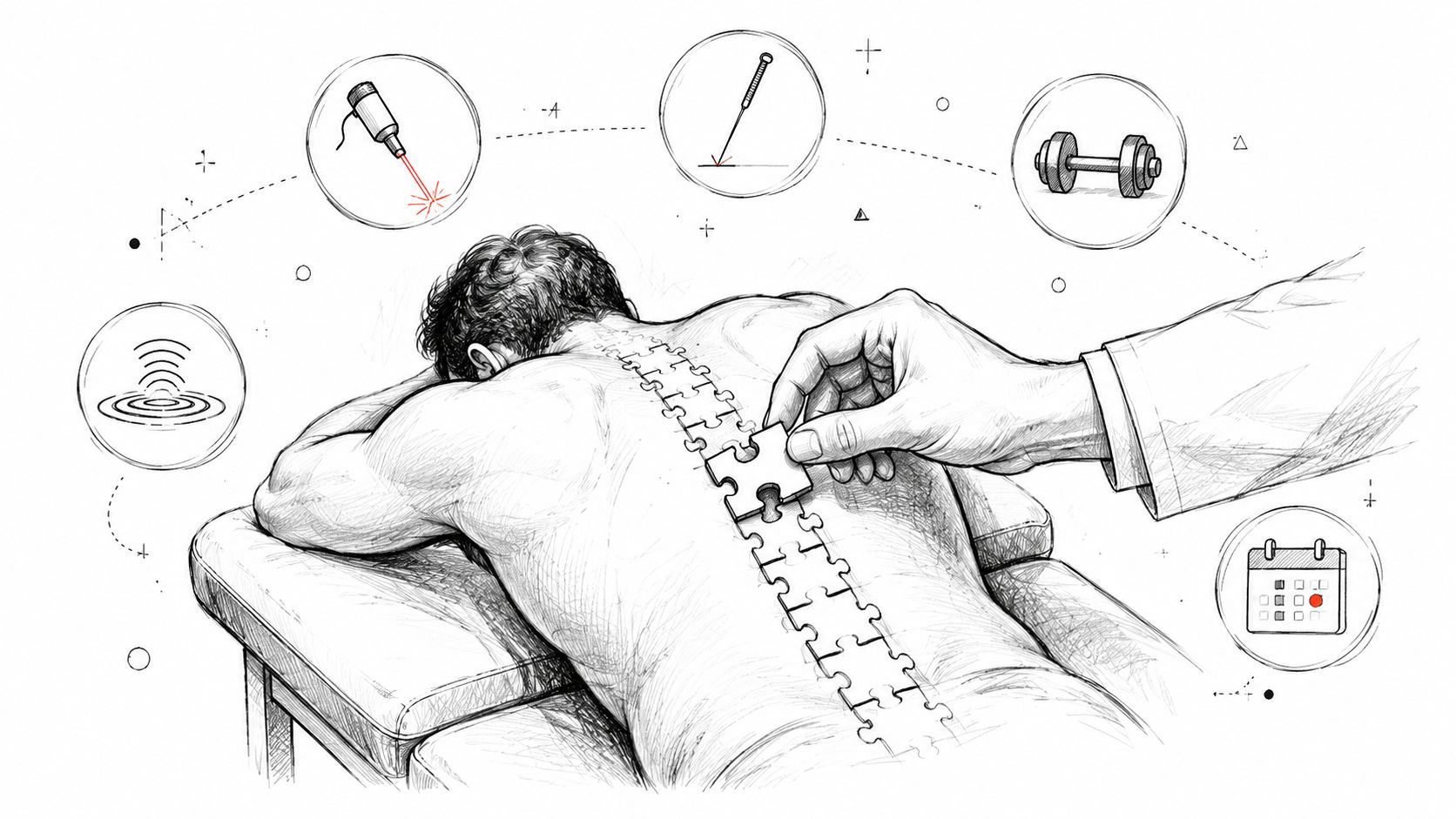
Discover what is therapeutic exercise and how it differs from standard workouts for effective back, neck, and joint recovery.
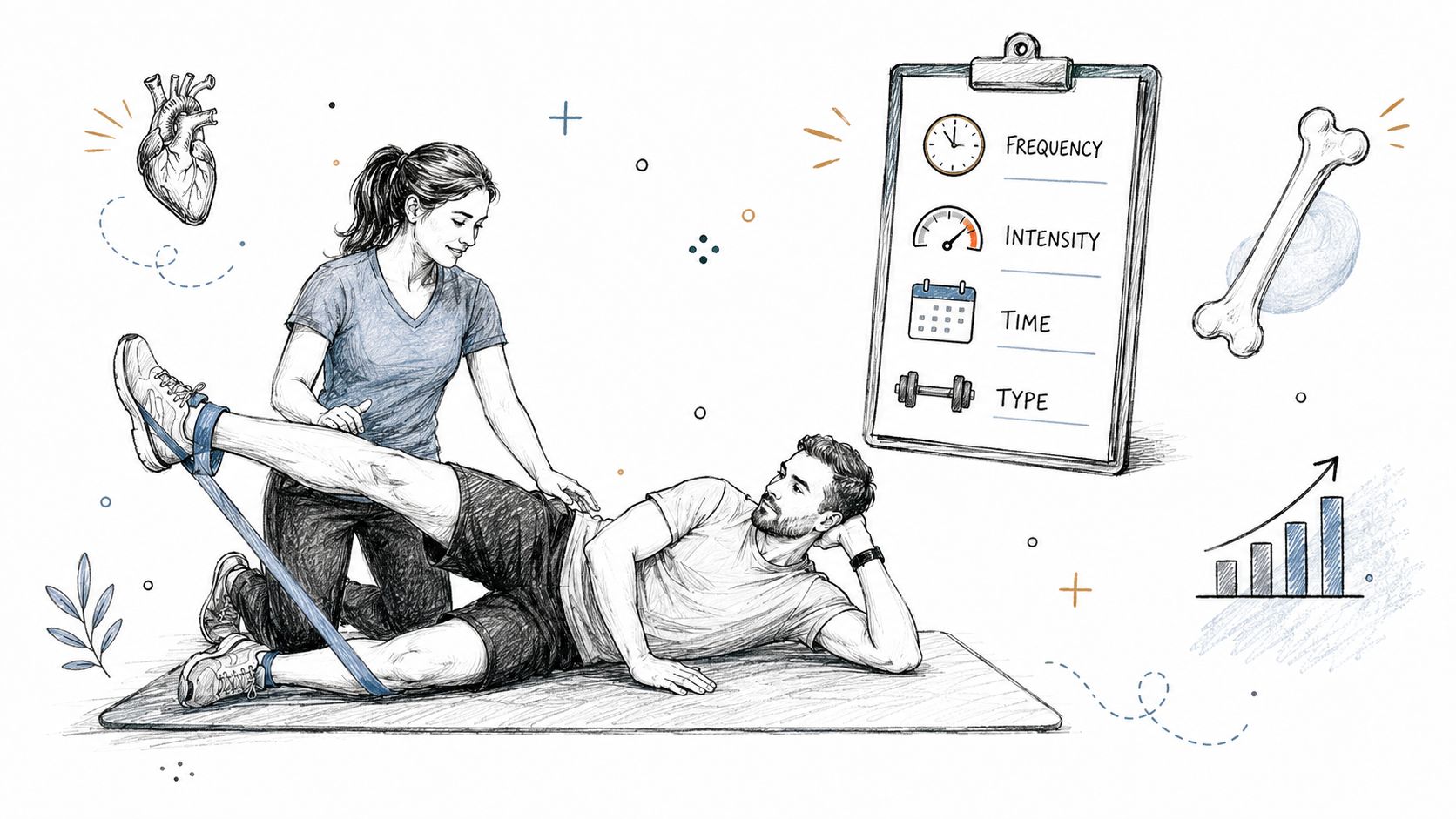



If your back or neck has been nagging you for weeks, you've probably already tried the usual fixes, maybe a few stretches, a walk after dinner, or a workout you hoped would “loosen things up.” Sometimes that helps for a day. Sometimes it just reminds you that generic movement and the right movement dose are not the same thing.
That's where therapeutic exercise comes in. It's not a fitness trend, and it's not just moving more. It's planned, structured, repetitive, and purposeful activity used to improve or maintain a health condition, which is why the same movement can feel helpful in one body and irritating in another. For anyone dealing with back pain, neck stiffness, sciatica, or recovery after an injury, the main question usually isn't whether to move. It's how much, how hard, how often, and when.
A lot of adults in Salt Lake City end up in the same spot. They've been stretching a tight back, walking to stay active, maybe even doing workouts they found online, but the pain never fully settles down. The problem usually isn't laziness or lack of effort. It's that back pain and neck pain often need a specific prescription, not just more movement.
Therapeutic exercise is that prescription. In clinical practice, it means planned, structured, repetitive, and purposeful physical activity chosen to improve or maintain a health condition. That's a very different idea from “exercise because exercise is good for you.” It's closer to a treatment plan than a workout style.
The difference matters because your body doesn't respond to every movement the same way. Someone with a stiff neck after long hours at a desk may need mobility work and posture retraining. Someone with a lumbar disc issue may need carefully progressed loading, not aggressive stretching. Someone recovering after an accident may need controlled, supervised movement before a home routine makes sense.
If you're new to care and want to understand how a clinic builds that kind of plan, start with Aspen Falls Wellness patient intake. It gives a sense of how an exam leads into a personalized approach instead of a one-size-fits-all list of exercises.
Practical rule: If a movement is chosen because it matches your condition, your tolerance, and your goal, it's therapy. If it's chosen just because it's popular, it's probably just exercise.
What makes therapeutic exercise different is intention. The clinician isn't asking, “What's a good workout?” The clinician is asking, “What stimulus will help this tissue, this joint, or this movement pattern recover?” That shift is why therapeutic exercise belongs in rehabilitation, not in the same bucket as casual fitness advice.
The cleanest way to understand therapeutic exercise is to break it into four words, planned, structured, repetitive, and purposeful. Planned means it's not random. Structured means the order, load, and progression matter. Repetitive means the body gets enough exposure to adapt. Purposeful means every drill has a job to do.
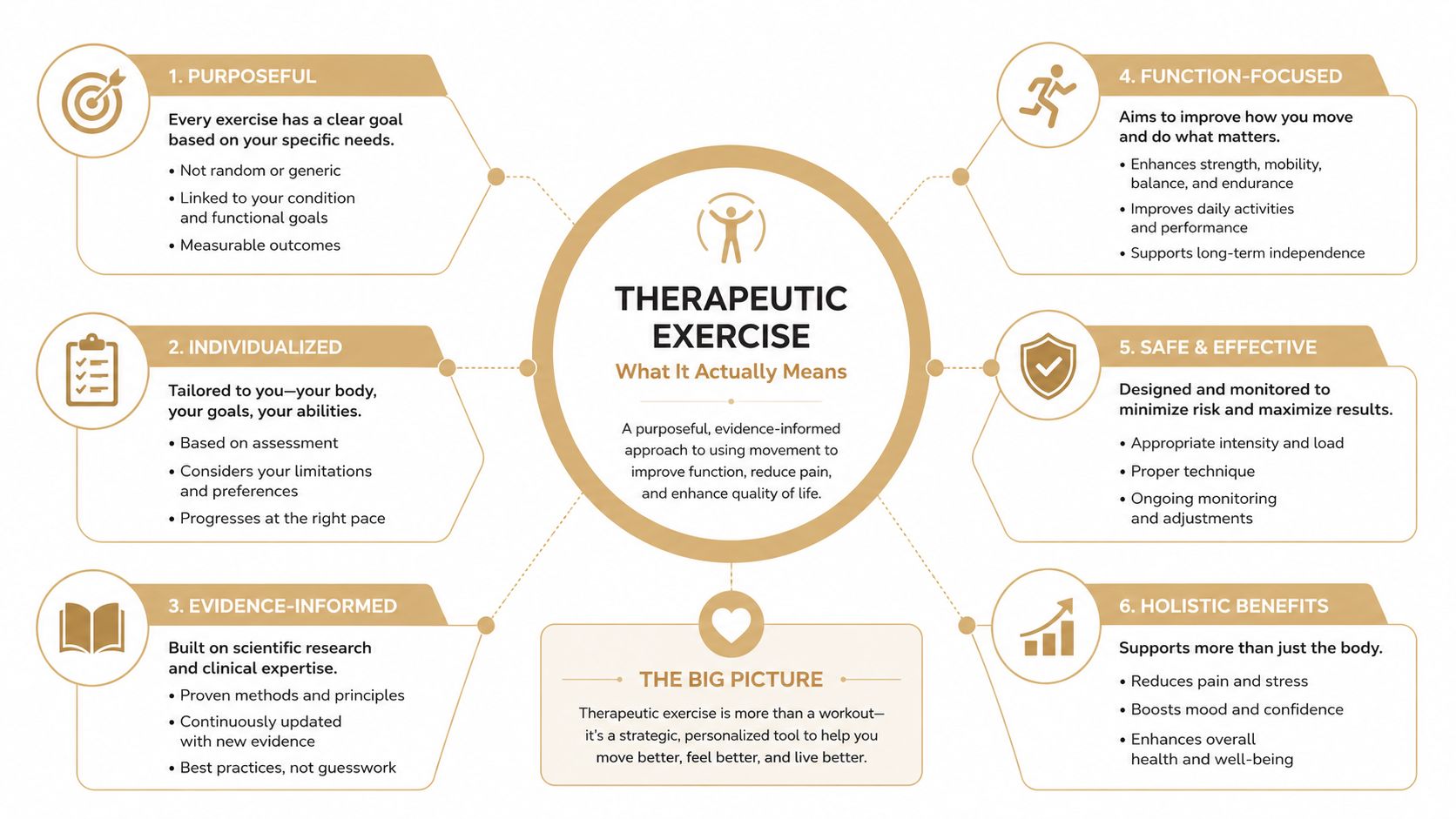
A useful way to think about it is as a dose, not a category. The same exercise can be too weak, just right, or too aggressive depending on the Frequency, Intensity, Time, and Type, or FITT model. Frequency is how often you do it. Intensity is how hard it feels. Time is how long the session lasts. Type is the kind of work you're doing, like mobility, strength, balance, or endurance.
That's why the dosage question matters so much. A gentle bridge, a resisted bridge, and a fast bridge are all “bridges,” but they don't send the same message to the body. One may calm symptoms and build confidence. Another may overload a sensitive back too soon. A clinician's job is to match the dose to the condition, the irritability, and the goal.
For someone healing after surgery or childbirth, that same logic shows up in the way movement gets reintroduced. A helpful resource on that kind of graded return is app-linked postnatal fitness advice, because the basic principle is the same, the right movement at the right time matters more than doing more.
Key takeaway: Therapeutic exercise is not “harder workouts for injured people.” It's carefully dosed loading with a clinical purpose.
The clinical vocabulary can sound formal, but the patient experience is simple. You start with what your body can do well, then you build from there without tipping into flare-up territory. That's the difference between random effort and a real treatment plan.
Therapeutic exercise works because the body adapts to the stress you give it. Muscles get stronger when they're asked to work. Connective tissue responds to controlled loading. The nervous system learns better coordination when movements are repeated with enough quality and consistency. The important idea is that exercise is a loading stimulus, not just a way to burn energy.
That's why there aren't “general” effects of exercise. The same movement can produce very different outcomes depending on intensity, duration, frequency, and tissue-specific timing after injury. Early after an injury, the load is usually lighter and more controlled. Later on, the program often gets more resistance, speed, and complexity so the tissue and nervous system can handle real-life demands again.
Therapeutic exercise usually aims at a few common targets:
Those targets sound clinical, but they show up in ordinary life. If your neck can turn farther, driving feels easier. If your trunk has more strength and endurance, sitting at work is less exhausting. If your balance improves, stairs feel less uncertain. If proprioception improves, the body stops reacting as if every movement is a threat.
The best therapeutic exercise plan doesn't chase fatigue for its own sake. It gives the body a signal it can use. Too little signal and nothing changes. Too much and pain can spike before adaptation happens.
Exercise prescription therefore lives in a narrow lane. It has to be enough to challenge the tissue, but not so much that it overwhelms recovery. That's why patient feedback matters every visit. Soreness, stiffness, and confidence all help guide the next dose.
A regular gym routine can be healthy. A stretching video can be useful. Neither one is automatically the same as therapeutic exercise, because purpose and progression are different. When the goal is recovery from a disc herniation, chronic neck pain, or post-whiplash stiffness, the exercise has to fit the condition, not just the calendar.
| Feature | Therapeutic Exercise | General Exercise |
|---|---|---|
| Purpose | Improve or maintain a specific health condition | Improve general fitness or performance |
| Dose | Matched to irritability, function, and tissue tolerance | Often chosen for convenience or preference |
| Supervision | Usually guided by a clinician or rehab plan | Often self-directed |
| Progression | Based on symptoms, mechanics, and function | Often based on time, habit, or effort |
| Measurement | Rechecked against specific goals | May be based on feel or broad fitness changes |
A common mistake is assuming more movement is always better. That's not true in rehab. If a movement keeps reproducing nerve pain, locking up the neck, or causing a back flare, the next step is usually to modify the dose, not push harder just because it's exercise. Progression belongs to symptomatic response, mechanical response, and functional response, not to a generic timeline.
For people trying to support recovery while also adjusting food choices, nutrition strategies for simultaneous fat loss can be a useful reference point for the broader lifestyle side of care. Movement and nutrition can work together, but they're still separate tools.
Clinical reminder: A good rehab plan can feel easier than a gym workout at first. That doesn't mean it's less effective. It means the dose is more precise.
The biggest difference is measurement. In therapeutic exercise, the question isn't whether you sweated. The question is whether your movement quality, tolerance, and function improved. That's why the same exercise category can help one person and irritate another.
A clinic-based program starts with an actual assessment, not a guess. At Aspen Falls Wellness, that means an in-depth exam and diagnosis first, with X-ray or MRI referrals when indicated. That matters because exercise should match the problem in front of you, not a generic label like “tight back” or “stiff neck.”
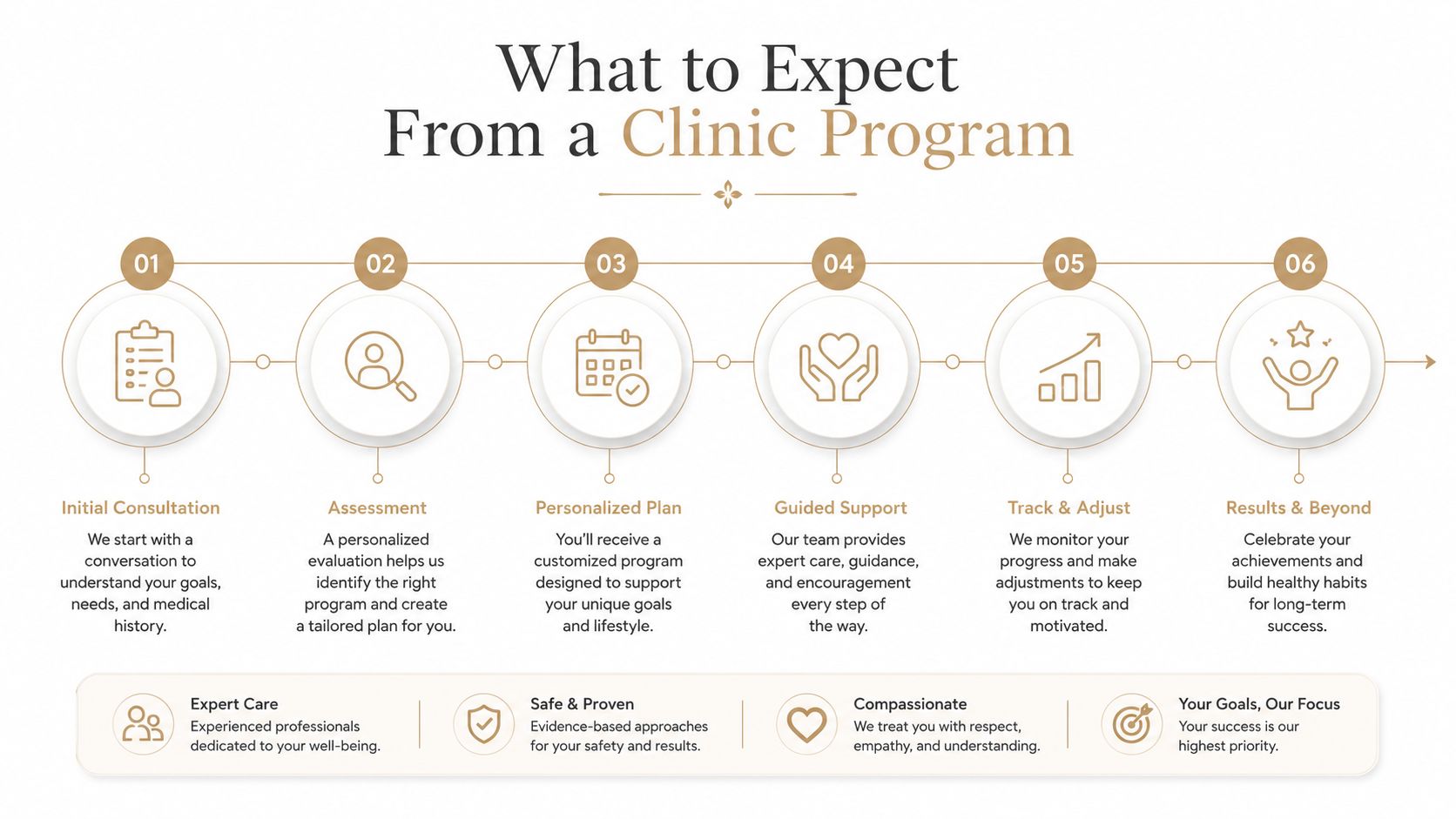
The next step is an individualized plan. That may include chiropractic adjustment, DRX9000 spinal decompression, MLS Laser Therapy, SoftWave therapy, massage therapy, acupuncture, mobility therapy, and corrective exercise. Some people need more soft-tissue work first. Some need decompression if disc-related symptoms are part of the picture. Others need movement retraining and a home routine right away.
Inside that plan, rehabilitation exercise services are paired with in-clinic supervision and a take-home program. That combination matters because a patient often needs both hands-on guidance and repetition outside the office. In the clinic, the clinician can watch form, adjust load, and notice when a movement is too easy or too provocative. At home, the patient gets the repetition needed to build adaptation.
Visit frequency and length of care depend on the situation. Acute pain may call for closer follow-up. Chronic patterns often need a steadier progression. Preventive care may use a lighter touch with periodic reassessment. The point is to tie the schedule to the body's response, not to a fixed script.
A well-run program also leaves room for reassessment. If something improves, the next step can be more challenging. If something flares, the plan gets regressed or redirected. That kind of adjustment is what keeps rehab from turning into just another list of exercises.
A patient with a lumbar disc problem often wants one thing first, less radiating pain. In that situation, a plan may combine decompression, manual work, and targeted corrective exercise so the spine is loaded in a way that's less aggravating while still helping the area recover. The exercise choice is usually conservative at first because nerve symptoms need careful pacing.
Another person may come in after a car accident with whiplash, stiffness, and a guarded neck. In that case, the program often starts with documentation, then moves into gentle manual care and progressive loading. The body has to relearn that movement is safe, and that takes controlled repetition, not a sudden jump into full-range effort. For a practical home reference, neck pain exercises at home can help patients understand why small, precise movements are often part of the recovery path.
An athletic overuse case looks different again. The goal there is usually a safe return to activity, so rehabilitative exercise may focus on mobility, tolerance, and the exact demands of the sport or training routine. The work has to restore function without throwing the person back into the same overload pattern that caused the problem.
Three takeaways show up across those examples:
The common thread is simple. The exercise plan is built around what the person can tolerate today, then adjusted as function improves. That's why the same category of movement can look very different from one patient to the next.
A patient often wants one clear answer here. Will the exercise help, and how much should it be pushed? The research says the answer depends on the condition, the timing, and the dose. Reviews of therapeutic exercise have found it helpful for several chronic musculoskeletal and cardiopulmonary conditions, including knee osteoarthritis, subacute low back pain, chronic low back pain, cystic fibrosis, chronic obstructive pulmonary disease, and intermittent claudication (The Lancet Rheumatology review00122-4/fulltext)). The same review also says the evidence is not as strong for some complaints, including neck pain and shoulder pain, which is a reminder that exercise works best as a matched prescription, not a blanket fix.
That dose question matters in practical terms. A few gentle movements can be appropriate early on, while a harder plan may be better once the tissue calms down and the person can tolerate more load. Modern guidance for people with chronic conditions points to 150 minutes per week of moderate-intensity aerobic exercise. Older public-health guidance also used the idea of 30 minutes of moderate-intensity activity on most, if not all, days, which could be built from 3 × 10-minute bouts. Those recommendations show how therapeutic exercise moved from general activity advice into a clinical tool where intensity, timing, and progression all change the outcome.

The reason this matters is easy to feel in the body. A patient with back pain may notice that the right plan reduces guarding, makes walking easier, and lets sitting or standing feel less threatening. Structured exercise programs that include stretching, strengthening, and mobility work have been reported as effective for subacute and chronic low back pain (Musculoskeletal Key therapeutic exercises overview). That fits with the everyday experience many people describe, less stiffness, better control, and more confidence with routine tasks when the program is individualized and progressed at a pace the body can handle.
Myth check: “No pain, no gain” is not a rehab rule. In therapeutic exercise, the better rule is enough challenge to adapt, not enough to spiral into flare-up.
Dose also explains why two people can react so differently to the same movement category. One person may tolerate a motion well and feel looser afterward, while another may flare if the same motion is too intense, too soon, or repeated too often. For anyone wondering whether exercise makes inflammation worse, the answer depends on the dose and the condition. That is why reassessment matters. A program should be tracked against function, not just time. If standing, turning, lifting, or walking gets easier, the plan is working. If not, the dose probably needs to change.
For a separate foot-pain issue that can be mistaken for ordinary activity soreness, what causes plantar fasciitis pain is a useful reminder that pain location and cause do not always match the same recovery strategy.
How soon should I expect to feel a change?
Some people feel looser or more confident after the first few sessions, while others need more time for symptoms to settle and function to improve. The honest answer is that it depends on the tissue involved, the irritability of the problem, and how closely the program matches the right dose.
Is therapeutic exercise safe to do at home between visits?
Yes, when the home plan is built for your current stage of recovery. A good program includes movements you can repeat safely outside the clinic, but the exercises should be specific enough that they don't replace guidance with guesswork. If a home drill feels unclear, the next visit should be used to clean up the form and adjust the load.
What should I do if an exercise flares pain?
Stop and report it to the clinician, then describe what happened as clearly as you can, what movement, how hard it felt, and what symptoms followed. A flare doesn't automatically mean failure. It usually means the dose needs to be reduced, the position needs to change, or a different exercise category makes more sense.
How do insurance and visit frequency usually work?
Coverage can vary by plan, so verification is part of the normal intake process. At Aspen Falls Wellness, care is usually organized around your diagnosis, your response to treatment, and whether the goal is acute relief, chronic management, or preventive maintenance. That structure helps keep visits tied to progress instead of habit.
If you see yourself in these examples, the next useful step is a proper evaluation. A good exam can tell you whether the issue is mainly mobility, strength, endurance, nerve irritation, or movement control, and that changes the entire exercise prescription.
A CTA for Aspen Falls Wellness. If you've been trying to manage back pain, neck pain, sciatica, or post-injury stiffness on your own, schedule an evaluation so a clinician can match the right dose of treatment and therapeutic exercise to your body, your symptoms, and your goals.

Stay updated with the latest chiropractic news and exclusive offers.