Spinal decompression therapy cost explained. See typical session prices, full-course ranges, insurance coverage, and what drives your final bill.
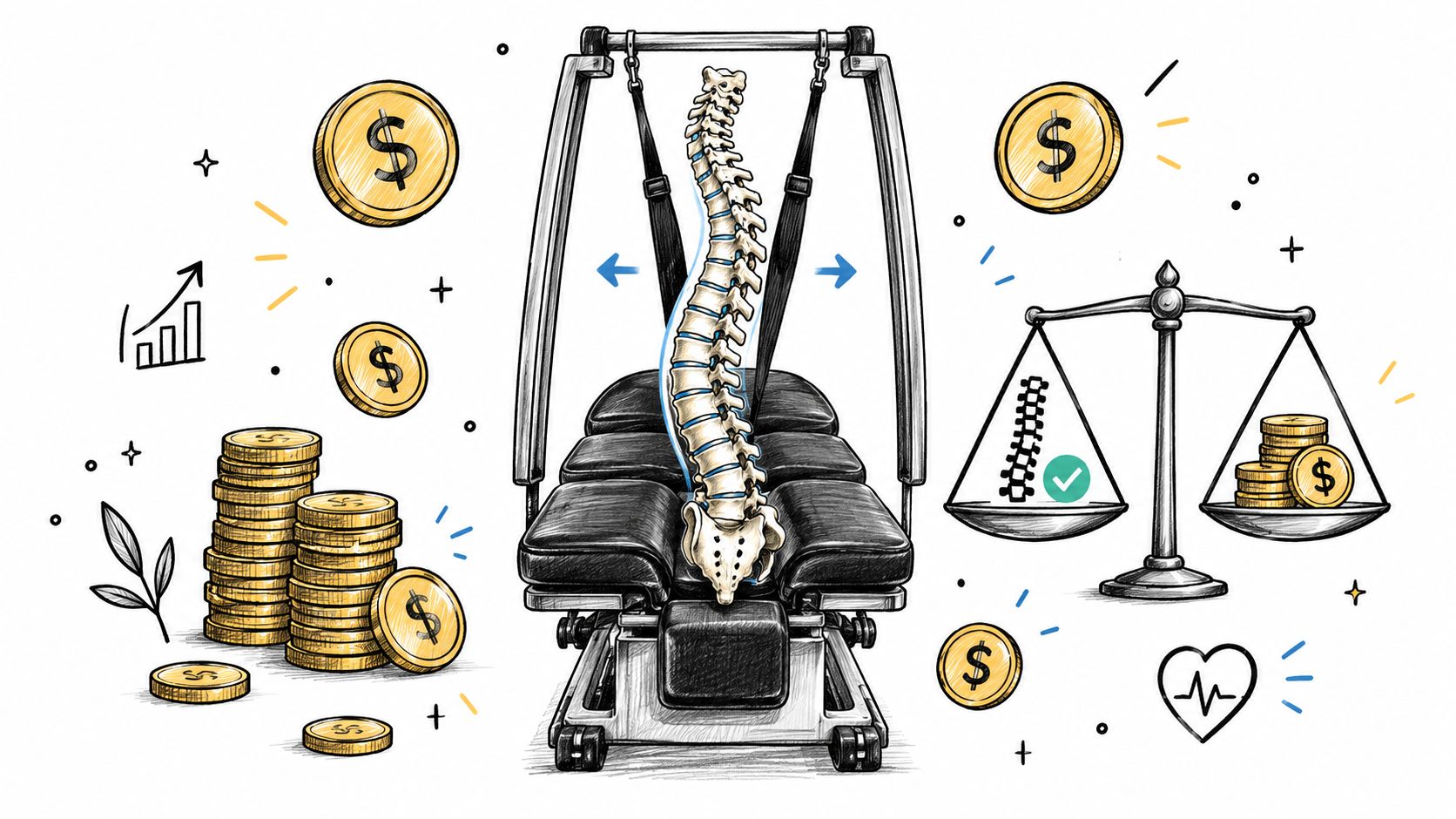
A typical full course of spinal decompression runs $2,000–$4,000 out of pocket for 15–20 sessions at roughly $100–$200 each, while session-only prices across published ranges run from $60 to $250. The number that matters isn't the attractive per-visit rate, but what you pay after the examination, imaging, recommended add-ons, and complete protocol are included.
Patients often ask, “How much does spinal decompression therapy cost?” They should ask a sharper question: What will this entire episode of care cost me from the first examination through the final reassessment? A low session price can become an expensive plan when the clinic prescribes more visits or bills related services separately.
I've watched patients compare two quotes that appear far apart, only to discover that one includes the consultation and supportive care while the other lists only time on the decompression table. The fairest comparison is always an itemized, written plan with the total number of visits, included services, exclusions, payment terms, and cancellation policy.
Fifteen to twenty sessions at approximately $100–$200 each can produce a $2,000–$4,000 out-of-pocket episode, while published single-session prices range from about $60 to $250. That episode figure is the number to evaluate. A low per-session rate tells you very little if examinations, imaging, and add-on therapies sit outside the advertised package.
Clinics promote the session price because it appears manageable. Your bill may also include the initial examination, imaging review, referral-related costs, rehabilitation exercises, laser therapy, muscle stimulation, or massage. Ask the clinic to identify every planned charge before you sign or prepay.
Request written answers to four questions:
| Component | Typical Range | What to Watch For |
|---|---|---|
| Single decompression session | $60–$250 | Check whether the quote excludes examination, imaging review, or supportive care |
| Full treatment course | $750–$7,500 | Session count, package terms, and included services determine the final total |
| Initial examination and record review | Varies by clinic | Ask whether the fee is credited toward treatment |
| Imaging or outside imaging review | Varies by need and provider | Confirm whether referrals, image retrieval, or interpretation are billed separately |
| Adjunct therapies | Varies by service and frequency | Check whether laser, stimulation, massage, or exercise visits are optional or automatically added |
A sample episode bill might combine one decompression package with a separate first-visit consultation and charges for recommended services. That structure can be reasonable when the clinic shows the line items and explains what each service does. Refuse the package if staff cannot state the visit count, exclusions, payment terms, and cancellation policy in writing.
Practical rule: Compare the total episode cost, not the cheapest figure on the brochure.
A quoted session price rarely shows the full cost of spinal decompression. The true figure is the complete episode of care, including the assessment, equipment time, imaging review, reassessments, and any therapies added to the protocol.
Traditional mechanical traction and non-surgical spinal decompression use pulling forces, but they are not identical services. Basic traction applies a steady force, often within a broader rehabilitation visit. A programmed decompression session varies force and positioning according to the patient's presentation. That difference affects the equipment, staff time, room use, and clinical planning included in the bill.
A dedicated DRX 9000 spinal decompression program can therefore cost more than traction delivered as one part of a general therapy appointment. The machine is only one part of the expense. Clinics also account for consultation time, treatment planning, repeated visits, progress checks, and the administrative work required to manage the episode.
The bill climbs when a clinic adds imaging, examination charges, image interpretation, or supportive care. Chiropractic adjustments, muscle stimulation, pain-relief support, and rehabilitation exercises may be appropriate for some patients, but they should not appear as automatic add-ons. Ask what each service contributes and whether it is included in the quoted protocol.
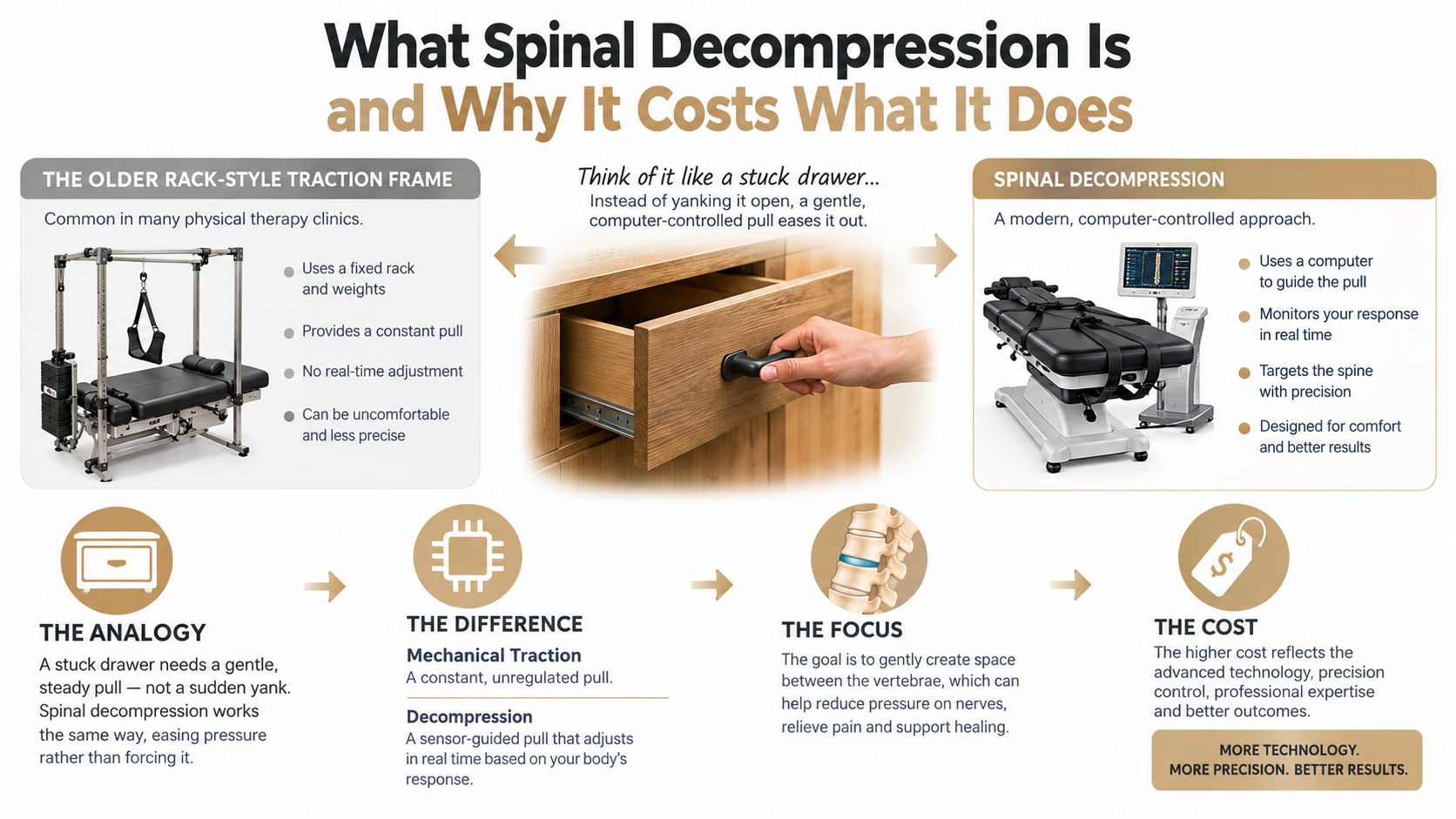
Before paying a technology premium, identify the service in writing:
The Happy Billing chiropractic guide offers plain-language background on healthcare coding and billing. Patients evaluating a DRX9000 program can also review this DRX 9000 spinal decompression overview before requesting an itemized episode quote.
A cash session commonly costs $60 to $120, but the total episode can range from about $750 to $7,500. Those figures describe different products: a single appointment, a short package, and a complete 20–30-session protocol should never be compared as equivalent care.
A review of publicly posted clinic pricing found a $75 median listed cash price across five clinic pages, while complete plans varied with visit count, packaging, and financing structure. The per-session rate is only the starting point. Your real figure is the full course, including any intake, reassessment, imaging, or supportive services placed outside the advertised package.
| Provider Setting | Per Session | 10-Session Package | Full 20–30 Session Course |
|---|---|---|---|
| General chiropractic office | $60–$120 commonly listed | Request a written bundled quote | May fall within the broader $750–$7,500 published range |
| Dedicated DRX9000-style program | Often quoted as a program rather than a visit | Confirm whether examinations and reassessments are included | Commonly quoted around $2,500–$4,500 for a full course |
| Medical or multidisciplinary spine setting | Varies with examination, staffing, and services | May include more clinical assessment | Request a complete episode estimate |
| Hospital outpatient setting | May follow different billing and coverage rules | Confirm the applicable benefit category | Do not assume hospital billing means decompression is covered |
A low session price can conceal a high total when the protocol runs longer or when examinations, imaging, follow-up visits, and combined therapies are billed separately. Ask the clinic to show how each item changes the episode total.
Your written quote should state the recommended number of visits, reassessment points, included services, optional care, and final package price. If staff can provide only a single-visit rate, you do not yet have a treatment estimate. Insist on the full-course figure before committing.
Your total episode cost depends on six factors, not just the advertised session rate. A longer protocol repeats every per-visit charge, while a bundled plan may clarify the invoice and lower the effective cost of each visit. Judge the quote by the full course, not the first number used in the consultation.
Session count is the largest lever. A 15-visit recommendation creates a very different bill from a 30-visit plan. Ask the clinic why it chose that duration, what progress it will measure, and when it will reassess whether more visits are justified.
Equipment and protocol affect pricing. A dedicated program using specialized equipment requires a different workflow from a generic traction service. The quote should identify the treatment being provided, how often sessions occur, and what the package includes. Dedicated programs are commonly quoted around $2,500–$4,500 for a full course.
The intake process may sit outside the package. An initial examination, imaging referral, imaging review, or review of existing records can create separate charges. Request those amounts before you sign a care plan.
The provider setting changes overhead. A multidisciplinary clinic with longer assessments or rehabilitation services may charge more than a basic visit-based practice. That higher bill makes sense only when the added evaluation or care addresses your condition. Ask what each added service contributes.
Geography affects local cash rates. Rent, staffing, operating costs, and demand can push prices higher in urban markets than in suburban or rural areas. Compare written quotes from clinics serving the same area instead of relying on a national average.
Add-on therapies can raise the episode total quickly. SoftWave Therapy, MLS Laser Therapy, Massage Therapy, Acupuncture, Muscle Stimulation, and Personal Exercise Plans may have a role in care. They should not appear on the invoice without a stated purpose, unit price, and explanation of whether they are optional.
| Cost Driver | Typical Dollar Impact | Why It Matters |
|---|---|---|
| Session count | Can move a course toward $7,500 | Each additional visit raises the total |
| Device and protocol | Around $2,500–$4,500 for some full-course programs | Equipment and treatment structure shape the fee |
| Examination and imaging | Varies | Separate diagnostics increase the starting balance |
| Provider setting | Varies | Staffing, scope, and overhead affect pricing |
| Geography | Varies | Local operating costs influence cash rates |
| Bundled therapies | Varies | Adjunct care may be included, optional, or billed separately |
A responsible quote shows every driver. Reject a package presented as one unexplained figure. Before committing, request the recommended visit count, reassessment points, included services, optional treatments, and final episode price in writing. A single-session rate is not a treatment estimate.
Calling spinal decompression “cash-only” gives patients the wrong financial picture. Coverage depends on the service definition, billing code, diagnosis, documentation, plan policy, and payer. Mechanical traction may receive different treatment from branded or non-surgical vertebral axial decompression. Ask which service the clinic is billing before you compare an insurance estimate with a cash package.
Medicare generally distinguishes covered mechanical traction from non-surgical spinal decompression. Coverage for traction depends on supporting documentation and continued treatment may require additional clinical justification. A patient can receive a favorable answer about mechanical traction and still face a denial for a decompression program. That difference can change the cost of the entire episode, especially when the plan includes examinations, imaging, reassessments, and add-on therapies.
A more common outcome is partial reimbursement rather than full coverage for every decompression session. Ask the insurer to review each part of the proposed care pathway:
Coverage guidance indicates that patient responsibility can remain substantial, while some policies exclude decompression or classify it as experimental or investigational. Use that information as a reason to verify your policy, not as a promise that your claim will pay.
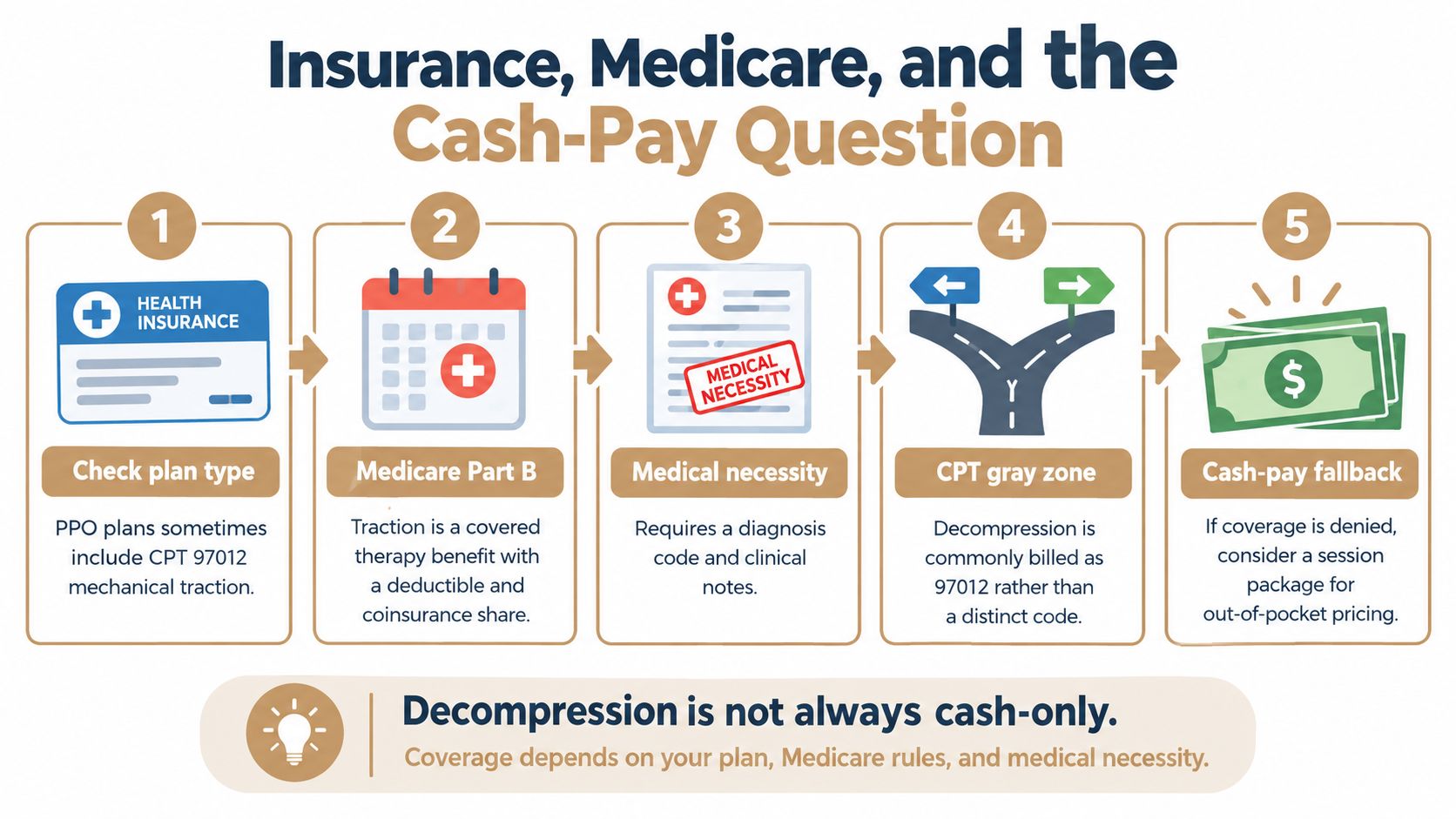
Cash pay can be simpler, but it does not automatically mean cheaper. Compare the complete episode price, including the initial examination, imaging, scheduled visits, progress checks, and optional therapies. A low session rate can conceal a much higher total once those services are added.
Request an itemized superbill and ask which parts of care are eligible for review. Motor-vehicle and workplace claims may follow separate rules, so obtain the claim administrator's written requirements before assuming approval.
For a patient-friendly explanation, read this insurance guide to spinal decompression. A pre-authorization letter supports your case, but it does not guarantee payment. Coding, documentation, medical necessity, and plan exclusions can still determine the final decision.
You can complete a useful coverage check in one afternoon. Don't ask only, “Does my insurance cover decompression?” That phrase is too broad and often produces an equally vague answer.
Use this script:
“I need a procedure-specific benefit quote for CPT 97012 mechanical traction and for non-surgical spinal decompression. Is either service excluded by name? Does it require prior authorization, and what would I owe after my deductible and coinsurance?”
If the representative gives a general answer, ask them to search the medical policy and provide the policy name or reference number. If necessary, request escalation to a benefits specialist. Then send the clinic's proposed diagnosis, code, and itemized plan to the insurer for written review.
Cash patients should request an itemized quote, the clinic's payment terms, and a Good Faith Estimate where applicable. Ask whether package pricing, prompt payment, or a shorter reassessment-based starting plan is available.
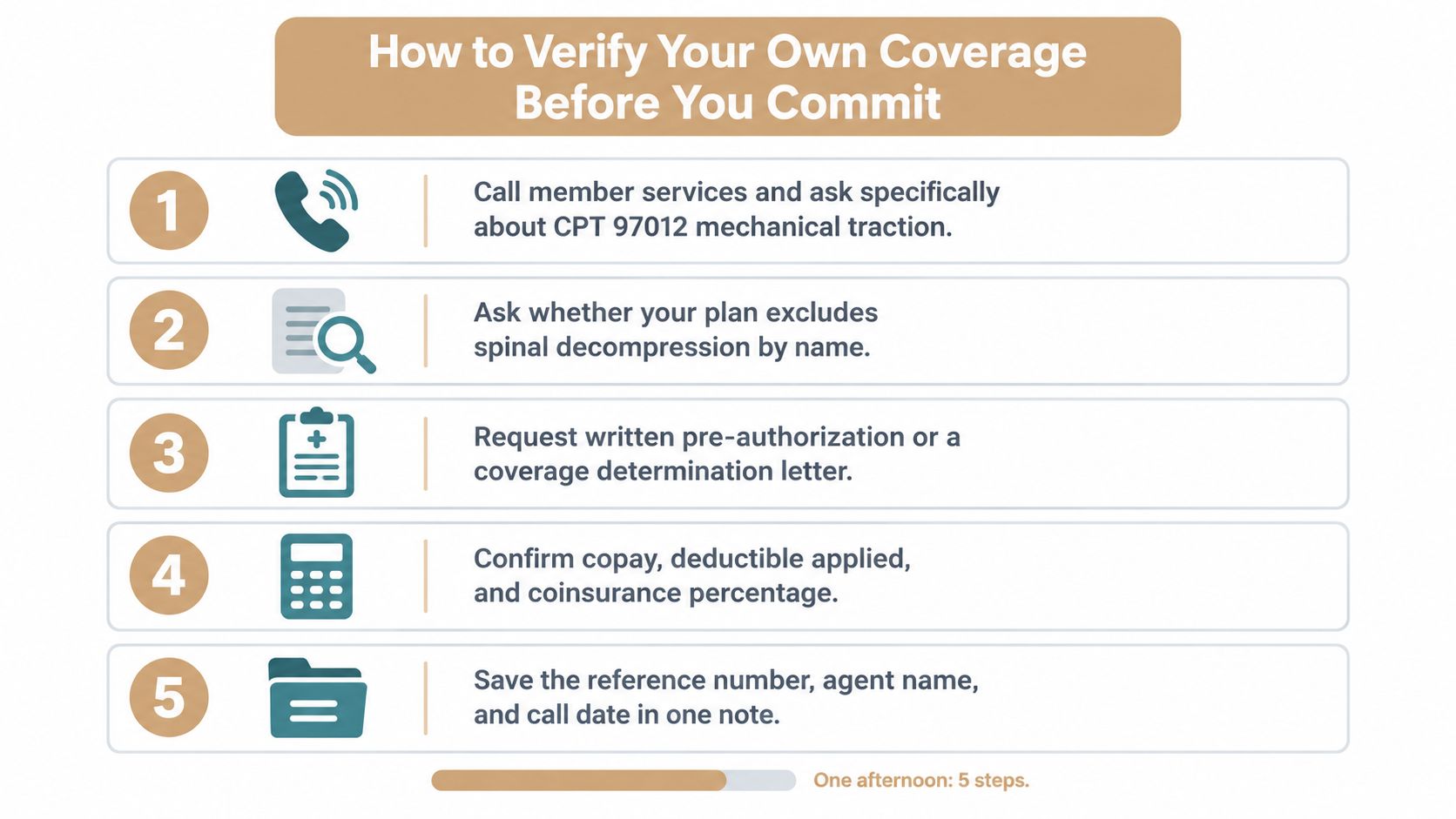
Verbal confirmation is useful, but it isn't a payment guarantee. Written predetermination or a formal coverage determination is the document you want before committing to a large package.
The safest way to lower the spinal decompression therapy cost is to improve the quote before financing it. Ask for the cash price, bundled price, and pay-as-you-go price in writing. Then compare what changes if you decide not to complete the protocol.
Health Savings Account and Flexible Spending Account funds may be available for eligible care, subject to your plan rules and tax guidance. Ask the administrator before using the account. A clinic payment plan can also spread the balance, but read the interest, enrollment, late-payment, and cancellation terms carefully.
| Payment Option | Typical Terms | Effective Cost Impact |
|---|---|---|
| HSA or FSA funds | Subject to account and eligibility rules | May reduce the after-tax burden |
| Clinic payment plan | Varies by provider | Spreads payments, but interest or fees may apply |
| Medical financing | Terms depend on the lender and approval | Can increase the final cost if interest accrues |
| Upfront package | Written course price | May reduce the marginal visit price |
| Prompt-pay discount | Clinic-specific | Lowers cash price when paid under stated terms |
| Pay-as-you-go | One visit at a time | Limits prepayment risk but may cost more overall |
Don't finance a package you can't evaluate. A better arrangement may be a clearly defined initial phase with a scheduled reassessment, followed by a separate decision about continued care. That approach keeps the clinical checkpoint and the financial commitment visible.
Patients who want to negotiate or audit a cash invoice can review these proven strategies for medical bills. Also review how health savings accounts may apply to chiropractic care, then confirm eligibility with the account administrator.
A clinic that refuses to itemize the invoice, demands full prepayment without explaining its cancellation policy, or won't state what happens if you stop early deserves careful scrutiny. Price matters, but transparency matters more.
The value question isn't “Is the session cheap?” It's “Does this plan give me a reasonable, measurable opportunity to improve function without committing blindly?” A course can be worth considering when the examination supports it, the goals are specific, and the clinic measures whether you're progressing.
The evidence and the financial comparison need to stay honest. A 2021 peer-reviewed cost study reported average nonsurgical care costs of $29.34 per patient per month, compared with $50.84 per patient per month for the surgical cohort in its sample. The same paper reported surgery costs of $2,761.50 per patient per month, compared with $180.40 per patient per month for nonsurgical medical services in the study sample (peer-reviewed cost study in BMC Musculoskeletal Disorders).
Those figures don't prove that decompression will work for you, and they don't make surgery the wrong choice when it is medically necessary. They do show why patients and clinicians compare a nonsurgical pathway with the broader cost and burden of operative care. The right decision depends on diagnosis, neurological findings, duration of symptoms, functional limitation, and response to reasonable conservative care.
Before paying for a complete course, ask how the clinic will measure progress. Useful measures may include walking tolerance, sitting tolerance, sleep, work activity, range of motion, leg symptoms, and pain interference. A plan that promises relief but never defines improvement gives you no practical basis for continuing.
Ask these questions before signing:
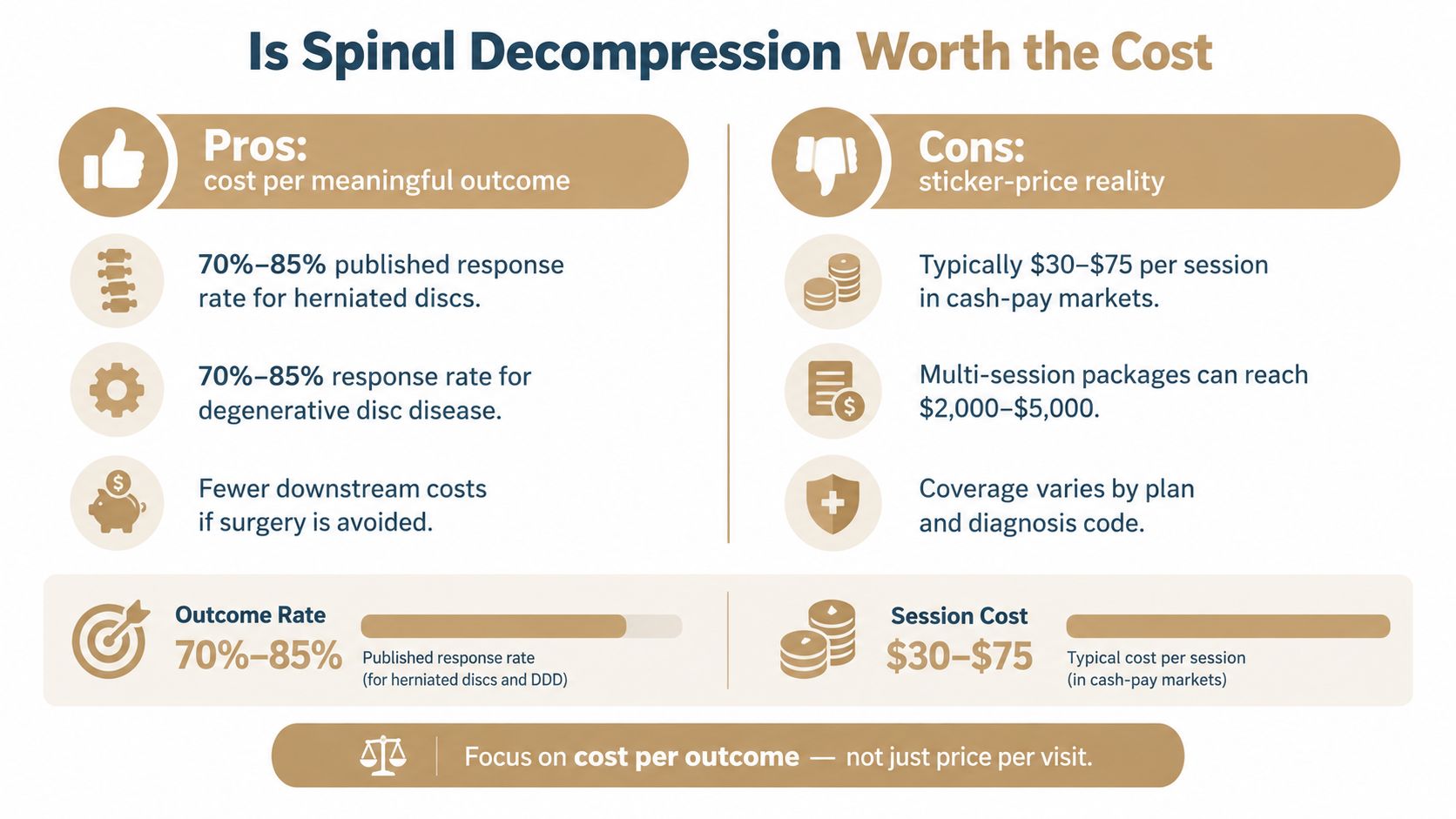
Aspen Falls Wellness offers non-surgical Spinal Decompression with the DRX 9000 alongside Chiropractic Adjustment, Massage Therapy, Acupuncture, MLS Laser Therapy, mobility work, and individualized rehabilitation support. That integrated model may be useful for patients who need more than table-based care, but you should still request a written plan that separates the decompression fee from every additional service.
Visit Aspen Falls Wellness to discuss your symptoms, examination needs, and whether a DRX 9000 spinal decompression plan fits your goals. Ask the clinic for an itemized estimate, expected reassessment points, and clear details about included care before you commit.

Stay updated with the latest chiropractic news and exclusive offers.