Discover effective, non-surgical treatments for a pinched nerve in neck. Learn about spinal decompression, chiropractic care, and when to seek help



You wake up, turn your head, and feel a sharp electrical jolt run from your neck into your shoulder or hand. Later, your fingers may tingle while you type, your grip may feel unreliable, or you may keep moving your arm to find a position that eases the discomfort. A pinched nerve in the neck can be alarming, but the symptoms don't always mean the same thing, and the right treatment depends on whether a cervical nerve root is compressed or whether tight muscles, irritated joints, or a peripheral nerve are creating a similar pattern.
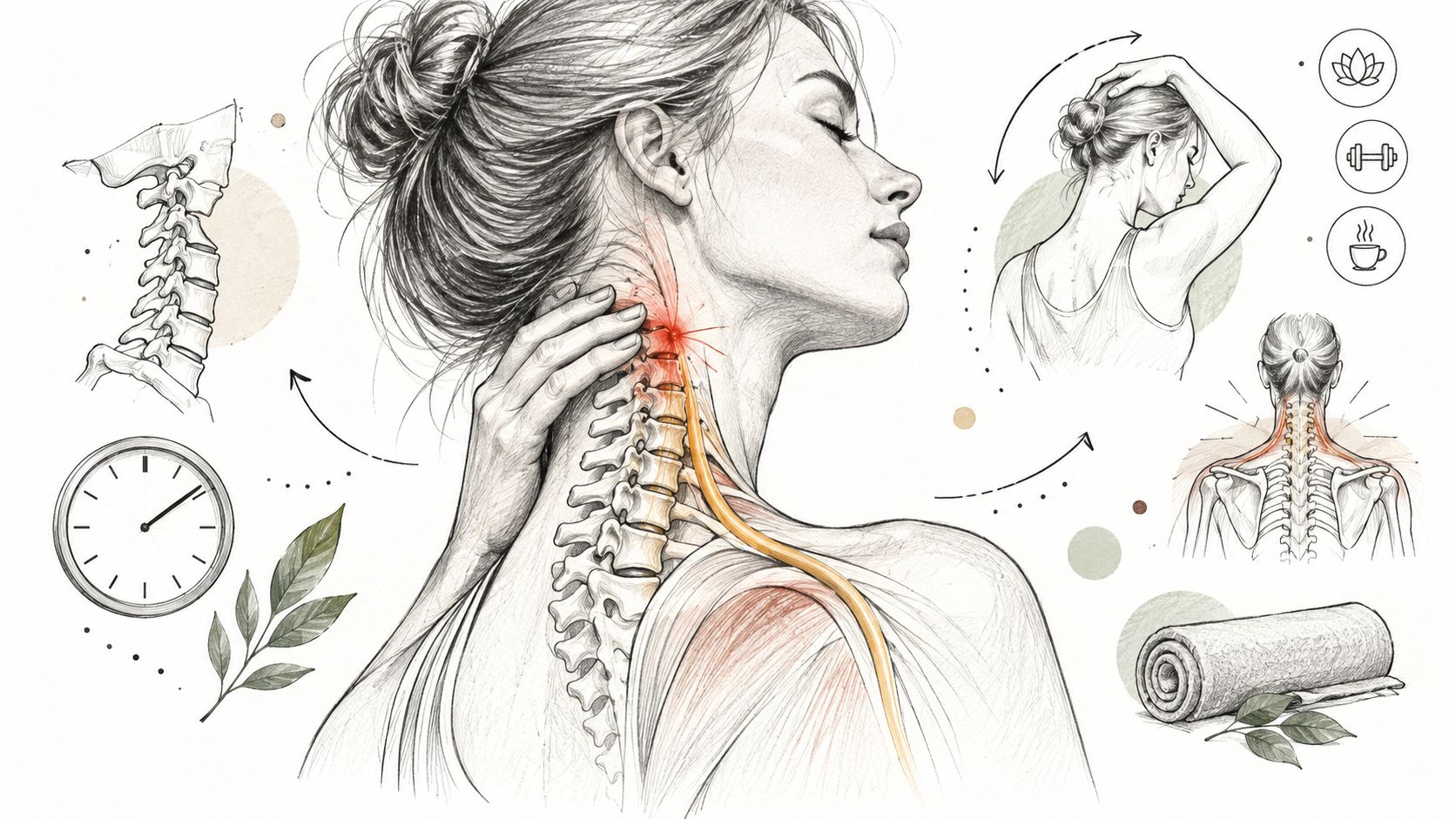
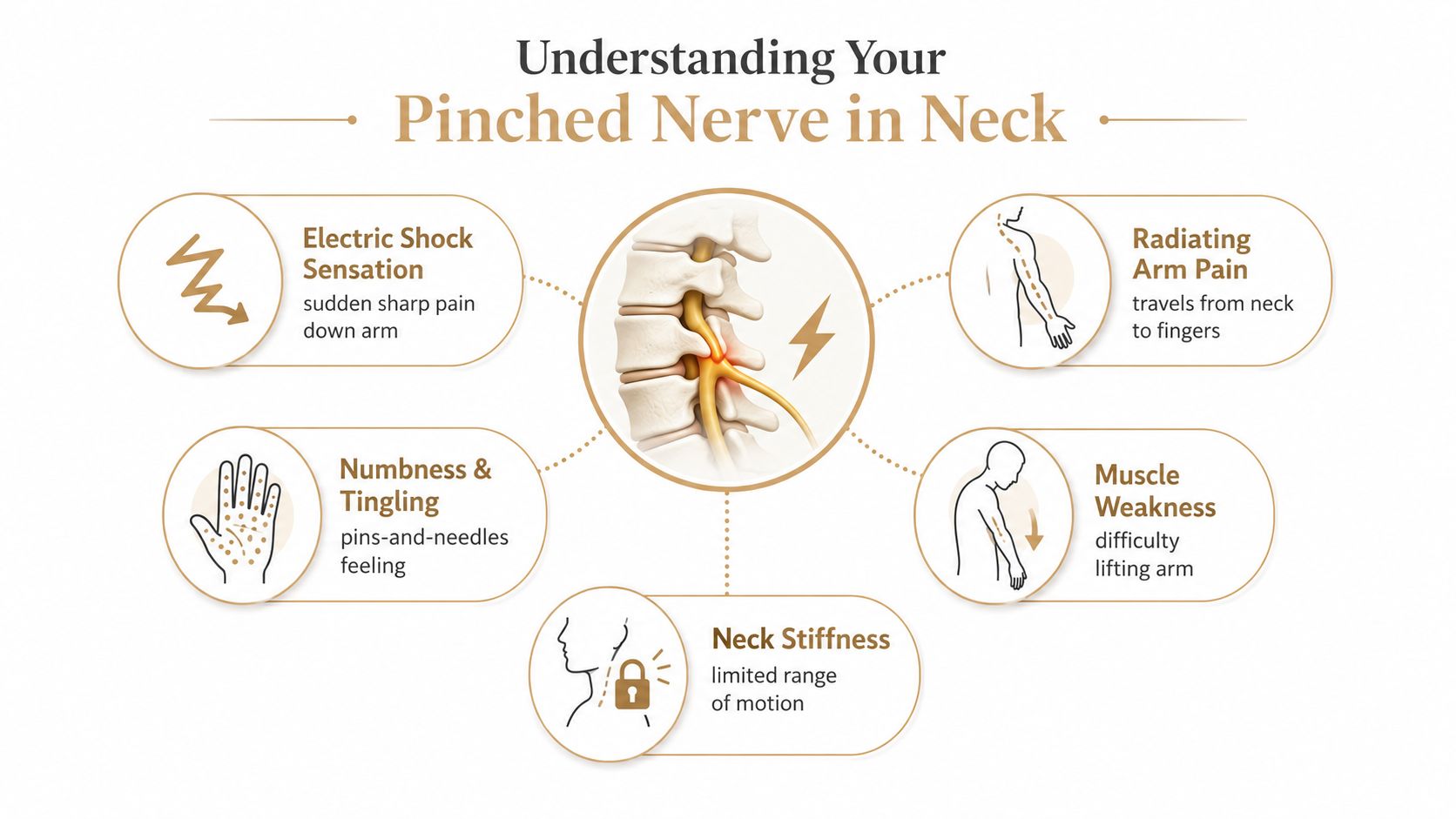
The clinical condition most often meant by a pinched nerve in the neck is cervical radiculopathy. It occurs when a nerve root leaving the cervical spine becomes compressed or irritated, commonly because of a herniated cervical disc or degenerative narrowing of the opening where the nerve travels. The result can feel like a sudden electric shock when you turn your head, followed by pain that travels toward the shoulder, arm, or hand.
This differs from ordinary neck soreness. Local muscle or joint pain usually stays closer to the neck, while nerve-root irritation can produce radiating pain, altered sensation, reflex changes, or weakness along the arm. A physical examination helps determine whether the pattern fits a nerve root or points toward another source.
Cervical radiculopathy is measurable in population studies, although estimates vary by study design and setting. A systematic review found annual incidence estimates from 0.832 to 1.79 per 1,000 person-years and point prevalence estimates from 1.21 to 5.8 per 1,000 people (systematic review of cervical radiculopathy epidemiology). Earlier population-based research reported an overall annual incidence of 83.2 per 100,000 people, with the highest age-specific incidence reaching 202.9 per 100,000 among people aged 50 to 54 (population-based Rochester study summary).
Those figures shouldn't be used to diagnose yourself. They do show that cervical nerve-root compression is a recognized spine disorder, particularly relevant for adults in middle age. The practical question is whether your symptoms follow a neurologic pattern and whether an examination finds corresponding changes in strength, reflexes, or sensation.
Start by separating where the problem begins from where you feel it. A nerve root can be irritated in the neck while symptoms appear farther down the arm, so hand pain doesn't necessarily mean the hand is the source.
Use this simple symptom map when describing your experience:
Trace the pain. Note whether it stays in the neck or travels through the shoulder and arm. Radiating arm pain is a particularly important clue, because one review reported arm pain in 97% to 99% of cases, compared with neck pain in 56% to 80% (clinical review of cervical radiculopathy).
Mark sensory changes. Write down the exact area affected by numbness, burning, or pins and needles. Include whether the sensation reaches the thumb, index finger, middle finger, ring finger, or little finger. The distribution can help a clinician estimate which nerve-root region needs closer testing, but it can't identify the level by itself.
Test function, not just pain. Difficulty lifting the arm, straightening the elbow, opening a jar, or maintaining a grip may indicate motor involvement. Weakness deserves more attention than pain alone because it can change the urgency of evaluation.
Observe what changes symptoms. Turning or extending the neck may reproduce radiating symptoms, while changing arm position may ease them. Don't repeatedly force a painful motion to “test” the nerve. Record the pattern and share it during an examination.
Arm pain, sensory loss, reflex changes, and weakness can overlap with other conditions, including soft-tissue irritation and peripheral nerve sensitivity. That's why symptom location is a diagnostic clue, not a final answer. For more context on common neck-pain sources, see this guide to what causes neck pain.
An MRI isn't automatically the best first move. A careful clinician usually begins with your history and a physical examination, then decides whether imaging would change treatment.
The examination may compare:
| Clinical finding | What it helps clarify |
|---|---|
| Strength | Whether the nerve appears to be affecting motor function |
| Reflexes | Whether neurologic signaling differs between sides |
| Sensation | Whether altered feeling follows a recognizable pattern |
| Neck and arm movement | Which positions reproduce or reduce symptoms |
| Coordination and gait | Whether the spinal cord may be involved rather than only a nerve root |
MRI becomes more useful when symptoms persist, objective neurologic findings progress, or a compressive lesion must be confirmed before an injection or surgery. The North American Spine Society guideline notes that pain in a dermatomal pattern alone doesn't reliably identify the exact pathologic level. It recommends MRI to confirm a correlating compressive lesion when conservative care has failed and the patient may be considered for interventional or surgical treatment (North American Spine Society guideline).
An AAFP review similarly lists suspected myelopathy or abscess, persistent or progressive objective neurologic findings, and failure to improve after four to six weeks of conservative treatment as reasons MRI may be indicated (AAFP diagnostic review). In other words, imaging should answer a clinical question, not provide a picture of normal age-related changes.
Patients begin with a non-operative plan because irritated nerve roots often settle as inflammation decreases and movement improves. Treatment should match the suspected driver. A disc-related presentation with radiating arm pain calls for a different emphasis than neck stiffness caused mainly by muscle and joint restriction.
Spinal decompression with the DRX 9000 may be considered when examination findings suggest disc-related loading and the patient can tolerate carefully controlled treatment. The aim is to reduce mechanical stress during a structured plan, not to promise that a device will physically “pull” a disc back into place. It should be used selectively, with regular reassessment and referral when findings fall outside conservative care.
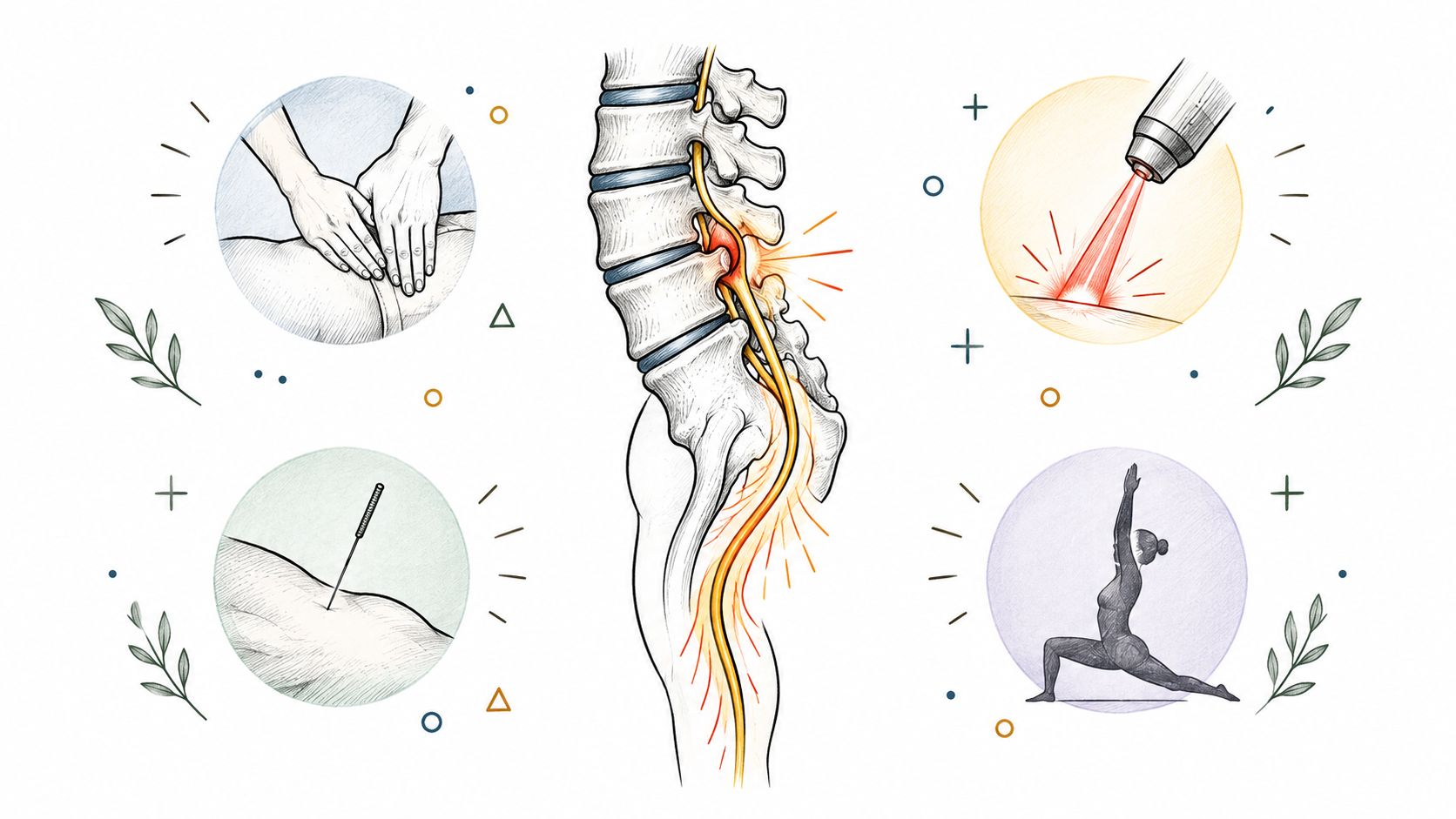
MLS Laser Therapy and SoftWave Therapy may support patients whose symptoms include local tissue irritation, muscle guarding, or inflammation around the painful region. These modalities don't replace neurologic examination or correct every structural cause. They're best viewed as adjuncts that may help make movement and rehabilitation more comfortable.
Chiropractic Adjustment, realignment, and mobility therapy can address restricted movement and mechanical loading when the technique is appropriate for the patient's findings and tolerance. High-force treatment isn't suitable for every neck presentation, particularly when instability, significant neurologic loss, or spinal cord involvement is suspected.
Massage Therapy may reduce guarding in the surrounding muscles, while Acupuncture can be used for pain modulation and functional improvement. Muscle Stimulation may help support activation when pain has inhibited normal movement. Personal Exercise Plans, Rehabilitation Exercise, and posture retraining then give the patient a way to build capacity between visits.
The evidence doesn't support treating every case with one universal technique. A 2025 review found that cervical lateral glide and median nerve neural mobilisation reduced pain, but rated the evidence low to very low quality and described it as heterogeneous. Another evidence update reported that research on neck epidural steroid injections remains limited and often draws from lumbar conditions, so neck-specific effectiveness is still uncertain (review summary of evolving conservative treatment evidence).
A useful plan combines symptom relief with progressive function. Pain Relief is important, but the lasting target is better neck and shoulder control, improved tolerance for daily activity, and a clear escalation plan if neurologic findings worsen.
Home care should calm the irritated area without making the nerve more reactive. The safest starting point is usually gentle, controlled movement, not aggressive stretching or prolonged bed rest.

Begin with comfortable neck movement within a symptom-free or minimally irritating range. Stop if an exercise increases radiating arm pain, numbness, or weakness rather than creating mild muscular effort. Nerve-gliding movements should be prescribed carefully, because forcing a sensitive nerve can worsen symptoms.
Adjust your environment as well:
A personal exercise plan works better than copying a routine from a generic page because the same movement may ease one pattern and aggravate another. Aspen Falls Wellness can use mobility therapy, posture retraining, muscle stimulation, and rehabilitation exercise to build a plan that fits your findings. You can also review practical guidance on neck pain exercises at home, but persistent neurologic symptoms still warrant an assessment.
Practical rule: An exercise should improve movement or function over time, not steadily spread symptoms farther down the arm.
Recovery from a pinched nerve is rarely linear. Sleep, workload, posture, and activity can change symptoms from day to day, yet the overall trend should gradually improve. Most cases begin with non-surgical care. Reassessment is appropriate when pain remains disabling, weakness progresses, or symptoms continue after a structured conservative trial of about 6 to 12 weeks. Evidence comparing conservative and surgical care supports this staged approach (evidence summary on conservative and surgical care).
That timeframe is a checkpoint, not a reason to ignore declining function. Surgery generally applies to a minority of patients with confirmed compression and neurologic compromise. Selected patients may improve more quickly with surgery, although the decision depends on examination findings, imaging, symptom severity, and response to care. Treatment should match the problem. Soft-tissue irritation without neurologic loss may follow a different course from true nerve-root compression.
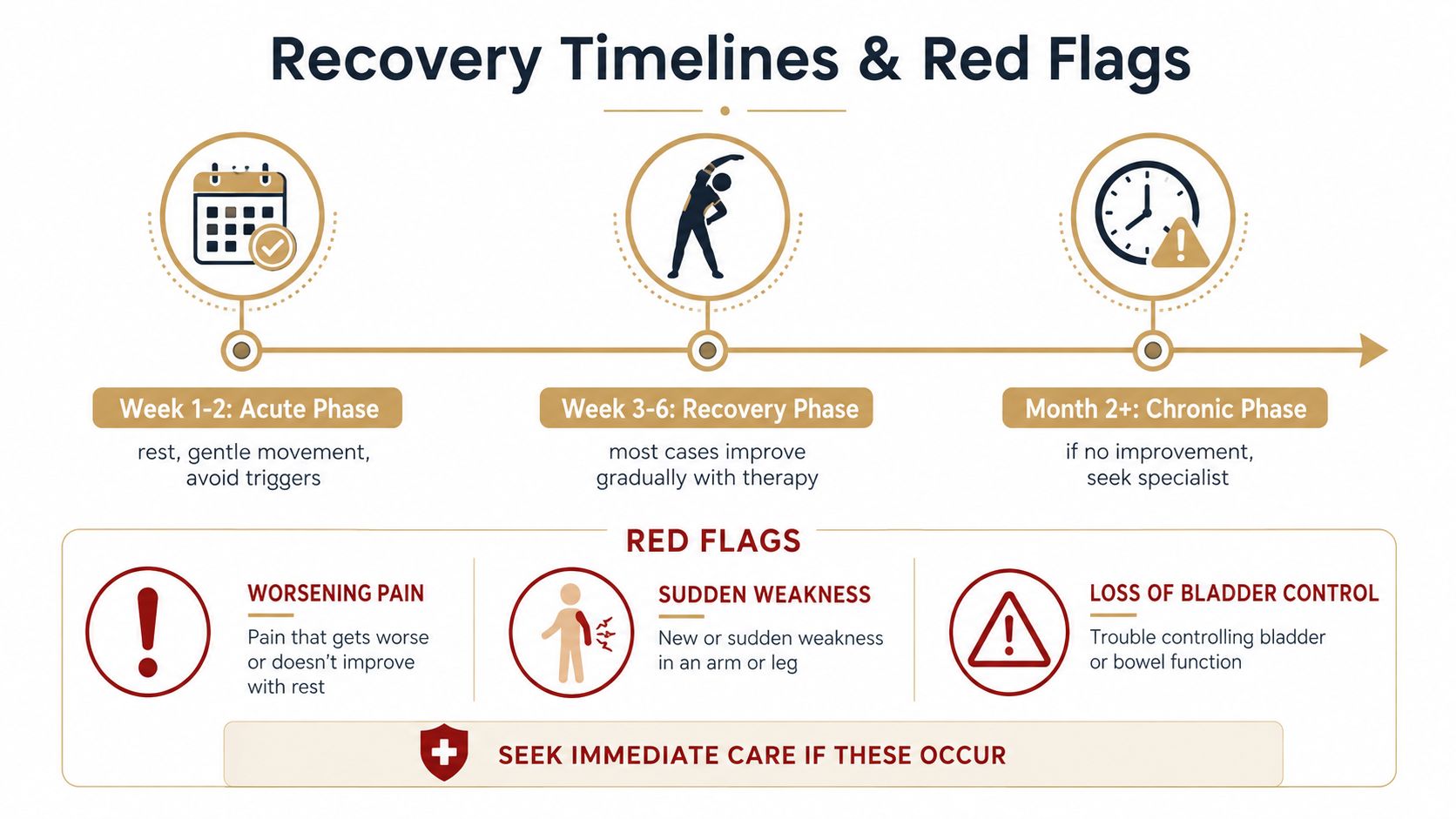
Seek urgent medical evaluation for:
These findings do not confirm a diagnosis by themselves, but delaying assessment can carry greater consequences. A clinician may arrange urgent imaging, specialist referral, or emergency evaluation after reviewing the full presentation. A steady improvement pattern is reassuring. Worsening strength, coordination, or walking is not.
A patient in Salt Lake City may develop radiating arm pain after prolonged desk work. The first appointment should not begin with a device or routine adjustment. It should establish whether the presentation suggests true nerve-root compression, muscle guarding, joint restriction, or another source of symptoms through history, neurologic screening, movement assessment, and a decision about imaging or medical referral.
If findings indicate manageable mechanical restriction with soft-tissue irritation, care may combine a carefully selected Chiropractic Adjustment, Mobility Therapy, and Massage Therapy. A Rehabilitation Exercise program can improve neck and upper-back control. Acupuncture, SoftWave Therapy, or MLS Laser Therapy may be considered when reducing pain sensitivity and supporting tissue recovery are appropriate goals.
Patients with persistent disc-related symptoms may require a different plan. If the examination supports non-surgical spinal decompression, the DRX 9000 can be considered with regular reassessment. Decompression does not replace monitoring for worsening neurologic findings, and it cannot mechanically correct every cause of neck or arm pain. Nutrition and Nutrition Counseling may support recovery habits, but they do not remove nerve compression.
The value of an integrated model is coordination, not using every service for every patient. Aspen Falls Wellness combines chiropractic, massage, acupuncture, mobility, rehabilitation, and nutrition services, with care available in Salt Lake City and Sandy. The clinic also provides Car Accident Treatment and referral guidance when evaluation exceeds its in-house scope. Learn more about a chiropractor for neck pain while keeping treatment tied to examination findings, patient goals, and ongoing reassessment.
A pinched nerve in the neck can create intense pain, numbness, tingling, and weakness, but the label alone doesn't tell you which treatment you need. The important distinction is whether symptoms reflect cervical nerve-root compression, a mixed nerve and soft-tissue presentation, or another condition requiring different care.
Start with an examination rather than guessing from symptom location. Conservative treatment often comes first, using targeted adjustments, decompression, MLS Laser Therapy, SoftWave Therapy, massage, acupuncture, mobility work, and a personal exercise plan when those options fit the clinical findings. Persistent or worsening neurologic symptoms deserve timely reassessment, and red flags require urgent medical attention.
If you're in the Salt Lake City or Sandy area, arrange an evaluation that can clarify the source of your symptoms and outline a practical path toward restored movement.
Aspen Falls Wellness offers individualized chiropractic care, spinal decompression with the DRX 9000, MLS Laser Therapy, SoftWave Therapy, massage, acupuncture, and rehabilitation exercise for patients dealing with neck pain and radiating arm symptoms. Visit Aspen Falls Wellness to request an evaluation in Salt Lake City or Sandy and discuss the care approach that fits your examination findings.

Stay updated with the latest chiropractic news and exclusive offers.