Sciatica pain on both sides can signal stenosis or a serious nerve problem. Learn the causes, red flags, diagnosis and treatment options.
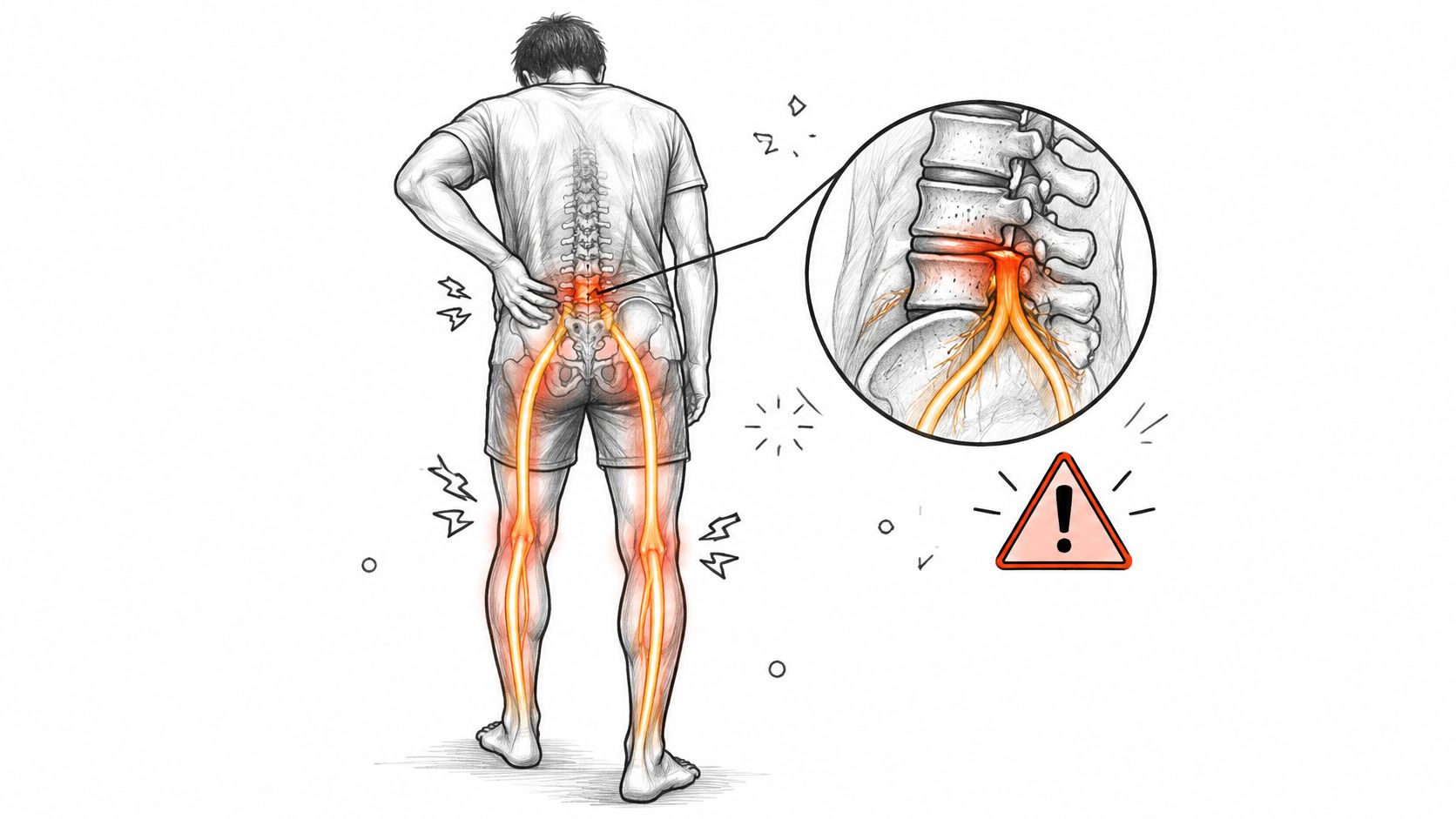
Which matters more when pain travels into both legs: where it hurts, or what happens when you stand, walk, or try to use the bathroom? Pain on both sides doesn't point to one diagnosis by itself. The changes in strength, sensation, balance, and bladder or bowel function help determine whether you need emergency care, a prompt appointment, or a carefully chosen treatment plan.
Sciatica describes symptoms caused by irritation or compression of nerve roots in the lower back. A bilateral pattern can occur when a problem affects nerve structures on both sides, but it doesn't automatically mean you have a dangerous condition. The next step is to identify what the symptoms do and how they're changing.
Pain on both sides alone isn't automatically an emergency. Many causes don't threaten nerve function. The important question is whether nerve function is changing, especially alongside a change in bladder or bowel function.
| Symptom | What it may signal | Action |
|---|---|---|
| Pain or tingling in both legs, with no weakness or bladder change | Nerve-root irritation or stenosis | Book a prompt clinical assessment |
| Worsening weakness or numbness in both legs | Progressing nerve compression | Seek same-day medical review |
| Numbness around the genitals or anus | Possible cauda equina syndrome | Go to the emergency department now |
| Difficulty starting urination or inability to urinate | Possible cauda equina syndrome | Go to the emergency department now |
| New loss of bladder or bowel control | Possible cauda equina syndrome | Call emergency services now |
The NHS guidance on sciatica advises immediate emergency assessment when symptoms affect both sides, particularly when accompanied by severe or worsening weakness or numbness, numbness around the genitals or anus, trouble urinating, or loss of bladder or bowel control. These signs can indicate cauda equina syndrome or another serious spinal problem that needs hospital evaluation.
Bilateral pain without those additional signs still deserves prompt assessment, rather than waiting weeks to see whether it disappears. A clinician can check strength, sensation, reflexes, and walking, then decide what further evaluation is appropriate. If symptoms are worsening quickly, don't wait for a routine appointment.
Cauda equina syndrome is uncommon, but missing it can have serious consequences. Bilateral sciatica is a warning feature, not a diagnosis by itself: a BMJ review of suspected cauda equina syndrome found that bilateral sciatica occurred in some people without confirmed syndrome, as well as in some people who did have it. The combination of symptoms and examination findings matters.
Until serious causes have been ruled out, don't start adjustment, massage, spinal decompression, laser therapy, acupuncture, or exercise as a substitute for urgent assessment. Those options may be considered later when a clinician has evaluated the neurological risk. For related warning signs in back pain, see this guide to low-back-pain red flags.
Before bed tonight, ask yourself: Is anything getting worse? Is there numbness near the genitals or anus? Has bladder or bowel control changed? If the answer to any question is yes, stop and seek medical care. If you're unsure whether a symptom counts, err on the side of calling for urgent medical advice.
People often picture sciatica as one pinched nerve causing pain in one leg. That can happen, but a problem near the middle of the lower spinal canal can affect nerve roots on both sides. A side-located problem is more likely to irritate a nerve root on one side, while a central or multilevel problem can produce symptoms in both legs.
A 2024 review of lumbosacral radiculopathy reported that the condition affects an estimated 3% to 5% of adults. That figure refers to lumbosacral radiculopathy overall, not to bilateral symptoms specifically. Pain on both sides can have several causes, so the pattern needs to be considered alongside function and the neurological exam.
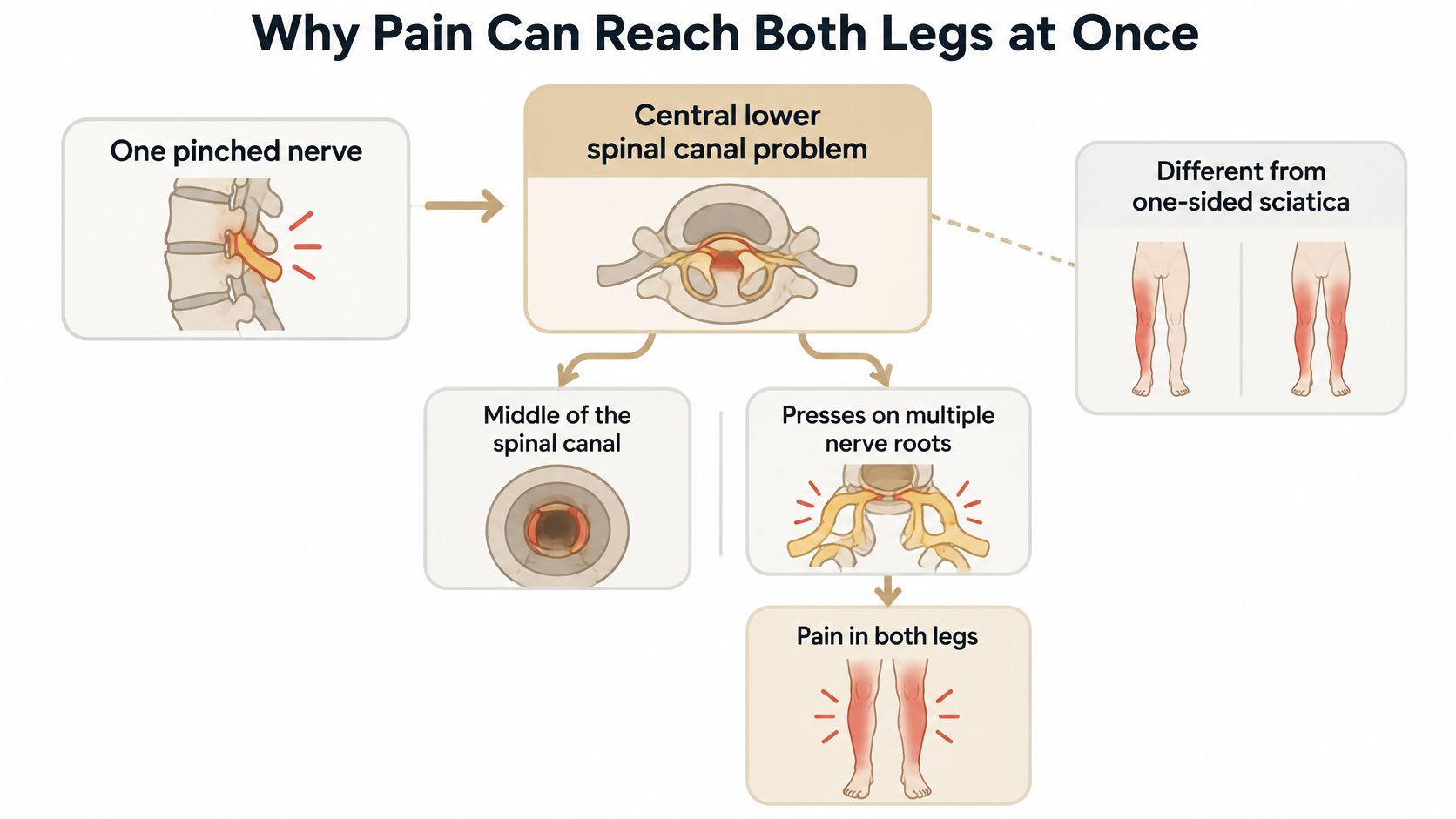
| Cause | Typical pattern | Usual confirmation |
|---|---|---|
| Large central lumbar disc herniation | Pain in both legs, often with back pain | MRI |
| Lumbar spinal stenosis | Leg pain on standing or walking, eased by sitting | Clinical exam with MRI or CT |
| Spondylolisthesis | Bilateral leg pain, sometimes with back stiffness | X-ray, with MRI if needed |
| Multi-level nerve root involvement | Symptoms across several areas of both legs | MRI and clinical exam |
| Systemic or non-spinal causes | Bilateral pain without the typical spinal pattern | Clinical review, further tests as indicated |
The pattern matters more than the label. Lumbar spinal stenosis means narrowing around the nerves in the lower spine. Spondylolisthesis means one vertebra has slipped in relation to another. A large disc herniation or involvement at several levels can also affect multiple nerve roots. Less commonly, a cause outside the spine may explain symptoms on both sides, particularly when the pattern doesn't fit a typical spinal problem.
Say a 62-year-old can walk a short distance before both legs ache, then feels better after sitting. That activity-linked pattern may point toward stenosis and calls for a different evaluation than a sudden two-sided ache after lifting, which could fit a disc-related problem. Neither example confirms a diagnosis on its own.
The cause determines which tests are useful and which treatment makes sense. Pain location alone can't tell you whether to pursue imaging, exercise, or another approach. Be ready to describe what brings symptoms on, what eases them, and whether strength, sensation, or balance has changed.
Pain location alone is a weak signal. What separates stenosis from two-sided disc pain is what loads the nerve and what unloads it, plus any change in strength or sensation.
| Feature | Disc-related sciatica | Lumbar stenosis |
|---|---|---|
| Pain made worse by | Sitting, bending forward, or coughing | Standing or walking |
| Pain relieved by | Often changing position or walking | Sitting or leaning forward |
| Walking tolerance | Often limited by pain with movement | Limited distance before legs ache |
| Leg weakness | Possible, depending on the nerve root | Possible, sometimes with balance change |
| Typical onset | Sudden, after lifting or twisting | Gradual, over months |
Stenosis acts like a kink in a garden hose that tightens when you stand upright. Standing or walking brings burning, heaviness, or aching into both legs, and sitting or leaning forward opens space around the nerves so symptoms ease within minutes. Disc-related sciatica tends to follow the opposite trigger. Sitting, bending forward, coughing, or sneezing raises pressure on the disc and can shoot pain down the leg.
Overlapping problems are common, so treat the pattern as a starting point. A person can have both narrowing and disc irritation, and symptoms do not predict exactly what imaging will show. The clinical table comparing radicular syndromes and neurogenic claudication highlights how features such as bilateral leg pain, worsening with standing or walking, and relief when seated or bending forward help distinguish patterns.
Record what you were doing when symptoms began and what helped. Concrete notes give a clinician more to work with than memory:
Bring the diary to the visit. If weakness is spreading, numbness is expanding, balance is worsening, or bladder or bowel function has changed, report that right away instead of waiting to finish several days of notes.
A same-day assessment isn't just a pain-rating conversation. The clinician checks how the nerves and muscles are functioning, because those findings help determine urgency and whether imaging or referral is needed.
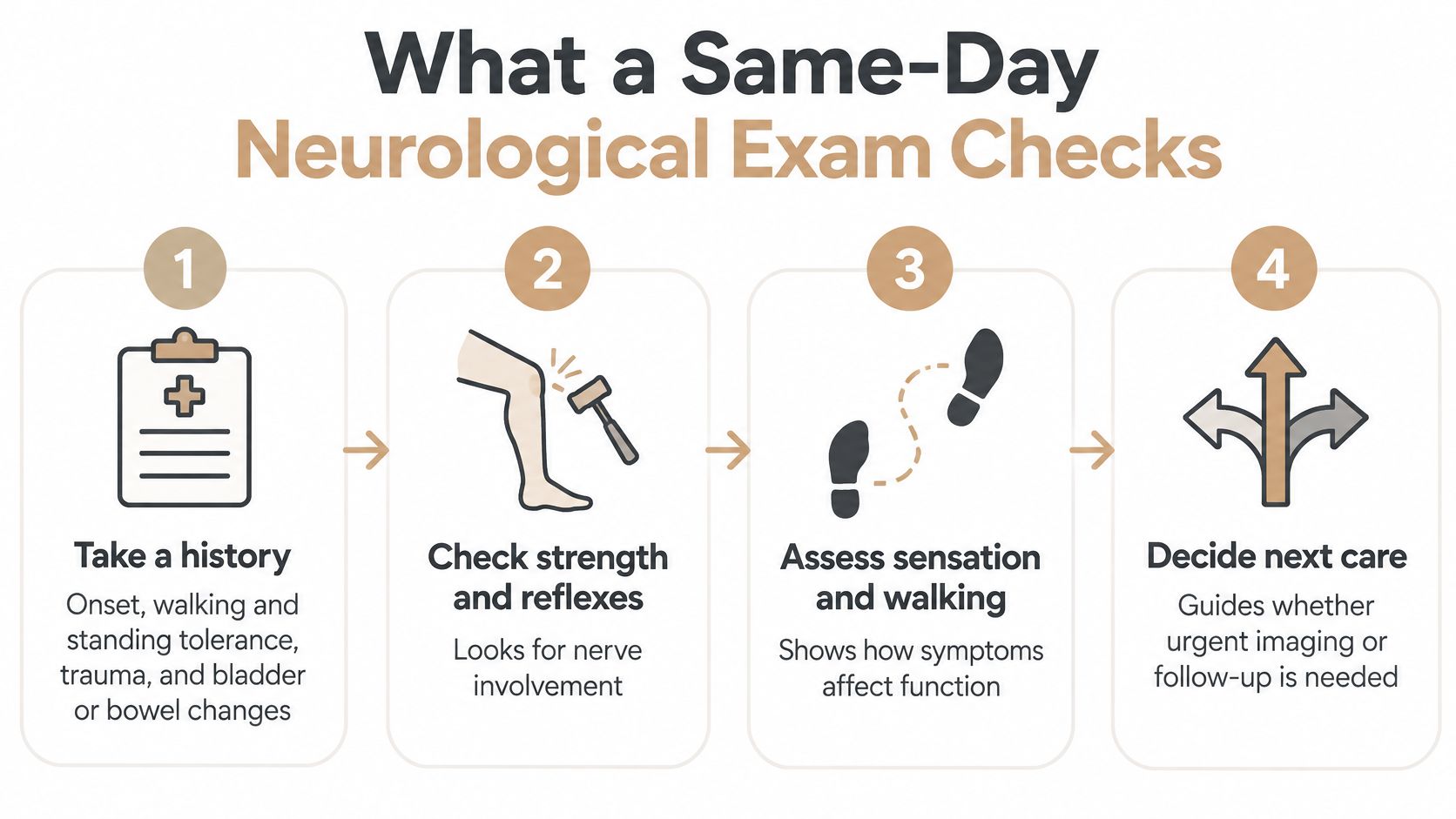
Take a history. Expect questions about when symptoms began, how far you can walk, how long you can stand, whether you had an injury, and whether bladder or bowel function has changed. The timing and progression of symptoms help shape the next steps.
Test leg strength. The clinician may ask you to push or pull against resistance at the hip, knee, ankle, and big toe. Comparing both legs can reveal weakness that changes how urgently you need care.
Check reflexes and sensation. Knee and ankle reflexes are compared on both sides, and sensation is mapped across the legs and feet. The clinician may also ask about numbness in the inner thighs or around the saddle area, because that can signal a serious problem.
Observe walking and balance. You may be asked to walk normally, then try walking on your heels and toes. These tasks can show how symptoms affect function beyond what a pain score captures.
Perform a straight-leg raise. The clinician raises each leg while you lie down and notes whether the movement reproduces your familiar pain. The side and nature of the response help interpret the rest of the examination.
Decide whether imaging is needed. MRI is important when cauda equina syndrome is suspected, symptoms are progressing, or an injection or surgery is being considered. Imaging decisions should follow neurological findings and the effect the result would have on management, not pain intensity alone.
A clinical guide to how spinal stenosis is diagnosed can help you understand why examination and imaging are considered together. For a separate explanation of how nerve symptoms may change over time, see understanding neuropathy progression.
At the initial exam, an X-ray or MRI may be suggested to confirm the patient's condition. The choice depends on what the clinician finds and what question a test needs to answer. If weakness or numbness progresses, seek urgent referral rather than waiting for a routine follow-up.
What should conservative care change when both legs hurt? The goal is to preserve walking tolerance and daily function while the clinician monitors for neurological change. Exercise provides that active base. NICE guidance on low-back pain and sciatica recommends considering group exercise programs, including biomechanical, aerobic, mind-body, or combined approaches, suited to a person's needs and abilities. It also allows manual therapy, including manipulation, mobilization, and massage, only as part of a package that includes exercise.
| Option | Role in the plan | Main limit |
|---|---|---|
| Rehabilitation exercise | Core of the plan | Needs consistent home practice |
| Chiropractic adjustment | Mobility and symptom relief once red flags are excluded | Not a substitute for emergency care |
| Spinal decompression with DRX9000 | Traction-based option for disc-related pain | NICE does not recommend traction for non-specific low-back pain |
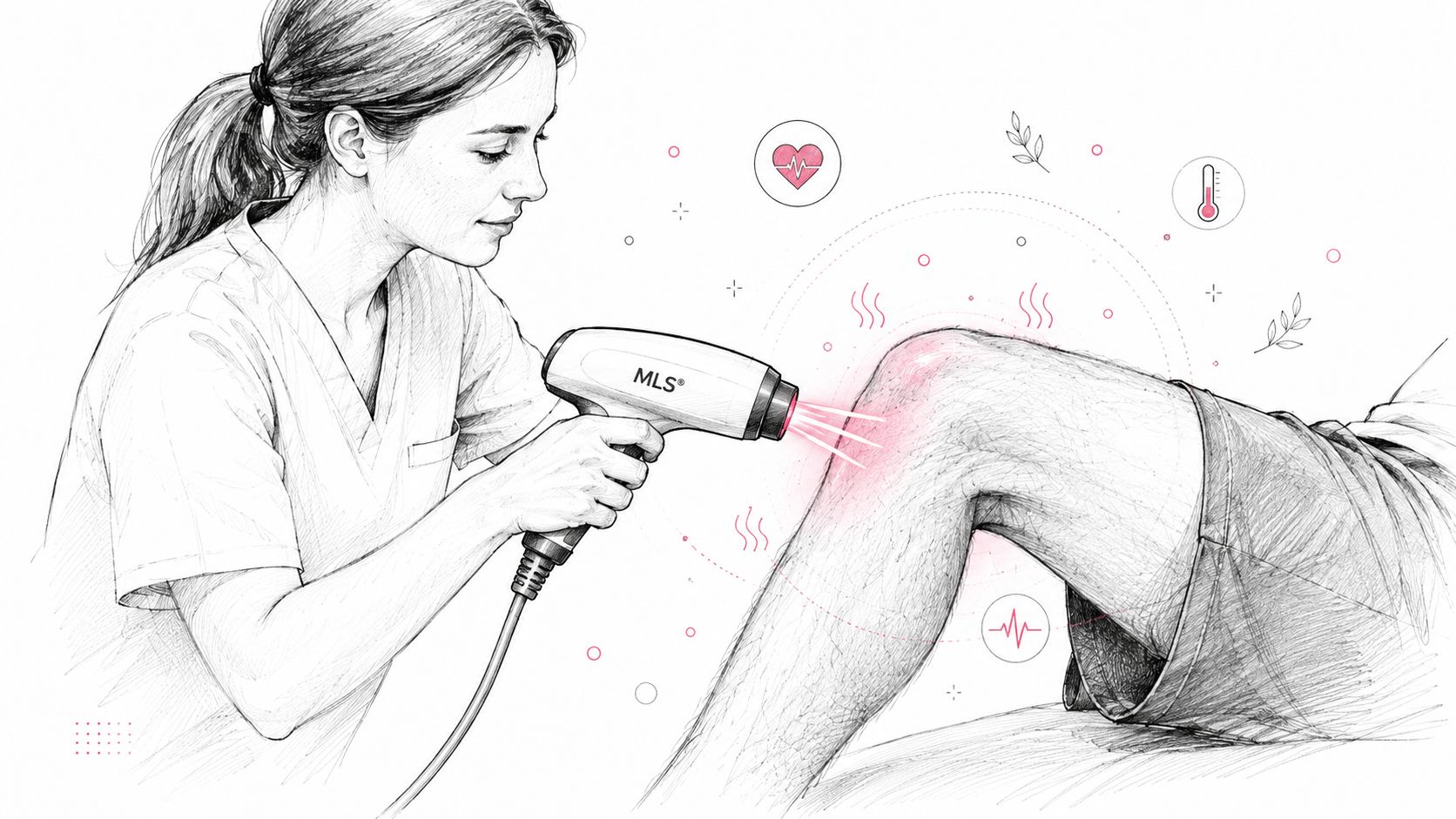
| MLS Laser Therapy | Adjunct to reduce inflammation | Supports exercise, doesn't replace it |
| SoftWave Therapy | Adjunct for soft-tissue and chronic pain | Works best within a package |
| Acupuncture | Pain modulation alongside other care | Response varies by person |
| Massage therapy | Short-term soft-tissue relief | Pair with exercise for lasting change |
Rehabilitation exercise gives the plan an active foundation, but the movements should match symptoms and capability. A personal exercise plan can include mobility therapy and gradual strengthening, with adjustments if an activity increases pain or neurological symptoms.
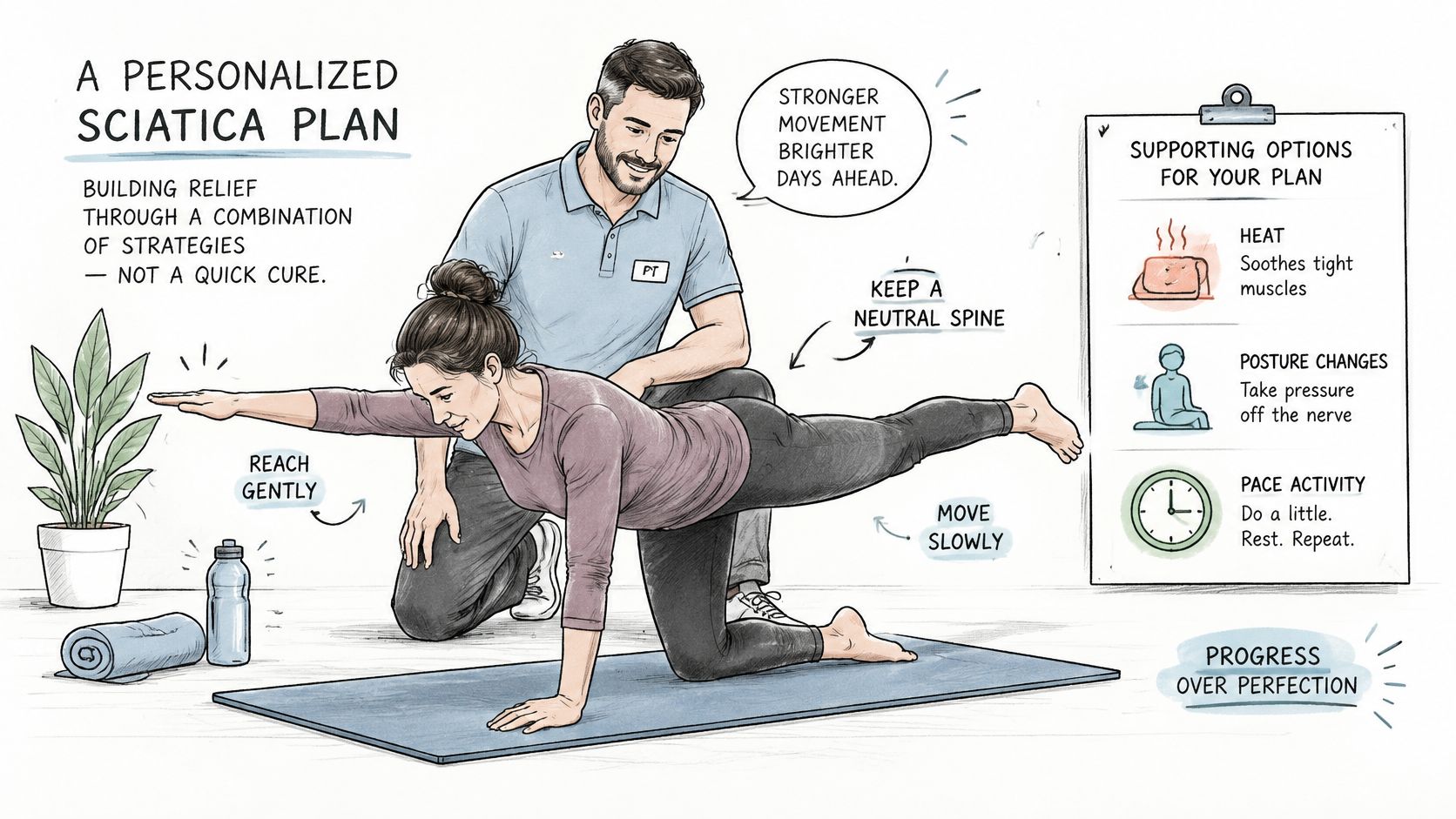
Manual approaches such as chiropractic adjustment or massage may support movement and short-term comfort alongside assessment and an exercise plan. Spinal decompression with the DRX9000 is a traction-based option that requires a clear clinical rationale. NICE does not recommend traction for non-specific low-back pain, so clinicians reserve it for selected disc-related presentations.
Use MLS Laser Therapy, SoftWave Therapy, and acupuncture as adjuncts alongside rehabilitation exercise. Response to acupuncture varies from person to person. A detailed breakdown of sciatica treatment options explains how exercise, manual therapy, decompression, and adjunct modalities fit together in a staged plan.
At Aspen Falls Wellness, a customized plan is developed based on the diagnosis and may include chiropractic adjustments, DRX9000 Decompression, and/or MLS Laser Therapy. The right combination depends on the assessment, the suspected cause, and how symptoms respond.
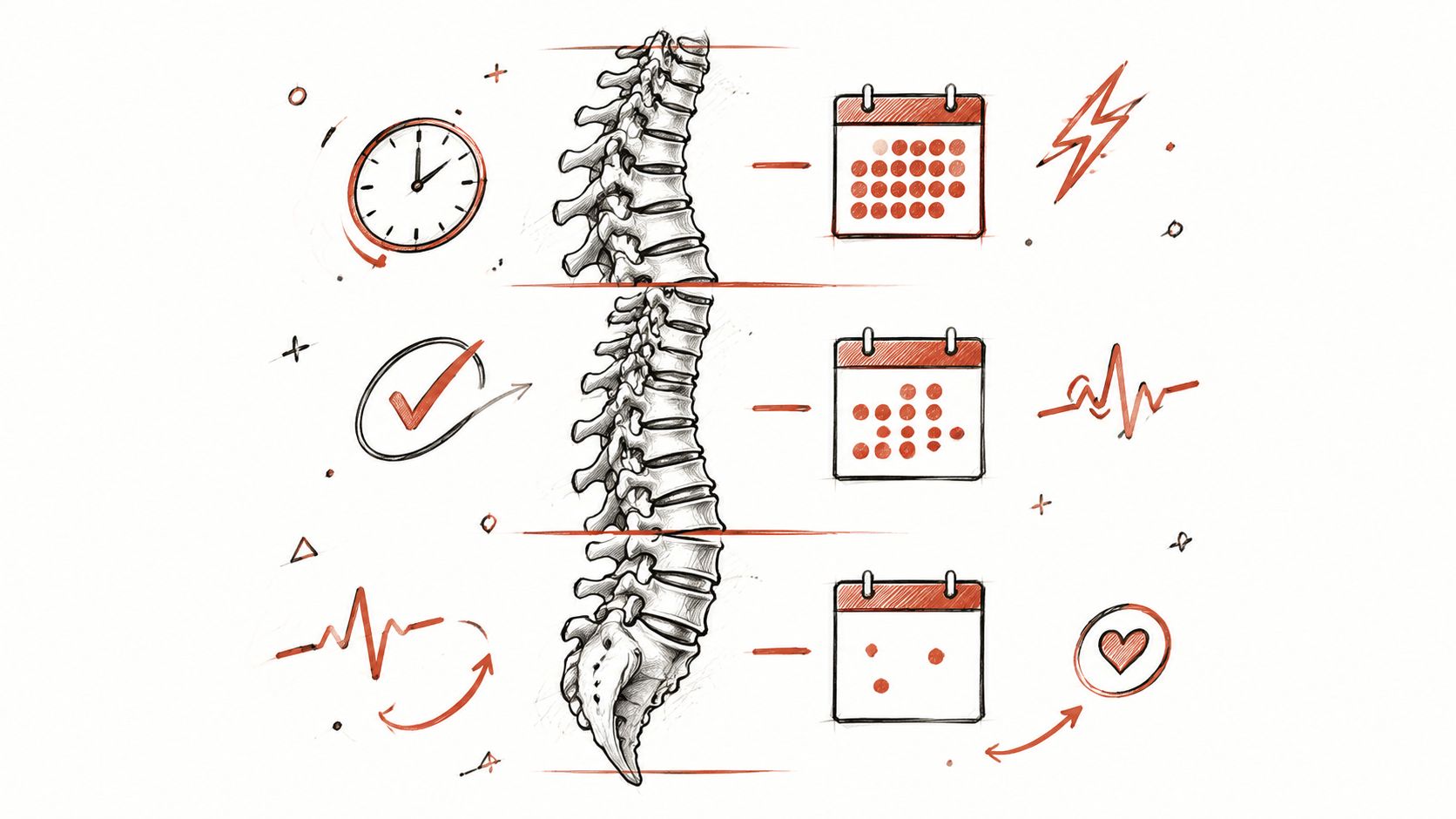
How long will this last? Pain location alone cannot answer that. Recovery becomes clearer when you track function week by week and pair it with strength, sensation, and bladder or bowel changes.
Weeks 0 to 2 focus on safety and movement. Confirm no urgent warning signs are present, avoid positions that reliably aggravate both legs, and keep walking in short, frequent bouts as tolerated. Prolonged bed rest slows recovery.
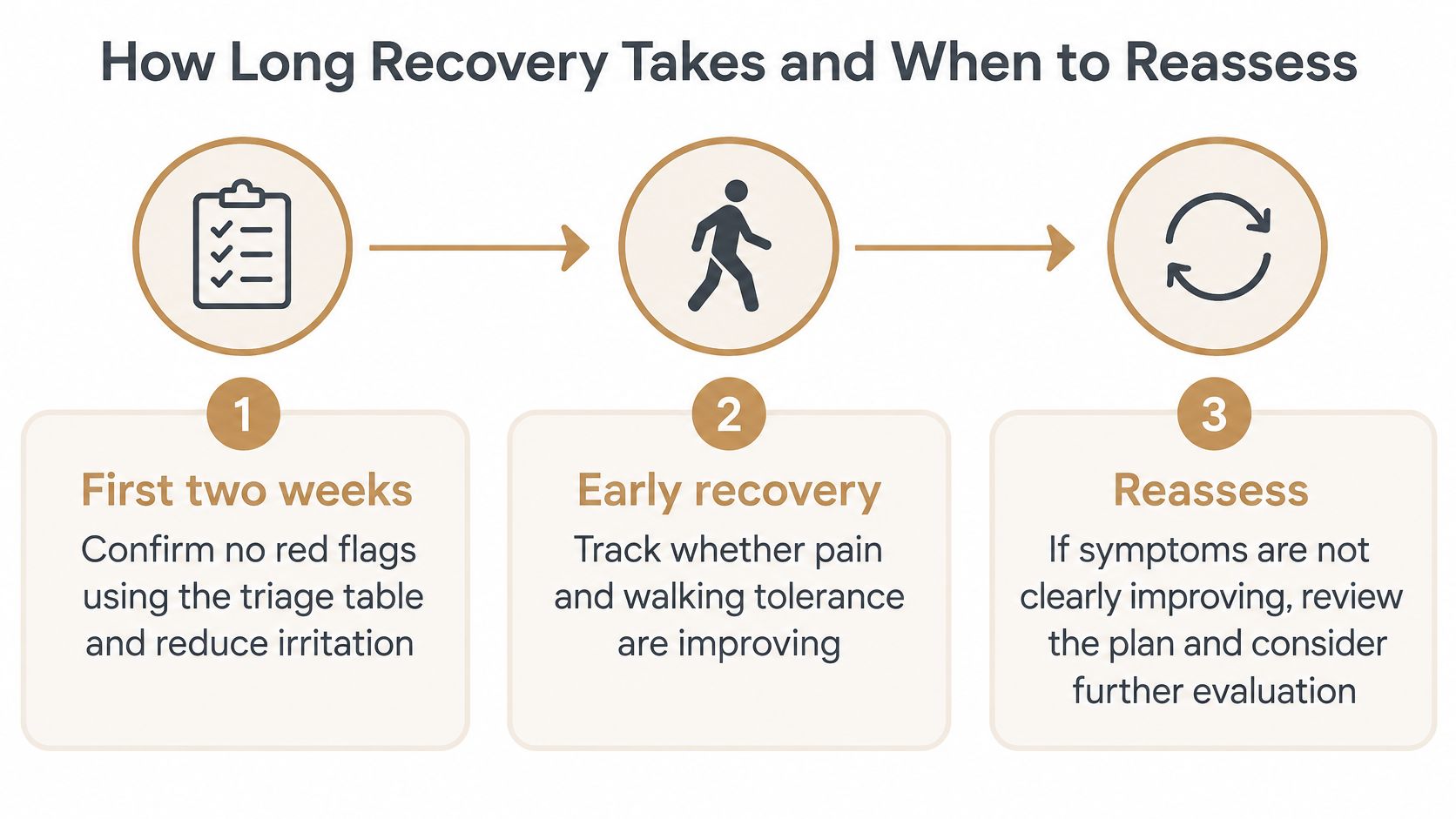
Weeks 2 to 6 look for a slow upward slope. Daily tasks get a little easier. Flares still happen, but they settle faster. Patients typically begin to experience back pain relief within weeks, although timing varies by cause, severity, and consistency with the plan. Visit frequency also varies: some clients with chronic pain visit once a week to alleviate their pain, while others plan a monthly appointment.
After 6 weeks, reassess rather than wait. If symptoms persist beyond about six weeks or deficits are present, request imaging or electrodiagnostic testing. The Merck Manual guidance on lumbosacral radiculopathy describes imaging and electrodiagnostic evaluation when deficits are present or symptoms persist beyond that point. Stable but disabling pain after an appropriate non-operative trial can also warrant specialist referral.
Instead of listing the same numbers again, describe what changed since the last visit:
A red flag overrides the timeline. New bladder or bowel problems, saddle-area numbness, or worsening weakness means urgent assessment, not another scheduled check-in.
What will make your first visit most useful is not the exact spot of the pain. It is a clear record of function triggers and nerve signs. Bring a short diary that notes walking distance before symptoms start, standing tolerance, sitting tolerance, what eases the pain, and any numbness, weakness, or balance change.
Ask three focused questions at that visit. Do my exam findings point more toward stenosis, bilateral nerve irritation, or another cause. Is imaging needed now or after a trial of conservative care. What specific change should prompt urgent reassessment, and when will we review progress. A good exam should test strength, sensation, reflexes, and walking, then connect those results to the plan.
For symptoms suitable for conservative care, options offered at Aspen Falls Wellness include spinal adjustments, massage therapy, spinal decompression, acupuncture, MLS Laser Therapy, SoftWave Therapy, nutrition counseling, mobility therapy, and rehabilitation exercise. Care starts with examination and diagnosis, with X-ray or MRI referral when indicated, followed by a personalized plan that may combine manual care, device-based modalities, and take-home exercise.
If you have two-sided leg pain without emergency warning signs, Aspen Falls Wellness offers assessment and individualized care, including chiropractic adjustment, spinal decompression, massage therapy, acupuncture, and MLS Laser Therapy. Bring your symptom diary to discuss what may be driving the pain and which next steps are appropriate.

Stay updated with the latest chiropractic news and exclusive offers.