Neck Pain After Rear End Collision. Understand neck pain after a rear end collision, including whiplash causes, symptoms, red flags, diagnosis, conservative
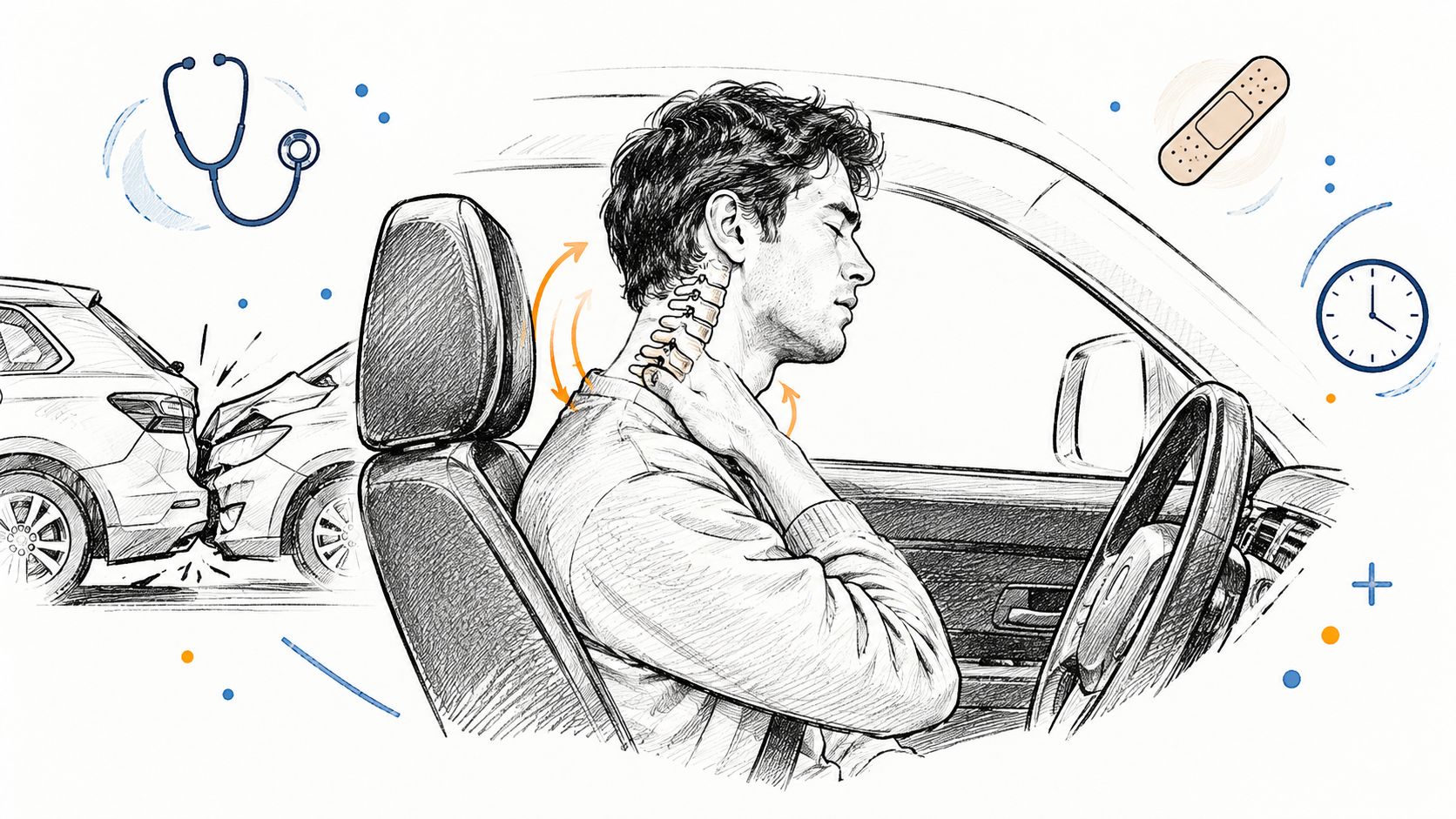



You're stopped at a red light when the car behind you bumps into your rear bumper. There's a brief silence, followed by the instinctive turn of your head to check the other passengers. Adrenaline is high, the damage looks limited, and your neck feels fine, so you exchange information and drive away.
That reaction is common, but it doesn't tell you whether the neck is uninjured. Neck pain after a rear end collision may appear later, once protective muscle guarding and inflammation become more noticeable. The important question isn't whether the crash looked dramatic. It's whether your symptoms, examination findings, and recovery pattern fit a soft-tissue injury that can improve with conservative care, or whether they point toward imaging or specialist assessment.
A rear impact moves your body before your head has time to respond. Your torso is pushed forward by the seat, while your head briefly lags behind. The neck then moves through a rapid sequence of extension and flexion, even when the collision seems minor from outside the vehicle.
The first hours can be misleading. Adrenaline, attention to passengers, and the practical demands of dealing with the crash can overshadow early soreness. Some people notice only a tight feeling that evening. Others wake with stiffness, headache, shoulder tension, or difficulty turning the head.
A prospective cohort study of people who reported rear-end collisions to police found that 78% of participating respondents had neck pain lasting more than one week, and 52% still reported pain at one year. The same study found that a history of neck pain strongly predicted early symptoms, while the initial pain level and a compensation claim were the strongest predictors of pain at one year. Read the prospective cohort findings
Those figures shouldn't be used to predict your individual outcome. They do show why “I felt fine at the scene” isn't a reliable clearance test.
Practical rule: Treat the collision as a reason to monitor yourself carefully, not as proof that you're seriously injured or proof that you're fine.
The useful next steps are straightforward. Identify the symptoms that commonly follow whiplash, recognize signs that need urgent attention, arrange an appropriate examination, and use a treatment plan that progresses from symptom control toward restored movement and strength. Recovery can be quick, but persistent pain deserves a fresh clinical look rather than repeated reassurance alone.
Think of a towel being snapped. The hand moves first, the middle follows, and the far end changes shape rapidly. A rear-end collision creates a similar acceleration-deceleration problem in the body, although the neck is more complex than a towel and the forces depend on the vehicle, seat, restraint, head position, and occupant.
First, the seat drives the torso forward. The head lags behind for a fraction of a second. That difference creates an S-shaped deformation of the cervical spine, followed by extension and flexion as the head catches up. Research describing rear-impact mechanics reports that the cervical region can exceed normal physiologic limits within about 50 to 100 milliseconds, increasing shear and tensile loading on soft tissues. Review the rear-impact neck mechanics
Several structures may absorb that load:
The result is the familiar whiplash-associated pattern: neck pain, headache, restricted motion, and tension across the shoulders or upper back. Symptoms can also extend into the arms when nerve tissues become irritated, but radiating pain, numbness, or weakness changes the assessment.
Head-restraint position is one modifiable factor. The same research reports that appropriate positioning has been associated with a 24% reduction in neck-pain incidence in rear-end crashes. Learn about soft-tissue loading and injury mechanisms
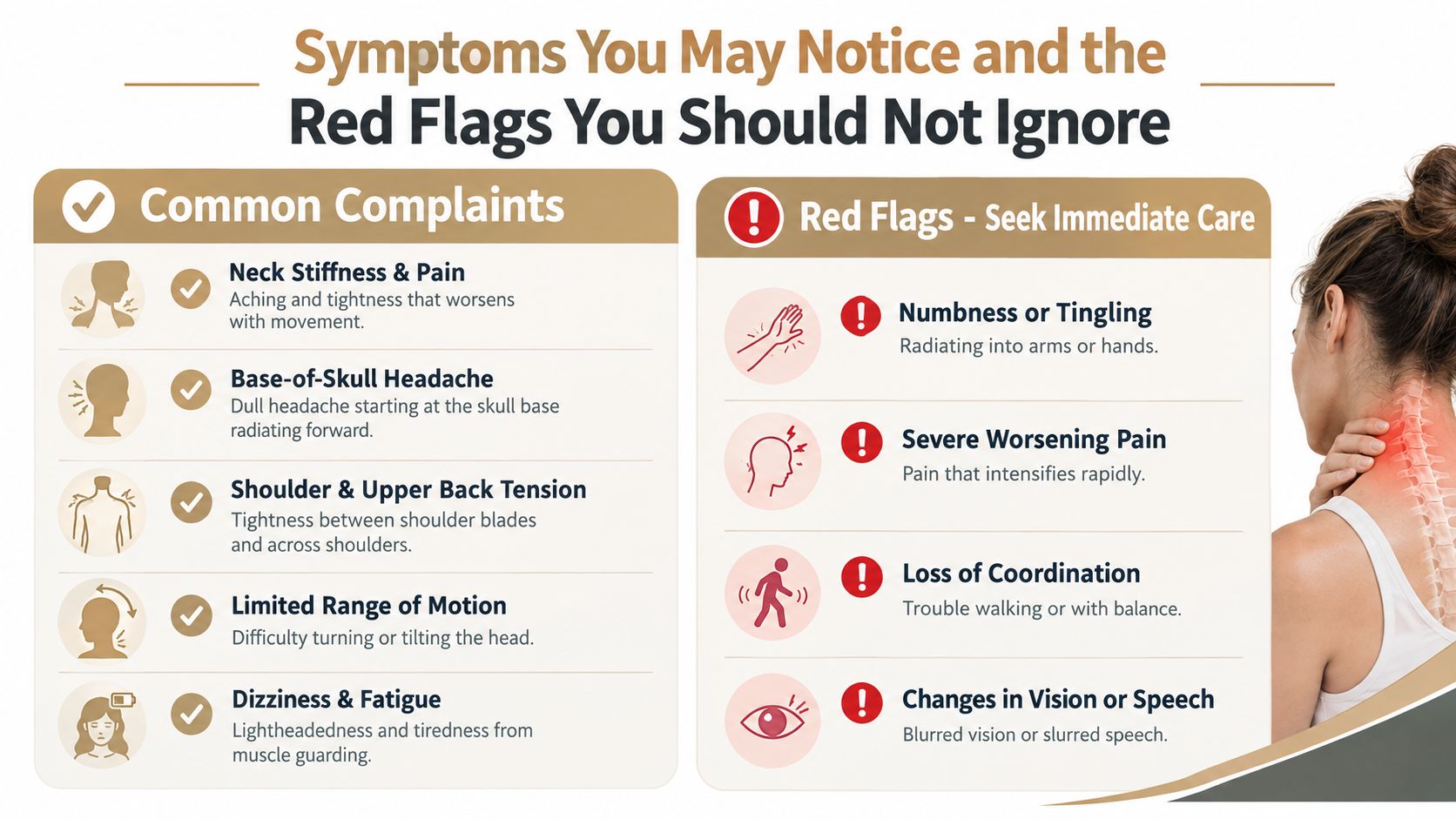
Most post-collision neck complaints fall into a recognizable soft-tissue pattern. You may feel stiffness when backing out of a parking space, aching at the base of the skull, or tension between the shoulder blades. Turning your head can become difficult, and the neck may feel more painful after sitting, driving, or working at a screen.
Other symptoms deserve attention without automatically meaning that a dangerous injury is present:
The urgency changes when symptoms suggest spinal cord involvement, fracture, significant nerve compromise, or a head injury. Seek immediate medical care for progressive weakness, spreading numbness, bowel or bladder changes, trouble walking, loss of coordination, severe escalating pain, visual or speech changes, or an electric-shock sensation with neck movement. Severe midline tenderness also warrants urgent assessment.
A mild ache that plateaus and gradually eases is different from pain that steadily worsens. Persistent night pain, increasing weakness, or new radiating symptoms shouldn't be managed by adding more rest.

For a plain-language checklist covering symptom monitoring and practical car accident whiplash recovery tips, use a resource that emphasizes both documentation and timely evaluation. The purpose isn't to diagnose yourself online. It's to recognize when a routine recovery pattern has changed.
A careful examination starts before anyone touches your neck. The clinician should ask how the collision happened, where your head was facing, how your seat and head restraint were positioned, whether symptoms began immediately or later, and which daily activities now provoke pain. Vehicle speed alone doesn't determine injury severity, so the circumstances and your physical findings matter.
The physical examination should include posture, cervical and upper-thoracic palpation, muscle spasm, active range of motion, and functional movements. The clinician should record what you can do, not just write “neck pain.” Turning distance, pain behavior, work tolerance, sleep disruption, and driving limitations create a baseline for later comparison.
A neurological screen checks reflexes, sensation, and muscle strength in the arms. Orthopedic testing may include Spurling's and distraction maneuvers when radicular pain is suspected. If you struck your head, the assessment may also include cranial nerve checks and a broader head-injury screen.
Imaging answers specific questions. X-rays and CT are useful when fracture or alignment problems are suspected. MRI is more useful for selected concerns involving discs, nerve roots, ligaments, or the spinal cord. Neither scan replaces a neurological and functional examination.
Clinical neck-pain guidance classifies patients who can actively rotate the head 45 degrees in each direction as low risk in the acute stage, for whom imaging isn't required under that framework. High-risk patients should undergo CT or cervical radiography. Review the clinical imaging guideline
Early imaging may not show a soft-tissue strain, and unnecessary scans can create incidental findings that distract from rehabilitation. Imaging becomes more relevant when red flags exist, radicular symptoms persist, fracture is suspected, or symptoms worsen despite appropriate care.

Treatment works best when the pieces have a job. Passive care can reduce irritability, but it shouldn't become the entire plan. The long-term target is useful movement, strength, confidence, and a return to normal activity.
A coordinated plan may include:
Aspen Falls Wellness offers these services alongside Car Accident Treatment, Chiropractic Care, Acupuncture, massage, mobility work, and rehabilitation. The appropriate combination depends on examination findings and progress, not on stacking every modality into every visit.
| Modality | Problem Addressed | Typical Phase |
|---|---|---|
| Massage Therapy | Muscle guarding and soft-tissue tenderness | Early to middle |
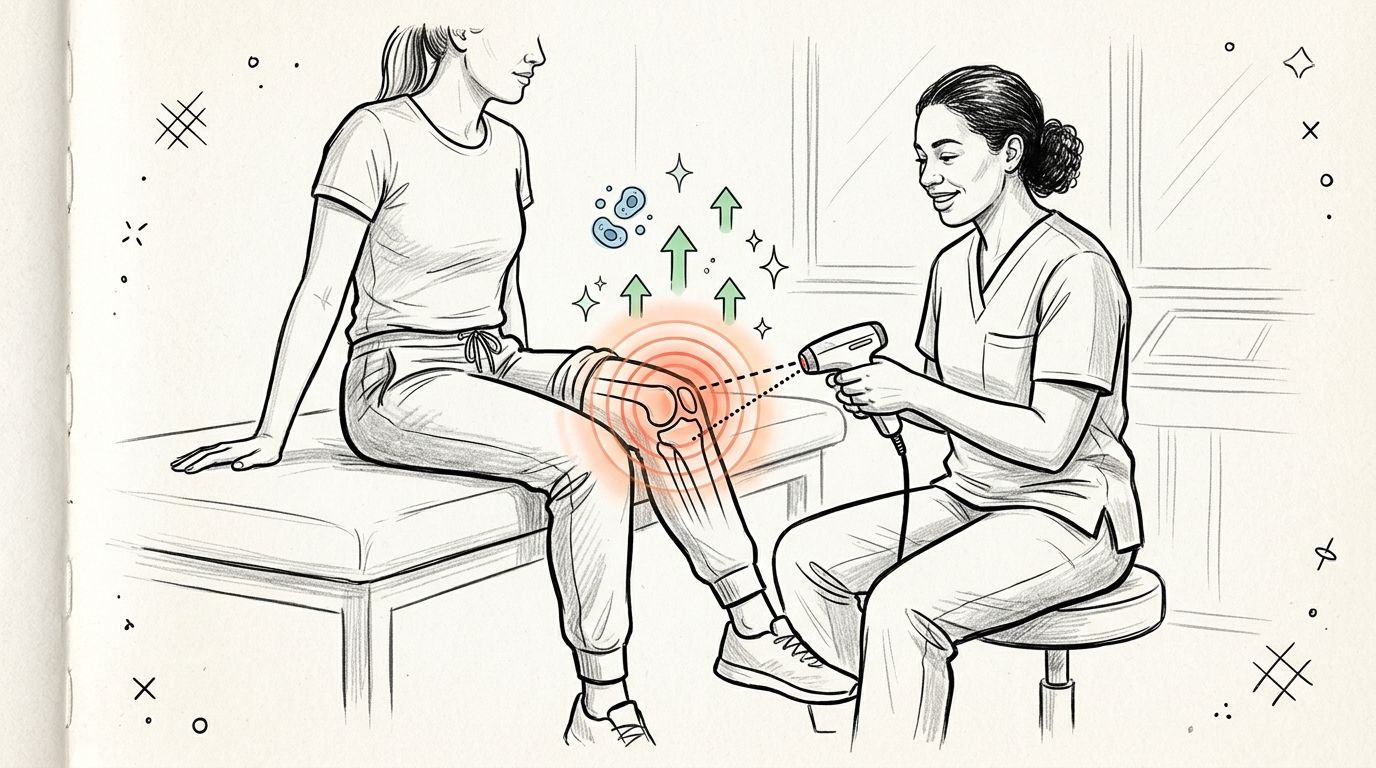
| MLS Laser Therapy or SoftWave Therapy | Pain sensitivity and tissue irritability | Early support |
| Chiropractic Adjustment | Restricted spinal movement when appropriate | Early to middle |
| Mobility Therapy | Loss of comfortable neck rotation | Early and ongoing |
| Rehabilitation Exercise | Reduced stabilizer control and endurance | Middle and later |
| DRX 9000 Spinal Decompression | Selected disc-related symptoms | Case dependent |
Guidelines from the State Insurance Regulatory Authority emphasize active care and reassessment rather than relying on specialized imaging for WAD grades I and II. Review the whiplash treatment approach
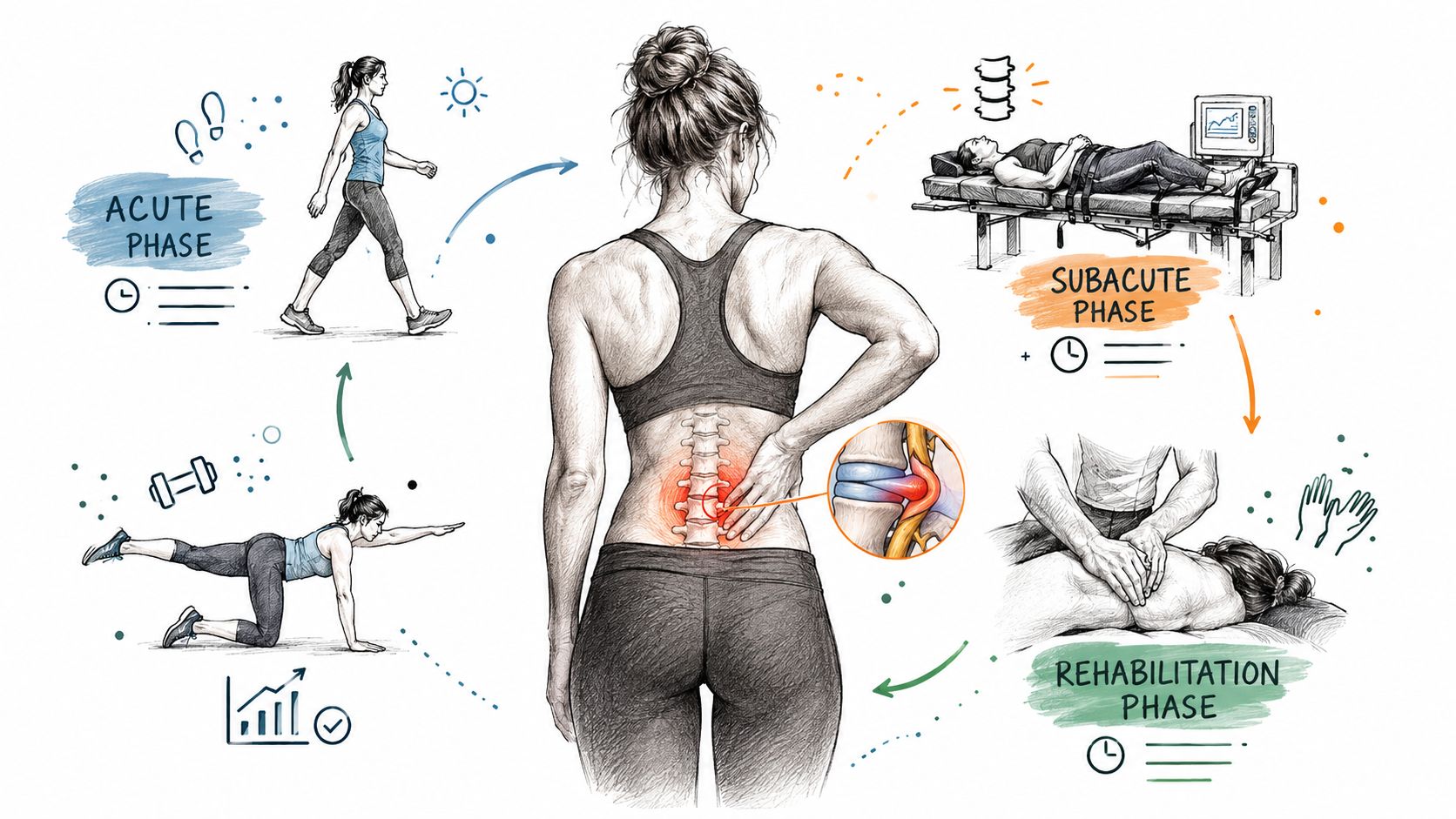
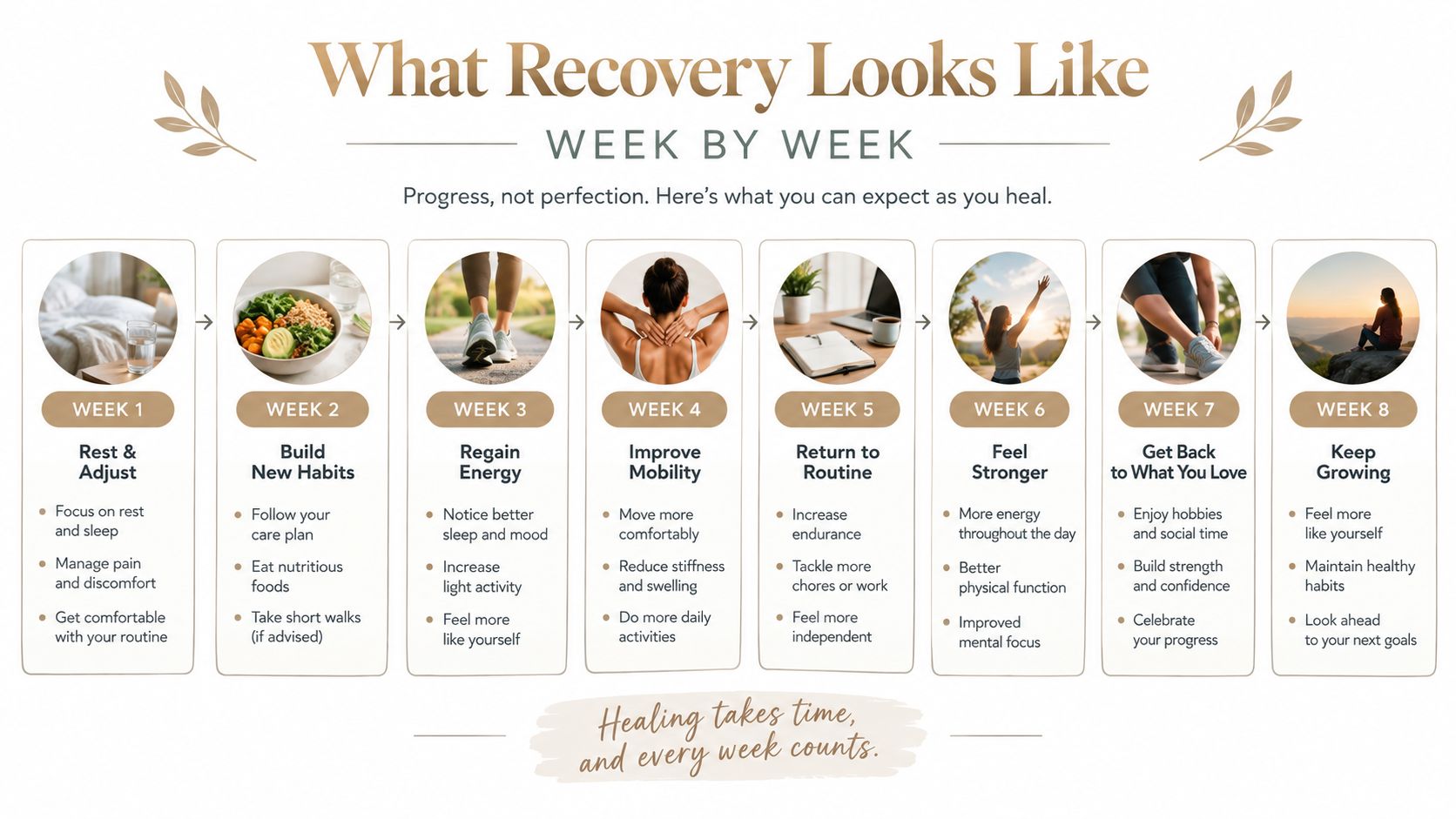
Recovery usually changes in phases rather than following a perfectly smooth line. A patient may feel better for several days, then become sore after a longer drive or an unfamiliar exercise. That temporary flare doesn't automatically mean new damage, but a sustained decline should trigger reassessment.
During the first week, pain, muscle guarding, headache, and limited rotation often dominate. Relative rest means reducing aggravating activity without staying rigid or inactive. Gentle movement, comfortable positioning, ice when helpful, and carefully selected pain-relieving modalities may be reasonable while the examination determines how much active care you can tolerate.
During the next several weeks, treatment should shift toward normal movement. Manual therapy may become more specific, while deep neck flexor activation, scapular stabilization, and controlled rotation build capacity. The aim isn't to chase zero pain before moving. It's to restore function without repeatedly provoking a significant flare.
A classic controlled study found that 47% of accident victims had initial pain. At one year, 4.0% had frequent neck pain, defined as more than seven days per month, compared with 6.2% of matched controls. Review the controlled rear-end collision study
As movement improves, resisted strengthening, postural endurance, and proprioception become more important. Residual stiffness can still appear with desk work, driving, lifting, or sleep, but the overall trend should be toward greater activity and fewer restrictions.
Beyond the early recovery period, persistent symptoms deserve a structured review of baseline pain, prior neck problems, range of motion, sleep, stress, confidence with movement, and adherence to the home plan. Guidance notes that up to 50% of people with whiplash-associated disorders report pain lasting months or years, while chronic care evidence favors active management and self-management over an automatic medication pathway. Read the clinical update on persistent whiplash
For hands-on support during the guarded phase, massage therapy for whiplash can be considered as part of a broader plan, rather than as a substitute for movement retraining.
Write down what happened while the details are fresh. Keep photographs of the vehicles and scene, preserve available dashcam footage, record witness contacts, and note whether you had turned your head or were looking straight ahead. Even mild symptoms deserve same-day documentation because pain and function can change after the initial shock wears off.
A simple daily record is more useful than a dramatic narrative. Note pain intensity in qualitative terms, neck rotation, sleep, driving, work duties, exercise, medication use, and activities you missed. Keep appointment summaries, imaging reports, referral paperwork, receipts, and treatment instructions together. A practical guide to how to organize medical records can help you create a usable file for both clinical and insurance communication.
Insurance rules vary by policy and jurisdiction. MedPay or PIP may address medical expenses under applicable coverage, while third-party liability claims address the responsible driver's policy. Health insurance may also be involved, often subject to policy rules, deductibles, liens, or reimbursement rights. Ask the insurer and your healthcare office how billing will be handled before assuming one universal order applies.
Escalate promptly for progressive neurological deficits, bowel or bladder changes, worsening weakness, severe night pain, or rapidly increasing symptoms. If there's no measurable improvement after four to six weeks of appropriate care, reassessment may include imaging, injection referral, or review by an orthopedist, neurologist, or pain physician. Guidance also supports earlier reassessment when symptoms fail to improve within one to six weeks, with urgent review sooner for neurological signs. Review the guidance on low-speed impacts and escalation
Yes. Low-speed collisions often don't produce structural injury, but tissue loading depends on head position, seat and head-restraint geometry, occupant awareness, and how quickly the body is accelerated. The evidence is more nuanced than calling every minor crash harmless or every symptom a hidden major injury.
Many people recover. A prospective study of emergency-department patients reported that 66% made a complete recovery and 2% were disabled. It also found that among patients symptom-free by two months, 88% remained asymptomatic at two years, rising to 93% among those symptom-free by three months. Review the prospective recovery data
Persistent pain is more likely when initial pain is high, movement is restricted, prior neck pain exists, or psychological distress and low confidence with movement become part of the problem. That doesn't mean symptoms are imaginary. It means recovery involves the nervous system, behavior, sleep, and function as well as injured tissues.
If symptoms are mild, stable, and improving, relative rest, comfortable ice, gentle movement, and appropriate over-the-counter medication may be reasonable if safe for you. Arrange an evaluation if symptoms interfere with work, sleep, driving, or daily tasks, or if they fail to improve.
Resume gradually when you can move your head safely, control symptoms, and perform the activity without a meaningful flare afterward. Driving requires comfortable scanning and braking responses. Work and exercise may need temporary modification, followed by progressive loading rather than prolonged avoidance.
An old neck injury doesn't guarantee a poor result, but it should be included in the history because prior neck pain was a strong predictor of early symptoms in the prospective cohort study cited above.
Aspen Falls Wellness provides post-collision evaluations and individualized conservative care, including Chiropractic Adjustment, Massage Therapy, Mobility Therapy, rehabilitation exercise, Acupuncture, SoftWave Therapy, MLS Laser Therapy, and selected Spinal Decompression with the DRX 9000. If neck pain after a rear-end collision is limiting your movement or not following a steady recovery pattern, visit Aspen Falls Wellness to arrange an assessment in Salt Lake City or Sandy.

Stay updated with the latest chiropractic news and exclusive offers.