Learn how acupuncture for neck pain and headaches works, what the evidence shows, what to expect in clinic, and how it fits into an integrative care plan.
Acupuncture can modestly reduce neck pain and reduce headache frequency for some people. In trials, 51% of people with tension-type headaches achieved at least a 50% reduction in headache frequency, compared with 43% receiving sham acupuncture, while chronic neck-pain benefits over sham treatment were small.
The practical question many patients carry is whether acupuncture belongs in their plan when the base of the skull feels tight, headaches arrive by mid-afternoon, and over-the-counter medication has become part of the routine. The most useful answer isn't a promise of a cure. Acupuncture for neck pain and headaches works best as one layer of an integrative plan, with a defined trial, clear goals, and regular reassessment.
By Wednesday afternoon, Maya's neck feels as though it has been holding up her desk monitor all week. She works at a computer, drives home through traffic, and notices a familiar pattern every few days: tightness across the shoulders, reduced ability to turn her head, and a headache that starts near the base of her skull before spreading toward her temples.
She hasn't suffered one dramatic injury recently, although an old whiplash episode still makes her cautious. Her symptoms have become predictable. Stretching helps for a while, medication takes the edge off, and then the cycle returns.
This pattern can occur when irritated or overworked neck muscles refer discomfort upward into the head. It may resemble a tension-type headache or a headache with a strong cervical component. Migraine has different features and requires appropriate screening, especially when symptoms include pronounced sensitivity to light or sound, nausea, visual changes, or a major change from the usual pattern. You can review migraine and headache treatment when deciding whether your symptoms need a broader evaluation.
Practical rule: A recurring headache deserves more than a treatment choice. It deserves a baseline, a working diagnosis, and a plan for checking whether daily function is actually improving.
Acupuncture may be reasonable for someone like Maya, but it shouldn't be presented as a structural correction or a guaranteed way to stop every headache. The value lies in seeing whether treatment reduces pain, improves neck movement, lowers headache frequency, or makes exercise easier.
People also explore complementary options while comparing possible risks and benefits. If you're considering supplements or cannabidiol products, use a cautious, medication-aware resource such as using CBD for headaches safely and discuss any new product with a qualified clinician, particularly if you take prescription medication.
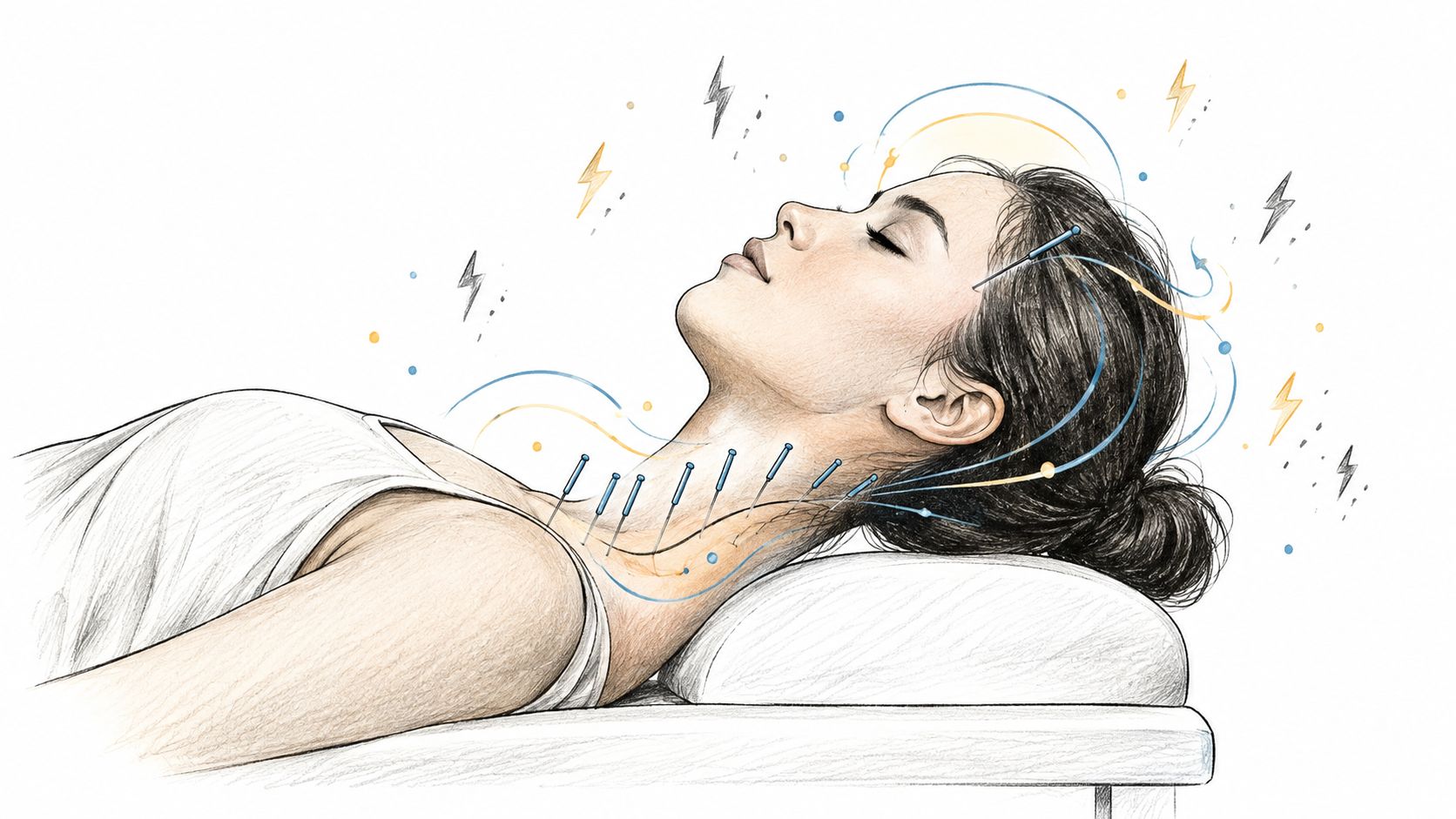
Acupuncture uses fine needles placed at selected points on the body. For neck pain and headache syndromes, a clinician may work around the neck, upper shoulders, head, limbs, or other points chosen after an assessment. The exact plan depends on the symptoms, examination findings, health history, and the practitioner's training.
A simple analogy is a volume control. Pain isn't only a message from an injured or tense area. The nervous system also decides how loudly that message is processed. Needling may influence local tissue response and pain signaling, while the surrounding clinical context can affect muscle guarding, attention, stress, and expectations.
The neck and head share overlapping pain pathways, including a region often described as the trigeminocervical system. Signals from upper-neck structures and head tissues can interact there, which helps explain why irritation or tension in the cervical area may be experienced as head pain. This proposed mechanism doesn't mean every headache comes from the neck, and it doesn't replace diagnosis.
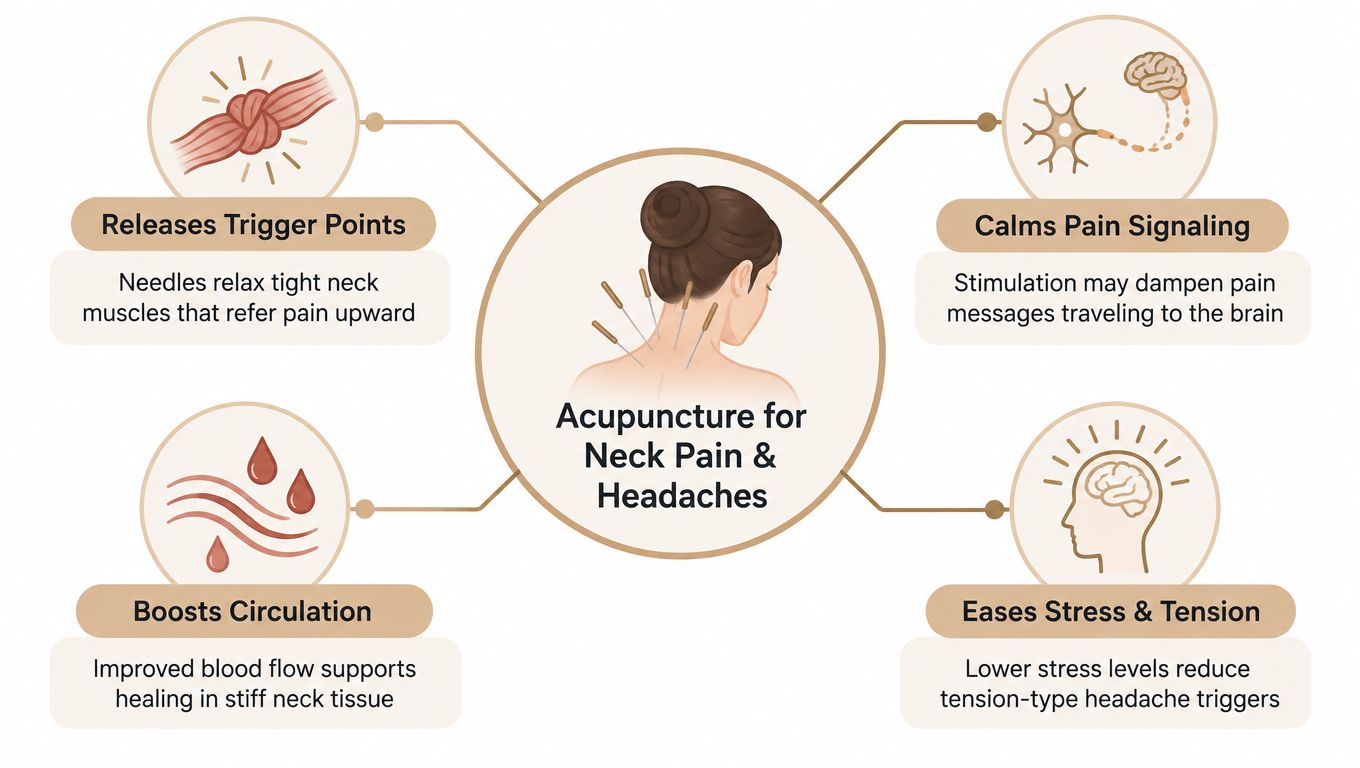
A sham-controlled study attempts to separate needling-specific effects from other influences. Those influences can include time with a clinician, a quiet treatment room, regular appointments, reassurance, expectation, and the opportunity to pause from aggravating activities. These effects aren't imaginary. They can shape how a person experiences and responds to pain.
That distinction matters because acupuncture may feel different from taking a tablet. A session creates a repeated therapeutic setting, and treatment may include discussion of sleep, stress, movement, posture, and symptom patterns. The patient also has an active role in noticing changes between visits.
The evidence doesn't require us to choose between “needles do everything” and “the treatment does nothing.” A more accurate view is that acupuncture may combine a modest needling-specific effect with meaningful clinical context. The next decision is whether that combined effect is large enough for your goals.
For chronic neck pain, acupuncture appears to add a small effect beyond sham needling. A large individual-patient-data meta-analysis found pain scores 0.23 standard deviations lower with acupuncture than with sham treatment, compared with 0.55 standard deviations lower than with no acupuncture (JAMA Internal Medicine evidence). In practical terms, the treatment setting may contribute to relief, while needling itself may provide an additional, modest benefit.
A 2016 Cochrane review examined acupuncture for neck disorders across 27 randomized controlled trials involving 5,462 participants. Eight studies involving 560 participants found a standardized mean difference in pain relief of -0.23 after three months, with a 95% confidence interval from -0.40 to -0.07 (Cochrane review of acupuncture for neck disorders). The review described a modest short-term advantage, but noted that its clinical importance may be limited and that evidence quality varied.
Another analysis of six studies and 522 patients estimated a mean neck-pain reduction of 16.60 points versus control. Results varied substantially between studies, with heterogeneity at (I^2=97.6%) (JAMA Internal Medicine meta-analysis). An average result is therefore a reference point, not a personal forecast. Your baseline symptoms, diagnosis, treatment dose, and concurrent rehabilitation still matter.
For migraine prevention, a Cochrane review included 22 trials involving 4,419 participants. When acupuncture was added to usual care, 41% achieved at least a 50% reduction in headache frequency, compared with 17% receiving usual care alone. At three months, the figures were 57% with acupuncture and 46% with preventive medication. At six months, they were 59% and 54%, respectively (Cochrane evidence on acupuncture for headache prevention).
For tension-type headache, 51% of acupuncture recipients achieved at least a 50% reduction in headache frequency, compared with 43% receiving sham acupuncture. The risk ratio was 1.3, with a 95% confidence interval of 1.09 to 1.5. This points to a measurable, though limited, advantage over sham treatment.
Taken together, the evidence supports acupuncture as an adjunctive option, not a universal cure. Track headache days, intensity, duration, neck function, and medication use before reassessment. Nonprescription resources such as Supplemynts Inc 60 capsules should be reviewed with a healthcare professional and should not replace diagnosis or medical care.
A useful acupuncture plan begins before the first needle. The clinician reviews your headache pattern, neck symptoms, injury history, medication use, medical conditions, and goals. They may assess cervical range of motion, muscle tenderness, posture, neurological symptoms, and the movements or activities that provoke pain.
The first treatment is usually gentle and individualized. Needles may be placed in areas around the upper neck, shoulders, scalp, arms, legs, or other selected points. Sessions commonly include time for needle placement and quiet rest, with the overall visit shaped by the treatment approach and your tolerance.
Guidance for adults with headaches recommends up to 10 acupuncture sessions over 5 to 8 weeks, with the recommendation conditional on factors such as prior medication failure, intolerance, unsuitability, patient preference, comorbidities, and adverse-event risk (clinical guidance on acupuncture for headaches). That framework gives patients a defined experiment instead of an open-ended commitment.
Before treatment, record:
The cadence may be more frequent early in care, sometimes approaching twice-weekly visits, then less often as symptoms stabilize. That schedule must be individualized. The key question isn't whether you completed a fixed number of appointments. It's whether the course produced clinically meaningful improvement.
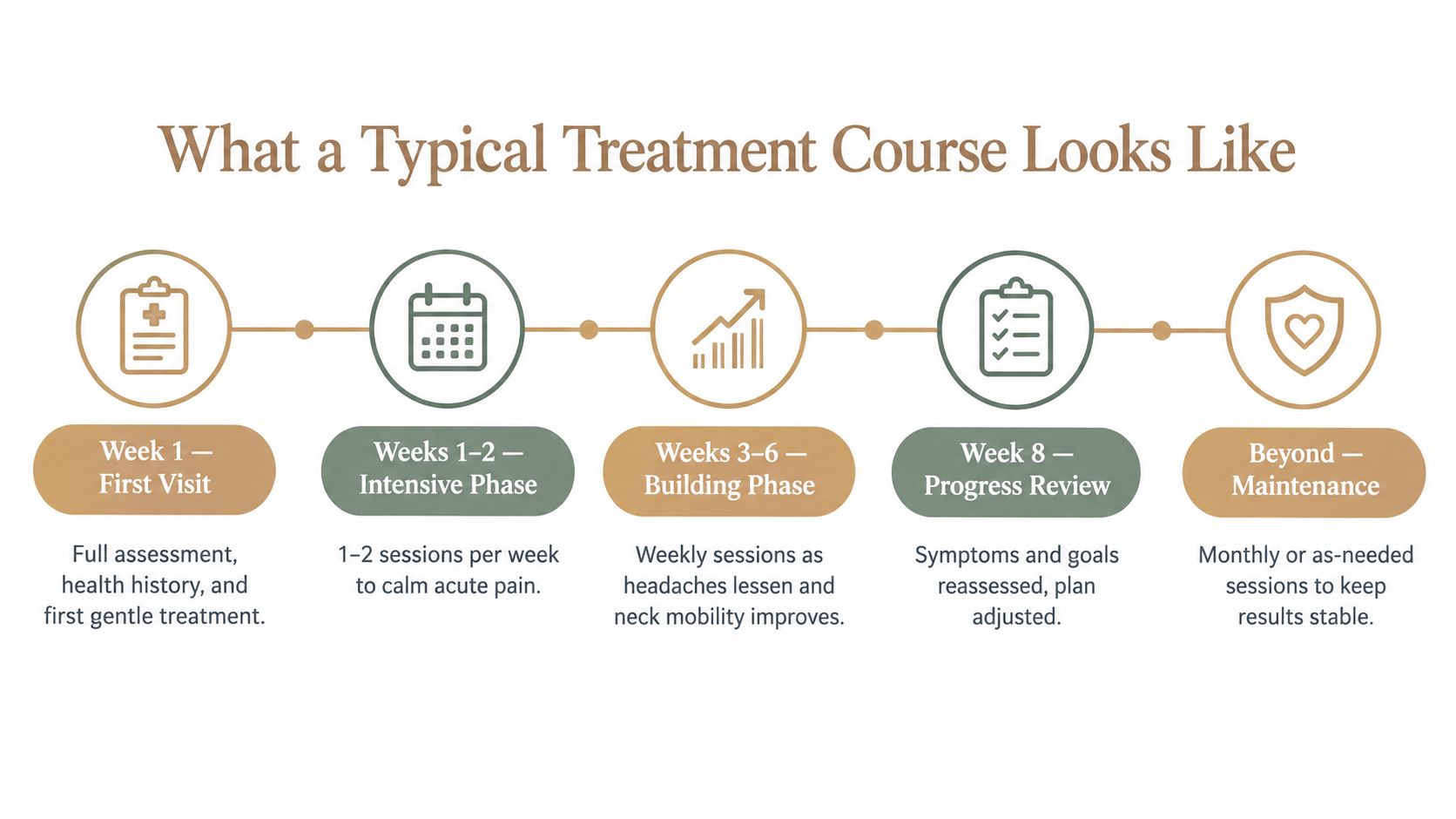
Early improvement might mean easier neck rotation, fewer headache days, less intense episodes, or improved tolerance for rehabilitation. If nothing meaningful changes after a reasonable monitored trial, the clinician should revisit the diagnosis, technique, treatment frequency, and broader plan rather than automatically extending care.
A useful appointment question is: “What result would tell us to continue, modify, or stop?” For a broader explanation of how needling can fit into chronic-pain care, see acupuncture for chronic pain.
Acupuncture can reduce the protective muscle guarding that makes movement uncomfortable, but it doesn't teach the neck how to tolerate a full workday, a long drive, or repeated lifting. That job belongs to a coordinated rehabilitation plan.
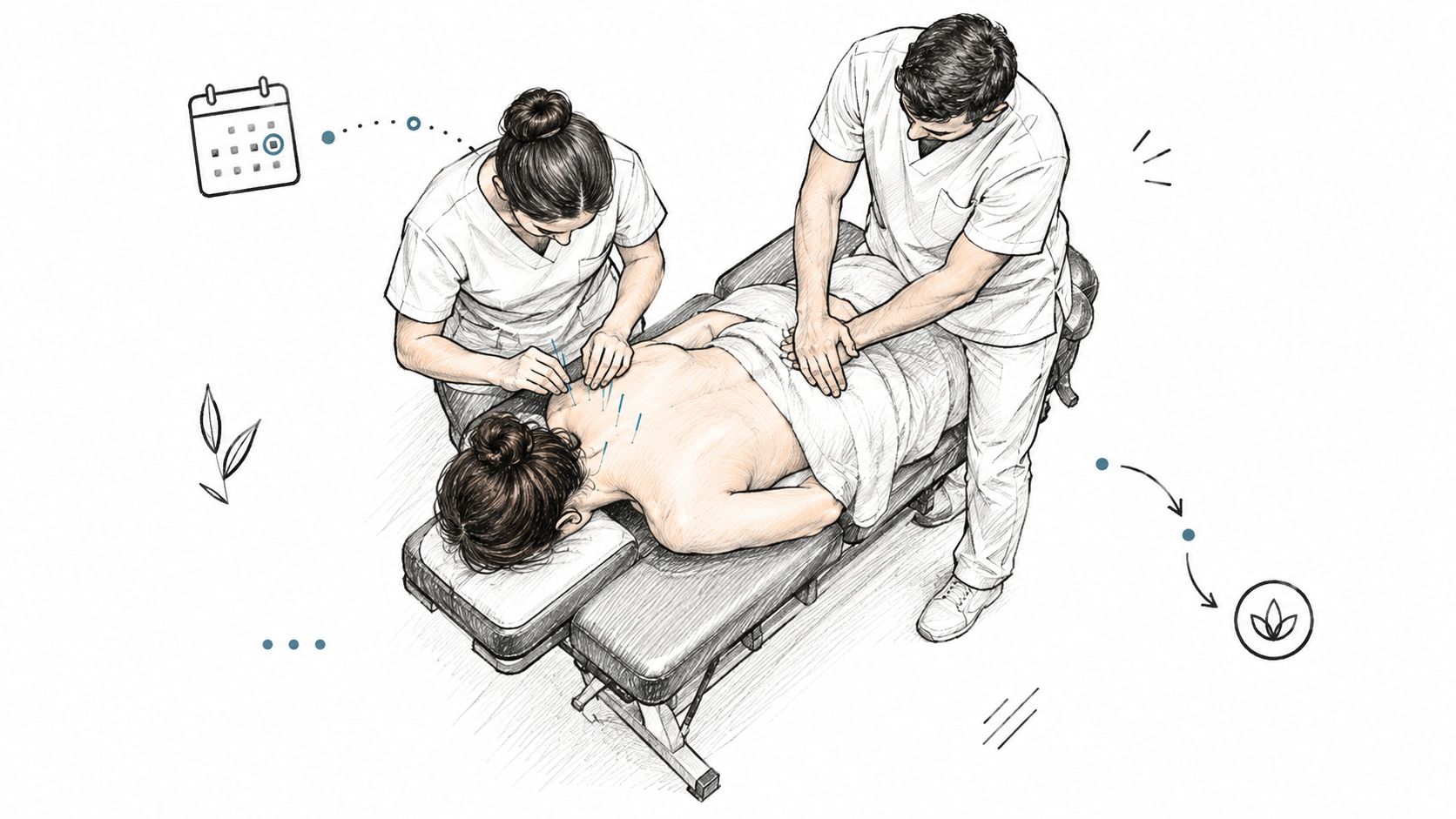
A patient with restricted cervical rotation might receive acupuncture to help settle pain sensitivity, followed by mobility therapy while movement feels easier. A chiropractic adjustment may be considered when the examination supports it and the technique fits the patient's condition and tolerance. Massage therapy or other soft-tissue work can address muscle tension, while posture retraining and a personal exercise plan help maintain gains between visits.
The sequence shouldn't be rigid. One patient may benefit from acupuncture before exercise because pain prevents active participation. Another may need mobility work first, with acupuncture added when persistent guarding limits progress. The clinician's role is to match each layer to the problem being addressed.
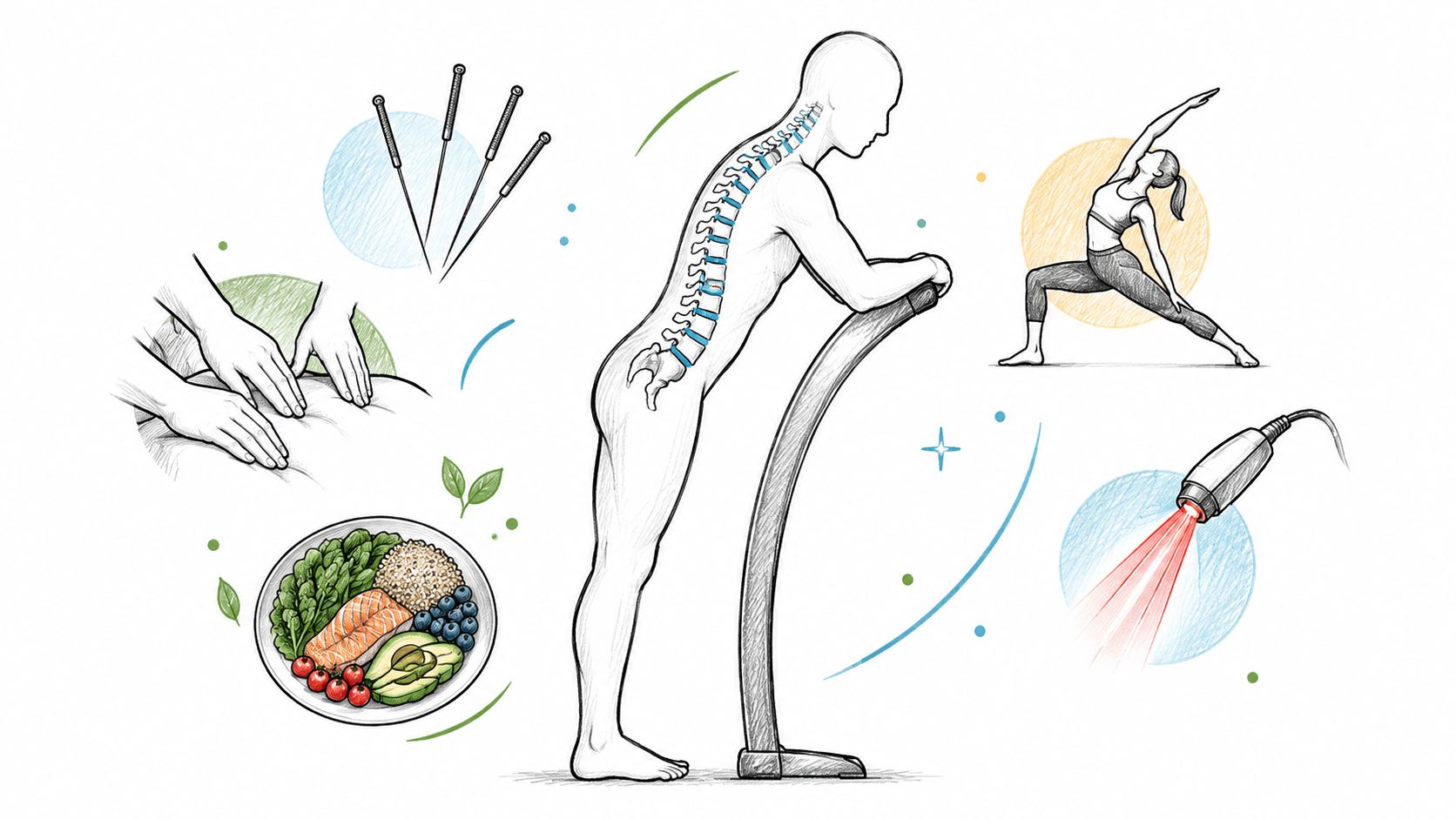
A broader Aspen Falls Wellness plan may include Chiropractic Care, Chiropractic Adjustment, Mobility Therapy, Rehabilitation Exercise, Massage Therapy, and Acupuncture, with reassessment guiding the mix. Other available services include SoftWave Therapy, MLS Laser Therapy, Muscle Stimulation, Nutrition and Nutrition Counseling, and non-surgical Spinal Decompression with the DRX 9000 when a disc-related condition calls for that type of evaluation.
The point isn't to collect treatments. It's to assign each intervention a job:
This approach also matters after a collision, during sports rehabilitation, or when neck symptoms occur alongside sciatica or broader movement limitations. A provider may need to coordinate Car Accident Treatment, exercise progression, or referral for further assessment rather than treating every complaint with the same technique. You can also read about chiropractic care for neck pain when considering how manual treatment may fit your situation.
The evidence supports a reduction in headache frequency for some people, while results still vary. A realistic plan tracks headache days, neck rotation, medication use, and daily function, so improvement can be judged rather than guessed. Acupuncture also does not replace medical evaluation for migraine, medication-overuse headache, or possible secondary causes.
A treatment plan should have a clear review point. Continuing indefinitely without measurable progress offers little reason to expect a different result. Guidance describes up to 10 sessions over 5 to 8 weeks, but the schedule should reflect the person's response, health history, and risk factors, rather than become an automatic maintenance routine (headache treatment guidance).
Progress may show up in several ways:
Keep a simple baseline before treatment and reassess the same measures afterward. This works like checking a dashboard: one reading can mislead, while repeated measures show whether the overall direction is useful.
Needle sensation is not a reliable effectiveness score. A stronger ache, twitch, or heavy feeling does not prove greater benefit, and a nearly painless session does not prove failure.
“Natural” does not mean risk-free. Correctly performed acupuncture generally has a favorable safety profile, but bruising, soreness, bleeding, dizziness, and temporary symptom worsening can occur. Treat the course as a defined trial with agreed outcomes and a reassessment, not as a permanent commitment made at the first visit.
Different treatments address different barriers. Acupuncture may help with pain modulation and muscle guarding, while adjustment, massage, mobility work, and exercise address movement, tissue tolerance, and the habits that keep symptoms active.
| Care Layer | Primary Role | Typical Cadence | Sign of Progress |
|---|---|---|---|
| Acupuncture | Modulate pain and reduce guarding | Defined trial adjusted to response | Fewer headache days, lower pain, easier movement |
| Chiropractic adjustment | Support joint mobility when clinically appropriate | Based on examination and tolerance | Improved cervical motion and functional comfort |
| Soft-tissue and massage work | Address muscle tension and tenderness | Added when soft-tissue findings limit movement | Less protective tension and easier activity |
| Home mobility and exercise | Build control, strength, and tolerance | Repeated between visits according to the plan | Better posture, endurance, and confidence with movement |
This table isn't a ranking. It shows why coordinated care can be more practical than asking one treatment to solve every part of the problem. Acupuncture may create enough comfort for someone to participate in mobility therapy, while exercise helps preserve changes after the appointment ends.
Patients sometimes compare acupuncture with dry needling because both use fine needles. The techniques differ in their clinical framework and application, so a helpful overview such as MEDISTIK on dry needling benefits can clarify terminology. The choice should still follow an assessment rather than a preference for one label.
A clinician should be able to explain what each layer is expected to change, how progress will be measured, and when the plan will be adjusted. If a treatment has no clear role or outcome measure, it may not deserve a permanent place in the care plan.
Acupuncture is generally low risk when performed by a qualified clinician using sterile, single-use needles. Expected effects can include temporary soreness, minor bruising or bleeding, brief dizziness, and a short-lived increase in symptoms. A 2025 neck-pain review found adverse reactions in 6.4% of acupuncture participants, generally mild, with no serious reactions reported in the included studies, although the evidence quality was low to moderate and study results varied (2025 neck-pain review).
Tell the provider about anticoagulant use, bleeding risk, pregnancy, metal allergy, active infection, broken skin, relevant medical implants, and any significant anxiety about needles. These details can change whether treatment is suitable, where needles are placed, or whether another form of care should come first.
Acupuncture shouldn't delay medical evaluation for progressive weakness, significant numbness, fever, a severe sudden headache, fainting, or new symptoms after major trauma. A changed headache pattern, especially after a motor-vehicle collision, also warrants appropriate screening before complementary treatment.
Ask a prospective provider:
Aspen Falls Wellness offers acupuncture alongside chiropractic adjustment, massage therapy, mobility therapy, rehabilitation exercise, and other non-surgical services for neck pain and headaches. Visit Aspen Falls Wellness to request an evaluation in Salt Lake City or Sandy and discuss a measurable care plan suited to your symptoms.

Stay updated with the latest chiropractic news and exclusive offers.