Discover how to treat herniated disc naturally with our guide. Find effective exercises, therapies, and specialist advice for lasting relief in 2026.



You wake with a sharp ache in your lower back that travels through your buttock and down your leg. Sitting at work becomes uncomfortable, bending to put on shoes feels risky, and online advice points in different directions. If you want to learn how to treat a herniated disc naturally, start with a phased plan rather than random stretches or passive treatments.
Natural care focuses on reducing irritation, maintaining safe movement, rebuilding strength, and watching for neurological changes. It also requires knowing when home care is inappropriate. Without an urgent neurological problem, conservative treatment is commonly used before surgery, and acute symptoms often improve over time with this approach. Your recovery plan should progress from immediate symptom control to active rehabilitation, then to professional conservative care when added guidance or treatment can help. Nutrition, daily habits, and clear red-flag monitoring support that process. The goal is steady improvement, with each phase adjusted to your symptoms and function rather than forcing a fixed routine.
The first few days are about lowering irritation without shutting your body down. Severe pain can make complete rest feel sensible, but prolonged inactivity often increases stiffness, reduces confidence, and makes the return to movement harder. Authoritative patient guidance recommends limiting activities for only 2 to 3 days if symptoms are severe, walking as tolerated, and avoiding bed rest because inactivity can worsen stiffness and slow recovery (guidance on natural herniated-disc recovery).
Active rest means removing the movements that flare symptoms while maintaining gentle activity that your body tolerates. Walk around your home, change positions regularly, and avoid staying in one chair for long stretches. You might need to pause lifting, housework, long drives, workouts, and repeated trips up and down stairs during the acute phase.
Avoid bending forward and twisting together, especially while carrying something. That combination can increase stress through an irritated lumbar region. If you need to pick up a light object, hinge at the hips, keep it close, and turn your whole body instead of rotating through your lower back.
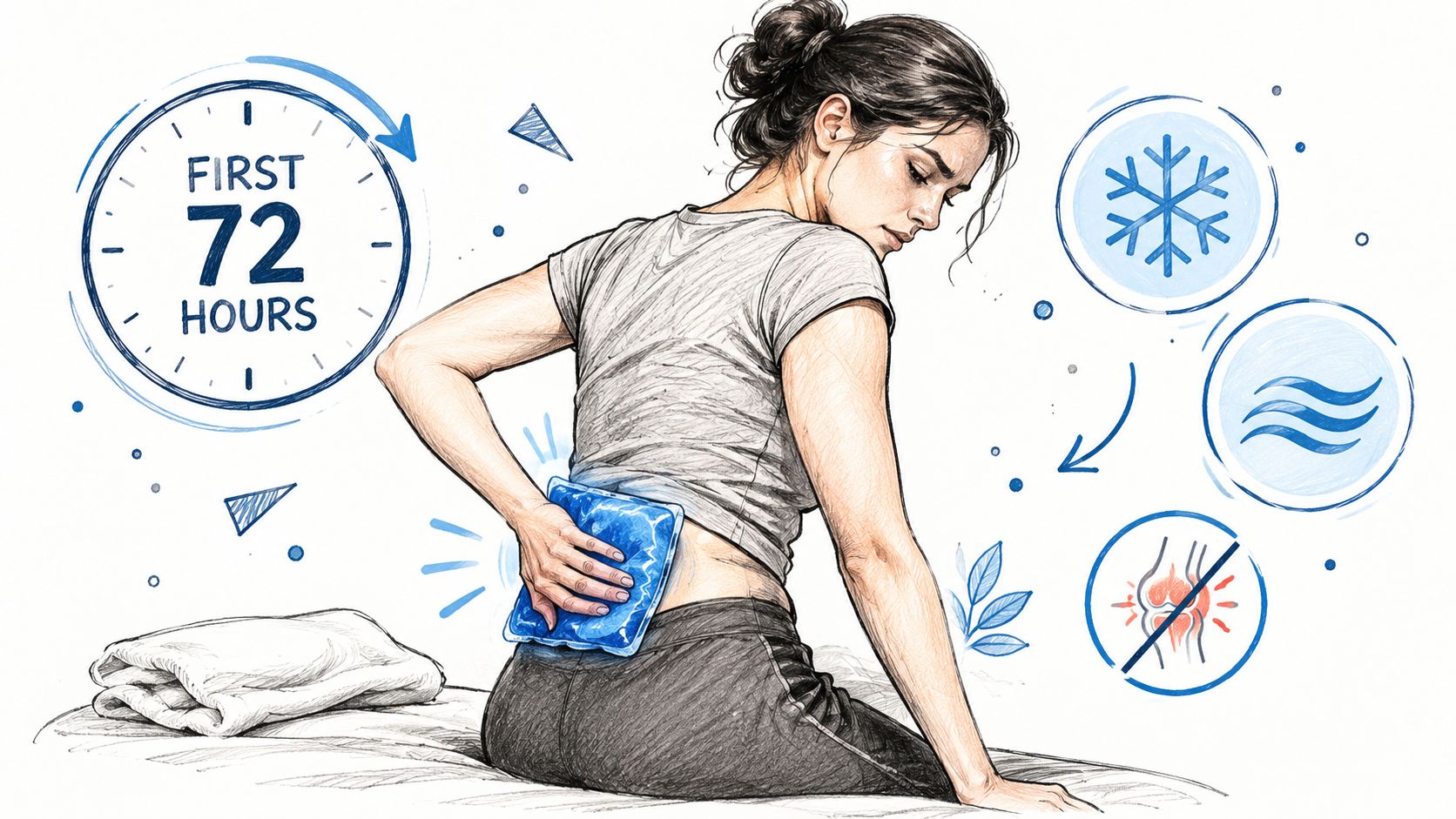
An ice pack may help reduce the sensation of heat, swelling, and nerve irritation during the early phase. Wrap it in a thin cloth, apply it for a short comfortable interval, then remove it and check your skin. Cold isn't a cure for the herniation, but it can make movement and sleep more manageable.
Some people prefer gentle heat when muscle guarding becomes the dominant problem. Choose the option that eases symptoms without leaving the skin irritated, and don't fall asleep with a heating or cooling device in place. If you take anti-inflammatory medication, ask a qualified clinician or pharmacist whether it's appropriate for your health history, medications, and symptoms.
Try lying on your side with a pillow between your knees, or on your back with support beneath your knees. The right position is the one that reduces leg symptoms and allows your muscles to relax. When sitting, keep both feet supported, avoid sinking into a deep couch, and use a small cushion if it helps you maintain a comfortable neutral position.
Some patients also investigate nonprescription options while managing sciatica symptoms. For general education about CBD and sciatica, you can review HempWell USA's guide to CBD for sciatica, but discuss any product with a healthcare professional before use, particularly if you take medication or have a medical condition. Don't use CBD, supplements, or pain relief products as a substitute for neurological assessment.
Practical rule: The right amount of movement is enough to prevent stiffness without repeatedly provoking sharper back or leg pain.
Seek urgent medical care if you develop new bladder or bowel problems, numbness in the saddle area, or rapidly worsening weakness. Those symptoms require a different response than ordinary acute soreness.
Once the sharpest symptoms settle, your spine needs controlled movement rather than aggressive stretching. The purpose of early exercise is to restore confidence, improve tolerance for daily activities, and help supporting muscles resume their work. A movement that gently reduces or centralizes symptoms may be useful. A movement that sends pain farther down the leg, increases numbness, or leaves you worse afterward should be stopped and reviewed.
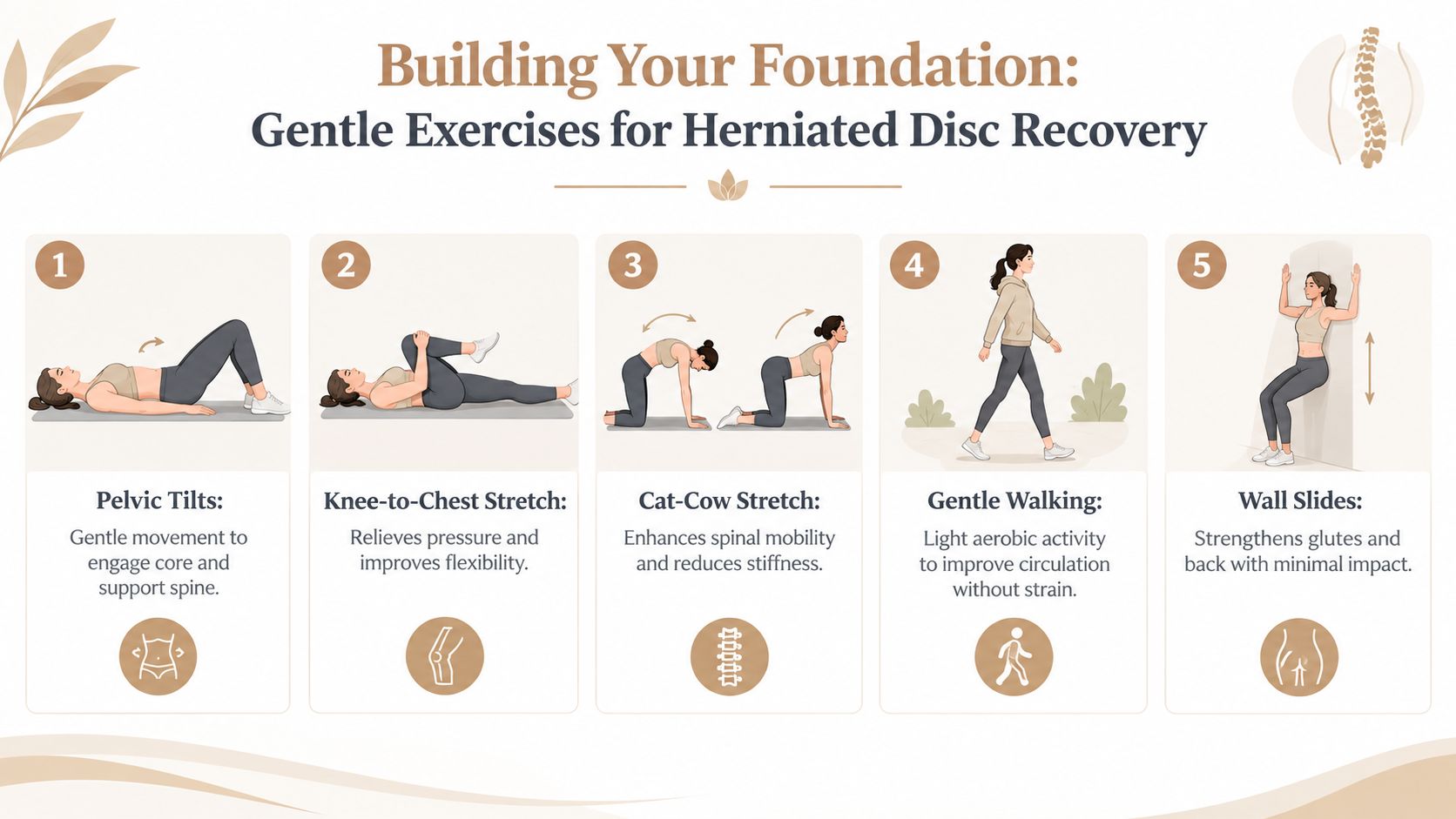
Begin with easy walking on a level surface. Short, frequent walks are often better tolerated than one long outing because they break up sitting and let you monitor symptoms. Keep your pace relaxed, avoid hills at first if they increase leg pain, and stop before fatigue changes your posture.
Pelvic tilts can help you reconnect with gentle abdominal control. Lie on your back with your knees bent, then slowly flatten and release the natural curve of your lower back without pushing into pain. The movement should be subtle. You're practicing control, not trying to force the spine into a new position.
A knee-to-chest movement may feel comfortable for some people and irritating for others. Bring one knee toward your chest only within a pain-free range, return slowly, and compare how your back and leg feel afterward. If the stretch increases radiating symptoms, it isn't the right exercise for that stage.
A gentle cat-cow pattern can reduce stiffness when performed slowly and within a small range. Keep the motion smooth, avoid dropping heavily into the lowest position, and let your symptoms determine how far you move. The goal is to make movement less threatening, not to achieve maximum flexibility.
Bird-dog exercises introduce trunk stability while your arms and legs move. Start on hands and knees, brace lightly, and extend one arm or one leg at a time before progressing to opposite arm and leg. Keep your pelvis steady. If your back arches, your symptoms spread, or you hold your breath, reduce the range.
Wall slides offer another low-impact way to train the hips and trunk. Stand with your back supported, slide down only as far as you can control, and keep the movement comfortable. Stronger glutes and better hip control can reduce the tendency to compensate through the lower back during everyday tasks.
Use this simple response guide while building a home routine:
A supervised program can turn these ideas into a Personal Exercise Plan matched to your symptoms, movement restrictions, and daily demands. Aspen Falls Wellness also provides mobility therapy and rehabilitation exercise, and its guidance can complement the practical movement principles in this resource on functional mobility exercises. If relaxation, breathing, or gentle yoga helps you stay consistent, a quiet setting and supportive props from Comfort Pure's mindful living collection may make home practice easier, but equipment should support the routine rather than replace active rehabilitation.
Home care works best when you know what to do, what to avoid, and how to progress. Professional conservative treatment adds examination, hands-on assessment, symptom monitoring, and adjustments to the plan when your response changes. It shouldn't be presented as a single machine or technique that fixes every disc problem. The useful question is which combination can help you move more comfortably while your body recovers.
A clinician should first clarify whether the pattern is consistent with disc-related nerve irritation, another spinal condition, or a problem outside the spine. The assessment should consider strength, sensation, reflexes, walking tolerance, aggravating positions, and the presence of red flags. Imaging or referral may be appropriate when the findings call for it.
When no urgent neurological signs are present, conservative care is generally the first-line approach. A guideline review describes an initial 4 to 12 week trial before surgery is considered, with the practical sequence of confirming no urgent signs, limiting aggravating flexion and sitting, then adding supervised physical therapy or exercise-based rehabilitation (guideline review of lumbar disc herniation management).
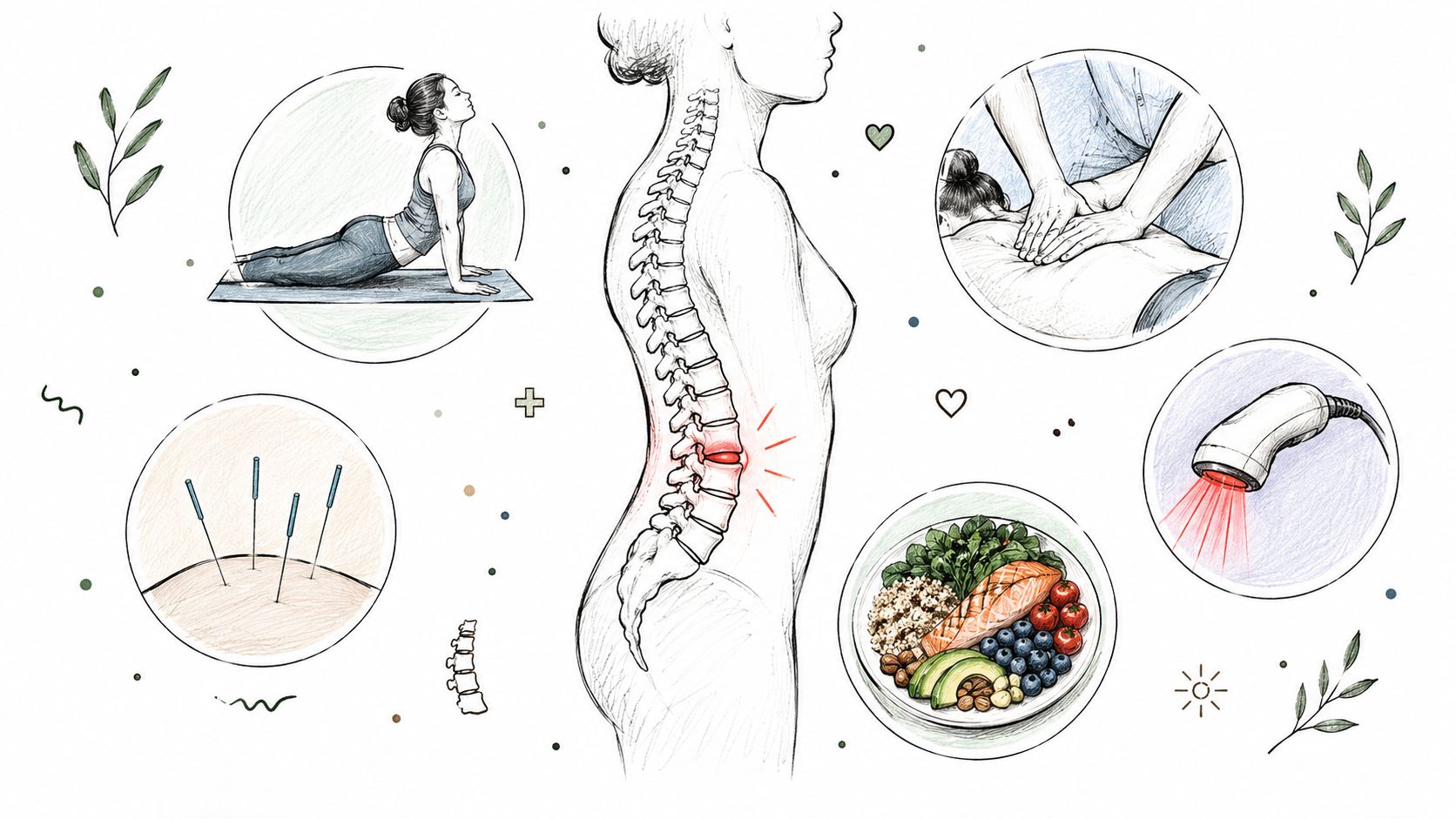
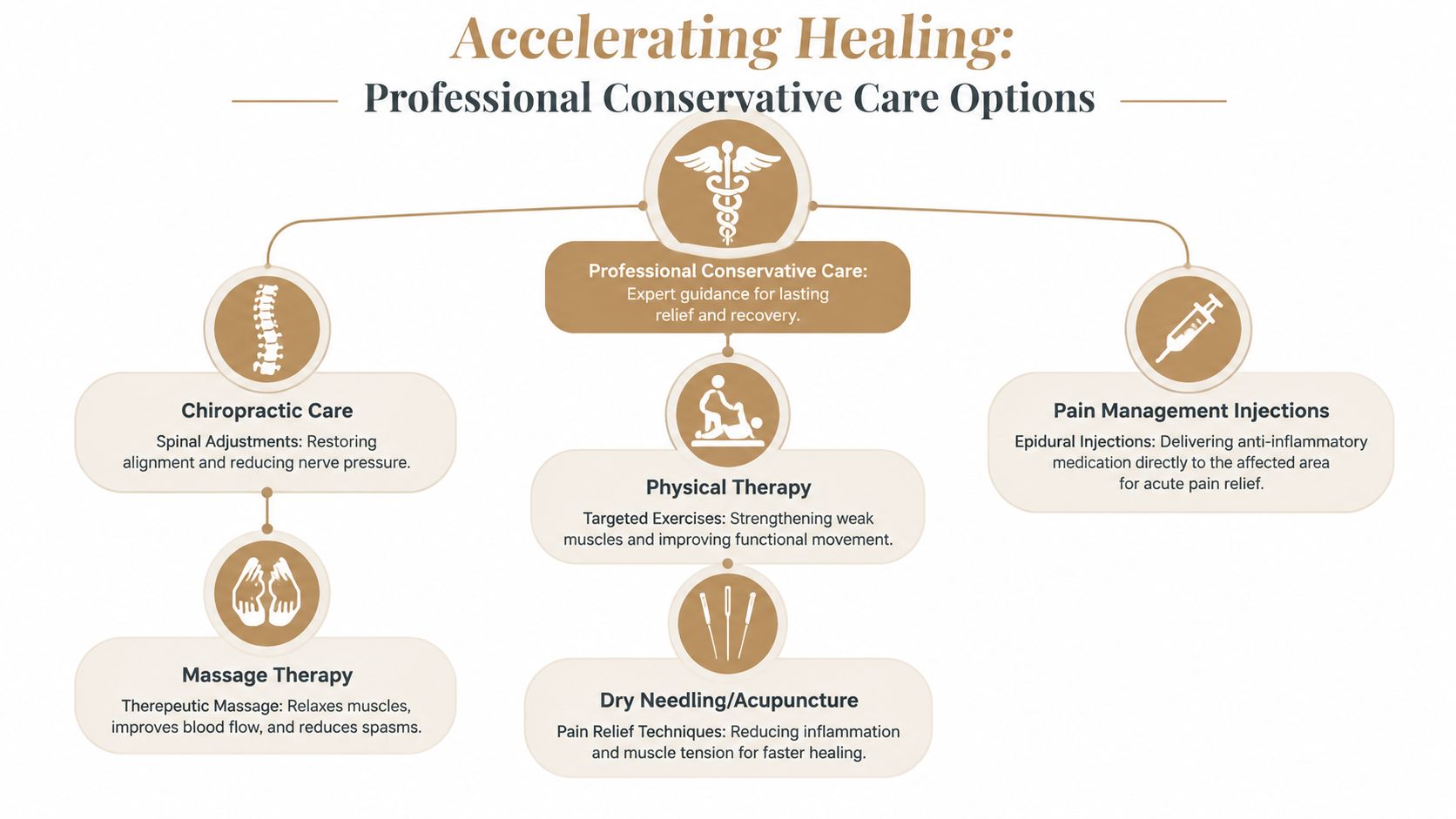
A Chiropractic Adjustment may be used to address restricted joint motion when it's appropriate for the person's condition and tolerance. Realignment isn't a promise that a disc will be pushed back into place. The intended role is to improve movement options, reduce protective stiffness, and help the patient participate in rehabilitation more comfortably.
Massage Therapy can address muscle guarding around the low back, hips, and buttocks. Acupuncture may support pain modulation, particularly when muscle tension and sensitivity make exercise difficult. These treatments can be useful components of a plan, but they shouldn't become the entire plan.
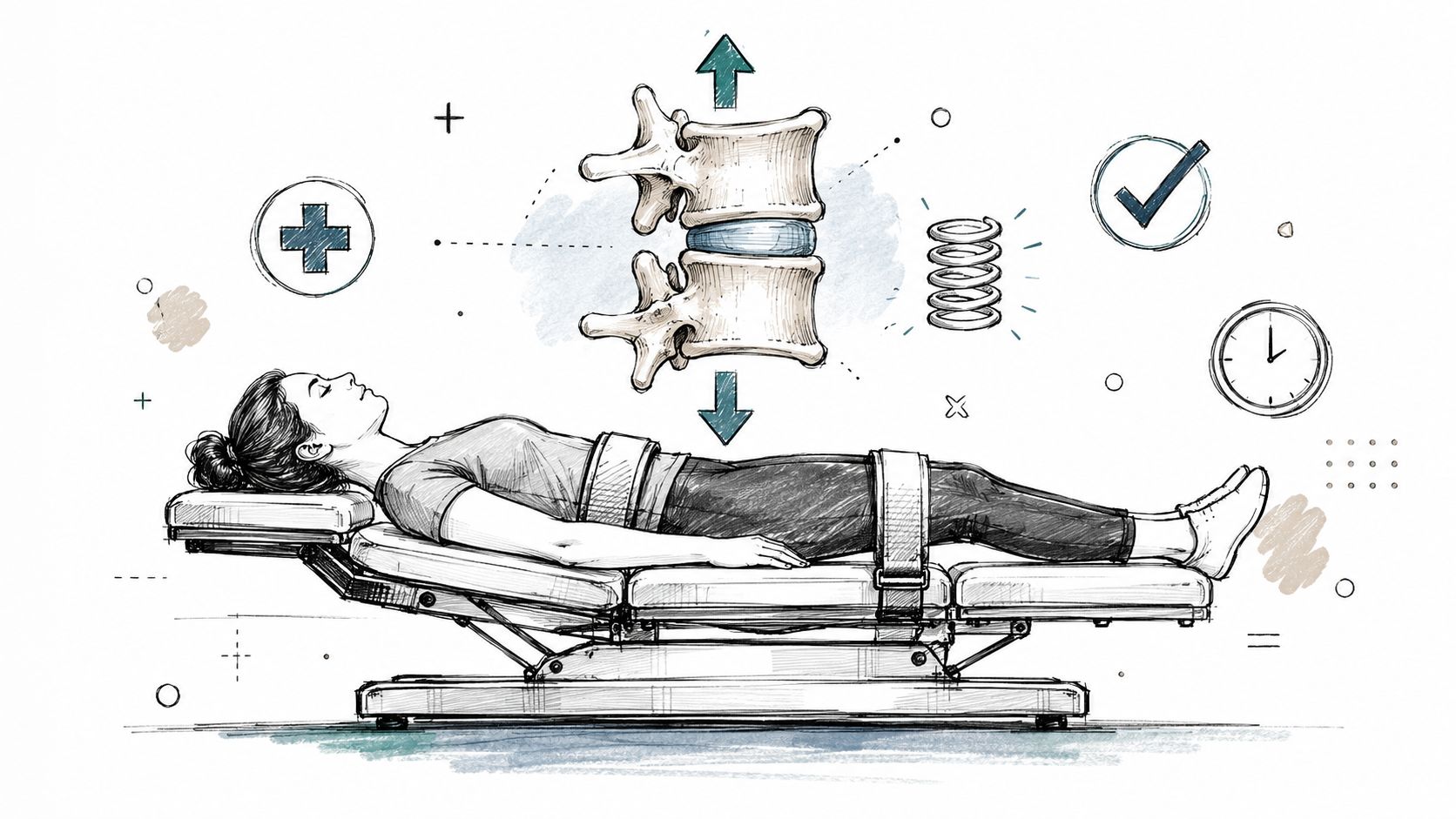
Aspen Falls Wellness offers Chiropractic Care, Chiropractic Adjustment, Massage Therapy, Acupuncture, Mobility Therapy, Rehabilitation Exercise, and personal exercise guidance within its non-surgical model. The clinic also offers Spinal Decompression with the DRX 9000, which may be considered when a clinician believes decompression-based care fits the patient's presentation. Treatment selection should follow an examination rather than a device-led promise.
MLS Laser Therapy and SoftWave Therapy may be incorporated to support pain relief, tissue stimulation, and tolerance for movement. Their practical value is greatest when they help you complete the active work that restores strength and function. They shouldn't be used to justify complete inactivity or indefinite passive treatment.
Spinal decompression, realignment, muscle stimulation, and pain relief services can each serve different roles in a coordinated program. A sensible plan sets a target, reevaluates your response, and changes course if symptoms fail to improve. It may also include nutrition counseling, a referral, or a different specialist when the problem falls outside the clinic's scope.
Passive care may quiet symptoms, but active rehabilitation teaches your body how to handle daily life again.
A healing plan can lose momentum if your daily routine repeatedly recreates the same stress that irritated your back. Nutrition, sleep, hydration, workstation setup, and lifting habits don't replace examination or rehabilitation, but they can make the environment more supportive of recovery.
Build meals around minimally processed foods, adequate protein, colorful vegetables, fruit, legumes, whole grains, and sources of healthy fats. Foods containing omega-3 fats and antioxidant compounds can fit within an overall balanced eating pattern. Nutrition isn't a shortcut that dissolves disc material, and no single supplement can guarantee nerve recovery.
Break up sitting with brief movement. Position your screen so you aren't constantly leaning forward, keep frequently used objects close, and use your hips and knees when lowering yourself rather than rounding repeatedly through the lumbar spine. During lifting, plan the route, hold the load close, and pivot with your feet instead of twisting under load.
Hydration supports general tissue function, although drinking more water won't mechanically rehydrate a herniated disc or reverse a structural injury. The practical benefit comes from consistent habits that support energy, bowel regularity, exercise participation, and overall health.
Foods high in added sugars, heavily refined ingredients, and excessive alcohol may displace more nourishing choices. Rather than adopting a restrictive diet during a painful episode, focus on meals you can sustain and discuss individual needs with a qualified professional. Aspen Falls Wellness includes Nutrition and Nutrition Counseling, which can help connect food choices with your rehabilitation demands. For a focused discussion of protein and recovery habits, see this guide to protein for healing.
Acupuncture and massage may provide modest or short-term relief for some people, but support for specific adjunct therapies varies. Mayo Clinic guidance places conservative care first and emphasizes that these approaches should sit within an integrated plan that includes exercise and monitoring, rather than replacing active rehabilitation (Mayo Clinic guidance on herniated-disk treatment).
Your meals and workspace won't “fix” a herniation by themselves. They can make it easier to sleep, move, train, and follow through with the care that does improve function.
Severe pain alone doesn't automatically mean you need surgery. A painful nerve can remain irritated while strength and function gradually improve. The concern rises when neurological function deteriorates, symptoms become disabling without improvement, or emergency warning signs appear.
Cauda equina symptoms require immediate medical attention. These include new loss of bladder or bowel control, difficulty initiating urination, numbness around the inner thighs or saddle area, and rapidly worsening symptoms in both legs. Don't wait for a routine chiropractic, therapy, or primary-care appointment if these signs appear.
Progressive weakness also changes the decision. Watch for a foot that starts slapping the ground, difficulty lifting the front of the foot, repeated tripping, inability to rise onto the toes, or a clear decline in leg strength. Numbness that steadily expands deserves prompt assessment even when pain fluctuates.

If your symptoms aren't improving after a consistent period of activity modification and guided rehabilitation, arrange a review rather than adding more treatments. A clinician may reconsider the diagnosis, assess neurological changes, request imaging, or refer you for specialist care. Persistent leg pain can be exhausting, but persistence by itself doesn't tell you whether the original diagnosis or treatment plan remains correct.
For patients without significant neurological deficits, independent guidance commonly recommends a 6- to 12-week trial of conservative treatment before considering surgery (AANS patient guidance on herniated discs). That timeframe isn't permission to ignore worsening weakness or emergency symptoms. It's a framework for monitored care when the condition remains uncomplicated.
Don't negotiate with a red flag. New bladder or bowel dysfunction, saddle numbness, or progressive weakness warrants urgent medical evaluation.
Natural recovery works best as a sequence. First, calm the acute irritation with active rest, comfortable positioning, and short-term symptom control. Then restore walking tolerance, mobility, trunk control, and strength through carefully selected rehabilitation. Professional care can help identify the right dose, provide pain relief that makes movement possible, and monitor whether your progress matches the expected course.
The evidence supports hope without false promises. StatPearls reports that over 85% of acute symptoms resolve within 8 to 12 weeks with conservative care, and about 90% of symptomatic cases resolve after 6 weeks (StatPearls clinical reference). Surgery can relieve symptoms faster in selected severe cases, but research has found that faster relief doesn't necessarily produce better overall functional recovery at the longer follow-up point (multicenter trial of early surgery and conservative care).
Your job isn't to force healing. It's to create the conditions for safe progress, notice meaningful changes, and seek help when the pattern doesn't fit ordinary recovery. For more guidance on expected timelines, review how long herniated disc recovery can take.
Aspen Falls Wellness offers individualized chiropractic care, spinal decompression with the DRX 9000, MLS Laser Therapy, SoftWave Therapy, massage, acupuncture, and rehabilitation exercise for disc-related pain and sciatica. Visit Aspen Falls Wellness to request a thorough evaluation and build a conservative recovery plan designed for your symptoms, movement, and goals.

Stay updated with the latest chiropractic news and exclusive offers.