Learn what ankle adjustment chiropractic can change, who it helps, safety limits, and the rehab that should follow the visit.
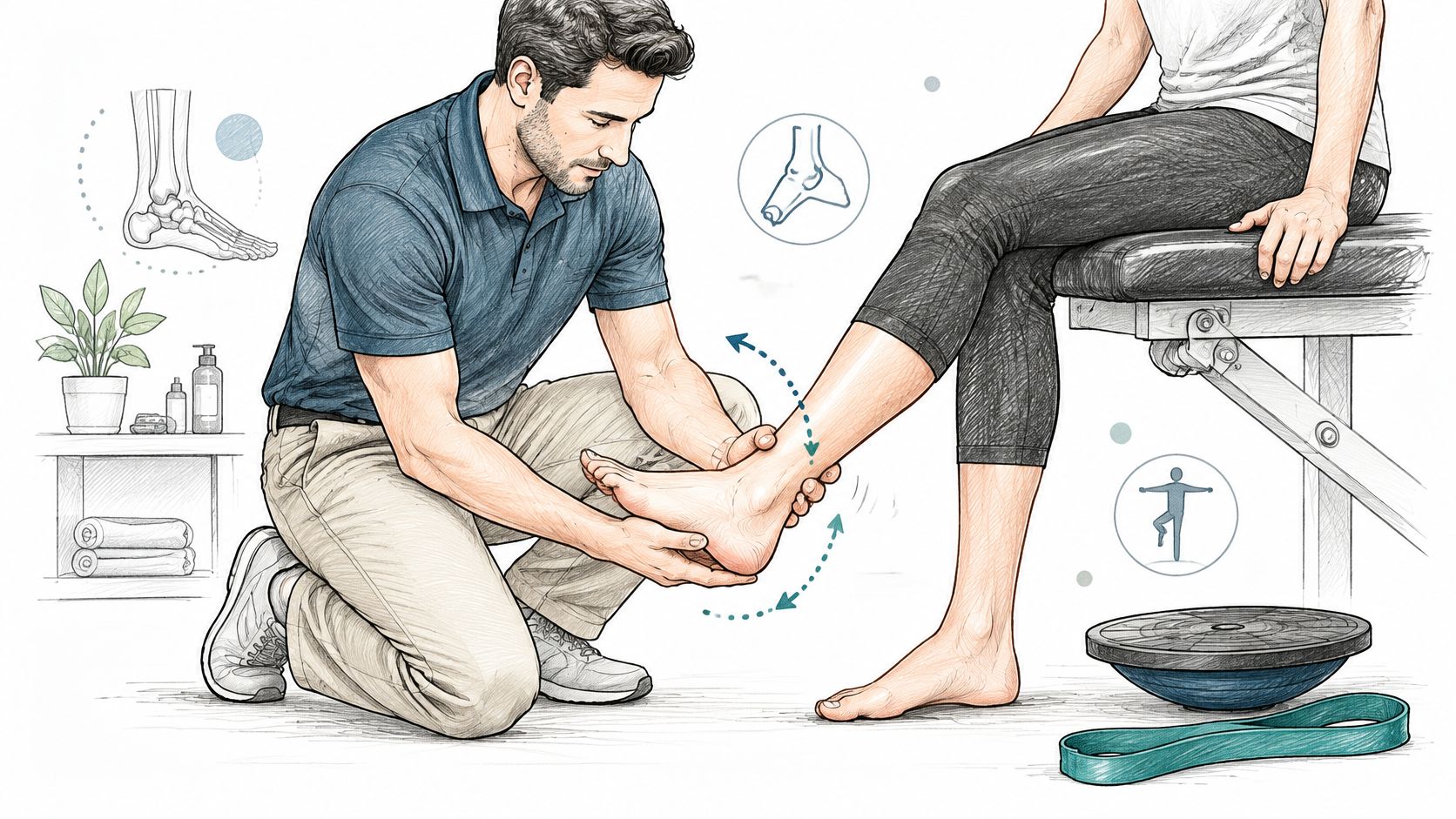
The most common ankle-adjustment advice promises a quick fix: get the joint moving, hear a pop, and expect the problem to be solved. That skips the important distinction between temporary mobility and lasting recovery. An adjustment may help a specific restricted movement, but it doesn't rebuild strength, restore balance, or by itself prevent another sprain.
For ankle adjustment chiropractic care, the useful question isn't whether a joint can be moved. It's whether an examination finds a restriction worth treating, whether a hands-on technique changes a relevant measure, and what exercises will help the change last.
Ankle adjustment is best understood as joint mobilization or manipulation within a broader care plan, not as a stand-alone cure. A 2022 systematic review of 9 randomized trials involving 364 people with chronic ankle instability included weight-bearing and non-weight-bearing techniques, with treatment periods ranging from 1 day to 6 weeks. The results suggest possible gains in movement and balance, but they don't prove that an adjustment alone restores everyday function or prevents reinjury. The 2022 systematic review and meta-analysis reported these outcomes:
Chronic ankle instability outcomes after joint manual therapy
| Outcome | Estimate | 95% confidence interval | How to read it |
|---|---|---|---|
| Ankle dorsiflexion range | SMD 1.02, p<0.001 | 0.41 to 1.63 | Mobility often improves, but studies vary widely (I²=85%) |
| Dynamic balance | SMD 0.49 | 0.06 to 0.78 | Balance can improve modestly |
| Patient-reported function | 0.76, not significant | −0.00 to 1.52 | Broader function is not established |
In plain language, ankle dorsiflexion, or the ability to bring the shin forward over the foot, can improve after manual therapy. Dynamic balance may improve too, while the evidence for broader patient-reported function is less certain. The high variation between studies on dorsiflexion also means the pooled result isn't a promise about what one person will feel after one visit.
The numbers describe group-level results, not a guaranteed effect, lasting correction, or cure for instability. A useful treatment plan makes the target explicit: is the goal easier forward ankle bend, steadier single-leg balance, or something else?
Practical rule: Ask what will be measured before and after treatment. Rechecking dorsiflexion and single-leg balance is more informative than judging the visit by whether the ankle made a sound.
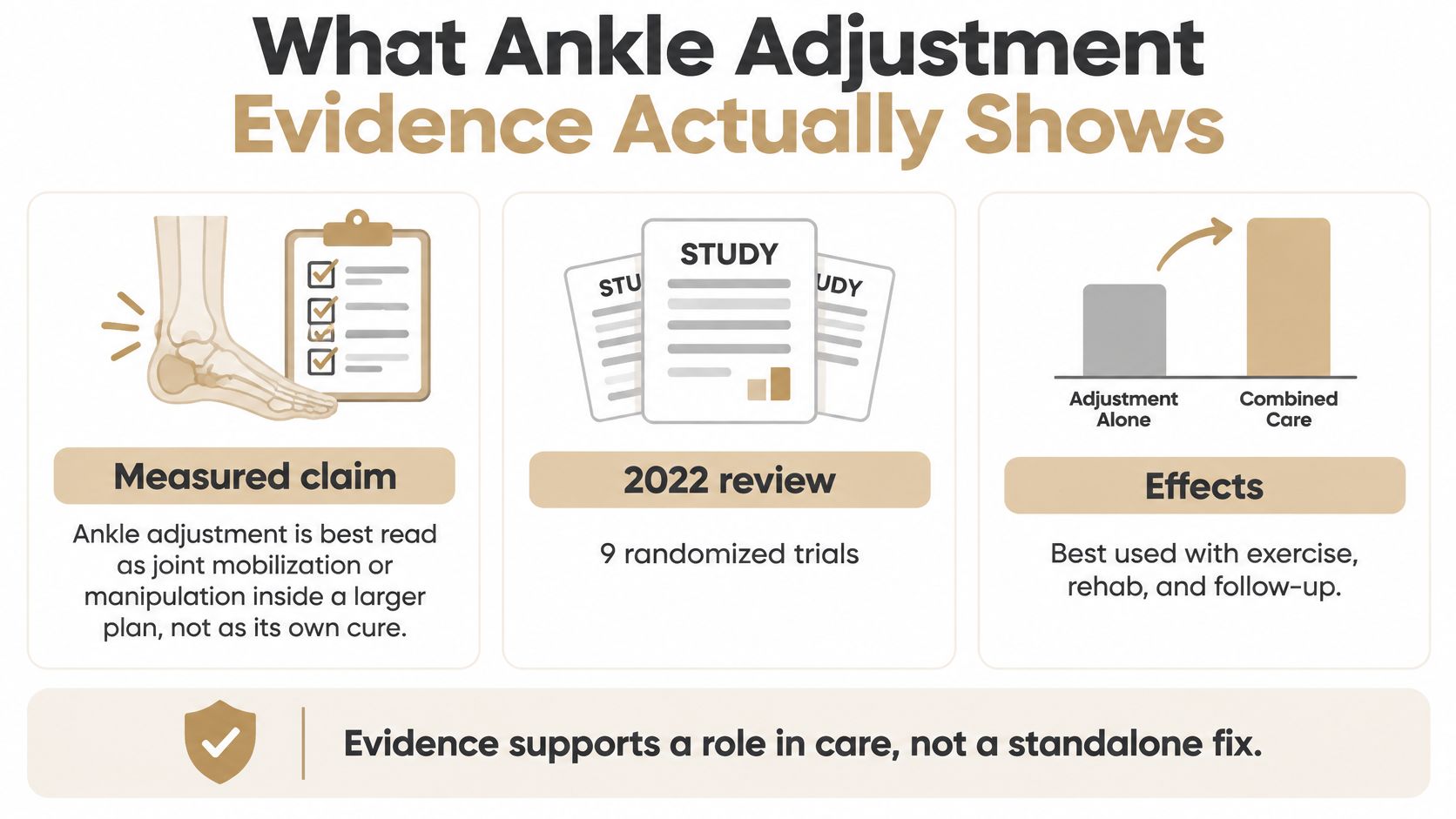
For longer-term change, strengthening, proprioception, rehabilitation, and reassessment need to accompany hands-on care. The adjustment may help make a movement more comfortable to practice; it doesn't replace the practice.
When you walk downstairs, your shin needs to travel forward over your planted foot. One joint involved is the talocrural joint, where the talus sits between the lower-leg bones. It works somewhat like a hinge, but smooth ankle bending also relies on the talus gliding within the joint. Clinicians may assess whether that glide is limited, particularly the posterior glide associated with dorsiflexion.
A simple analogy is a stuck drawer: the front may look fine, but the drawer won't slide easily. A clinician may use a graded, symptom-limited mobilization to address a restricted glide. Depending on the examination and your tolerance, the technique might instead involve a quicker, low-amplitude thrust.
Below that joint, the subtalar joint helps the heel and foot adapt as you move over uneven ground or turn. It contributes to the side-to-side adjustments that help the foot meet the surface beneath it. The nearby distal tibiofibular joint may also be screened, but it isn't automatically the source of a person's symptoms.
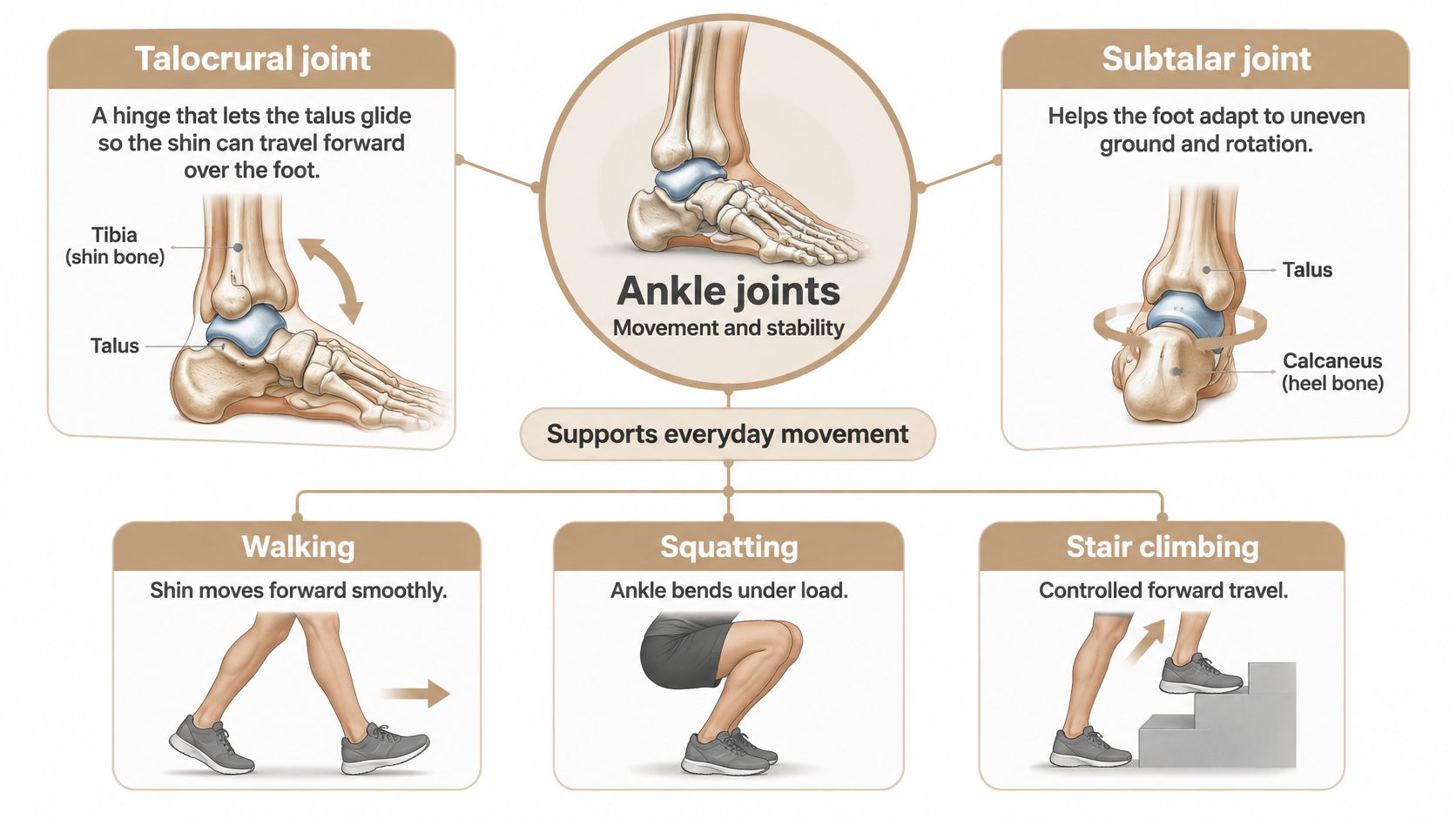
The treatment should match what the exam finds, not aim for a particular sound. A clinician should first identify a meaningful sign, such as limited dorsiflexion, a stiff-feeling glide, a walking pattern that avoids bending the ankle, or pain that changes when the glide is restored.
A pop can be a sound associated with gas release in a joint. It doesn't prove that a sprain healed or that a bone was put back into place.
A manual technique may have a role when an ankle sprain or joint restriction makes movement uncomfortable. It isn't appropriate for every ankle problem, and it shouldn't be treated as the same intervention for every person. The table shows how the role changes with the situation.
When an ankle adjustment fits the problem
| Situation | Role of adjustment | What else is required |
|---|---|---|
| Acute lateral sprain, no fracture signs | Pain-free mobilization as an adjunct for pain and dorsiflexion | Swelling control and gait work |
| Subacute or chronic sprain | Short-term help for motion and function | Graded loading and follow-up checks |
| Chronic ankle instability | Graded techniques aimed at short-term dorsiflexion and balance | Neuromuscular and balance training |
| Pain-free stiffness in lifters | Not assumed to improve squat depth after one thrust | Exam findings; no guaranteed immediate gain |
For an acute lateral sprain without signs of fracture, a clinician may use pain-free joint or soft-tissue work, including anterior-to-posterior talar mobilization, as an adjunct. The plan still needs to address swelling and walking mechanics. Guidance on ankle sprains describes manual care as part of rehabilitation, rather than a replacement for exercise. The ankle-sprain clinical practice guidance also emphasizes reassessing movement and function, not using a pop as evidence that the injury has been corrected.
For a subacute or chronic sprain, manual care may support motion and function, but exercise remains part of the plan. With chronic ankle instability, the practical target is short-term improvement in weight-bearing dorsiflexion or dynamic balance, not a permanent guarantee against the ankle giving way.
Lifters and runners shouldn't book an adjustment solely to gain squat depth. In a double-blind, sham-controlled crossover trial, 24 resistance-trained participants with pain-free dorsiflexion deficits showed no significant difference between manipulation and sham for maximum ankle dorsiflexion during a back squat (p=0.24), or for immediate ankle range of motion (p=0.39). The sham-controlled trial cautions against assuming a single thrust will produce an immediate mobility gain.
Before booking, consider three questions: Does the ankle roll repeatedly? Is it difficult to bring the knee forward over the toes? Does pain limit walking? If none applies and the only goal is better performance, an examination may find no joint restriction to treat. If ankle pain is affecting daily movement, ankle pain treatment options can help you understand the kinds of care to discuss.
Get a structural or systemic problem checked before any ankle adjustment. A possible fracture or dislocation, signs of infection, or compromise to a nerve or blood vessel calls for medical evaluation first.
The Ottawa ankle rules flag when a fracture needs imaging. They combine inability to bear weight or take four steps with tenderness at particular bony points around the ankle and foot. A positive screen shifts the next step from hands-on care to medical assessment.
An ankle that is hot and swollen, especially with fever, needs medical attention before manual treatment. So do numbness, unusual coldness, or a change in skin color. The ankle can feel stiff for several reasons, and these findings point to tissues or systems outside the joint itself.
Stop and reassess if the ankle locks, keeps giving way despite rehabilitation, or becomes more painful after gentle treatment.
Once those concerns have been excluded, an adjustment may serve as a short-term mobility adjunct for a specific joint restriction within a conservative plan that continues to monitor symptoms. For more information about possible responses to treatment, see chiropractic adjustment side effects.
A useful ankle visit starts by naming the joint sign being chased: limited dorsiflexion, a talar glide that feels blocked, swelling that changes balance, or a gait pattern that protects the ankle. At Aspen Falls Wellness, each patient receives a thorough chiropractic evaluation to identify the root cause of the problem, followed by a customized plan based on the diagnosis.
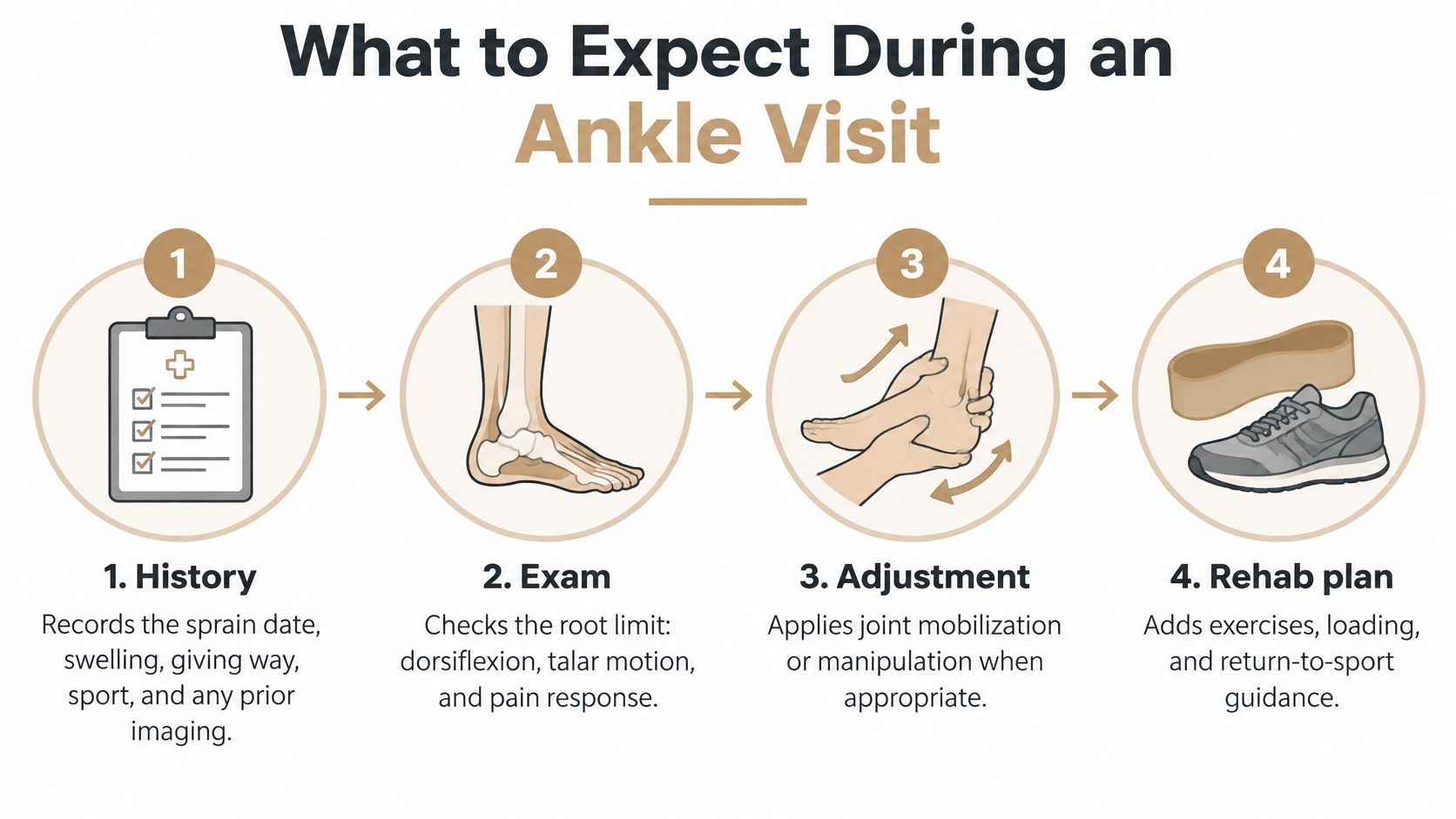
History: The clinician asks when the sprain happened, whether the ankle swelled or gives way, what activity you want to return to, and whether you've had imaging. These details help distinguish a new injury from recurring instability and set the activity marker that matters to you.
Examination: The clinician checks dorsiflexion, talar motion, swelling, single-leg balance, and gait. If screening suggests a problem beyond a joint restriction, referral for imaging or medical evaluation comes before hands-on care.
Plan: The clinician explains how the treatment matches the examination and your tolerance, including what should be rechecked. The ankle-mobilization trial record reported an 8-degree increase in ankle range of motion after one mobilization session (95% CI 6 to 11) and an 11-degree increase after six sessions (95% CI 9 to 13); use those ranges as a reason to set a target and retest it, with your own response measured at the visit.
Hands-on treatment: If appropriate, the chiropractor chooses a technique and force matched to the finding and your comfort. The target is a specific local change in ankle motion; sprain control and confidence on uneven ground still depend on the wider plan.
Clothing and access: Ankle work usually needs only the foot and shin uncovered. In most cases, clothing doesn't need to be removed before a full-body adjustment; with significant pain or stiffness, you may be asked to remove some garments or wear a gown.
Retest and next steps: Before you leave, the clinician should recheck the same relevant signs, such as ankle bend, swelling, and balance. A full session may also screen the knee, hip, or spine if those areas affect how you load the ankle. For details about the first appointment, see what to expect at a first chiropractic visit.
Mild soreness may follow hands-on care. A clear plan should state what will be rechecked at the next visit and which activity marker shows progress.
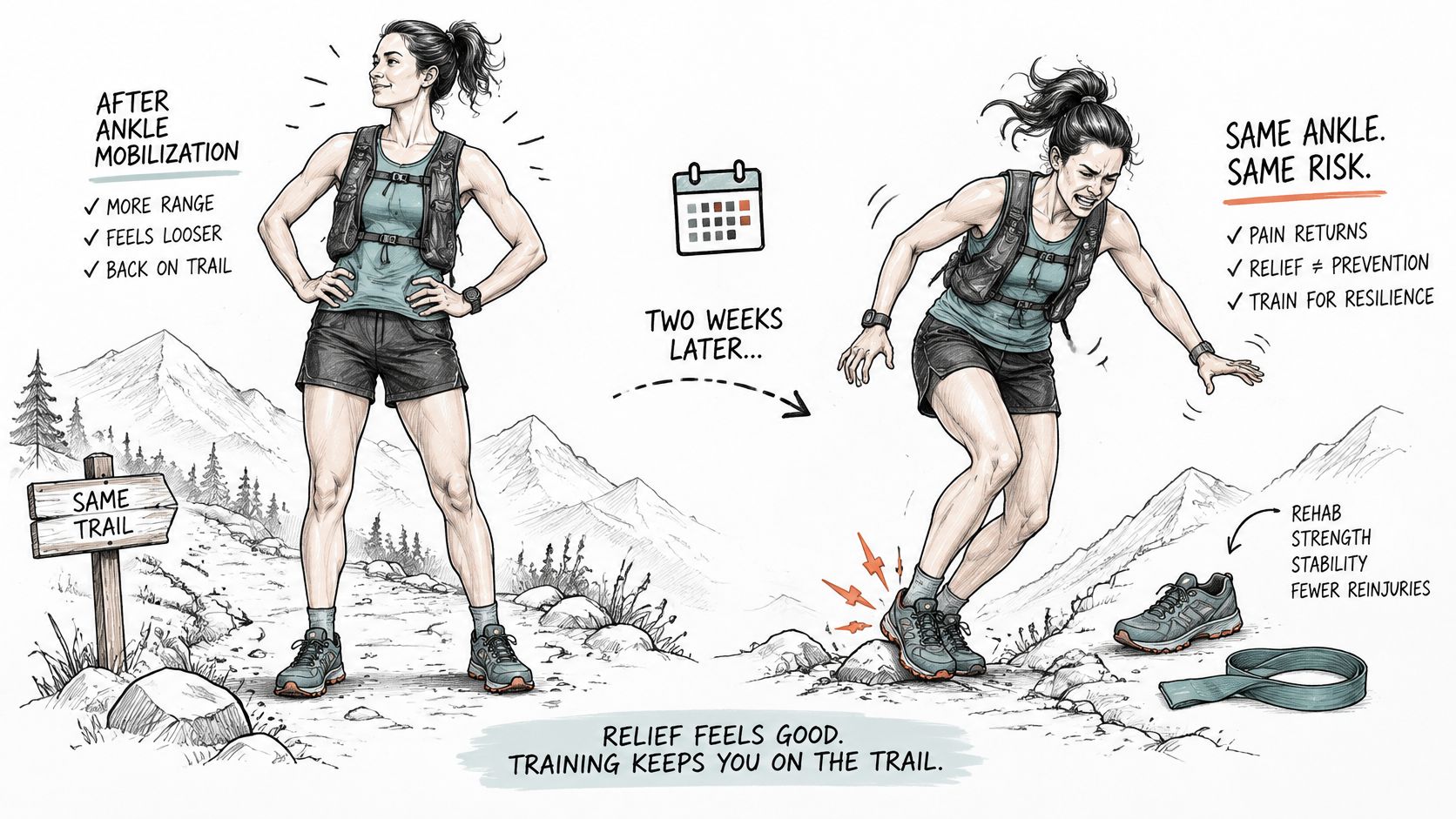
A trail runner's ankle feels looser after mobilization, so they head back to uneven trails. Two weeks later, the ankle rolls again. The movement may have felt easier, but the runner still needed strength, balance, and gradual exposure to the demands of the trail.
A meta-analysis of three randomized clinical trials involving 180 patients found that manual therapy plus exercise produced greater improvements than exercise alone in dorsiflexion (8.79 degrees, 95% CI 6.81–10.77), plantar flexion (8.85 degrees, 95% CI 7.07–10.63), lower-limb function (1.20, 95% CI 0.63–1.77), and pain (−1.23, 95% CI −1.73 to −0.72). The meta-analysis of manual therapy combined with exercise supports pairing hands-on care with progressive activity, rather than relying on repeated adjustments alone.
A sensible sequence starts with low-force, symptom-limited mobilization when the exam supports it. Then reinforce the movement with calf flexibility, peroneal and calf strengthening, proprioceptive drills, and graded single-leg loading. Each exercise should match the person's current tolerance, then progress as control improves.
Manual-therapy effects are mainly short term. Guidance summarized in a clinical practice guideline reported that some very short-term gains after sprain mobilization had disappeared two weeks after injury; supervised neuromuscular training helps address reinjury risk. The ankle-sprain guideline emphasizes structured exercise alongside manual care.
Track changes that matter to activity: dorsiflexion symmetry, episodes of giving way, balance or hop testing when appropriate, and tolerance for returning to sport or exercise. Modify or stop the plan if swelling rises, instability persists, or mechanical symptoms point to a structural lesion. Orthotics make sense only when foot posture clearly changes the way the ankle is loaded.
Soft-tissue work, MLS Laser Therapy, SoftWave Therapy, or acupuncture may be considered as optional adjuncts when they fit the assessment; they don't replace progressive loading. A 2024 systematic review found evidence insufficient to determine whether high-intensity laser or low-level laser therapy is superior, so laser shouldn't be presented as a guaranteed fix. The review of laser therapies for musculoskeletal disorders supports keeping such treatments within an individualized plan. For readers interested in nutrition-related tendon and ligament support, the NZ Supps guide to collagen offers additional background.
Aspen Falls Wellness combines chiropractic manipulation, soft-tissue techniques, and therapeutic rehabilitation within an evidence-based approach. Treatment may require multiple visits, and the team keeps patients informed about the recommended extent and duration of care.
Book an examination if dorsiflexion remains limited, the ankle keeps giving way, or a sprain continues to change your gait after the early swelling phase, provided the safety screen doesn't suggest fracture or infection. These patterns give a clinician something specific to assess and recheck.
Choose medical evaluation first if walking is impossible, bone tenderness raises Ottawa-rule concerns, the joint is hot or numb, or the ankle is mechanically locked; the safety screen already covers those situations in detail. If the ankle is pain-free and your only goal is extra squat depth or athletic performance, an exam may find no restriction that needs treatment.
For people in Salt Lake City or Sandy, Aspen Falls Wellness provides family chiropractic care as part of a broader conservative approach. Care begins with a thorough evaluation to identify the root cause of the problem, and the plan built from that diagnosis can draw on mobility therapy, rehabilitation exercise, massage, or acupuncture when they fit. The chiropractic team includes Dr. Dustin Hedstrom, Dr. Zachary Taylor, Dr. Jeremy Kaier, Dr. Nav Brar, Dr. Rebekah Patton, and Dr. Megan Gorton.
At a first visit, ask three direct questions: Which joint restriction did you find? What measure will you recheck? What home loading should I begin today? A clinician who can name the restricted joint and the measure that should improve is working from the assessment rather than guessing, and those answers also show whether the adjustment is a short-term mobility step inside a larger plan or the entire plan by itself.
Schedule an evaluation, bring any prior imaging, and ask the clinician to explain the recommended plan, its expected duration, and how progress will be checked at each visit.
Visit Aspen Falls Wellness in Salt Lake City or Sandy to have recurring ankle stiffness or instability assessed and matched with a personalized care plan. The team offers chiropractic adjustment, mobility therapy, rehabilitation exercise, massage, acupuncture, SoftWave and MLS Laser Therapy, as well as spinal decompression with the DRX 9000 for appropriate conditions.

Stay updated with the latest chiropractic news and exclusive offers.