Chiropractic adjustment side effects are usually mild, but knowing the risks helps you decide. Learn what to expect and when to see a doctor.



A chiropractic adjustment can leave people feeling better, but chiropractic adjustment side effects are common enough that patients should expect them, not fear them. In a prospective study of more than 1,000 patients and about 4,700 treatments, roughly 55% reported at least one unpleasant reaction during a course of care, and the most frequent symptoms were local discomfort, pain outside the treated area, fatigue, and headache. The important detail is timing, these reactions usually appeared soon after treatment and were typically gone the next day (prospective safety study summary).
That pattern matters because it separates ordinary post-treatment soreness from the much smaller group of problems that need urgent attention. In practice, the question isn't whether a person feels anything afterward. It's whether the symptom pattern fits normal adaptation, or whether it looks like a warning sign that the plan needs to change.
A chiropractic adjustment can leave a patient with local soreness, stiffness, headache, tiredness, and a brief sense of radiating discomfort. In the prospective study cited above, local discomfort was the most frequent symptom and made up about two thirds of reported reactions, while 64% started within 4 hours and 74% resolved within 24 hours (study details). That timing is the main clinical clue. These symptoms usually fit a short-lived tissue or nervous-system response, not an injury pattern.
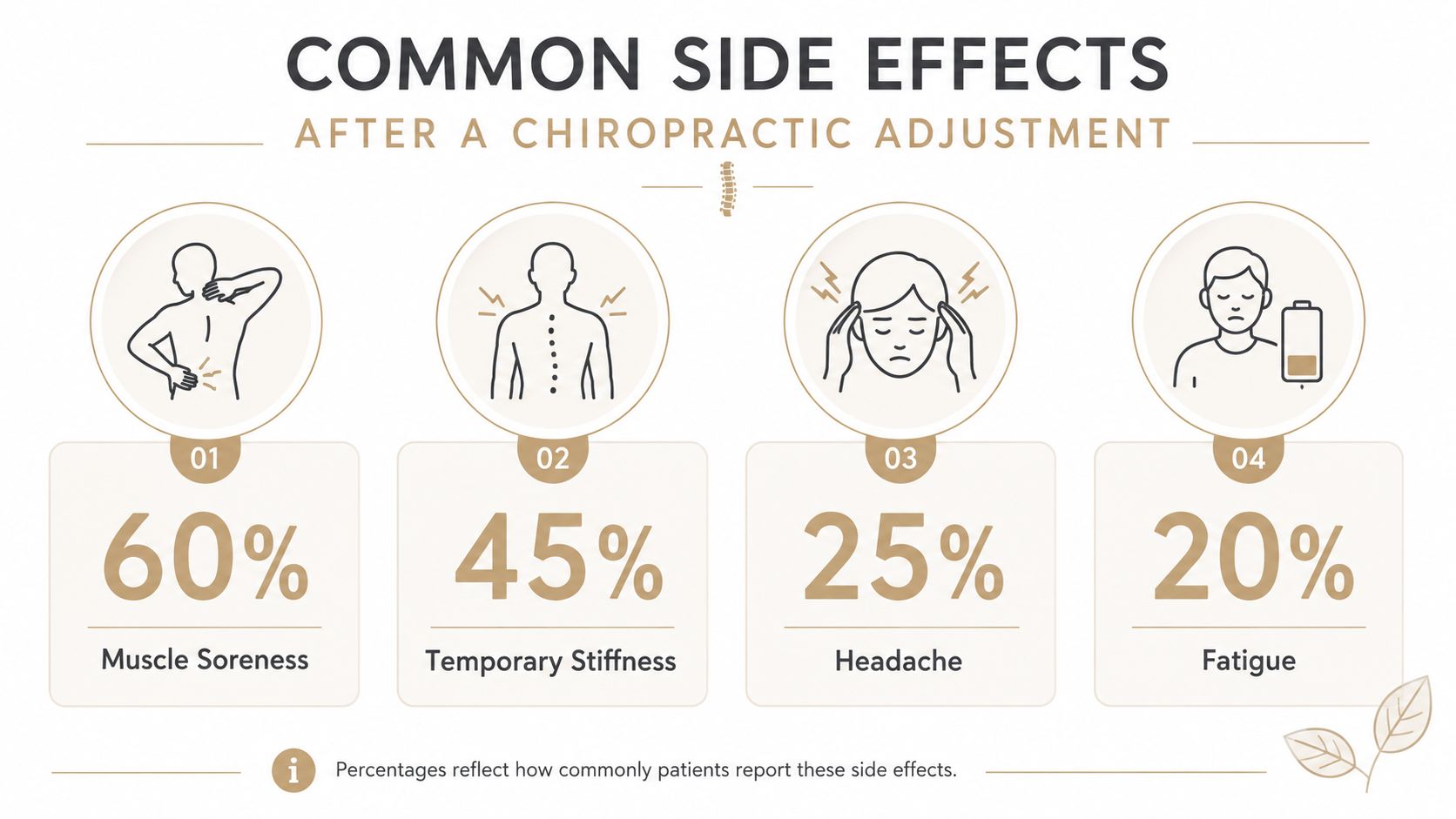
Most patients describe the sensation as post-exercise soreness, not sharp pain. The treated area may feel tender, tight, or “worked,” and nearby muscles can feel a little off because they have been compensating for restricted motion. Broader manual-therapy reviews have reported benign adverse events in adult patients anywhere from 23% to 83%, with many studies clustering around 30% to 50% (manual therapy review).
A practical rule helps here. If the discomfort is mild, local, and already easing by the next day, that usually fits the expected pattern.
Headache and fatigue can also show up after care. The Mayo Clinic notes that some people have minor side effects for a few days, including headaches, pain in the treated body parts, and tiredness (Mayo Clinic). That matches what many clinicians see in everyday practice, where the main complaint is temporary achiness rather than anything dramatic.
The most useful thing to watch is the trend. Expected soreness improves, often quickly. A reaction that keeps escalating, spreads, or starts looking very different from ordinary achiness deserves a closer look.
Serious complications after manipulation are documented, but they're rare. Reported events include arterial dissection, myelopathy, disc extrusion, and epidural hematoma, and the published estimates vary a lot because study designs and definitions differ. A systematic review summary reported frequencies ranging from about 5 strokes per 100,000 manipulations to 1.46 serious adverse events per 10,000,000 manipulations and 2.68 deaths per 10,000,000 manipulations. Another review of cervical spine manipulation found no serious adverse events in its sample and estimated an upper-bound risk of about 6 per 100,000 cervical spine manipulations.
The practical difference is in the pattern. Mild reactions are usually short-lived, local, and improving. Serious complications can involve the nervous system, blood vessels, or structural injury, and they call for immediate evaluation instead of observation at home.
| Pattern | More typical of | Why it matters |
|---|---|---|
| Soreness, stiffness, mild headache | Routine after-effect | Usually self-limited |
| Weakness, severe headache, numbness, loss of balance | Serious complication | Needs urgent evaluation |
| Local tenderness that fades | Expected response | Fits short recovery window |
| Sudden new neurologic change | Red flag | Time-sensitive care matters |
A later large retrospective analysis in Hong Kong found severe adverse events potentially related to spinal manipulative therapy at 0.21 per 100,000 sessions. That does not remove the risk, but it does show why good care depends on screening, informed consent, and monitoring.
A simple rule helps sort normal adaptation from warning signs. If symptoms stay mild and trend better over the first day or two, that fits the expected course. If a new problem appears suddenly, spreads, or changes the way you move, feel, see, or think, it needs prompt medical attention.
Rare doesn't mean imaginary. It means the clinician has to look for the right warning signs before choosing the technique.
Some people need a more cautious plan from the start. The literature points to upper-cervical manipulation, treating more than one spinal region, longer pre-treatment neck-pain duration, and certain medications as situations that can raise concern, even though serious events remain uncommon (risk-stratification review). That's why a good intake isn't just paperwork, it changes what gets done in the room.

A careful clinician should ask about vascular disease, spinal instability, osteoporosis, pregnancy, blood thinners, prior trauma, cancer history, and new neurologic symptoms. Those details don't automatically rule out care, but they can change the technique, the force used, the area treated, or whether imaging or referral comes first.
One practical reason this matters is that many public FAQs stop at “soreness is normal” and never explain who needs a different plan. A patient with a long history of neck pain who's taking anticoagulants should be screened differently from someone with mild low-back stiffness after overuse.
The best first visit should include a targeted exam, not a generic adjustment. If a provider skips neurological testing, ignores medication history, or doesn't explain why a technique is being chosen, that's a warning sign in itself. Good care is individualized, and individualized care starts before the table.
For a broader look at why patients are not adjusted the same way, see how treatment choices change from one patient to the next.
The first signs of post-adjustment symptoms usually appear quickly and usually fade quickly too. Most reactions begin within the first few hours, and most settle within a day, which is why same-day soreness is common while delayed, worsening pain deserves more attention. timing data
A patient may leave the office feeling looser, then notice muscle soreness later that evening. Another person feels fine for several hours, then wakes up the next morning with a stiff neck or back. Either pattern can still fit normal recovery if the symptoms stay mild and begin easing rather than building.
The timing matters as much as the symptom itself. Early soreness that peaks and then starts to fade is usually part of the body adapting to the new joint motion and soft-tissue load.
By the next day, benign reactions should usually be quieter. A review of manual therapy describes these reactions as transient, and the Mayo Clinic notes that some people feel minor side effects for a few days (manual therapy review, Mayo Clinic). If soreness is still present at 24 to 48 hours, that does not automatically point to a problem, but the direction should be clear. It should be improving, not spreading or becoming more intense.
Symptoms can also vary by risk profile. Someone with a simple muscle strain may settle fast, while a person with joint irritation, higher tissue sensitivity, or recent flare-ups may feel achy a little longer.
If the discomfort shifts from sore and stiff to sharper, stronger, or neurologic, that is no longer routine recovery.
Soreness that lingers beyond the usual window deserves a follow-up conversation, especially if it affects sleep, walking, or ordinary daily tasks. The key question is whether the symptom is fading or whether it is holding steady and growing. Recovery should move downhill, not climb back up.
Pain that keeps returning after each adjustment also needs a closer look. That pattern can point to a technique that needs to change, a body region that needs more time, or a condition that should be re-evaluated before another treatment.
A little soreness after an adjustment is common, but the way you prepare and the way you respond afterward can make the difference between a brief ache and a longer flare. Before treatment, tell the provider about new health changes, medication changes, recent injury, pregnancy, and anything that feels different from your usual condition. That kind of update helps sort out whether you fit a low-risk pattern for standard care or whether the plan should be adjusted because your tissues are already irritated.
After the visit, gentle movement usually helps more than complete rest. A short walk, light mobility work, and normal hydration can help the body settle without adding strain, while heavy lifting, aggressive stretching, and high-impact exercise are better delayed if the area still feels tender. If a patient is prone to post-visit soreness, I usually want the first few hours to stay calm and predictable.
A practical aftercare routine often looks like this:
These steps are also where risk stratification matters. A healthy person with mild muscle tightness may only need a light day and ordinary movement, while someone with higher tissue sensitivity, a recent flare-up, or a more complicated pain pattern may need a slower return to exercise and closer follow-up. If soreness fades in the expected window, that fits routine adaptation. If pain is worsening, spreading, or changing into sharper or neurologic symptoms, the plan needs to change.
For practices that need the administrative side of care to stay organized while patients recover, a resource like shorten A/R days with Happy Billing can help support the follow-up side of treatment.
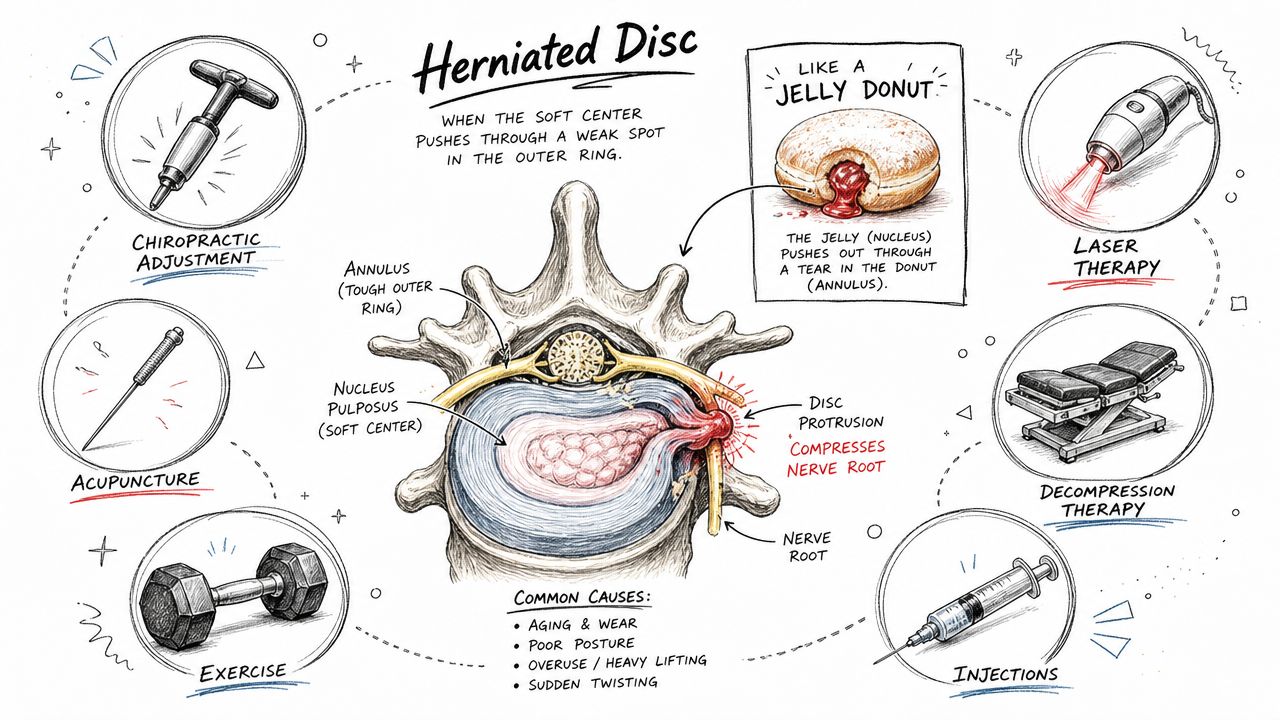
Adjustments aren't the only way to help a painful joint or irritated muscle. In a coordinated clinic, a patient may respond better when chiropractic care is paired with SoftWave Therapy, MLS Laser Therapy, massage therapy, spinal decompression with the DRX 9000, acupuncture, muscle stimulation, mobility therapy, and rehabilitation exercise. The point isn't to stack services for their own sake. It's to reduce tissue irritation while still addressing the underlying movement problem.
A person who's very sensitive to force may do better with lower-load options first, then move toward adjustment once the tissue calms down. Someone with disc-related pain may need decompression and exercise emphasis, while a stiff, guarded neck may respond better when soft tissue work comes before manual correction. That sequence can reduce the sense of “post-visit flare” because the body isn't asked to absorb everything at once.
Integrated care also lets the plan change when the body says it needs a different dose. A clinician can lean more on exercise, laser, massage, or acupuncture on days when high-velocity care doesn't fit the presentation. That flexibility is one of the clearest ways to reduce side-effect burden without giving up meaningful treatment.
For more on that model, see multidisciplinary pain management.
A sore neck or back after treatment can be normal. Sudden severe headache, new weakness, numbness, trouble speaking, facial drooping, dizziness, fainting, loss of bowel or bladder control, or numbness in the groin area are not normal. These symptoms may point to vascular or neurologic trouble, and they need immediate medical evaluation.
If symptoms look stroke-like, or if weakness and sensation changes are progressing, call emergency services right away. If there's loss of bowel or bladder control or saddle-area numbness, that also needs urgent attention because serious spinal conditions can present that way. The issue is not whether the adjustment caused the symptom, the issue is that the symptom itself is time-sensitive.
Don't assume every ache is “just healing,” and don't assume every headache means something catastrophic. The right response is to separate mild, improving soreness from new, severe, or neurologic symptoms. When the picture is unclear, err on the side of urgent evaluation.
If you want a practical way to think about imaging and symptom severity, this overview of MRI versus X-ray for back pain is a useful companion read for understanding why some symptoms deserve more than observation.
When your body feels off after an adjustment, the safest move is simple, get it checked early instead of waiting to see if it turns into something bigger.
If your soreness doesn't follow the usual short recovery pattern, or if you're unsure whether what you're feeling is normal, Aspen Falls Wellness can evaluate your symptoms, screen for risk factors, and tailor care to what your body needs. The team offers chiropractic care, decompression, soft-tissue therapies, rehabilitation, and clear follow-up planning, so you're not left guessing after a visit. If you want a careful, individualized approach to chiropractic adjustment side effects and recovery, visit Aspen Falls Wellness to learn more and request an appointment.

Stay updated with the latest chiropractic news and exclusive offers.