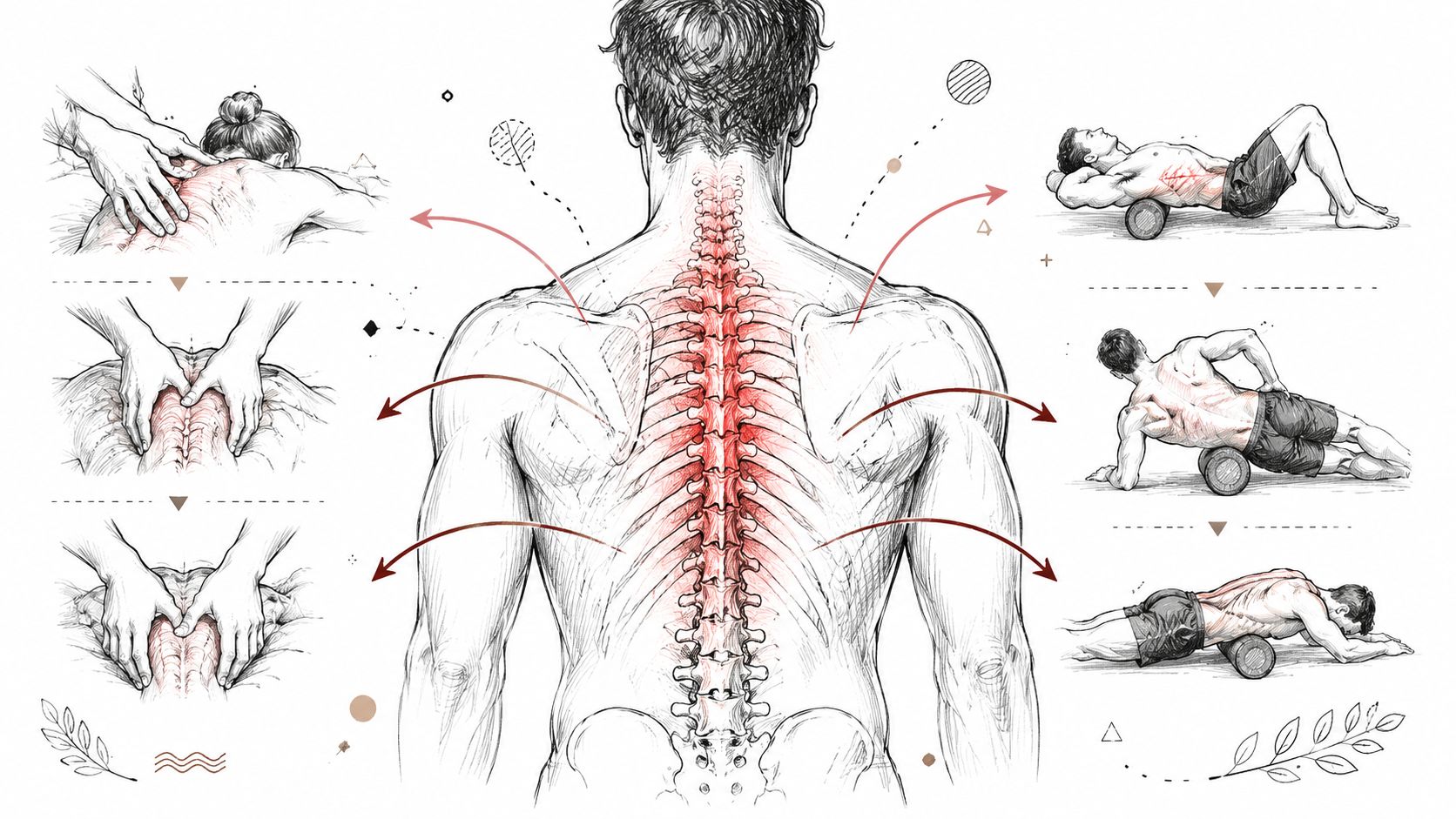
Learn what seeing a chiropractor after car accident involves, from evaluation and treatment options to documentation, timelines, and red flags to watch for.
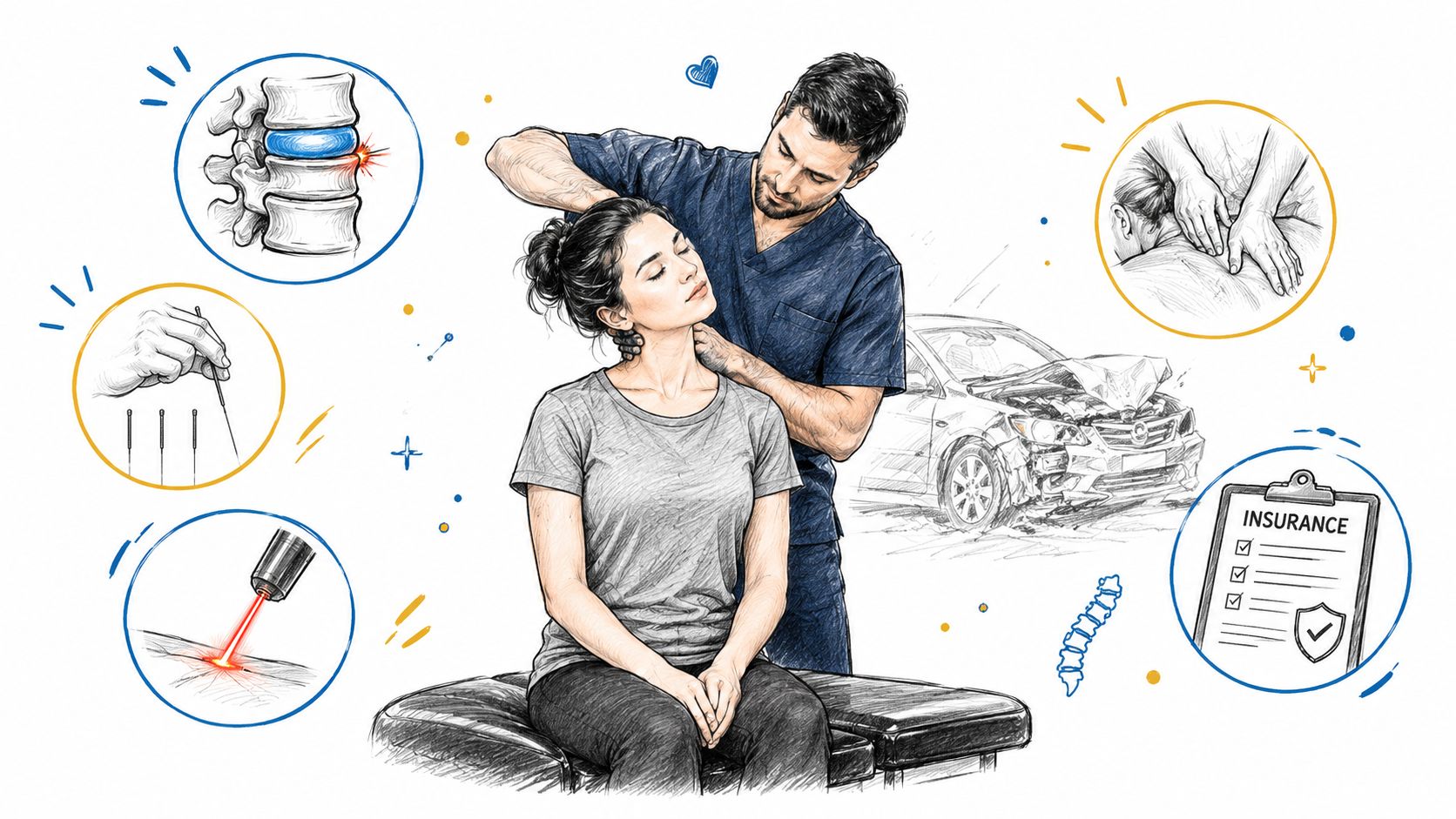
You're sitting in your car after being rear-ended at a stoplight. The vehicle still runs, you can move your arms, and the adrenaline is beginning to fade. A few hours later, your neck feels tight. The following morning, you notice a headache, shoulder soreness, or trouble sleeping, and you're unsure whether to wait, visit urgent care, or schedule a chiropractic evaluation.
That uncertainty is understandable. Seeing a chiropractor after a car accident can be appropriate for some soft-tissue and musculoskeletal injuries, but it isn't the right first step for every person. The safest sequence is to identify emergency warning signs, obtain imaging or medical clearance when needed, then build conservative care around the findings.
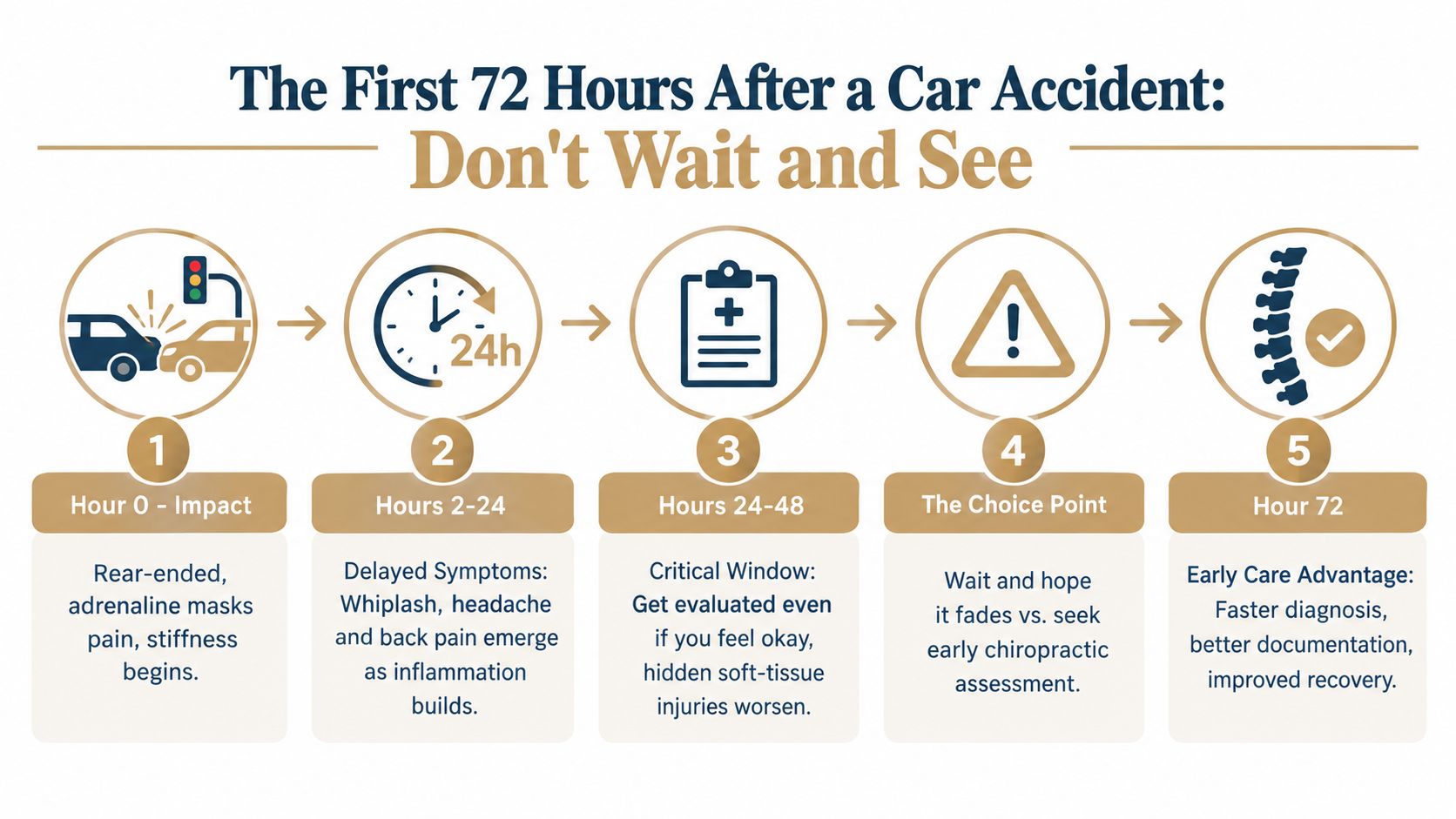
A driver who walks away from a collision may assume the lack of immediate pain means there's no meaningful injury. In reality, a sudden acceleration-deceleration event can strain the neck, upper back, lower back, shoulders, and supporting muscles. Adrenaline and the body's early stress response can also make symptoms difficult to judge at the scene.
Pain and stiffness may become clearer during the next day or two. Neck tightness, headaches, dizziness, reduced movement, muscle tenderness, and disrupted sleep deserve attention, even when the crash initially seemed minor. The SIRA acute whiplash guidelines focus on adults during the first 12 weeks after a motor vehicle collision and support advice, exercise, low-load isometric work, postural endurance, and strengthening for appropriate injuries.
Use the early window to create a clear record and protect your recovery:
The decision isn't whether to receive an adjustment. It's whether your symptoms fit conservative care, whether you need imaging first, and how the findings should be documented. For a broader overview of auto accident injury treatment, look for guidance that addresses evaluation, rehabilitation, and follow-up rather than treatment alone. You can also review this resource on whiplash injury treatment before your appointment.
Think of triage like checking a house after smelling smoke. You deal with flames and structural danger before repainting a wall. After a collision, imaging or emergency evaluation comes before manual care when symptoms suggest a fracture, brain injury, spinal cord problem, or serious neurologic condition.
Seek emergency evaluation for symptoms such as:
The Canadian C-spine rule identifies high-risk features such as age 65 or older, a dangerous mechanism including a high-speed motor vehicle collision, rollover, or ejection, and paresthesias. The NICE cervical-spine recommendations also describe low-risk features, including a minor rear-end collision, comfortable sitting, walking after the injury, no midline tenderness, and delayed neck pain. If a person remains low-risk but can't actively rotate the neck 45 degrees left and right, imaging is indicated before manual treatment.
| Symptom | Action Needed | Urgency Level |
|---|---|---|
| Confusion, slurred speech, new seizure, or visible head injury | Go to emergency care for assessment | Immediate |
| Limb weakness, numbness, or loss of bladder or bowel control | Seek emergency evaluation | Immediate |
| Severe neck pain with limited motion after a dangerous crash | Obtain medical imaging and clearance | Immediate |
| Localized neck stiffness with stable symptoms | Schedule a clinical evaluation | Prompt |
| Upper-back soreness, shoulder restriction, or muscle tenderness | Consider conservative assessment after triage | Prompt |
| Mild soreness that improves with gentle movement and has no warning signs | Monitor while arranging professional guidance | Routine but timely |
A chiropractor shouldn't treat a suspicious presentation blindly. A responsible clinician can pause care, recommend emergency services, or coordinate imaging and medical referral. The green light for conservative care comes after the red flags have been considered, not before.
You may feel only mild soreness after a crash, then notice neck stiffness or tingling later that day. A thorough evaluation helps decide whether conservative chiropractic care is reasonable, whether imaging or medical assessment comes first, and how the two should be sequenced. It starts with the collision history and your current function, not with an automatic adjustment.
Expect questions about the direction of impact, approximate speed, seat position, headrest height, seat belt use, airbag deployment, and whether your head struck anything. The timing of symptoms also matters. Describe what you felt immediately, what appeared later, and what has changed since the crash.
Disclose prior neck, back, shoulder, or nerve problems. An older injury does not automatically explain current symptoms. It can, however, change how the clinician interprets the examination, estimates recovery, and identifies a meaningful change from your usual condition.
The examination may include active range-of-motion measurements, posture assessment, palpation of the cervical and thoracic spine, and orthopedic testing. Depending on your symptoms, the clinician may use Spurling's, distraction, or compression testing to assess possible cervical nerve irritation.
Neurologic screening commonly checks reflexes, sensation, and strength. Balance or concussion screening may also be appropriate after a head impact, dizziness, coordination change, or unusual visual symptom. These findings help distinguish localized muscle soreness from a pattern that needs medical investigation.
A useful evaluation leaves you with clear answers:
Practical rule: The treatment plan should state what the examination found, what remains uncertain, and which changes would require referral.
Plain radiographs can help assess suspected bony injury. CT may be considered when acute structural injury needs a more detailed assessment. MRI is particularly useful for selected concerns involving soft tissue, discs, the spinal cord, or nerves. The BC Medical Journal review of imaging after whiplash describes high-risk factors such as advanced age, a dangerous mechanism, sensory abnormality, focal neurologic deficit, altered consciousness, intoxication, a distracting painful injury, or inability to complete active neck rotation.
Acute whiplash guidance does not support X-ray, CT, or MRI as a way to predict poor recovery. MRI referral is supported when the neurologic examination suggests cervical radiculopathy, as summarized in this clinical guideline executive summary. A clinic may coordinate with a radiologist, primary-care provider, urgent-care service, or emergency department instead of ordering every scan in-house.
Before treatment, request a written plan covering the working diagnosis, goals, home exercises, reassessment points, and referral criteria. If you are managing an injury claim, a resource for a Northern Wisconsin injury attorney can address legal questions separately from clinical decisions.
A collision can create several overlapping problems. One person may have restricted neck joints and muscle guarding. Another may have low-back pain with radiating symptoms. A third may mainly need graded exercise after the acute irritation settles. The useful question is not which modality is universally best, but which tool matches the findings.
| Modality | Best Suited For | Typical Patient Experience |
|---|---|---|
| Chiropractic adjustment | Restricted spinal motion and selected mechanical pain patterns | Brief hands-on treatment, followed by movement advice and monitoring |
| DRX 9000 decompression | Selected disc-related low-back conditions | Comfortable, supported sessions with careful screening |
| MLS Laser Therapy | Localized soft-tissue irritation and inflammation support | Noninvasive device treatment with no manual thrust |
| SoftWave Therapy | Deeper soft-tissue healing support | External tissue stimulation over the affected region |
| Acupuncture | Pain modulation and trigger-point sensitivity | Fine needles placed at selected points, followed by quiet rest |
| Massage Therapy | Muscle guarding, tenderness, and spasm | Hands-on soft-tissue work adjusted to tolerance |
| Rehabilitation exercise | Reduced strength, endurance, coordination, or mobility | Guided exercises performed in the clinic and at home |
For chronic neck pain with radiating symptoms, the 2017 Neck Pain clinical practice guideline describes mechanical intermittent cervical traction combined with stretching, strengthening, and cervical or thoracic mobilization or manipulation. That recommendation illustrates why post-accident care often works best as a coordinated plan rather than repeated passive treatment alone.
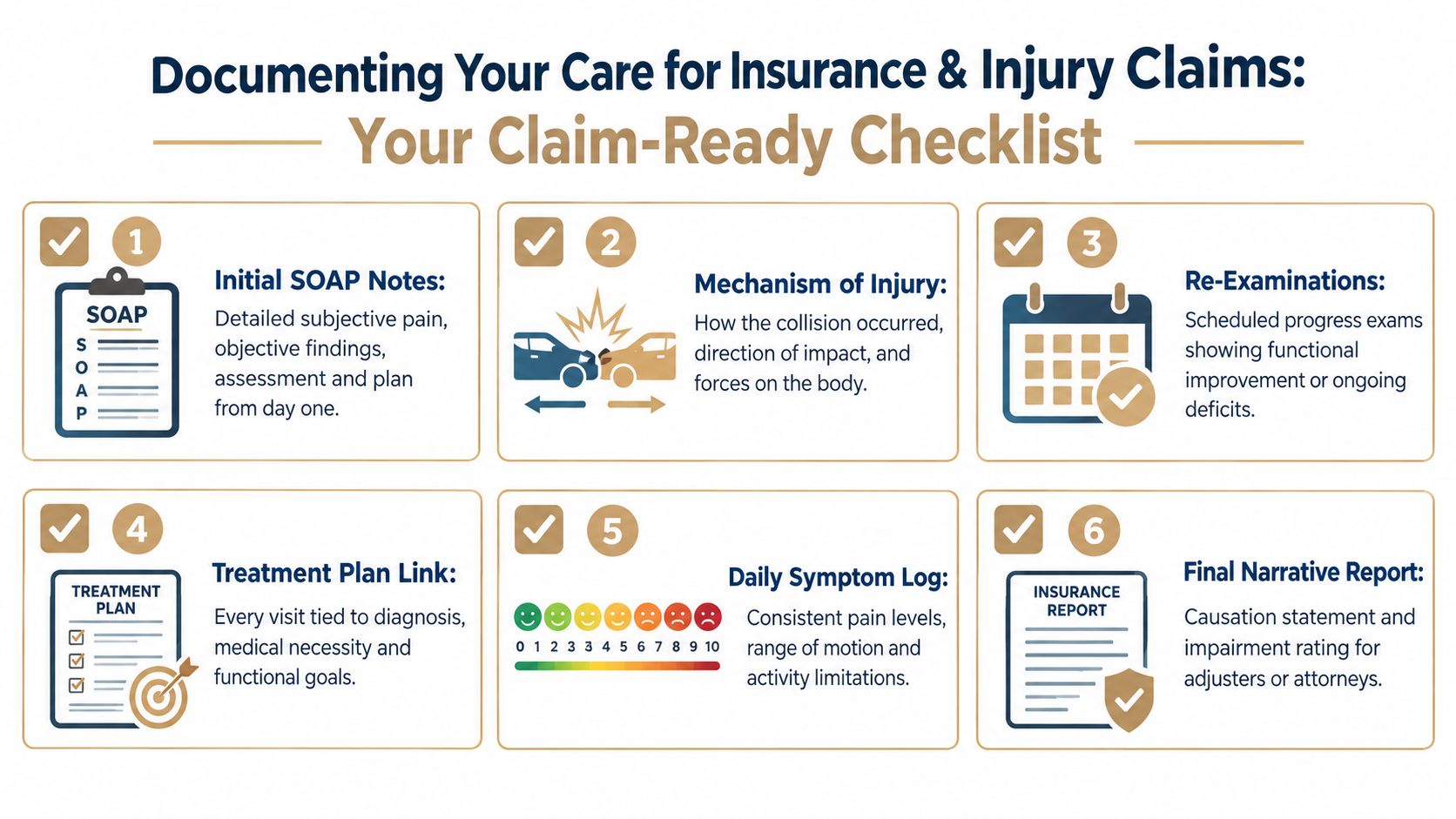
Good documentation begins with the first visit. Your record should connect the collision, your symptoms, the examination findings, the diagnosis, and the functional goals without exaggeration.
Ask whether the initial SOAP note records:
The collision mechanism matters because direction, force, restraint, and body position help a clinician interpret the injury pattern. Re-examinations create comparison points. A later note should show whether movement, pain, sleep, work tolerance, and daily activity are improving, unchanged, or worsening.
Documentation works best when it describes function, not just discomfort.
Keep a simple daily log. Write down your pain level, how long you slept, whether you drove, lifted, exercised, or missed work, and what activity caused a flare. “Neck pain today” is less useful than “Turned head less while changing lanes, slept poorly, and couldn't complete a normal work task.”
Ask the clinic how it handles personal injury protection, medical-pay billing, liens, records requests, and attorney communication. Request copies of intake forms, examination reports, imaging referrals, treatment plans, re-examinations, itemized bills, and the final narrative report when appropriate. Keep claim numbers, adjuster contact details, appointment dates, and receipts in one folder.
Common gaps include delayed reporting, inconsistent symptom descriptions, missed follow-ups without explanation, and treatment notes that don't connect care to functional goals. Clinical records should remain accurate. Don't ask a provider to add symptoms that weren't present or make a legal conclusion outside the provider's role.
Recovery often changes from day to day. A patient may feel better after gentle movement, flare after an unusually active day, then settle again after reducing the workload. That pattern can occur during healing. Symptoms that steadily worsen, new neurologic changes, or little improvement over time call for reassessment before treatment continues.
During the first two weeks, care usually emphasizes symptom control, comfortable movement, education, and protection from loads that aggravate symptoms. For appropriate acute whiplash-associated disorders, active rehabilitation can include advice, exercise, low-load isometric work, postural endurance, and strengthening. Prolonged immobilization is generally not the goal.
A clinician may begin with small, tolerable movements and adjust manual care to your response. The purpose is not to force normal motion immediately. It is to keep the neck and back moving safely while checking whether the pattern still fits a soft-tissue injury or needs further medical evaluation.
During approximately weeks three through six, many patients can gradually build range of motion, light strength, mobility, and daily activity. The calendar is only a guide. Examination findings should determine the pace. Radiating pain, weakness, or a suspected disc-related problem may require slower progression, imaging coordination, or referral.
During approximately weeks seven through twelve, treatment may place more attention on endurance, strength, work reintegration, posture, and independent exercise. Recent-onset WAD grades I through III are generally managed with multimodal conservative care, self-management, exercise, and regular outcome monitoring.
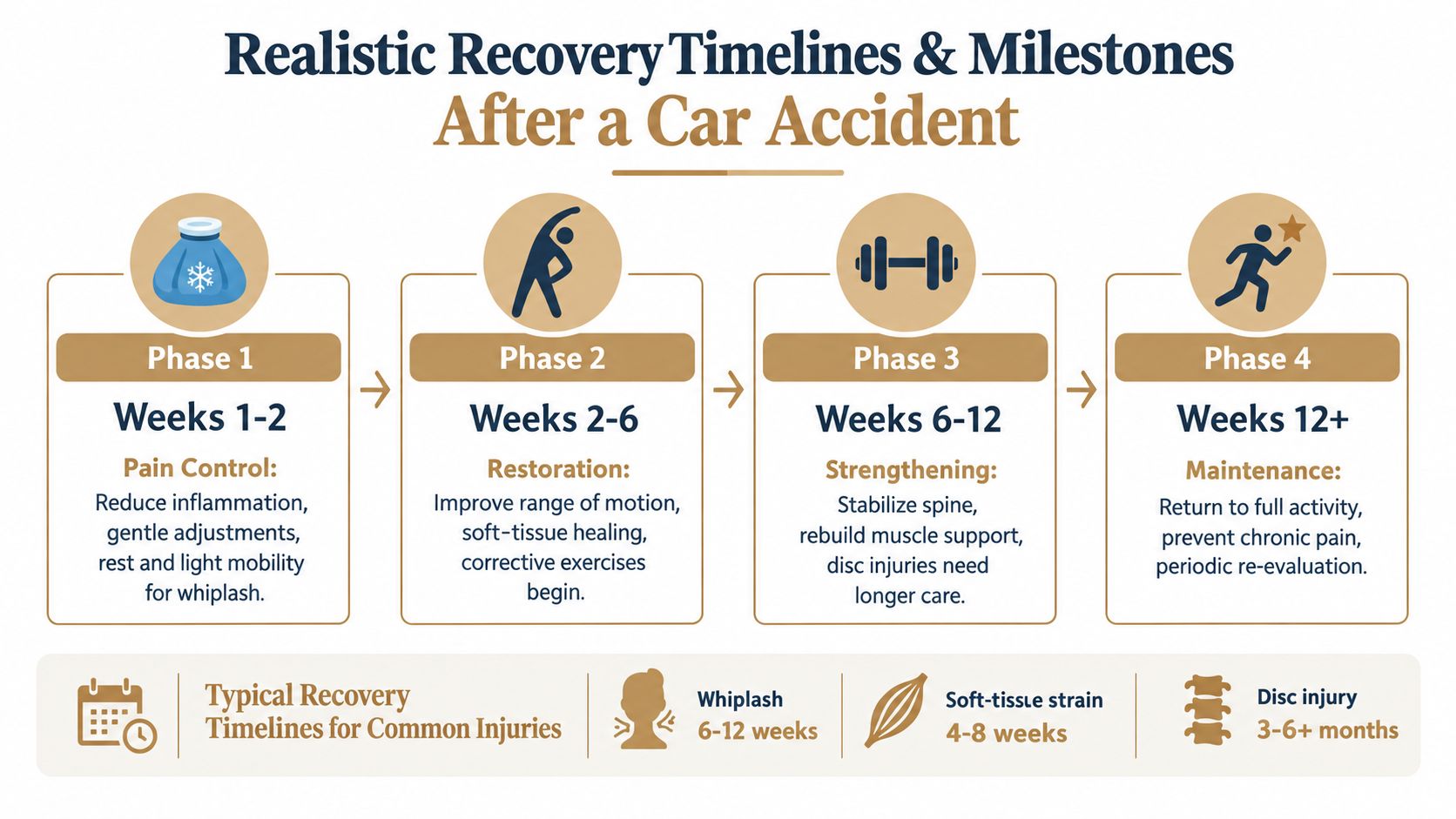
Symptoms that continue beyond three months deserve a fresh review of supervised exercise, self-management, psychosocial barriers, imaging, or specialist referral. Persistent pain does not mean treatment has failed. It means the working plan may need to change. Guidance on healing after an accident can help keep recovery priorities separate from pressure related to a claim.
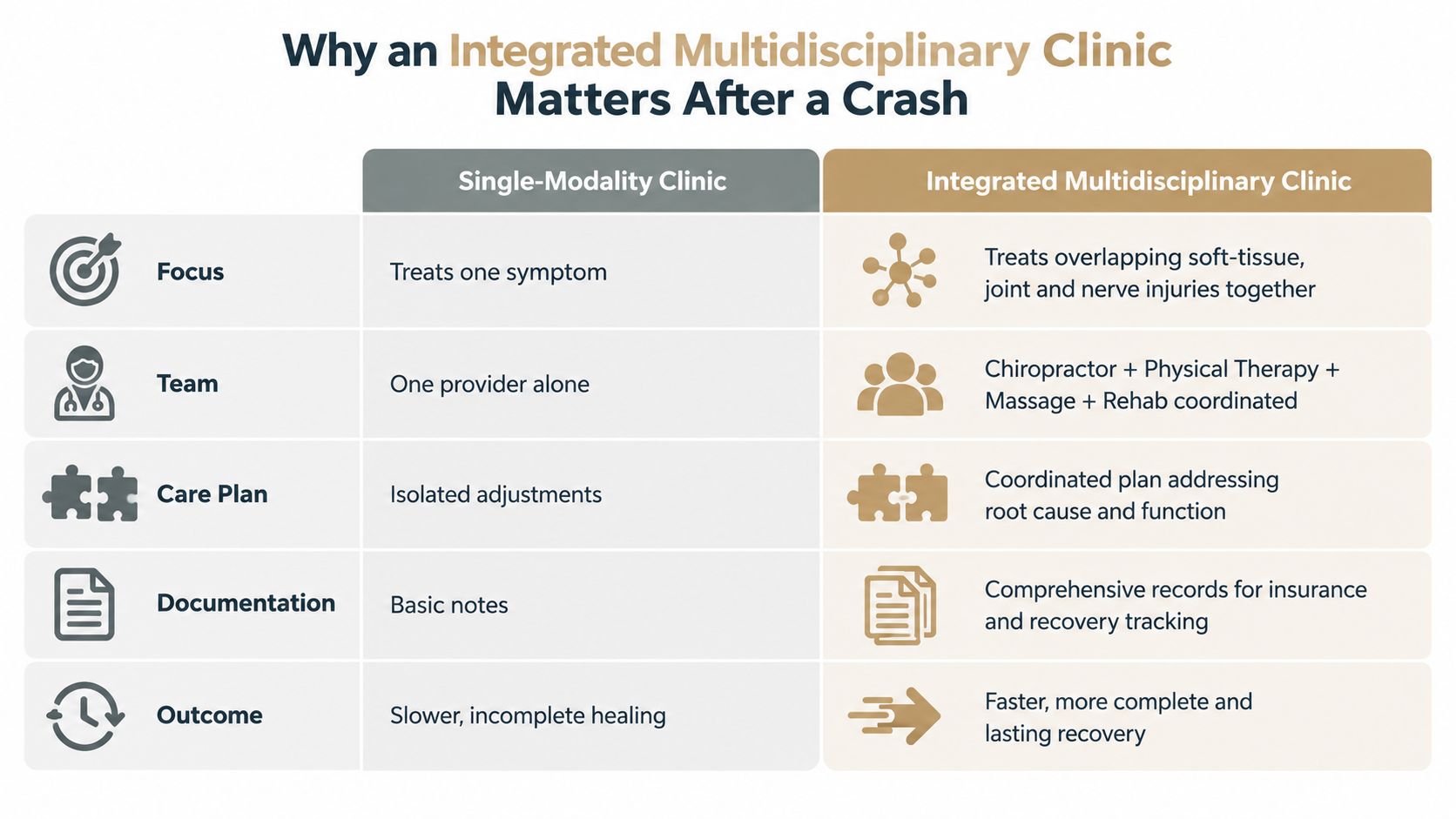
A single collision can affect joints, muscles, ligaments, discs, nerves, and movement confidence at the same time. One treatment may ease a symptom without addressing the factors that keep it present. That's why an integrated model can make practical sense for patients whose examination reveals more than one problem.
At Aspen Falls Wellness, the available services include chiropractic adjustment, DRX 9000 spinal decompression, MLS Laser Therapy, SoftWave Therapy, acupuncture, massage, mobility therapy, rehabilitation exercise, nutrition counseling, and personalized home plans. Those services shouldn't be applied automatically. The clinician can sequence them according to the diagnosis, tolerance, progress, and need for referral.
A shared care model can keep examination findings, treatment responses, exercise adherence, and referrals in one coordinated record. That makes it easier to identify whether a patient needs more active strengthening, less manual treatment, imaging coordination, or a different specialist.
The model also helps avoid a common mistake, continuing the same passive treatment after progress has stalled. A patient whose muscle guarding improves but whose radiating symptoms remain may need a different evaluation. Another patient may need less device-based care and more supervised exercise.
The purpose of integration isn't to add treatments. It's to match the right treatment to the right finding at the right stage.
Patients can review how coordinated services fit together in this overview of multidisciplinary pain management. The same philosophy can include nutrition coaching for general recovery support and, after symptoms settle, movement-focused services such as golf movement screening for patients returning to recreational activity.
Call Aspen Falls Wellness at 801-849-1028 to request a post-collision evaluation. Tell the scheduling team the crash date, your current symptoms, whether symptoms appeared immediately or later, and whether you've already had X-rays, CT, or MRI.
Bring practical claim and medical information:
Wear comfortable clothing that allows access to your neck, shoulders, upper back, and lower back. Arrive 15 minutes early so you have time to complete intake forms that document the mechanism of injury and symptom history.
Patients traveling from Salt Lake City can reach the Sandy office in roughly 20 minutes via I-15 southbound, with the clinic near the 10600 South exit and free parking available. The first visit is expected to last about 60 minutes, including history, examination, and discussion of a preliminary care plan.
If you have the warning signs described earlier, choose emergency evaluation before scheduling manual care. If your symptoms are localized and stable, arranging an assessment within 72 hours can support early clinical documentation and timely rehabilitation.
Aspen Falls Wellness provides post-accident evaluations, chiropractic adjustment, DRX 9000 spinal decompression, massage, acupuncture, laser and SoftWave therapies, mobility work, and personalized rehabilitation plans when appropriate. Visit Aspen Falls Wellness to request an evaluation in Salt Lake City or Sandy and take the next step toward a documented, movement-focused recovery.

Stay updated with the latest chiropractic news and exclusive offers.