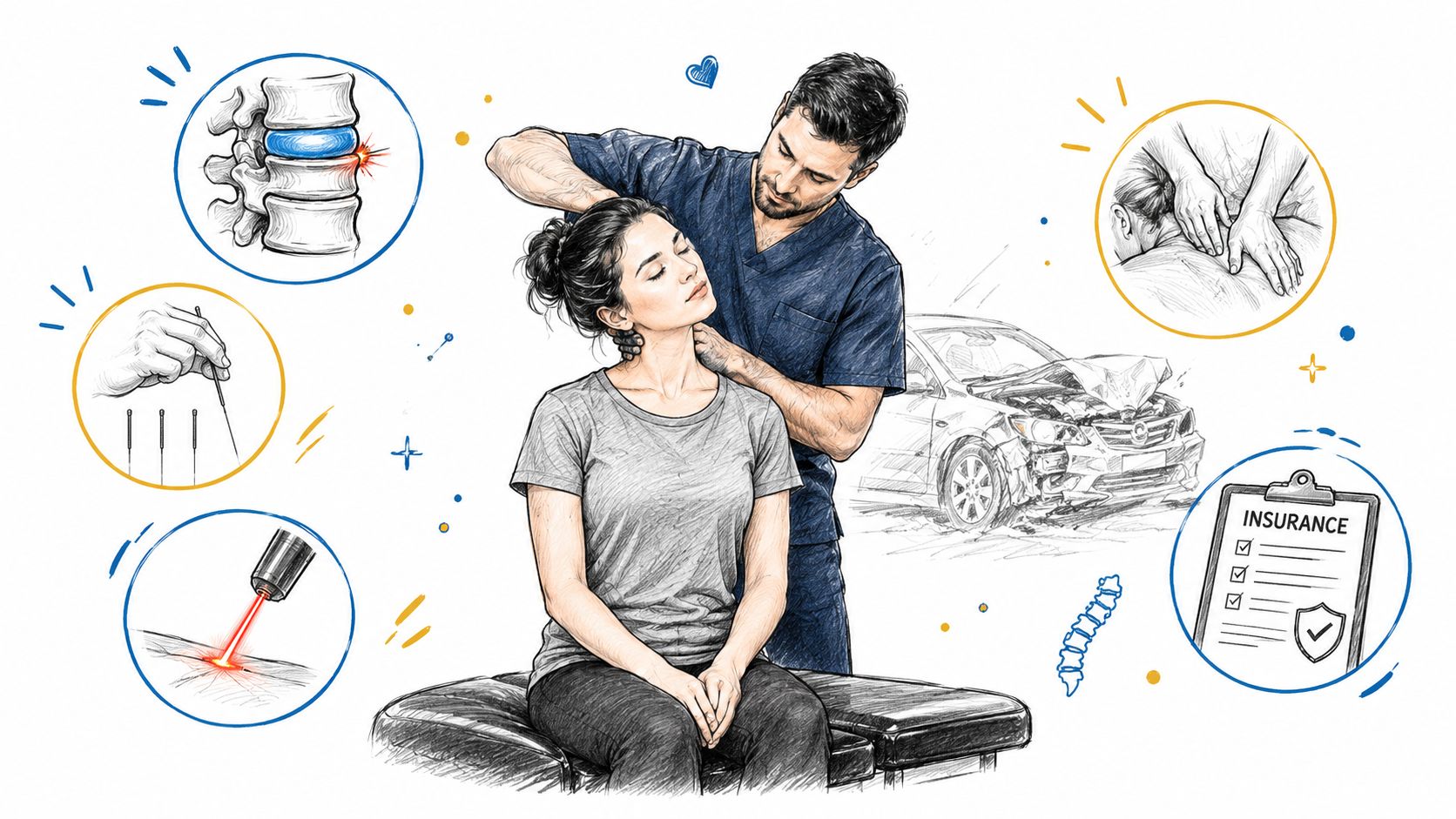
Can Chiropractors Fix Bad Posture. Discover whether chiropractors can actually fix bad posture. Learn evidence-based approaches to postural correction and when
Have you ever wondered whether a spine can be “fixed” by an adjustment if the muscles, habits, and movements around it keep pulling you back into the same position? That question exposes the gap in many posture promises. Can chiropractors fix bad posture? They may help reduce pain, improve mobility, and support better movement, but an adjustment alone isn't a permanent solution.
Posture is a dynamic skill. It changes with muscle strength, mobility, motor control, fatigue, pain, work habits, and the way you move throughout the day. Effective care therefore combines assessment, appropriately selected manual therapy, rehabilitation exercise, education, and a home program. The aim isn't to force everyone into one ideal alignment. It's to help you move with less discomfort and maintain useful, sustainable positions during daily activities.
Can a chiropractor adjust your spine once and permanently correct your posture? The evidence doesn't support that simple claim. A chiropractic adjustment may improve joint motion or reduce discomfort, but it doesn't automatically retrain the muscles and movement habits that shape your posture hour after hour.
Posture isn't a fixed object that sits inside your body waiting to be realigned. Your nervous system coordinates how you sit, stand, walk, reach, and respond to pain or fatigue. If your upper-back muscles lack endurance, your neck muscles tire quickly, or your workstation encourages forward-head positioning, your body may return to familiar patterns after temporary relief.
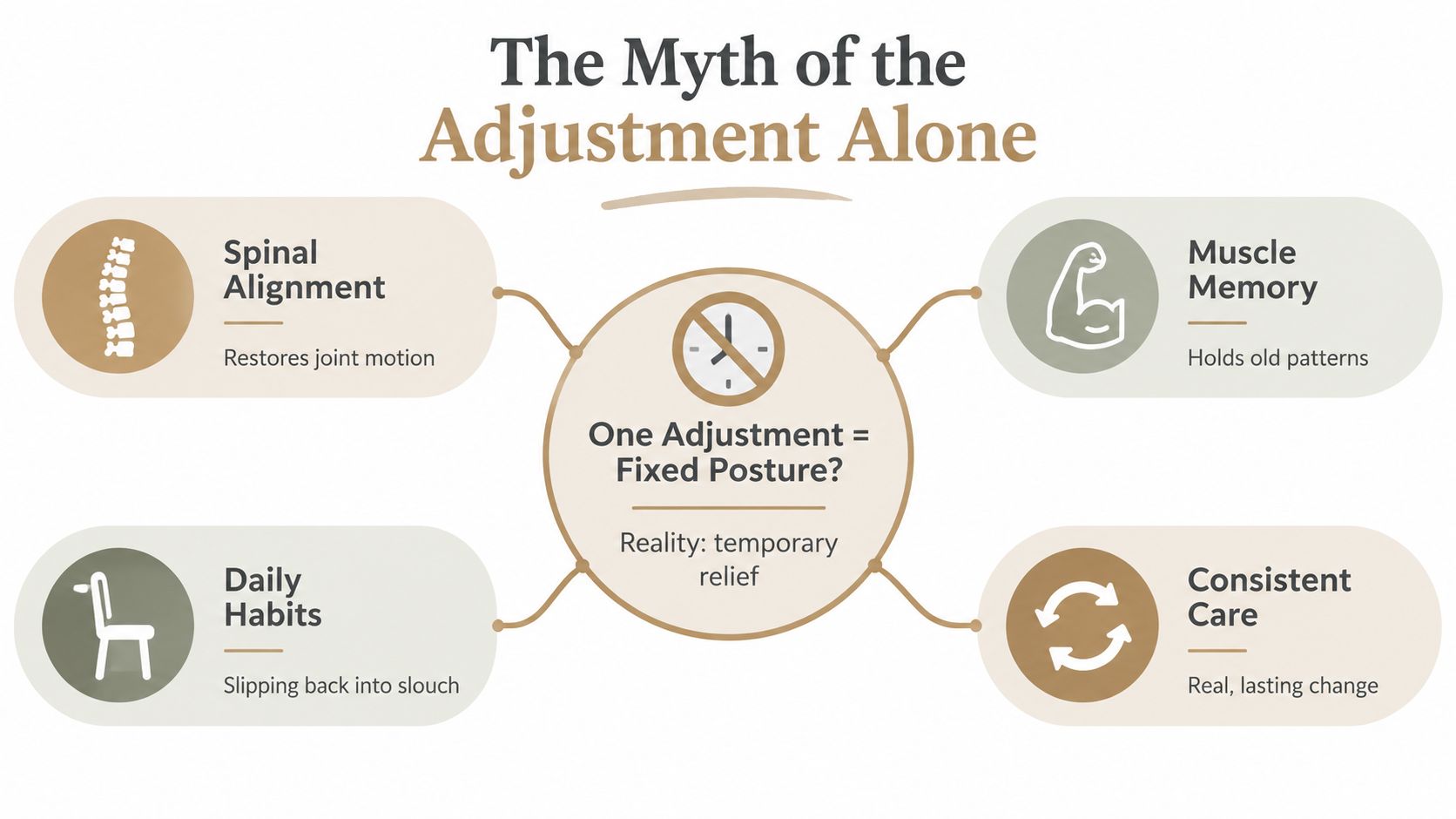
A chiropractic adjustment applies a controlled force or mobilization to influence joint movement. That can be useful when stiffness, pain, or restricted motion makes it harder to hold a comfortable position. In practical terms, treatment may create a window in which you can move more freely and participate more effectively in exercise.
It doesn't, by itself, build the strength needed to sustain that change. You can't adjust yourself into fitness any more than you can adjust yourself into cardiovascular endurance. The lasting part comes from practicing the movement pattern and progressively challenging the muscles that support it.
A review of chiropractic adjustment benefits can help explain why adjustments may provide symptom relief and mobility support, but posture care requires a broader plan.
A 2015 evidence-based chiropractic guideline reviewed research on low-back disorders and recommended combining passive care, such as spinal manipulation, with active care, especially exercise, education, and progressive return to normal activity. The guideline describes exercise as useful for functional recovery and reconditioning, rather than treating posture as a purely structural problem. The guideline's recommendations support a realistic conclusion: chiropractic care may help some posture-related problems, but an adjustment alone isn't a reliable way to permanently fix bad posture.
Practical rule: If a posture plan doesn't include something you must practice between appointments, ask how it is supposed to create lasting change.
A responsible posture assessment goes beyond looking at whether your shoulders appear level. A chiropractor may watch how you sit, stand, walk, bend, rotate, and transition between positions. The clinician is looking for movement limitations and compensations rather than judging your appearance.
The assessment may include spinal range of motion, muscle strength, endurance, coordination, and control. For example, forward-head positioning may occur alongside limited thoracic extension, reduced cervical endurance, or poor scapular control. Those findings matter more than a photograph because they reveal what your body can and can't do.
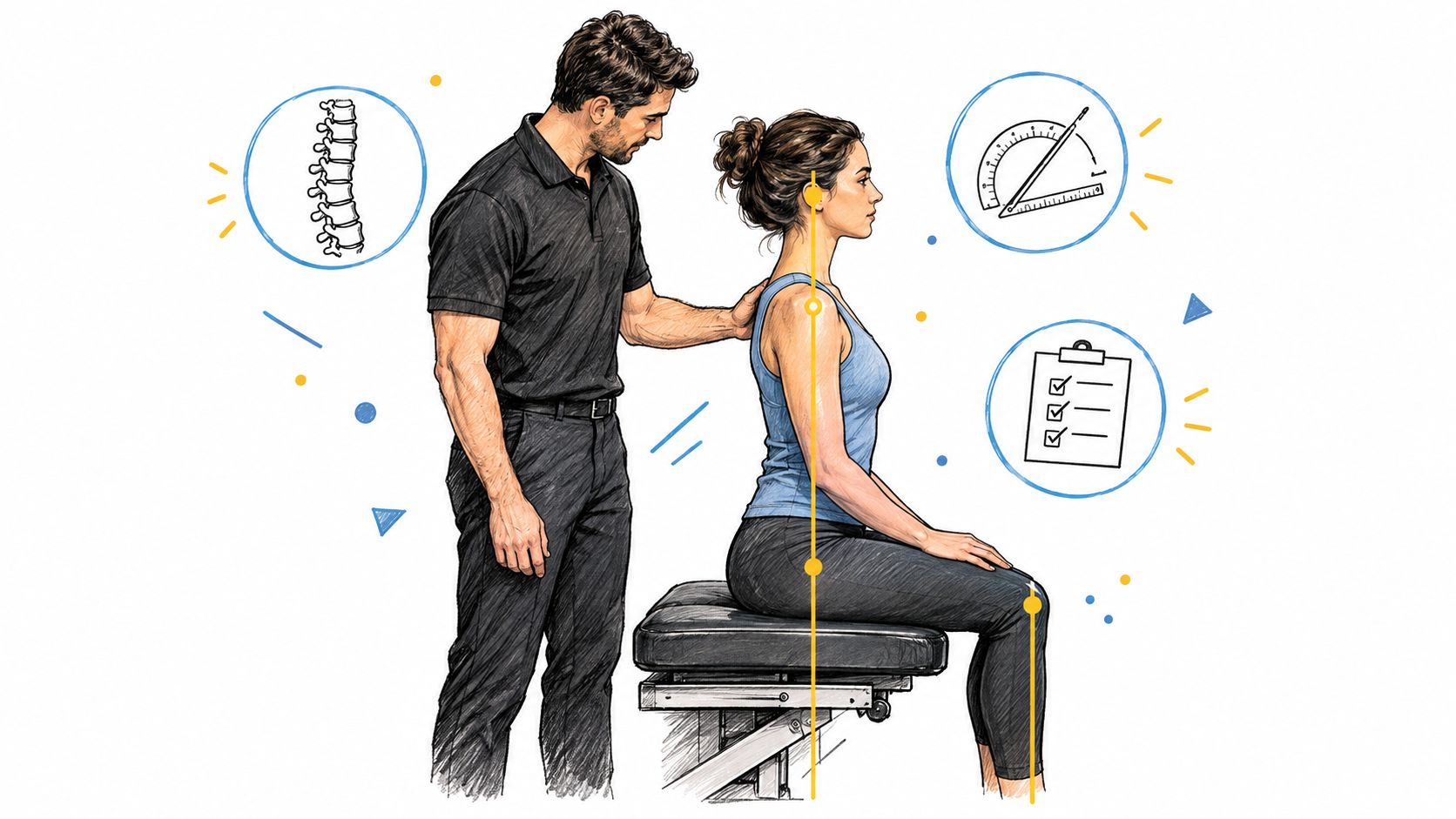
Your clinician should also ask about daily loading. Relevant details can include:
If trauma or neurological findings raise concern, the clinician may recommend imaging or referral. X-rays or MRI aren't necessary for every posture complaint, and visible asymmetry doesn't automatically indicate serious disease. The decision should follow the examination and the patient's symptoms.
You can learn more about the visit process in this guide to what to expect at a first chiropractic visit.
A rounded shoulder or forward head may be harmless in one person and associated with pain or restricted function in another. A useful assessment asks whether you can rotate your neck, tolerate sitting, reach overhead, and control your position without increasing symptoms. That functional perspective prevents treatment from becoming a cosmetic attempt to impose one “perfect” posture on everyone.
Manual therapy can be useful, but its role is often overstated. An adjustment may influence joint motion and reduce discomfort when stiffness or pain is limiting movement. That relief can make it easier to exercise, breathe comfortably, or practice a better movement pattern.
It doesn't replace the practice itself. If the muscles that support your neck, shoulder blades, trunk, or pelvis remain weak or poorly coordinated, the original pattern can return when you resume normal activities.
Think of manual treatment as opening a door. A stiff joint or painful area may cause protective muscle guarding, which makes movement feel restricted. A chiropractic adjustment, mobilization, or other hands-on technique may reduce that barrier for a time.
The next step is what you do with the improved movement. A clinician might pair an adjustment with mobility therapy, motor-control work, strengthening, or ergonomic changes. This pairing helps convert short-term comfort into a useful training opportunity.
A randomized UCLA trial involving chiropractic patients with neck pain found similar reductions in pain and disability from manipulation and mobilization over six months. All participants also received posture and body-mechanics education, stretching, flexibility or strengthening exercises, and ergonomic advice. The trial report therefore supports combined care, not a claim that manipulation alone corrected posture.
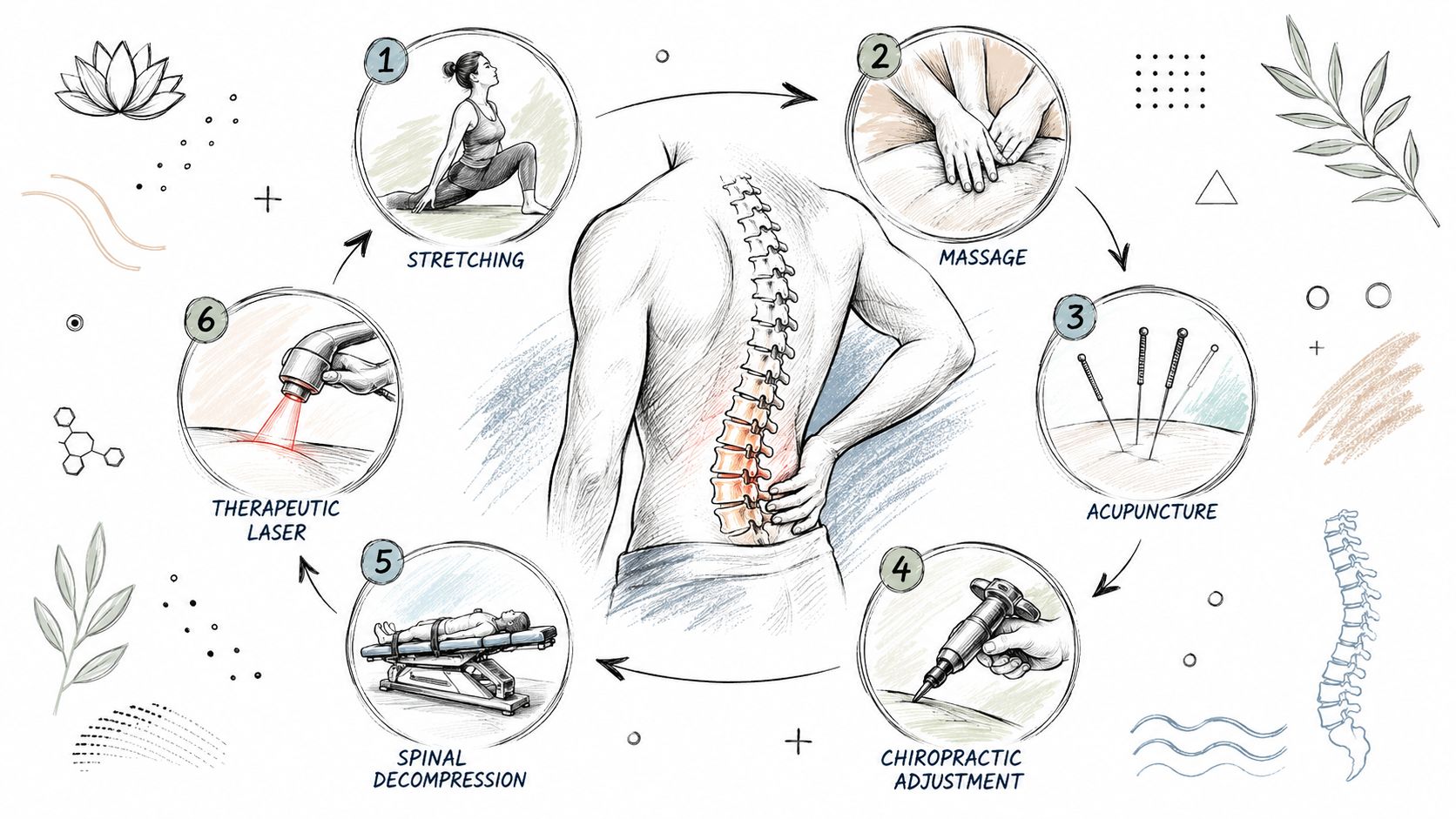
Massage therapy may ease soft-tissue tension and make movement more comfortable. SoftWave Therapy, MLS Laser Therapy, acupuncture, and muscle stimulation may also be considered within a broader plan for selected symptoms, depending on the examination and treatment goals. These services should support function rather than become substitutes for rehabilitation.
Spinal decompression is a separate modality that uses controlled distraction forces. It isn't the same as a chiropractic adjustment and shouldn't be marketed as a general posture realignment method. For selected disc-related complaints, including some cases involving sciatica, a clinician may discuss Spinal Decompression with the DRX 9000, while still evaluating whether exercise, education, or referral is more appropriate.
For patients considering hands-on care, an integrative manual therapy approach is most useful when it connects symptom relief to active movement and a take-home plan.
Can an adjustment teach your body to hold a new posture? Usually, lasting change depends on practice. Corrective exercises develop the strength, endurance, mobility, coordination, and motor control needed to maintain a comfortable position without constant conscious effort. Posture is a dynamic skill, not a structure that can be placed into alignment.
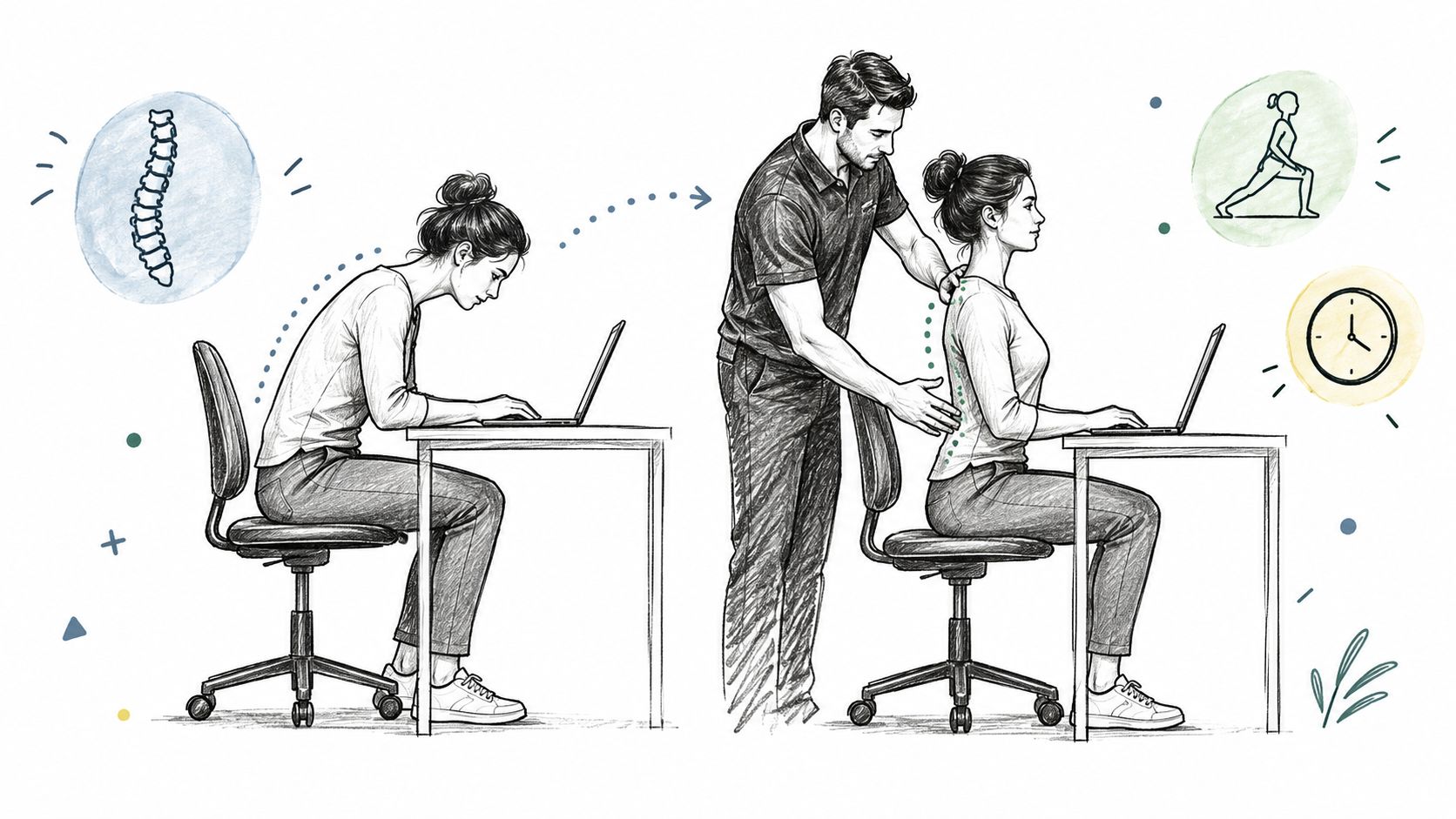
A person who works at a computer may develop a forward-head position by the end of the day. Manual care can make neck movement feel easier, while a custom exercise plan addresses deep-neck-flexor endurance, thoracic mobility, scapular control, and posture during sitting or reaching. The person is learning to control the position, much like practicing balance rather than being held upright by someone else.
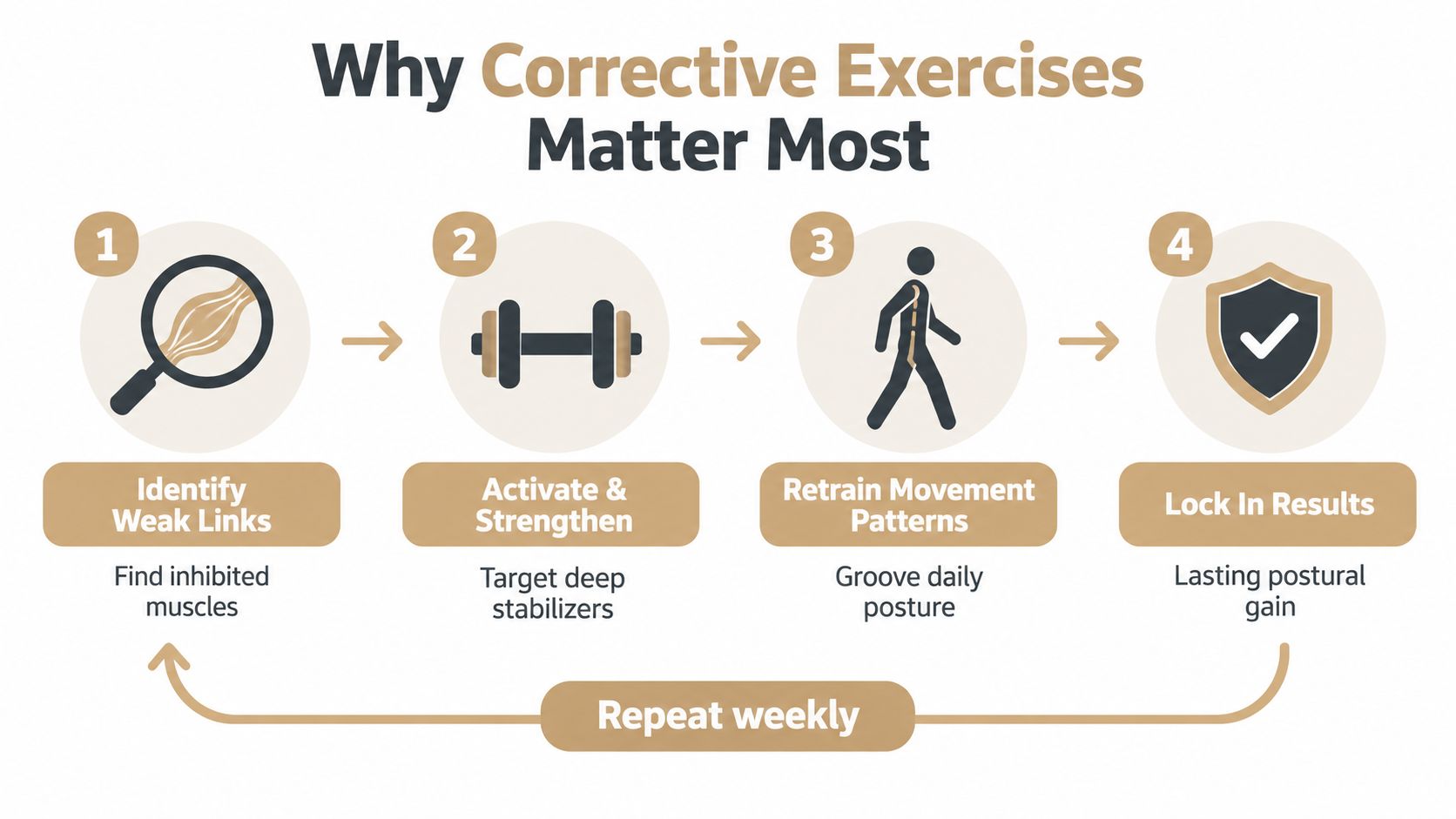
A systematic review of forward-head-posture interventions found that exercise improved the craniovertebral angle by an average of 3.38 degrees versus controls, with a 95 percent confidence interval of 2.10 to 4.65 degrees. Programs lasted approximately three to eight weeks, while functional gains were more evident in programs lasting at least eight weeks. Cervical stabilization combined with postural-correction exercises also appeared more effective than isolated exercise types. The review of forward-head-posture interventions supports active rehabilitation as the main driver of measurable postural change.
A 2026 systematic review and meta-analysis examined 28 randomized controlled trials involving 901 participants with upper-crossed syndrome. Corrective exercise produced statistically significant improvements in forward-head posture, shoulder alignment, and hyperkyphosis angle, with large effect sizes. The 2026 review evaluated exercise-based outcomes. It does not show that chiropractic manipulation caused those improvements.
A home program may include deep-neck-flexor work, scapular strengthening, thoracic mobility, and task-specific movement practice. Exercises should match the examination findings rather than come from a generic list. Difficulty can increase as control and endurance improve.
A systematic review found that, in healthy adults without symptoms, spinal manipulation generally did not improve performance-related outcomes compared with sham or other interventions, including scapular movement measures. The evidence review supports separating a temporary mobility change from a learned change in movement behavior.
Active care changes what your body can do. Manual care may help you do that practice with less pain.
How quickly should posture improvement happen? Usually, progress feels gradual rather than dramatic. Symptoms may ease or movement may feel easier before your posture looks different. That sequence is expected because pain can settle before strength, endurance, and automatic movement control improve.
The exercise research reviewed earlier points to a training period of several weeks. The practical question is how to track change during that period, rather than expecting an adjustment to create an immediate, permanent result.
Useful progress markers include:
Photographs can add context, but they should not be the only measure. A more symmetrical appearance may not improve daily function. Conversely, a modest visual change can occur alongside meaningful pain relief and better movement.
Short-term relief and lasting skill may develop at different rates. A clinician can use these measures to adjust exercise difficulty, work habits, and treatment frequency instead of judging progress from appearance alone.
A retrospective chart review evaluated 94 adults with chronic discogenic low-back pain who completed an eight-week course of motorized spinal decompression using the DRX9000. Mean pain on a 0-to-10 numerical rating scale fell from 6.05 at presentation to 0.89 at the end of treatment, with P less than 0.0001. In the smaller follow-up subgroup, 29 patients reported an average 83 percent improvement in low-back pain at a mean of 31 weeks, and satisfaction averaged 8.55 out of 10. The chart review had no control group, used a convenience sample, and its authors stated that randomized double-blind trials are needed.
Because this was an uncontrolled chart review, treat its eight-week course as a description of one clinic's protocol, not a guaranteed schedule. The findings may inform discussions about sciatica treatment and disc-related symptoms, but they do not show that the treatment corrects posture or predict an individual's result.
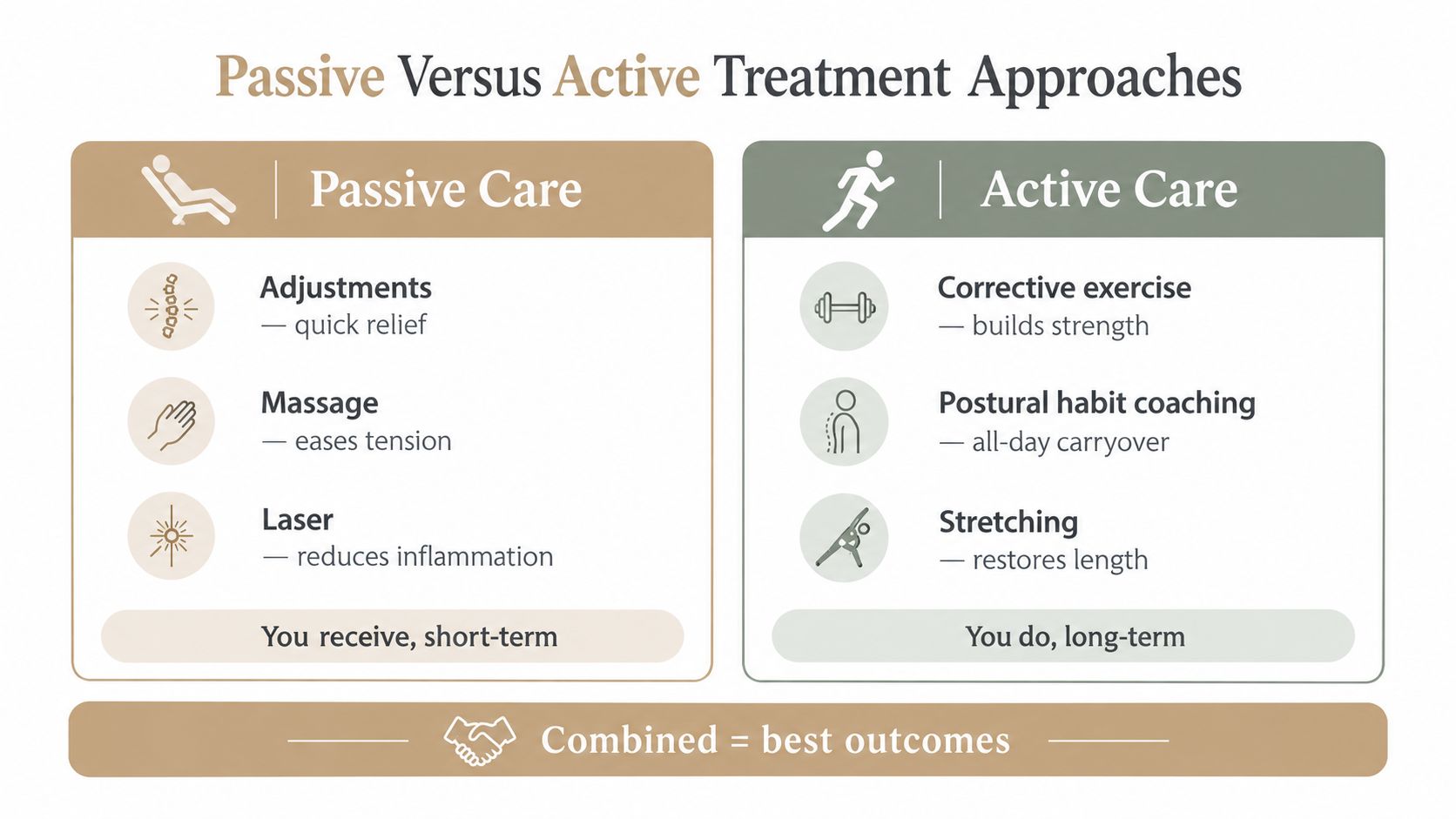
Passive and active care solve different problems. Adjustments, massage, laser therapy, acupuncture, and decompression may help reduce symptoms or improve mobility while you're receiving treatment. Corrective exercise, movement retraining, and environmental changes teach you how to maintain useful movement when you're on your own.
The mistake is treating those categories as rivals. A painful, stiff patient may not tolerate strengthening at first. Conversely, repeated passive treatment without progressive exercise may provide relief without changing the capacity that supports daily posture.
The 2017 American College of Physicians guideline strongly recommended initially selecting non-drug treatments for chronic low-back pain, including exercise and multidisciplinary rehabilitation. Spinal manipulation was included as an option, but the evidence quality for it was rated low. The guideline supports exercise-led care rather than promising a specific posture correction from manipulation.
The 2019 VA/DoD guideline likewise suggested clinician-directed exercise for chronic low-back pain and noted that spinal manipulation appears most useful when combined with other treatment approaches. The broader lesson is straightforward: passive treatment may help you start moving, while active treatment helps you keep moving.
| Passive care | Active care |
|---|---|
| May reduce pain or stiffness during treatment | Builds strength and endurance for daily tasks |
| Can improve short-term mobility | Develops motor control and movement confidence |
| Delivered by a practitioner or device | Practiced by the patient between visits |
| Useful as part of a plan | Necessary for carrying changes into daily life |
A combined plan might begin with symptom-guided adjustment, massage, or mobility therapy, then progress toward rehabilitation exercise, ergonomic changes, and a personalized exercise plan. The proportions should change as your function improves.
Posture complaints don't always explain the whole problem. Persistent or worsening pain may coexist with nerve irritation, disc disease, injury, or another condition that needs a different evaluation. A responsible chiropractor should recognize those situations and coordinate care rather than forcing every symptom into a posture diagnosis.
Seek prompt medical evaluation for symptoms such as radiating arm or leg pain, progressive weakness, worsening numbness or tingling, bowel or bladder changes, unexplained weight loss, or pain after significant trauma. A car accident deserves careful assessment because whiplash and soft-tissue injuries may require coordinated monitoring and rehabilitation.
Imaging or specialist referral may be appropriate when the examination suggests neurological involvement, substantial trauma, progressive symptoms, or suspected structural disease. That doesn't mean chiropractic care failed. It means treatment is being matched to the patient's risk and needs.
Patients with disc-related symptoms may require a plan focused on nerve-related pain and function rather than visible posture. Someone with sciatica may discuss spinal decompression, adjustment, mobility therapy, rehabilitation exercise, or referral, depending on the examination. The FDA-cleared DRX9000-SL is labeled for decompressive forces in selected conditions involving incapacitating low-back pain and sciatica, including herniated, bulging, or protruding discs, degenerative disc disease, posterior facet syndrome, and sciatica. The FDA documentation describes intended use, not proof of permanent realignment or superiority over other conservative care.
A multidisciplinary setting may include chiropractors, massage therapists, acupuncturists, mobility specialists, and nutrition professionals. Nutrition counseling, acupuncture, SoftWave Therapy, MLS Laser Therapy, and massage can address supportive aspects of recovery, while rehabilitation remains central to movement capacity.
How should you build a posture plan that still works between appointments? Start with a functional examination, then turn the findings into skills you can practice independently. Ask what limitation is being addressed, how progress will be measured, and which exercises or habits belong at home.
A practical plan may include:
For a simple mobility habit, readers can review how to perform the door frame stretch. A stretch may help, but it should match your symptoms and should not replace personalized evaluation when pain persists.
As the corrective-exercise research above shows, combining hands-on care with active rehabilitation is what produced measurable postural change. The practical lesson is that an adjustment may reduce symptoms or improve movement temporarily, while exercise helps you develop the control needed to use that improvement during work, exercise, driving, and daily tasks.
For adults in Salt Lake City and Sandy, Aspen Falls Wellness combines chiropractic adjustments and mobility therapy with rehabilitation exercise and personalized home plans, adding modalities such as massage or laser when the examination supports them. The plan should follow your findings and goals, rather than a fixed service menu. It may also include condition-specific spinal decompression with the DRX 9000 when appropriate.
The honest answer to “can chiropractors fix bad posture?” is that they may help improve posture-related pain, mobility, and function, particularly when care includes active rehabilitation. Lasting change depends on repeated practice, progressive exercise, sensible daily habits, and reassessment. One adjustment cannot permanently realign the body.
If posture-related pain or restricted movement affects work, exercise, driving, or daily life, schedule an evaluation with Aspen Falls Wellness to discuss chiropractic care, mobility therapy, rehabilitation exercise, and personalized treatment options.

Stay updated with the latest chiropractic news and exclusive offers.