Carpal tunnel vs RSI explained with clear symptoms, diagnostic tests, and treatment paths so you know when to seek professional care.
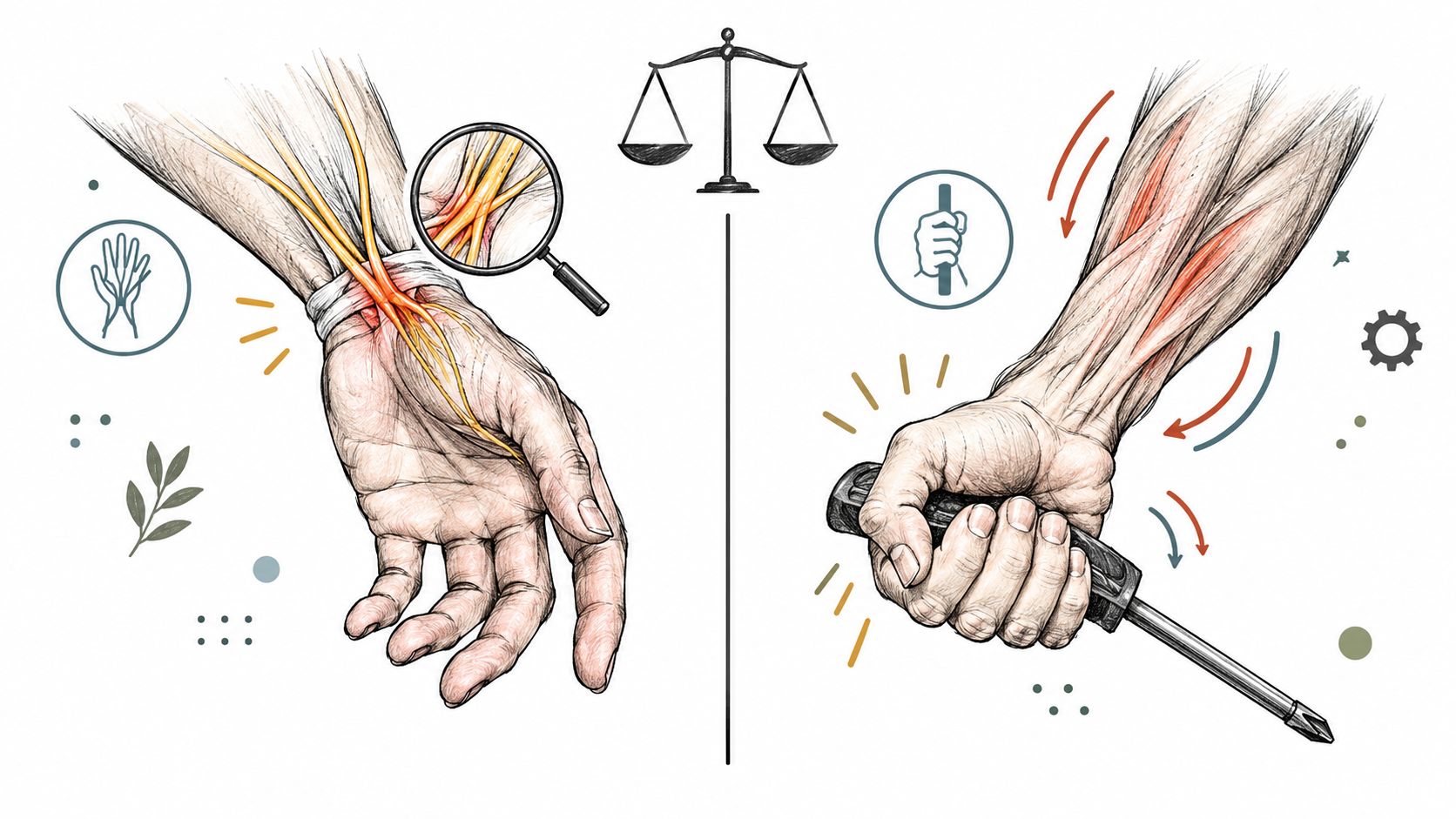
You wake with tingling in your thumb and first two fingers after a long night of data entry. Or perhaps you're a dental hygienist who finishes a shift with a dull forearm ache, stiff fingers, and a hand that feels tired rather than numb. The immediate question is usually the same: is this carpal tunnel syndrome, repetitive strain injury, or ordinary muscle soreness?
The labels are often used interchangeably, but they don't mean the same thing. Carpal tunnel syndrome is one specific nerve entrapment. RSI is a broad umbrella term for injuries caused by repeated movement or force over time. Getting that distinction right matters because a night wrist splint may help a compressed median nerve, while an irritated forearm tendon may need load reduction, progressive exercise, and a different form of support.
Wrist and hand complaints are easy to mislabel. A person may describe any pain from typing as “carpal tunnel,” while a workplace conversation may call every repetitive-use problem “RSI.” Both shortcuts can delay the right assessment.
The first step is to identify what the symptom feels like, where it travels, and when it appears. Numbness that wakes you at night and affects the thumb, index finger, and middle finger points toward a median-nerve problem. An ache across the forearm that builds during gripping, mouse use, lifting, or sustained posture fits a broader overuse pattern more closely.
Practical rule: Pain describes an experience. It doesn't identify the injured tissue.
RSI isn't a single diagnosis. It can involve muscles, tendons, nerves, or joints, and it may reflect cumulative loading rather than one dramatic injury. The CDC explanation of repetitive strain injuries in adults describes RSI as an umbrella term for injuries caused by repeated movement or force over time. In that report, 9% of adults reported an RSI during the prior three months, and 44% of those cases limited usual activities for at least 24 hours.
Carpal tunnel syndrome has a narrower meaning. It occurs when the median nerve is compressed as it passes through the carpal tunnel at the wrist. That compression can produce a recognizable sensory pattern, although symptoms may overlap with tendon irritation, neck-related nerve symptoms, arthritis, and other causes of hand pain.
A generic wrist brace isn't automatically the right answer. If the problem is in the forearm extensor tendons, restricting the wrist without changing the provoking task may leave the main driver untouched. If the median nerve is being compressed during sleep, however, keeping the wrist in a neutral position at night may be a reasonable conservative measure while you arrange an evaluation.
Timing offers another useful clue. Symptoms that build with a particular task and ease after rest often suggest load-sensitive muscle or tendon irritation. Symptoms that appear during sleep, on waking, or while holding a phone may deserve a focused nerve assessment.
Multiple conditions can coexist. A person may have diffuse forearm overload and median-nerve irritation at the same time, which creates the diagnostic gray zone that symptom checklists rarely explain well.
Repetitive strain injury is a category, not a diagnosis. It describes upper-limb problems associated with cumulative microtrauma, repeated movement, sustained postures, forceful gripping, vibration, or inadequate recovery. The category may include tendinopathies such as lateral elbow tendon irritation, tenosynovitis such as De Quervain's, and myofascial pain affecting muscles and surrounding tissues.
Clinicians may also use terms such as cumulative trauma disorder or work-related musculoskeletal disorder for related overuse patterns. These labels describe the context, not one specific structure. An assessment must still identify whether the main problem involves a tendon, muscle, joint, nerve, or several tissues together. A broader explanation of how repeated loading affects muscle, tendon, and other tissues appears in this overview of soft-tissue damage.
Carpal tunnel syndrome has a narrower definition. It is a focal median neuropathy at the wrist, caused by pressure on the median nerve beneath the transverse carpal ligament. Symptoms classically affect the thumb, index finger, middle finger, and thumb-side half of the ring finger. With progression, weakness may impair thumb function and grip.
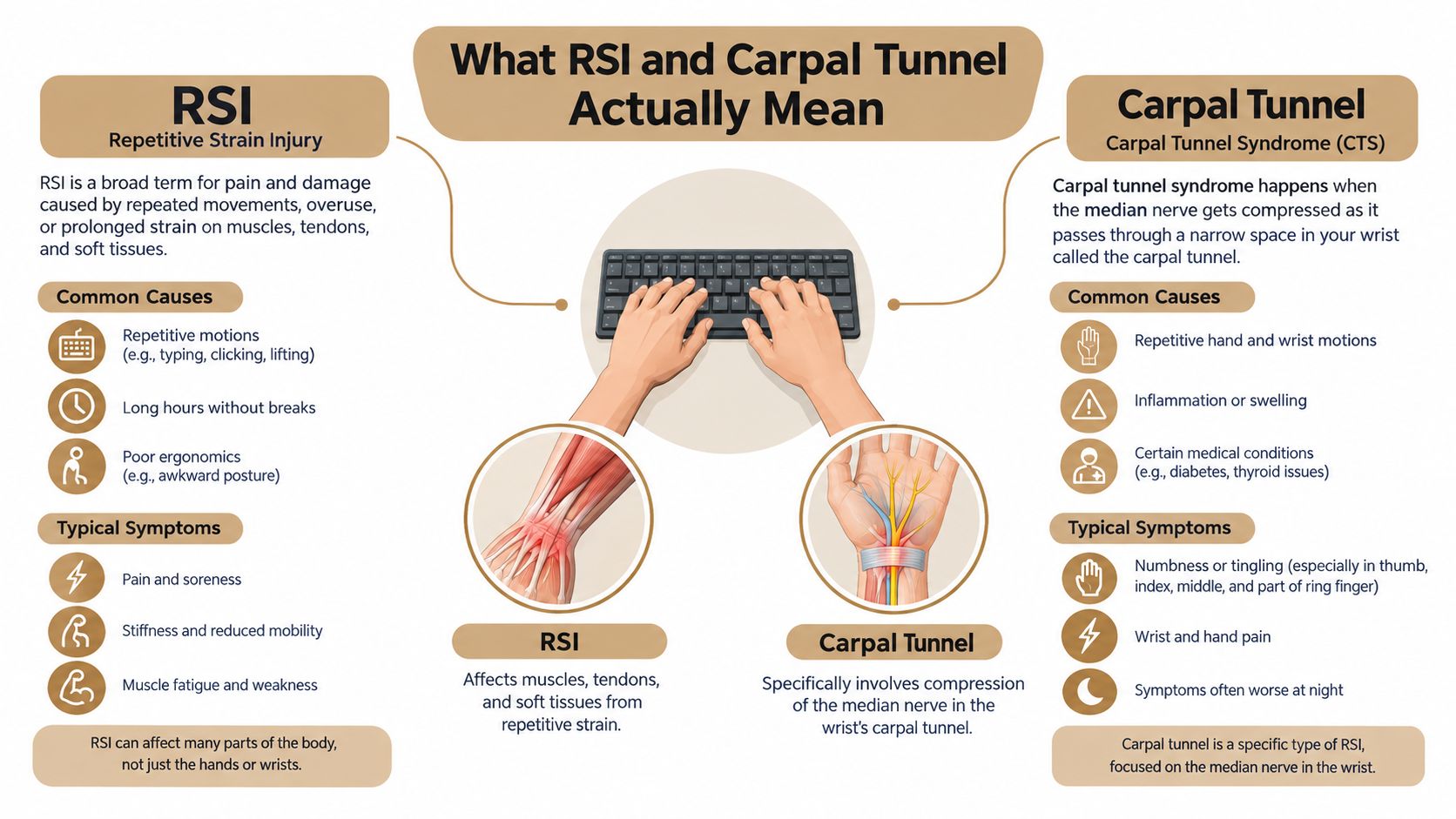
RSI covers many work-related and activity-related tissue problems, so its scope is broader than CTS. CTS has a defined clinical pattern and is among the most common peripheral nerve entrapment disorders. Major clinical references place adult CTS prevalence around 3% to 6%, while some pooled reviews cite a global estimate near 14.4%, depending on the population and diagnostic definition. The clinical reference on carpal tunnel syndrome reports a 6.7% lifetime prevalence of clinician-diagnosed CTS among current or recent U.S. workers, a 3.1% 12-month prevalence, and about 4.8 million workers with current CTS.
These figures cannot diagnose an individual. They do show why CTS should receive specific attention instead of serving as a substitute for every repetitive-use complaint.
Use this model: RSI is the forest, and carpal tunnel syndrome is one specific tree. “Carpal tunnel vs RSI” is therefore not always an either-or question. Someone may have a defined nerve entrapment, a nonspecific overuse problem, or both. That overlap is the diagnostic gray zone, and a symptom label alone cannot resolve it.
The most useful comparison starts with distribution rather than pain intensity. A severe ache doesn't automatically mean CTS, and mild tingling doesn't automatically mean a harmless overuse problem. Look at the symptom map and the trigger.
| Feature | Carpal Tunnel (CTS) | RSI / Overuse |
|---|---|---|
| Main problem | Compression of the median nerve at the wrist | Cumulative irritation or overload affecting muscles, tendons, nerves, or joints |
| Common drivers | Crowding in the carpal tunnel, fluid retention during pregnancy, hypothyroidism, diabetes, rheumatoid arthritis, or wrist trauma | Repeated low-load tasks, sustained awkward posture, vibration, forceful gripping, and inadequate recovery |
| Typical sensation | Numbness, tingling, or altered sensation in the thumb, index, middle, and thumb-side half of the ring finger | Aching, burning, stiffness, fatigue, or tenderness in the hand, wrist, forearm, or related muscles and tendons |
| Timing | Often worse at night or during positions that keep the wrist bent | Usually builds during or after the provoking activity and may ease with rest |
| Motor signs | Thumb weakness, reduced grip, or later thenar muscle wasting | Weakness may reflect pain inhibition, fatigue, or local tissue irritation |
| Useful clue | Shaking or changing hand position may temporarily relieve symptoms | Changing the task, reducing load, or resting often changes symptoms |
| Confirmation | Nerve conduction studies, electromyography when appropriate, or ultrasound measurement of the median nerve | Primarily a clinical assessment based on pattern, exposure, examination, and exclusion of other causes |
CTS can arise without one obvious workplace cause. Anything that increases pressure inside the carpal tunnel may contribute, including systemic conditions and acute injury. Work can aggravate the condition, but repetitive keyboard use isn't proof that the median nerve is the source.
RSI, by contrast, often follows a clear relationship with workload. A salon worker may develop wrist and forearm aching after repeated gripping. A warehouse worker may feel pain after high-force handling. A desk worker may notice stiffness after sustained mouse use or awkward shoulder and wrist positioning.
The median nerve supplies sensation to the thumb, index finger, middle finger, and part of the ring finger. Symptoms limited to the radial, or thumb-side, half of the ring finger support a median-nerve pattern more than diffuse overuse. Symptoms affecting the little finger, the whole hand, or a broad area of the forearm require a wider differential.
Don't overinterpret the map, though. Sensory descriptions can be imprecise, especially when symptoms are mild or several tissues are irritated. That's why persistent numbness, weakness, or night waking deserves more than a self-applied label.
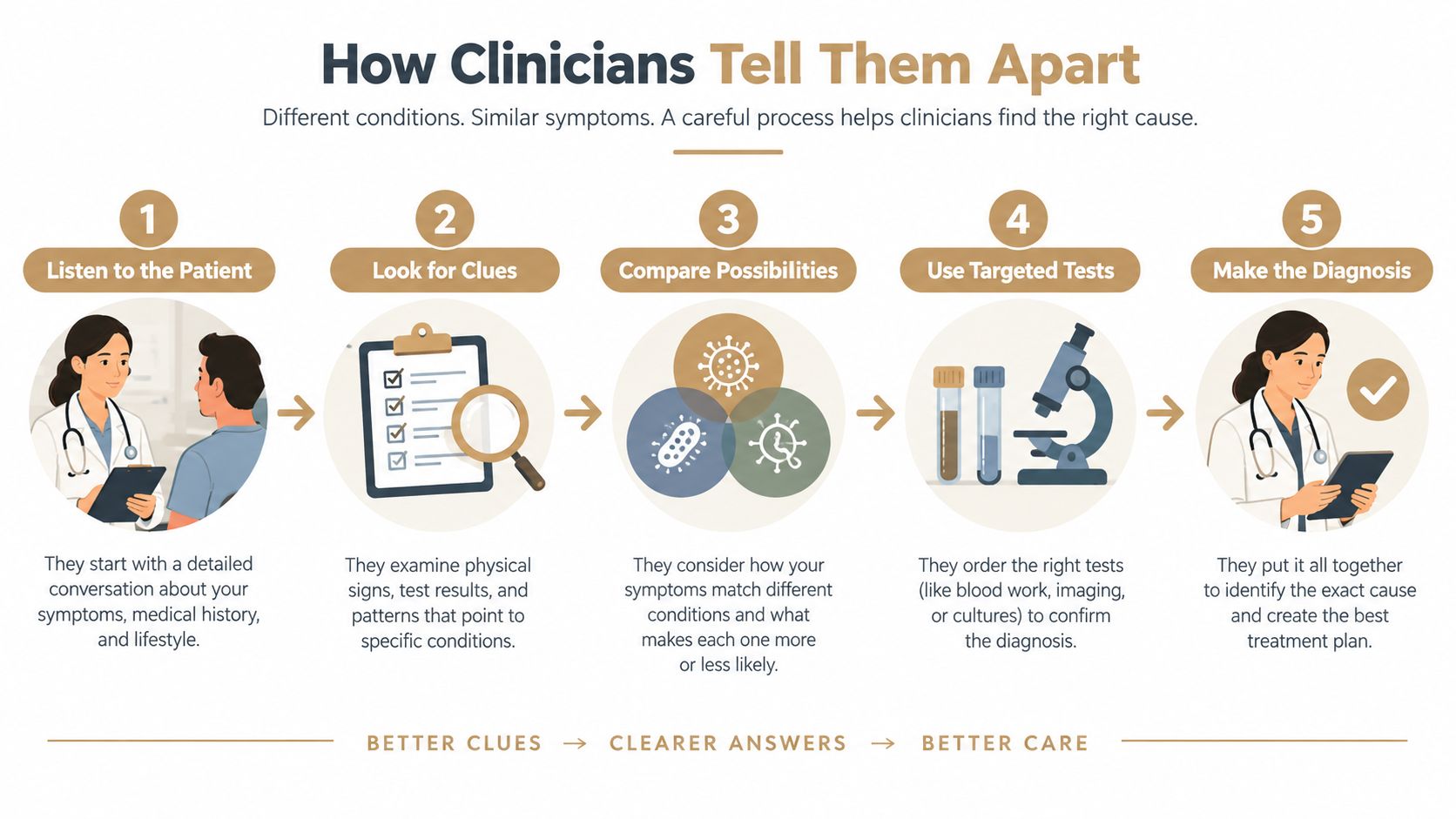
A useful evaluation begins with questions, not gadgets. The clinician asks when symptoms started, whether they wake you, which fingers are affected, what tasks provoke them, whether there was an injury, and whether symptoms travel from the neck or elbow. Work demands, hobbies, vibration exposure, and medical conditions such as diabetes or thyroid disease also matter.
The physical examination then tests the suspected structures. Tinel's maneuver involves tapping over the median nerve at the wrist to see whether it reproduces tingling. Phalen's test holds the wrists in flexion, while Durkan's test applies direct compression over the carpal tunnel. These maneuvers can support a clinical impression, but none should be treated as a stand-alone diagnosis.
Electrodiagnostic testing is the key benchmark when the pattern suggests CTS but the diagnosis remains uncertain. Nerve conduction studies assess how quickly and reliably electrical signals travel through the median nerve. Electromyography can help evaluate muscle involvement and distinguish wrist-level compression from other nerve or root problems.
The CDC identifies nerve conduction studies as the gold standard and reports sensitivity of about 90% to 95%, while cautioning that testing can be falsely negative when performed before 4 to 6 weeks after symptoms begin. An AAFP review of carpal tunnel diagnosis reports sensitivity ranging from 56% to 85% and specificity from 94% to 99%. It also notes that normal results can occur in up to one-third of mild CTS cases.
That gray zone is real. A normal study doesn't automatically invalidate the person's symptoms, especially when the clinical pattern is convincing. A review of suspected CTS cases found that 13% to 27% may have normal nerve conduction studies, which is why clinicians must interpret results alongside the history and examination.
Ultrasound measures the median nerve's cross-sectional area at the carpal inlet. The cited AAFP review reports that an area of at least 9 mm² is 87.3% sensitive and 83.3% specific for CTS when interpreted in the right clinical context. A more recent narrative review describes about 10 mm² as generally supportive when the symptoms fit.
A complete differential may also screen for cervical radiculopathy, thoracic outlet syndrome, elbow-level nerve irritation, joint disease, and systemic contributors. If the symptoms are diffuse and activity-linked without a consistent nerve distribution, the clinician may focus on load management and musculoskeletal examination rather than treating presumed CTS.
For practical discussion of nerve-related symptoms and conservative options, review this guide to nerve pain management.
Treatment should follow the tissue pattern. Treating every hand complaint as CTS leads to unnecessary restriction, while dismissing median-nerve symptoms as ordinary overuse can allow weakness or sensory loss to progress.
Start with the least invasive measures that address wrist position and exposure:
RSI care starts by identifying the task that keeps exceeding tissue tolerance. Reduce the provoking load, reorganize the work cycle, and restore capacity gradually rather than stopping all movement indefinitely.
A useful plan may include shorter exposure periods, planned recovery, progressive forearm extensor strengthening, scapular stabilization, and manual therapy for myofascial trigger points. The exercise dose should match irritability. A person with a painful tendon usually needs graded loading, not random wrist stretches performed until symptoms flare.
Both tracks can include ergonomic correction, clinician-guided anti-inflammatory medication use when appropriate, and a short course of occupational or physical therapy. Aspen Falls Wellness offers conservative services that may be relevant to musculoskeletal and nerve-related complaints, including chiropractic adjustment, massage therapy, acupuncture, mobility therapy, rehabilitation exercise, MLS Laser Therapy, SoftWave Therapy, and individualized exercise plans. These options don't replace nerve testing or surgical evaluation when those are indicated.
| Care Stage | Carpal Tunnel (CTS) | Diffuse RSI |
|---|---|---|
| First priority | Neutral wrist position, night splinting, and exposure changes | Identify the provoking task and reduce cumulative load |
| Exercise focus | Carefully prescribed nerve and tendon glides, then progressive hand conditioning | Graded strengthening for forearm, hand, shoulder, and postural muscles |
| Manual care | May support surrounding mobility and symptom relief, but doesn't remove nerve compression by itself | Can address muscle guarding, myofascial sensitivity, and movement restrictions |
| Escalation | Injection, electrodiagnostic review, or surgical consultation when weakness or persistent compression is present | Broader assessment, imaging, or specialist referral when symptoms fail to follow a load-related pattern |
| Avoid | Using a brace as the only treatment while numbness or weakness progresses | Resting completely for prolonged periods without rebuilding capacity |
Prompt referral is appropriate for visible thenar wasting, rapidly increasing weakness, significant loss of sensation, symptoms after serious trauma, or a pattern suggesting a neck or systemic disorder.
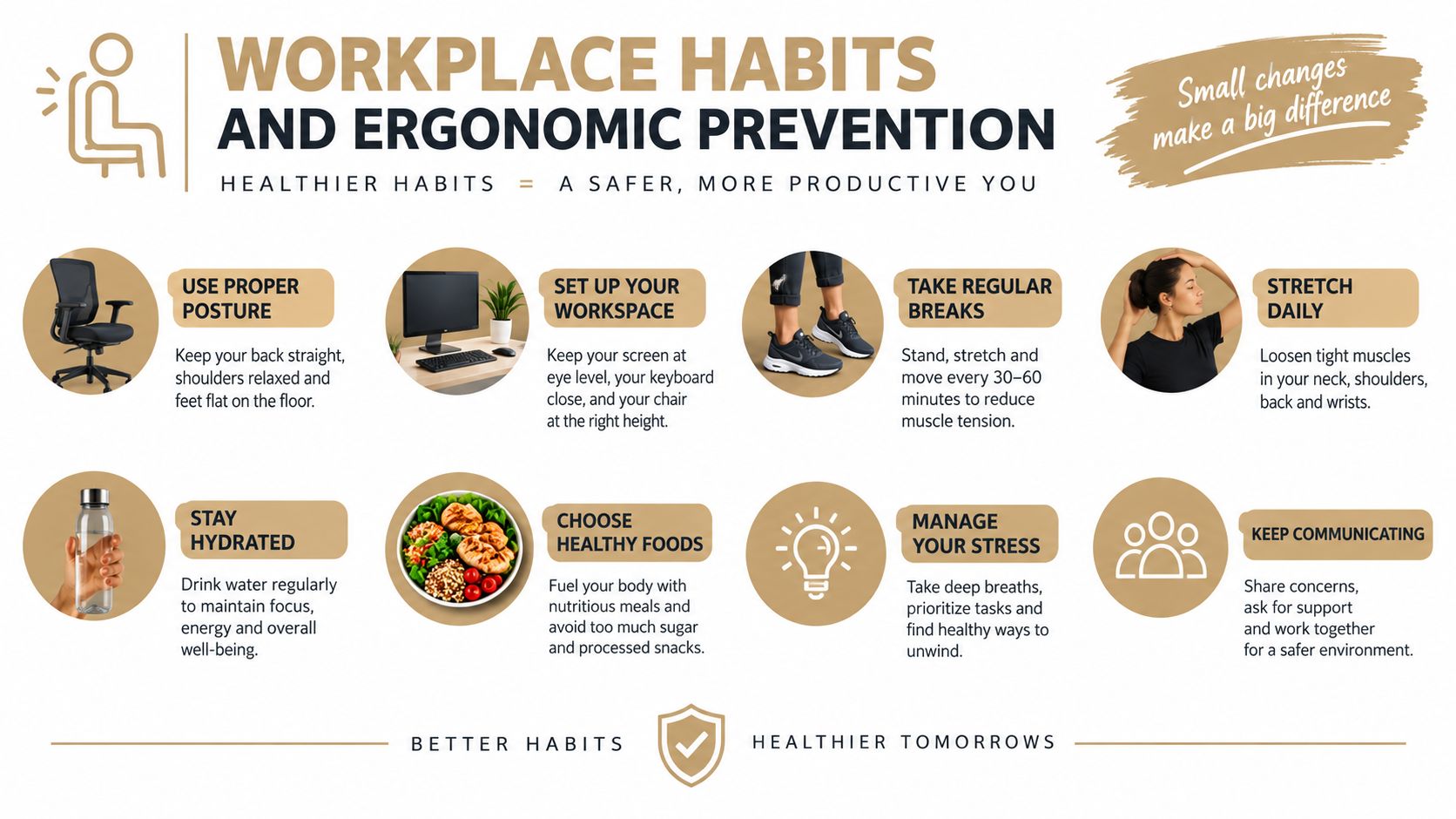
Ergonomics should reduce unnecessary load, not promise to cure an established nerve entrapment. Set the keyboard and pointing device so your wrists can stay near neutral, your elbows remain comfortably supported, and your shoulders stay relaxed. A padded wrist rest, split keyboard, or vertical mouse may help some people, but only if the equipment improves position without creating new pressure or forcing a different awkward movement.
Chair and monitor setup matter upstream. Support your back, place the monitor so you aren't repeatedly bending the neck, and let the shoulders drop rather than hovering them toward the ears. Forearm tension often rises when the shoulder girdle and neck remain braced for hours.
Use brief microbreaks at roughly 20 to 30 minute intervals. During those pauses, move the fingers, gently stretch the wrist flexors and extensors, relax the jaw and shoulders, and change cervical posture. The break should interrupt the exposure, not become another forceful exercise session.
For physical work, reduce grip force whenever the tool or task allows it. Alternate hands when safe, vary the height and direction of work, use handles that don't require excessive squeezing, and avoid holding the wrist at its end range while applying force. These changes apply to dental, salon, trade, assembly, warehouse, and computer-based work.
A practical ergonomics guide for teams can help supervisors and employees review workstation and task design together. The strongest workplace plan combines equipment changes with conditioning and workload management. No gadget substitutes for evaluating persistent numbness or weakness.
For structured movement and strengthening guidance, see this resource on therapeutic exercise.
Don't wait indefinitely when symptoms have a nerve pattern. Persistent night numbness in the thumb, index, and middle fingers, grip weakness that causes dropped objects, symptoms lasting beyond two weeks despite activity changes, or visible wasting at the base of the thumb all justify clinical evaluation.
The reason is straightforward. Mild overload may improve after exposure is reduced, but ongoing nerve compression can produce sensory and motor changes that need a more focused plan. A clinician should also assess symptoms that spread beyond the expected distribution, follow an injury, involve both hands suddenly, or accompany neck symptoms, marked weakness, or other concerning changes.
At Aspen Falls Wellness in Salt Lake City and Sandy, the evaluation pathway can include a focused history, orthopedic and neurologic testing, and referral for nerve conduction studies when indicated. Conservative care may include splinting guidance, manual therapy, loading exercises, mobility therapy, rehabilitation exercise, and structured ergonomic coaching. The practice also offers services such as chiropractic care, chiropractic adjustment, massage therapy, acupuncture, SoftWave Therapy, MLS Laser Therapy, Muscle Stimulation, Pain Relief programs, Personal Exercise Plans, Nutrition and Nutrition Counseling, and other individualized musculoskeletal care.
Some services are designed for different problems. Spinal Decompression with the DRX 9000, decompression, realignment, and sciatica treatment are directed toward spine-related conditions rather than serving as a substitute for a carpal tunnel workup. When conservative care plateaus, the next step may be a referral for injection, imaging, specialist assessment, or surgical consultation.
The practical distinction is clear. RSI describes a broad overuse category, while CTS identifies median-nerve compression at the wrist. If your symptoms are diffuse and task-related, start with load management and rehabilitation. If numbness follows the median-nerve pattern, wakes you, or comes with weakness, schedule an evaluation instead of guessing.
Aspen Falls Wellness provides focused musculoskeletal evaluation and conservative care for hand, wrist, nerve, and overuse complaints, with exercise planning, mobility therapy, manual treatment, and referral coordination when needed. Visit Aspen Falls Wellness to request an evaluation in Salt Lake City or Sandy and get a care plan matched to your symptoms.

Stay updated with the latest chiropractic news and exclusive offers.