Explore cervical stenosis treatment options from conservative care to surgery. Compare therapies, outcomes, and when each approach fits your symptoms.
A stiff neck that comes and goes can feel harmless until your hand starts missing buttons, your grip becomes unreliable, or your feet feel less steady on stairs. That change matters. Cervical stenosis treatment options depend less on pain intensity than on what the spinal cord and nerve roots are doing.
The practical decision is whether your symptoms are mild and stable, moderate with measurable neurologic changes, or severe and progressing. Conservative care can be appropriate, often effective, and financially meaningful for many adults. But when weakness, gait dysfunction, or other signs of spinal cord involvement appear, continuing the same routine without a surgical opinion can be a serious mistake.
A 58-year-old former runner described two years of intermittent neck stiffness. It never seemed dramatic. Some mornings were worse than others, and over-the-counter medication usually made the discomfort manageable. Then he began dropping coffee cups, struggling to button shirts, and feeling unsteady when walking across uneven ground.
He initially blamed aging and a few difficult nights of sleep. A primary care visit focused on neck pain, so the sensory changes and hand clumsiness didn't receive much attention. That pattern is common in cervical stenosis. The condition may progress through subtle sensory drift, reduced dexterity, and balance changes before pain becomes severe.
A person with intense neck pain may have irritation of a nerve root without spinal cord injury. Another person may report modest pain but show hyperreflexia, hand dysfunction, or gait disturbance. The second presentation demands more urgency because the spinal cord can lose function even when pain isn't the dominant complaint.
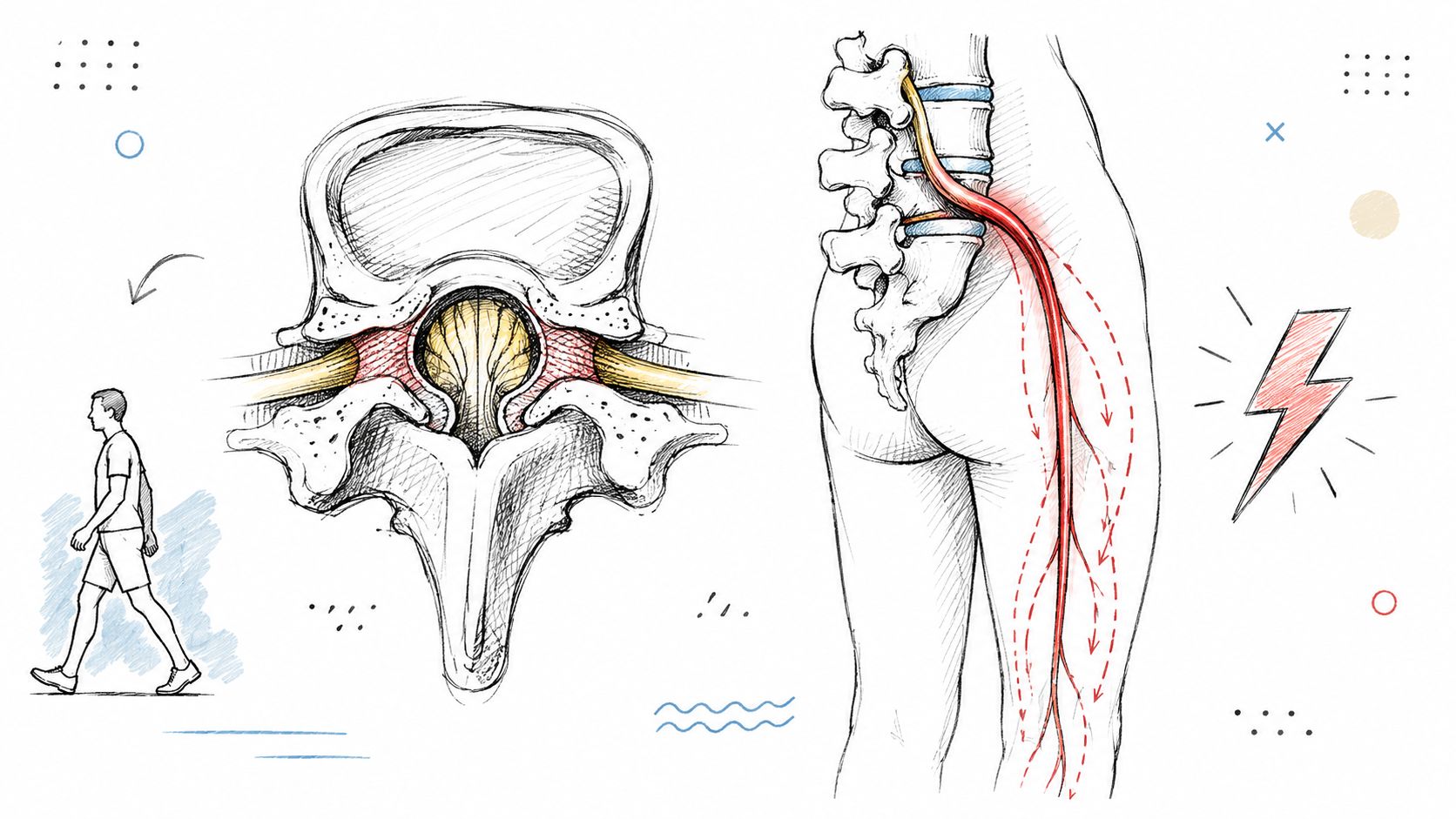
Cervical stenosis means the spinal canal or nerve exit spaces have narrowed. The narrowing can affect nerve roots, the spinal cord, or both. Symptoms may include neck pain, arm pain, numbness, weakness, clumsiness, and difficulty walking.
Clinical rule: A change in hand control or walking deserves a neurologic examination, even when the neck itself doesn't hurt much.
A neck injury can also complicate workers' compensation claims, particularly when symptoms affect job duties, lifting, driving, or fine motor work. Readers dealing with that situation may find this overview of Scher Bassett Hames workers comp useful for understanding the broader documentation and legal context.
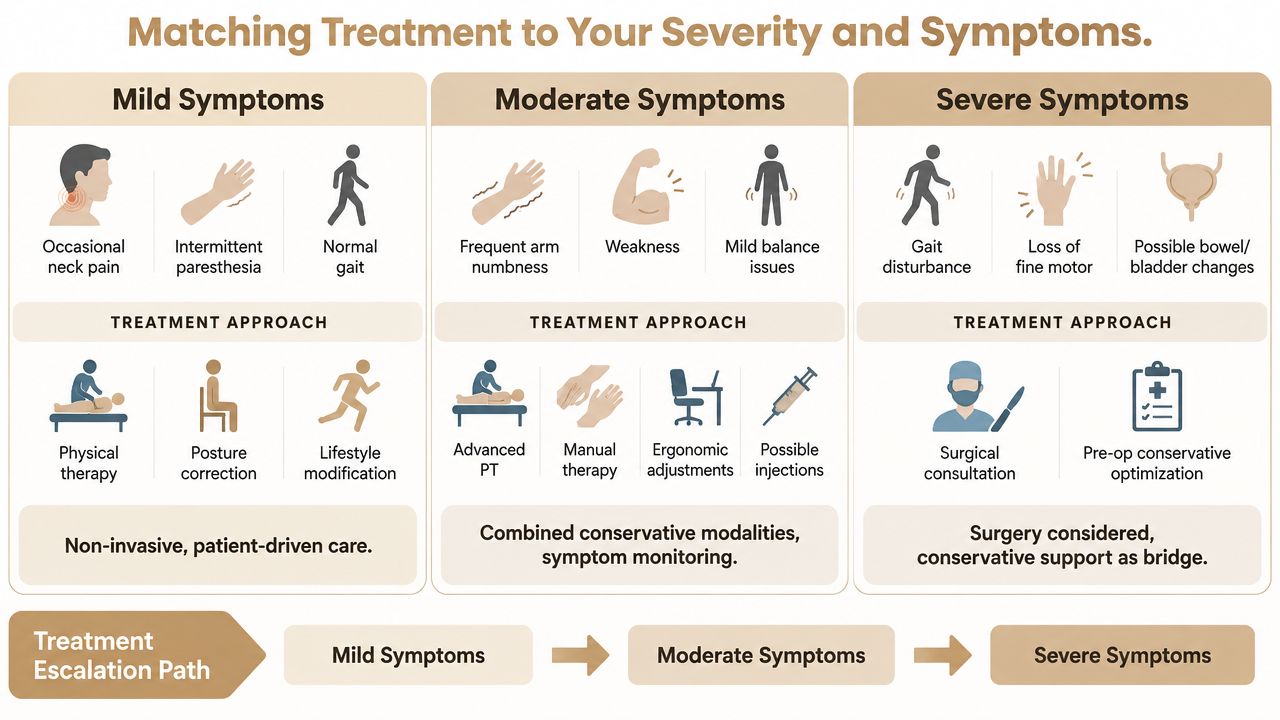
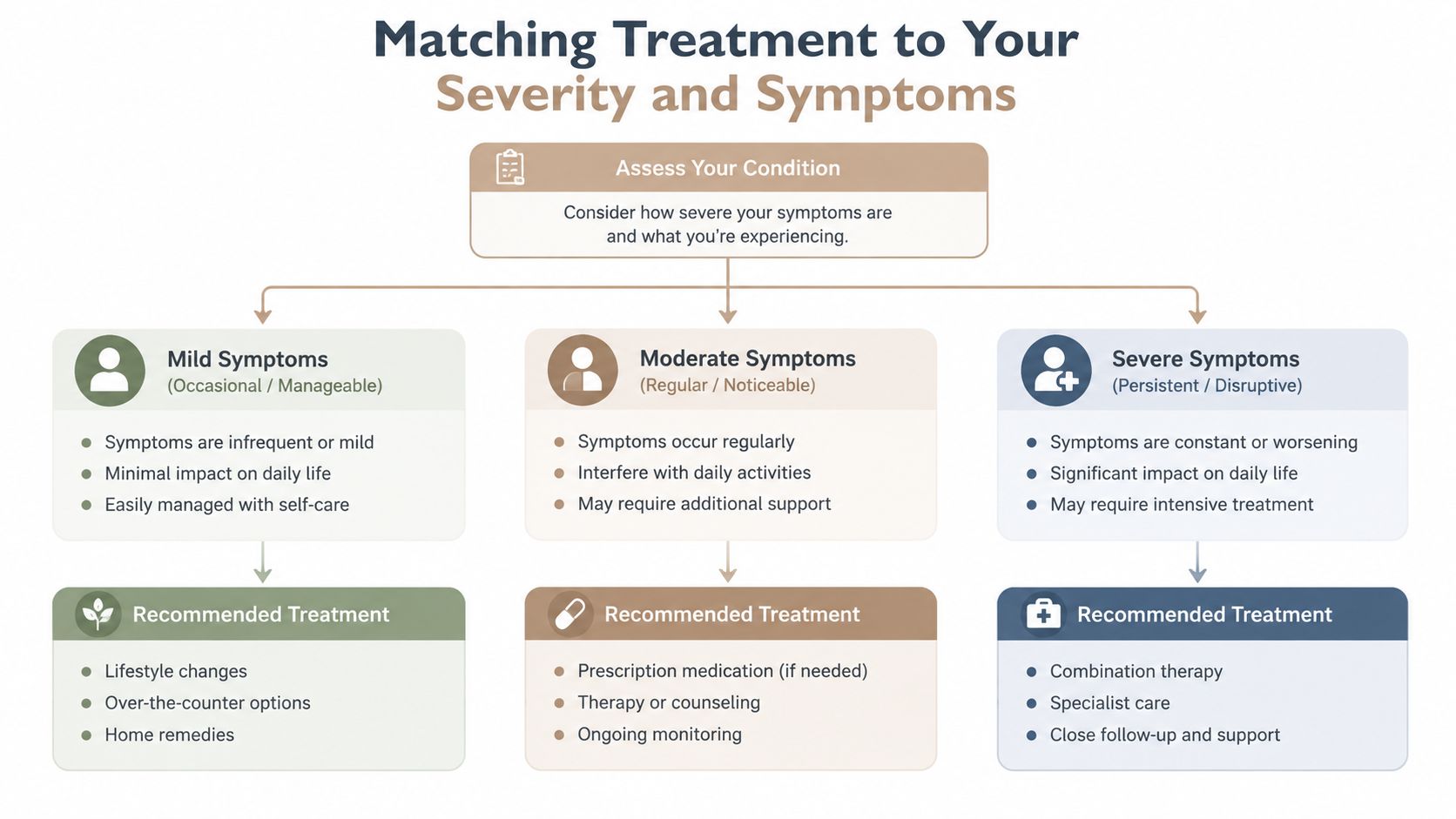
The right treatment starts with a severity assessment. Conservative care is usually reasonable for mild, stable symptoms. Moderate findings call for structured rehabilitation and closer monitoring, often alongside a surgical consultation. Progressive myelopathy changes the conversation entirely.
Cervical stenosis is a narrowing of the spinal canal or neural foramina in the neck. The canal houses the spinal cord, while the foramina are openings through which nerve roots exit. Some people have a congenitally narrow canal. Others develop narrowing through disc changes, arthritis, thickened ligaments, or bone overgrowth. Degenerative narrowing commonly affects the lower cervical levels, including the C4 through C7 region.
MRI helps show whether the cord is compressed and whether there is cord signal change. Clinicians also assess the canal, with a diameter under 10 mm treated as a significant anatomic concern in the appropriate clinical context. Imaging alone doesn't determine treatment. The examination and symptom trajectory carry equal or greater weight.
Neck irritation can also refer pain toward the head, although headache symptoms require their own assessment. A plain-language resource on neck tension and migraine may help readers distinguish neck-related symptoms from a primary headache disorder.
The key distinction is not “stenosis” versus “no stenosis.” It is stable nerve irritation, early cord dysfunction, or progressive cord dysfunction. That classification determines how much time conservative care deserves.
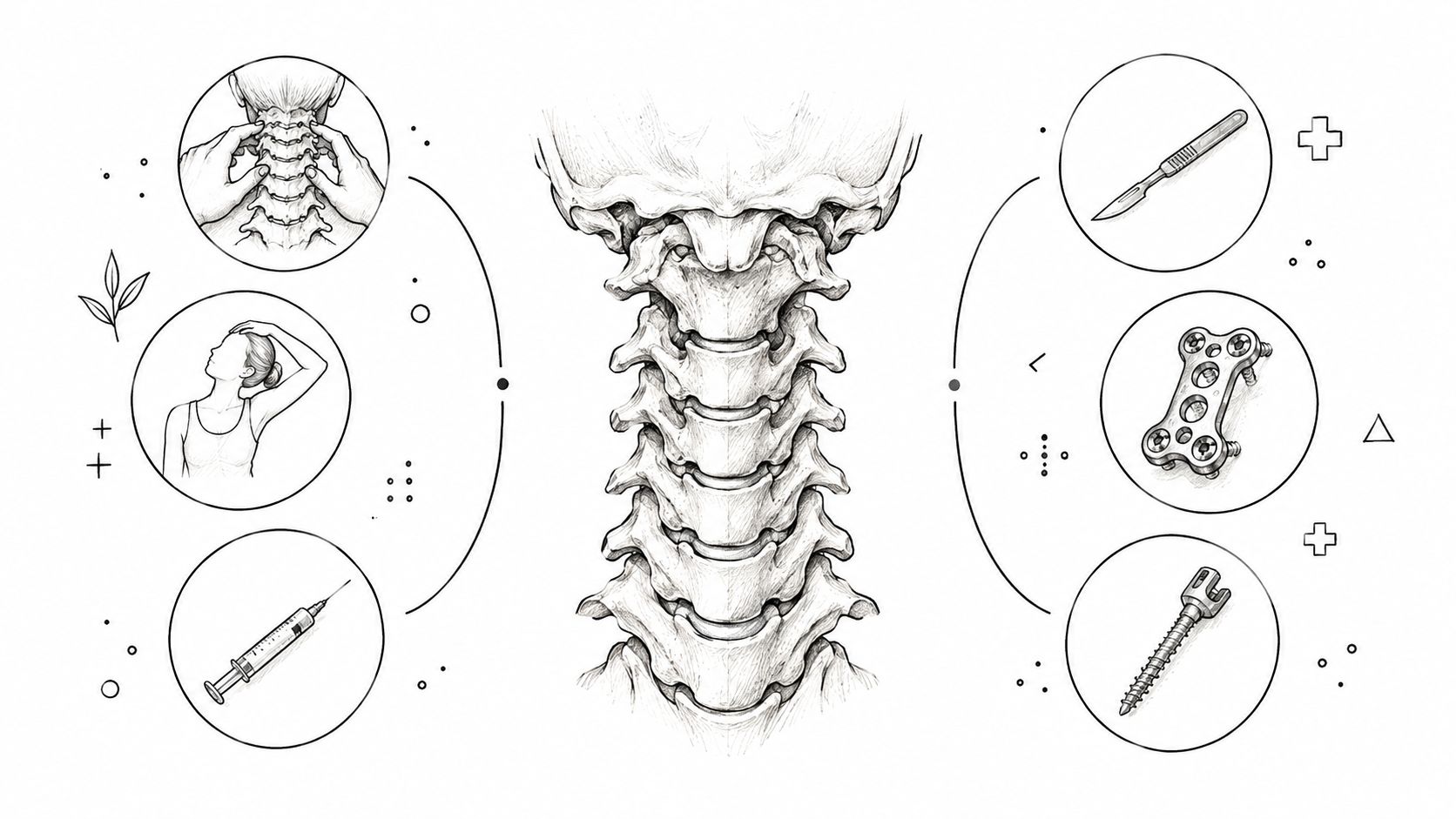
Conservative care is the first-line pathway for many adults with degenerative cervical stenosis, especially when symptoms are mild and there is no progressive neurologic deficit. In a retrospective analysis of 90,037 patients, 83,384 people, or 92.6%, were successfully treated without surgery, while 6,653, or 7.4%, ultimately required ACDF after nonoperative care failed (study details).
That doesn't mean every treatment works for every patient. Each modality has a defined job, and none reliably reverses established spinal cord damage. The best plan matches the therapy to the symptom pattern.
| Treatment | Mechanism | Best Symptom Match | Typical Course |
|---|---|---|---|
| Chiropractic adjustment | Gentle mobilization and low-velocity techniques can improve joint motion and reduce mechanical irritation | Axial neck pain and restricted mobility without myelopathy | Short monitored trial with frequent reassessment |
| Physical therapy | Cervical stabilization, scapular strengthening, posture correction, mobility work, and neurodynamic glides improve movement control | Neck pain, radiculopathy, postural strain, and deconditioning | Progressive supervised program with home exercise |
| Spinal decompression with the DRX 9000 | Intermittent traction may reduce loading and target disc-related or foraminal symptoms | Disc-driven neck pain and selected radicular patterns | Repeated sessions paired with active rehabilitation |
| Epidural steroid injection | Delivers medication near an irritated nerve root to reduce inflammatory pain | Radiating arm pain that limits rehabilitation | Targeted, time-limited intervention when clinically appropriate |
| MLS or SoftWave laser therapy | Photobiomodulation and tissue stimulation support symptom modulation in soft tissue | Myofascial pain, local tenderness, and inflammatory discomfort | Adjunctive sessions, not a replacement for exercise |
| Acupuncture or massage therapy | Acupuncture may modulate pain, while massage addresses muscle guarding and soft-tissue restriction | Myofascial referral, tension, and muscle-related discomfort | Adjunctive care selected around functional goals |
Chiropractic cervical adjustment deserves a clear boundary. Low-velocity mobilization may fit mild mechanical pain, but forceful manipulation isn't appropriate when moderate or severe myelopathy is present. The same principle applies to traction. It should be prescribed and monitored, not treated as an automatic solution.
For a more detailed overview of spinal decompression therapy, focus on how the modality fits into a broader plan rather than judging it as a stand-alone cure. The realistic ceiling for conservative treatment is improved pain, mobility, tolerance for activity, and function. It can't guarantee that a compressed spinal cord will remain stable.
Surgery becomes reasonable when neurologic function is worsening, conservative care has plateaued, or imaging and examination show clinically significant cord compression. It isn't a failure of rehabilitation. It is a decision to create more space for the cord or nerve roots when symptoms indicate that waiting carries more risk.
Anterior cervical discectomy and fusion, or ACDF, is commonly used for focal one- or two-level disease, particularly radiculopathy or anterior cord compression. The surgeon removes the disc and compressive material, then stabilizes the segment. Fusion can be highly effective, but it eliminates motion at the treated level and may increase mechanical demand on neighboring levels over time.
Cervical laminoplasty approaches the spine from behind and creates more room while preserving motion. It can suit multilevel compression when alignment and stability are favorable. It becomes less attractive in kyphosis or instability, where opening the posterior canal may not adequately address the mechanical problem.
Laminectomy with or without fusion removes the posterior bony covering to decompress a severely narrowed canal. Fusion may be added when instability or deformity is a concern. The operation can relieve cord pressure, but patients must understand the possibility of postoperative axial neck pain and C5 nerve palsy.
| Procedure | Best Indication | Fusion or Motion | Typical Recovery | Key Complication Risk | Reoperation Rate |
|---|---|---|---|---|---|
| ACDF | Focal anterior compression or radiculopathy | Fusion at treated level | Recovery progresses through staged activity and rehabilitation | Swallowing difficulty, hoarseness, hardware problems, adjacent-level stress | Depends on level, alignment, symptoms, and later degeneration |
| Laminoplasty | Multilevel posterior compression with suitable alignment | Preserves motion | Recovery depends on cord recovery and functional rehabilitation | Axial neck pain, residual compression, alignment concerns | Individualized |
| Laminectomy with or without fusion | Severe canal narrowing, especially with instability or deformity | May preserve or eliminate motion depending on fusion | Longer functional recovery when myelopathy is advanced | Axial pain, C5 palsy, instability, infection, or hardware issues | Individualized |
Older surgical data show both benefit and risk. In a 2002 series of 261 patients, 226 achieved fusion, an 86.6% fusion rate, and symptomatic improvement was reported in 99.2%. The same series reported dysphagia in 42 patients, hoarseness in 37 patients, and hardware failure in 14 patients, or 5.4% (outcome series).
Those figures aren't a promise for a modern individual, and they don't justify ignoring complications. Surgery is most compelling for progressive myelopathy, objective weakness, gait decline, or persistent cord dysfunction. It is less compelling when imaging looks narrow but the neurologic examination is normal and symptoms are stable.
Treatment should follow the neurologic tier, not the most alarming phrase on an MRI report. A radiology description of “severe narrowing” matters, but the examination tells you whether that narrowing is producing nerve or cord dysfunction.
Occasional neck pain, intermittent paresthesia, and a normal gait usually justify a conservative first step. That may include activity as tolerated, analgesics when medically appropriate, posture correction, mobility therapy, massage, and a supervised exercise plan emphasizing cervical and scapular control. If symptoms persist, imaging and specialist review become more useful.
Sustained arm symptoms, measurable weakness, early balance changes, or dexterity decline need more structure. Use physical therapy, carefully selected manual care, rehabilitation exercise, and targeted injection treatment when inflammation limits progress. A surgical consultation should run in parallel, not because surgery is automatic, but because early planning prevents a deteriorating patient from losing time.
Gait disturbance, hand clumsiness, hyperreflexia, worsening weakness, or bowel and bladder changes require prompt spine referral. For moderate or severe degenerative cervical myelopathy, guideline-based recommendations favor surgery, while prophylactic surgery generally isn't recommended for nonmyelopathic cord compression (clinical guideline review).
Better movement starts with safe movement. General guidance on better movement for health can support daily mobility, but it shouldn't replace a neurologic assessment when symptoms are progressing.
A useful conservative pathway is organized, measurable, and willing to change direction. The first visit should include a history, neurologic examination, functional assessment, and review of available imaging. The clinician then assigns a severity tier and identifies whether the dominant problem is axial pain, nerve-root irritation, muscle guarding, or cord dysfunction.
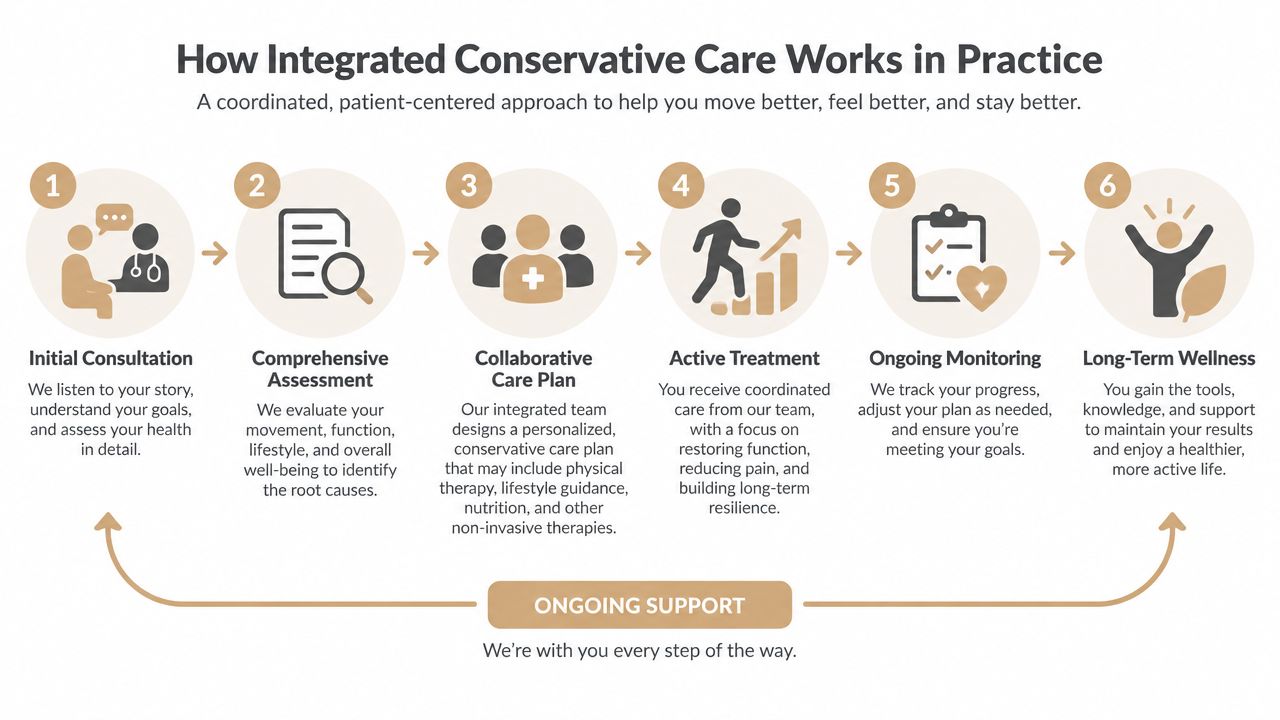
Physical therapy should build cervical control, scapular mechanics, thoracic mobility, and tolerance for daily tasks. Neurodynamic glides may help selected nerve-root symptoms, while a personalized home program keeps progress from depending entirely on clinic visits.
Spinal decompression, including treatment with the DRX 9000, may be considered when disc-related loading and foraminal symptoms fit the clinical picture. It works best as an adjunct to exercise and movement retraining, not as a passive replacement for either.
MLS Laser Therapy, SoftWave Therapy, massage therapy, acupuncture, and short-term medication can help reduce pain enough for a patient to participate in rehabilitation. An epidural injection may be considered when radiating arm pain remains too irritable for exercise, but it doesn't correct the underlying narrowing.
At Aspen Falls Wellness, available services include chiropractic care, spinal decompression with the DRX 9000, MLS Laser Therapy, massage therapy, acupuncture, mobility therapy, rehabilitation exercise, nutrition counseling, and personalized exercise plans. Those services can be coordinated around the person's symptoms and functional goals, with referral outside the clinic when neurologic findings require a spine specialist.
At each review, ask three questions:
If the patient is progressing, continue and gradually reduce passive care. If symptoms plateau, intensify the active program or obtain targeted consultation. If neurologic function worsens, stop treating conservative care as the endpoint. A structured stenosis treatment without surgery approach still needs clear escalation criteria.
Fragmented care creates avoidable confusion. One provider prescribes exercises, another performs injections, and a third applies manual treatment, but nobody compares the neurologic examination across visits. The patient may feel busy and treated while the most important question remains unanswered: is function improving or declining?
A coordinated model assigns one clinician or team responsibility for the full trajectory. The plan can combine manual therapy, exercise, decompression, laser, acupuncture, medication coordination, and referral while keeping the clinical record connected.
Outside referral is necessary with progressive myelopathy, bowel or bladder changes, sudden hand clumsiness, or worsening weakness. It is also appropriate when a defined 8 to 12 week conservative trial fails to produce meaningful improvement, provided the patient doesn't develop red flags sooner.
Practical standard: Conservative care should have a target, a time frame, and a documented reason to continue.
The structural advantages are straightforward. Shared notes preserve continuity of data, coordinated testing reduces redundant imaging, and a connected team can move the patient to a spine surgeon faster when decompression becomes appropriate. A multidisciplinary pain management approach is useful only when each treatment serves the same functional plan.
Can cervical stenosis stabilize without surgery?
Yes, some mild cases remain stable with nonoperative care. A review reports that nonoperative management can remain stable over 36 months in selected patients younger than 75 with mild cervical spondylotic myelopathy, and older guidance reports that about 70% of clinical gains from nonoperative treatment are maintained over 3 years (natural history guidance). Stability requires monitoring, not just feeling better.
When should I stop conservative care?
A fair trial commonly lasts 8 to 12 weeks when symptoms are mild or stable. Escalate sooner for weakness, gait change, worsening dexterity, or new reflex abnormalities. Increasing weakness, pain with functional decline, or inability to walk shifts the balance toward surgery (clinical guidance).
Is chiropractic adjustment safe with moderate stenosis?
Forceful cervical manipulation isn't appropriate when moderate or severe myelopathy is suspected. Gentle, condition-specific care may be considered only after a qualified clinician has assessed neurologic status and ruled out a reason to avoid it.
Will numbness recover?
Numbness caused by an irritated nerve may improve when compression and inflammation settle. Numbness from established spinal cord injury may persist, especially if decompression is delayed. No treatment can promise complete neurologic recovery.
When should I go to the emergency department?
Go urgently for sudden gait collapse, loss of bowel or bladder control, rapidly worsening hand weakness, or a sudden major decline in coordination. Don't schedule a routine adjustment first.
How long do surgical results last?
Decompression can provide durable relief, but no operation stops aging elsewhere in the spine. Future symptoms depend on the original disease, alignment, treated levels, adjacent segments, and the patient's neurologic recovery.
When should I book a spine appointment this week?
Book promptly if you're dropping objects, stumbling, losing hand coordination, developing measurable weakness, or noticing symptoms that are steadily progressing. Those findings deserve an examination, not more online research.
Aspen Falls Wellness can evaluate your neck symptoms, perform a neurologic and functional assessment, and build a coordinated non-surgical plan using rehabilitation, mobility therapy, chiropractic care, massage, acupuncture, MLS Laser Therapy, or DRX 9000 spinal decompression when appropriate. Visit Aspen Falls Wellness to schedule an assessment in Salt Lake City or Sandy and determine whether conservative care is appropriate or a spine referral should happen now.

Stay updated with the latest chiropractic news and exclusive offers.