A spinal decompression chiropractor explains how DRX9000 works, who it helps, what a treatment plan looks like, and when to consider it for disc pain.



You've tried resting, stretching, and over-the-counter medication, yet the ache in your lower back keeps returning. Maybe it now travels through your buttock and down your leg, making sitting, driving, or sleeping difficult. At that point, it's understandable to wonder whether you should book an MRI, see a surgeon, or search for a spinal decompression chiropractor.
Decompression can be useful for carefully selected disc-related problems, but it isn't a universal fix for every stiff or painful back. A responsible Salt Lake City clinic places it inside a broader conservative-care plan that may include examination, imaging review, chiropractic adjustment, mobility therapy, rehabilitation exercise, and a personal home program.
A typical patient doesn't arrive asking for a machine. They arrive because pain has outlasted their expectations. The back may have started hurting after lifting, sitting, a car accident, or no obvious event at all. Weeks later, the pain has settled into the buttock or leg, stretches have made it flare, and medication has offered only temporary relief.
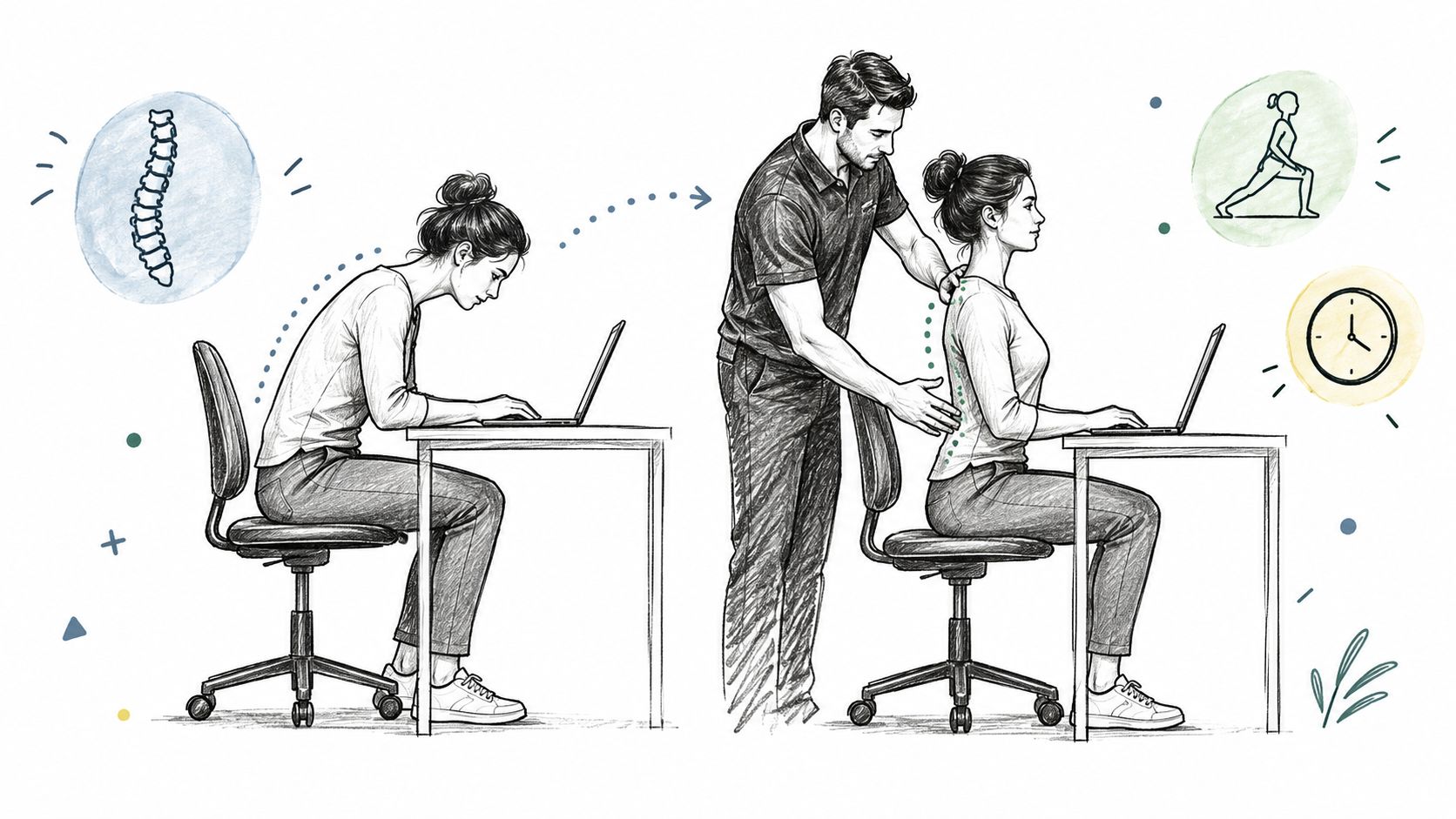
That pattern deserves an assessment before treatment begins. Leg pain, tingling, numbness, or weakness can suggest irritation of a nerve root, while localized soreness may come from muscles, joints, or other tissues. A chiropractic examination helps sort those possibilities through movement testing, neurologic checks, orthopedic tests, and a review of your medical history.
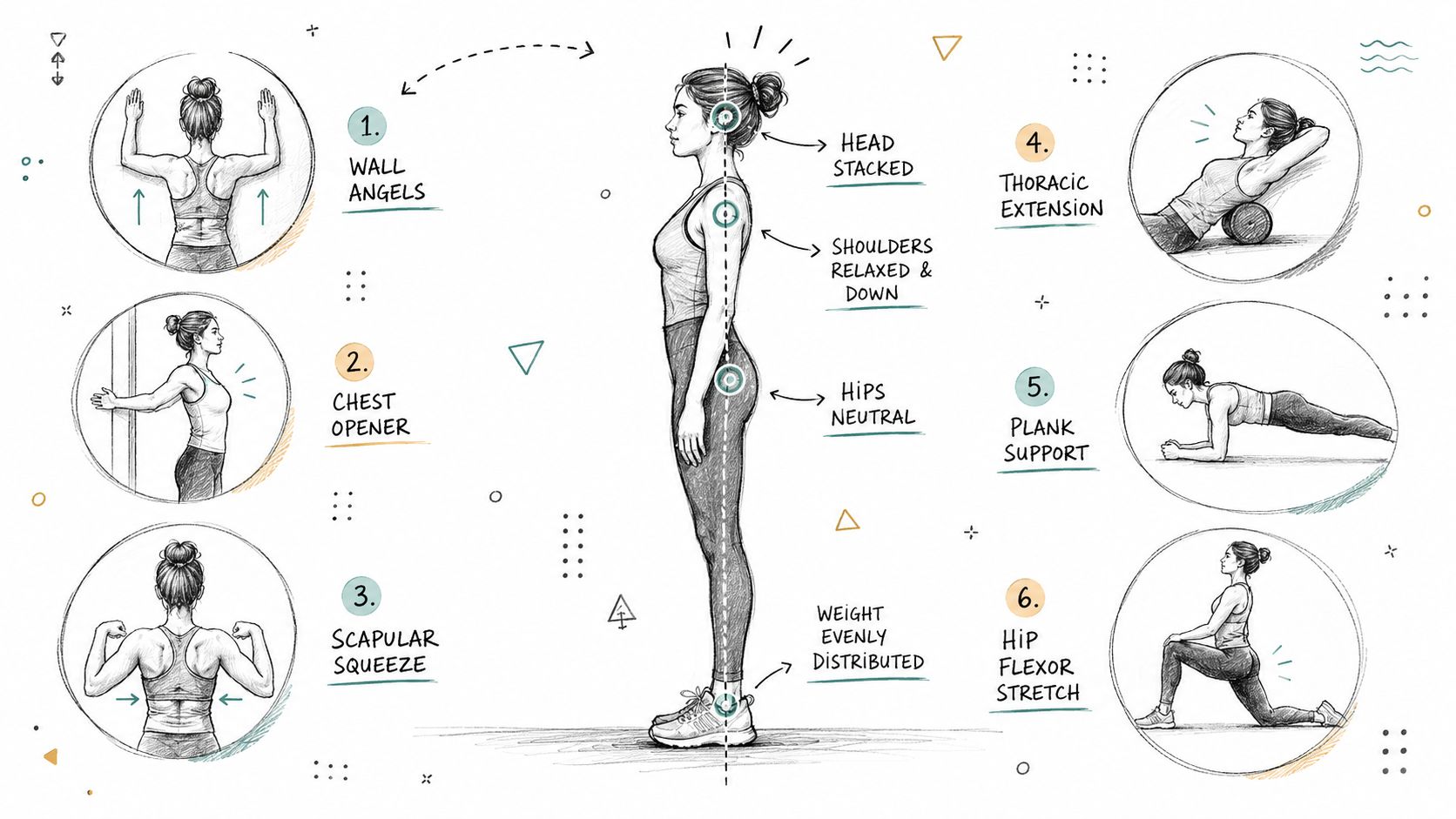
Conservative care usually follows a progression rather than jumping immediately to a device. Depending on the findings, an initial plan may involve activity modification, manual therapy, chiropractic adjustment, mobility work, and targeted exercise. Educational resources such as these evidence-based back exercises can help you understand why the right movement matters, although an exercise that helps one person may aggravate another.
Decompression generally earns consideration when simpler measures haven't produced durable improvement and the examination points toward disc-related nerve irritation. It shouldn't be presented as the first-line answer for every episode of axial low back pain.
Practical rule: The diagnosis should determine whether decompression belongs in the plan, not the availability of the table.
A consultation should also identify warning signs that require medical evaluation or referral. If symptoms are progressing, the safest next step may be imaging or a spine specialist rather than traction-based care. The purpose of the first visit is to decide what's appropriate, not to sell a predetermined series of sessions.
Think of a spinal disc as a water-rich cushion between two vertebrae. Repeated compression can squeeze fluid from the cushion and contribute to outward bulging, much like pressing a wet sponge. Controlled unloading allows the disc to experience a different mechanical environment, potentially reducing the pressure directed toward nearby nerve tissue.
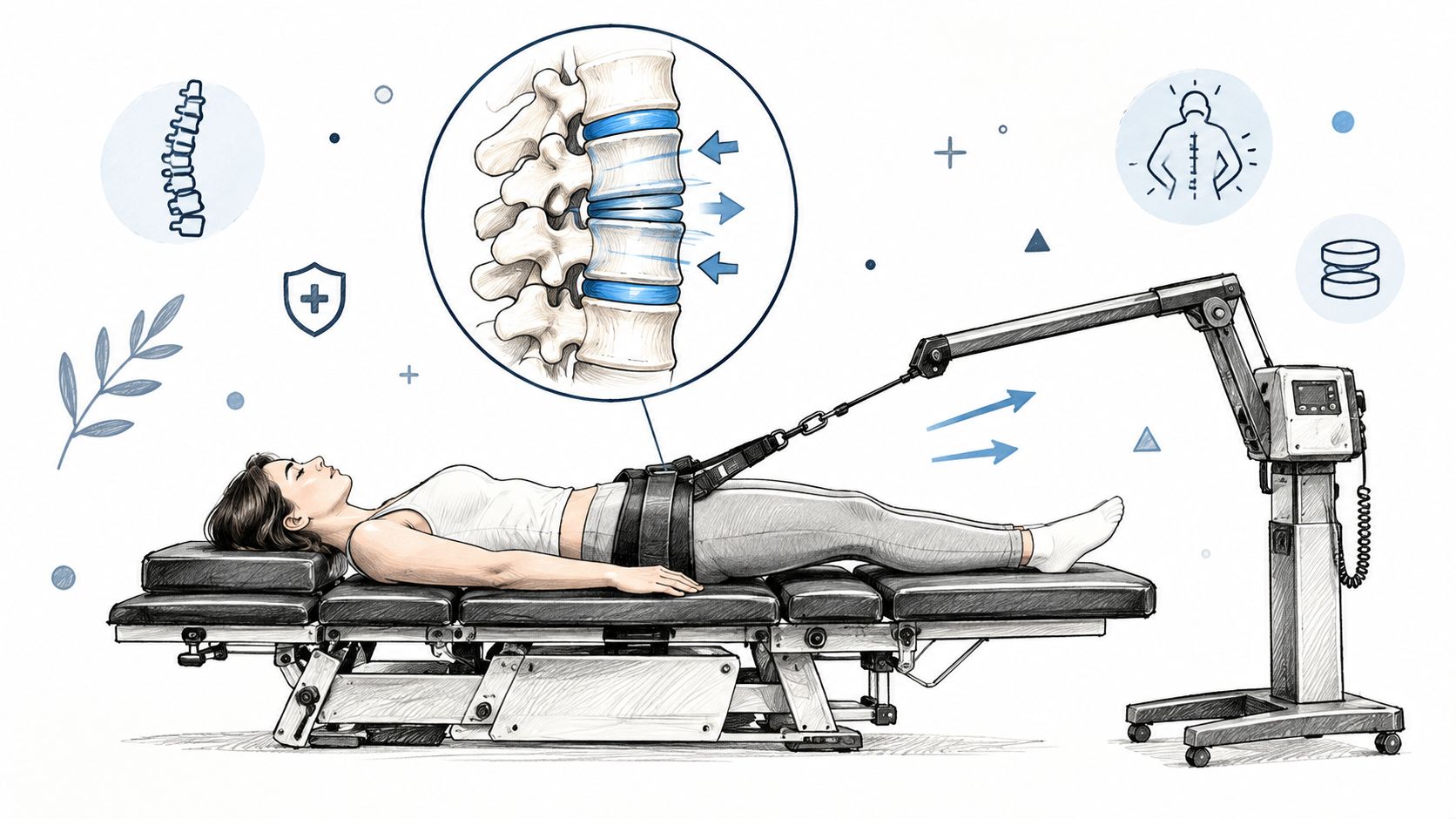
A motorized decompression session uses a harness and programmed cycles of pull, hold, and release. The intent is to isolate the targeted region and ramp force gradually, instead of applying one uninterrupted stretch. Older static traction approaches use a steadier pull, and the body may respond by guarding with muscle tension. A cycle-based system is designed to make the loading and unloading more tolerable.
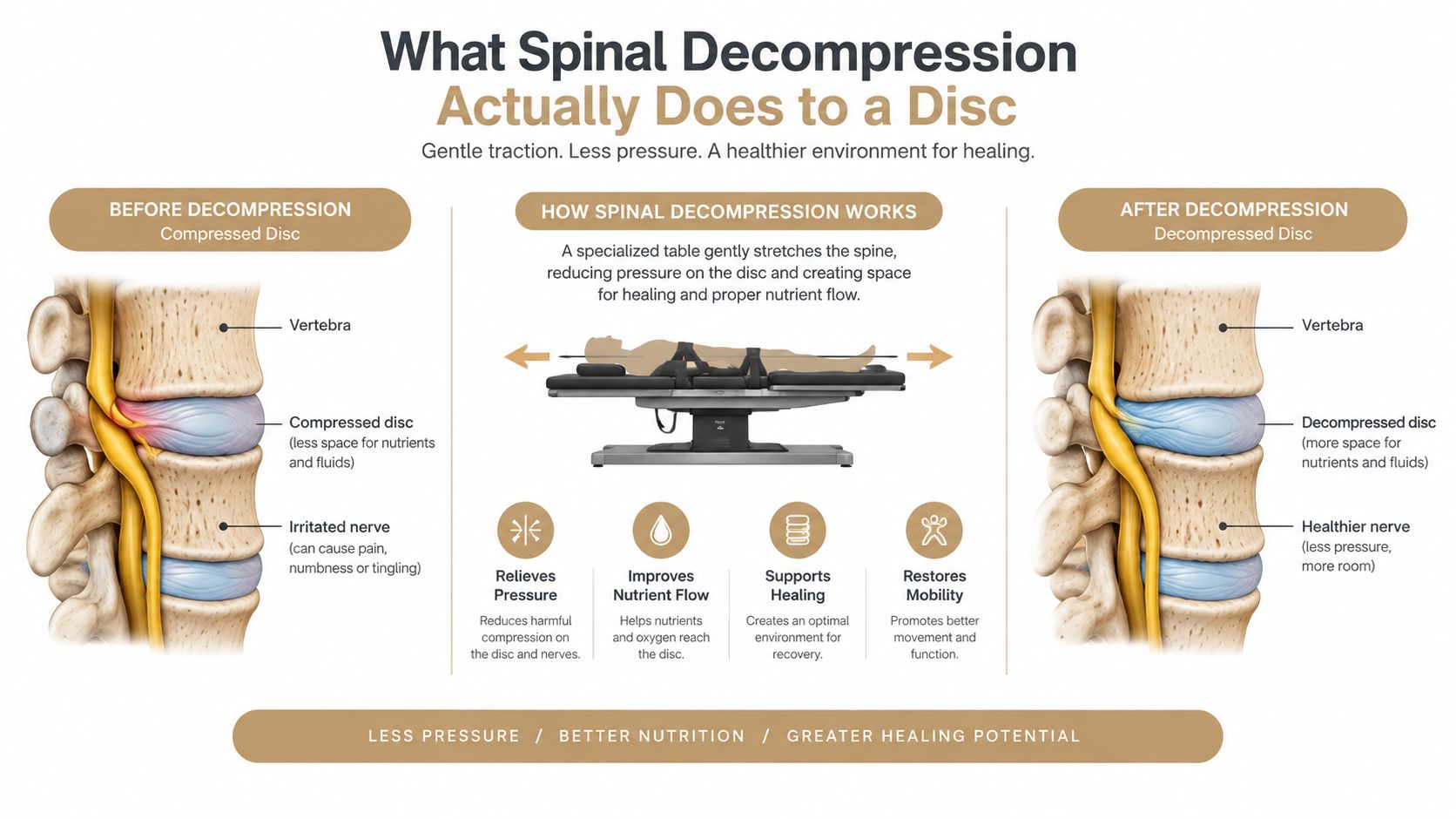
Clinicians commonly describe several possible effects:
Those mechanisms are plausible explanations, but they aren't all equally proven in humans or for every diagnosis. One controlled clinical study involving lumbar disc herniation reported reduced herniated-disc size and improved leg pain by 2 months, with functional improvement by 3 months in the published study. That finding is more relevant to disc-related leg pain than to vague back soreness.
An inversion table creates a different loading experience and isn't interchangeable with a clinician-directed decompression protocol. Anyone considering home inversion should review practical inversion table tips for older adults, especially when balance, blood pressure, bone health, or other medical factors may affect safety.
The strongest clinical rationale appears when symptoms, examination findings, and imaging point in the same direction. A contained lumbar disc protrusion with leg pain following a recognizable nerve-root pattern is a different problem from a sore back after gardening. Both can hurt, but they don't necessarily need the same intervention.
A spinal decompression chiropractor may evaluate patients with lumbar or cervical disc herniation, bulging discs, degenerative disc disease, posterior facet syndrome, spinal stenosis, selected failed back surgery cases, and sciatica-type symptoms. Decompression tends to make more sense when a disc or narrowing pattern could be contributing to nerve irritation. Fully sequestered fragments, severe structural compromise, or rapidly worsening neurologic findings require careful medical coordination rather than automatic treatment.
| Condition | Typical patient profile | Decompression rationale |
|---|---|---|
| Disc herniation or bulge | Back or neck pain with radiating symptoms and imaging findings | Controlled unloading may reduce mechanical irritation in a selected case |
| Sciatica-type leg pain | Leg symptoms that follow a nerve-root pattern | The goal is to address disc-related nerve irritation rather than general soreness |
| Degenerative disc disease | Recurrent pain with disc changes and reduced tolerance for loading | May be considered as one part of a broader conservative plan |
| Spinal stenosis | Symptoms related to narrowing and sensitivity during standing or walking | Requires careful examination because several structures may contribute |
| Facet-related pain | More localized pain linked to posterior spinal joints | Adjustment, mobility therapy, and exercise may be equally or more appropriate |
| Muscle strain or sacroiliac pain | Local pain without clear nerve involvement | Simpler manual therapy and rehabilitation often fit better |
Imaging matters, but an MRI finding alone doesn't prove that the disc causes your pain. A clinician must match the image with your symptoms and examination. For a plain-language review of conservative choices, see these disc herniation treatment options.
The honest answer is mixed. A major NIH-hosted review found that traction had been used for low back pain for decades, yet by 2007 only one small randomized controlled trial and several lower-level studies had evaluated spinal decompression specifically. The authors concluded that the evidence was very limited and routine use wasn't warranted, while a cited review found seven randomized trials of intermittent motorized traction, with six showing no difference from control groups in the review.
A retrospective audit of 94 outpatients treated with the DRX9000 reported a mean pain-score reduction from 6.05 to 0.89 after an 8-week course. The longer-term follow-up included 29 patients, who averaged 83% improvement at a mean of 31 weeks in the reported audit. Because that study was retrospective and lacked the same controls as a randomized trial, it can show an observed change, but it can't establish that the device caused all of the improvement.
A randomized trial found that both chiropractic manipulative treatment and non-surgical spinal decompression improved pain, function, and depressive mood in chronic low back pain associated with lumbar disc herniation. It also found that decompression wasn't superior to chiropractic manipulative treatment on pain, disability, depression, or quality of life in the trial.
| Clinical indication | Quality of supporting evidence | Typical reported outcome |
|---|---|---|
| Imaging-confirmed disc herniation with leg symptoms | Limited controlled evidence plus observational findings | Some studies report pain improvement and measurable disc change |
| Chronic discogenic low back pain | Inconsistent and incomplete evidence | Improvement may occur, but superiority over control care remains unproved |
| Nonspecific axial low back pain | Broader traction reviews show little or no meaningful effect | Results can resemble usual care, placebo, or other conservative approaches |
| Decompression compared with manipulation or exercise | Comparative evidence remains limited | The device hasn't consistently shown an advantage |
A systematic review concluded that efficacy for chronic discogenic low back pain remained unproved and that motorized decompression hadn't been adequately compared with exercise, spinal manipulation, or standard medical care in the review summary. The practical conclusion is narrow: decompression may be worth discussing when disc pathology and radicular symptoms are central, but patients should ask what additional value it offers beyond a well-designed rehabilitation plan. This DRX9000 spinal decompression overview can provide further treatment context.
A responsible clinic screens before scheduling a decompression series. The first question isn't whether you want the DRX9000. It's whether your symptoms and health history make controlled unloading reasonable.
A potentially appropriate candidate may have MRI-confirmed lumbar disc herniation or bulging, a contained protrusion rather than a sequestered fragment, and sciatica or radiculopathy that maps to a nerve root. The patient should also have persistent symptoms after a period of conservative care and be prepared to participate in visits and home exercises. Those factors increase clinical fit, but they don't guarantee success.
A clinician should pause or avoid treatment when conditions could make traction unsafe or inappropriate, including:
Progressive weakness, saddle anesthesia, or bowel and bladder changes are especially important warning signs. Unexplained weight loss, fever, and night pain also warrant medical evaluation. A chiropractic low-back-pain guideline describes chiropractors as suited to diagnose, treat, co-manage, and manage low back pain disorders, while recommending reassessment during care trials in the guideline.
The decision tree is straightforward: examine first, review imaging when indicated, screen for red flags, and then compare decompression with simpler rehabilitation. If the problem is mainly muscular or mechanical without nerve involvement, exercise, mobility therapy, and manual care may be the better fit.
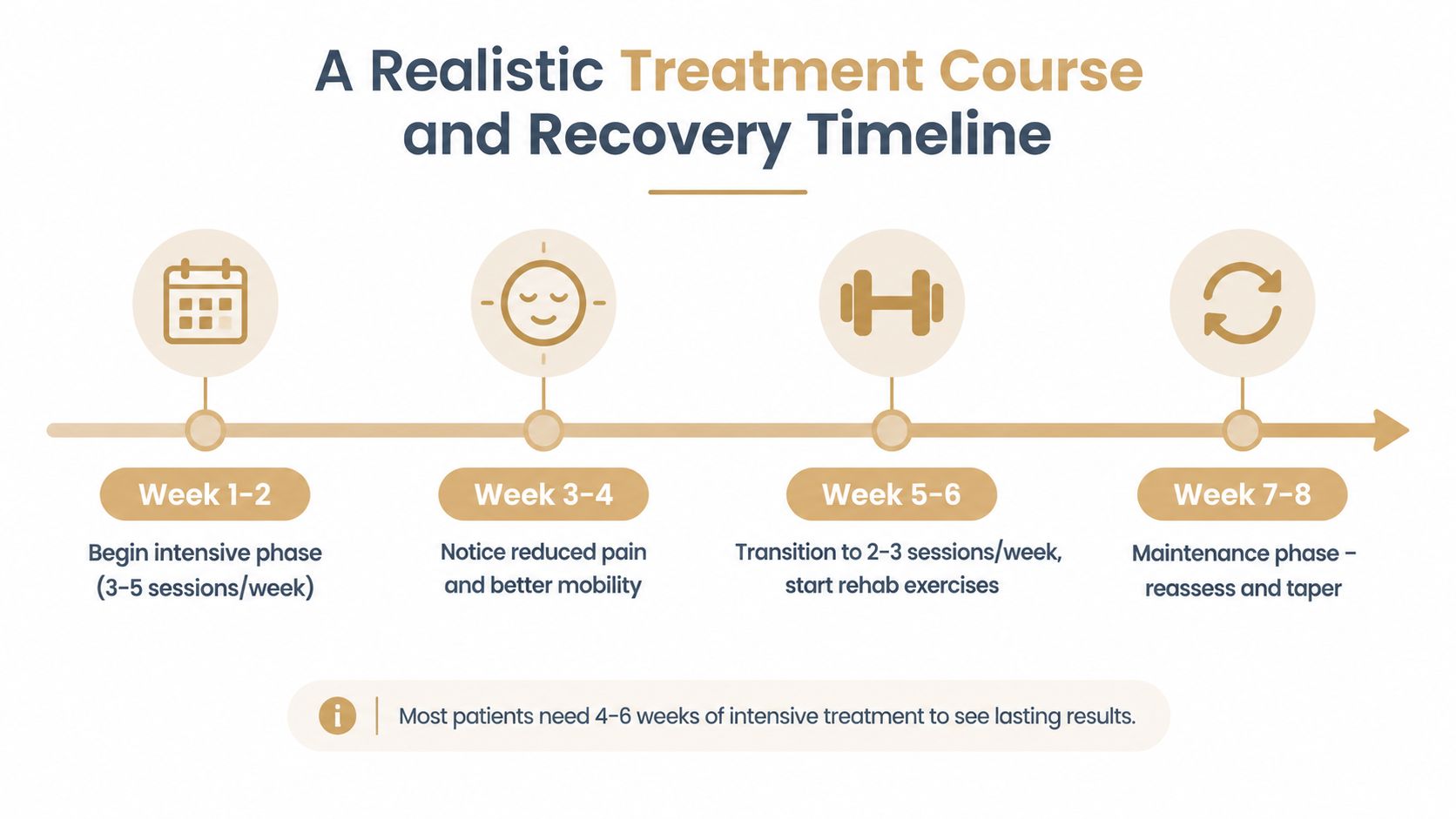
A decompression plan should have a beginning, progress checks, and an endpoint. At many clinics, the intensive phase lasts 4 to 6 weeks, with sessions scheduled several times weekly. A table session may take roughly 25 to 40 minutes, followed by adjunctive care such as muscle stimulation, cold therapy, massage-based soft-tissue work, or mobility exercises.
The first phase isn't a promise that pain will disappear immediately. Some patients notice little change at first, and temporary soreness can occur. The clinician should track whether symptoms are centralizing, whether leg pain is reducing, and whether daily function is returning.
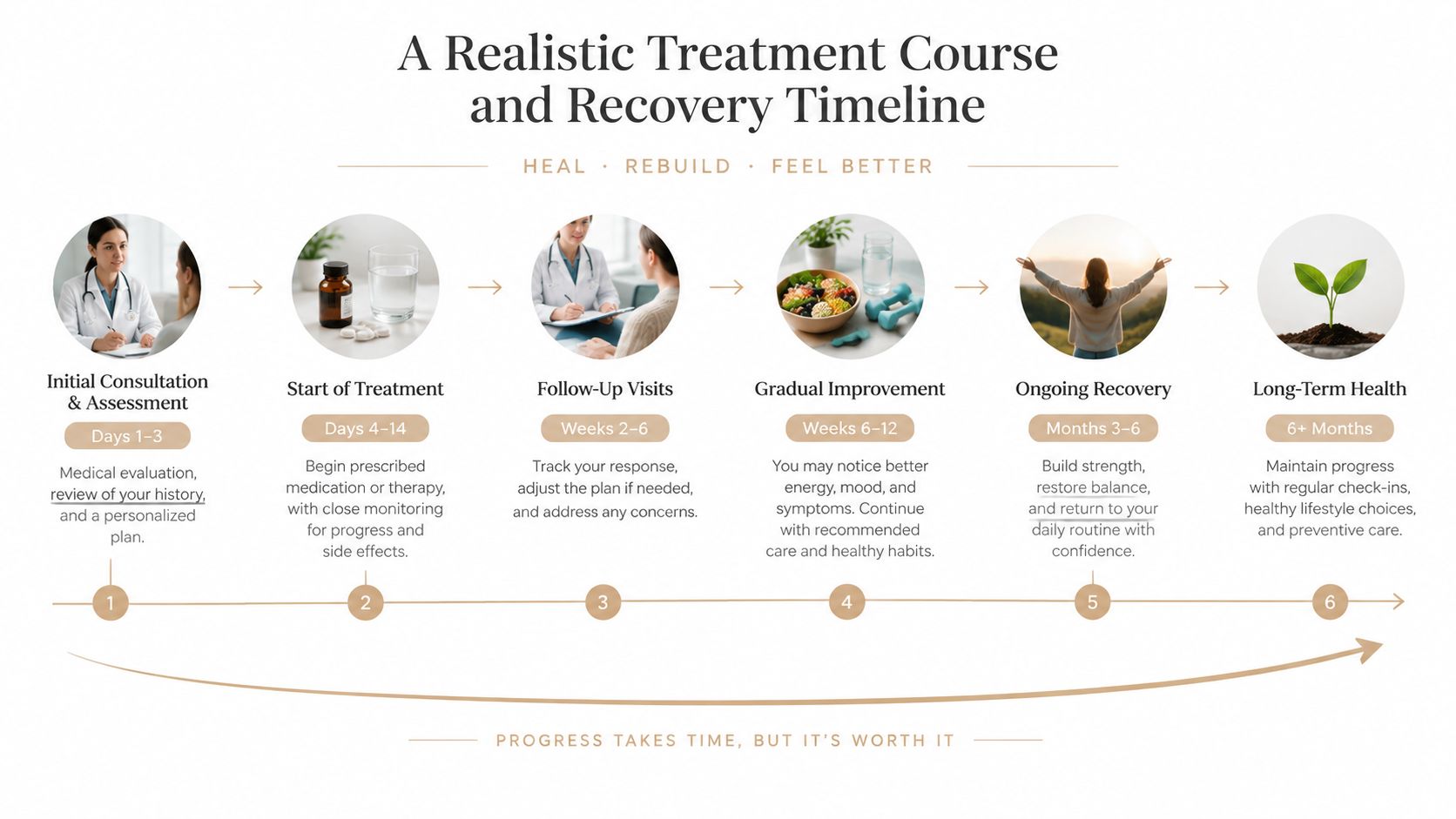
Home care is not optional. A plan may include daily directional-preference movements, a walking progression, and core stabilization introduced when symptoms allow. The clinician should explain which movements to stop or modify if they increase radiating pain.
A step-down phase may use less frequent visits for several additional weeks before transition to independent care. Most patients don't need lifelong decompression. Strength work, movement habits, and occasional reassessment are more useful long-term than assuming the machine must continue indefinitely.
An evidence-based guideline recommends spinal manipulation for acute and chronic low back pain and suggests multimodal care for chronic back-related leg pain, including education, manipulation, and home exercise in the guideline summary. That supports a layered plan rather than a device-only approach.
At a Sandy-area clinic, the first appointment should begin with questions, not a sales pitch. You'll usually discuss when the pain began, whether it travels into the leg or arm, what makes it better or worse, previous treatment, medical history, and any available MRI or X-ray reports. Red-flag screening belongs in this conversation.
The examination may include range-of-motion testing, palpation, orthopedic maneuvers, reflexes, sensation, strength, and movement patterns. If existing imaging doesn't clarify the suspected disc level, the chiropractor may recommend appropriate X-rays or refer for MRI when clinically indicated. Treatment shouldn't proceed because an image shows a common age-related change.
If the exam supports decompression, you'll be positioned with harnesses that stabilize the pelvis and upper body. The machine gradually ramps the distraction force, then cycles through programmed periods of loading and release. Most patients describe a controlled pulling sensation rather than a forceful stretch, but you should report sharp, worsening, or radiating symptoms immediately.
Afterward, the clinician may use an adjustment, decompression-related positioning, muscle stimulation, MLS Laser Therapy, SoftWave Therapy, cold therapy, or massage therapy when those services fit the examination. Acupuncture, mobility therapy, and rehabilitation exercise may also have a role. The right combination depends on the diagnosis and tolerance, not on adding every available modality.
Progress tracking should include more than “How do you feel today?” A clinic may record pain behavior, Oswestry or other functional questionnaires, range of motion, neurologic findings, walking tolerance, sitting tolerance, and specific movement tests. A personal exercise plan gives you a way to maintain gains between appointments.
Aspen Falls Wellness provides chiropractic care, spinal decompression with the DRX 9000, chiropractic adjustment, sciatica treatment, massage therapy, acupuncture, MLS Laser Therapy, SoftWave Therapy, nutrition counseling, mobility therapy, rehabilitation exercise, golf movement screening, and car accident treatment across its Salt Lake City and Sandy locations. Those services can be coordinated when the evaluation shows that a broader conservative plan is appropriate.
Start with the diagnosis, not the device. Ask whether your symptoms suggest disc involvement, whether imaging supports that conclusion, whether the examination matches the image, and whether red flags have been ruled out. Then compare decompression with targeted exercise, manual therapy, chiropractic adjustment, medication management, or a medical referral when appropriate.
The most useful consultation questions are practical:
Cost and coverage also deserve a direct conversation before committing to care. This guide to whether insurance covers spinal decompression can help you prepare questions, but your benefits and plan details still need verification.
For a Salt Lake City or Sandy resident, a sensible next step is to schedule an examination, bring existing imaging and reports, choose a functional goal beyond pain reduction, and agree to reassess the plan after the initial trial. Decompression may be a useful tool for a carefully matched disc case, while a simpler rehabilitation pathway may accomplish just as much for nonspecific back pain.
Aspen Falls Wellness can evaluate your back or leg symptoms, review imaging when indicated, and determine whether DRX 9000 spinal decompression belongs alongside adjustments, mobility therapy, rehabilitation exercise, or other conservative care. Visit Aspen Falls Wellness to request a consultation in Salt Lake City or Sandy and take the next step with a plan built around your diagnosis and functional goals.

Stay updated with the latest chiropractic news and exclusive offers.