Learn to perform the back arch stretch safely with step-by-step instructions, form cues, breathing tips, and common mistakes from Aspen Falls.



You're probably reading this with a stiff low back, a tight mid-back, or that awkward feeling after a long day at a desk when you want to crack your own spine and hope for relief. A back arch stretch can help in that moment, but only when it's done with control and for the right reason. In clinic, I've seen it calm irritated backs, and I've also seen it aggravate people who needed a different movement entirely.
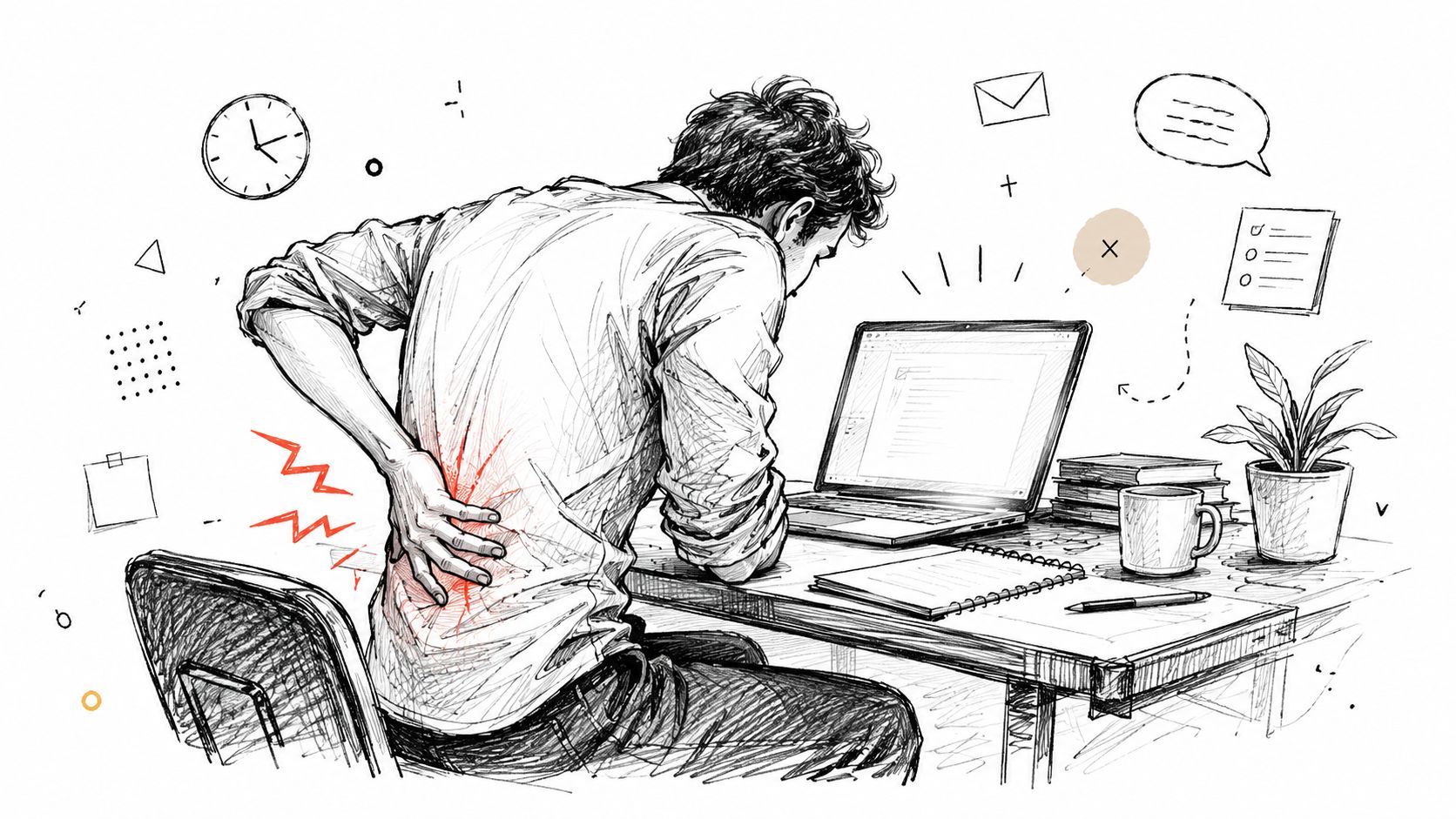
A lot of people come in after a day of hunching over a laptop, then twisting in a chair until something pops. That pop isn't a diagnosis, and it isn't always relief, but it does tell me the spine has been held in one direction too long. A controlled back arch stretch is a more deliberate answer than chasing a crack.
The logic is simple. Sitting keeps many backs flexed, and a gentle arch gives the front of the spine room, lets the spinal extensors contract and relax, and moves the trunk in the opposite direction of the posture many people live in. That's why a movement like this can feel like a reset instead of a stunt.
There's a trade-off, though. The same arch that feels freeing for one person can pinch or irritate another, especially if symptoms are coming from a disc, stenosis, or an already sensitive leg. If you want a broader look at common contributors, the overview on causes of chronic back pain is useful context before you decide whether arching belongs in your routine.
Practical rule: if the movement feels like a smooth opening, it may be the right drill. If it turns into pinching, guarding, or leg symptoms, the movement is telling you something useful.
For that reason, I don't treat back arching as a party trick. I treat it as a test, a mobility drill, or a rehab exercise depending on the person in front of me and how their spine answers on that day.
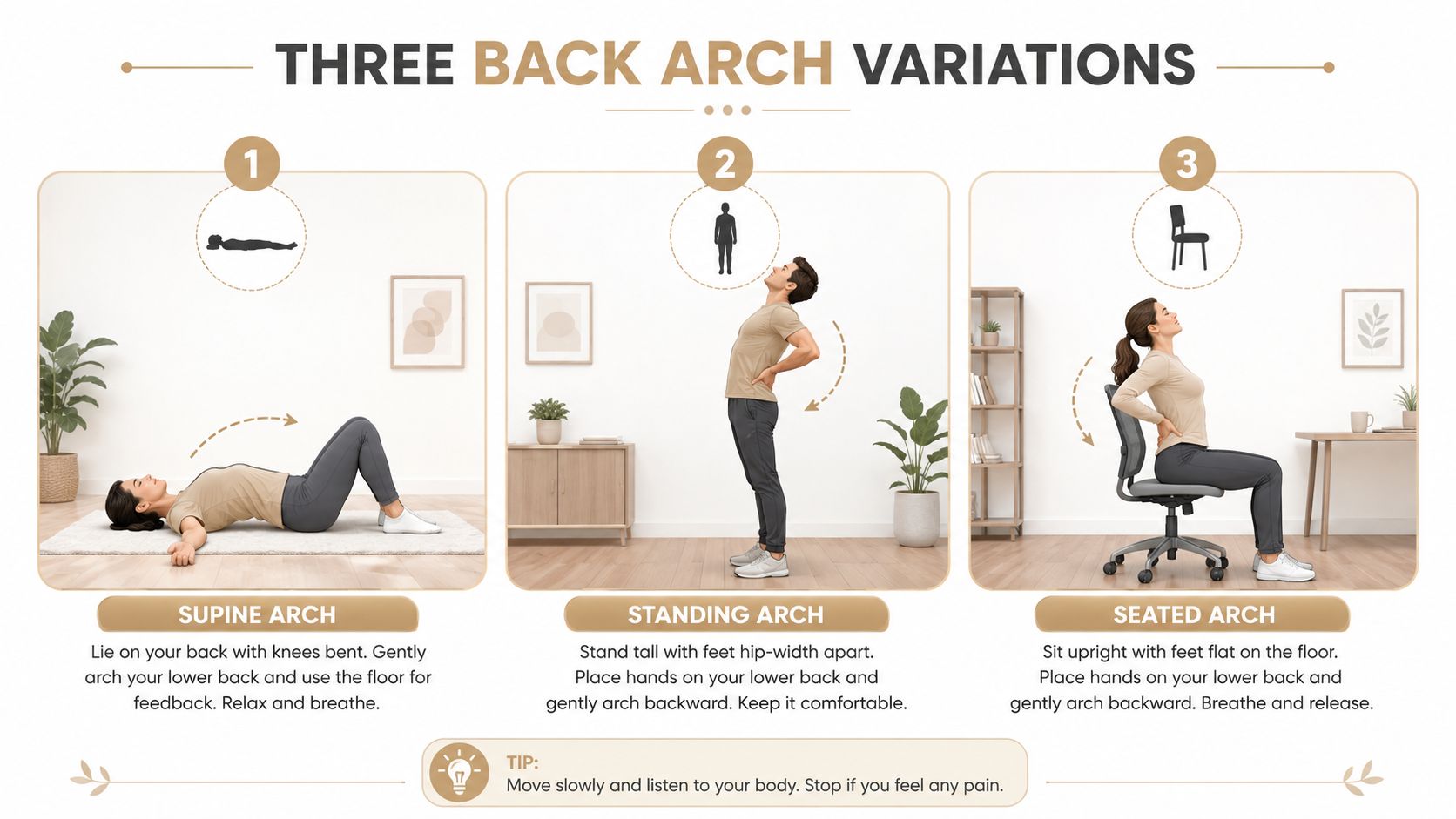
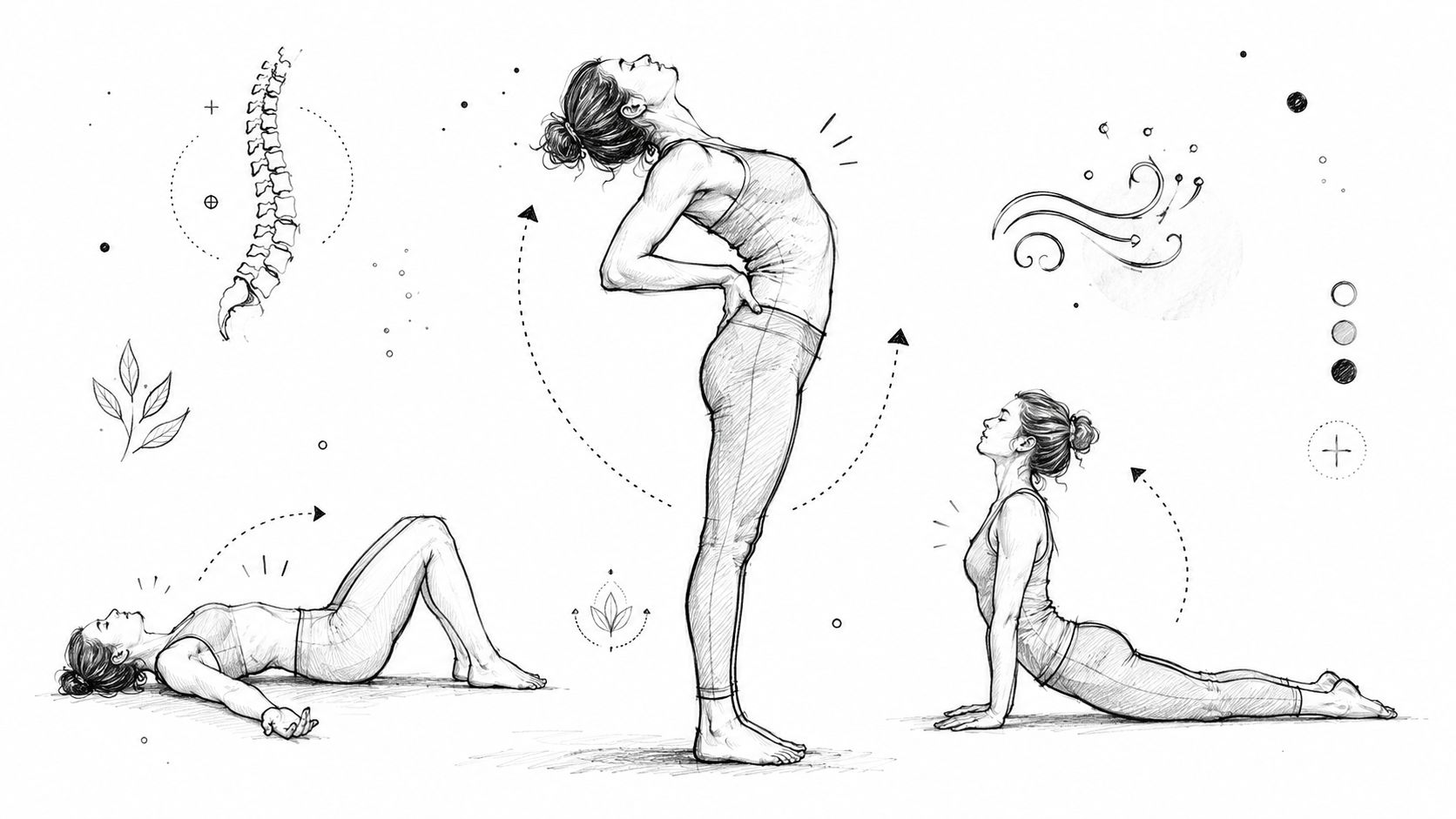
The easiest version is the one where the floor gives you feedback. Lie on your back with your knees bent and feet planted, then let the low back gently arch away from the floor as you breathe out. The cue that matters most is simple, keep the pelvis calm and let the motion come from the spine, not from a hard push through the ribs or neck. If you want a fuller routine that pairs well with this kind of mobility work, the back pain routine for stiffness and aches has a practical exercise-based frame.
This version works well when a person is guarded or unsure how much motion is safe. A small pillow under the head can help keep the neck quiet, and the breath should stay easy, in through the nose, out through the mouth, without bracing the abdomen hard. I like this one because the floor shows you immediately if you're overdoing it.
Keep the arch mild. You're looking for a gentle opening, not a big hollow in the low back. If your ribs flare or your hips start rocking, reduce the range and slow down.
This is the version you will most likely use at work or between meetings. Stand with feet about shoulder-width apart, soften the knees, place the hands on the hips or low back, and let the upper body drift backward only until you feel a comfortable stretch. The most useful cue is to keep the chin slightly tucked so the neck stays long.
Breathe out as you arch and breathe in as you return to neutral. I tell patients to think of this as a small wave through the trunk, not a collapse into the lumbar spine. A standing drill like this also fits naturally into a bigger movement routine, especially when paired with hip work, and the internal guide on how to improve hip mobility fits that larger picture.
This is the version I reach for when extension is the goal and the spine seems to want more than a standing arch can give. Lie face down, place the hands under the shoulders, and press the chest up while keeping the pelvis anchored to the floor. The important cue is that the hips stay down while the spine moves.
Do not force the top position. If the low back feels compressed, back off and make the motion smaller. Slow exhales help the trunk relax into the movement, which usually makes the drill feel less effortful and more precise.
What matters across all three is not how dramatic the arch looks. It's whether the movement is smooth, repeatable, and symptom-friendly.
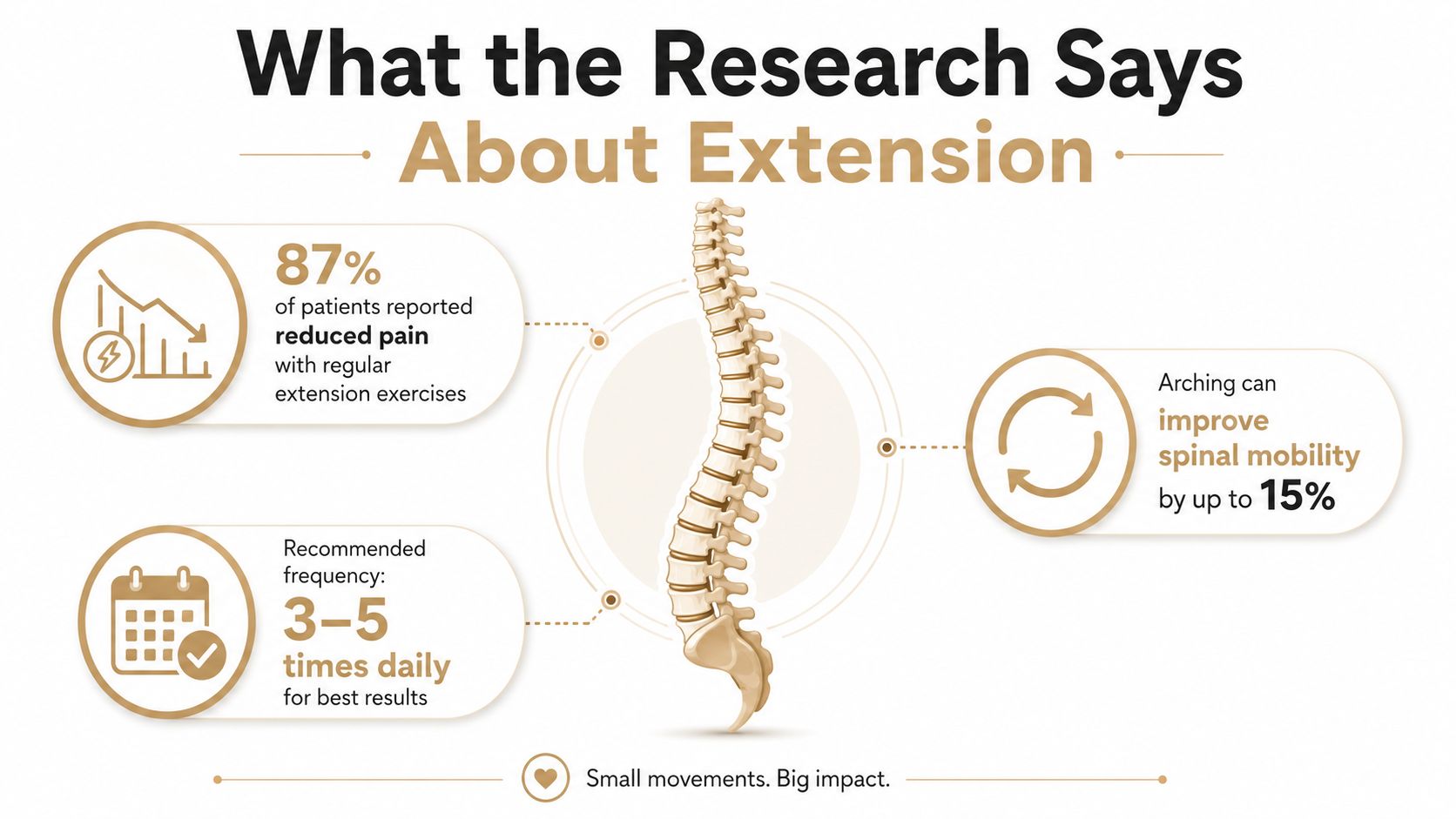
The evidence doesn't treat back arching as folklore. A randomized controlled trial published in 1995 found that flexion and extension exercise groups did not differ on outcomes over 8 weeks, but both exercise groups improved faster than no exercise after just 1 week, with better disability scores, higher return-to-work rates, and fewer positive straight-leg raise tests. The same study found no difference in low back pain recurrence at 6 to 12 months, which tells you two things at once, the movement has been studied clinically for a long time, and it's not magic by itself. PubMed abstract on flexion and extension exercise outcomes
A later trial strengthened the case for extension-based work inside a broader plan. In 2014, a cluster-randomized controlled trial found that an exercise program that included stretching and endurance training reduced the 12-month incidence of low back pain from 19.7% in the control group to 8.8% in the intervention group, with a hazard rate ratio of 0.37. More recently, a 2024 controlled trial reported average pain at 1 year of 2.26 ± 2.62 versus 3.78 ± 1.40 in the flexion group, a between-group difference of 1.52 points. PubMed summary of the later extension-based trial
Back arching can help, but it works best as part of a larger program that includes strength, endurance, and progressive loading. The research supports the idea that extension-oriented movement has a real place in rehabilitation, yet it also shows that the stretch alone is not the whole solution.
A useful drill can still be a small part of a bigger answer.
That's the clinical takeaway I trust. Use the movement as a measured tool, not as a stand-alone cure, and you're much closer to how the evidence is built.
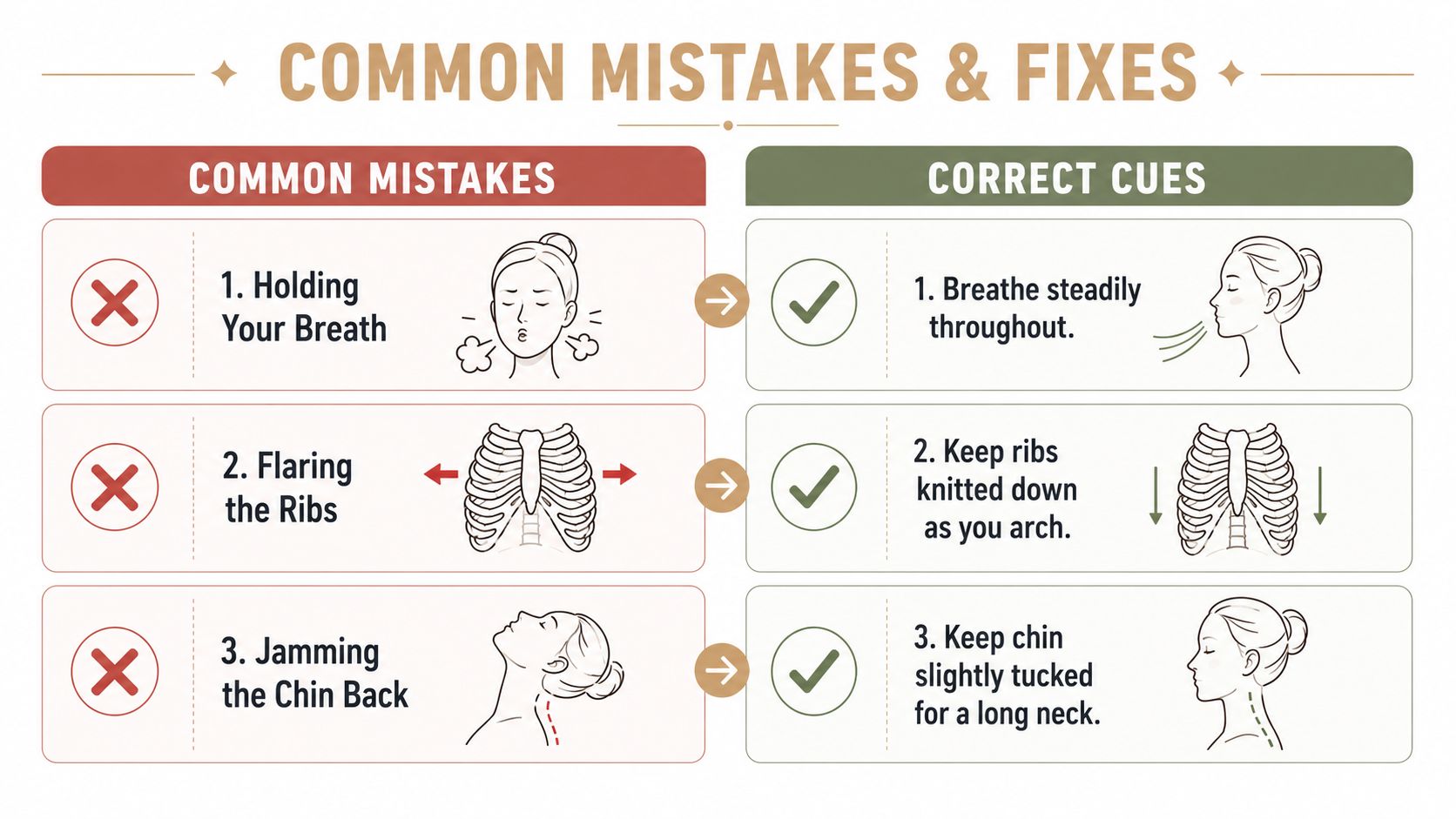
The body usually gives you a clear report when the form is wrong. The stretch feels choppy, the low back grips, or the neck starts doing the work. That's not a sign to push harder, it's a sign to clean up the setup.
The 2024 systematic review mentioned earlier found moderate-certainty evidence that stretching was ineffective for posture change, so don't expect this drill to fix alignment by itself. Use it for controlled mobility and symptom response, not as your main corrective strategy.
Some backs like extension, and some don't. That's why I don't hand out the same back arch drill to everyone who walks through the door with stiffness. A person with disc-related pain, spinal stenosis, or strong leg symptoms may need a different direction of motion, or they may need an exam before loading any arching at all. For a broader clinical framework, the article on chiropractor for back pain is a better next stop than guessing.
If the stretch sends pain down the leg, creates numbness, produces weakness, or changes bowel or bladder function, stop and get assessed. Those are not normal stretch sensations, and they're not the kind of thing I want patients pushing through.
A few other situations call for caution. Recent disc injury, an active stenosis flare, acute ligament sprain, osteoporosis, and pregnancy all change how much extension makes sense and how quickly it should be introduced. The goal is always to match the drill to the diagnosis, not to force the diagnosis to fit the drill.
If the movement makes symptoms travel farther from the spine, that's a problem worth paying attention to.
The safest rule is boring but effective. Keep the arch pain-free, keep it controlled, and get a proper evaluation if you're not sure what your back is asking for.
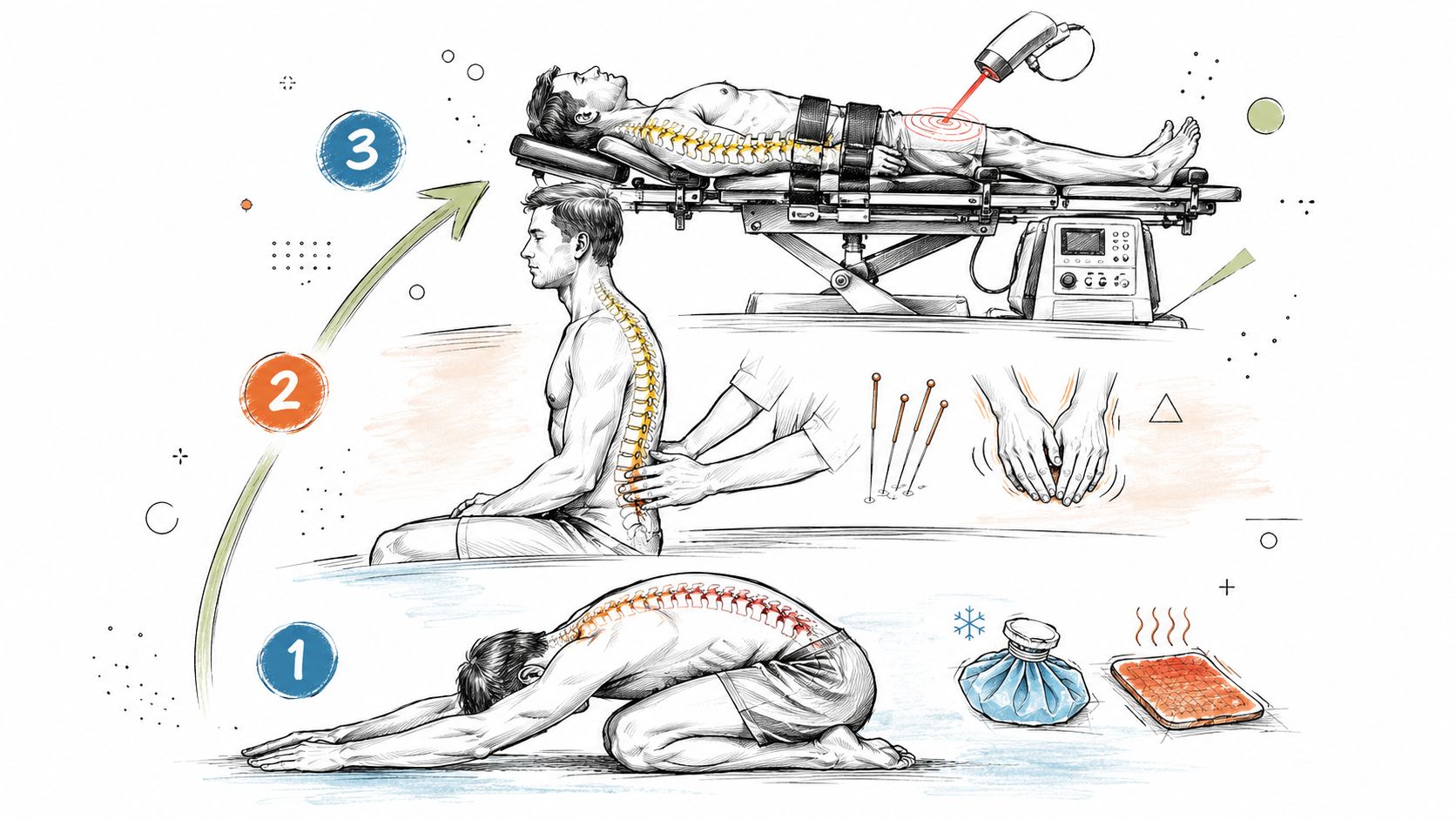
A useful back arch stretch is rarely the whole plan. In a coordinated care setting, I use mobility work as the opening move, then build toward Personal Exercise Plans, Mobility Therapy, and, when appropriate, Chiropractic Adjustment or Spinal Decompression for disc-related cases. At Aspen Falls Wellness, that might also include Massage Therapy for overworked hip flexors and erectors, or MLS Laser Therapy and SoftWave Therapy when inflammation is making motion hard to tolerate. The point isn't to stack services for its own sake, it's to match the tool to the tissue.
That sequencing matters. A person who can only tolerate a tiny arch on day one may progress to a more loaded extension pattern later, while someone with nerve irritation may need decompression or gentler mobility before they can handle much trunk work at all. The internal resource on what is therapeutic exercise fits naturally with that progression because the drill only earns its place when it's part of a deliberate plan.
In Salt Lake City and Sandy, a real care plan has to be specific. One person needs motion first, another needs pain reduction first, and another needs a reassessment because the back arch is clearly the wrong direction for the problem in front of us.
How often should I do it?
Use it as a short, repeatable mobility drill, not a marathon. If it feels better after a few clean reps, that's the right sign to stop for the moment.
Should it hurt?
No. A good back arch stretch feels like pressure or opening, not sharp pain, pinching, or leg symptoms. If it crosses into that territory, back off.
Is it safe during a flare-up?
Sometimes, but only if the movement stays gentle and symptom-free. A flare-up is exactly when technique and diagnosis matter most.
When is it worth coming in for an evaluation?
If the stretch keeps aggravating you, if pain is traveling into the leg, or if your back never settles no matter how carefully you do it, that's the point to get assessed. A good exam can tell you whether to keep arching, modify it, or stop it completely.
If your back arch stretch helps a little but doesn't solve the larger problem, Aspen Falls Wellness can evaluate the pattern, build a personal exercise plan, and pair mobility work with chiropractic care, decompression, massage, or laser-based support when appropriate. If you're in Salt Lake City or Sandy and want a real assessment instead of guessing, visit Aspen Falls Wellness and schedule a visit that matches your back, not a generic routine.

Stay updated with the latest chiropractic news and exclusive offers.