Chiropractic treatment pinched nerve lower back. Learn how chiropractic treatment for a pinched nerve in the lower back works, from your first visit
You bend to pick up a box, feel a pop in your lower back, and expect the soreness to settle by dinner. Instead, an electric pain travels through one buttock and down the leg. Sitting becomes difficult, coughing sends a jolt through your spine, and your foot feels strangely weak. That pattern deserves more than a routine “back strain” label.
Chiropractic treatment for a pinched nerve in the lower back should begin with a careful neurological evaluation, not an automatic adjustment. Conservative care can help many people, but the right plan depends on whether you have referred muscle pain, radicular pain, or true nerve-root dysfunction. It also depends on whether your symptoms are stable, improving, or progressing.
A 38-year-old warehouse worker bends to grab a box and feels a sudden pop. Within hours, a sharp, electric sensation runs from his lower back into the right buttock and down the back or side of the leg. He describes tingling in the foot and says that sitting in the delivery van makes everything worse.
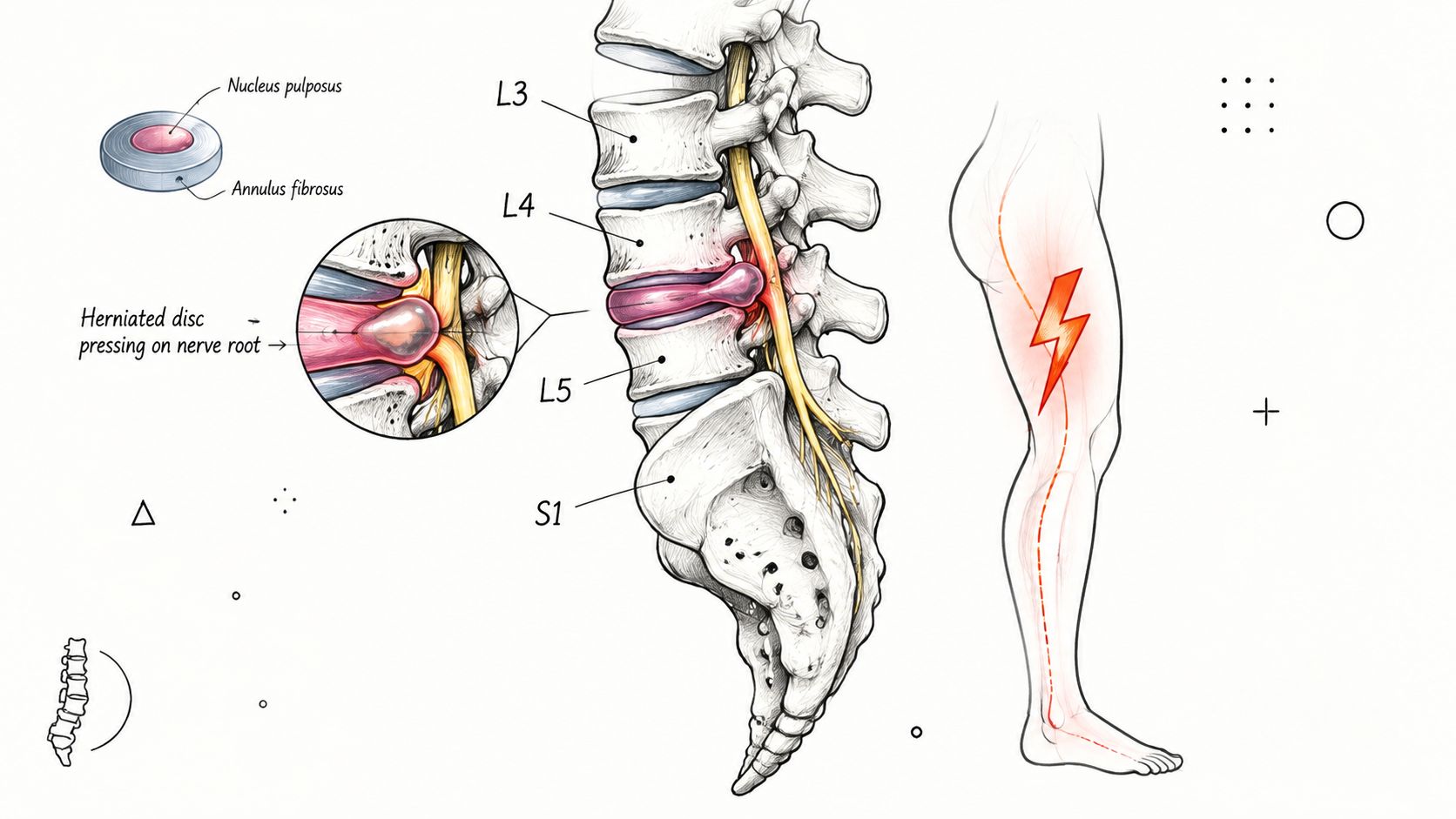
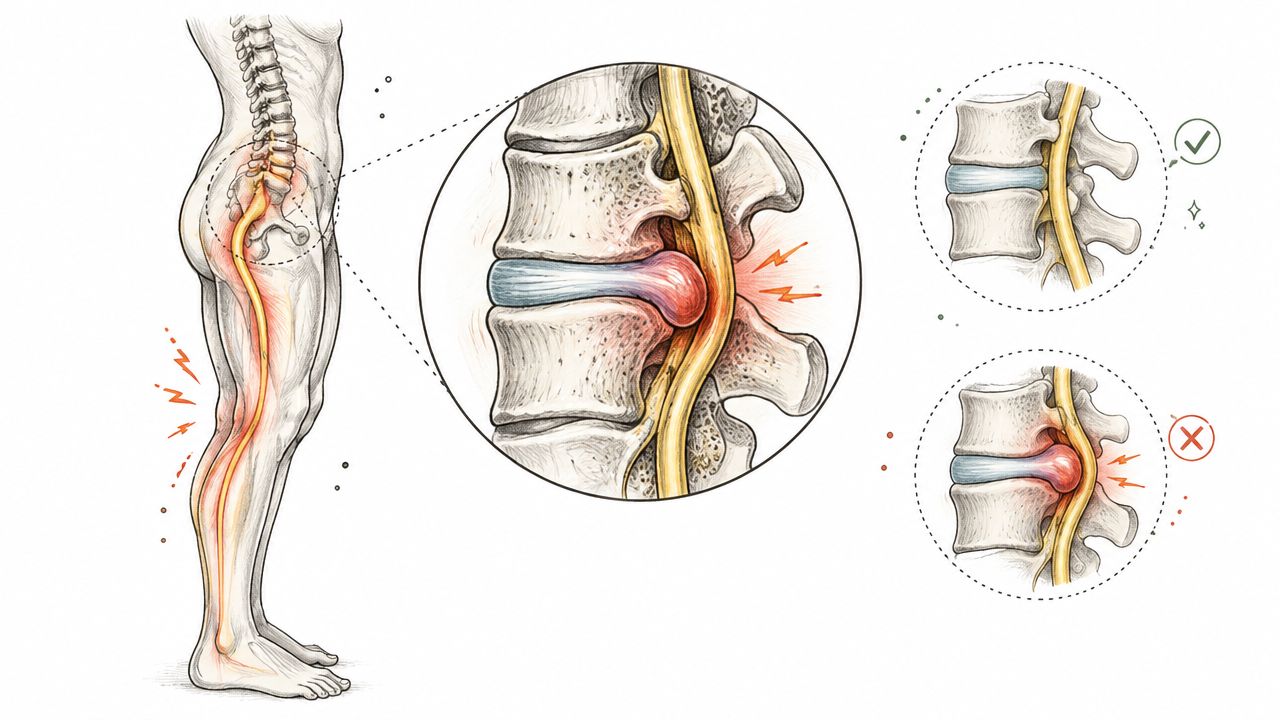
That description points toward lumbar radicular pain, commonly called sciatica, rather than ordinary axial low back pain. A disc may bulge or herniate near a nerve root, a thickened ligament may reduce available space, or a narrowed opening between vertebrae, called a foramen, may irritate the L4, L5, or S1 nerve root. The result can be pain, altered sensation, or weakness along the nerve's pathway.
Sciatica has a lifetime incidence estimated at 13% to 40%, with annual incidence estimated at 1% to 5%, while an NIH-hosted review estimates that 5% to 10% of people with low back pain have sciatica. The same review places lifetime low back pain prevalence at 49% to 70%, showing why nerve-related lumbar complaints form a substantial treatment population. These figures are summarized in the NIH review of sciatica and lumbar radicular pain.
Axial back pain is usually dull, aching, or localized around the lumbar spine. It often changes with lifting, twisting, standing, or sitting but doesn't consistently travel below the buttock. Radicular pain is more likely to feel burning, shooting, shocking, or sharply radiating, sometimes accompanied by numbness or tingling in a recognizable strip of the leg.
Coughing, sneezing, prolonged sitting, and forward flexion can increase symptoms because they may raise pressure around an irritated disc and nerve root. Symptoms don't always follow a perfect textbook map, so the location, quality, triggers, and neurological findings must be considered together.
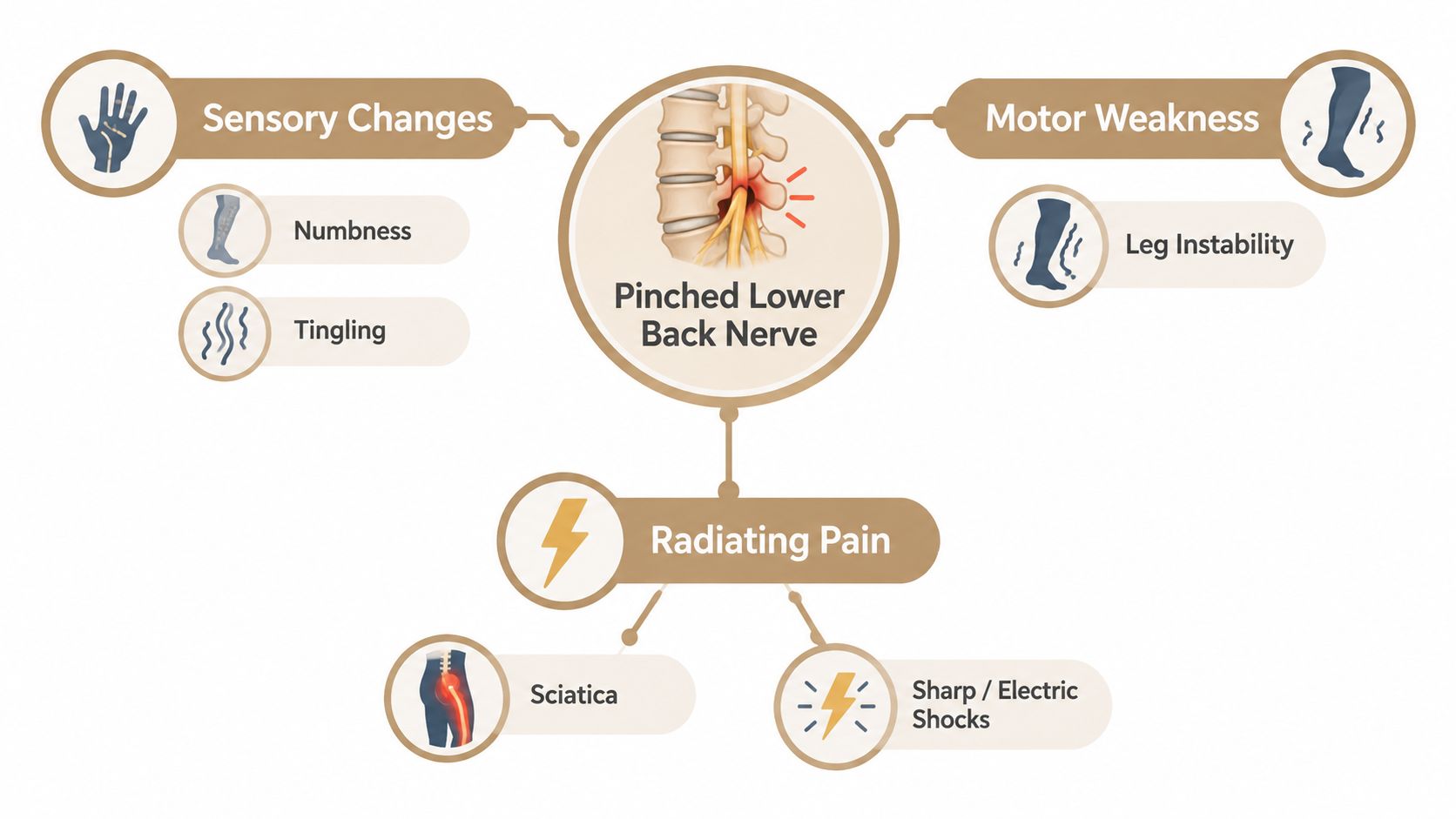
Foot drop is different from pain alone. If you can't lift the front of your foot or your toes catch the ground, the affected nerve may not be transmitting motor signals normally. New or worsening weakness needs prompt clinical assessment. A useful starting point is this guide to lumbar disc herniation signs and symptoms, but a written symptom list can't replace an examination.
The first visit should answer two questions before treatment begins. Is this a mechanical problem that can be managed conservatively, and is there any reason to escalate immediately?
The history focuses on more than pain intensity. I want to know where the pain starts, where it travels, how long it has been present, and which positions change it. Sitting, walking, bending, coughing, and lying down can each provide useful clues about irritability and mechanical loading.
Red-flag questions are essential:
The physical examination compares both sides. It may include lumbar range of motion, gait, heel and toe walking, sensation testing, muscle testing, and reflexes associated with the lower lumbar nerve roots. These findings help distinguish pain-limited movement from genuine neurological loss.
Straight leg raise and Slump testing can reproduce sciatic symptoms in some patients, while palpation of the lumbar paraspinals, gluteal muscles, and sacroiliac region helps identify contributing soft-tissue and joint findings. No single test confirms every case. The working diagnosis comes from the pattern formed by history, examination, symptom duration, irritability, and neurological stability.
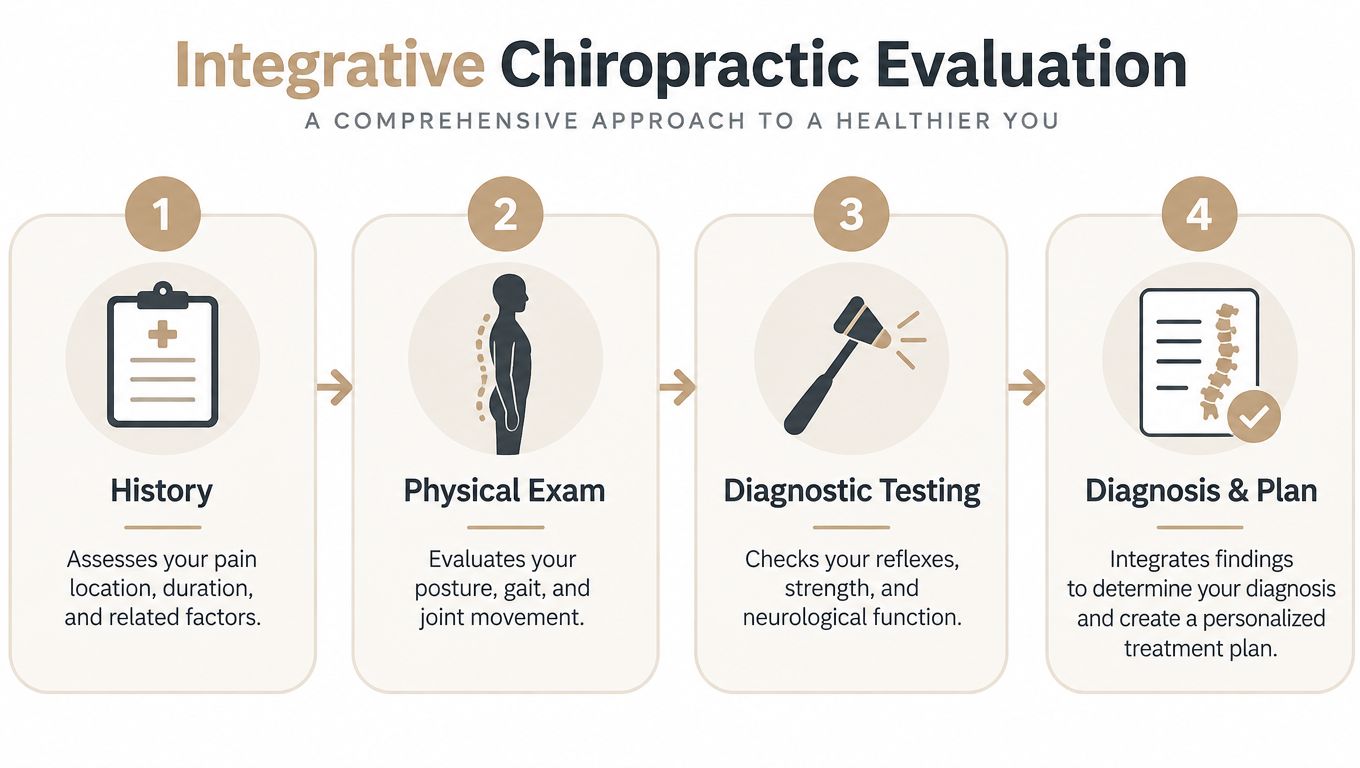
Plain radiographs can help assess alignment, bone changes, or broader biomechanical features, but they don't show nerve tissue or disc detail as clearly as MRI. MRI is generally considered when weakness progresses, symptoms are severe and unresponsive, cauda equina is suspected, or the imaging result would change treatment. The Canadian chiropractic guideline for low back pain emphasizes separating radicular pain from radiculopathy and paying close attention to whether neurological findings are stable or worsening.
Good documentation supports that reasoning. A resource on chiropractic documentation with PatientNotes can help clinicians organize the history, examination findings, treatment response, and referral rationale that make a staged plan defensible.
An adjustment isn't a magic “nerve release,” and not every irritated nerve should be manipulated aggressively. The technique has to match the patient's tolerance, examination findings, and stage of recovery.
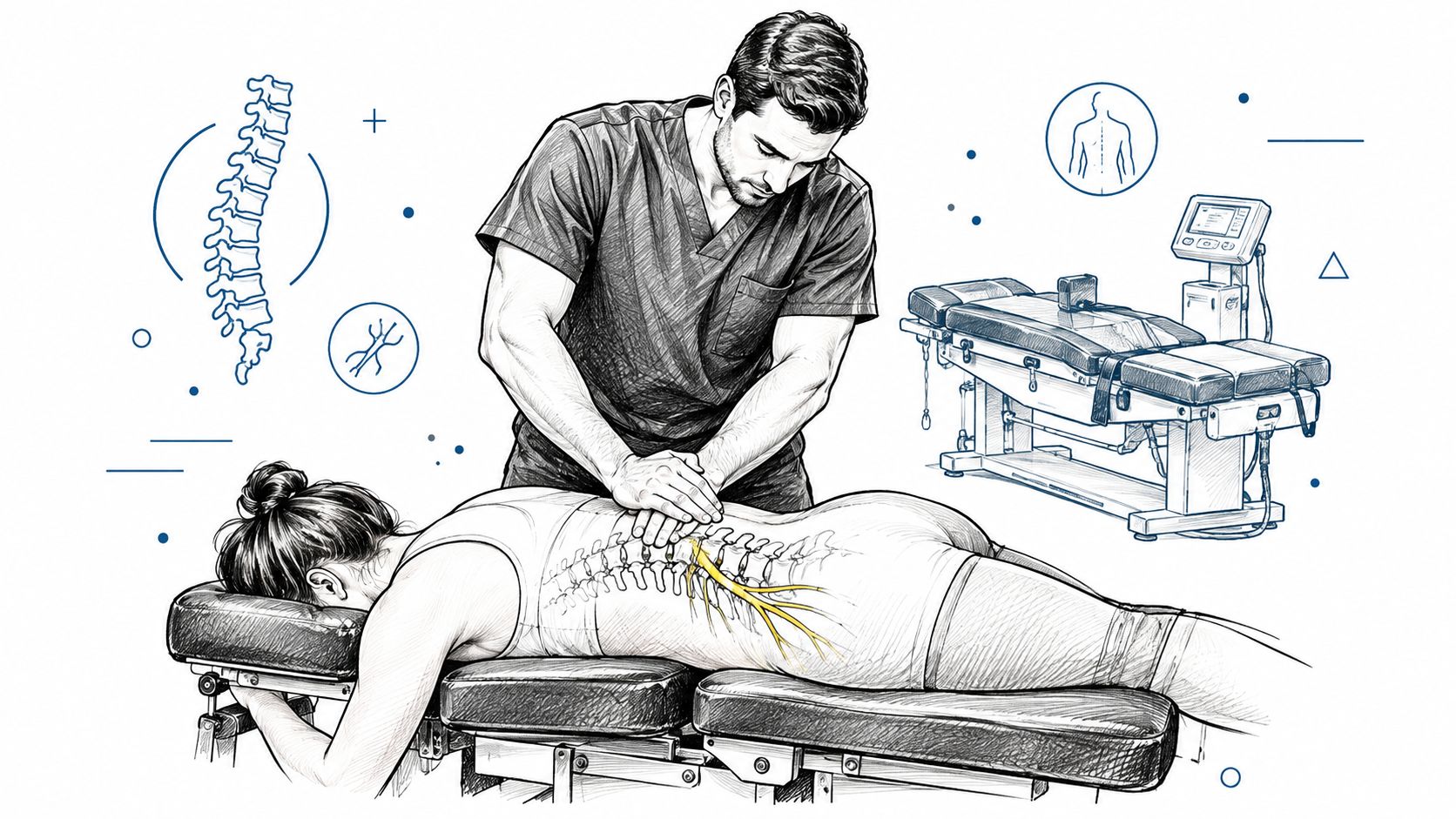
A lumbar or pelvic adjustment may use a side-posture contact, a drop-table approach, or a low-force instrument such as an activator. The intended goal is to improve restricted segmental or pelvic motion and reduce the mechanical load that aggravates nearby tissues. The adjustment doesn't guarantee that a herniated disc will retract, and it shouldn't be sold as structural correction in every case.
Soft-tissue work addresses a different problem. The quadratus lumborum, piriformis, and gluteal muscles can become protective, overloaded, or tender when someone changes how they walk and sit. Myofascial release and trigger-point work may reduce muscle guarding and improve movement, but they shouldn't be used to explain away objective weakness or numbness.
| Technique | Primary Goal | Best Used For |
|---|---|---|
| Chiropractic adjustment | Improve joint motion and reduce mechanical irritation | Restricted lumbar or pelvic motion when the patient tolerates manual care |
| Myofascial release | Reduce guarding and soft-tissue sensitivity | Tight paraspinals, quadratus lumborum, piriformis, or gluteal muscles |
| SoftWave Therapy | Support deep tissue stimulation and comfort | Soft-tissue sensitivity and recovery support alongside active care |
| MLS Laser Therapy | Support inflammation reduction and tissue recovery | Localized pain and irritated soft tissues when used as an adjunct |
| Massage Therapy | Decrease muscle tension and improve comfort | Protective spasm, gluteal tension, and movement limitation |
| Mobility Therapy | Restore tolerable range of motion | Stiffness that limits walking, standing, or exercise |
| Muscle Stimulation | Support muscle activation | Inhibition or weakness that needs a graded activation strategy |
SoftWave treatment is typically felt as a mechanical or tapping sensation, while MLS laser treatment is generally comfortable and may feel warm or barely noticeable. Exact dosing should be individualized rather than promised in advance. A practical overview of low-level laser mechanisms and treatment considerations is available in this low level laser therapy guide.
The evidence supports restraint. A meta-analysis found that spinal manipulation produced statistically significant but modest average improvements in pain and function up to 6 weeks for acute low back pain, while chronic low back pain outcomes were similar to recommended therapies and not clearly superior to sham over longer follow-up, as summarized in the BMJ evidence review. That makes adjustments reasonable as one part of an integrated plan, not a reason to omit exercise, education, referral, or reassessment.
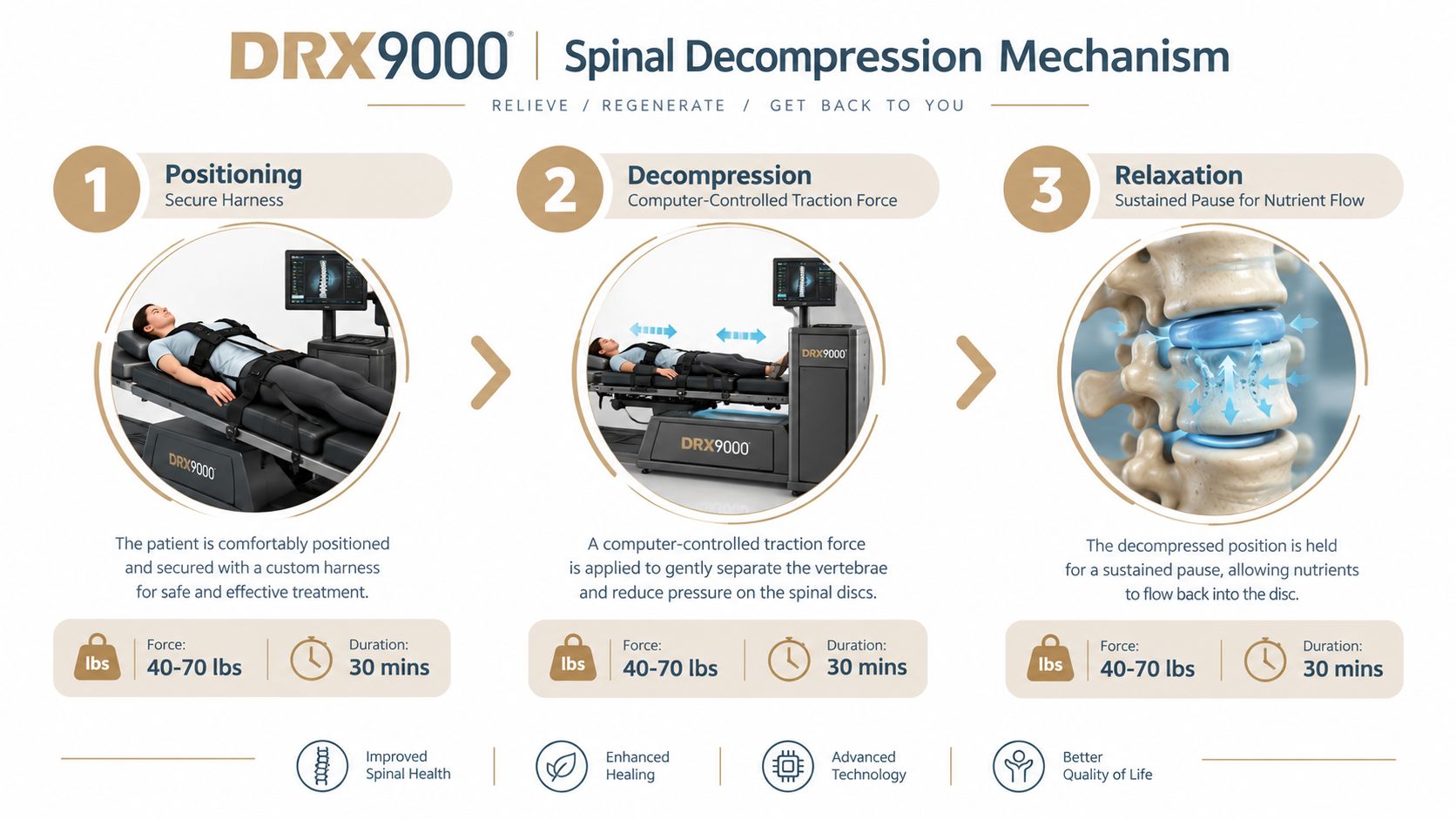
Spinal Decompression with the DRX 9000 is most useful when the clinical picture suggests disc-related irritation and ordinary adjustments alone haven't produced enough functional change. The DRX9000 uses computer-controlled axial distraction through pelvic and upper-body harnesses. The intended mechanical effect is to vary the traction force and reduce loading through the lumbar segments, although claims about reliably retracting herniated material or creating a durable negative intradiscal pressure shouldn't be treated as guaranteed outcomes.
You lie in a supported position while the harnesses stabilize the pelvis and torso. The machine gradually ramps the force rather than applying one abrupt pull, then cycles through traction and relaxation. A typical treatment cycle is described as lasting 28 to 30 minutes, but force and positioning should be selected by the clinician based on body size, diagnosis, irritability, and response.
Some patients feel a gentle pulling sensation and relief while positioned. Others feel no immediate change or become more uncomfortable in flexion or traction. That response matters. Decompression should be stopped or modified if it increases radiating pain, numbness, or weakness rather than only producing a temporary stretch sensation.
Reasonable candidates may include people with:
The treatment isn't appropriate for everyone. Fracture, severe osteoporosis, spinal instability, tumor, advanced spondylolisthesis, and acute cauda equina signs require exclusion or medical management before traction is considered.
Evidence for non-surgical decompression remains mixed. A systematic review concluded that motorized decompression for chronic discogenic low back pain remained unproved, while another review described the evidence as very limited. More recent literature reported better outcomes when motorized traction or decompression was added to conventional treatment for selected subacute and chronic lumbar discopathies, but that doesn't establish a universal fix. The review of spinal decompression evidence supports a cautious, individualized interpretation.
For a closer look at the device and its clinical role, see this explanation of DRX 9000 spinal decompression.
The first two weeks are usually about reducing irritation and avoiding repeated aggravation, not proving how much pain you can tolerate. Home work should support the clinic plan, and every movement should be judged by its effect on the radiating leg symptoms, not just the low back.
Nerve glides: Gentle seated sciatic or femoral nerve flossing can encourage movement of sensitive neural tissues without forcing a long stretch. Use short, easy sets and stop if symptoms travel farther down the leg or remain worse afterward.
Lumbar mobility: Prone press-ups may help some extension-tolerant patients, while pelvic tilts can maintain controlled movement with less load. Neither exercise is automatically correct for every disc presentation. If extension increases leg pain, use a different position and discuss it with the clinician.
Deep stabilizer activation: Modified dead bugs and bird dogs can train trunk control without demanding large ranges. Keep the ribs and pelvis controlled, breathe normally, and reduce the lever length if symptoms increase.
Walking: Short, flat-surface intervals are often easier to dose than one long walk. Add distance gradually as tolerated, using leg symptoms and next-day function as your guide.
Daily habits can determine whether the nerve settles between visits. Change position from sitting to standing every 20 to 30 minutes, use lumbar support at a desk, avoid prolonged flexion and heavy lifting, and try a pillow under the knees if sleeping on your back feels comfortable. Ice may calm a recently irritated area, while heat may help muscle guarding. Choose the option that improves comfort without masking a worsening neurological problem.
Practical rule: Stop an exercise that reproduces or extends radiating leg pain. New numbness, increasing weakness, or loss of foot control should be reported promptly.
A short, symptom-guided routine is more useful than an ambitious program that repeatedly flares the nerve. These chiropractic stretches for lower back pain can provide general movement ideas, but your examination should determine which ones belong in your plan.
Lumbar disc herniation with radiculopathy is usually approached conservatively when cauda equina syndrome and progressive motor deficit are absent. Symptoms often improve within 6 to 8 weeks, according to this clinical review of lumbar radiculopathy management, which also describes a staged approach involving screening, activity guidance, reassessment, and escalation when neurological findings worsen. The clinical review of lumbar disc herniation with radiculopathy supports that general sequence.
The first phase focuses on calming symptoms and identifying the pain generator. As irritability settles, care can progress toward decompression, graded loading, stabilization, and restoration of work or sport function. Some patients improve quickly, while larger disc extrusions, recurrent episodes, and longstanding neurological irritation may require a longer course and specialist input.
| Phase | Typical Goal | Escalate If... |
|---|---|---|
| Weeks 1 to 2 | Control pain, reduce aggravating loads, establish neurological baseline | Weakness progresses, foot drop appears, or red flags emerge |
| Weeks 3 to 4 | Add graded loading or decompression when appropriate | Symptoms remain severe, neurological findings worsen, or there is no meaningful functional change |
| Weeks 5 to 8 | Build strength, improve movement control, and restore daily activity | Symptoms remain disabling, recur repeatedly, or imaging would change management |
Same-day escalation is appropriate for progressive leg weakness, foot drop, loss of bowel or bladder control, saddle anesthesia, rapidly worsening numbness, or severe night pain that doesn't change with position. A history of cancer, infection, or significant trauma also lowers the threshold for urgent medical assessment.
MRI or specialist referral becomes more reasonable when active care produces no meaningful improvement after several weeks, neurological findings worsen, central stenosis is suspected, or short-term relief is followed by repeated recurrence. An injection may be considered for persistent radicular pain, with short-term relief commonly lasting 2 to 4 weeks, while surgery is reserved for selected cases involving significant neurological compromise, persistent disabling symptoms, or a structural problem that requires correction.
Surgery isn't a failure of chiropractic care. It becomes one step in a broader spine pathway when the risk of waiting outweighs the benefit of continued conservative treatment.
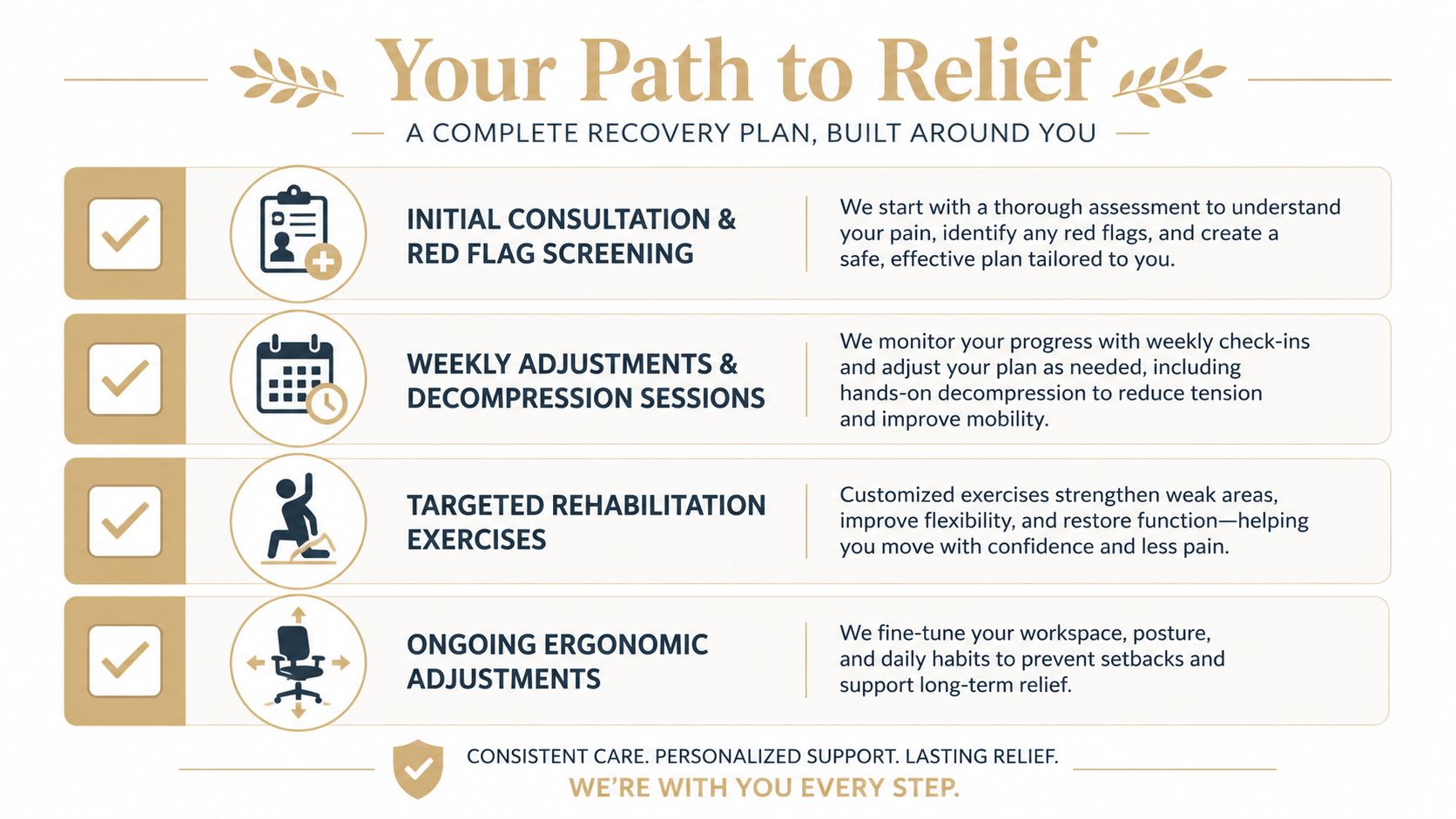
A credible plan follows the findings rather than selling one procedure. Start with a red-flag-screened evaluation, neurological testing, and a clear working diagnosis. If manual care is appropriate, the first phase may combine a carefully selected Chiropractic Adjustment, soft-tissue treatment, mobility therapy, and education.
For disc-related radiculopathy that remains irritable after the initial phase, DRX9000 decompression can be considered as an adjunct rather than a standalone cure. Other services may include SoftWave Therapy, MLS Laser Therapy, Massage Therapy, Acupuncture, Muscle Stimulation, Rehabilitation Exercise, Personal Exercise Plans, Nutrition Counseling, and targeted mobility work. The useful question isn't whether a clinic offers many modalities. It's whether each one has a defined purpose and whether the team reassesses your function.
During the first month, many plans use more frequent monitoring early, then reduce visit frequency as walking, sitting, sleep, and work tolerance improve. The exact schedule depends on irritability and examination findings. Ask how progress will be measured, what response would justify adding decompression, and what findings would prompt an MRI or pain-management referral.
Bring a list of medications, prior imaging, surgical history, the date symptoms began, and examples of movements that worsen or relieve the pain. Ask:
Long-term protection usually comes from maintaining strength, changing aggravating work habits, and returning to activity gradually. Maintenance shouldn't mean indefinite passive treatment without a functional reason. It should support the capacity you've rebuilt.
For adults in Salt Lake City or Sandy, an integrative clinic can coordinate chiropractic care, spinal decompression, soft-tissue therapies, exercise, and referrals when symptoms fall outside conservative treatment. Aspen Falls Wellness provides those services through individualized, evidence-based plans, with reassessment built into the process.
If radiating lower-back pain, numbness, or weakness is limiting your work, sleep, or walking, visit Aspen Falls Wellness to schedule an evaluation in Salt Lake City or Sandy. Bring your symptom history and any prior imaging so the team can determine whether chiropractic care, DRX9000 decompression, rehabilitation, or medical referral is the safest next step.

Stay updated with the latest chiropractic news and exclusive offers.