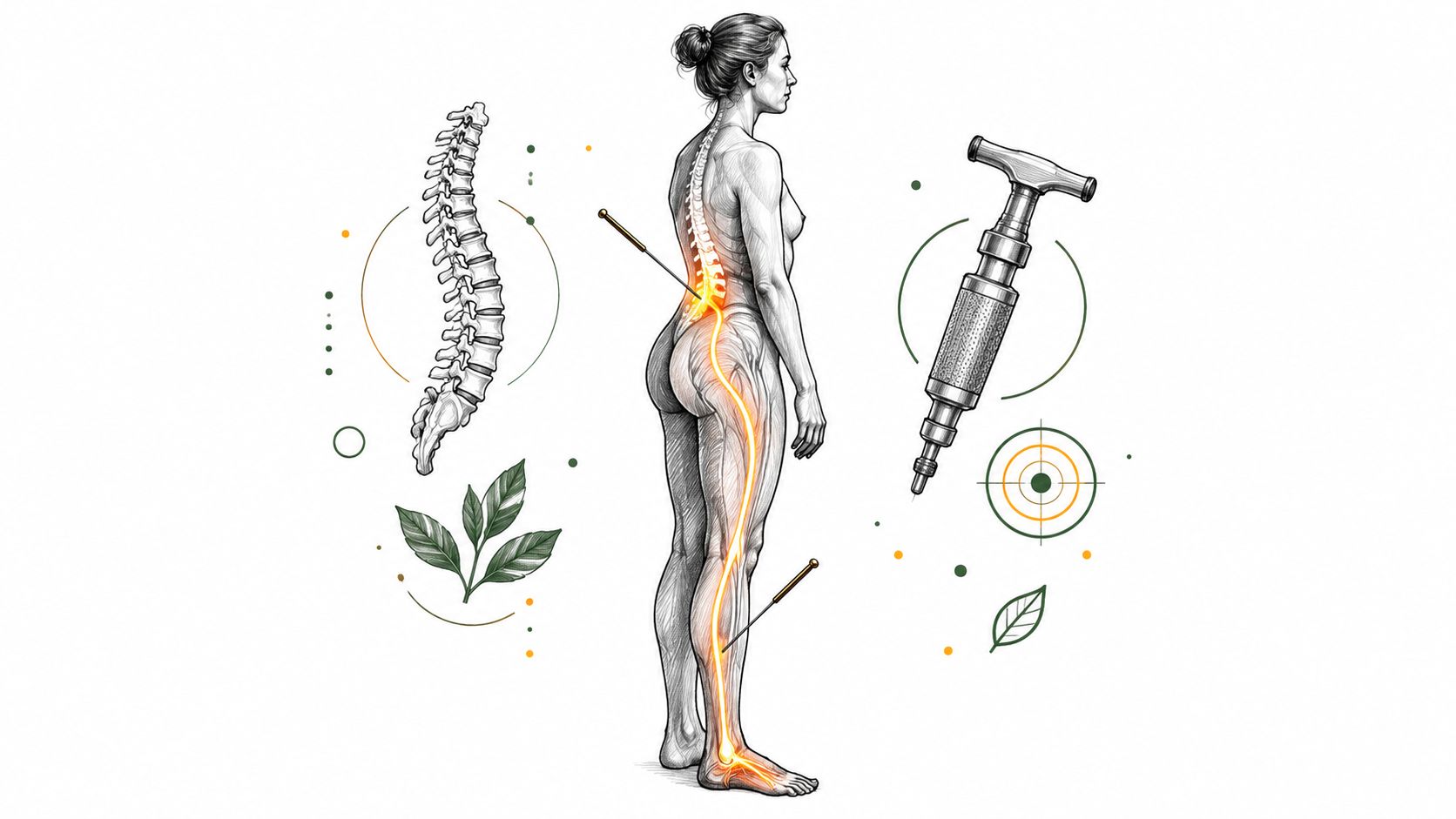
Recognize lumbar disc herniation signs and symptoms early. Learn red flags, common patterns, and how Aspen Falls Wellness evaluates and treats disc issues.
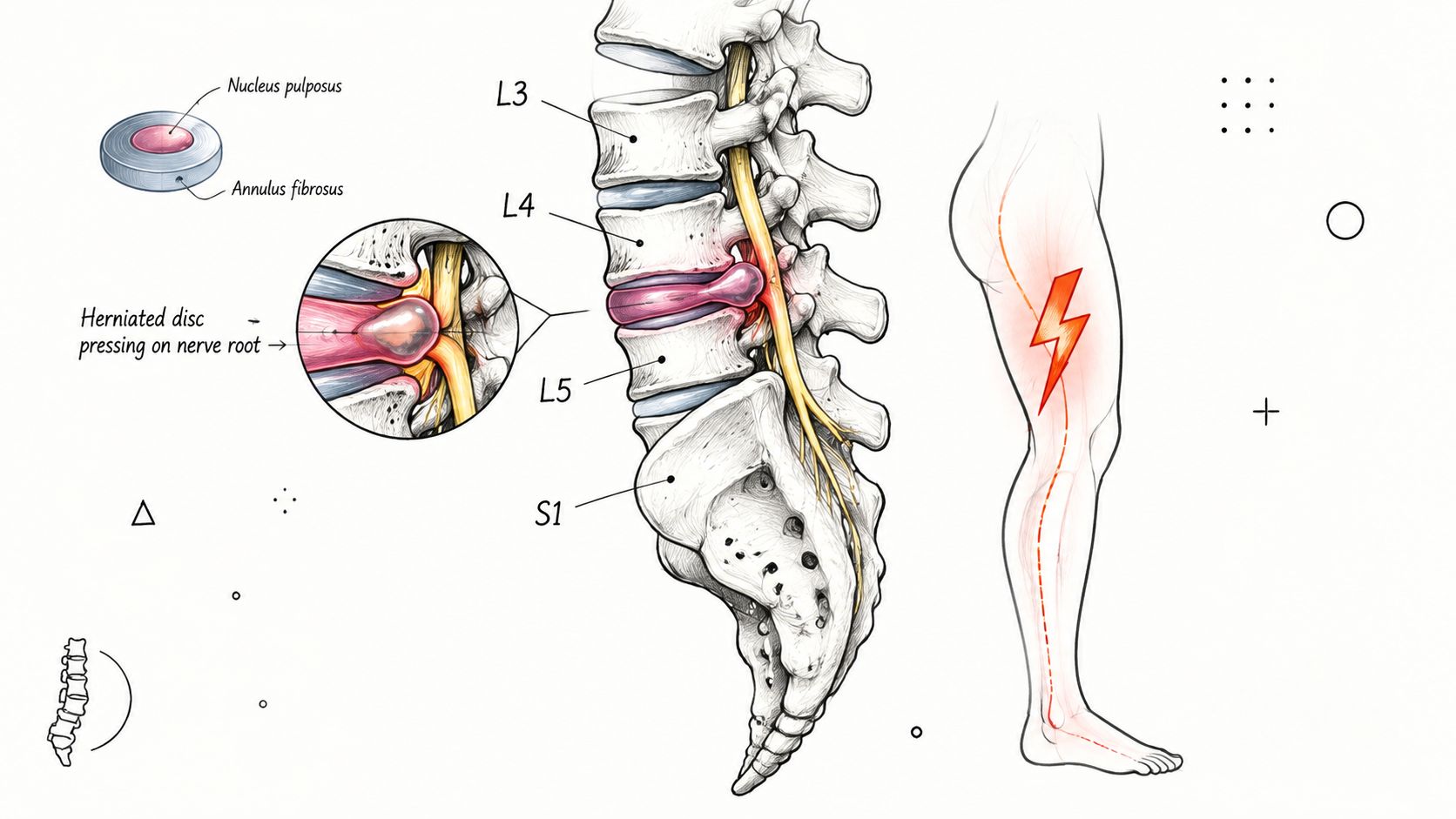



You wake up with a sharp ache in your lower back, then stand up and feel an electric line travel through your buttock and down your leg. Sitting in the car makes it worse. Coughing or sneezing catches the pain. You may wonder whether you strained a muscle, irritated a nerve, or developed a lumbar disc herniation.
The pattern matters. Back pain alone can have many causes, but leg-dominant pain, numbness, tingling, or weakness suggests that a spinal nerve may be involved. Most symptomatic lumbar disc herniations improve without surgery, yet certain combinations of symptoms require urgent medical evaluation. Knowing the difference helps you stay calm when symptoms are routine and act quickly when they aren't.
A patient may say, “I bent to pick up laundry, felt a catch in my back, and later my calf started burning.” That sequence can feel alarming, but the disc itself is not always the direct source of pain. Symptoms often begin when displaced disc material irritates or compresses a nearby nerve root.
Each spinal disc sits between two vertebrae and helps distribute load during movement. Its annulus fibrosus is a layered ring of tough fibers surrounding the softer nucleus pulposus. When the outer layers tear or weaken, the inner material can push outward. If it reaches an adjacent nerve root, it may contribute to pain, altered sensation, or weakness.
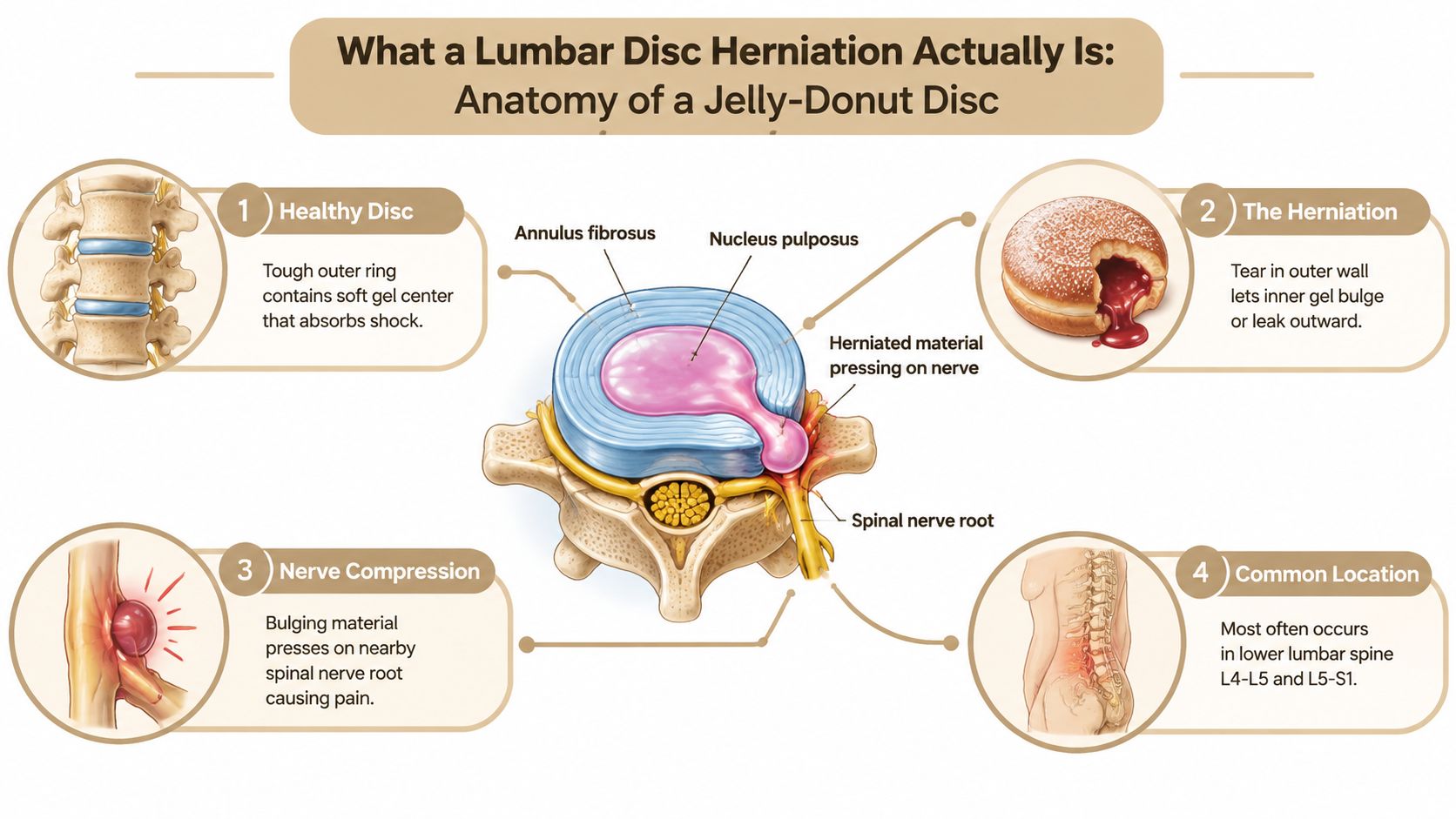
Lumbar disc herniations occur most often at L4-L5 and L5-S1. In adults aged 25 to 55, about 95% of symptomatic herniated discs are found at these lower levels, while only about 5% of lumbar disc herniations become symptomatic, according to a clinical review in Spine. These segments connect the mobile lower spine with the pelvis, so they manage substantial movement and load during bending, lifting, and sitting.
The affected level helps shape the symptom pattern. One person may feel discomfort through the buttock and down the back or side of the leg. Another may notice altered sensation in the foot or difficulty lifting the front of the foot. The important point is that symptoms depend on the involved nerve root, not on the presence of a disc bulge in an image.
Sitting places the lumbar spine in a flexed position and may increase pressure around an irritated nerve root. Clinical reference material from the National Center for Biotechnology Information describes pressure on nerve roots rising by about 40% while sitting. Bending forward can create a similar response in some people.
Coughing, sneezing, or straining can briefly raise pressure inside the spinal canal. When a nerve is already sensitive, that change may trigger a sudden jolt down the leg. It does not confirm a herniated disc on its own, but it can support a nerve-related pattern when the examination matches.
Practical rule: The useful question is not only whether a scan shows a disc change. Ask whether the imaging and examination match your pain, sensation, strength, and movement.
Imaging findings can exist without symptoms. A clinical evaluation connects the image with what your body is doing, then helps determine whether conservative care fits the pattern. For a broader discussion of conservative lower-back pain solutions, remember that radiating pain or weakness still deserves individual assessment at Aspen Falls Wellness.
The classic pattern involves more than an aching back. A lumbar disc herniation can irritate a nerve root and produce radicular symptoms, meaning pain or altered sensation that travels along the nerve's path. Symptoms often affect one side, though the pattern can change as compression or inflammation changes.
A 2024 patient-symptom survey found leg numbness in 87.0% of respondents and back pain in 81.2%, making those two complaints especially common among surveyed patients (patient-symptom survey). Those figures don't diagnose an individual, but they show why numbness shouldn't be dismissed as an incidental complaint.

Back pain can be present, but leg pain often becomes the complaint that limits daily life. A person may tolerate standing briefly yet struggle to sit through a meal or drive. Another may report that walking is manageable until the foot begins to feel weak or numb.
Some people use “leg pain when walking” to describe every radiating symptom. Neurogenic claudication, often associated with narrowing around the spinal nerves, tends to vary with posture. Standing or walking may worsen it, while sitting or leaning forward may provide relief. That pattern differs from pain caused by reduced blood flow, which isn't explained by a spinal nerve alone.
The distinction isn't always obvious at home. Your clinician may compare pulses, sensation, strength, reflexes, walking tolerance, and the positions that trigger or relieve symptoms. If you're trying to stay active while symptoms settle, read this practical resource on rowing machine lower back pain relief, but stop any activity that increases radiating pain, numbness, or weakness.
A detailed discussion of nerve-related leg pain is also available in can a chiropractor help sciatic nerve pain. The important point is simple: pain traveling below the buttock, especially with sensory change or weakness, deserves an examination rather than a guess.
Not every episode of back pain with sciatica is routine. Bowel or bladder dysfunction, saddle anesthesia, and progressive bilateral neurological deficits can indicate cauda equina compression, a dangerous condition requiring urgent evaluation.
Saddle anesthesia means numbness in the areas that would contact a saddle, including the groin, inner thighs, buttocks, or the area around the rectum. Bladder symptoms may include difficulty starting urination, urinary retention, or loss of control. Bowel control changes also matter.
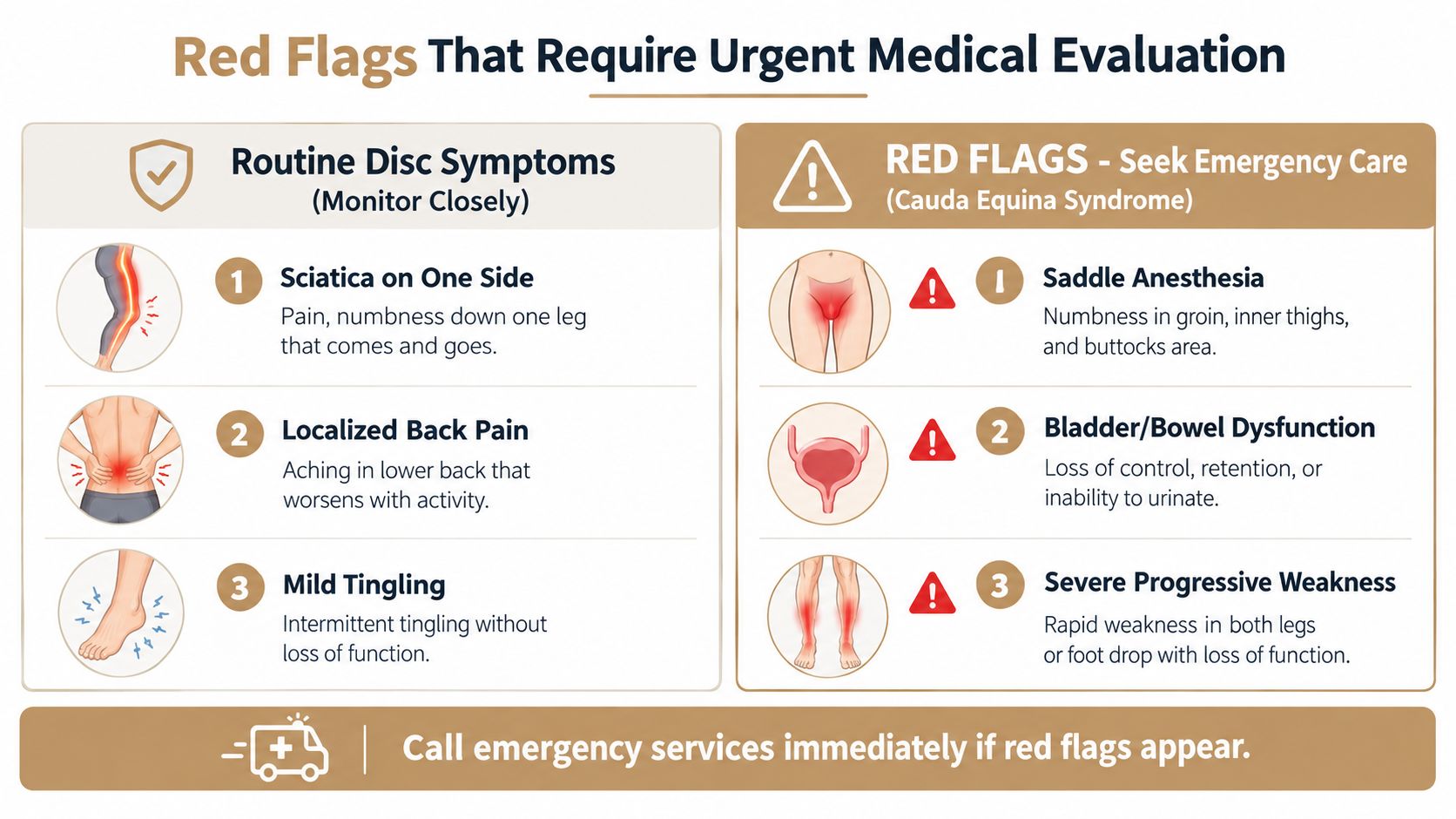
Routine sciatica commonly involves pain, tingling, or numbness down one leg. It may fluctuate with posture and activity. That pattern can still be painful and deserves care, but it isn't the same as rapidly worsening loss of function in both legs.
Seek same-day emergency evaluation if you develop:
Advanced lumbar disc herniation may include urinary retention or incontinence, diminished anal sphincter tone, and sexual dysfunction. These are late signs associated with potentially irreversible nerve injury if decompression is delayed, as outlined in a clinical review of cauda equina syndrome.
A negative red-flag checklist doesn't guarantee that cauda equina syndrome has been excluded. Evidence indicates that classic red-flag screening isn't sufficiently sensitive to diagnose or rule out the condition on its own, so clinicians need to consider the whole symptom pattern and escalate when concern remains (JOSPT clinical guidance).
Don't wait for a routine appointment if these warning signs appear. Emergency services or an emergency department can coordinate urgent neurological assessment. Imaging questions can be discussed later, and MRI versus X-ray for back pain may help explain why different tests answer different clinical questions.
A burning leg, aching back, or tingling foot doesn't automatically identify a herniated disc. Several conditions can irritate nearby nerves, refer pain from the pelvis or hip, or affect peripheral nerves outside the spine. Treatment becomes more effective when the suspected source matches the examination findings.
| Condition | Pain Pattern | Key Distinguishing Feature |
|---|---|---|
| Lumbar disc herniation | Often radiates from the low back or buttock into one leg | Numbness, weakness, or pain follows a nerve-root pattern and may worsen with coughing, sneezing, sitting, or bending |
| Lumbar spinal stenosis | Leg discomfort may increase with standing or walking | Symptoms may ease when sitting or leaning forward, with walking tolerance often limited by posture |
| Piriformis syndrome | Buttock pain can spread down the leg | Symptoms may be reproduced by local hip or buttock movement, without a clear spinal nerve-root deficit |
| Sacroiliac joint dysfunction | Pain commonly centers near one side of the pelvis or buttock | Pain may relate to pelvic loading or transitional movements rather than a consistent sensory pathway |
| Peripheral neuropathy | Burning, tingling, or numbness may affect the feet or hands | Symptoms may be more symmetrical or extend beyond one lumbar nerve distribution |
| Vascular leg pain | Leg discomfort can occur with walking | Circulation findings and reduced blood flow patterns point away from a spinal nerve source |
A disc-related nerve problem may produce measurable weakness or a focused sensory change. Peripheral neuropathy may create a broader or more symmetrical pattern. Stenosis can produce posture-dependent leg symptoms, while sacroiliac or piriformis-related pain may reproduce with local examination rather than nerve-tension testing.
These distinctions aren't perfect rules. People can have more than one condition, and an older adult may have both degenerative imaging findings and a separate source of pain. A clinician should review your history, test strength and sensation, assess movement, and decide whether imaging or referral is appropriate.
A scan can describe anatomy, but your symptom distribution and neurological examination help determine whether that anatomy is clinically meaningful.
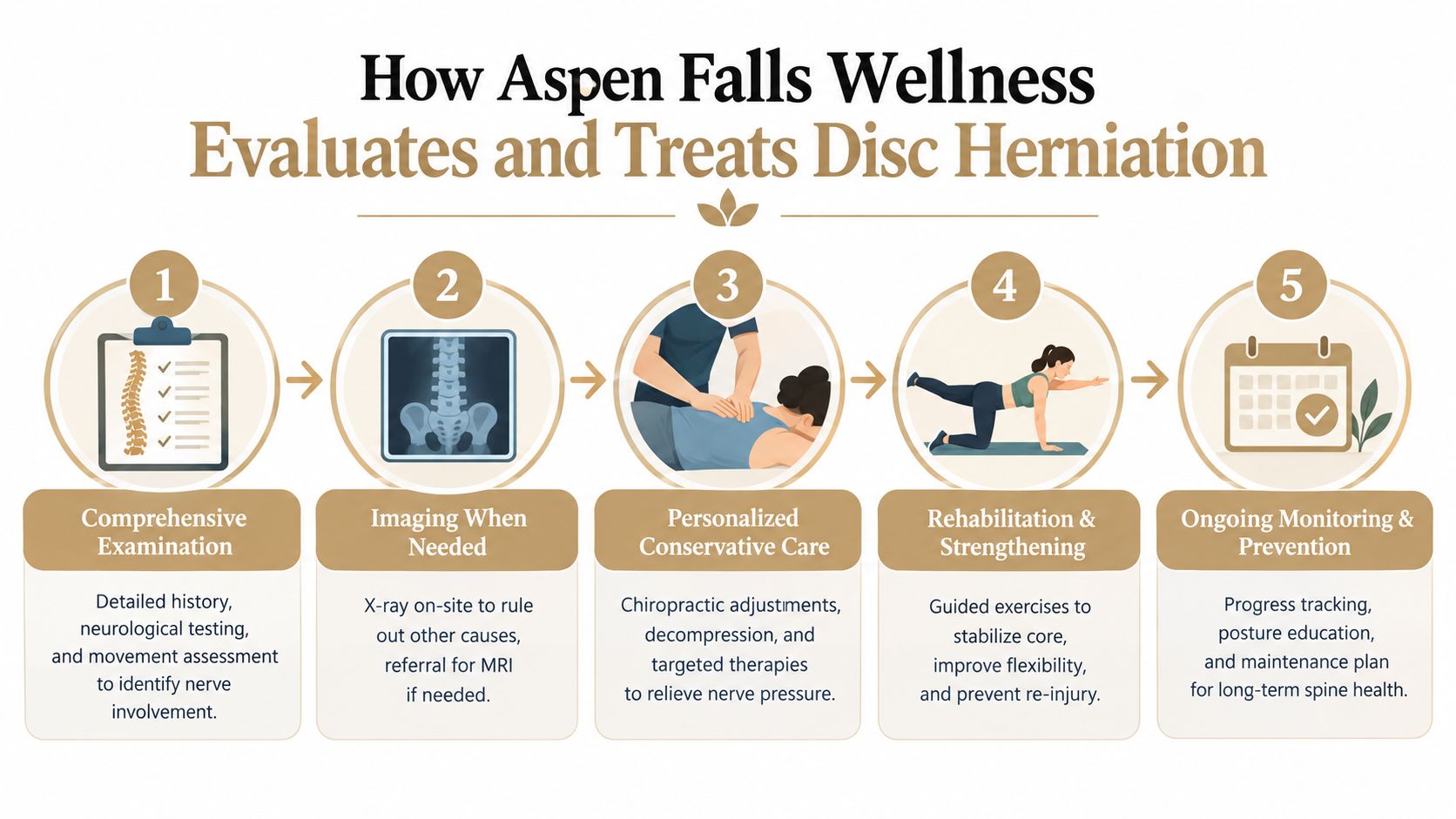
At Aspen Falls Wellness, the evaluation process is designed to identify nerve involvement and consider competing explanations before a conservative care plan is selected. The right plan may include spinal care, soft-tissue work, mobility training, or referral when the problem falls outside a non-surgical setting.
Care should begin with a diagnosis-focused examination, not a device or a preset treatment schedule. The clinician reviews how the pain started, where it travels, what positions change it, and whether sensation, strength, gait, or reflexes have changed.
Spinal decompression with the DRX 9000 may be considered for disc-related pain patterns when the examination supports a non-surgical approach. The purpose is to apply controlled unloading rather than force a painful movement. It isn't a substitute for emergency evaluation, and it shouldn't be used to delay care when progressive weakness or cauda equina warning signs are present.
A chiropractic adjustment may address restricted movement or mechanical contributors, while massage therapy can target protective muscle tension. SoftWave Therapy and MLS Laser Therapy may be incorporated as supportive modalities for pain and tissue recovery. Acupuncture can be used for pain modulation, and rehabilitation exercise helps convert short-term relief into better movement capacity.
People who enjoy golf often want to return to walking and swinging without provoking symptoms. Before increasing course activity, a golf movement screening can identify limitations in hip mobility, trunk rotation, or loading control. For general activity planning, this guide on how to browse hilly golf courses for walking can help you think about terrain and walking demands, but your return should follow your symptoms and clinician's guidance.
Car accident treatment, nutrition counseling, mobility therapy, and rehabilitation exercise can also fit into a coordinated plan when the history includes trauma, recurrent episodes, deconditioning, or broader musculoskeletal concerns. The treatment choice should follow the examination, not the other way around.
Schedule an evaluation when back pain travels into the leg, or when numbness, tingling, or weakness interferes with walking, sitting, work, or sleep. Mild symptoms that are steadily improving may be monitored with sensible activity changes, but worsening neurological function shouldn't be managed indefinitely at home.
Go to emergency care for saddle anesthesia, bladder or bowel dysfunction, or progressive weakness in both legs. Those findings don't fit ordinary, self-limited sciatica and need urgent assessment.
At a first visit, expect a conversation about symptom onset and triggers, followed by movement and neurological testing. The clinician may recommend X-ray or an MRI referral when the findings call for additional information. From there, the plan may include chiropractic care, decompression, the DRX 9000, massage, acupuncture, laser or SoftWave therapy, and a personal rehabilitation program, with follow-up adjustments based on your progress.
Symptomatic lumbar disc herniation affects an estimated 1% to 3% of the population, and 60% to 90% of cases resolve spontaneously over time, according to NCBI clinical evidence. That natural recovery potential is reassuring, but conservative care still needs appropriate monitoring so a routine pattern isn't confused with an emergency.
If your leg pain, numbness, or weakness resembles the patterns described here, visit Aspen Falls Wellness for an individualized evaluation in Salt Lake City or Sandy. The practice offers chiropractic adjustment, spinal decompression with the DRX 9000, SoftWave Therapy, MLS Laser Therapy, massage, acupuncture, mobility therapy, and rehabilitation exercise for appropriate non-surgical cases.

Stay updated with the latest chiropractic news and exclusive offers.