Learn how to know if you have a herniated disc through symptom patterns, red flags, and when to seek imaging for sciatica and nerve pain.
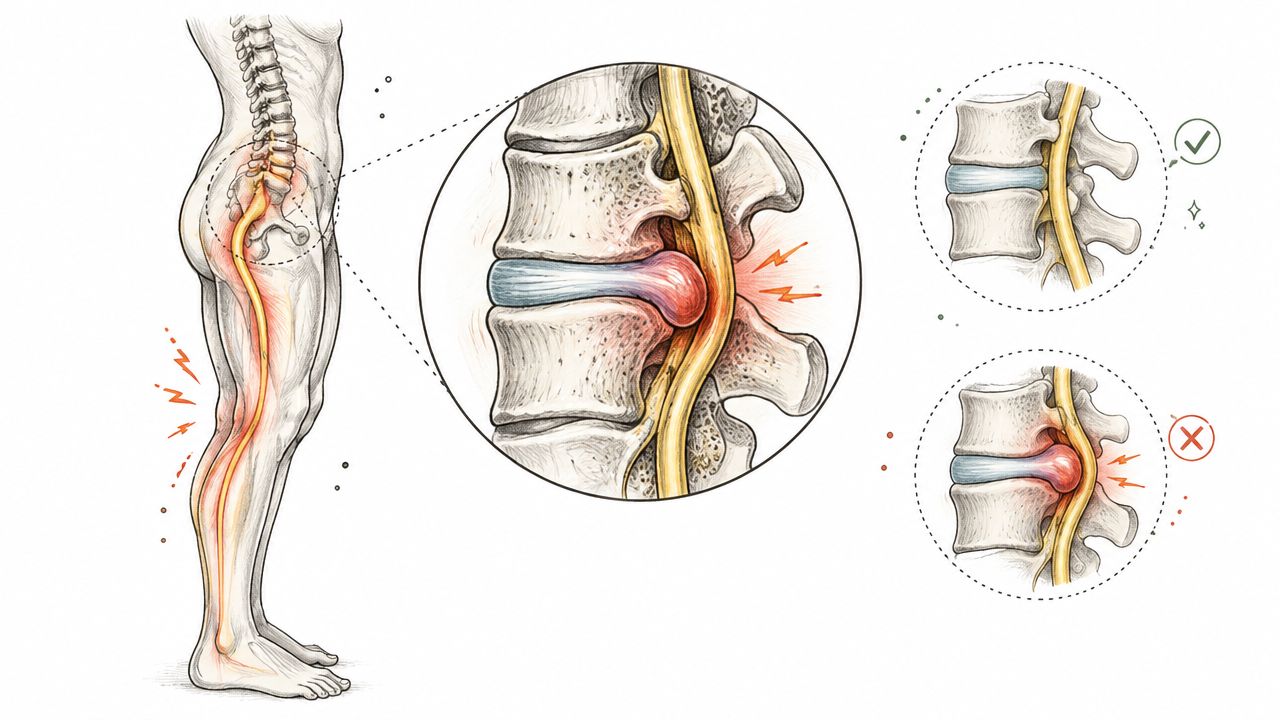
About 95% of lumbar herniations occur at L4-L5 or L5-S1, and they commonly appear as radiating leg pain, numbness, weakness, or sciatica rather than isolated back pain. That pattern makes nerve irritation more informative than the location of back pain alone.
You may be sitting carefully, avoiding the movement that started the pain, and wondering whether a sharp ache means you've damaged a disc. Then the pain begins traveling through your buttock and down one leg, or your foot feels numb when you walk. That change deserves attention, but it still doesn't prove that you have a herniated disc.
There isn't a reliable home test that can confirm the diagnosis. The safest approach is to identify whether your symptoms suggest nerve-root irritation, check for warning signs, and arrange a clinical examination when the pattern or severity warrants it.
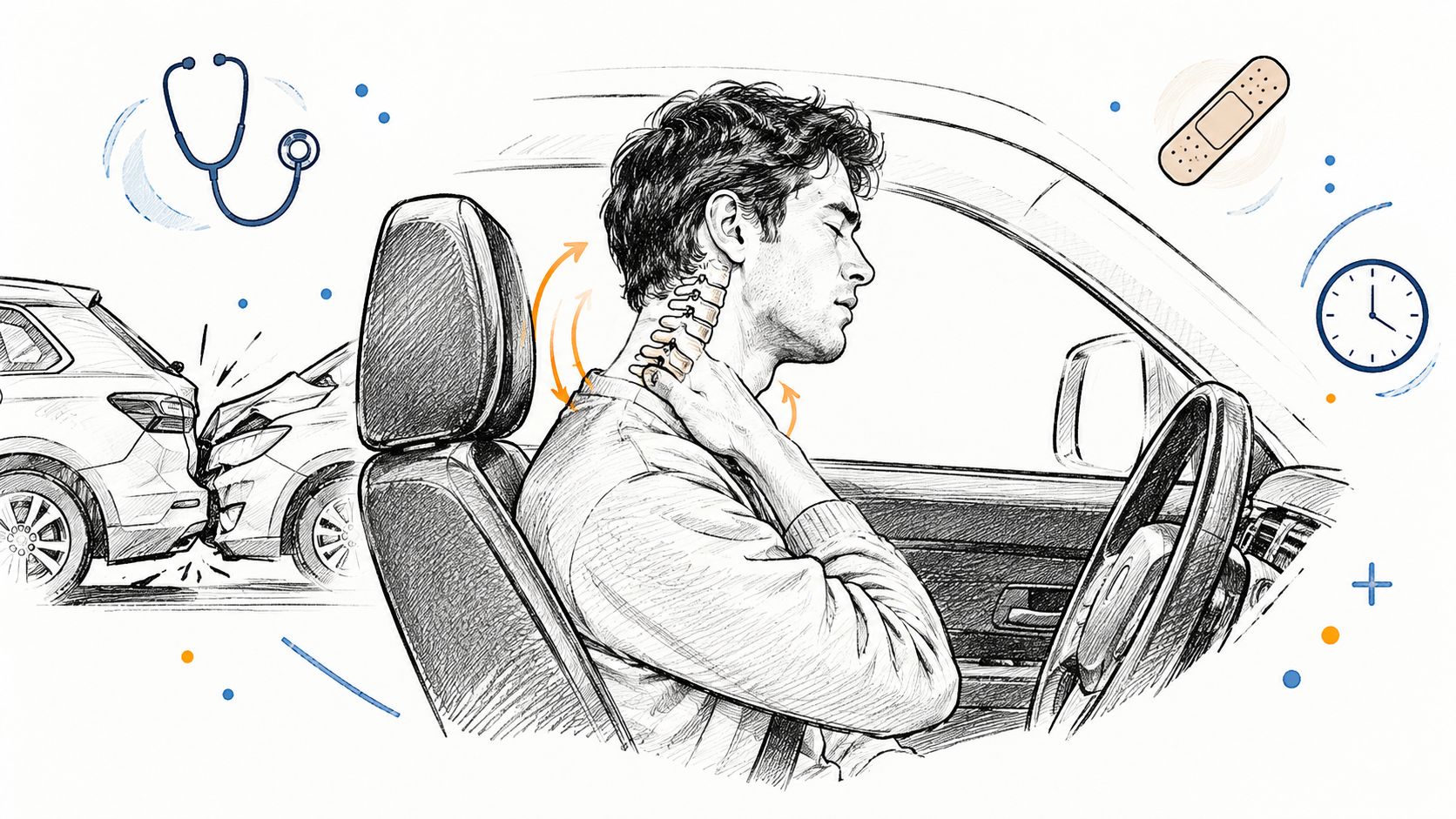
A strained muscle and a herniated disc can both cause pain after lifting, bending, prolonged sitting, or an awkward movement. The difference is often found in how the symptoms behave, not in how intense they feel.
Mechanical back pain usually stays centered around the spine or nearby muscles. It may feel tight, sore, stiff, or painful with particular movements, but it doesn't necessarily travel along the buttock and leg. A disc problem becomes more concerning when pain extends beyond the lower back and follows a nerve-related path.
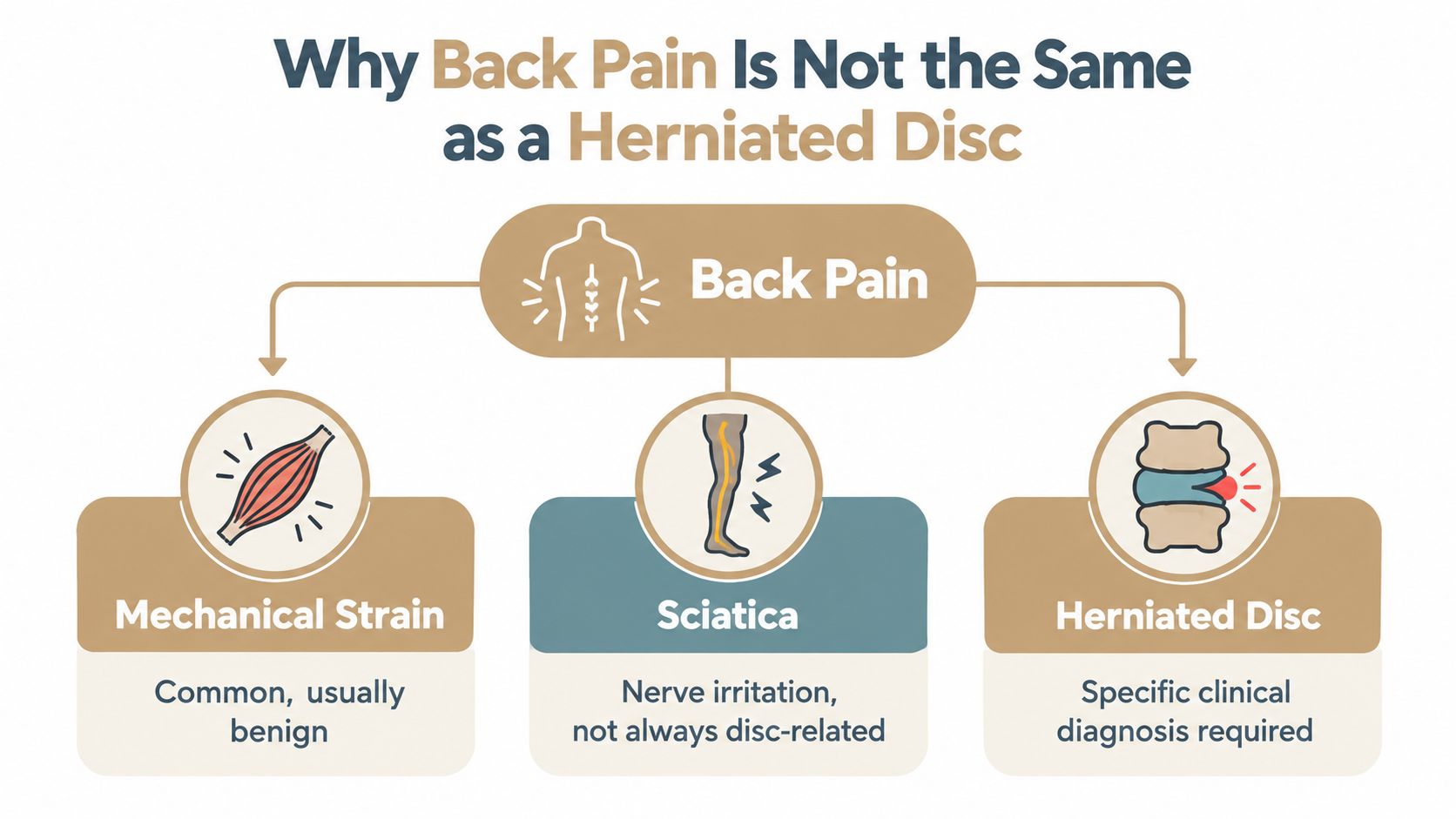
The lower spine contains several discs and nerve roots, but about 95% of lumbar herniations occur at L4-L5 or L5-S1. At those levels, irritation commonly produces leg pain, numbness, weakness, or sciatica, rather than pain limited to the spine itself (clinical overview of lumbar disc herniation).
That doesn't mean every case includes severe back pain. Some people notice the leg symptoms more than the back symptoms. Others feel pain, tingling, or altered sensation in a recognizable distribution that becomes worse when sitting, bending, coughing, or sneezing. Those features raise the clinical suspicion of nerve involvement, but they still need to be interpreted alongside an examination.
Practical rule: A painful back doesn't automatically mean a herniated disc. Pain that travels, changes sensation, or affects strength deserves a more focused assessment.
People often search for “how to know if you have a herniated disc” because they want a yes-or-no answer based on one symptom. That approach fails in both directions. It can create unnecessary fear when ordinary mechanical pain is labeled as a disc injury, or it can delay care when radiating pain and weakness are dismissed as a simple strain.
Sciatica also isn't synonymous with disc herniation. It describes a symptom pattern involving irritation of a lumbar nerve root, and it can have more than one underlying cause. If you're recovering from pregnancy or caring for a newborn, guidance on postpartum back care at The Axelrad Clinic may help you distinguish common physical strain from symptoms that need individual evaluation.
The useful question is therefore not, “Does my back hurt enough to be a disc?” Ask instead: Does the pain travel, do I have numbness or tingling, has strength changed, and are any emergency warning signs present?
Nerve irritation tends to create symptoms that extend beyond a sore muscle. The classic pattern is pain beginning in the lower back or buttock and traveling down the leg, sometimes reaching the foot. It may feel sharp, burning, electric, or aching, and it may be accompanied by tingling, numbness, or weakness.
Sciatica is a symptom, not a diagnosis. It most often results from lumbar nerve-root compression caused by a herniated disc or narrowing within the spinal canal, but the word itself doesn't identify the precise cause.
Look for a pattern rather than a single sensation:
A vague ache after activity doesn't establish a disc problem. Similarly, pain that worsens with sitting or lifting can occur with several musculoskeletal conditions. The more persuasive pattern is radiating pain paired with sensory change or weakness.
Pain can travel into the buttock or thigh without coming from a compressed nerve root. Joints, muscles, and other spinal structures can refer discomfort away from the original source. The distinction depends on the distribution, neurological findings, movement response, and overall history.
That's why repeated home maneuvers aren't a substitute for an examination. A self-test may reproduce pain, but it usually can't tell you whether the pain comes from a disc, a joint, muscle tissue, or another condition. If your symptoms follow a persistent nerve-like pattern, arrange an assessment through a clinician familiar with sciatica treatment options rather than trying to force a diagnosis.
The practical threshold is simple: local soreness can often be monitored, but radiating symptoms, numbness, and weakness should influence your decision to seek professional care.
Most back and leg pain doesn't represent a neurological emergency. Some symptoms, however, suggest that nerves serving the bladder, bowel, sexual function, and pelvic sensation may be under serious pressure. Those symptoms change the appropriate response from routine monitoring to urgent evaluation.
Seek immediate medical evaluation if you develop:
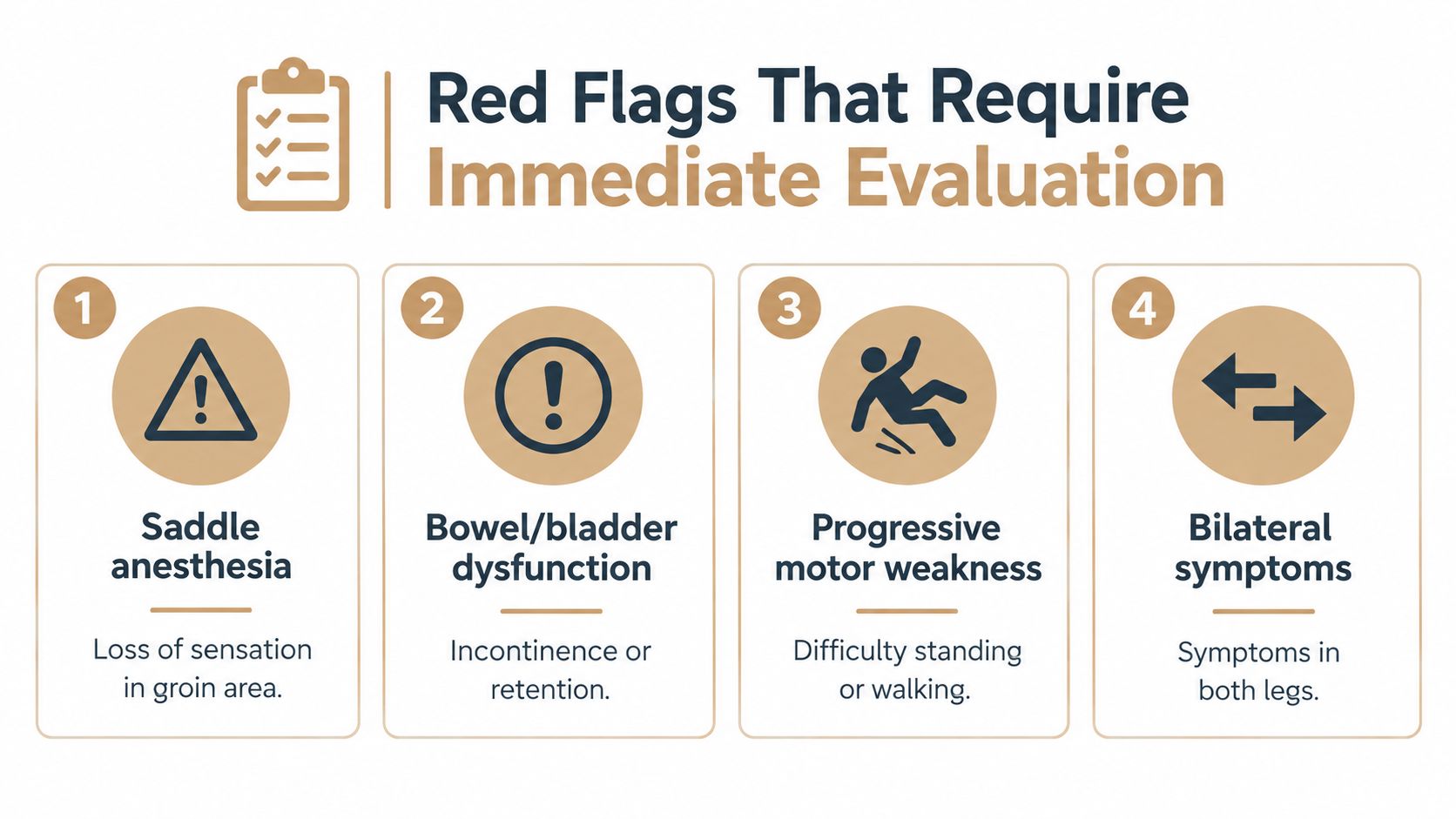
These findings can indicate possible cauda equina syndrome, a condition involving compression of the nerve bundle at the lower end of the spinal canal. The emergency warning pattern includes bilateral sciatica, reduced perineal sensation, altered bladder function, loss of anal tone, saddle anesthesia, and bowel or bladder incontinence (emergency features of cauda equina syndrome30535-2/fulltext)).
If one of these symptoms appears suddenly or progresses quickly, don't continue stretching, exercising, or waiting to see whether it settles. Contact emergency services or go to an emergency department for prompt assessment. MRI is commonly used to investigate suspected cauda equina syndrome, with CT myelography considered when MRI isn't available.
Red-flag screening isn't meant to make ordinary back pain frightening. It gives you a clear decision rule. Severe or progressive neurological changes require a faster response than isolated pain, even if the pain itself isn't the most intense symptom.
A proper evaluation starts with a conversation, not a scan. The clinician will ask when the symptoms began, what triggered them, where the pain travels, whether coughing or sneezing changes it, and whether numbness or weakness is progressing. They'll also ask about bladder, bowel, saddle-area sensation, fever, trauma, and other features that can alter the urgency.
The physical examination then tests whether the history matches a nerve-root pattern. It usually includes strength testing, sensation, reflexes, walking, and the straight-leg raise. The straight-leg raise is considered the most sensitive single bedside test, but it has limited specificity, so a positive result doesn't identify a herniated disc by itself. A crossed straight-leg raise is less sensitive but more specific, which can make a positive finding more useful for confirming nerve irritation when the rest of the examination supports it (clinical examination for lumbar radiculopathy).
| Assessment Method | Strengths | Limitations |
|---|---|---|
| History | Identifies radiating pain, sensory changes, weakness, and symptom triggers | Symptoms overlap with other spinal and musculoskeletal conditions |
| Neurologic examination | Tests strength, sensation, reflexes, gait, and functional loss | Findings can be subtle or difficult to interpret without training |
| Straight-leg raise | Helps assess nerve sensitivity and is useful when combined with other findings | A positive result isn't specific enough to confirm the disc source alone |
| MRI | Shows disc anatomy and possible nerve compression | Abnormalities can appear in people without symptoms and require clinical correlation |
A herniated disc can't be diagnosed reliably from symptoms alone, but MRI findings can't establish the diagnosis by themselves either. Historical evidence found disc herniations on MRI in 20% to 36% of asymptomatic volunteers, which is why clinicians must match anatomy to symptoms and examination findings (diagnosis of lumbar disc herniation).
MRI is the preferred confirmatory test when symptoms persist, neurological deficits appear, or red flags are present. Most acute disc herniation cases improve within about 4 weeks, and imaging before that period can produce false positives because disc abnormalities are common even without symptoms. For a practical explanation of how clinicians choose between studies, see MRI vs. X-ray for back pain.
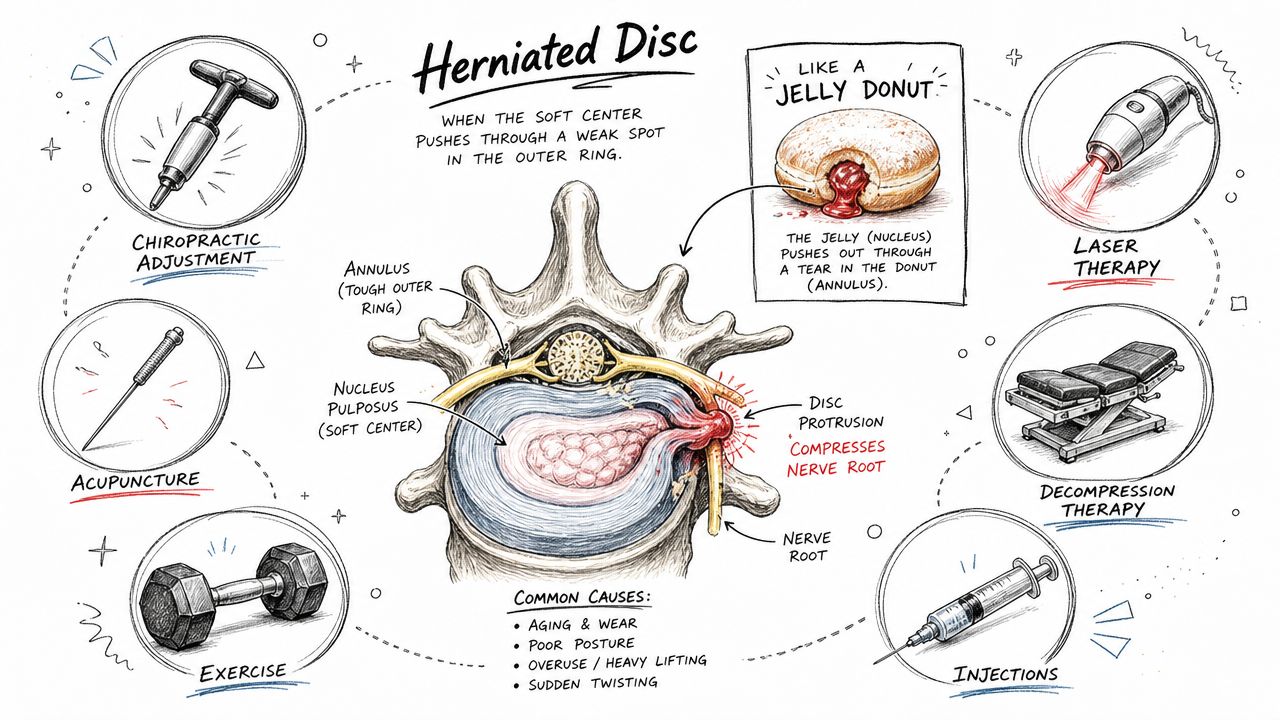
When the examination supports disc-related nerve irritation without emergency findings, conservative care is often the starting point. The treatment plan should match your symptoms, neurological status, movement tolerance, and functional goals. No single procedure should replace a proper assessment or be presented as a guaranteed way to “put a disc back in place.”
The first priority is usually to keep you moving safely while reducing activities that sharply aggravate the nerve. Prolonged bed rest can make recovery harder, while carefully selected movement can preserve mobility and confidence. A clinician may combine hands-on care with exercises, symptom-modification strategies, and regular reassessment.
Possible components include:
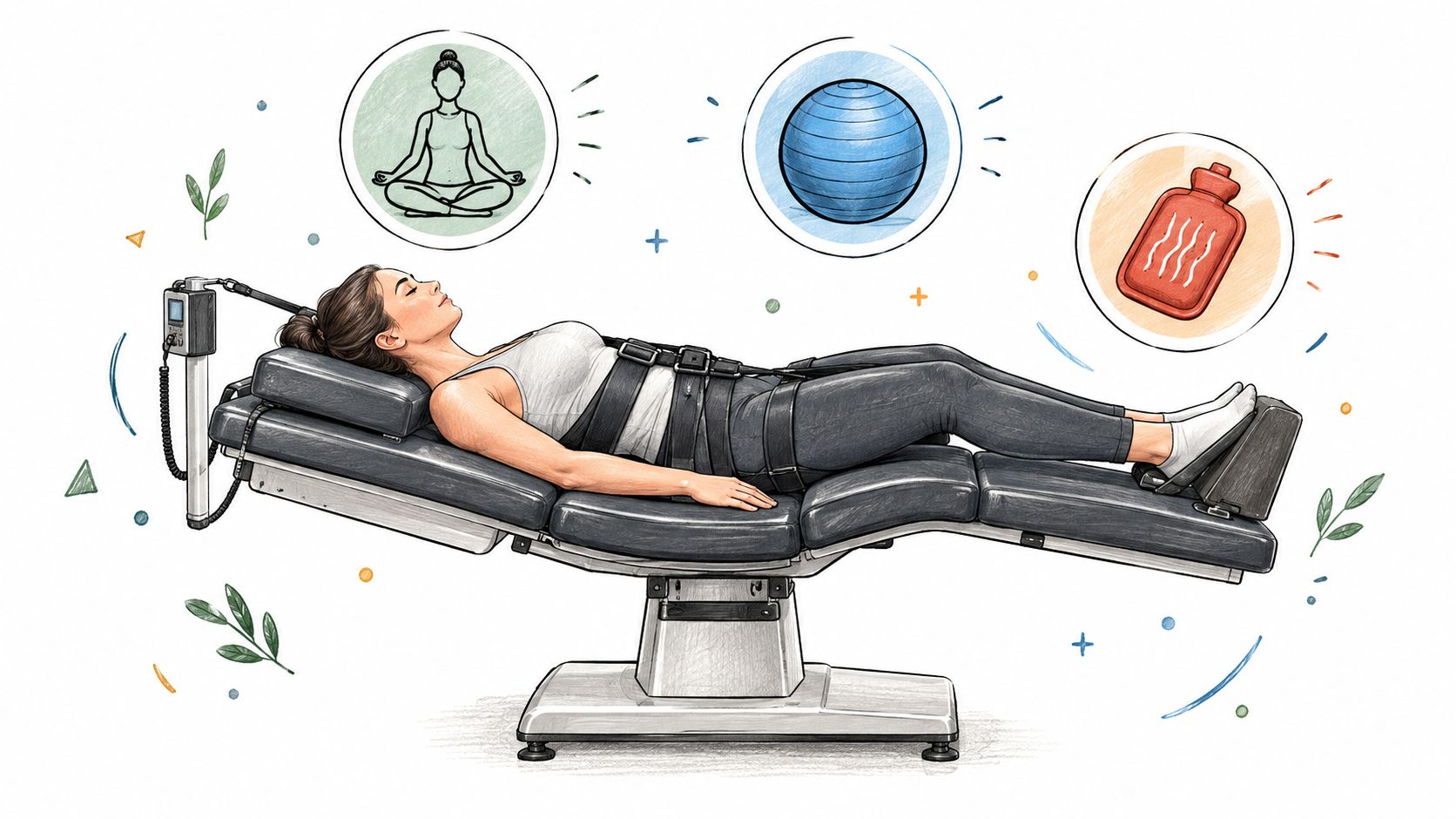
Conservative treatment can help reduce pain, improve mobility, and guide a gradual return to daily activity. It can't determine the diagnosis from treatment response alone. Feeling better after massage, adjustment, or decompression doesn't prove that a disc caused the original pain, just as a temporary flare doesn't prove that treatment has damaged the spine.
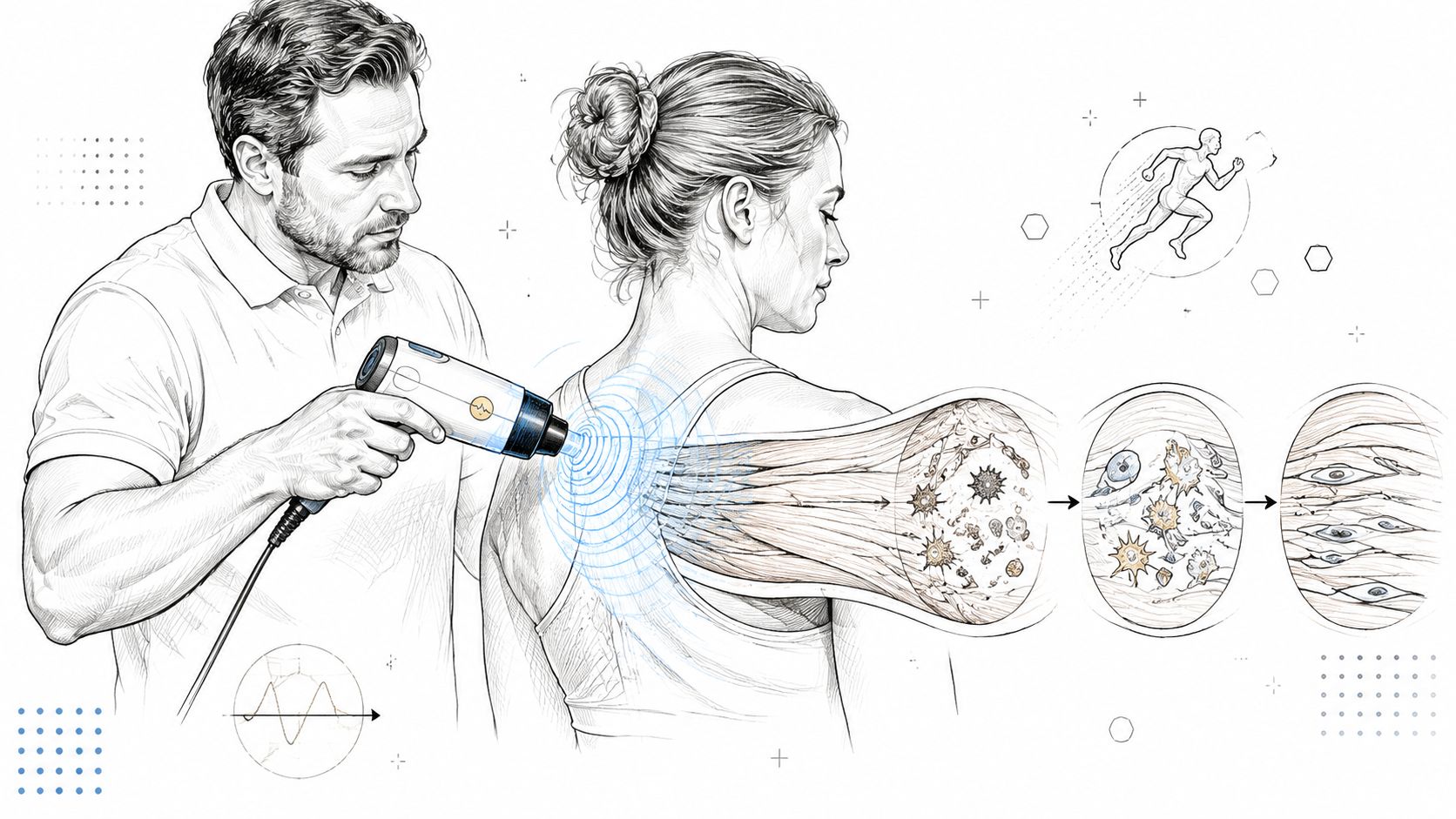
Aspen Falls Wellness provides evaluation and non-surgical care that may include Chiropractic Care, Spinal Decompression with the DRX 9000, adjustment, massage, laser therapy, acupuncture, and rehabilitation exercise, with imaging referral or specialist input when indicated. For readers interested in the broader relationship between conditioning and long-term physical capacity, VO2 max training for longevity offers useful context, although cardiovascular training isn't a diagnostic test for a herniated disc.
A structured approach to disc herniation treatment without surgery should include clear goals, activity guidance, and reassessment rather than an indefinite series of passive sessions.
Track three things while symptoms evolve: where the pain travels, whether sensation or strength changes, and what you can do today that you couldn't do before. Improvement in walking, sitting, sleep, and leg symptoms supports continued conservative care when no warning signs are present.
Arrange a clinical examination if radiating pain persists, numbness continues, weakness appears, or normal activities remain restricted. The examination helps decide whether you need structured care, imaging, or referral instead of leaving you to interpret symptoms alone.
Use this decision path:
Don't judge the situation by pain intensity alone. A moderate pain level with worsening weakness can be more urgent than severe soreness that is steadily improving.
Aspen Falls Wellness can evaluate back pain that travels into the leg, numbness, tingling, or weakness and build an individualized conservative plan when appropriate. Visit Aspen Falls Wellness to request an assessment and discuss options such as chiropractic adjustment, spinal decompression, mobility therapy, rehabilitation exercise, and imaging referral when clinically indicated.

Stay updated with the latest chiropractic news and exclusive offers.