Learn how to prepare for acupuncture: what to eat, wear, bring and tell your practitioner before your first session.
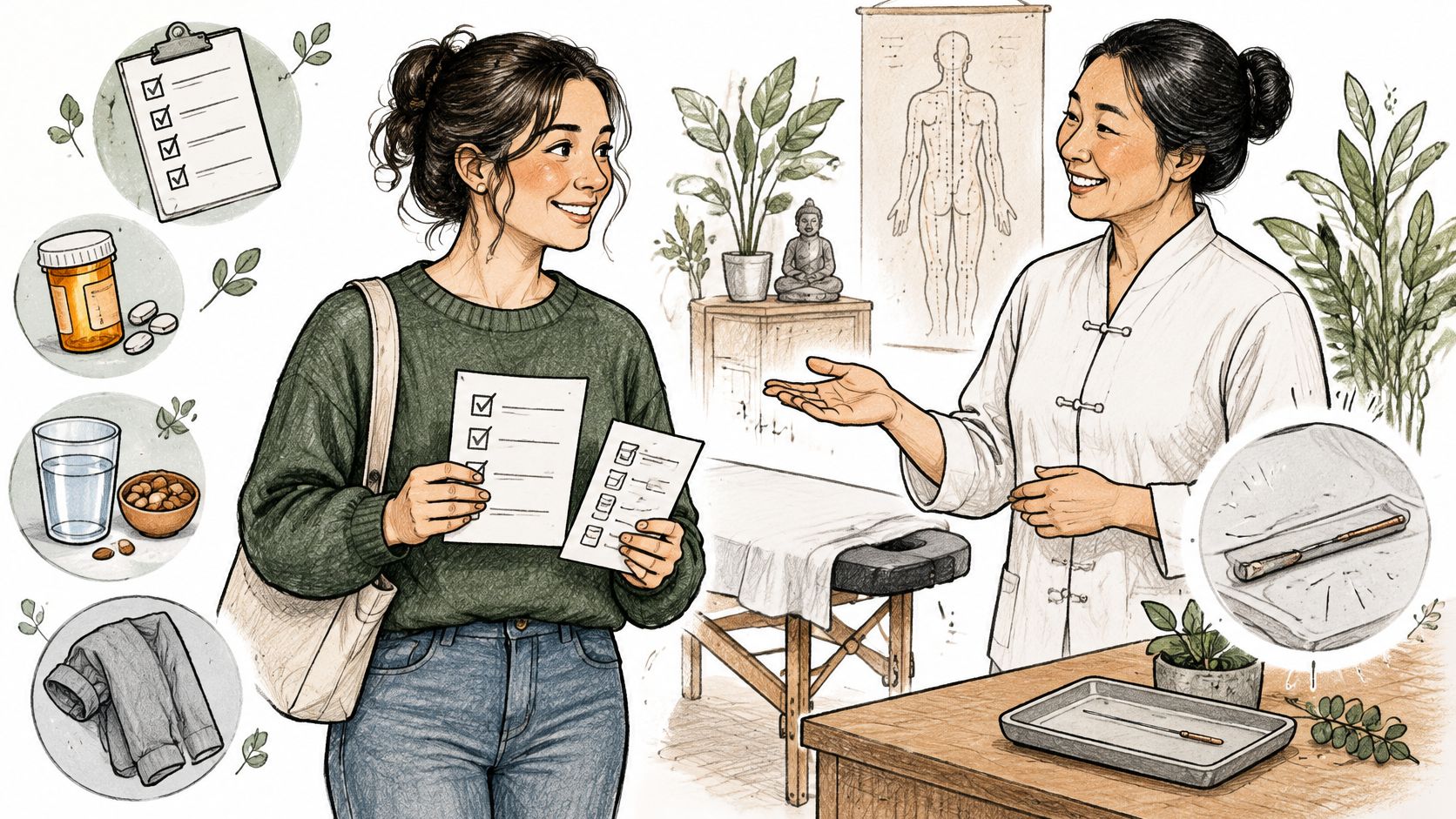
Is preparing for acupuncture mostly about what you eat and wear, or about what your practitioner needs to know before placing a needle? Comfortable clothes help, but a clear health history and an honest safety screen matter more.
Learning how to prepare for acupuncture doesn't require a special routine. It means organizing your medications and symptoms, avoiding unnecessary fasting, and understanding what will happen so you can speak up throughout your visit.
Preparation is about safety screening and a clear intake, not making the needles work better.
| Timing | Action | Why It Matters |
|---|---|---|
| One week before | Compile a full medication, supplement and diagnosis list | Lets the practitioner spot blood-thinning and interaction risks before needling |
| Two to three days before | Note your main complaint, when it started and what changes it | Gives the intake interview concrete detail |
| The day before | Confirm the time, travel and a ride home if needed | Prevents rushing and covers past drowsiness after treatment |
| The morning of | Eat a normal light meal and drink water | Reduces light-headedness and fainting risk |
| On arrival, 10–15 minutes early | Finish forms and report any change in health | Leaves time for intake and any tongue and pulse assessment |
Treat this as a planning schedule, not a medical deadline. If your appointment is tomorrow, you can still gather the information and call about anything that needs clarification.
Make your symptom notes specific. Instead of writing “back pain,” write “lower-back pain that started after lifting, worsens while sitting, and eases when walking.” Add what the problem stops you from doing, such as sleeping comfortably, driving to work, or finishing a round of golf.
A World Health Organization Bulletin review summarized in the acupuncture safety information reported mild, transient adverse events in 6.71%–15% of treatments, most commonly slight bleeding or hematoma and local needling pain. These figures describe temporary treatment events, not a prediction of your individual risk.
Serious complications are uncommon when appropriately trained practitioners deliver treatment, but “uncommon” doesn't mean screening is unnecessary. Your practitioner needs to know whether you've previously felt faint around needles, become unusually sleepy after treatment, or arrived exhausted after work or exercise.
Practical rule: Don't push through illness or exhaustion just to keep an appointment. Call and describe how you're feeling before traveling to the clinic.
Your travel plan matters, too. If past treatment left you drowsy or faint, arrange another way home rather than assuming you'll feel different this time. Leave enough room in your schedule to discuss concerns without rushing into treatment.
A useful intake is a safety check, not just a list of diagnoses. Share the details that can affect needle placement, bleeding, or how your body responds to treatment.
| Condition or medication | Why it matters | What to do before the visit |
|---|---|---|
| Anticoagulants such as warfarin or heparin | May increase the risk of minor bleeding | Give the medication name and dose. Do not stop it without speaking to the prescriber |
| Aspirin or other antiplatelet drugs | The cited analysis found no significant association with post-treatment bleeding | Disclose the medication and let the practitioner assess your situation |
| Pregnancy or possible pregnancy | May affect point selection | Disclose it before treatment is planned |
| Diabetes | Blood glucose can shift around treatment | Follow your usual meal and medication plan and bring the details |
| Bleeding or clotting disorder | May increase bruising or hematoma risk | Disclose it before the first needle |
| Pacemaker | May affect whether electrical stimulation is used | Disclose it and ask whether stimulation is planned |
| Epilepsy | The practitioner may need to account for it during treatment | Disclose it and discuss monitoring |
| Immune suppression or recent infection | May affect infection-related precautions | Tell the practitioner before treatment |
| Recent surgery or injections | May affect which needle sites are appropriate | Give the dates and locations |
“Blood thinner” covers medications that work differently. A large observational analysis summarized in professional acupuncture safety guidance included 13,447,563 acupuncture sessions among 821,946 participants and found that anticoagulants increased minor-bleeding risk, while antiplatelet drugs weren't significantly associated with post-treatment bleeding.
The practitioner should assess your actual medication, conditions, and bleeding history. The findings do not make aspirin irrelevant or mean every anticoagulant user is unsuitable for treatment.
Do not stop warfarin, heparin, aspirin, or another prescribed medicine on your own. Bring the medication name, dose, and reason you take it. Mention unusual bruising, prolonged bleeding, or previous treatment complications. Any medication change belongs with the prescribing clinician.
Mention allergies, poor wound healing, liver or cardiovascular disease, and other ongoing treatments, even if they seem unrelated to your reason for seeking care. For example, a recent injection in your hip may affect which areas are appropriate to needle when you're seeking care for back discomfort.
Before the appointment:
A steady meal, enough water, and clothing that can be adjusted make the day easier. Eating advice varies, so follow any instructions from your practitioner and ask about restrictions that conflict with your usual health routine.
| Source | Guidance | Practical use |
|---|---|---|
| Mayo Clinic | No special preparation required | Eat normally if you feel well |
| UCLH | Take meals and regular medicines as usual; choose a light meal if you may lie on your stomach | Drink water before and after treatment |
| NHS patient guidance | Eat within 1–2 hours beforehand; other guidance allows 2–4 hours | Treat the timing as guidance, not a rigid cutoff |
| Diabetes guidance | Eat according to your usual medical plan; acupuncture may occasionally lower blood glucose | Bring your glucose-management plan |
Choose a light meal you know sits well, such as toast with an egg, oatmeal, or a small rice-based meal. A familiar meal is a safer choice than arriving hungry or eating a large portion just before lying on your stomach.
The practical concern is light-headedness, so plan food and water around the whole day. If your appointment follows a long journey or a physically demanding shift, consider when you can comfortably eat and drink before you arrive.
If you have diabetes, follow your established food, medication, and glucose-management plan rather than a general timing suggestion. Bring what you need to follow that plan.
Caffeine instructions vary. Ask the clinic whether your practitioner recommends avoiding it before or after treatment, and whether that advice applies to you.
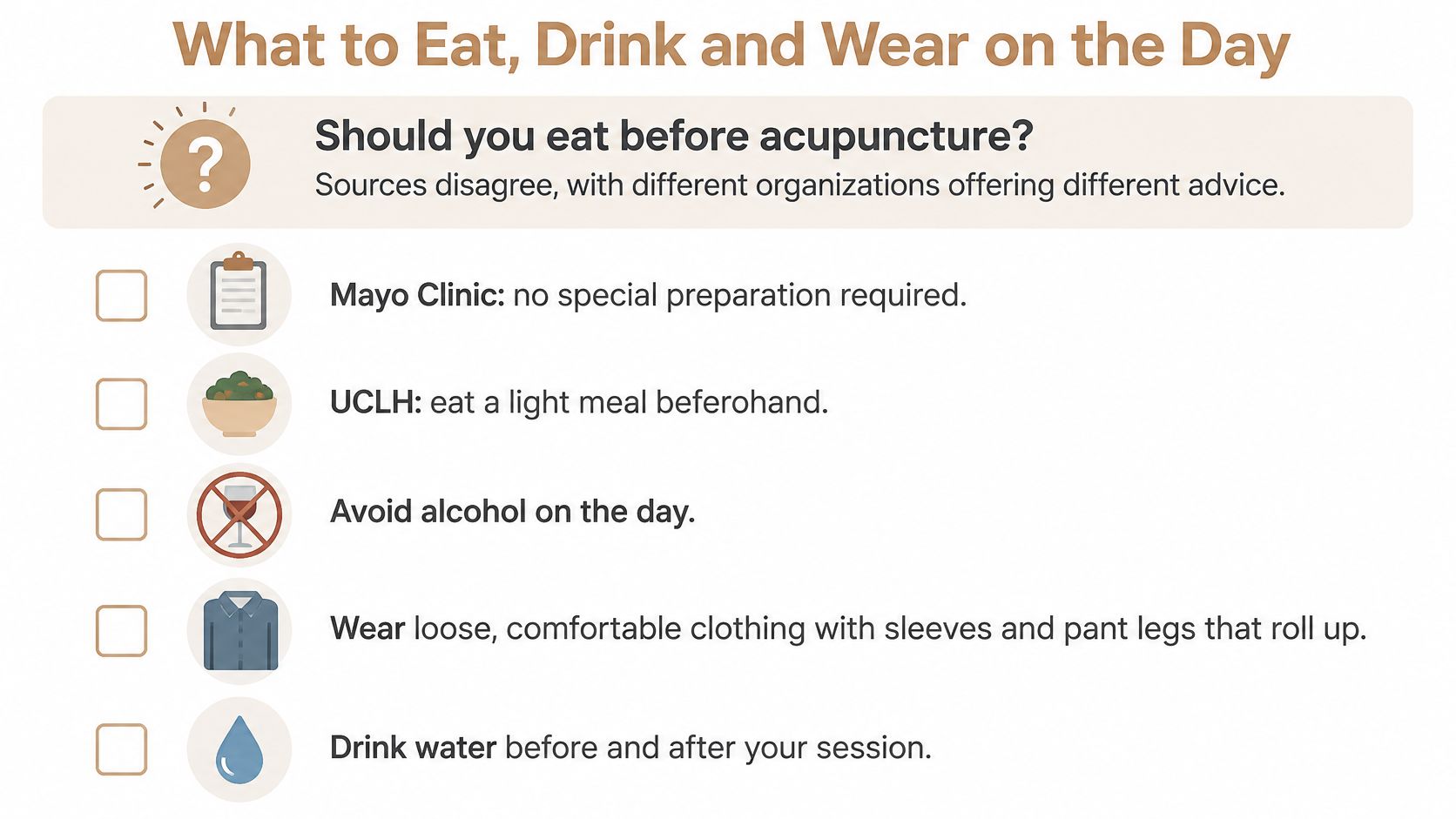
Wear clothes that make it easy to reach the treatment area while keeping you comfortable and covered. Loose sleeves, shorts, or trousers that roll up are easier to adjust than fitted jeans or tight cuffs. For more ideas, see this guide to what to wear to a chiropractic appointment.
If your plans also include massage, GLAZE - House of Wellness's guide to getting ready for body therapy in Lombok offers separate preparation guidance. Follow any acupuncture-specific instructions from your practitioner.
What happens once you are in the treatment room?
Your first visit begins with a conversation before any needling. Say the problem is recurring neck pain. The practitioner needs when it starts, which movements provoke it, and what you want to do more comfortably, such as turning your head while driving. A concrete goal like that is more useful than picking a technique yourself.
The intake works like a preflight checklist. History, symptoms, medications, and goals are reviewed first so the plan fits your body instead of a generic script.
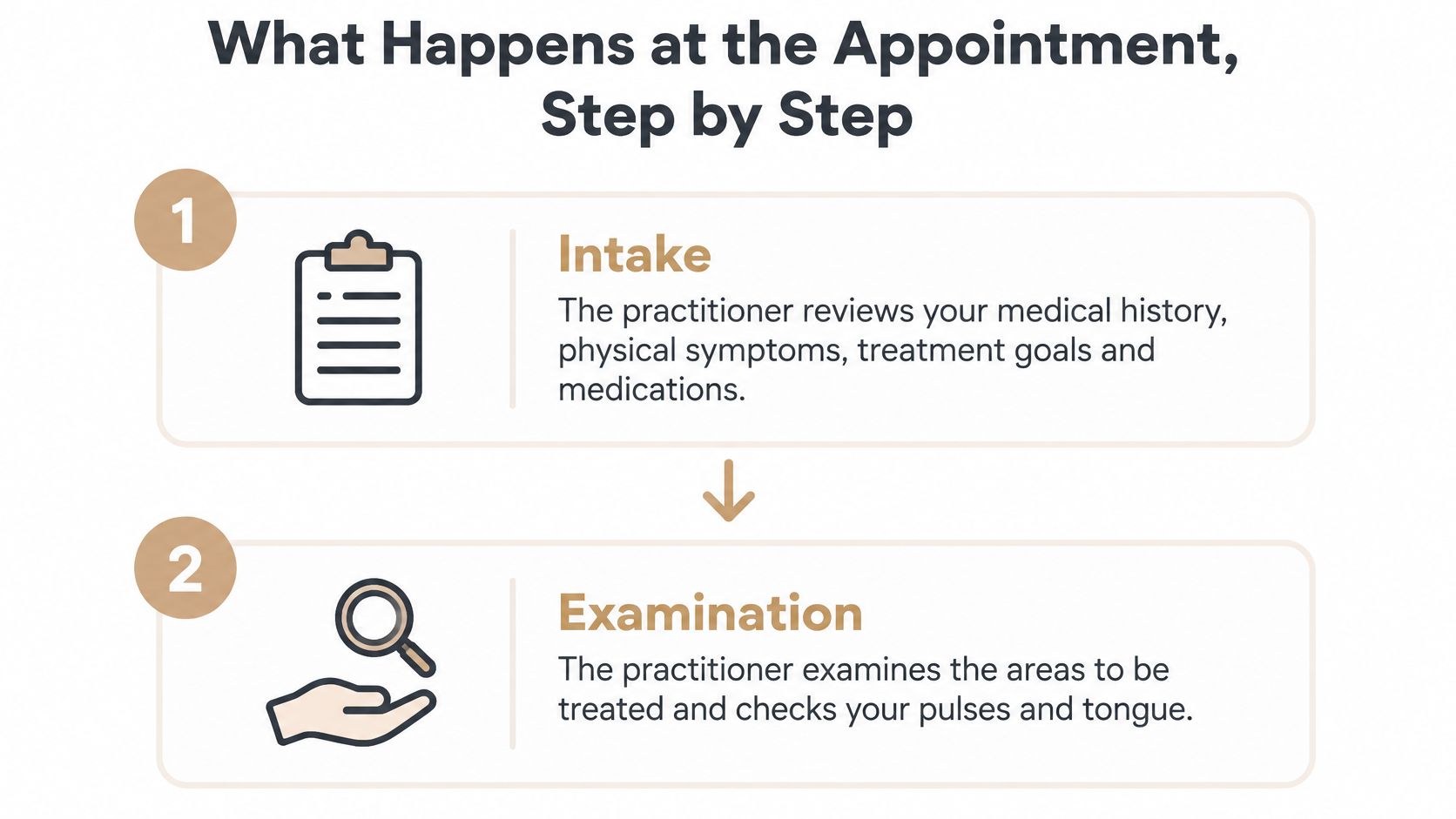
The examination may include the painful area as well as your tongue and radial pulse, the pulse felt at your wrist. These are parts of traditional acupuncture assessment. They can appear alongside questions you already know from other healthcare visits.
StatPearls' acupuncture overview describes approximately 350 points across 14 meridians in acupuncture systems. The practitioner selects points from your symptoms and assessment. The chart is part of the clinician's training.
You then settle into a supported position, perhaps lying face up, face down, or on your side. Speak up if a position aggravates your back, makes breathing uncomfortable, or is hard to hold. A few minutes of shifting now is easier than staying still in a pose that hurts.
Insertion may produce a brief pinch. Stimulation can also produce de qi: heaviness, tingling, numbness, or soreness, more like steady pressure than an injection.
NIH acupuncture information gives a typical 15–30-minute range with the needles in place. Plan that window for needling itself, separate from intake and examination.
Report dizziness, sharp pain, or significant discomfort immediately.
At Aspen Falls Wellness, new patients start with an initial consultation and examination, receive a personalized treatment plan, and then work on relieving pain. Those stages shape the visit. People still respond differently.
If persistent symptoms brought you in, our information on acupuncture for chronic pain can help you prepare questions about goals and progress.
A clear first conversation can help you understand who will provide your care and how treatment decisions are made. Check the practitioner's license with the state licensing board that applies where you'll receive treatment, and confirm that the license and training fit the service being offered. NIH and NCCIH patient guidance also recommends checking practitioner credentials and discussing complementary treatments with your healthcare providers.
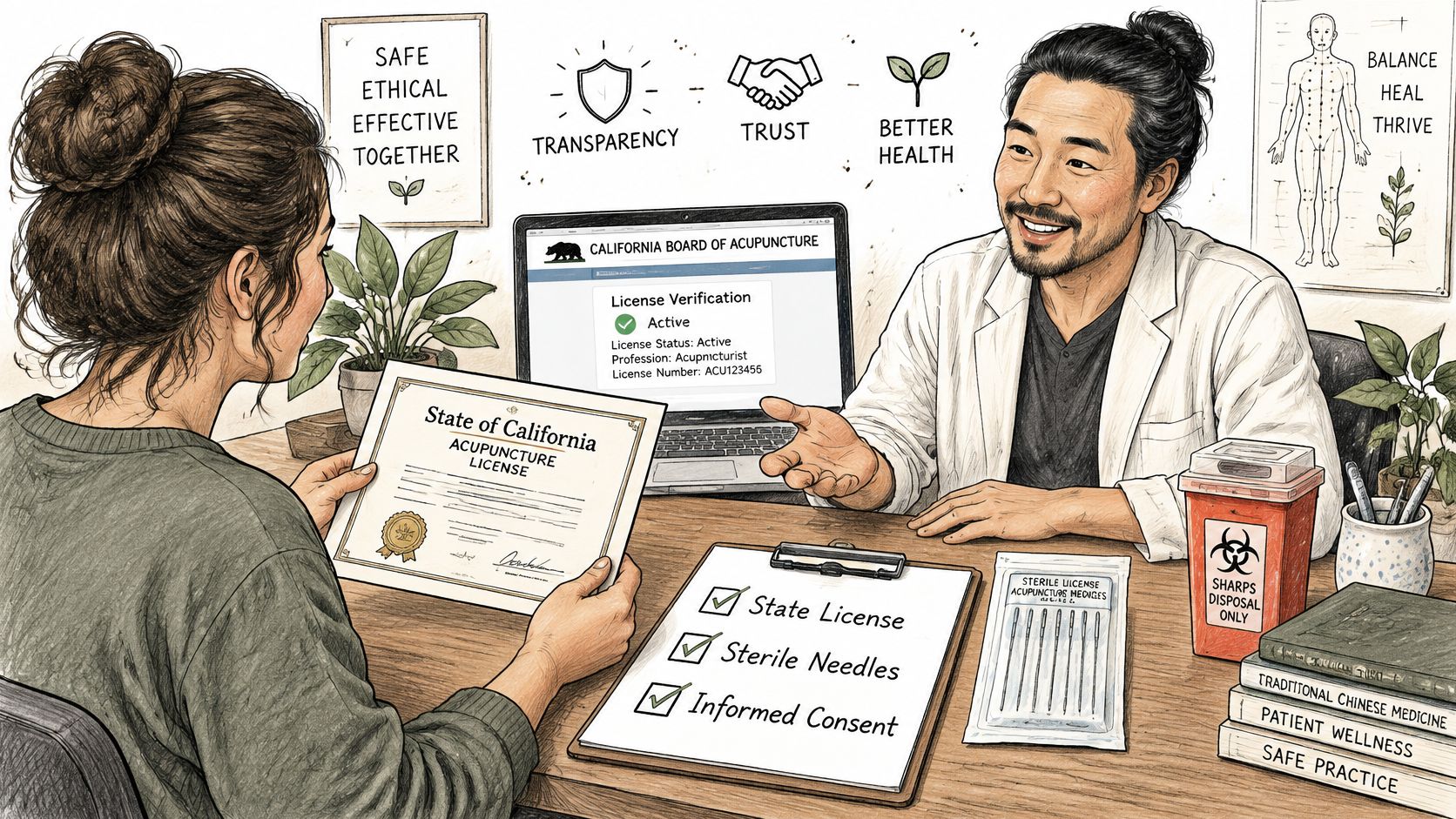
Needle safety is a practical question, not a formality. Aspen Falls Wellness uses sterile, single-use, very fine needles. You can also ask how the practitioner handles hand hygiene, skin preparation, and sharps disposal. Improper technique or nonsterile equipment can lead to complications, including infection, bleeding, or injury.
Bring a short list of questions to the consultation:
A helpful explanation connects a recommendation to your circumstances. For example, you might discuss progress in terms of daily activities or sleep affected by pain, rather than assuming that a fixed number of visits suits everyone.
Write down the answers while they're fresh. A question-led guide to compare regenerative clinics before treatment offers a way to organize questions for a healthcare consultation.
Aspen Falls Wellness's chiropractors, massage therapists, acupuncturists, pain management specialists, and nutritional coaches collaboratively design treatment plans. Let your primary healthcare provider know about your appointment so the people involved in your care have the same information.
A clear intake helps the clinic assess whether acupuncture fits your situation and what adjustments may be needed. Use the medication and pregnancy guidance above when deciding whether to call before booking. Describe any other concern plainly so the clinic can assess it.
For example, mention recent surgery near the painful area or an infection or open wound where needles might be placed. A prospective safety review supports structured screening and avoiding needling through infected skin or open wounds.
If you are uncertain, contact the clinic and keep taking medication as prescribed unless your prescribing clinician advises otherwise. If your health changes after booking, update the team before treatment begins. When no concerns need clarification, bring your notes and questions to the appointment.
Aspen Falls Wellness offers acupuncture at its Salt Lake City and Sandy clinics. Treatment may combine acupuncture with bodywork, cupping, and topical herbal medicines, so mention relevant skin sensitivities or product allergies. New patients start with an initial consultation and receive a personalized treatment plan. You can also visit Aspen Falls Wellness to book.

Stay updated with the latest chiropractic news and exclusive offers.