Master repetitive strain prevention with active recovery strategies, ergonomic adjustments, and targeted therapies to stop pain before it limits your life.
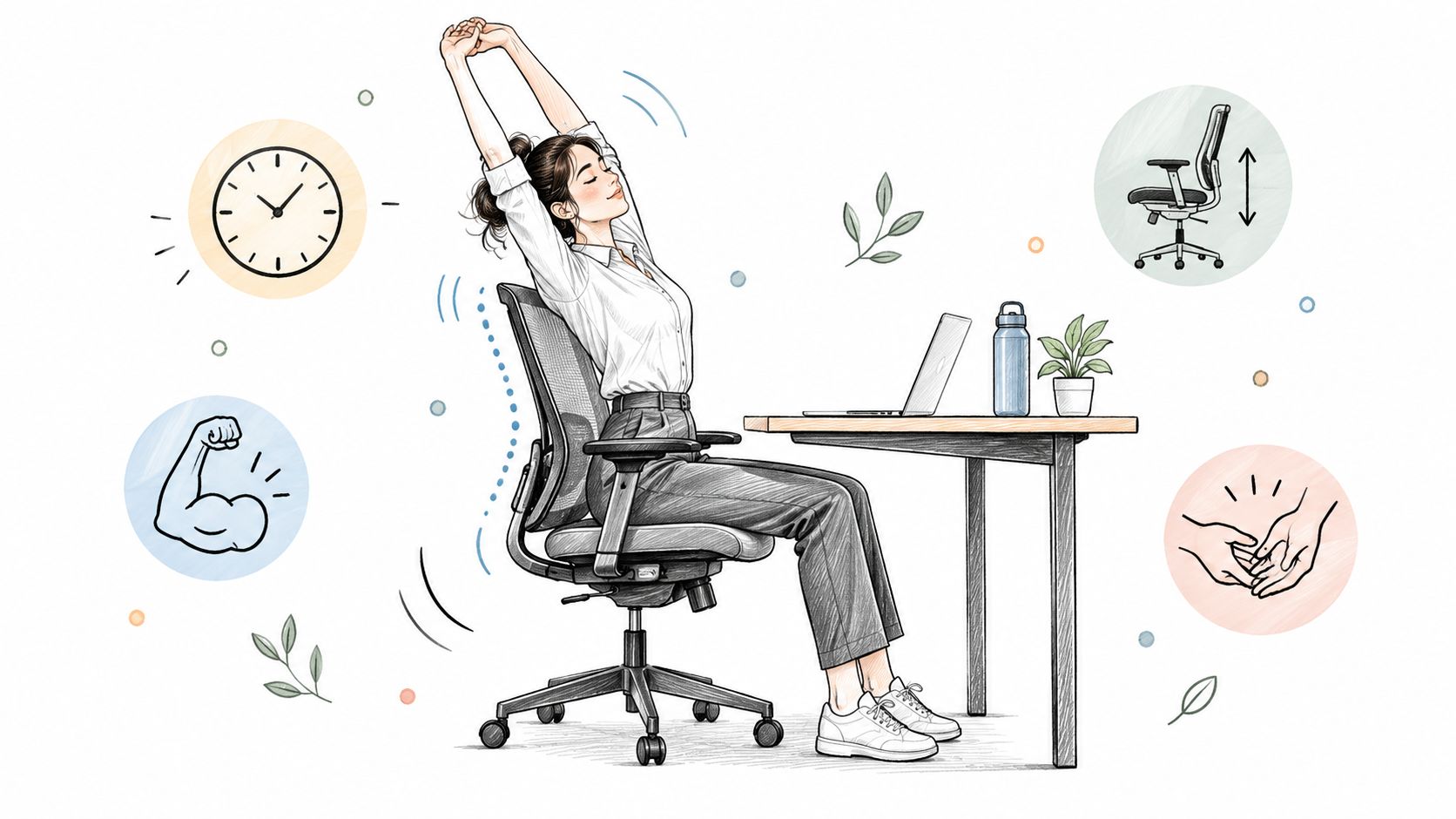
A new chair, split keyboard, or standing desk won't prevent repetitive strain by itself. Those changes may reduce an awkward position, but they don't strengthen underprepared tissues, slow an overloaded workflow, or restore recovery time. Repetitive strain prevention works best when equipment, movement, workload, and active recovery operate together.
That distinction matters because repetitive strain injuries affect more than comfort. The CDC reported that 9.0% of U.S. adults aged 18 and over had a repetitive strain injury during the previous three months in 2021, and 44% of those affected had to limit usual activities for at least 24 hours (CDC data on repetitive strain injury). Prevention is therefore a functional health issue, not merely an office-comfort preference.
The most common response to overuse pain is to buy something. A person changes the chair, raises the monitor, replaces the keyboard, or adds a wrist rest. The discomfort may ease temporarily, but the same ache often returns because the underlying exposure hasn't changed. The person is still typing for long stretches, gripping tools repeatedly, skipping recovery, or working under pressure that discourages movement.
Equipment can help when it addresses a specific mismatch. A workstation that lets you change between sitting and standing, keeps frequently used tools within easy reach, and reduces forceful or awkward positioning is useful. Canadian guidance recommends workstation designs that support different postures and tools that reduce force and awkward positioning, while also emphasizing task elimination, mechanization, task rotation, and short, frequent breaks (Canadian RSI prevention guidance summarized by the Cleveland Clinic).
But support isn't the same as capacity. A chair can support your pelvis while your neck, forearms, and upper back remain exposed to the same repeated demand. A keyboard can change wrist angle while your finger tendons still perform thousands of similar actions. Passive correction may reduce one stressor, but it doesn't teach the body to tolerate the next hour of work.
Practical rule: Use equipment to reduce unnecessary strain, then use movement and conditioning to improve the body's ability to handle necessary work.
Historically, workplace musculoskeletal disorders have been substantial enough to make ergonomics a central safety concern. Within the EU27, about 25% of workers reported backache and about 23% reported muscular pain, according to the European Agency for Safety and Health at Work (European workplace musculoskeletal disorder summary). In the United States, employer-reported data from 2014 recorded 319 musculoskeletal disorder cases per 100,000 full-time workers, and about one-third of private-sector lost-workday cases were attributed to musculoskeletal disorders (same European Agency summary of U.S. data).
Those figures explain why a single-product solution is inadequate. A useful plan must address exposure time, force, repetition, tissue capacity, and recovery. Start with the simplest workstation adjustment, but don't stop there.
For practical workstation ideas, review this guide to a lumbar pad for an office chair, then pair any seating change with scheduled position changes and a progressive exercise routine. The chair may make good movement easier. It can't create good movement on your behalf.
Tissues rarely fail because of one ordinary movement. More often, the daily demand slightly exceeds recovery for long enough that the body loses its ability to respond normally. Repetition, force, sustained posture, vibration, grip intensity, and limited rest all contribute to cumulative load. Time pressure can make the problem worse because people move less, brace more, and keep repeating the same task after symptoms begin.
Posture matters, but it isn't the entire assessment. A neutral position held too long can still become stressful. A slightly imperfect position that changes frequently may be more tolerable than a rigidly maintained posture. The practical question is not, “Can I hold the perfect position?” It is, “How often do I change position, how much force do I use, and how well do my tissues recover?”
Early symptoms often appear as a change in performance rather than sharp pain. Pay attention to:
A symptom that disappears during movement isn't automatically harmless. Warm-up can temporarily improve circulation and movement, while the original exposure continues to irritate a tendon, nerve, or joint. Numbness, progressive weakness, persistent swelling, color changes, or pain that travels into an arm or leg deserve clinical assessment rather than repeated self-testing.
The work system also deserves scrutiny. Staffing pressure, deadlines, long uninterrupted computer sessions, and a lack of task variation can reduce natural movement variability. Recent reviews describe work-related musculoskeletal disorders as an area with uneven coverage of risk factors and assessment tools, reinforcing the need to examine organizational conditions alongside biomechanics (2025 scoping review of work-related musculoskeletal disorders).
Write down what happens during a demanding work period:
If the answers reveal continuous exposure with little recovery, changing the mouse or chair won't address the main driver. For symptoms involving the hand or wrist, distinguishing nerve compression from broader overuse can also change the plan. A clinician's explanation of carpal tunnel versus RSI can help you understand why similar symptoms may require different evaluation and management.
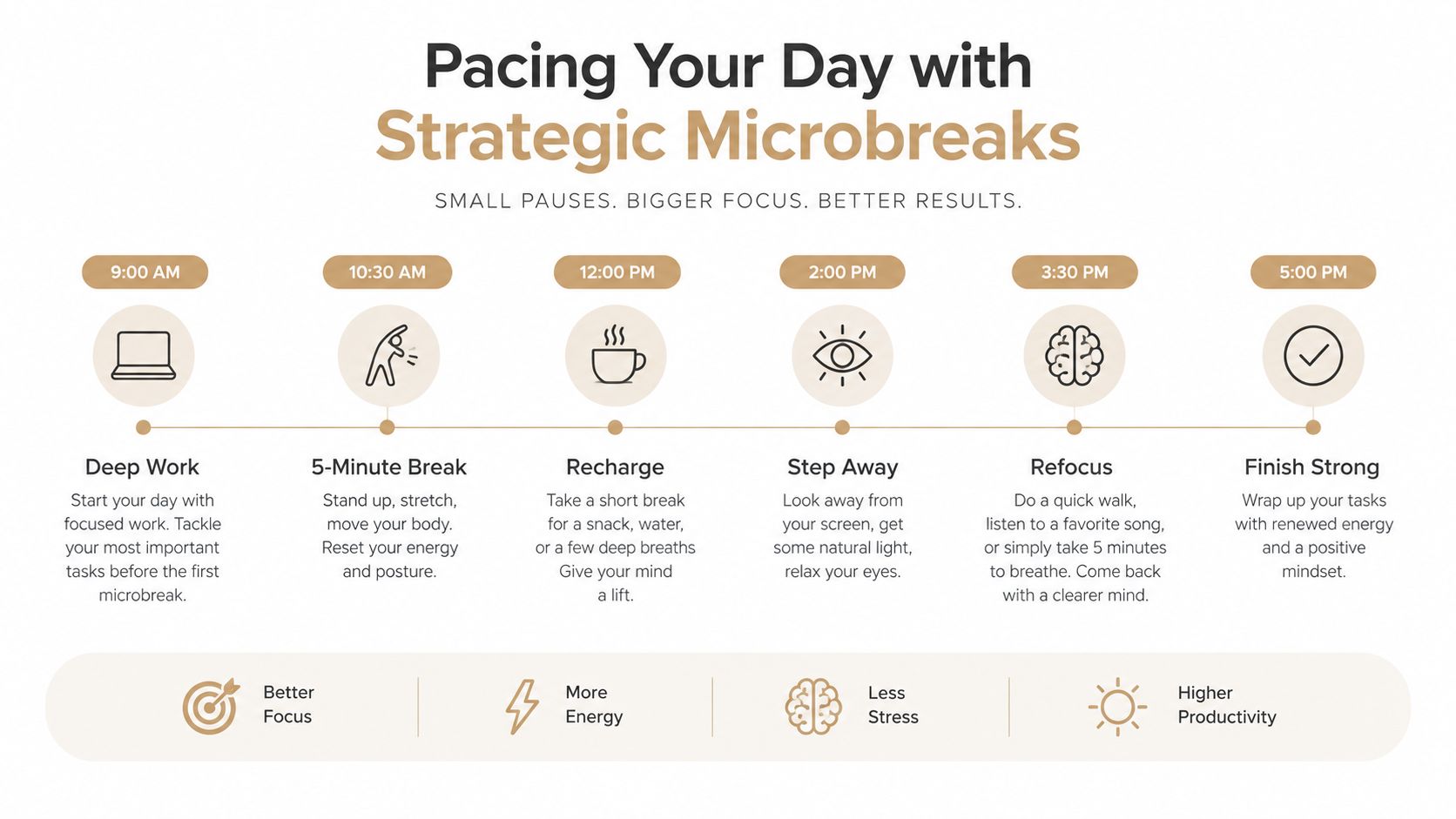
A lunch break is useful, but it doesn't erase hours of uninterrupted loading. Muscles and tendons respond better when recovery is distributed throughout the day. A microbreak is a very short pause, lasting from a few seconds to 1–3 minutes, used to interrupt sustained posture or repetitive activity. One workplace ergonomics guide strongly recommends an active microbreak every 20 minutes (Colorado State workplace ergonomics guidance).
That doesn't mean abandoning the task every 20 minutes for a long exercise session. It means changing the demand. Stand, lower your shoulders, open and close your hands, look away from the screen, walk to a nearby location, or perform a gentle mobility drill. The pause should be brief enough to repeat and active enough to prevent you from merely replacing keyboard posture with phone posture.
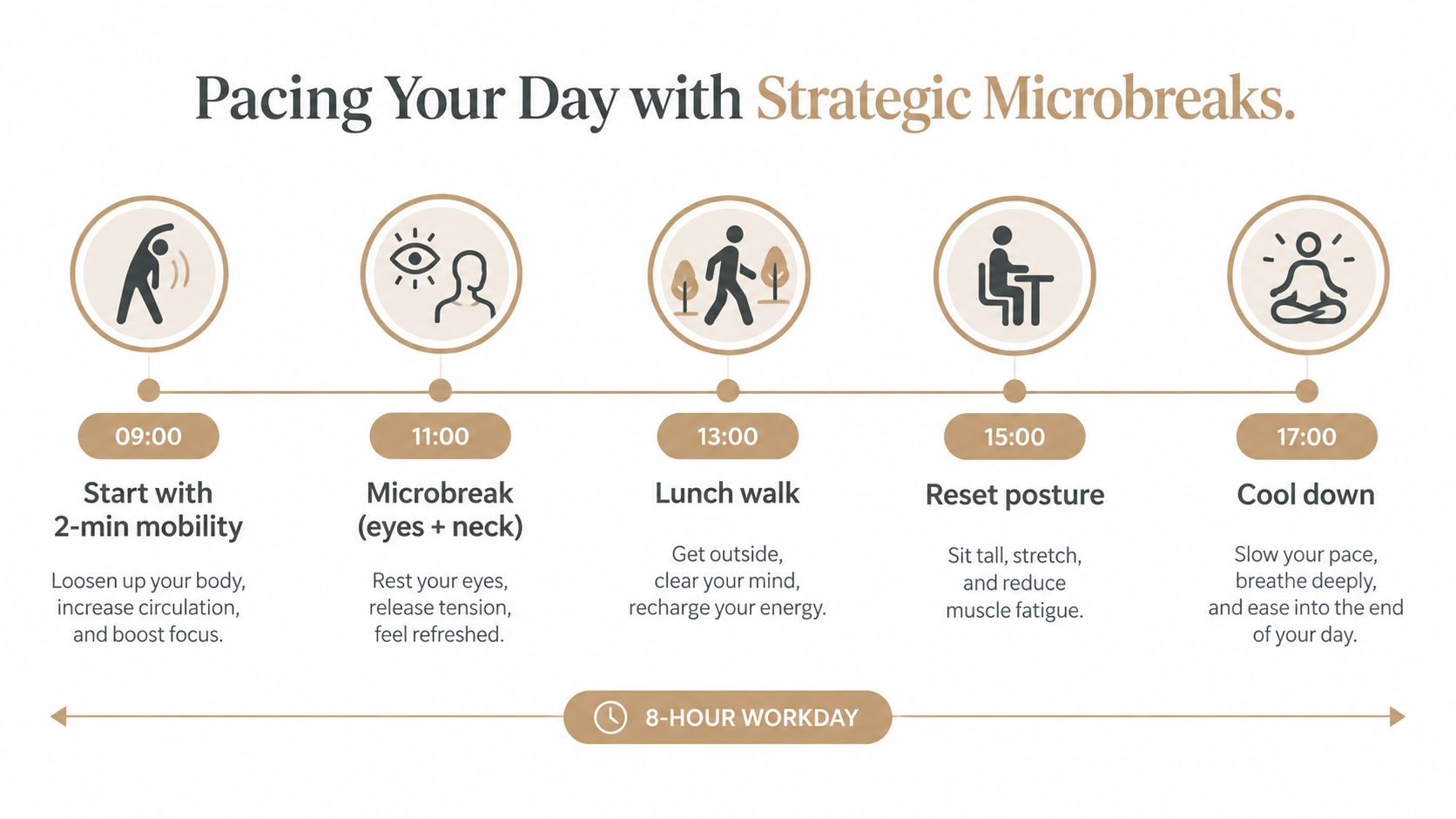
Use this sequence during a typical workday:
At the start of a work block, set the position. Place the screen at a comfortable viewing height, keep the keyboard and pointing device close, and let the shoulders remain relaxed. Check that your feet are supported and that you can change position without rearranging the entire workstation.
Every 20 to 30 minutes, interrupt the posture. UCLA ergonomics guidance recommends breaks from sustained postures every 20–30 minutes, along with stretching stiff muscles, alternating tasks, and changing position when pain appears (UCLA guidance on preventing musculoskeletal disorders and RSI). Use one minute to stand, move the neck gently, rotate the shoulders, or walk.
Rotate the type of demand. Follow a fine-motor task with a phone call, reading, walking, filing, or another activity that uses different muscle groups. Occupational guidance recommends rotating workers away from continual exertion, repetitive motion, and awkward posture so different muscle groups receive periodic recovery (OSHA ergonomics resource).
Use the longer break for recovery, not more sitting. A lunch walk, gentle mobility, or a change of environment gives the spine and upper limbs a different demand. Avoid turning the entire break into another fixed-screen session.
Modify the plan when symptoms appear. Pain, tingling, or loss of coordination means the current dose may be too high. Reduce force, change the task, move to a different position, and seek evaluation if symptoms persist or progress.
A PubMed-indexed study summarized in an ergonomics resource found that microbreaks reduced discomfort in the neck, shoulders, low back, and wrists, with particularly notable benefit when breaks occurred at 20-minute intervals, and reported no evidence of reduced productivity (summary of the computer-terminal microbreak study). The point isn't to chase a perfect schedule. It's to make recovery frequent enough that tissues don't have to wait until the end of the day.
Stretching can make a stiff area feel better, but temporary relief isn't the same as improved load tolerance. Repetitive strain prevention requires tissues to produce and control force, not only to reach a longer position. The useful progression is usually gentle mobility first, controlled strengthening second, and task-specific endurance last.
Exercise should remain below the level that provokes escalating pain, numbness, or weakness. If symptoms spread, linger longer after each session, or alter grip and coordination, stop the progression and obtain an assessment.
For the wrists and forearms, begin with slow wrist flexion and extension through a comfortable range. Add gentle forearm rotation, then progress to light resistance with the wrist supported. The goal is controlled movement without gripping harder than necessary. For people who type or use tools, include finger opening against a light elastic band to balance repeated closing and gripping.
For the neck and upper back, use controlled chin nods, thoracic extension over a supported surface, and scapular retraction without shrugging. These drills develop awareness and endurance around the regions that often remain static during desk work. Keep the movement smooth, because forcing a stretch into tingling can aggravate an irritated nerve.
A simple home sequence might look like this:
Loading principle: The right exercise is the one that leaves the tissue more capable, not the one that produces the strongest stretch.
Core and whole-body conditioning matter because the upper limb doesn't work in isolation. A stable trunk and mobile shoulder blade can reduce the tendency to overuse the forearm during reaching, lifting, or tool work. For a practical progression that complements upper-limb conditioning, review these bear crawl core strength variations, adapting the movement if wrist loading causes symptoms.
Perform mobility as a daily movement habit, while resistance work can be scheduled on nonconsecutive training days according to tolerance. Start with a small amount of work and increase only when symptoms remain stable during the activity and afterward. A personalized posture correction exercise plan can help match exercise selection to your movement restrictions rather than copying a generic routine.
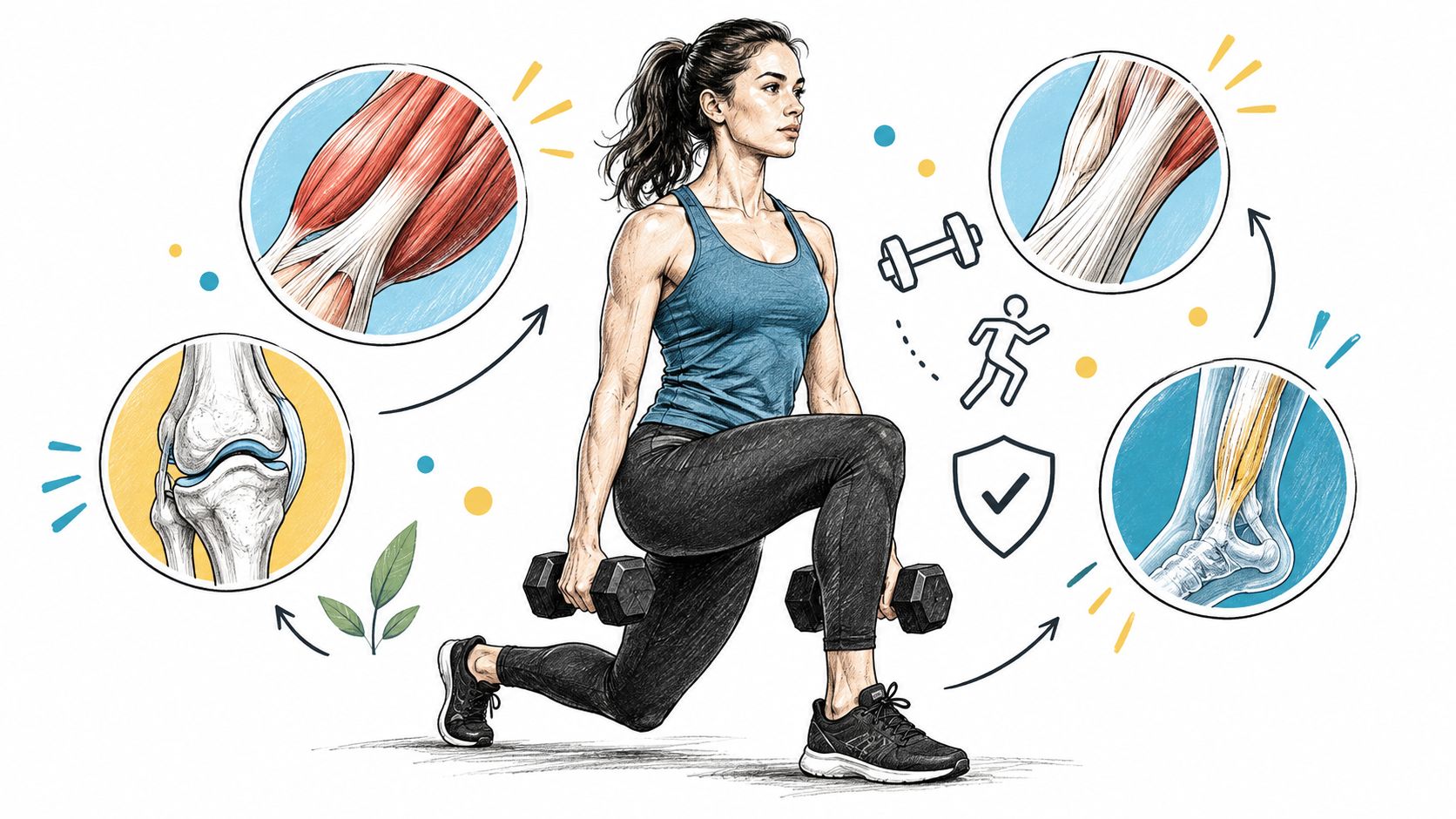
The same principle applies to athletes, musicians, tradespeople, and golfers. Strengthen the movement chain that supports the repeated task, then rehearse the task with reduced volume before returning to full demand. Passive stretching can remain part of recovery, but it shouldn't be the entire prevention program.
Self-care is appropriate when symptoms are mild, clearly linked to a modifiable task, and improving as you change the exposure. It becomes insufficient when pain continues despite pacing, when tingling or numbness returns repeatedly, or when weakness changes how you use the hand, arm, neck, back, or leg. Progressive symptoms, night pain, loss of coordination, significant swelling, or pain following trauma should prompt timely evaluation.
A clinical assessment should identify more than the painful spot. The examiner may consider joint motion, tendon loading, nerve sensitivity, strength, coordination, spinal involvement, work demands, sleep, and recovery habits. That broader view helps distinguish a local overuse problem from a nerve-related condition, disc-related pain, referred symptoms, or a movement pattern that keeps reloading the same tissue.
For people who want structured workplace guidance, these practical occupational health assessment protocols offer useful context for examining tasks, exposures, and functional demands. The same principle applies in a clinic. Treatment should connect symptom relief with a plan for changing the load that caused the problem.
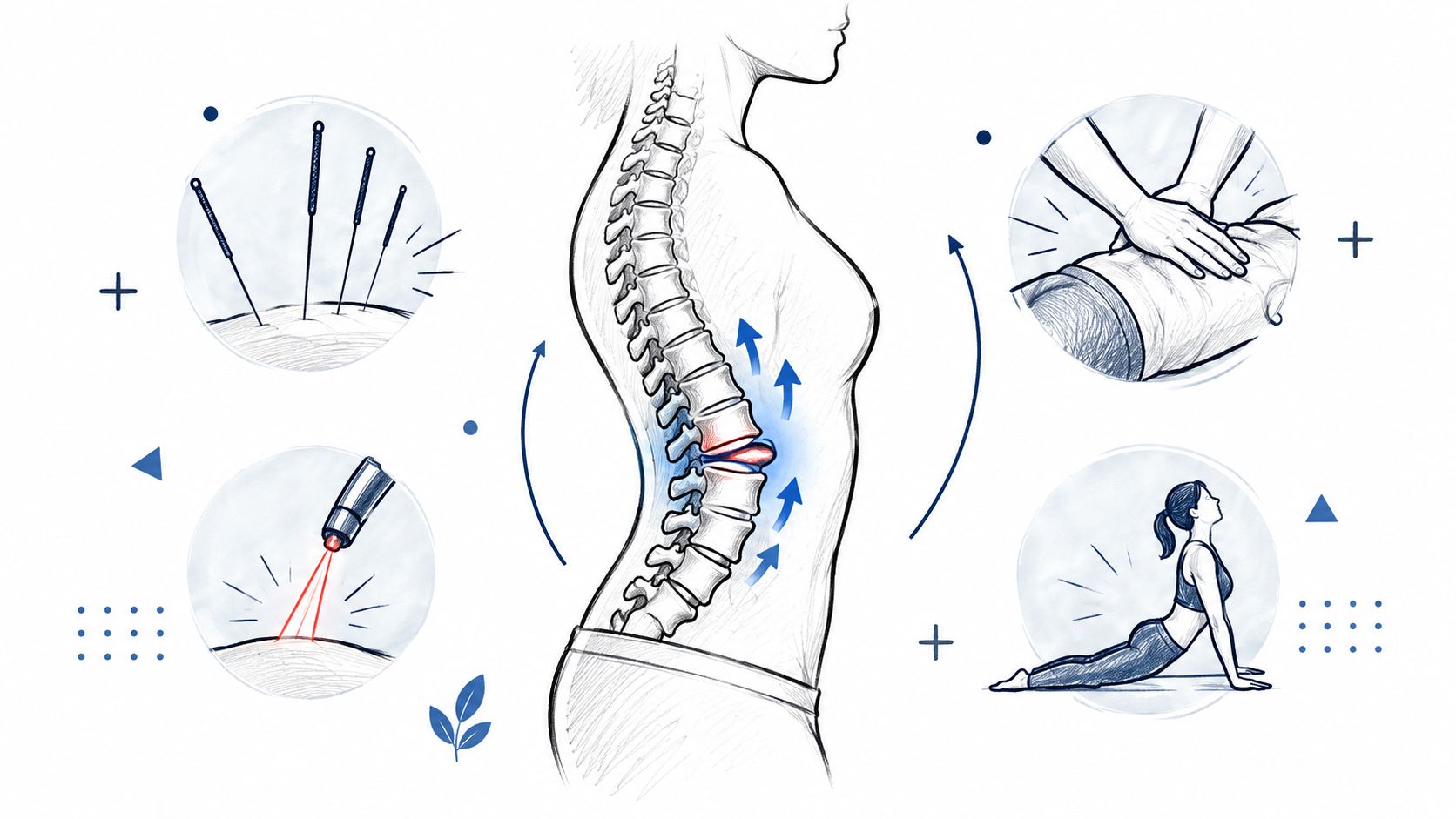
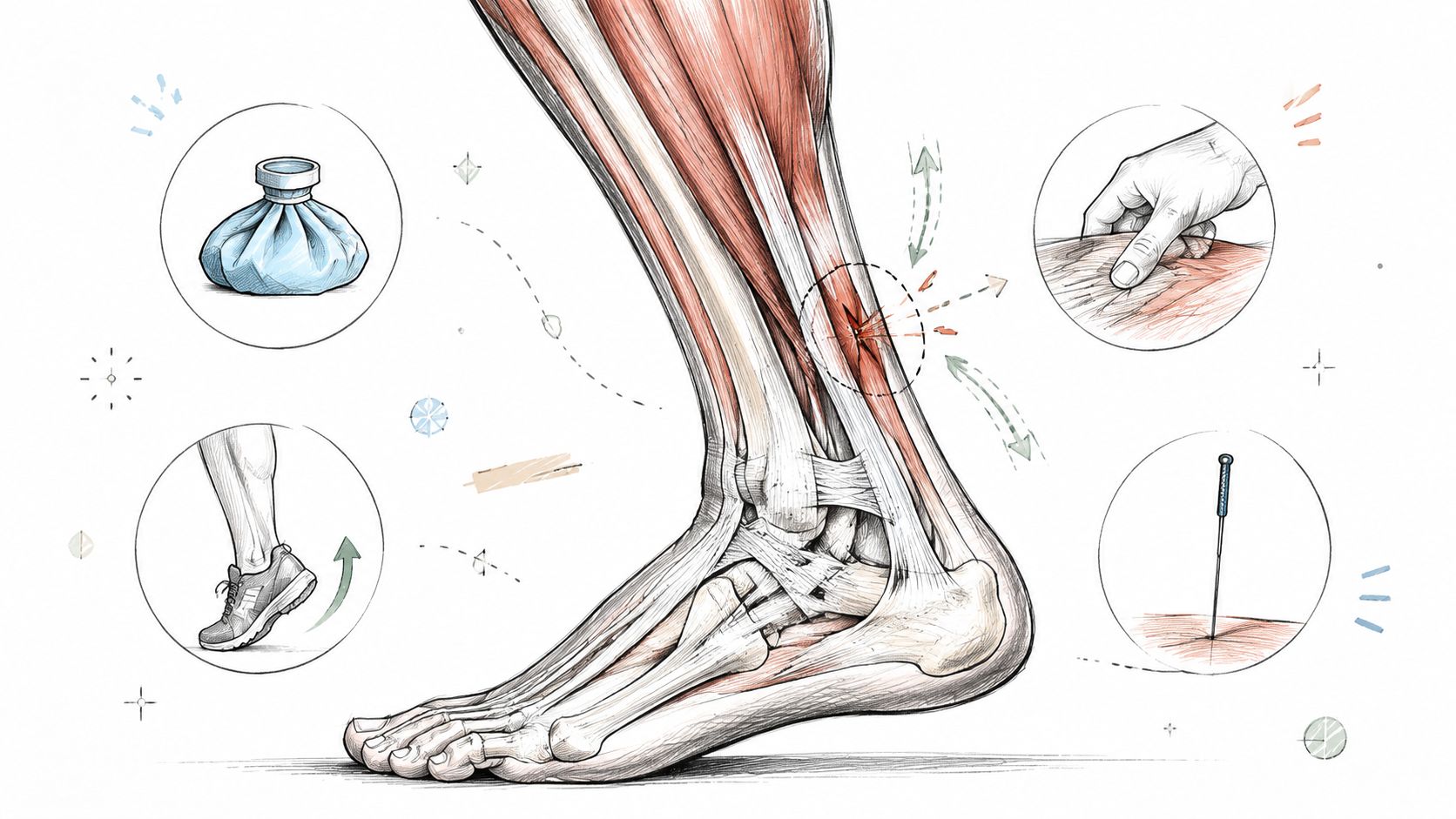
When home prevention plateaus, care may combine hands-on treatment, device-based modalities, and active rehabilitation. At Aspen Falls Wellness, assessment and individualized care may include:
The correct combination depends on the examination. A person with local forearm overload may need task modification, progressive strengthening, and soft-tissue care. Someone with radiating symptoms may require a different diagnostic pathway before using a loading program. Pain relief is useful, but it shouldn't be mistaken for tissue recovery.
Clinical care also extends beyond desk work. Chiropractic care, spinal decompression, and rehabilitation may be relevant for sciatica treatment or spinal symptoms that alter how a person moves. Golf movement screening can identify repeated swing demands, while car accident treatment requires a separate assessment of trauma-related strain. The objective remains the same: reduce symptoms enough to move, restore function, and change the conditions that keep provoking the problem.
A prevention routine succeeds when it fits the day you live. The ideal schedule isn't a demanding second job. It's a series of small decisions that reduce uninterrupted exposure, maintain movement variety, and preserve enough capacity for work, exercise, and ordinary life.
Start the morning with a brief body and workstation check. Notice whether your hands feel stiff, whether your neck moves comfortably, and whether yesterday's workload left lingering symptoms. Set the screen, chair, keyboard, and frequently used objects so you can change position easily. If you begin the day already symptomatic, reduce the most repetitive task rather than waiting for pain to force a stop.
During the first work block, alternate focused computer work with brief standing or walking pauses. Use the microbreak interval described earlier, and make each pause active enough to change the demand on your neck, shoulders, wrists, and back. If a meeting replaces a typing session, use it as genuine task variation rather than continuing to work from the same fixed posture.
At midday, walk if your symptoms allow and avoid compressing the entire break into more screen time. In the afternoon, rotate fine-motor tasks with communication, reading, mobility, or other work that uses different muscle groups. If workload makes rotation impossible, raise the issue as an exposure problem. A prevention plan that depends on uninterrupted output will fail when the schedule consistently removes recovery.
In the evening, use a short mobility sequence and the strengthening exercises appropriate to your current capacity. Don't turn a mild work-related ache into a high-volume workout. The aim is to leave the body prepared for the next day, not to prove that it can tolerate more pain.
Use this checklist to keep the plan practical:
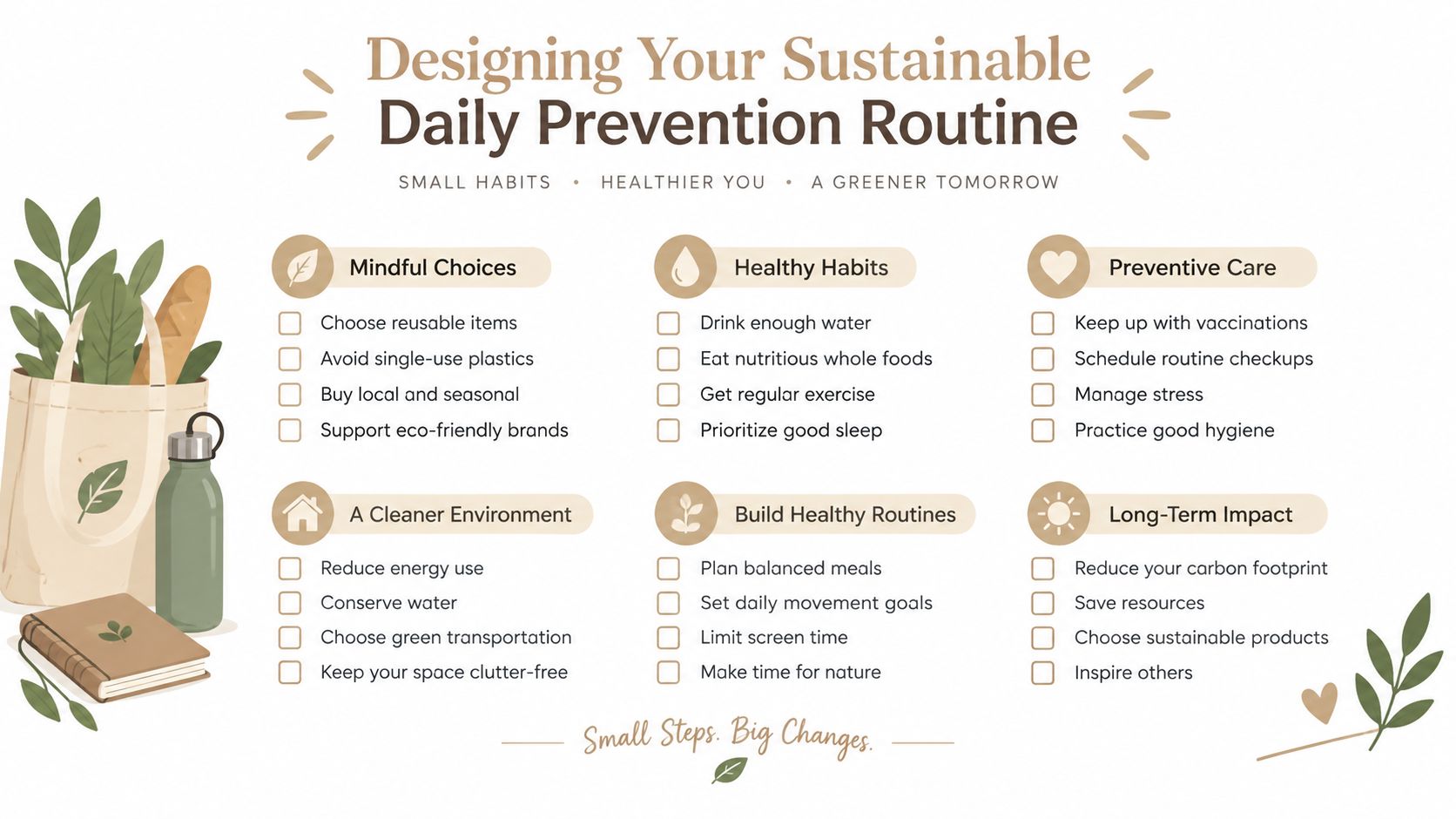
The strongest prevention plan is rarely the most expensive one. It is the plan you can repeat while meeting your real workload, adapting when symptoms change, and progressing exercise as your tissues become more capable. Equipment supports that process, but pacing, conditioning, and timely evaluation do the heavier work.
If repetitive strain is limiting your work, exercise, or daily activities, visit Aspen Falls Wellness for an individualized evaluation and non-surgical care plan. The practice offers chiropractic adjustment, SoftWave Therapy, MLS Laser Therapy, massage, acupuncture, mobility therapy, rehabilitation exercise, and spinal decompression with the DRX 9000 when clinically appropriate.

Stay updated with the latest chiropractic news and exclusive offers.