Discover what causes neck pain, from everyday posture habits to hidden structural issues. Learn evidence-based treatments and when to seek professional care.
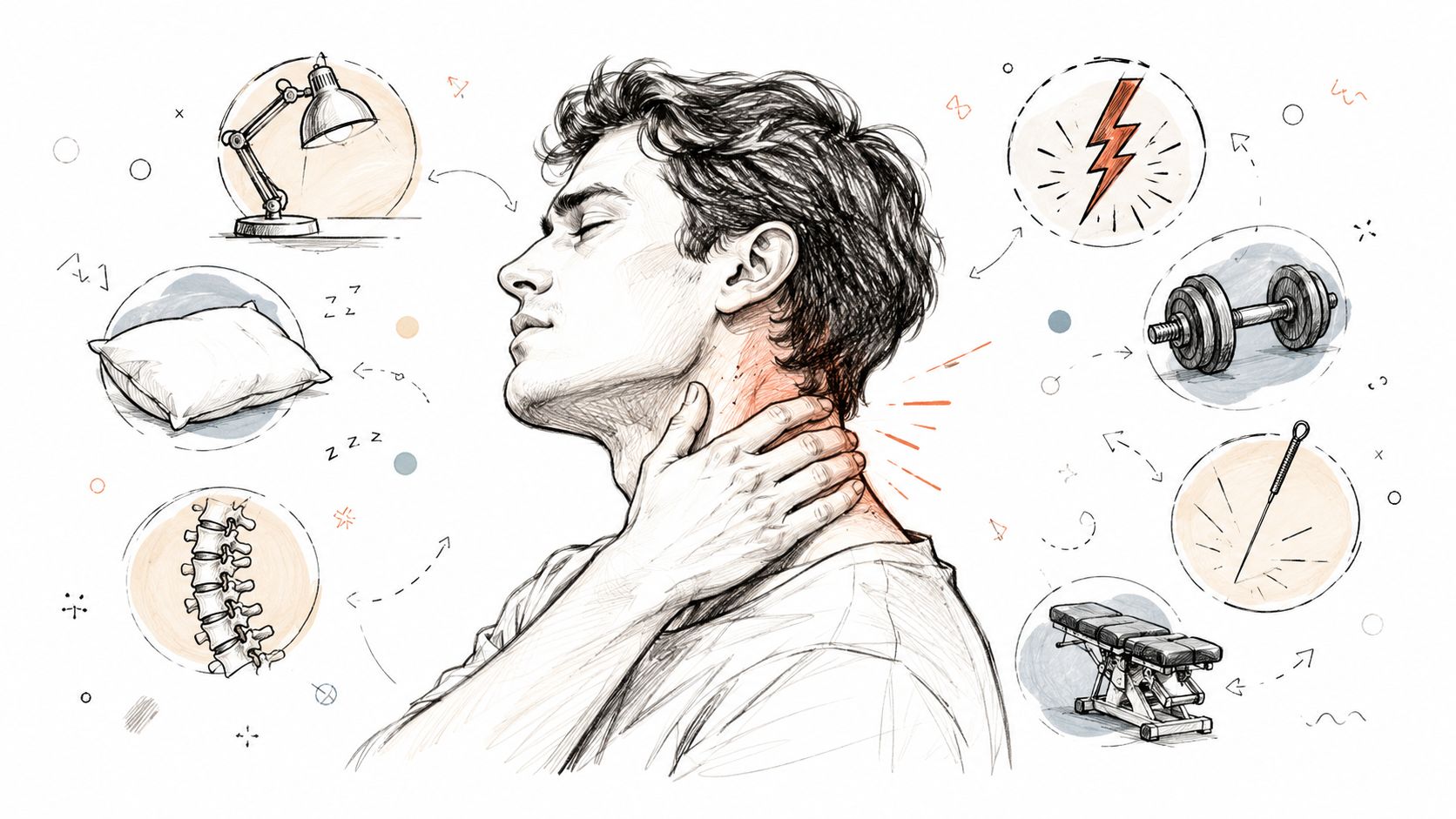



You wake up, turn your head toward the alarm, and feel a sharp catch at the base of your neck. By the end of a long workday, the discomfort may have shifted between your shoulder blades, tightened your jaw, or spread into a headache. You may blame the pillow, your desk, or “wear and tear,” but what causes neck pain is usually more layered than one obvious trigger.
Neck pain develops through an interaction among muscles, joints, discs, nerves, movement habits, sleep, stress, injury, and general health. The right answer comes from identifying which factors are active in your case, then matching care to the actual pain generator instead of treating every stiff neck the same way.
You wake with a stiff neck after sleeping in an awkward position. The position may have been only the final stressor. If your neck muscles were already tired from computer work, your upper back was moving poorly, and your sleep had been disrupted, a minor overnight strain can feel severe by morning.
Neck pain is multifactorial. Poor posture, sleep problems, repetitive movement, injury, limited exercise, and changes affecting the cervical discs, joints, ligaments, and nerves may all contribute. A 2024 review also describes links with motor vehicle collisions, workplace events, sports injuries, degenerative cervical conditions, neurological disease, and neoplasms. A 2024 global burden review explains the many pathways behind neck pain.
Hours with the head angled toward a screen can overload the neck muscles. The same person may also have an irritable facet joint, a degenerating disc, poor sleep, or tension-related headaches. One factor may begin the episode, while another keeps the nervous system sensitive after the initial irritation has settled.
Stress can add to that sensitivity. It may increase muscle guarding, disrupt sleep, and reduce activity, leaving less opportunity for the tissues to recover. The result is often a feedback loop rather than one isolated structural problem.
Population research shows how common the problem is. One review found a worldwide prevalence range of 16.7% to 75.1%, while a separate sample reported 20.3% prevalence. Global surveillance estimated a 2017 age-standardized prevalence rate of 3,551.1 per 100,000 people and an incidence rate of 806.6 per 100,000. These findings are summarized in the global review.
Those figures do not mean every painful neck requires extensive testing. They show why symptoms must be interpreted in context. A similar ache can reflect mechanical strain, tissue irritation, nerve involvement, poor sleep, stress, or several factors acting together.
Clinical perspective: Ask more than “Where does it hurt?” Ask what increases the load, what eases it, and what is preventing recovery.
A careful evaluation considers how you work, sleep, exercise, drive, lift, and respond emotionally to pain. It also screens for signs of routine strain versus a condition requiring medical investigation. Treatment should address the active contributors instead of chasing an abnormal scan as the sole culprit.
A neck can hurt after a full day at a computer, a night spent with the head turned, or a sudden movement during exercise. These problems usually develop when ordinary demands are repeated faster than the tissues can tolerate them. Office work, phone use, lifting, repetitive tasks, awkward sleep, and vehicle collisions can all contribute. A worker-focused review found annual neck-pain prevalence ranging from 27.1% in Norway to 47.8% in Québec, Canada, and estimated that 11% to 14.1% of workers experience activity limitations because of neck pain each year. Occupational exposure and neck pain findings are detailed in this worker-focused review.
Forward-head posture increases the work required from the cervical extensor muscles. Instead of sharing the load with the upper back and shoulder girdle, those muscles remain active for long periods. One brief episode may settle quickly. Repeating the same position through a workday can produce fatigue, stiffness, and pain referred toward the shoulders or head.
This pattern is common during computer work, lap-level reading, and phone use below eye level. Occupational analyses also associate neck pain with repetitive movement, lifting and moving loads, prolonged sitting or leaning, and poorly designed computer workstations. In one study of office employees, 34.7% reported cervical pain, and age 40 and above was associated with an odds ratio of 6.148. The occupational review discusses these posture and workplace findings.
Sleep can maintain irritation overnight. Several pillows may push the head forward, while inadequate support can leave the neck rotated or tilted for hours. Muscle strain often feels broad and achy. Myofascial pain may include tender bands or trigger points in the neck, upper trapezius, or shoulder-blade muscles.
Joint-related pain can follow a different pattern. Age-related disc degeneration, facet-joint wear, osteoarthritis, and spinal stenosis may contribute to stiffness or pain during extension and rotation. Imaging can display these changes, but an abnormal finding does not automatically identify the active pain source. The examination must match the scan with the symptom pattern and movement findings.
A bulging or herniated disc can irritate a nearby nerve root. Cervical radiculopathy commonly causes pain, tingling, pins-and-needles sensations, or altered strength traveling from the neck into the shoulder, arm, or hand. Radiating symptoms, sensory changes, or weakness call for a more careful neurological examination than a straightforward muscle strain.
Whiplash is a specific injury mechanism. The Quebec Task Force defines it as an acceleration-deceleration transfer of energy to the neck that causes soft-tissue injury and associated symptoms. The Quebec Task Force definition of whiplash is available through this clinical source.
Rapid flexion and extension can strain cervical facet-joint capsules even when routine imaging shows no fracture or obvious structural injury. Reviews describe whiplash-associated pain as involving musculoskeletal injury, altered pain processing, stress-system responses, and motor-control changes. Biomechanical and clinical explanations of whiplash are reviewed here.
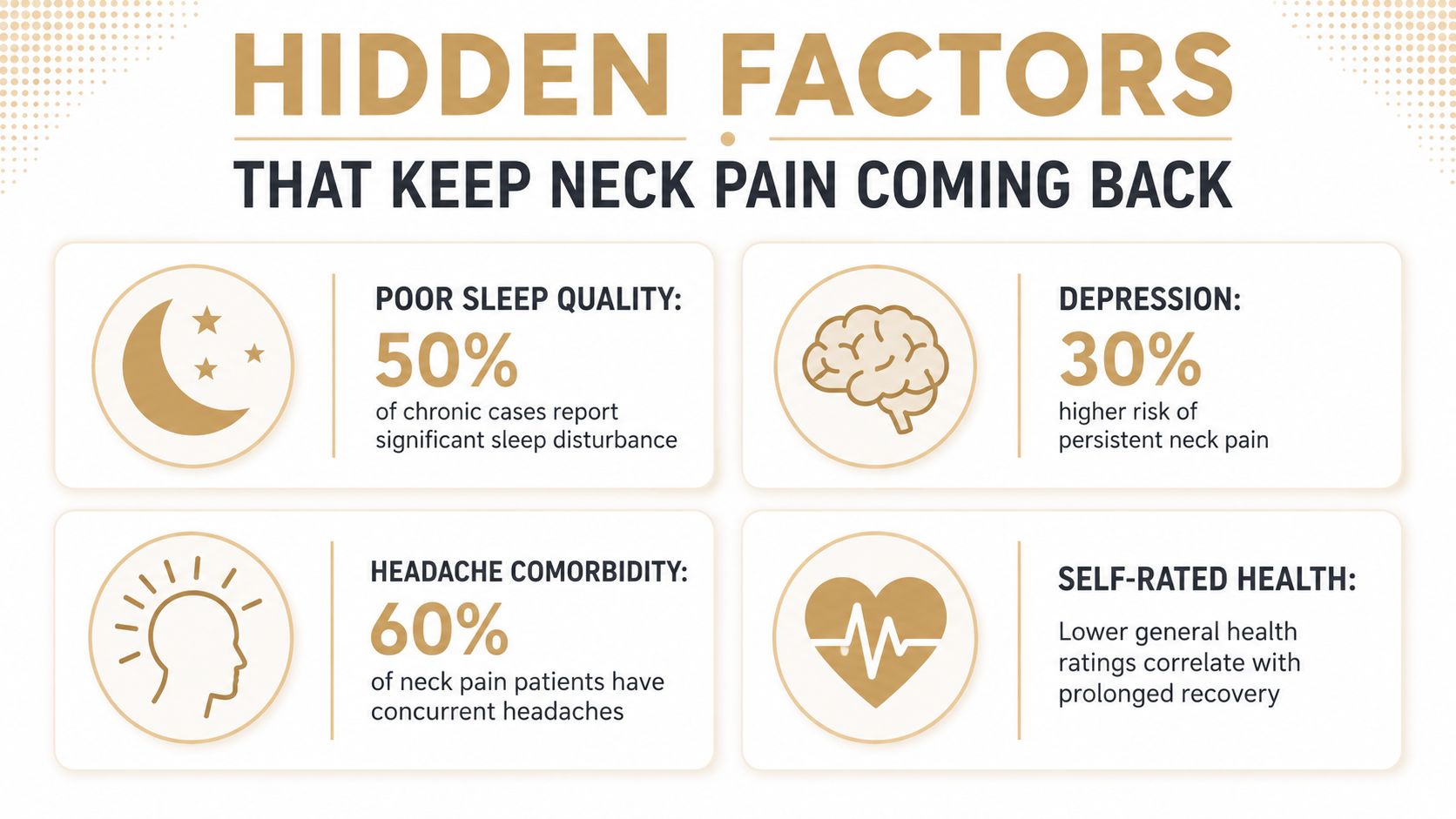
A patient may feel better after a few days of treatment, then wake with the same neck pain after another poor night's sleep. That pattern does not always mean the original treatment failed. Sleep quality, mood, headache comorbidity, physical activity, and general health can affect how the body responds to mechanical irritation and how consistently it can recover.
A 2025 CHARLS cohort study of middle-aged and older adults in China found associations between neck pain and depression, short sleep time, poor self-rated health, and headache. The reported odds ratios were 1.23 for depression, 1.48 for short sleep time, 2.93 for poor health status, and 4.83 for headache. The cohort findings are reported in this PubMed study.
These findings do not show that depression or poor sleep directly causes every case of neck pain. They show why spinal alignment alone rarely explains the full recovery pattern. Poor sleep can reduce tolerance for discomfort and make rehabilitation harder to sustain. Stress may keep the shoulders raised, jaw clenched, and neck muscles guarded. Headaches can add another layer, with neck sensitivity and head pain repeatedly aggravating each other.
A practical treatment plan examines the factors that keep symptoms active:
Nutrition and hydration cannot replace an examination or targeted care, but they can support recovery. Sleep routines, mobility work, graded strengthening, and realistic activity changes matter when symptoms persist. Treatment may need to address the painful joint or muscle while also improving sleep and reducing the load that keeps the area irritated.
A persistent symptom needs a broader question: What keeps the tissues and nervous system from returning to normal after the original trigger has passed?
This broader view also prevents overconfidence about imaging. Structural findings may matter when they match radiating symptoms or neurological changes, yet a scan cannot explain every pain experience. The clinician should connect symptoms, examination findings, functional limits, sleep, stress, and general health into one workable plan.
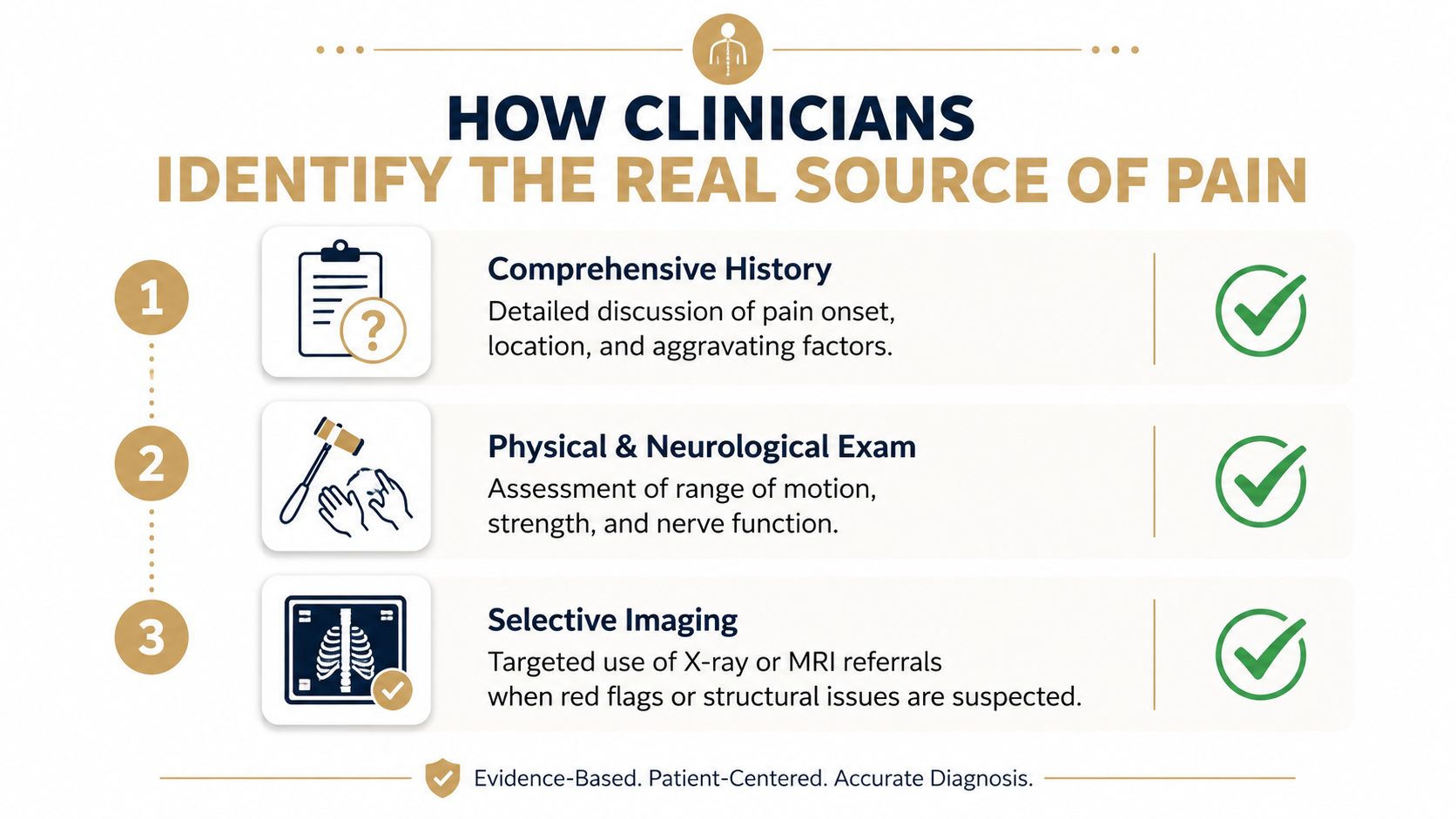
A thorough neck evaluation starts before any adjustment or treatment. The clinician needs to understand when the pain began, what changed around that time, and whether the symptoms behave like muscle pain, joint pain, nerve irritation, referred pain, or something requiring medical referral.
Expect questions about:
That history helps identify the dominant pattern. A sore neck after a long day at a screen differs from progressive weakness after a collision, even if both patients describe “neck pain.”
A clinician may assess active range of motion, joint sensitivity, muscle tone, posture, shoulder-blade control, strength, reflexes, sensation, and nerve tension. The neurological portion matters because altered strength, sensation, or reflexes can indicate nerve involvement that requires a different level of attention.
Imaging has a role, but it's selective. X-rays can help evaluate certain bony or alignment concerns, while MRI referrals may be appropriate when disc, nerve, spinal cord, or other structural problems are suspected. A disc bulge on a scan can exist without producing symptoms, so the examination must determine whether the image matches the person's pain pattern and functional loss.
Seek urgent medical evaluation for progressive weakness, significant numbness, severe headache, fever, unexplained weight loss, or pain after significant trauma. Neck pain associated with symptoms lower in the body, major loss of coordination, or rapidly worsening neurological changes also shouldn't be managed as routine posture strain.
When history and examination don't suggest a dangerous structural problem, active treatment is generally more useful than passive waiting. Clinical guidance on neck pain emphasizes active care when no specific structural cause is identified.
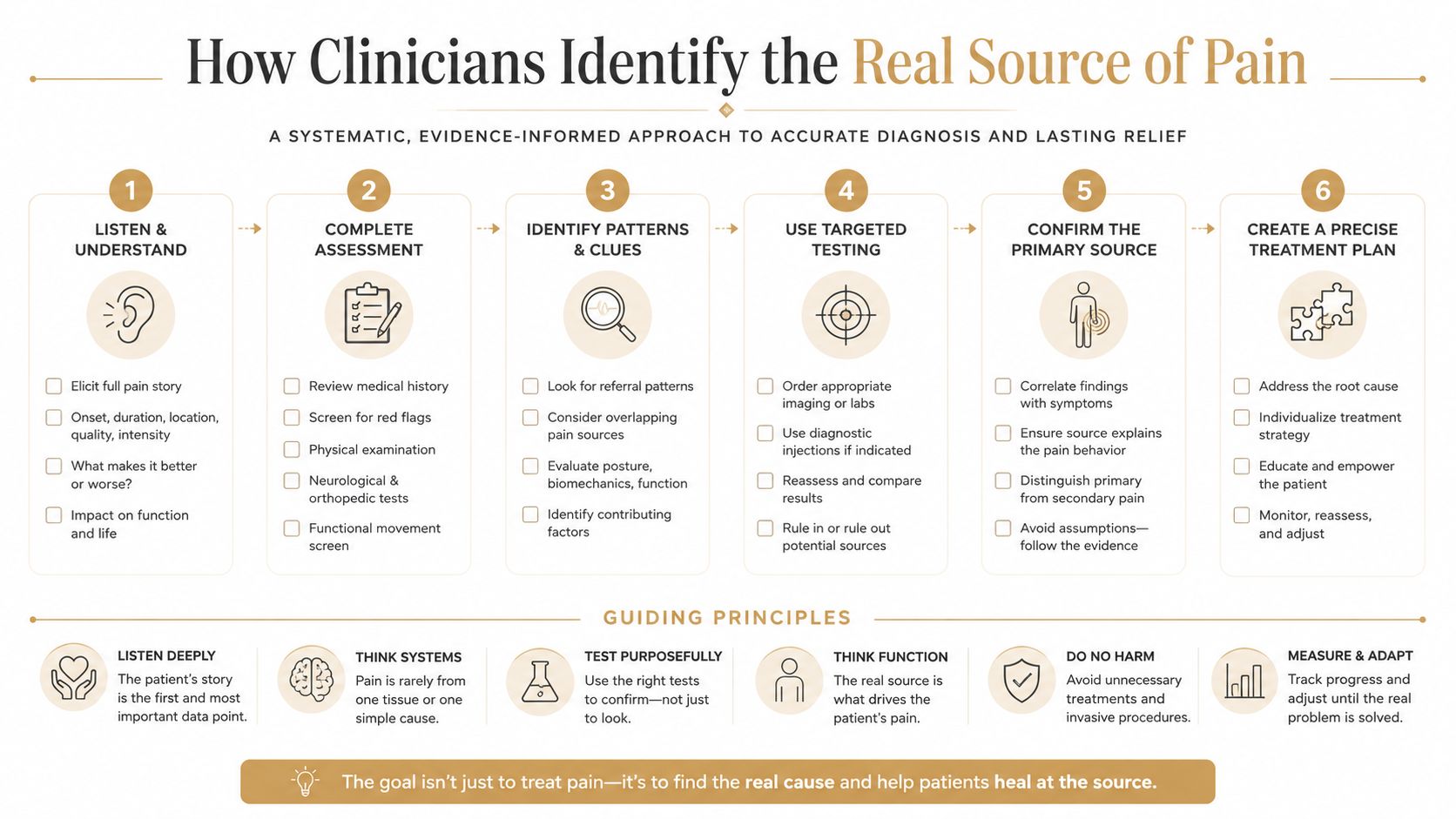
Treatment works best when it matches the suspected pain generator. An adjustment may help restricted joint motion, but it won't replace neurological evaluation for progressive weakness. Likewise, soft-tissue treatment may calm muscle guarding, while disc-related radiating pain may require a different combination of decompression, activity modification, and rehabilitation.
| Pain Generator | Primary Treatment | Supporting Therapy |
|---|---|---|
| Restricted cervical or upper-back joint motion | Personalized chiropractic adjustment | Mobility therapy, posture retraining, rehabilitation exercise |
| Myofascial trigger points and muscle guarding | Therapeutic massage therapy | Muscle stimulation, mobility work, home exercise |
| Disc-related irritation with radiating arm symptoms | Non-surgical spinal decompression with the DRX 9000, when clinically appropriate | Rehabilitation exercise, mobility therapy, symptom monitoring |
| Soft-tissue irritation after strain or whiplash | SoftWave Therapy or MLS Laser Therapy | Massage therapy, gradual movement, personal exercise plans |
| Persistent pain with multiple contributing factors | Coordinated chiropractic care | Acupuncture, nutrition counseling, sleep and recovery support |
A chiropractic adjustment is intended to address joint dysfunction and improve movement within the patient's tolerance. It should be individualized, not delivered as a forceful routine. For patients with suspected disc-related nerve compression, spinal decompression with the DRX 9000 may be considered as part of a broader non-surgical plan, rather than as a stand-alone promise.
SoftWave Therapy and MLS Laser Therapy are device-based options used to support tissue recovery and reduce irritation. Massage Therapy can be useful when muscle guarding, trigger points, or restricted soft-tissue mobility dominate the examination. Acupuncture may support pain modulation and functional improvement, particularly when the patient prefers a lower-force approach.
Rehabilitation is what helps a temporary improvement become a durable change. Deep neck flexor work, scapular stabilization, mobility therapy, and individualized home exercises teach the body to tolerate the loads that previously triggered symptoms.
For more detail on how an adjustment may fit into care, review the benefits of a chiropractic adjustment. Aspen Falls Wellness offers these services within an integrative model that can combine adjustments, decompression, massage, acupuncture, laser-based care, and rehabilitation according to the examination findings.
Small adjustments are most effective when they target the activity that repeatedly provokes symptoms. A workstation that keeps your head forward for hours can undermine an otherwise sensible exercise plan.
Place the top portion of your monitor near eye level so you're not repeatedly looking down. Keep the screen close enough that you can read without leaning forward, support your lower back against the chair, and let your elbows rest comfortably rather than reaching toward the keyboard. If you use a phone frequently, choose hands-free use instead of cradling it between your ear and shoulder.
Every so often, stand, walk, or change position. A short movement interruption is more useful than trying to hold a perfect posture rigidly through an entire workday.
Your pillow should support the natural space between your head and mattress without forcing your neck sharply upward or sideways. Avoid stacking several pillows under your head, and check whether your sleeping position leaves your neck rotated for long periods. If you wake with the same side of the neck irritated repeatedly, the sleep position deserves attention.
Start within a comfortable range. Gentle chin-tuck activation can help you practice deep neck flexor control, while shoulder-blade setting and upper-back mobility can reduce the amount of work your neck performs during desk tasks. Stop an exercise that produces increasing arm pain, numbness, or weakness rather than treating those symptoms as a sign to push harder.
These neck pain exercises for home can complement a personal exercise plan when the movements fit your symptoms and current tolerance.
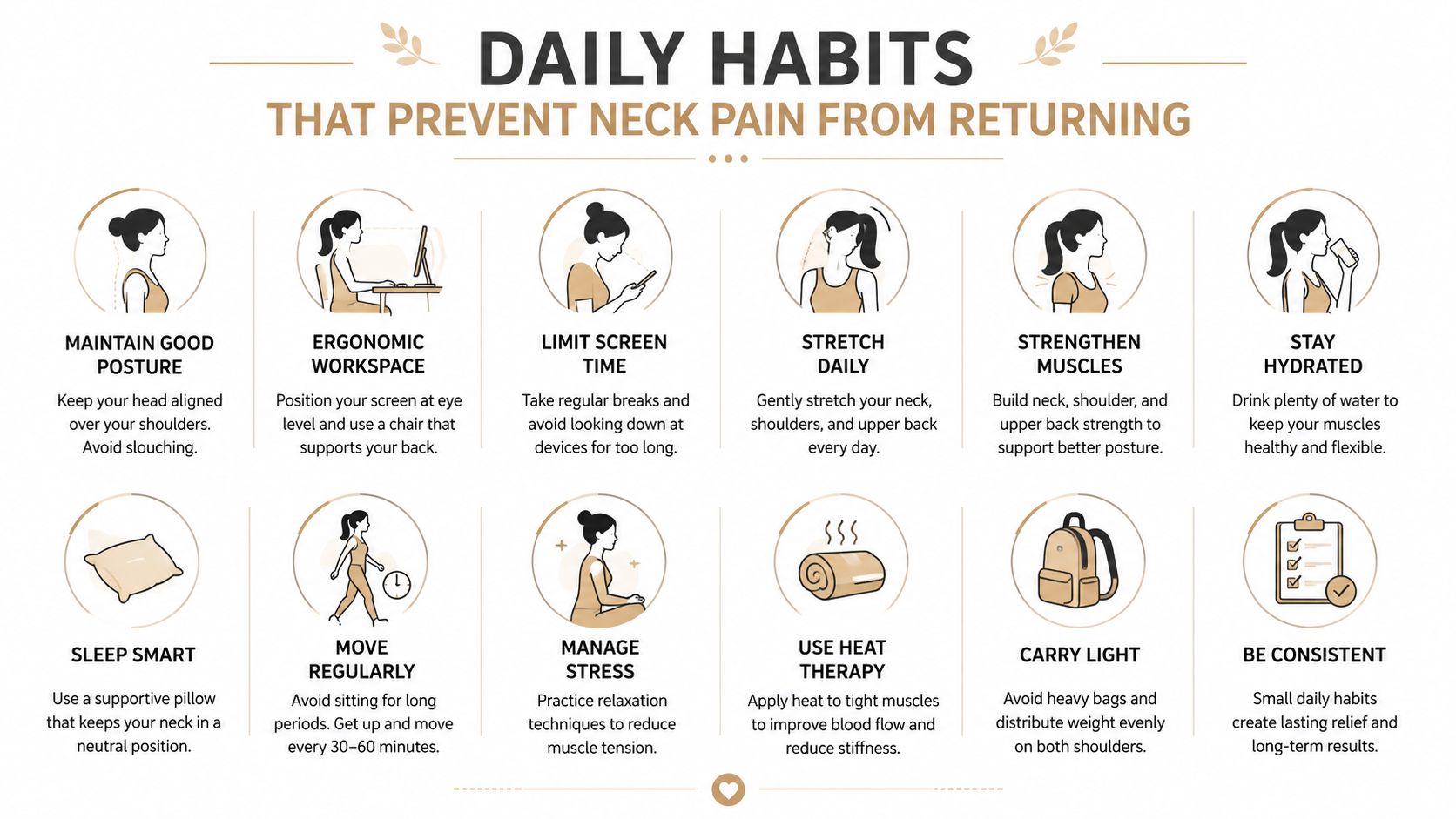
Nutrition counseling and hydration can support general recovery, especially when poor appetite, inconsistent meals, or low fluid intake accompany a demanding schedule. They won't correct a compressed nerve or replace rehabilitation, but they can remove avoidable barriers to tissue recovery and energy.
For mild, recent-onset discomfort that clearly follows desk work or an awkward sleep position, try gentle movement, workstation changes, and careful sleep support. Schedule a clinic evaluation if pain persists beyond two weeks, keeps returning, limits normal activity, or travels into the arm.
Seek urgent care for progressive weakness, significant numbness, severe headache, fever, unexplained weight loss, or pain after significant trauma. If headaches are part of the pattern, a resource such as custom migraine risk alerts may help you recognize when head pain deserves additional attention, but it doesn't replace a clinical assessment.
A first visit should include a history, physical and neurological examination, discussion of imaging referrals when indicated, and a clear plan for reassessment. You can learn more about seeing a chiropractor for neck pain before booking an appointment. Recovery is often gradual, and the most practical plan addresses the spine, muscles, movement habits, sleep, stress, and general health together.
If neck pain is limiting your work, sleep, or activity, visit Aspen Falls Wellness for an individualized evaluation in Salt Lake City or Sandy. The clinic offers chiropractic adjustment, spinal decompression with the DRX 9000, massage therapy, MLS Laser Therapy, SoftWave Therapy, acupuncture, mobility therapy, and rehabilitation exercise to match care to the findings rather than treating every neck problem the same way.

Stay updated with the latest chiropractic news and exclusive offers.