Learn what causes thoracic back pain, how to recognize red flags, and which treatments bring real relief—from posture exercises to advanced therapy.
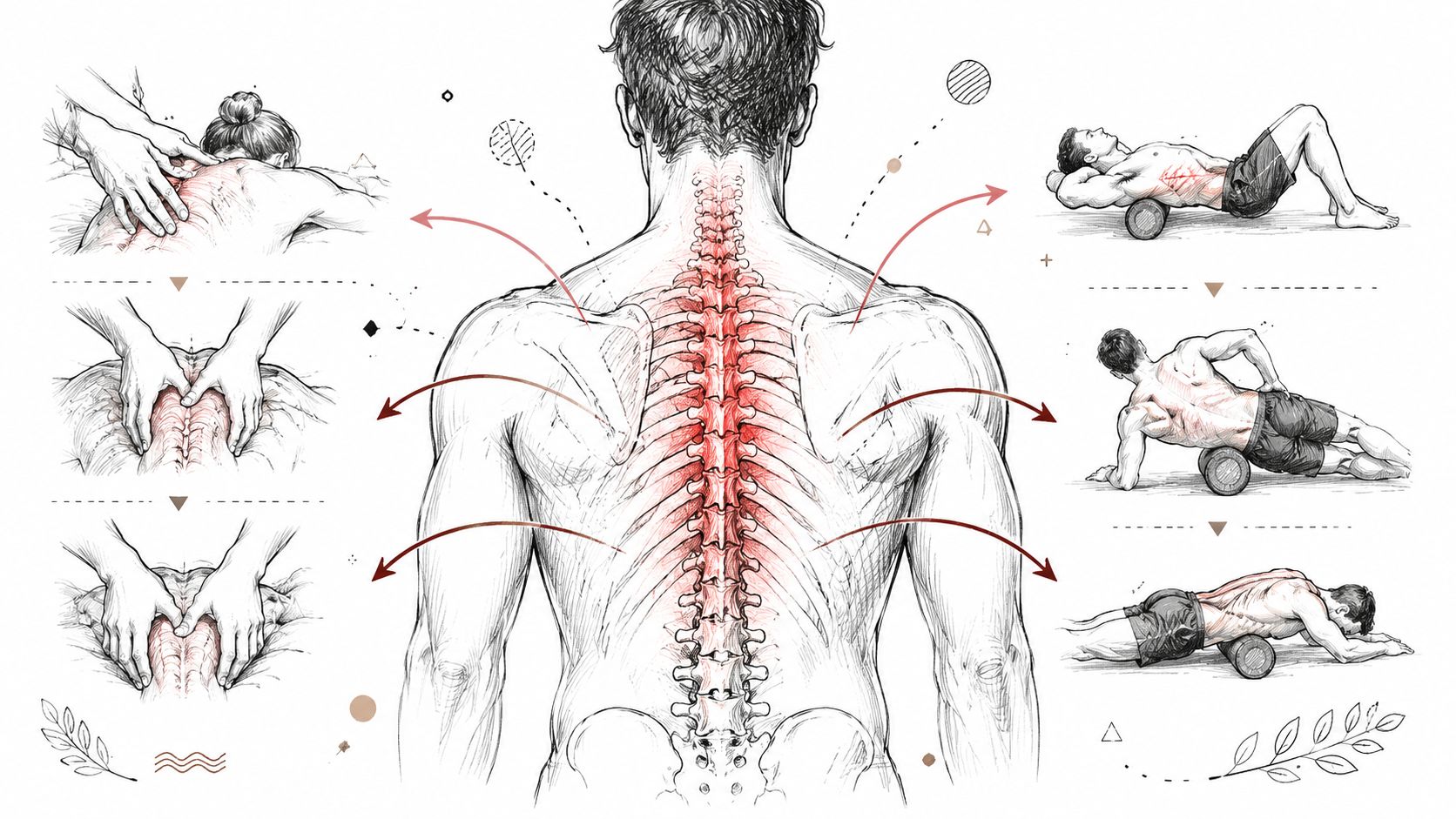



You notice it first when you sit down to answer email or drive home, a deep band of ache between the shoulder blades that doesn't feel like a simple knot anymore. You stretch, roll your shoulders, maybe pop your back, but the soreness keeps coming back because the thoracic spine does more than hold you upright, it also helps with rib motion, rotation, and the load of daily posture. When that area gets irritated, the pain can feel stubborn, vague, and hard to pin down, which is exactly why so many people underestimate it.
A clinical review defines thoracic back pain as pain between the neck and above the costal margin, and places it at 10% to 15% of all spinal pain with a 1-year prevalence of about 20% in adults (clinical review). That matters because mid-back pain isn't rare, it's just often misunderstood. The thoracic region is built differently from the neck and low back, so the reasons it hurts, and the way it should be evaluated, aren't the same either.
A person who's been working at a laptop for months often describes the same thing, a burning strip between the shoulder blades that shows up late in the day. They usually assume it's just tight muscles, yet the issue often starts with the way the thoracic spine is designed. It sits in the middle of the back, anchored by the ribs, so it has to balance support, protection, and just enough flexibility to let you twist and breathe comfortably.
The thoracic spine includes 12 vertebrae, T1 through T12, and each one connects to the rib cage. That rib connection gives the area stability, but it also means stiffness shows up quickly when posture collapses or breathing becomes shallow. In plain language, the mid-back isn't meant to be floppy. It's meant to be controlled.
That control is exactly why pain here can feel so annoying. A small strain in the muscles, joints, or rib attachments can spread across a broad band instead of staying in one neat point. People often say it feels like a belt, a bruise, or a deep ache that's hard to reproduce with one finger.
Cleveland Clinic describes thoracic back pain as most often a mechanical problem, driven by muscle irritation, strain, or ligament injury, and notes that prolonged poor posture or repetitive loading can create micro-injury over time (Cleveland Clinic). That's why this region often reacts to long desk sessions, repeated reaching, and sustained bending. The tissues don't fail all at once, they get overloaded little by little.
Practical rule: if the pain gets worse the longer you sit, hunch, or hold one position, mechanical overload belongs high on the list.
A person with thoracic back pain often expects one clear reason, but the middle of the back usually hurts for a few different reasons. In clinic, the pattern usually falls into a few broad buckets. The first is muscle and ligament strain, which often feels like soreness, tightness, or a pulling pain after long posture holds, twisting, lifting, or repetitive work. The second is facet joint dysfunction, where the small joints at the back of the spine get irritated and make turning, arching, or extending feel blocked or sharp.
The third category is disc-related pain, including the less common thoracic disc problem that can create aching, wrapping, or nerve-like symptoms. The fourth is rib dysfunction, where movement around the rib-spine connection feels restricted and breathing or twisting can aggravate it. The fifth is scoliosis or kyphosis-related loading, where spinal shape changes place uneven stress on muscles and joints.
These categories overlap more than people expect. A sore muscle can start after a long workday, but a stiff facet joint can feel similar the next morning, and a disc or rib issue can add a deeper, more stubborn ache. The job is not to memorize labels, it is to match the pain pattern to the likely source. A dull ache after sitting all day points somewhere different from pain that wakes you at night, changes with breathing, or travels around the chest. That is why a careful history matters so much, because the same spot can come from very different pain generators.
Thoracic pain is also more likely to show up in people with certain structural issues, and a clinical review notes that it is more common in people with spinal abnormalities such as kyphosis and Scheuermann disease (clinical review). Population research also shows the burden is real. In a large adult study of 5,397 people aged 40+ years, the mean lifetime prevalence of thoracic spine pain was 23.6% and the average duration among those affected was 11.8 ± 11.2 years (population study). In workers, an occupational review found 1-year prevalence ranging from 3.0% to 55.0%, with medians around 30% in many groups (occupational review).
Pain pattern matters because the thoracic spine is not just a stack of joints. It is a brace-like segment tied to the ribs, so the source may sit in the disc, the facet joint, the rib attachment, or the soft tissue between them. That is why a clinician often has to sort through mechanical pain, referred pain, and pain that is coming from somewhere else entirely before choosing treatment.
Not every pain between the shoulder blades is a posture problem. That's the part many people miss, and it's the reason thoracic pain deserves more caution than a generic “stretch and wait” approach. Because the thoracic region sits close to the chest and upper abdominal organs, the wrong assumption can delay care for something that needs attention sooner.
Chest pain or pressure, shortness of breath, or pain that feels tied to breathing can point toward cardiac or pulmonary causes. Guidance on thoracic pain evaluation also emphasizes screening for weight loss, fever, night pain, cancer history, osteoporosis, infection, and recent trauma because thoracic pain can reflect fracture, malignancy, visceral referral, or infection (clinical guidance). If pain wakes you from sleep or appears at rest without a clear mechanical trigger, it deserves a closer look.
Pain that changes with breathing, swallowing, eating, or chest symptoms should never be treated as routine back tightness.
This is the part that separates thoracic pain from many other aches. The region can be a site of cervical referral or visceral referral, which means the back isn't always the source of the problem. Clinically, that's why a careful differential diagnosis matters before anyone assumes a simple strain.
If you had a fall, car crash, known osteoporosis, cancer history, fever, unexplained weight loss, or a brand-new pain pattern that doesn't behave like a muscle strain, don't try to out-stretch it. Get assessed. A calm, timely evaluation is safer than hoping a serious cause will announce itself later.
A good first visit starts with a conversation, not an adjustment. The clinician asks where the pain sits, what makes it better or worse, whether it changes with breathing, coughing, eating, or neck movement, and whether there's any chest, digestive, or neurological symptom attached to it. Those details matter because thoracic pain can be local, referred, or unrelated to the spine entirely.
The physical exam usually includes range-of-motion testing, palpation, orthopedic testing, and neurological screening. The goal is to see whether movement, posture, or a specific rib or spinal level reproduces the symptom. A careful clinician also checks the neck, because thoracic-region pain can sometimes be influenced by the cervical spine (thoracic examination overview).
Why this matters: the exam isn't just about finding pain, it's about finding the pattern that explains the pain.
Imaging isn't automatic. An X-ray is usually considered when fracture, scoliosis, or degenerative change is suspected, while MRI is more useful when discs, the spinal cord, or soft-tissue lesions need a closer look. If the symptom pattern points toward cardiac, pulmonary, oncologic, or other non-musculoskeletal disease, the right move is referral rather than forcing a spine-focused answer.
For readers trying to understand the difference between scans, this MRI vs X-ray guide for back pain is a useful companion. The practical takeaway is simple, imaging follows the story the body is telling. It shouldn't replace it.
The most useful treatment plan matches the cause, not just the location. A tight muscle pattern needs different care than a disc problem, and a pain pattern tied to the rib joints or neck referral shouldn't be handled as if it were the same thing. That's why the best results usually come from a coordinated plan rather than one isolated modality.
For muscle and facet-related pain, chiropractic adjustment, soft-tissue work, and massage therapy can help restore motion and reduce guarding when the joint or muscle is the main limiter. When the problem behaves more like a disc issue, non-surgical spinal decompression may be considered. Aspen Falls Wellness offers Spinal Decompression with the DRX 9000, and its decompression therapy page describes it as a non-surgical option used for disc-related back pain (spinal decompression therapy).
For tissue recovery and pain modulation, MLS Laser Therapy and SoftWave Therapy are commonly used as part of a broader plan, especially when inflammation, soft-tissue irritability, or slower recovery is part of the picture. Acupuncture can also be useful when the goal is to calm pain and improve function without leaning on one single intervention. In some patients, the treatment mix includes personal exercise plans, mobility therapy, and rehabilitation exercise so the gains hold outside the clinic.
The right mix depends on how the pain behaves. A patient whose mid-back flares after sitting may need posture retraining, scapular work, and manual treatment. A patient with disc-related symptoms may need decompression first, then graded strengthening.
The best plan usually pairs in-clinic treatment with a home routine the patient can actually keep doing.
For readers who want a movement-friendly framework for symptom management, the safe running guide from VitzAi.com is a practical resource for staying active without guessing. It's the kind of thinking that helps people recover without turning every movement into a threat.
A clinic may also use Adjustment, Realignment, Muscle Stimulation, Pain Relief strategies, and Chiropractic Care as part of a structured sequence. The point isn't to stack services for their own sake, it's to choose the few that match the exam findings and the patient's tolerance.
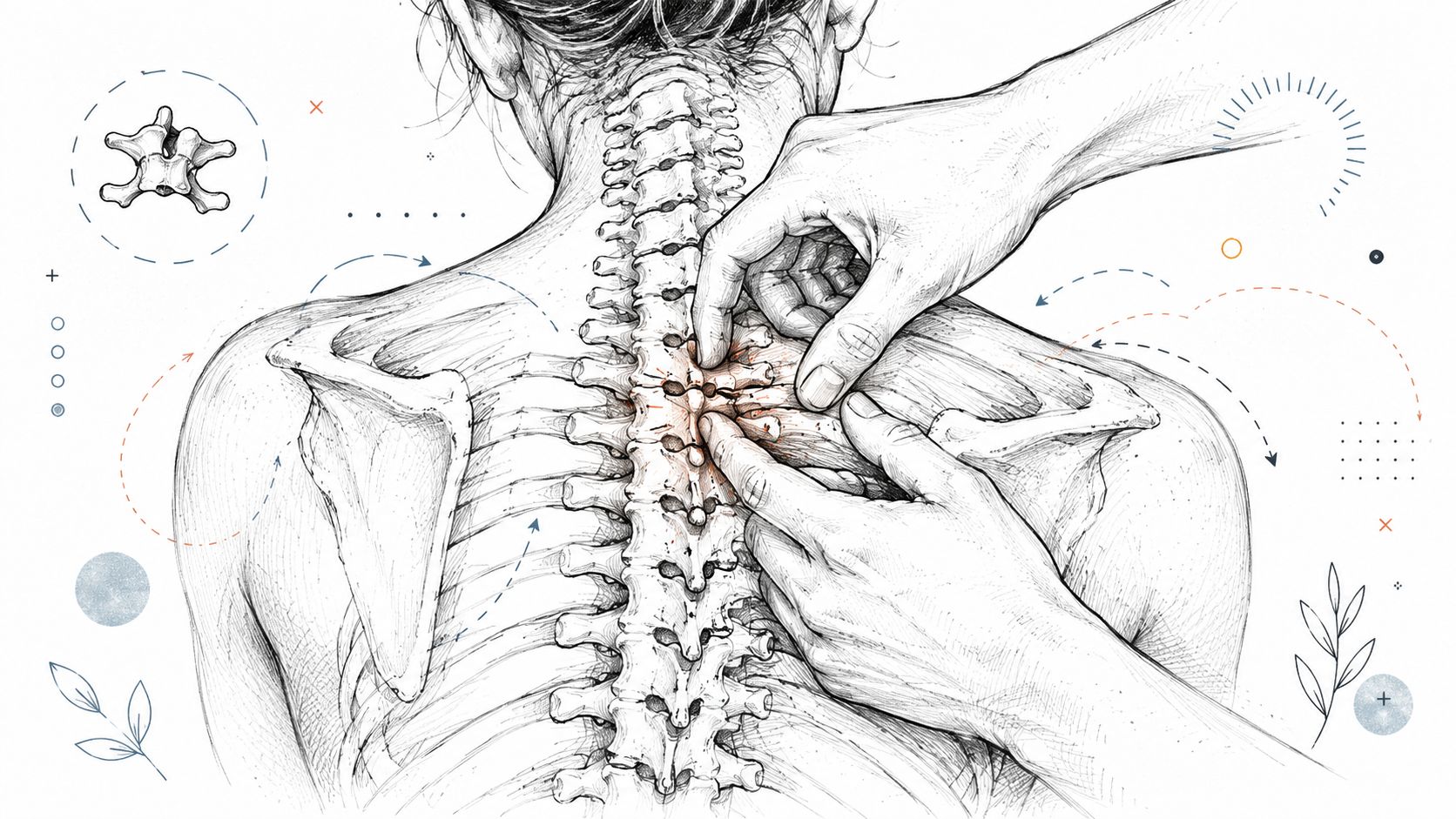
The body usually feels better when the thoracic spine gets small, regular doses of movement instead of one aggressive stretch. Think of the goal as restoring motion, not forcing a crack or chasing a dramatic sensation. The following drills are simple enough to do at home and gentle enough to build on.
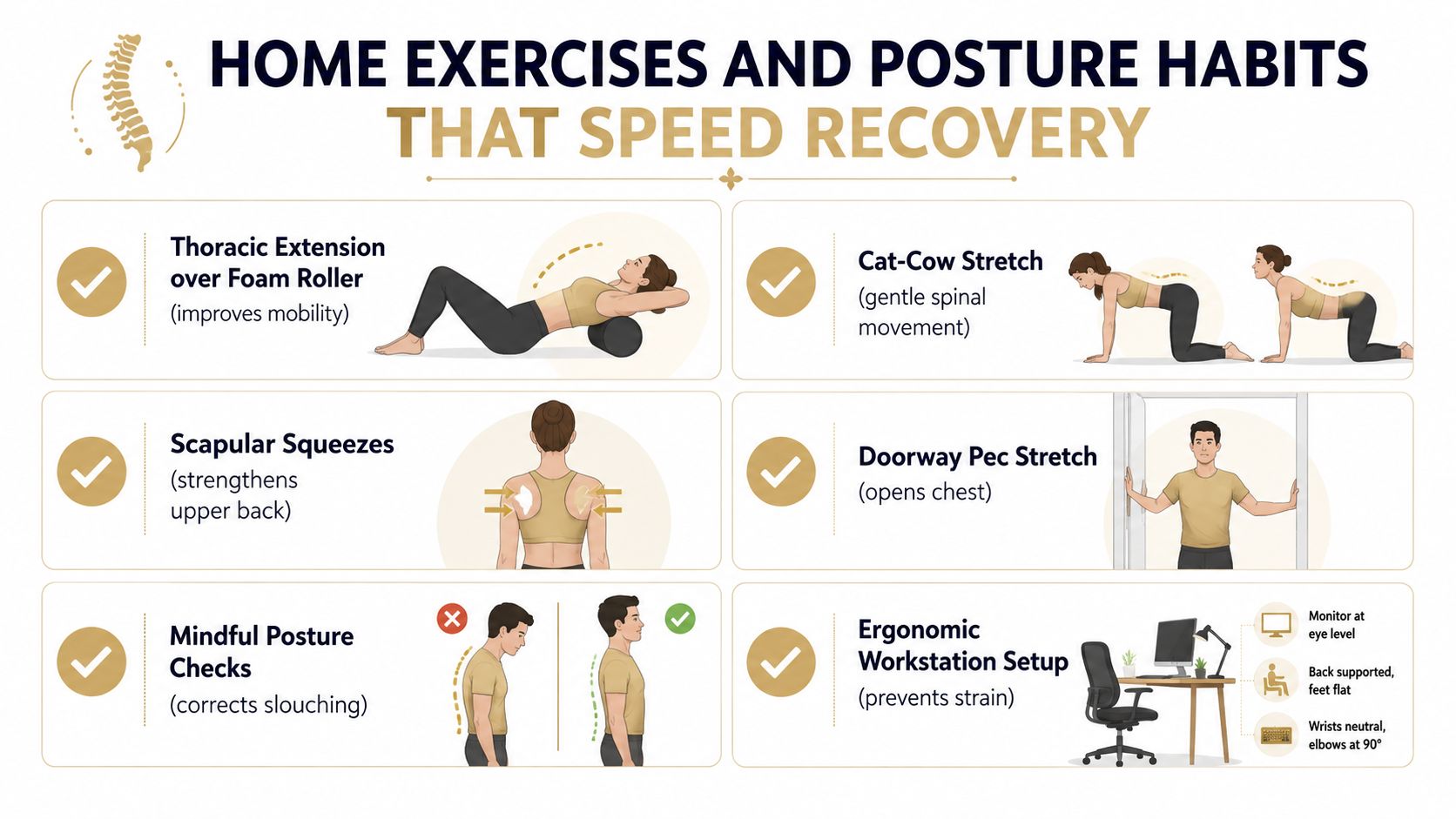
Thoracic extension over a foam roller opens the front of the chest and gives the mid-back a controlled backward bend. Start with your head supported, move slowly, and stop short of any sharp pain. Open-book stretches help rotation, which matters when the rib cage feels stiff. Scapular retraction drills remind the shoulder blades to sit back and down instead of drifting forward.
Cat-cow mobility adds easy spinal motion without loading the area hard. Doorway pec stretches can reduce the front-of-chest tightness that keeps the mid-back rounded. For a related progression, this back arch stretch guide fits well with extension-based work when the movement feels comfortable.
A lot of thoracic pain starts or worsens at the workstation. Raise the monitor so you're not living in a forward head posture, use chair support that lets the low back settle, and change positions often enough that one posture doesn't become a 3-hour hold. Micro-breaks matter more than perfect posture, because the thoracic spine hates being trapped in one shape.
If disc-related pain is part of the picture, avoid repeated end-range twisting or forceful self-cracking. Favor controlled walking, gentle extension, and the specific rehab plan your clinician gives you. The safest routine is the one that improves your movement without setting off the same pain cycle again.
Same-day care makes sense when thoracic pain comes with chest symptoms, breathing difficulty, fever, unexplained weight loss, major trauma, or a night pain pattern that doesn't settle. A scheduled clinic visit within the week is more appropriate when the pain is persistent, keeps returning, or limits work, sleep, or training even without obvious red flags. Mild, clearly mechanical soreness can often start with home care, but if it isn't improving, it shouldn't be ignored.
Aspen Falls Wellness serves patients in Salt Lake City and Sandy, Utah with a multidisciplinary musculoskeletal model that includes chiropractic care, massage, acupuncture, mobility work, nutrition counseling, and rehab exercise. The clinic also uses DRX9000 decompression and MLS Laser Therapy when those tools fit the exam findings, and it treats problems such as disc-related pain, chronic mid-back pain, post-accident injuries, and posture-related strain.
Insurance participation includes multiple plans, but verification is recommended before the visit. If you want a clinic that can sort out whether your pain looks mechanical, referred, or more serious, this is the right kind of conversation to have in person.
| Question | Short Answer | See Section |
|---|---|---|
| How long does thoracic back pain last? | It depends on the cause, but persistent or recurring pain needs a proper exam if it keeps coming back. | How a Clinician Diagnoses Thoracic Back Pain |
| Is thoracic back pain a sign of a heart attack? | Sometimes chest-related symptoms can overlap, so chest pressure, shortness of breath, or pain with exertion should be treated as urgent. | Red Flags You Should Never Ignore |
| Is a thoracic herniated disc serious? | It can be, especially if symptoms wrap around the ribs, change with coughing or breathing, or involve nerve irritation. | The Five Main Causes of Thoracic Back Pain |
| How should I sleep with mid-back pain? | Choose the position that keeps the spine neutral and doesn't increase pain, then avoid the posture that wakes you up. | Home Exercises and Posture Habits That Speed Recovery |
If your mid-back pain keeps coming back, gets in the way of work or sleep, or has features that don't feel like a simple strain, schedule an evaluation with Aspen Falls Wellness. Their team can sort out whether the problem looks mechanical, disc-related, or referred, then build a plan with the right mix of decompression, manual care, rehab, and home exercise.

Stay updated with the latest chiropractic news and exclusive offers.