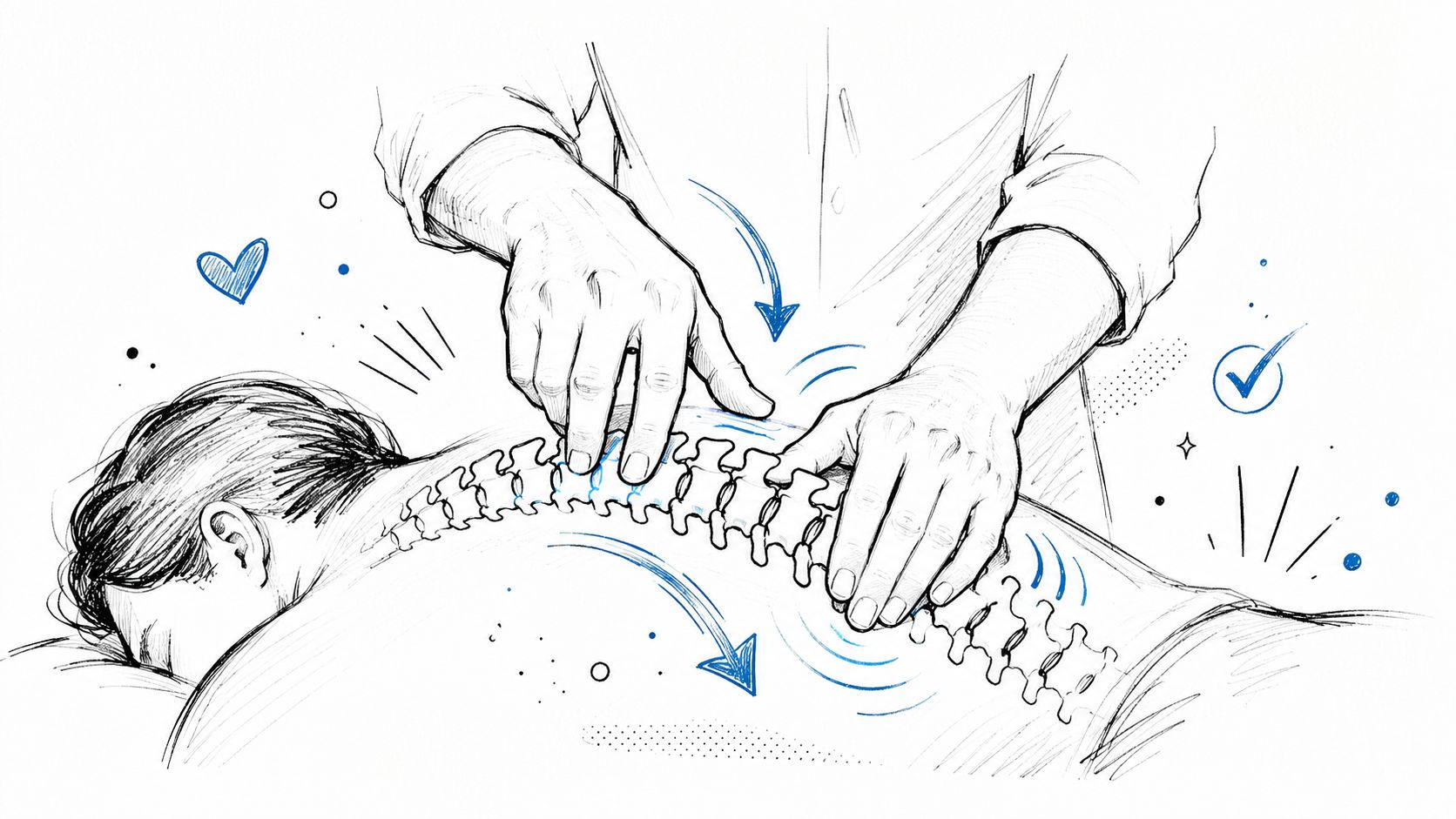
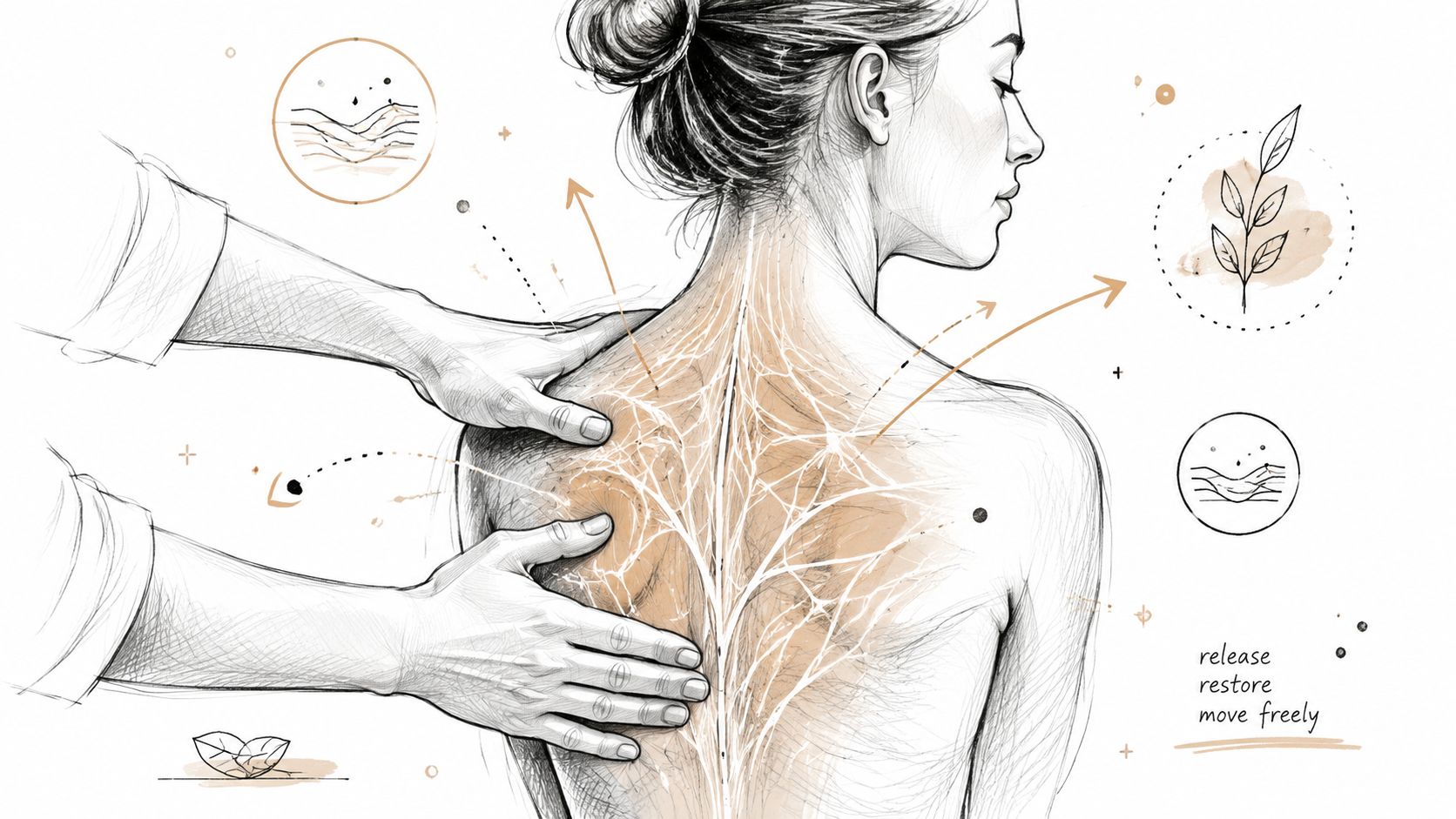
Compare spinal stenosis treatment options, from conservative care and DRX9000 decompression to surgery, plus referral red flags and how to choose a plan.
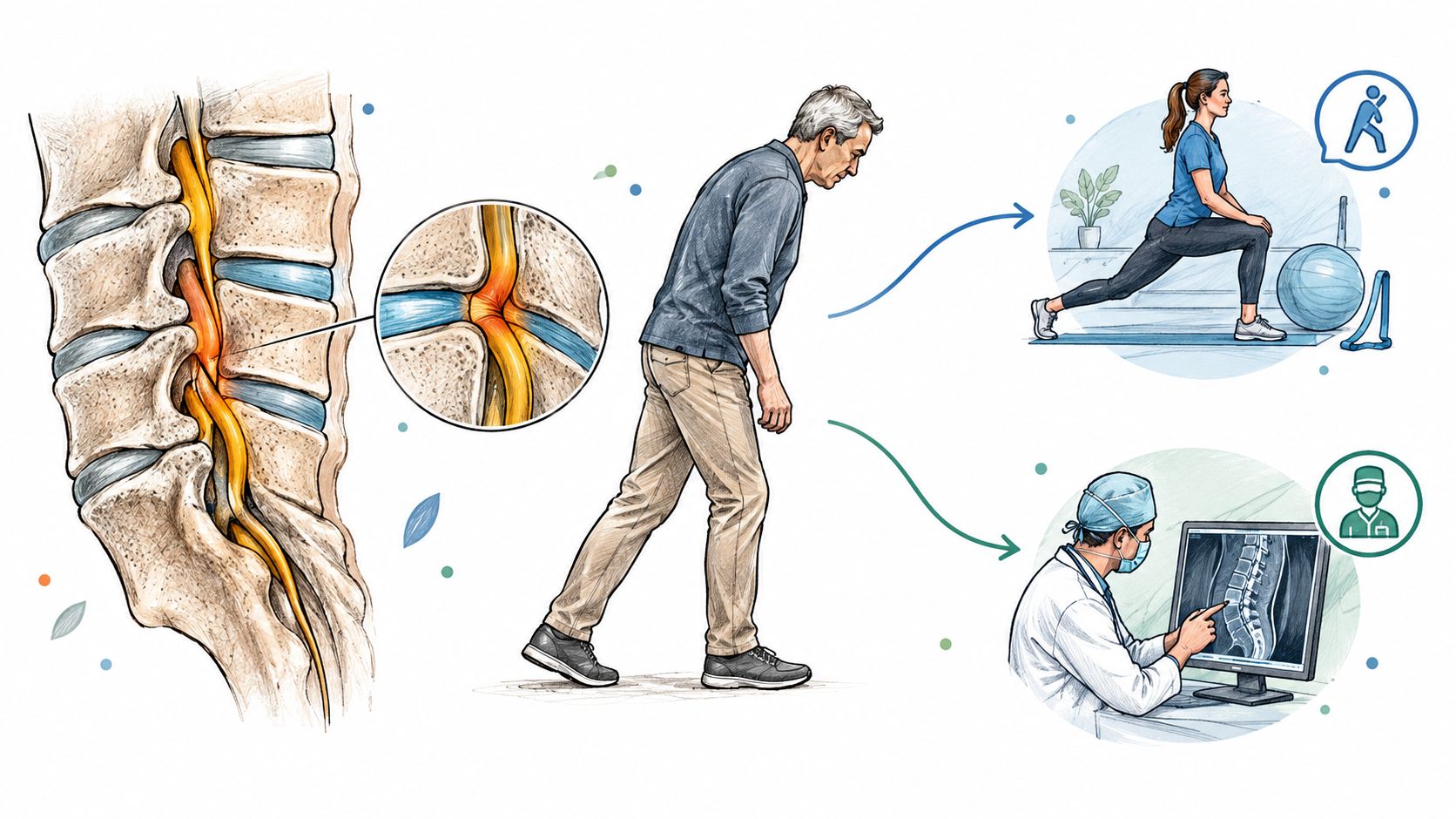
The most popular advice about spinal stenosis is also the least useful: either avoid surgery at all costs or assume an MRI showing a narrow canal means an operation is inevitable. Neither is a sound starting point. The decision should turn on what you can do, how your symptoms are changing, and what happens when you try a structured plan of care.
A diagnosis of spinal stenosis doesn't force you to choose between living with pain and going straight to surgery. Treatment is a spectrum, from guided exercise and activity changes to specialist assessment and, when appropriate, decompression. Where you start depends on your symptoms, walking tolerance, neurological findings, overall health, and personal goals.
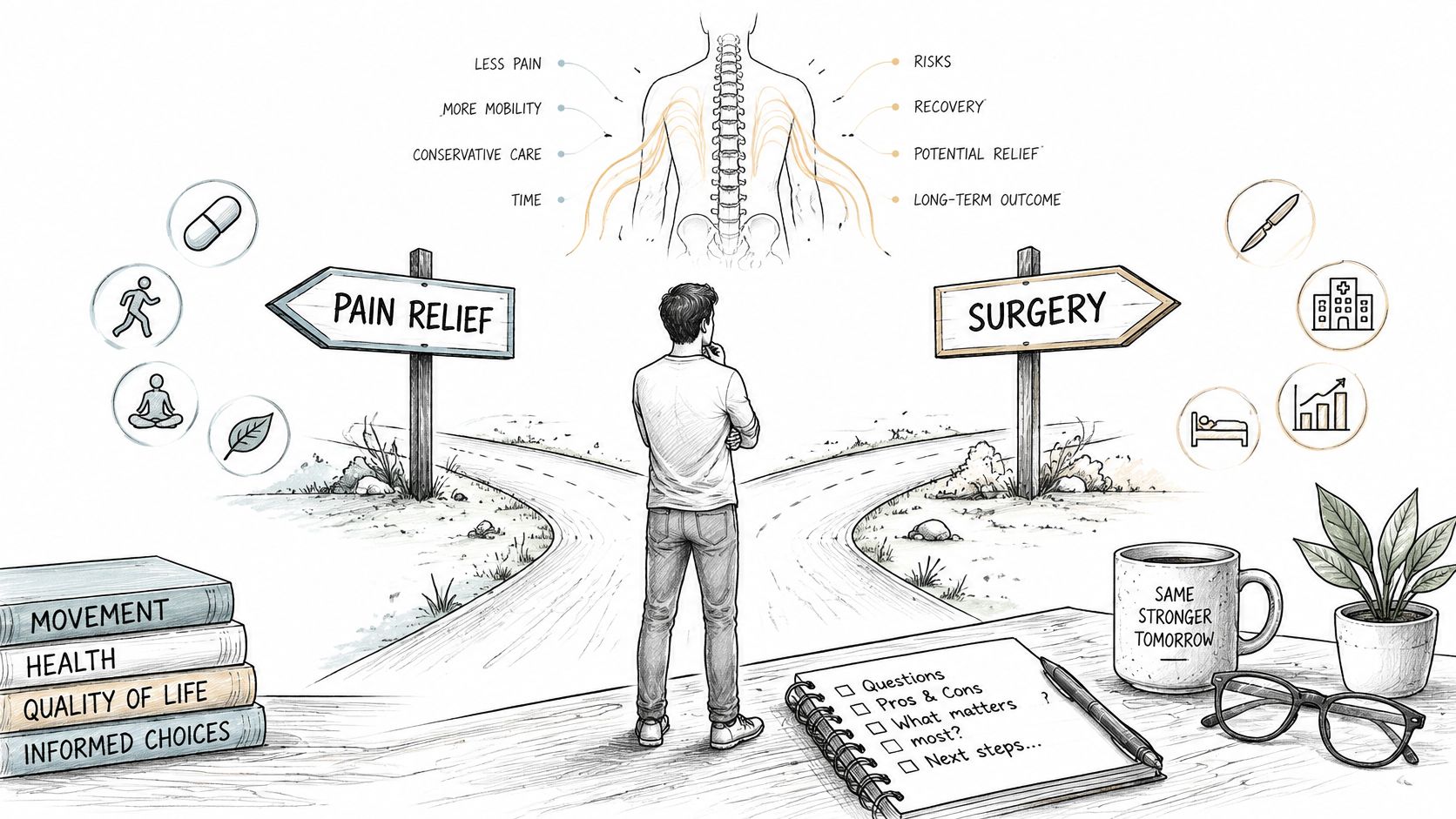
An MRI can show narrowing, but it can't tell the whole story. Some people have visible narrowing and manageable symptoms; others have leg pain or weakness that makes standing, walking, or everyday tasks difficult. Clinicians therefore interpret imaging alongside a physical and neurological examination, symptom history, and the effect on daily function. A guide to how spinal stenosis is diagnosed can help you understand why a scan is only one part of the evaluation.
The useful question isn't, “Do I have stenosis?” It's, “What is this stopping me from doing, and is that changing?” A person who can still walk comfortably and has no progressive neurological symptoms may reasonably begin with conservative care. Someone whose walking is shrinking despite a consistent rehabilitation effort may need a specialist discussion about other options.
Evidence also differs by treatment. A multimodal program combining exercise, education, and manual therapy has more relevant support for short-term function than many marketed add-ons. Injections may offer limited symptom relief for some people, while device-based approaches need stenosis-specific evidence before their benefits can be assumed. The right plan is staged and reassessed, not chosen from an MRI image or a list of available procedures.
The spinal canal is a protected passageway for nerves. In the lower back, nerve roots travel through this space and branch toward the legs. Spinal stenosis means that the available space has narrowed, which can crowd or irritate those nerves.
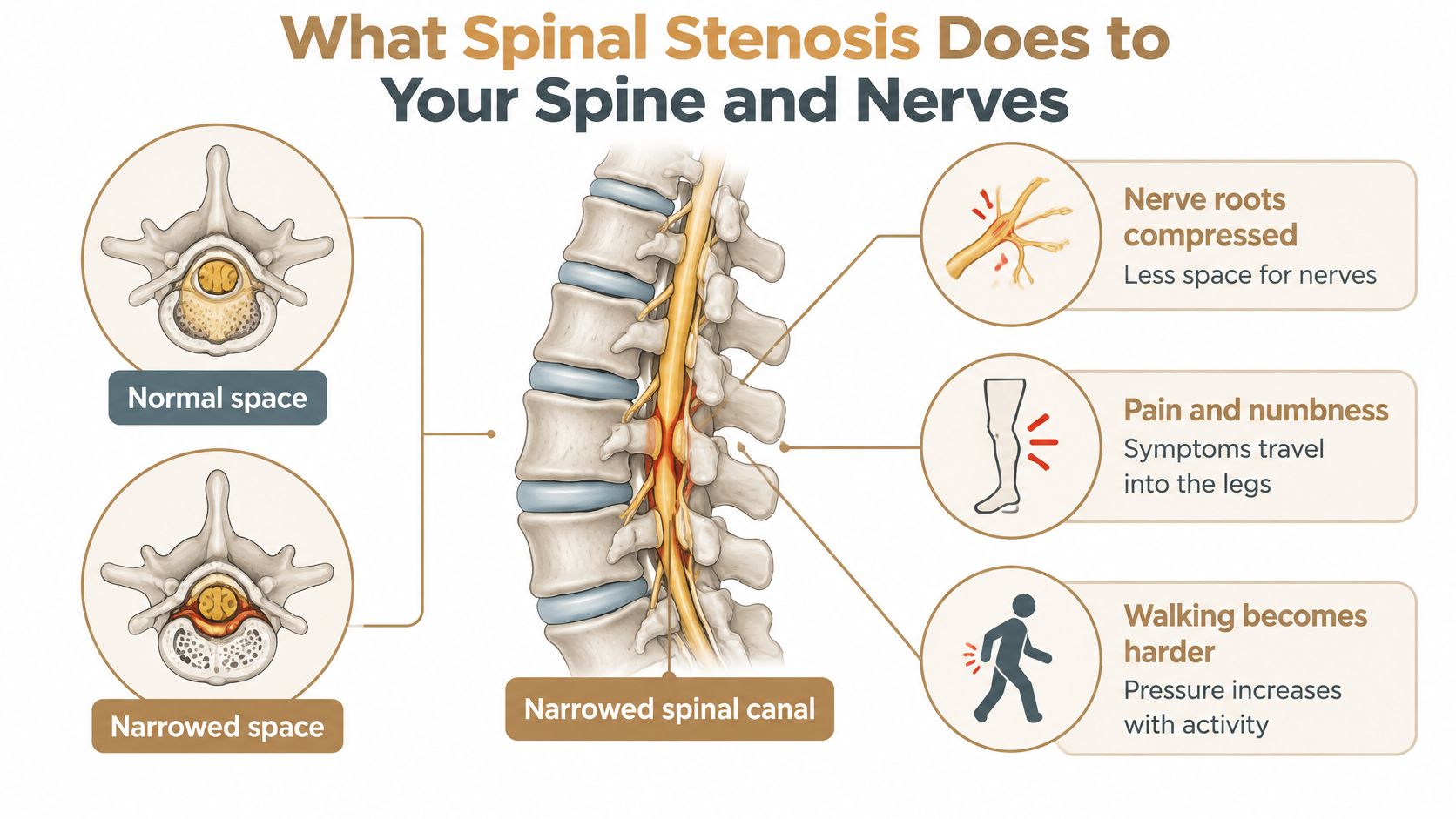
Think of the canal like a hallway. If the walls or contents take up more room, people have less space to pass through. In the spine, changes such as thickened ligaments, arthritic bone growth, or disc changes can reduce room for the nerves. The narrowing itself is anatomical, but the symptoms depend on whether it irritates the nerves and how that affects movement.
A common pattern is neurogenic claudication: aching, heaviness, cramping, tingling, or numbness in the legs that appears or worsens with standing and walking, then eases when sitting or bending forward. That posture can reduce pressure on the affected nerve structures for some people. As a result, someone may find that leaning on a shopping cart feels easier than standing upright in a queue.
Not every back or leg symptom comes from stenosis. Hip problems, peripheral nerve conditions, vascular circulation issues, and other spine conditions can cause overlapping complaints. The pattern, examination, and relevant imaging help a clinician distinguish among them. Describe what brings symptoms on, where they travel, what relieves them, and how far you can walk before you need to stop.
Function matters more than a scan in isolation. A useful evaluation connects the anatomy to your actual symptoms and abilities, rather than treating every narrowed image as the cause of every pain.
When symptoms are mild or there's no progressive neurological deficit, conservative treatment is generally the first step. The aim isn't to pretend the narrowing has disappeared. It's to manage symptoms, preserve mobility, and see whether you can regain useful function without surgery.
A structured program may include physical therapy focused on stretching, strengthening, aerobic conditioning, posture, and mobility. It can also involve activity adjustments, pain or anti-inflammatory medication, and medication for neuropathic pain when appropriate. Selected patients may consider an injection as part of a wider plan, but an injection shouldn't replace follow-up or rehabilitation. If everyday back discomfort is also affecting your routine, this guide to managing everyday back discomfort offers practical context for thinking about activity and self-care.
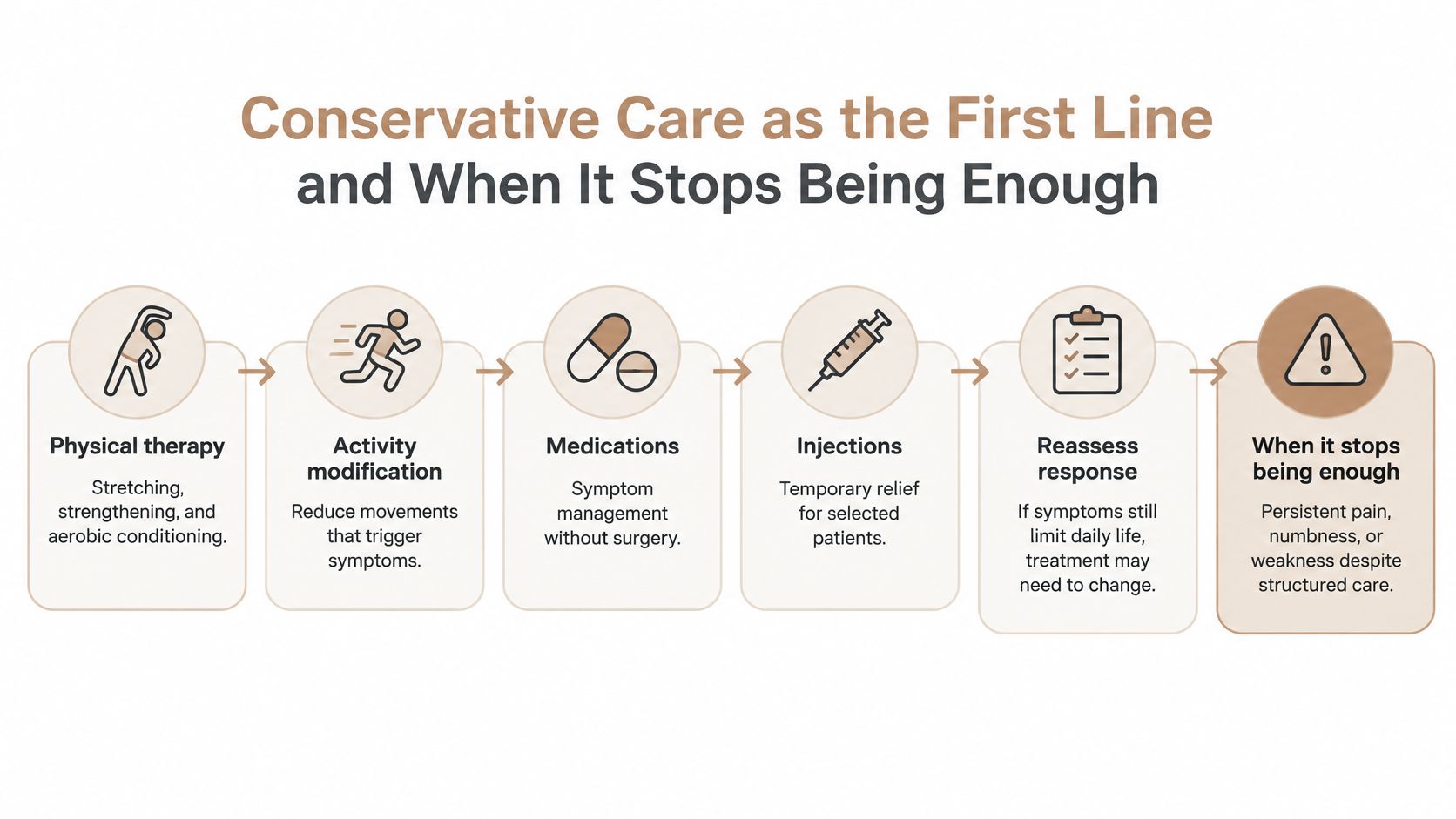
A clinical review reports that approximately 50% of conservatively treated patients remain stable or improve over 4–10 years, while an estimated 30%–40% eventually undergo surgery because of worsening neurogenic claudication, radiculopathy, or functional decline (clinical review of lumbar spinal stenosis treatment). Those figures describe different paths, not a guarantee for an individual. They support a staged approach: begin with appropriate nonoperative care when safe, then change course if symptoms and function warrant it.
A structured plan needs goals you can track. For instance, record how far you can walk before leg symptoms make you stop, whether you can stand to prepare a meal, and whether numbness or weakness is changing. If these measures don't improve, or daily activities remain substantially limited, discuss reassessment rather than repeating the same treatment indefinitely.
Urgent exception: Rapidly progressive weakness, bowel or bladder dysfunction, or suspected cauda equina syndrome requires urgent specialist assessment. Conservative care shouldn't be the only response to these warning signs.
“Non-surgical” describes what a treatment avoids, not how well it works. The evidence for stenosis-specific care isn't equal across exercise programs, injections, and devices. A useful comparison asks whether a treatment aims to improve walking and function, offers only temporary symptom relief, or has limited direct evidence for spinal stenosis.
| Treatment | Primary goal | Evidence strength | Expected benefit window |
|---|---|---|---|
| Multimodal care combining exercise, education, and appropriate manual therapy | Improve symptoms, walking tolerance, and function | Moderate-quality support for selected approaches | Short-term improvements; reassess function as care progresses |
| Symptom-guided flexion exercise and progressive walking | Build activity tolerance while adjusting to symptoms | Supported as part of structured rehabilitation | Depends on response and continued participation |
| Epidural corticosteroid injection | Temporarily modulate pain for selected patients | Modest or inconsistent; not disease-modifying | Benefit is generally limited to roughly two to three weeks |
| Device-based decompression, laser, or other adjunctive modalities | Intended symptom relief | Stenosis-specific evidence may be limited; evaluate claims cautiously | Not established from the evidence described here |
A multimodal program may combine symptom-guided flexion-based exercise, progressive walking, education, and manual therapy when appropriate. Evidence indicates that manual therapy combined with exercise can produce clinically important short-term improvements in symptoms and function compared with medical care or community exercise. Education plus exercise delivered with a cognitive-behavioral approach can improve walking distance more than self-directed home exercise (systematic review of nonoperative treatment for lumbar spinal stenosis with neurogenic claudication). Exercise should be adapted to the person's needs, preferences, and capabilities, rather than prescribed as a one-size-fits-all routine (NICE recommendations on exercise for low back pain and sciatica).
Epidural corticosteroid injections may help with pain for a limited period, but they don't widen the spinal canal or change the underlying narrowing. Evidence describes modest or inconsistent benefit, generally around two to three weeks, and doesn't show clinically important functional gains from adding steroid in the relevant comparisons. Before repeating an injection, check whether walking, leg symptoms, neurological findings, or daily activity improved.
Claims for treatments such as device-based decompression or laser therapy should be viewed cautiously unless supported by trials specifically involving spinal stenosis. Evidence from general low-back pain or disc conditions doesn't automatically establish effectiveness for stenosis. For more background on what spinal decompression therapy involves, see this overview of spinal decompression therapy.
Surgical decompression can be considered when spinal narrowing continues to limit walking and daily function after a structured conservative trial. The operation creates more room for compressed nerves. Whether that trade-off makes sense depends on symptoms, neurological findings, and the person's priorities, not the scan alone.
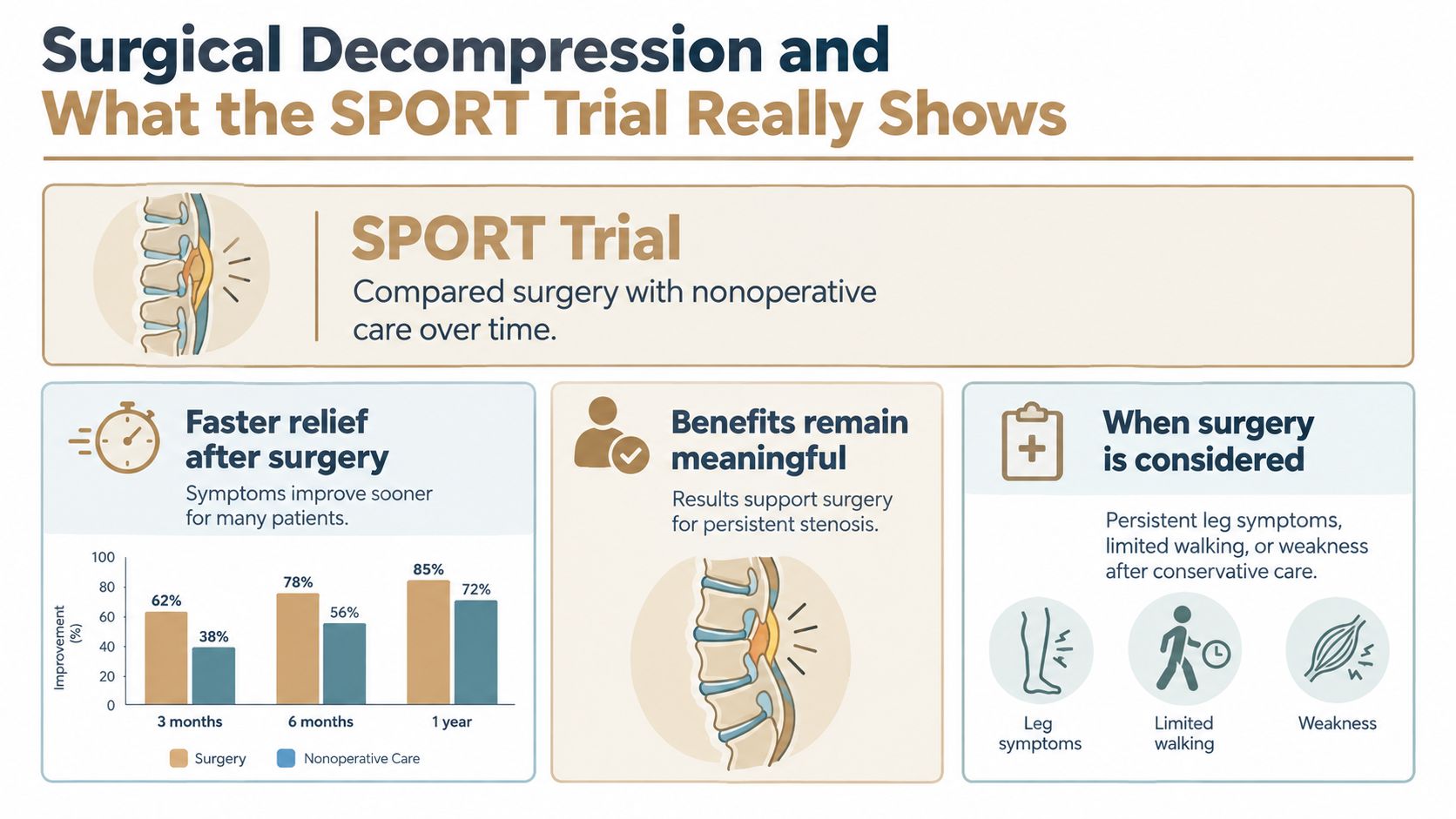
The Spine Patient Outcomes Research Trial, or SPORT, followed 654 participants: 289 in a randomized cohort and 365 in an observational cohort. Treatment often changed after enrollment. By two years, 67% of participants assigned to surgery had undergone it, while 43% assigned to nonoperative care had switched to surgery (SPORT long-term results). This crossover makes a straightforward comparison of surgery with no surgery difficult.
In the combined as-treated analysis, outcomes at four years favored surgery by 12.6 points for bodily pain, 8.6 points for physical function, and 9.4 points in the favorable direction for the Oswestry Disability Index. Those scores are one way to measure change, but walking tolerance and daily activity matter too. The trade-offs included a dural tear, the most common surgical complication, at 9%, and a four-year reoperation rate of 13%. By years six to eight, the earlier advantage was no longer statistically significant for the primary outcomes.
A separate intention-to-treat analysis of SPORT's randomized cohort found a 7.8-point greater improvement in bodily pain with surgery, but no significant difference in physical function or the Oswestry Disability Index (randomized SPORT trial report). The analyses differ because they handle treatment changes differently. That distinction matters: one score or time point cannot settle the decision for an individual.
For stenosis without instability or degenerative spondylolisthesis, decompression alone is generally the relevant surgical benchmark. Fusion is a separate decision, considered when instability, deformity, or associated spondylolisthesis is present, rather than for stenosis by itself.
A treatment plan should fit the person, not just the scan. Start with what you want to do, what currently limits you, whether weakness or numbness is progressing, and how much risk your health history adds to treatment. Imaging helps confirm whether the anatomy matches the symptoms, but it shouldn't set the plan by itself.
A practical discussion with a clinician can cover:
There isn't a universal timetable that suits everyone. A person with tolerable symptoms and stable findings may continue adjusted conservative care. Persistent disability despite a well-planned trial may justify a surgical opinion, while urgent neurological warning signs call for prompt specialist assessment.
For someone seeking coordinated non-surgical care in Salt Lake City or Sandy, Aspen Falls Wellness offers an initial examination, imaging referral when indicated, chiropractic adjustments, therapeutic massage, acupuncture, SoftWave therapy, MLS Laser Therapy, mobility therapy, and rehabilitation exercise with take-home plans. The practice also offers spinal decompression with the DRX 9000 for disc-related pathology, along with posture retraining, nutrition counseling, and golf movement screening. These services aren't equally supported for stenosis itself, so ask which parts of a proposed plan are intended to improve walking and function and how progress will be measured.
Aspen Falls Wellness participates with plans including Aetna, BCBS, Cigna, Humana, GEHA, and Motiv Health, with insurance verification recommended. When a patient's needs fall outside the clinic's scope, the practice refers to external specialists. A coordinated clinic can support evaluation and rehabilitation, but it shouldn't delay urgent referral or replace a spine specialist's assessment when one is needed.
The decision to seek specialist care is a moving threshold, not a scan result or a fixed timetable. MRI severity alone should not set it. Changes in neurological findings, walking tolerance, daily function, and response to structured rehabilitation help show whether the current plan is working.
Seek urgent specialist assessment for progressive weakness, bowel or bladder dysfunction, saddle anesthesia, or severe unremitting symptoms. These warning signs should not wait for a routine follow-up. For more guidance on symptoms that need prompt attention, read this guide to low back pain red flags.
At planned reassessments, compare function with where you started. Can you walk farther before stopping? Have leg pain, numbness, or heaviness eased, stayed steady, or worsened? Has your strength changed? Are standing and household tasks becoming easier? These measures help distinguish a treatment that is improving daily life from one that has not shifted the problem.
If symptoms remain disabling despite structured rehabilitation, ask whether a specialist opinion is appropriate. Surgery is commonly considered when disabling symptoms persist after roughly three to six months of nonoperative treatment, depending on severity and neurological findings, as summarized in the clinical review of lumbar spinal stenosis treatment. This timeframe is a point for careful review, not a requirement to wait through urgent symptoms or a sign that everyone with ongoing pain needs surgery. The decision also depends on treatment response, health risks, and personal preferences.
This week, arrange an evaluation if walking or daily activities are limited. Bring your imaging and a short record of what triggers or eases symptoms, and ask how walking tolerance will be tracked during the first several weeks of care.
Aspen Falls Wellness provides individualized chiropractic care, rehabilitation exercise, mobility therapy, and non-surgical options including spinal decompression with the DRX 9000. If stenosis is limiting your walking, visit Aspen Falls Wellness to discuss an evaluation, a function-focused plan, and referral to a specialist when needed.

Stay updated with the latest chiropractic news and exclusive offers.