Discover what causes chronic joint pain, from osteoarthritis and inflammation to nerve sensitization. Learn evidence-based treatments and when to seek care.
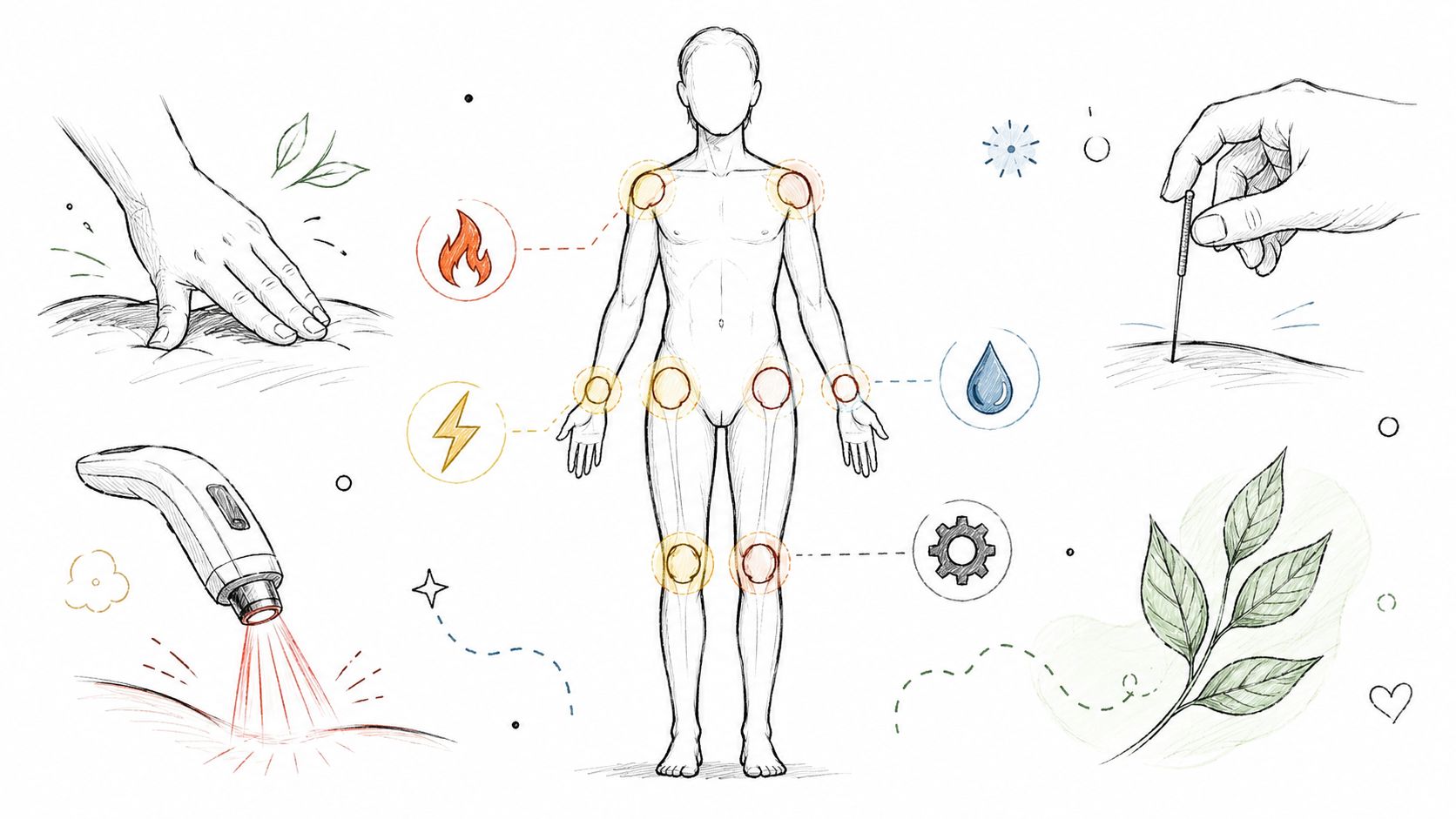



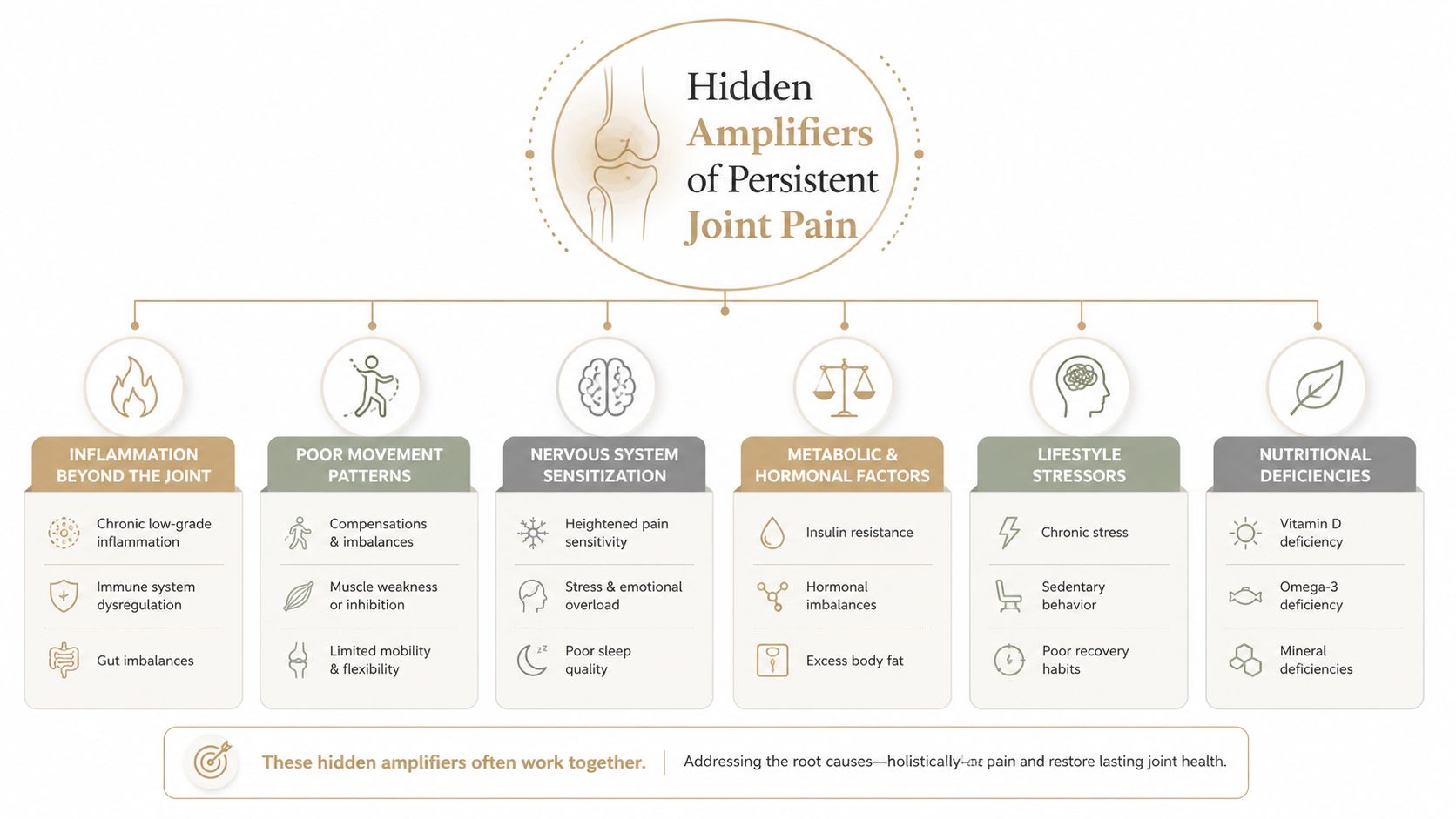
“Wear and tear” is one of the most popular explanations for chronic joint pain, and it's often incomplete. A painful knee, hip, shoulder, hand, or spine may reflect osteoarthritis, but persistent pain can also involve immune activity, irritated nerves, metabolic inflammation, poor sleep, previous injury, or changes in how the nervous system processes danger signals.
That distinction matters because pain intensity doesn't always match an X-ray. Two people can have similar structural changes and very different symptoms. Effective care starts by identifying what's driving the pain in your body, then matching treatment to that mechanism instead of applying the same arthritis advice to everyone.
Chronic joint pain is most commonly associated with osteoarthritis, the leading cause of arthritis-related pain and disability worldwide. CDC-backed estimates cited in musculoskeletal research place osteoarthritis at about 32.5 million affected adults in the United States, while arthritis overall affects about 53.2 million U.S. adults, roughly one in five. (Osteoarthritis prevalence and burden data)
Those figures describe how common arthritis is, not why every person hurts. A joint contains cartilage, bone, a capsule, synovial tissue, ligaments, tendons, blood vessels, and nerves. Pain may begin with cartilage breakdown, but it can continue through synovial irritation, bone remodeling, swelling, muscle weakness, altered movement, or nerve sensitivity.
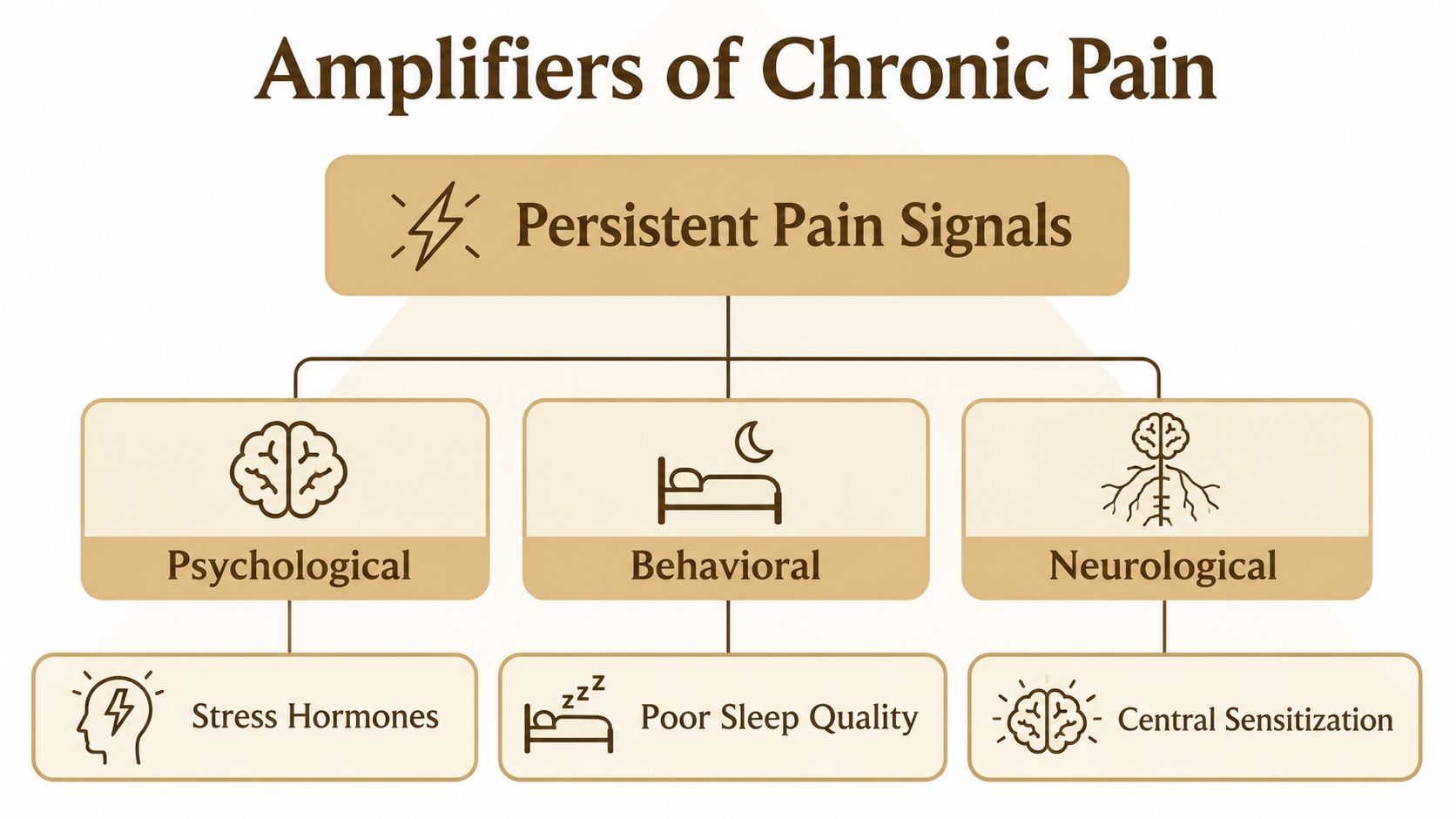
Pain is the nervous system's protective response to actual or potential threat. It uses information from the joint, muscles, skin, spinal cord, and brain. When irritation continues, the system can become more responsive, so ordinary movement may feel threatening even after the original injury has settled.
That's why visible swelling and pain don't always rise and fall together. In rheumatoid arthritis, for example, persistent input from inflamed tissue can increase sensitivity in peripheral nerves and alter pain processing in the central nervous system. Pain may become amplified even when swelling is less obvious. (Chronic pain mechanisms in rheumatoid arthritis)
Age-related degeneration is only one part of the story. Previous joint injury, excess body weight, repetitive mechanical stress, and sex are recognized contributors to osteoarthritis, which often develops gradually and is commonly seen after age 45. (Clinical overview of joint pain and risk factors)
A joint that hurts mainly after loading suggests a different starting point than several joints that feel stiff after rest. Burning, tingling, numbness, or shooting pain may point toward nerve involvement rather than a problem confined to the joint surface.
Clinical rule: Don't ask only, “What does the scan show?” Ask, “What pattern does my pain follow, and what systems could be maintaining it?”
Osteoarthritis is often described as cartilage wearing down until bones lose their cushioning. That description captures part of the process, but it treats the joint like a hinge rather than a living ecosystem. In reality, cartilage, bone, synovial tissue, fluid, muscles, and nerves respond to one another.
As cartilage changes, the bone beneath it remodels. The synovial lining can become irritated and thicker, blood vessels can grow into tissue that was previously less vascular, and excess fluid can collect inside the joint. These changes can stimulate nociceptors, the sensory nerve endings that detect potentially harmful pressure or chemical irritation.
Mechanical loading often aggravates osteoarthritis, but rest doesn't always switch the pain off. Synovial inflammation, effusion, bone changes, and sensitized nerves can continue sending signals when you're sitting or trying to sleep.
Modern reviews describe osteoarthritis as an inflammatory condition as well as a degenerative one. The severity of synovial inflammation has been associated with patient-reported pain, and chronic synovitis is associated with faster disease progression. (Inflammation and osteoarthritis pain)
Laboratory findings support this mixed picture. Research in knee osteoarthritis has identified higher levels of inflammatory and tissue-remodeling markers, including TNF-α, IL-6, IL-8, MMP-1, and MMP-3, compared with controls. Other findings have linked pain intensity with markers such as IL-6, macrophage colony-stimulating factor 1, fibroblast growth factor-21, and TWEAK. (Biomarkers and pain intensity in knee osteoarthritis)
A purely mechanical plan may help if movement overload is the main driver. Mobility work, strengthening, posture retraining, and carefully selected manual therapy can improve how force travels through the joint. But if synovial irritation and pain sensitivity remain active, loading changes alone may not be enough.
Some people also explore complementary options, such as browsing CBD for arthritis relief. That choice deserves a careful discussion about product quality, interactions, expectations, and the difference between symptom support and treatment of the underlying joint process.
At Aspen Falls Wellness, laser therapy for inflammation is one non-surgical option that may be considered alongside movement-based care. The appropriate plan depends on examination findings, symptom behavior, tolerance, and whether the dominant problem is mechanical, inflammatory, neurological, or mixed.
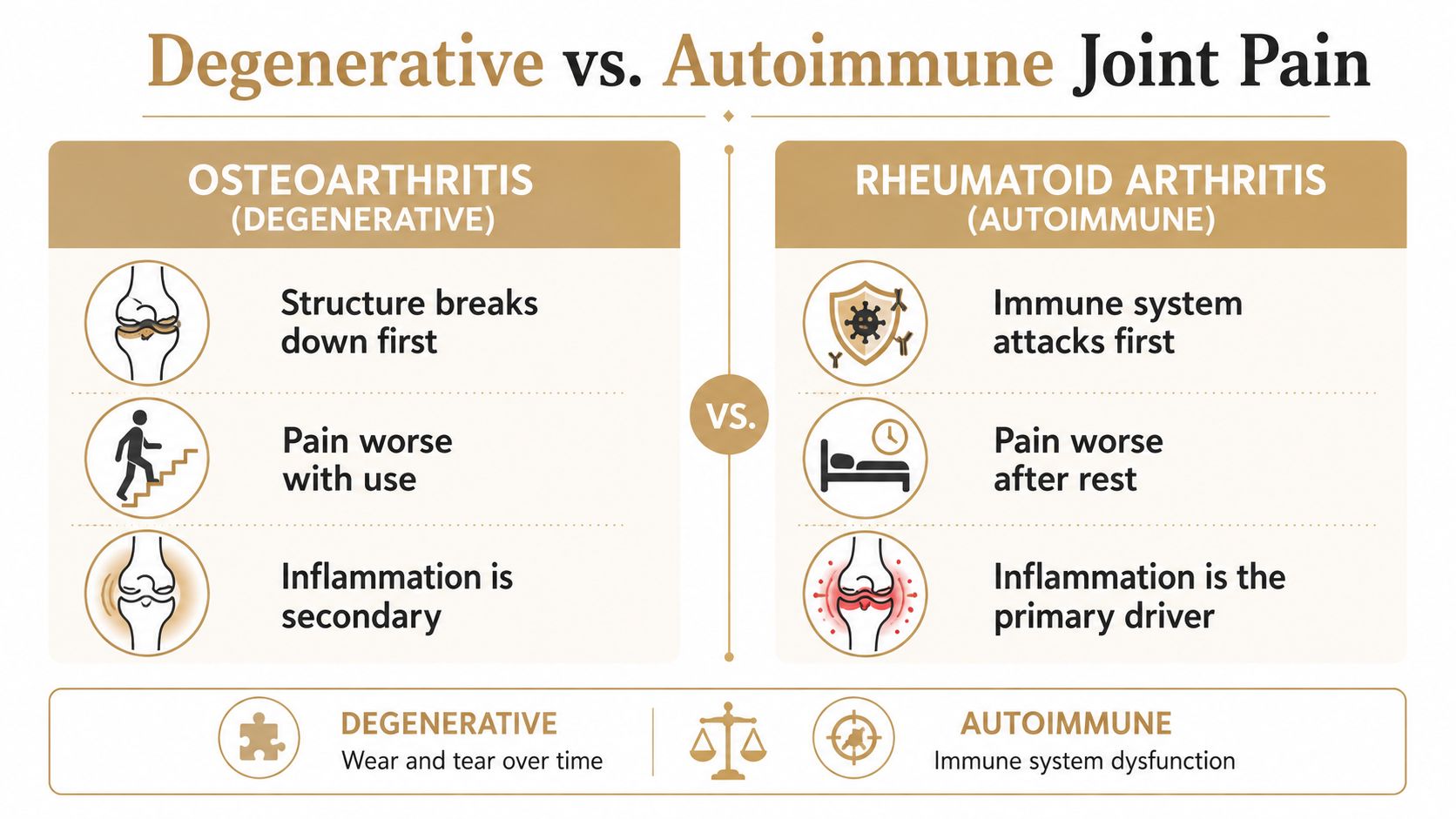
Rheumatoid arthritis creates chronic joint pain through a different pathway. The immune system mistakenly attacks healthy joint tissue, producing inflammation that can damage cartilage and bone. Without appropriate management, that damage may become irreversible.
The World Health Organization identifies smoking, obesity, female sex, age, genetics, and air pollution among established rheumatoid arthritis risk factors, while the exact cause remains unknown. Merck estimates that rheumatoid arthritis affects about 0.5% of the global population, and Harvard reports that about 1.5 million people in the United States have the disease, with at least 75% being women. (Rheumatoid arthritis and chronic pain mechanisms)
Degenerative pain commonly increases with repeated loading. Inflammatory arthritis more often produces pronounced stiffness after rest, swelling, warmth, and symptoms affecting several joints. Morning stiffness lasting over an hour, symmetrical hand or foot symptoms, unusual fatigue, or a general sense of illness should prompt an evaluation rather than a self-diagnosis of “normal aging.”
Inflammation can cause excess joint fluid, tissue swelling, cartilage injury, bone damage, and muscle loss. (Inflammatory joint pain mechanisms)
Rheumatoid arthritis pain isn't driven by inflammation alone. Inflamed synovial tissue can activate peripheral nociceptors, while persistent signals can increase sensitivity in the spinal cord and brain. The nervous system may also lose some of its normal ability to dampen pain.
As a result, pain can remain severe when visible swelling fluctuates. That doesn't mean the pain is imaginary or exaggerated. It means the immune system and nervous system are interacting, and treatment needs to account for both.
A person with suspected inflammatory arthritis needs appropriate medical assessment. Chiropractic care, massage, mobility therapy, acupuncture, and exercise may support function and comfort in a coordinated plan, but they shouldn't replace evaluation or disease-directed treatment when an autoimmune condition is possible.
Some people continue to hurt after the original joint irritation has been identified and treated. The explanation may involve central sensitization, a state in which the nervous system becomes more responsive to incoming signals. Pressure, movement, or temperature that would once have felt neutral may begin to feel painful or unusually intense.
This process can coexist with osteoarthritis, rheumatoid arthritis, an old injury, or nerve irritation. It doesn't mean the joint is undamaged. It means the brain and spinal cord are contributing more strongly to the final pain experience.
Obesity can increase joint stress because the musculoskeletal system must manage greater mechanical demand. It can also contribute to inflammatory biology, so the effect isn't limited to pressure on the knee or hip.
That combination helps explain why weight-related care shouldn't be framed as blame or a demand for rapid change. Nutrition counseling, gradual activity progression, strength development, and realistic behavior support can reduce barriers to movement. People who want structured guidance can review this resource on weight loss for joint pain, while discussing individual goals with a qualified clinician.
Pain can make it difficult to fall asleep, change position, or stay asleep. Poor sleep can then increase fatigue, reduce coping capacity, disrupt activity, and heighten pain sensitivity. Depression, anxiety, and inflammation may add further pressure to the same cycle in people with knee or hip osteoarthritis.
A treatment plan that focuses only on the painful joint may miss this feedback loop. Sleep regularity, appropriate daytime movement, pacing, relaxation strategies, and assessment of mood can be as relevant to recovery as local hands-on care.
Muscles and fascia often compensate when a joint loses mobility or strength. That compensation can create tenderness, guarding, and inefficient movement. Myofascial release therapy may be useful for selected soft-tissue restrictions, particularly when it's combined with mobility work and rehabilitation rather than used as a standalone fix.
The first diagnostic question isn't always “Which joint hurts?” It's “What pattern does the pain follow?” Chronic pain in one joint has a different differential from pain affecting several joints, and the timing of symptoms can narrow the possibilities.
Clinicians consider osteoarthritis, inflammatory arthritis, crystal disease, connective-tissue disorders, fibromyalgia, endocrine disease, infection, malignancy, nerve disorders, tendon problems, and previous trauma. (Primary-care approach to chronic joint pain)
Write down where the pain starts, where it travels, what makes it worse, and what eases it. Record stiffness after waking, symptoms after activity, sleep disruption, visible swelling, numbness, weakness, fever, fatigue, rashes, bowel symptoms, recent infections, medication changes, and previous injuries.
A review of systems can help organize symptoms outside the musculoskeletal system. This patient-friendly explanation of ROS explained for patients can help you understand why clinicians ask questions that seem unrelated to the painful joint.
| Pain Pattern | Common Causes | Key Distinguishing Features |
|---|---|---|
| One joint, gradually worse with use | Osteoarthritis, prior injury, tendon or ligament dysfunction | Activity-related pain, reduced range of motion, mechanical irritation |
| Several joints with prolonged stiffness after rest | Inflammatory arthritis | Swelling, warmth, symmetrical or multi-joint involvement, fatigue |
| Burning, tingling, numbness, or shooting pain | Nerve irritation or compression | Radiating symptoms, altered sensation, weakness, sensitivity |
| Widespread pain with poor sleep and fatigue | Central sensitization, fibromyalgia, overlapping conditions | Pain exceeds one local structure and may vary across regions |
| Sudden, intensely painful swelling | Crystal disease, infection, acute injury | Rapid onset, warmth, marked tenderness, or systemic illness |
A physical examination assesses movement, strength, stability, swelling, tenderness, reflexes, sensation, and the way you walk or use the limb. X-rays can show structural changes, while MRI may be appropriate when soft tissue, discs, nerves, or other structures need closer evaluation. Lab work may help identify inflammatory, metabolic, infectious, or autoimmune causes.
Seek urgent evaluation for a hot, severely swollen joint, fever with joint pain, sudden major weakness, a significant injury with deformity, or new loss of bladder or bowel control. Unexplained weight loss and pain that repeatedly wakes you from sleep also deserve prompt professional attention.
A useful plan matches the intervention to the mechanism. Consider a person with a painful, stiff knee who avoids stairs. The starting problem might be osteoarthritis, but weak hip muscles, limited ankle mobility, guarded movement, poor sleep, and weight-related inflammation can all maintain symptoms.
A personalized examination may lead to mobility therapy, a progressive rehabilitation exercise plan, soft-tissue work, and nutrition counseling. A chiropractic adjustment may be appropriate when restricted movement or adjacent spinal and pelvic mechanics contribute to the load pattern. The adjustment isn't intended to “put worn cartilage back,” but it may support mobility and function when used selectively.
A person with disc-related nerve compression, radiating leg pain, or sciatica needs a different approach from someone with isolated knee osteoarthritis. Spinal decompression with the DRX 9000 may be considered for selected disc-related conditions after evaluation, while targeted chiropractic care and a home exercise plan can address movement tolerance and strength.
SoftWave Therapy and MLS Laser Therapy may be included when the clinical goal is to support irritated soft tissue, inflammation management, and recovery. Massage Therapy can reduce muscle guarding and improve tolerance for movement. Muscle Stimulation may help selected patients engage inhibited muscles, but it works best as a bridge to active strengthening, not as a substitute for rehabilitation.
Practical rule: Passive treatment can open a window for movement. The home program helps you use that window.
Acupuncture may support pain modulation and functional progress for some people, particularly when pain sensitivity, muscle tension, or sleep disruption complicates recovery. A coordinated plan can include acupuncture for chronic pain, provided the treatment fits the diagnosis and the patient's preferences.

Pain relief matters, but so do walking tolerance, sleep, range of motion, strength, work capacity, and confidence with daily activity. At Aspen Falls Wellness, care may combine chiropractic adjustment, decompression, realignment, massage, SoftWave Therapy, MLS Laser Therapy, acupuncture, nutrition counseling, mobility therapy, rehabilitation exercise, and personal exercise plans according to the examination findings.
Additional services can address specific circumstances. Golf Movement Screening can identify movement limitations affecting swing mechanics, while Car Accident Treatment can organize evaluation and conservative rehabilitation after a collision. If the presentation falls outside a non-surgical clinic's scope, referral to another medical professional is part of responsible care.
Self-care is reasonable for a mild ache that clearly follows unusual activity and steadily improves. Chronic, recurrent, or progressively limiting pain deserves a proper assessment because the cause may involve the joint, nerves, muscles, immune system, metabolism, sleep, or several of these at once.
Arrange professional evaluation when pain persists, repeatedly returns, limits work or exercise, causes instability, or changes the way you walk. Don't wait through warning signs such as:
Bring a medication list, previous imaging, injury history, and a record of symptom timing. Ask what the leading possibilities are, what findings would change the plan, how progress will be measured, and when referral or imaging is appropriate.
The most useful treatment plan isn't the one with the longest list of therapies. It's the one that identifies the dominant pain drivers, uses tolerable interventions, progresses active rehabilitation, and gets re-evaluated when the expected changes don't occur.
If chronic joint pain is limiting your movement, Aspen Falls Wellness offers individualized non-surgical care in Salt Lake City and Sandy, including chiropractic adjustment, spinal decompression with the DRX 9000, MLS Laser Therapy, SoftWave Therapy, massage, acupuncture, mobility therapy, rehabilitation exercise, and nutrition counseling. Visit the clinic to schedule an evaluation and build a plan based on your pain pattern, functional goals, and underlying contributors.

Stay updated with the latest chiropractic news and exclusive offers.