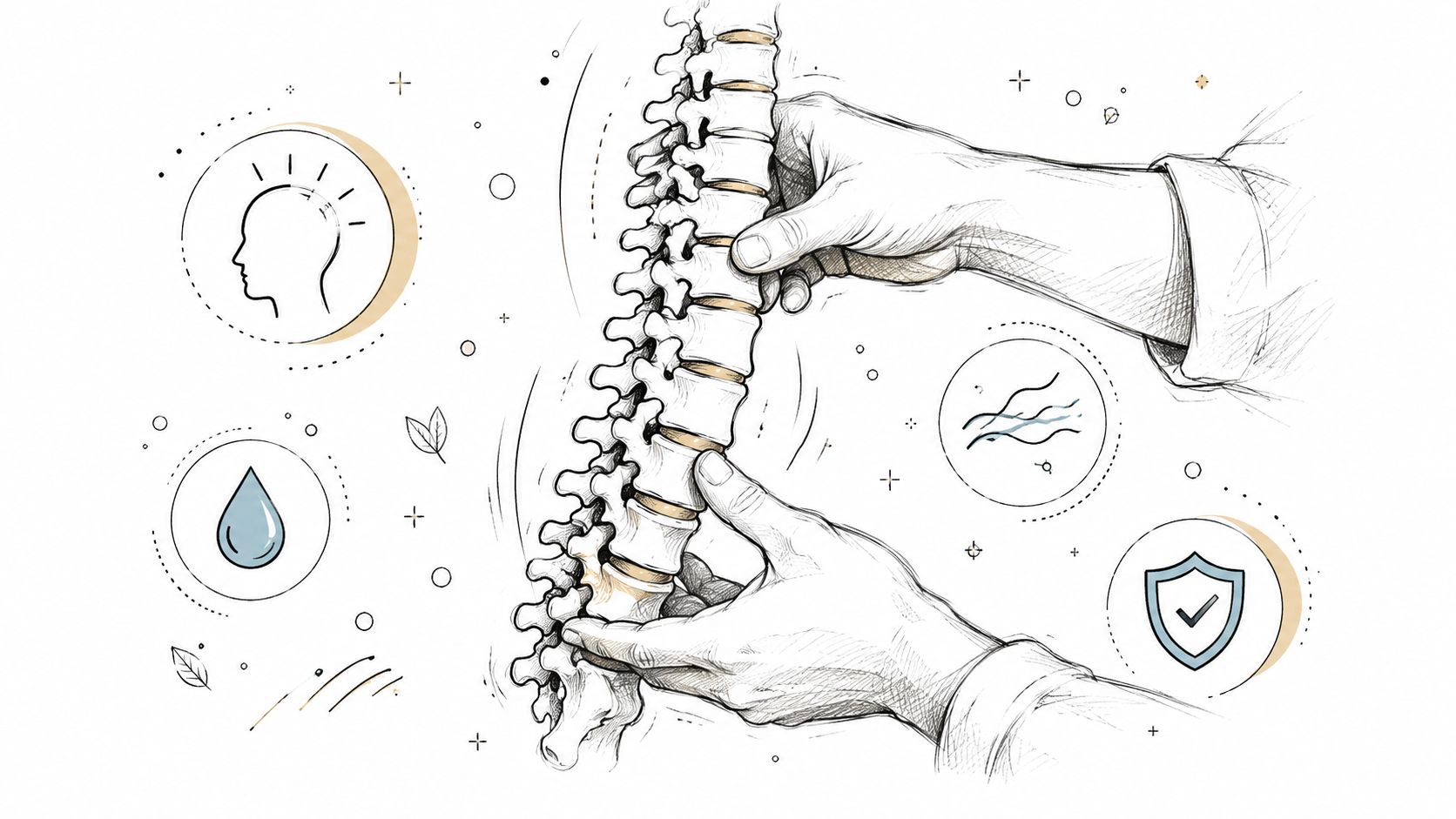
Discover what causes sciatic nerve pain, from herniated discs to spinal stenosis. Learn the real mechanisms behind sciatica and effective treatment options.



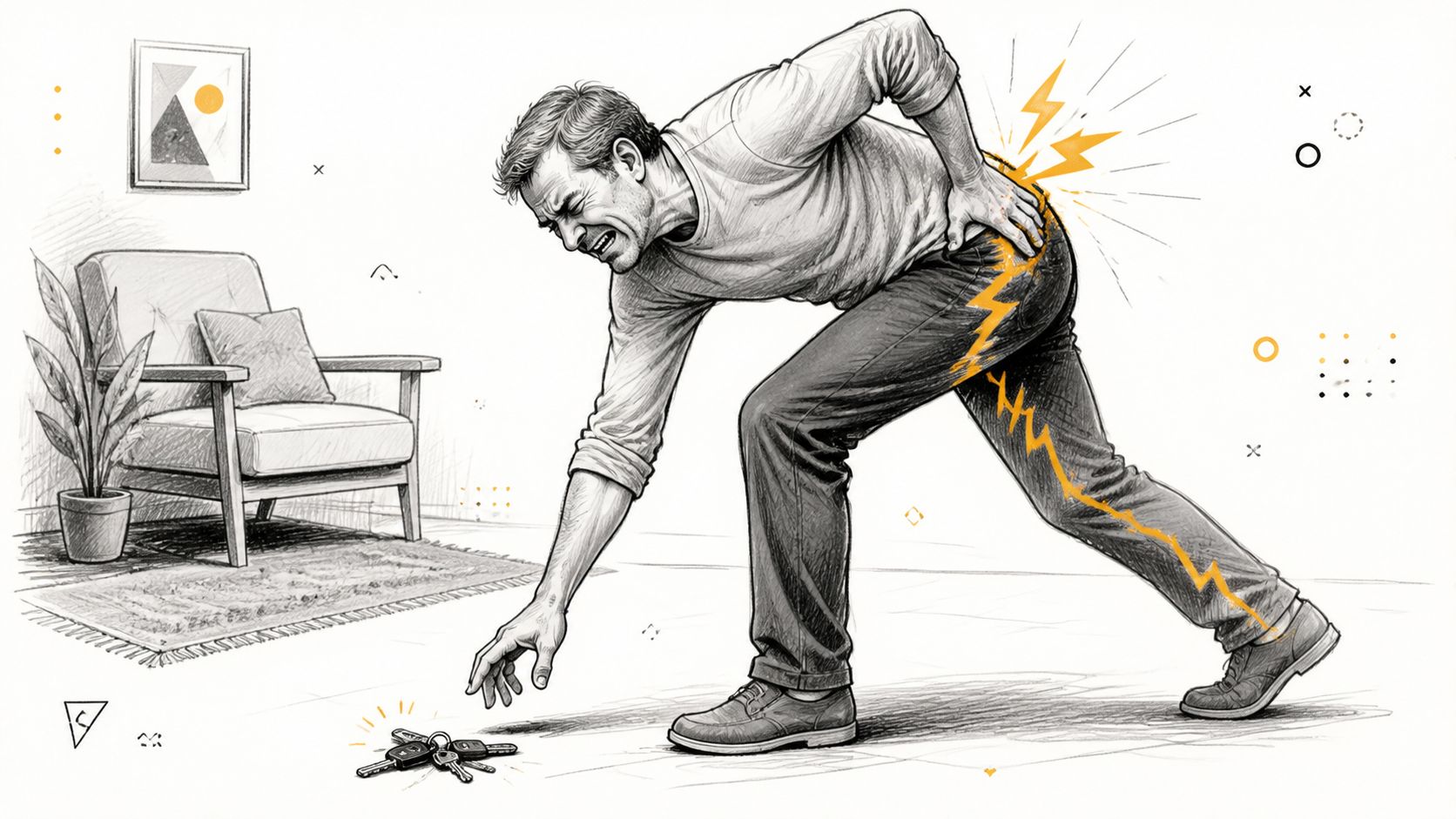
You bend to pick up a set of keys, and a sharp, electric jolt suddenly runs from your lower back through your buttock and down your leg. The pain may ease when you stand still, then return when you sit, twist, cough, or take a step. If that sounds familiar, you're probably asking the right question: what causes sciatic nerve pain, and how can you address the reason it started rather than quieting the symptoms?
Sciatica describes a pattern of nerve-related pain, not one single disease. The cause may be a disc problem, age-related narrowing, inflammation, muscle entrapment, trauma, or another condition. Understanding the mechanism matters because a treatment that helps a compressed nerve root may not address pain coming from a narrowed spinal canal or an irritated muscle.
The person reaching for those keys may assume they “pulled a muscle.” That's possible, but a sudden electrical sensation traveling down the leg suggests that a nerve pathway is involved. Sciatica usually begins when a lumbar nerve root is compressed or irritated, often where the root exits the lower spine, rather than because the entire sciatic nerve has been damaged somewhere in the calf or foot. Medical references describe herniated or bulging lumbar discs as the leading cause, with spinal stenosis also common, especially in older adults.
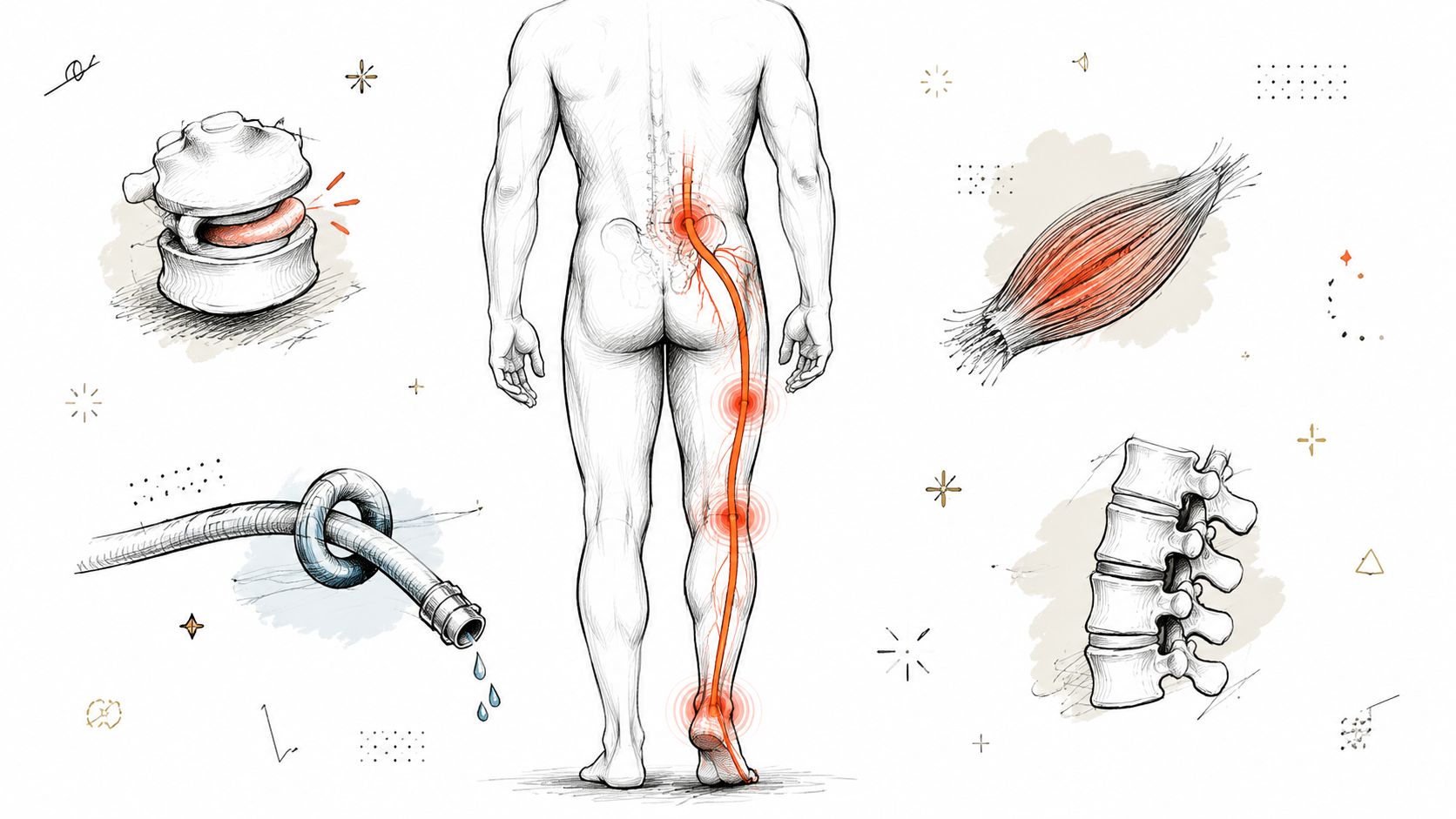
The sciatic nerve is the body's largest nerve. It forms from five nerve roots, L4 through S3, then travels through the pelvis and down the back of the leg. That long route explains why a problem in the lower back can be felt in the buttock, thigh, calf, or foot.
Not every ache in the leg is sciatica. A strained hamstring, hip joint problem, sacroiliac irritation, or local muscle tension can create leg pain without affecting a lumbar nerve root. Sciatica is more suggestive when pain is sharp, burning, tingling, numb, or weak, and when it follows a recognizable path down one leg.
A herniated disc is also not the only explanation. In younger adults, disc herniation is especially prominent, while degenerative narrowing becomes more important as people age. Documented causes also include trauma, tumors, infection, postoperative scarring, spondylolisthesis, and less common soft-tissue entrapment syndromes. A clinical review explains how the causes of sciatica vary with age and identifies these structural, systemic, and extraspinal possibilities.
The practical lesson: A label tells you where the symptoms travel. An examination helps identify what is irritating the nerve and which treatment has a reasonable chance of helping.
Think of a garden hose running beneath a heavy object. If the hose is compressed or kinked, the flow changes and pressure builds around the restriction. A lumbar nerve root behaves differently from a hose, but the analogy helps explain why pressure at the spine can produce symptoms farther down the leg.
The pathway works like this:
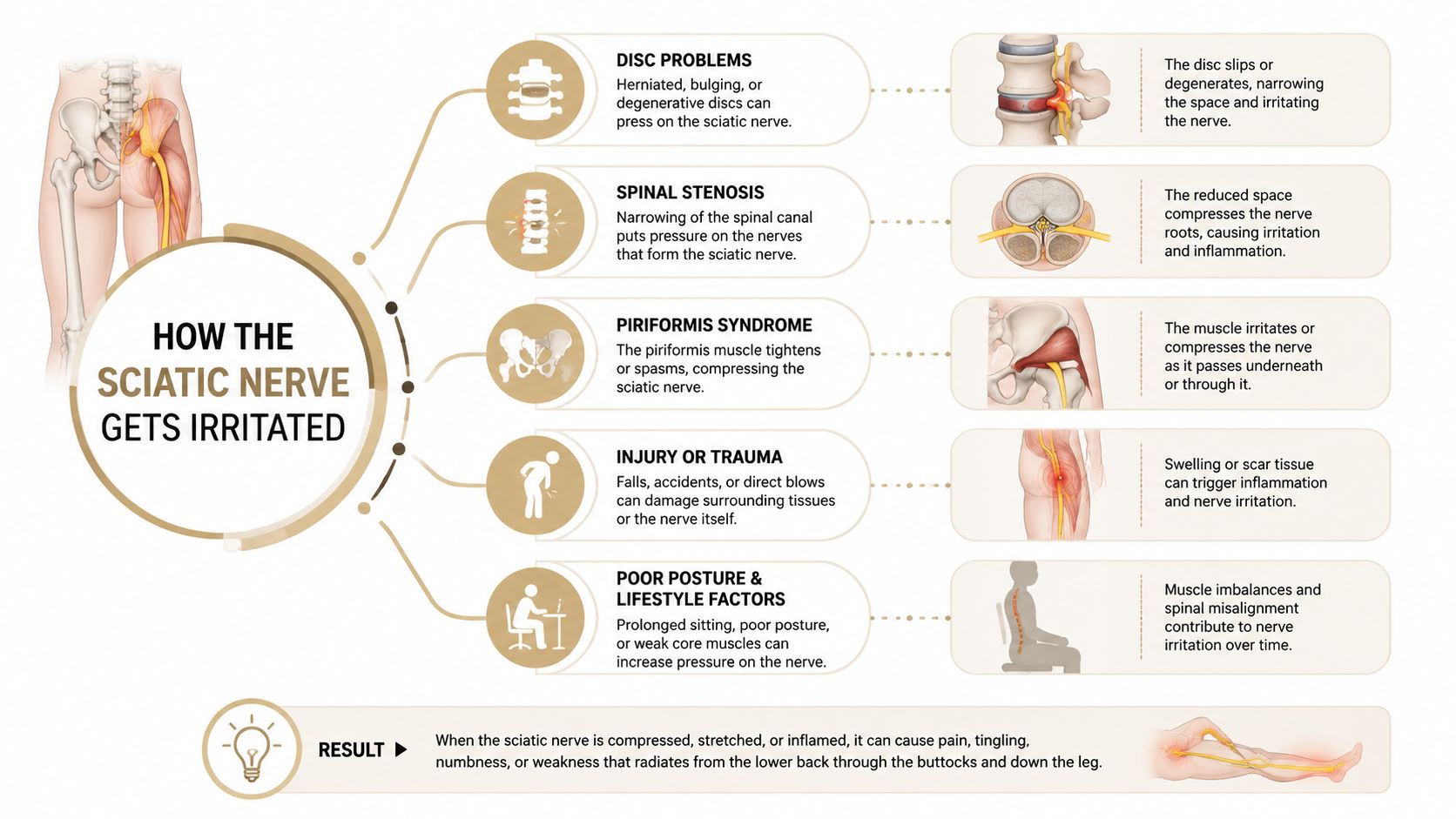
The first mechanism is mechanical compression. A herniated disc can press against a nerve root. Bone spurs, displaced vertebrae, thickened supporting tissues, or a narrowed opening can also reduce the space available for the nerve. Major clinical references identify disc herniation and lumbar spinal stenosis as common structural causes. The Cleveland Clinic's clinical overview also lists spondylolisthesis, degenerative disc disease, foraminal stenosis, osteoarthritis, pregnancy, tumors, cysts, and other growths among recognized causes.
The second mechanism is chemical inflammation. Disc material and irritated surrounding tissues can release inflammatory substances that make the nerve more sensitive. That sensitivity can create severe radiating pain even when the visible degree of compression seems modest. A peer-reviewed review describes inflammation around the disc and nerve root as an important part of radicular pain.
Compression and inflammation commonly amplify each other. Pressure makes the nerve vulnerable, while inflammation lowers its tolerance to movement and contact. The result may be shooting pain, tingling, numbness, or muscle weakness.
A busy clinic also needs a reliable way to manage calls while staff focus on patient care. Practices exploring an automated receptionist for chiropractors may find it useful for handling routine scheduling and incoming questions, but administrative convenience doesn't replace a proper neurological and orthopedic evaluation.
A patient may describe pain running from the buttock down one leg, yet several different problems can irritate that same nerve route. The cause depends on how the nerve is being stressed, whether inflammation is present, and what movements change the symptoms. Age, activity, posture, symptom triggers, and examination findings help separate these mechanisms.
A lumbar disc works like a cushion between two vertebrae. Its tough outer ring surrounds a softer center. If the outer ring tears, inner material can push outward and contact a nearby nerve root. The displaced tissue may create physical pressure, while chemical irritation around the disc can make the nerve more sensitive.
Disc-related sciatica is especially common in younger adults. A major review describes many mechanical cases as involving the L5 or S1 nerve root, often at L4-L5 or L5-S1. Another review reports that disc herniation accounted for 95% of sciatica cases in younger age groups. These findings are summarized in the peer-reviewed literature.
Bending, sitting, lifting, coughing, or straining may increase symptoms because these actions can raise stress around the disc and nerve root. Recovery is not identical for everyone. Readers comparing expected timelines can review this guide to herniated disc recovery.
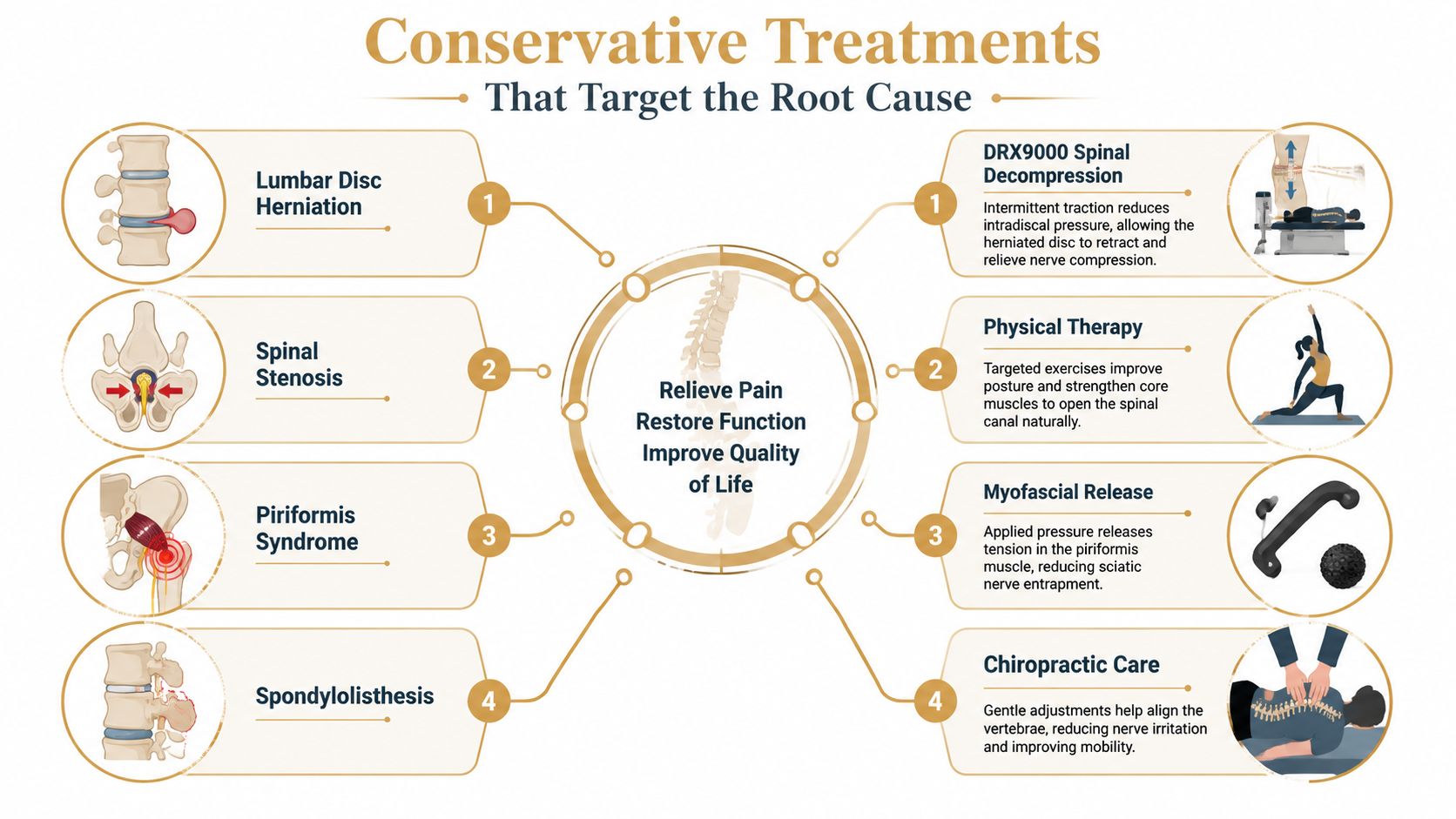
Conservative care aims to reduce both parts of the problem. Decompression-based treatment, including DRX9000 decompression, is intended to reduce mechanical loading around the affected disc and nerve. It does not erase inflammation instantly, and it cannot replace an examination, but reducing repeated stress may give irritated tissues a better chance to settle.
Spinal discs can lose height over time, while the small facet joints may develop arthritic enlargement. The result is similar to a doorway becoming narrower from both sides. The openings used by nerve roots may have less available space, allowing ordinary movement to produce irritation gradually rather than after one obvious injury.
Stiffness, aching, and intermittent leg symptoms may occur together. These changes become more relevant with advancing age and may exist alongside spinal stenosis. Because several structures can contribute at once, an examination and, when indicated, imaging review are needed before assigning the symptoms to one tissue.
Treatment typically focuses on lowering repeated compression, improving movement, and building support from the trunk and hips. Decompression may address pressure related to reduced disc height, while exercise and manual care can address the movement patterns that keep loading the area. The goal is to change the mechanical conditions around the nerve, not cover up pain.
Spinal stenosis means the spinal canal or a side passage has narrowed. Thickened supporting tissue and osteophytes, or bone spurs, can reduce room around the nerve roots. In older adults, this narrowing may cause neurogenic claudication, leg pain, heaviness, or numbness that increases with standing or walking and improves with sitting or bending forward.
Posture offers an important clue. Standing upright often extends the low back and further reduces space in an already narrow passage. Sitting or bending forward can create more room. Disc-related symptoms, by comparison, often react poorly to flexion, so the same position may affect these conditions differently.
A treatment plan therefore has to match the mechanism. Gentle decompression and flexion-tolerant exercise may reduce the load on crowded nerve roots, while walking and strengthening programs can help preserve function. Symptoms that steadily worsen still require clinical assessment rather than repeated self-treatment.
The piriformis is a deep muscle in the buttock. Spasm, tightness, or enlargement can irritate the sciatic nerve as it passes through the deep gluteal region. This is an extraspinal cause, so the lumbar spine may not show a clear compressive lesion.
Piriformis syndrome is relatively uncommon. One review estimates that it accounts for only 0.3% to 6% of low back pain and/or sciatica cases. Buttock tenderness and symptoms that worsen with prolonged sitting or hip movement can provide useful clues. In this situation, treatment directed only at the lumbar disc may miss the irritated structure. Muscle-focused care, movement changes, and gradual strengthening are more logical targets.
Spondylolisthesis occurs when one vertebra shifts relative to another. The shift can create shear, instability, and foraminal narrowing around a nerve root. Pregnancy can also change ligament support and mechanical loading, increasing stress around the pelvis and lower back.
Trauma, infection, tumors, postoperative scarring, and diabetes-related nerve problems are less typical but important possibilities. Sciatica describes a pattern of nerve-related symptoms, not one automatically identified structure. These findings are summarized in the peer-reviewed literature.
| Cause | Primary Mechanism | Typical Age Group | Key Symptom Pattern |
|---|---|---|---|
| Lumbar disc herniation | Disc material presses on and inflames a nerve root | Often younger and middle-aged adults | Leg pain may worsen with bending, sitting, lifting, coughing, or straining |
| Degenerative disc or facet changes | Loss of disc height and joint overgrowth reduce nerve space | More common with aging | Stiffness with variable radiating pain |
| Spinal stenosis | Canal or foraminal narrowing reduces room for nerve roots | More common in older adults | Walking or standing aggravates symptoms, flexion may ease them |
| Piriformis syndrome | Deep gluteal muscle irritates the sciatic nerve | Any adult age group | Buttock pain and symptoms linked to sitting or hip motion |
| Spondylolisthesis | Vertebral slippage creates shear and foraminal narrowing | Varies by cause | Back pain with possible radiating leg symptoms |
| Pregnancy | Ligament and load changes alter spinal and pelvic mechanics | During pregnancy | Low-back or buttock symptoms influenced by position and load |
| Trauma or systemic disease | Injury, infection, growth, scarring, or neuropathy affects nerve function | Varies | Symptoms depend on the underlying condition and may include atypical features |
Typical sciatica often feels like a line of nerve pain rather than a broad muscle ache. It may start in the low back or buttock and travel down one leg, with burning, tingling, numbness, or weakness along the route. The exact location can offer clues, although symptoms alone can't confirm which structure is responsible.
The L4 root may produce symptoms toward the front of the thigh and inner lower leg. L5 involvement may affect the outer leg and top of the foot, while S1 irritation may travel through the back of the leg toward the outer foot. These patterns help a clinician decide which movements, reflexes, strength tests, and sensory findings deserve closer attention.
Severe pain isn't automatically an emergency, and mild pain isn't proof that the nerve is safe. The combination of location, weakness, progression, and changes in bladder or bowel function matters more than a simple pain score.
| Symptom Type | Typical Sciatica | Red Flag, Seek Urgent Care |
|---|---|---|
| Pain distribution | Usually radiates down one leg | Severe, unremitting, rapidly worsening, or unusual distribution |
| Sensation | Tingling or numbness in a recognizable path | New saddle anesthesia, especially around the inner thighs or groin |
| Strength | Mild, stable weakness may occur | Progressive motor loss or weakness in both legs |
| Bladder or bowel function | Usually unchanged | New difficulty controlling or emptying the bladder or bowel |
| Course | May fluctuate with position and activity | Worsens quickly or doesn't ease with rest and appropriate care |
| General health | No major systemic symptoms | Fever, serious illness, significant trauma, or other concerning findings |
Cauda equina syndrome requires emergency attention. Saddle anesthesia, bilateral leg weakness, or bowel and bladder dysfunction are not symptoms to monitor at home. Progressive weakness and severe pain that won't let up also warrant prompt specialist evaluation.
Many uncomplicated cases improve with conservative care, but persistent symptoms deserve a more organized plan. If pain continues beyond six weeks, or if numbness and weakness remain active, a clinician may consider advanced imaging and a structured treatment approach rather than continued wait-and-see care. The reason isn't that every persistent symptom requires a scan. The reason is that the likely benefit of identifying the pain generator becomes more important when symptoms aren't following an improving course.
Treatment should match the mechanism. A disc-related nerve-root problem, a narrowed canal, and a tight deep-gluteal muscle may all produce pain down the leg, but they place different demands on the clinician and patient.
For selected disc-related cases, spinal decompression with the DRX 9000 is intended to create controlled unloading through intermittent traction. The proposed biomechanical rationale is that reducing loading around the disc may decrease intradiscal pressure and reduce irritation near the nerve root. It isn't a universal answer, and a proper examination should determine whether the pattern is appropriate for decompression.
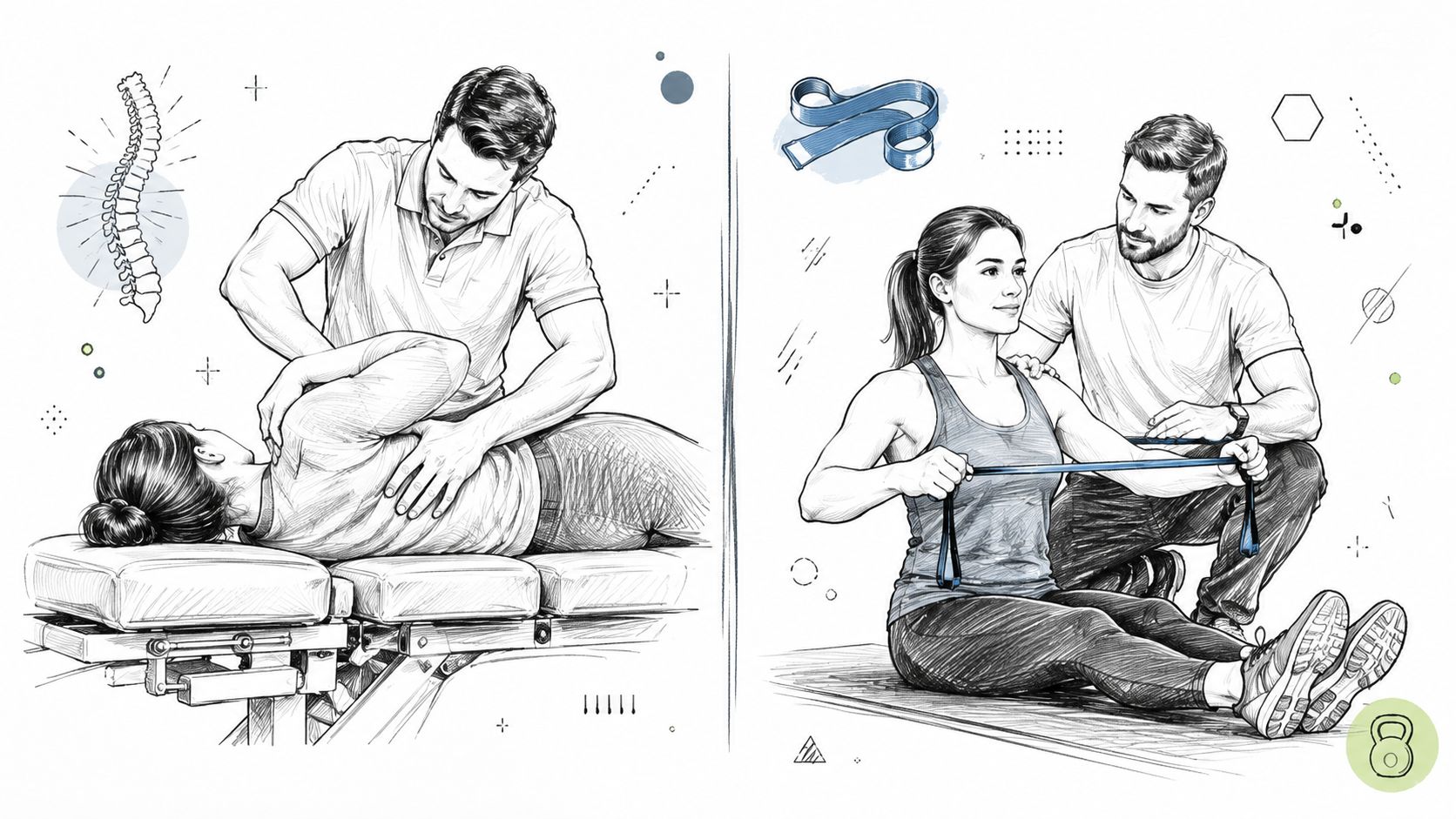
The aim isn't to make the leg feel temporarily numb. The aim is to reduce the mechanical stress that may be contributing to the symptoms while the patient builds capacity through movement and rehabilitation. A personalized plan may also include chiropractic adjustment, mobility therapy, core stabilization, and take-home exercises.
When stenosis or joint dysfunction contributes to symptoms, treatment may focus on positions and movements that improve available space and reduce irritation. Gentle, targeted chiropractic adjustments can address restricted joint motion when clinically appropriate. Flexion-based exercise, posture retraining, and rehabilitation exercise may help a patient move with less extension-related compression.
The right approach depends on the individual. Aggressive manipulation or unsupervised stretching isn't appropriate for every spine, especially when neurological deficits or significant structural narrowing are present.
Piriformis-related symptoms call for a different strategy. Massage therapy, myofascial techniques, mobility therapy, and carefully selected stretching can reduce excessive tension in the deep gluteal muscles. Strengthening the hip and correcting movement habits can help prevent the muscle from repeatedly overworking.
Adjunctive care may support comfort while the underlying movement problem is addressed. Options can include SoftWave Therapy, MLS Laser Therapy, acupuncture, and muscle stimulation, selected according to the examination findings and patient tolerance.
At Aspen Falls Wellness, an integrated plan may combine chiropractic care, spinal decompression, massage, acupuncture, mobility work, rehabilitation exercise, nutrition counseling, and supportive modalities. The practice also provides personalized exercise plans, realignment and adjustment services, muscle stimulation, pain-relief strategies, and care planning for problems such as sports injuries or car accidents. Readers comparing approaches can review sciatica treatment options, then discuss which choices fit their diagnosis.
Pain that continues beyond about three months deserves more than the assumption that the nerve remains pinched. A review of multidisciplinary pain management strategies can help frame chronic care around diagnosis, function, and several contributing factors rather than one repeated procedure.
This does not make every procedure inappropriate. It means the plan should set realistic goals and address movement, strength, sleep, confidence, and daily activity alongside pain. Repeatedly trying to quiet symptoms without changing mechanical loading or physical capacity can leave the original drivers in place.
A persistently irritated nerve may make the nervous system more protective and reactive. Muscles tighten, movement becomes guarded, and ordinary activities can begin to feel unsafe. The pattern is similar to a car alarm that becomes oversensitive after repeated triggers. Structural findings still matter, yet they may not explain every part of the pain experience.
Chronic care may therefore combine mechanical unloading, inflammation management, neuromuscular control, conditioning, and clear education about pain. Decompression, including DRX9000 when examination findings support it, aims to reduce mechanical stress on an irritated nerve. Chiropractic care and targeted rehabilitation then address joint motion, strength, and movement habits, while supportive therapies can help patients participate in that process.
A review also reports that up to 30% of cases may occur without clear structural compression, supporting an inflammatory or non-compressive mechanism in some patients. That finding helps explain why a plan focused only on imaging or pressure may not fit every chronic case.
If you live in Salt Lake City or Sandy and recurring leg pain is changing how you sit, walk, work, or sleep, start with an evaluation rather than guessing at the cause. A thorough first visit should include your history, an orthopedic and neurological examination, and a review of existing imaging. X-ray or MRI referral may be considered when the findings call for a closer look.
Bring a list of current symptoms, medications, prior diagnoses, previous imaging reports, and questions about activities that make the pain better or worse. The clinician can use that information to decide whether the pattern fits disc-related nerve-root irritation, joint dysfunction, stenosis, piriformis involvement, trauma, or another condition.
The treatment path should follow those findings. A disc herniation may lead to consideration of DRX9000 spinal decompression, while joint-related restriction may call for targeted chiropractic adjustment and mobility therapy. Soft-tissue treatment may be more appropriate when deep gluteal muscle tension is central, and a personal exercise plan can help restore strength and movement in each case.
Don't ignore progressive weakness, saddle numbness, or bowel and bladder changes. For persistent but non-emergency symptoms, early evaluation can help limit compensatory movement patterns and prolonged nerve sensitivity.
Aspen Falls Wellness offers evaluations and individualized chiropractic care for sciatic nerve pain, including DRX9000 spinal decompression, adjustment, massage therapy, MLS Laser Therapy, acupuncture, mobility therapy, and rehabilitation exercise. Visit Aspen Falls Wellness to request a consultation in Salt Lake City or Sandy and discuss a plan based on the actual cause of your symptoms.

Stay updated with the latest chiropractic news and exclusive offers.