Neck pain after a crash may signal a spinal injury. See what to do after car accident neck pain, the red flags needing the ER, and when chiropractic care helps.

You're home after a collision, the insurance calls have started, and your neck feels tighter every time you turn. Maybe the bumper barely looks damaged. Maybe you felt fine at the scene and now have a headache.
Deciding what to do after car accident neck pain starts with medical triage, not stretching or booking an adjustment. Once serious injury is excluded, your early symptoms and how they change tell you more about recovery than the condition of the car.
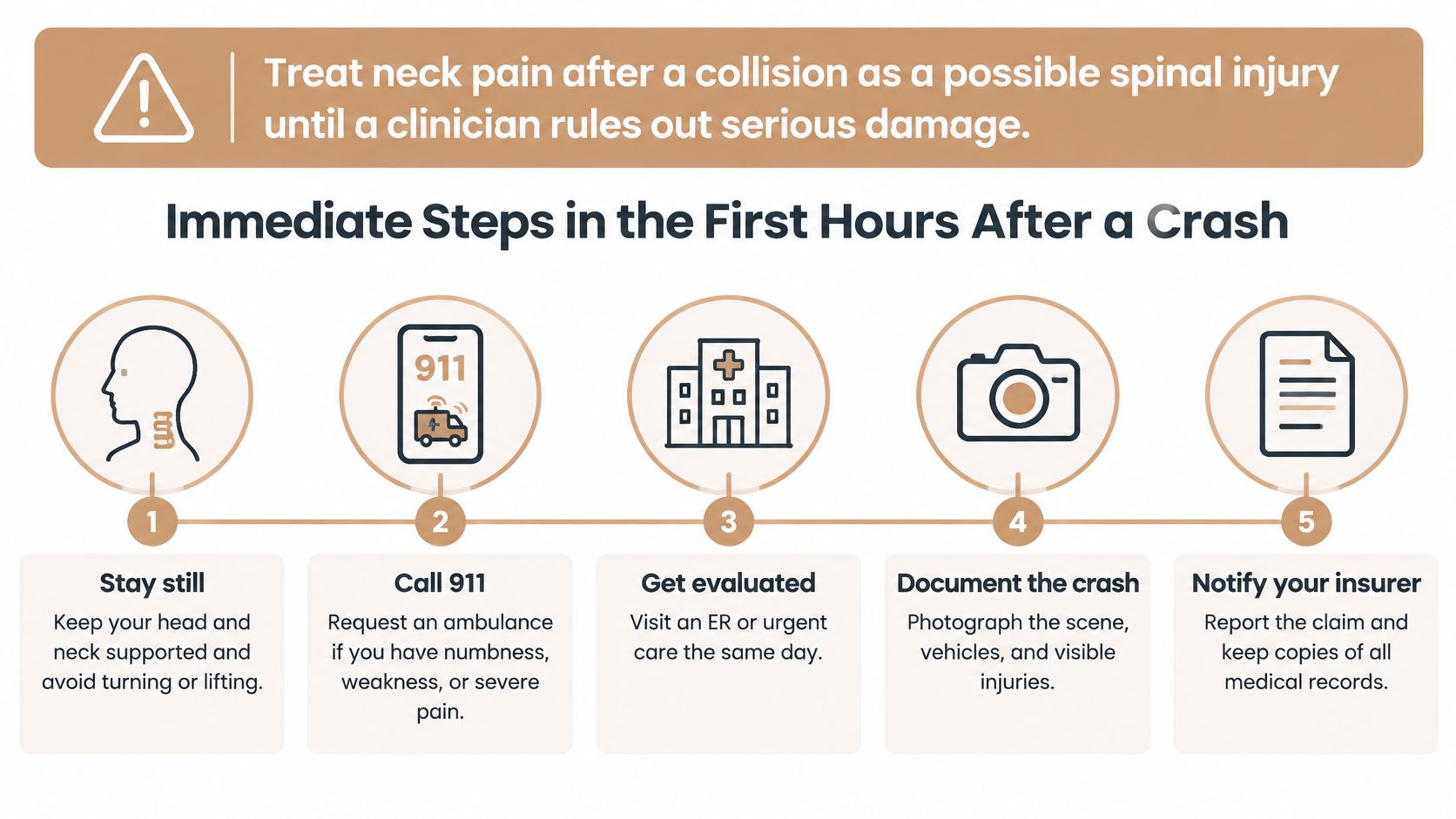
Treat neck pain after a collision as a possible spinal injury until a clinician rules out serious damage. Being able to talk, stand, or move your neck doesn't establish that it's safe to continue normally.
Stay still. Keep your head and neck supported in the position you find comfortable. Don't turn to check other vehicles or climb out quickly when your neck hurts, unless remaining there exposes you to immediate danger.
Call 911 for warning signs. Neck pain with weakness, numbness or tingling, loss of coordination, trouble walking, loss of bladder or bowel control, breathing difficulty, severe neck or back pain, or a visibly twisted neck needs emergency assessment. Don't drive yourself.
Tell responders before they move you. Say clearly that your neck hurts and describe any arm or leg symptoms. That information helps them protect spinal alignment during assessment and transport.
Skip self-treatment. Don't stretch, massage, apply heat, crack your neck, or exercise before fracture or instability has been excluded. Trying to release tight muscles is the wrong priority when the injury hasn't been assessed.
Arrange same-day evaluation. Get checked even if you initially feel fine, particularly when the crash could have injured your head or neck. The Mayo Clinic's head-trauma first-aid guidance supports prompt attention because symptoms can evolve, with emergency evaluation for concerning neurological or head-injury signs.
Document once you're safe. Record the crash time, where you hurt, and who examined you. Ask someone else to photograph the vehicles, scene, and visible injuries if doing so would require you to move unnecessarily.
Say a driver is rear-ended at a red light and notices only slight stiffness. The next morning, they wake with a headache and a dull ache toward the shoulder blade. That change deserves medical review, not an assumption that it's ordinary soreness.
First priority: Identify fracture, dislocation, concussion, or spinal-cord injury before trying to make the neck feel better.
Once medical needs are addressed, notify your insurer and retain medical records and claim correspondence. LA Law Group, APLC's California accident response guide offers a practical administrative checklist, although California-specific legal guidance shouldn't be treated as Utah advice.
A clinician first checks alertness, neurological function, tenderness directly over the cervical spine, and whether movement testing is safe. Don't test your own neck by forcing it through a painful turn.
The neck-pain clinical practice guideline describes risk-based assessment, including active rotation of 45 degrees each way when safe, and cervical CT within 1 hour for adults with head injury and neck pain who meet relevant high-risk criteria or fail safe movement assessment. MRI is an escalation test for nerve or cord concerns, progressive neurological change, suspected ligament injury, or persistent severe midline pain despite a negative CT.
Use this table as a reference, not permission to diagnose yourself. An emergency row overrides any self-care or rehabilitation plan.
| Symptom after the crash | Urgency | What to do |
|---|---|---|
| Weakness, numbness or tingling in an arm or leg | Emergency now | Call 911, stay still, and describe the affected limb |
| Trouble walking or loss of coordination | Emergency now | Call 911; don't try to walk unassisted |
| Loss of bladder or bowel control | Emergency now | Call 911 for possible spinal-cord involvement |
| Breathing difficulty or a visibly twisted neck | Emergency now | Call 911 and avoid moving the head or neck |
| Confusion, unusual drowsiness, seizure or repeated vomiting | Emergency now | Call 911 for emergency brain-injury assessment |
| Worsening headache that does not go away | Emergency now | Go to the ER for brain-injury evaluation |
| Cannot actively turn the neck about 45 degrees left and right | Urgent same-day assessment | Clinician exam and possible CT before any treatment |
| Pain spreading into the arm, dizziness or persistent headache | Prompt medical review | Visit a clinician and record how the symptoms change |
| Soreness that eases with rest and gentle motion | Routine follow-up | Keep a symptom log and reassess at the first visit |
The final row applies after serious injury has been excluded. New limb tingling or weakness belongs in the emergency category, even if it begins during an otherwise improving recovery.
The CDC's brain-injury discharge guidance also identifies slurred speech, unequal pupils, unusual behavior, confusion, and inability to awaken as danger signs. These require emergency help even when they appear after a delay.
A passenger who felt fine at the scene but develops headache and confusion the next day needs emergency assessment. Pain that worsens, interferes with daily tasks, or spreads into an arm also needs medical review, with the progression recorded.
The car's damage is a poor recovery forecast. Early pain, functional limitation, headache, pre-existing neck pain, anxiety, post-traumatic stress symptoms, and catastrophizing are more useful prognostic markers than crash mechanics, according to the JOSPT systematic review of whiplash prognosis.
Catastrophizing means becoming caught in threatening interpretations of pain, such as assuming every painful movement causes more damage. It isn't a character flaw, and recognizing it gives the clinician another problem to address.
Start your record on the day of the crash when practical. Complete measurements with your clinician rather than pushing through painful movements at home.
Keep a one-line daily phone entry, noting activities that aggravate symptoms. Save imaging reports and visit notes, and record missed work by date. The explanation of what causes whiplash in car accidents can help you describe the movement involved without treating the collision itself as a prognosis.
Persistent pain isn't proof of permanent damage or personal failure. Report worry, poor sleep, and distress as openly as physical symptoms.
For example, a nurse might record that headaches shortened her usual ten-hour shift to six hours. Bringing that log to a two-week recheck gives the clinician a concrete functional problem to reassess, rather than only the statement that her neck still hurts.
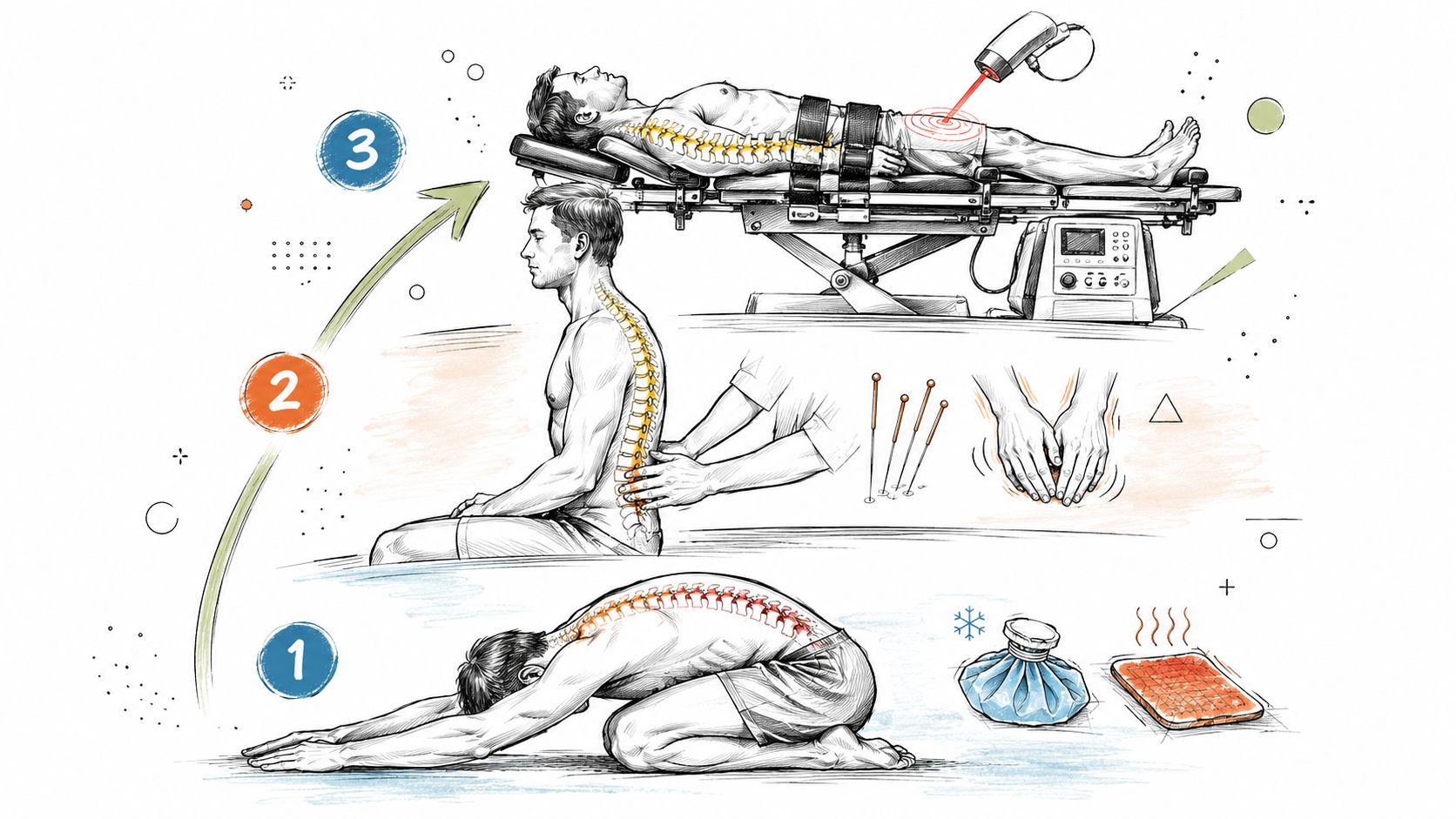
Chiropractic care can support rehabilitation, but hands-on treatment comes after serious injury has been ruled out. An adjustment appointment is not a substitute for trauma assessment. Vehicle damage tells the clinician little about how your neck will recover; the findings from your first examination, and the direction your symptoms move over the following weeks, carry far more weight.
NICE's spinal-injury guidance supports spinal protection and indicated imaging when cervical injury is possible, with MRI after CT when a neurological abnormality could reflect spinal-cord injury even if CT doesn't explain it. Manipulation waits until fracture and instability have been excluded and the clinician has judged it suitable.

| Option | Intended role and practical limit |
|---|---|
| Mobility Therapy and posture work | Address stiffness and movement tolerance without forcing painful end ranges |
| Massage Therapy | Ease muscle guarding; it doesn't establish spinal stability |
| Low-force Chiropractic Adjustment | Consider when examination finds a suitable mechanical restriction |
| MLS Laser Therapy and SoftWave Therapy | Adjuncts offered for inflammation management and tissue-healing support, not replacements for reassessment |
| Acupuncture and Muscle Stimulation | Consider for symptom modulation when appropriate |
| Personal Exercise Plans and Rehabilitation Exercise | Build tolerance and function through an individualized home program |
Spinal Decompression with the DRX 9000 warrants a separate decision. Consider decompression only when examination and imaging support relevant disc involvement with nerve symptoms, the device is appropriate for the spinal region being treated, and contraindications have been excluded. Don't assume a lumbar decompression system is a cervical treatment.
Aspen Falls Wellness in Salt Lake City and Sandy provides car accident assessment and treatment planning, with documentation and referral to external specialists when findings fall outside in-house scope. Wherever you go, ask one question before accepting a plan: did the examination include a neurological screen and measured range of motion, and which specific findings justify each recommended technique? A clinician who can answer that clearly is working from your presentation rather than from a routine.
Verify your insurance benefits directly with the clinic before starting care, and review what to expect at a first chiropractic visit so the appointment structure is familiar.
By week three, stiffness without arm symptoms usually points toward mobility work, an adjunct such as laser therapy, and a home exercise program, with a recheck date set in advance. I recommend judging that plan against your own recorded baseline. If pain scores, rotation, and headache frequency are trending the right way, the plan is working regardless of how damaged the car looked.
Once serious injury has been ruled out, most uncomplicated whiplash is managed conservatively. Symptom-guided movement generally works better than prolonged rest or routine immobilization, and the calendar should not dictate exercise intensity. How you feel and function in the first weeks predicts how long neck pain lasts far better than the damage to the car, which is why the baseline log you started on day one carries the most diagnostic weight.
A systematic review available through PubMed Central estimates that about 50% of people with whiplash-associated disorders recover fully within 3 months, while nearly 25% develop more complex long-term pain-related disability. The same review describes a first reassessment at roughly 2 to 4 weeks and escalation when substantial limitation persists beyond 4 to 6 weeks. In the exercise trials it summarizes, average gains were modest at medium-term follow-up, around 7% for pain and 7.4% for disability, and a sizeable share of patients report pain lasting months or longer. These figures describe groups; your own log defines your timeline.
| Timeframe | What is typically happening | Action at this point |
|---|---|---|
| About 2 to 4 weeks | First formal reassessment | Repeat pain rating, rotation, headache count and disability score |
| Up to 3 months | The window where most improvement typically occurs | Continue the plan if improving; adjust if progress flattens |
| Beyond 4 to 6 weeks | Substantial limitation persisting despite appropriate conservative care | Escalate to specialist review or further imaging when clinically indicated |
| Any time | New weakness, numbness, worsening function or altered alertness | Urgent or emergency medical evaluation |

Generic exercise sheets fall short when nobody checks technique, tolerance, or whether the exercises match the limitation. Passive treatment may provide pain relief, yet the plan should also help you resume useful activity, since symptom scores alone do not prove function is returning.
A medically cleared patient might begin in week one with five-minute walks and comfortable neck movement. By week three, daily walking and longer sitting may be realistic, with driving and work tasks resuming gradually when safe. These are hypothetical starting points, and worsening symptoms always override the schedule.
If progress stalls, bring your log to the next reassessment and revise the plan with your clinician.
Understanding soft-tissue damage can make the recovery process less confusing. At reassessment, look for a falling pain score, greater rotation in degrees, fewer headache days, and longer work tolerance. Judge recovery by that trajectory rather than expecting every symptom to disappear together.
An examination is a decision point, not a commitment to manipulation. Before any hands-on treatment, you should understand what the clinician found, what remains uncertain, and what would change the plan.
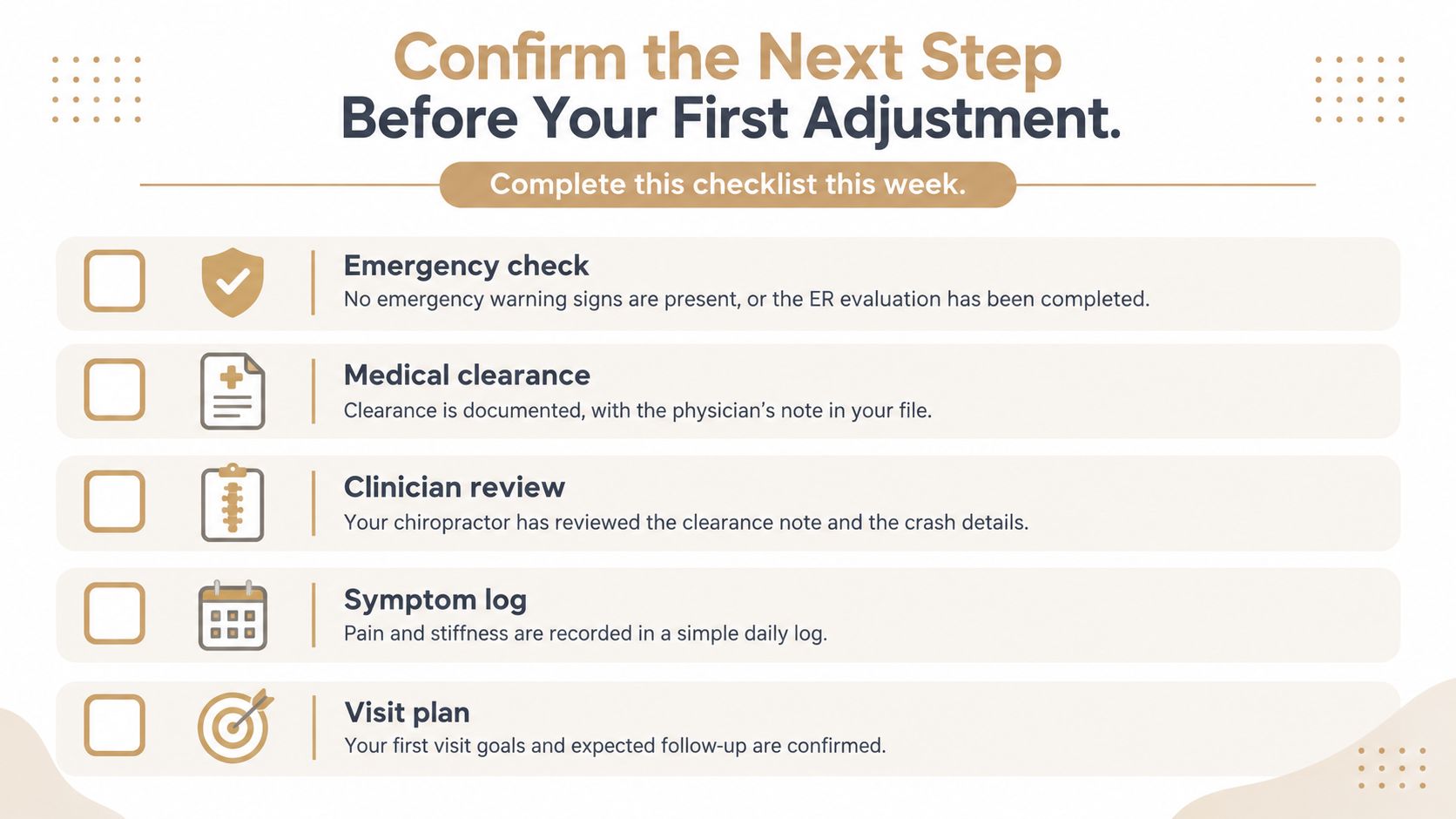
If function is improving, continue the prescribed home program and visits while gradually increasing activity. If substantial limitation persists despite appropriate care, request reassessment rather than repeating the same treatment indefinitely. Any red flag means stopping self-directed care and obtaining urgent or emergency evaluation.
The Salt Lake City and Sandy clinics provide an initial examination, X-ray or MRI referral when indicated, and onward referral when needs exceed in-house care. Acute high-risk trauma still belongs in a medical setting with access to appropriate emergency imaging.
Ask what each proposed treatment is intended to improve and how that improvement will be measured. If you're medically stable, book the first examination within the week while the early symptoms and changes are still easy to describe.
Aspen Falls Wellness offers post-collision assessment, individualized chiropractic care, mobility work, and rehabilitation exercise for appropriately screened neck injuries. Visit Aspen Falls Wellness to arrange an examination in Salt Lake City or Sandy and discuss a plan built around your symptoms, function, and recovery progress.

Stay updated with the latest chiropractic news and exclusive offers.